Do not remove an electrical panel cover, touch exposed conductors, bypass protection, or repeatedly reset a fault. Keep clear of smoke, sparks, burning odors, hot equipment, standing water near electricity, and downed lines, then call qualified help.
You are planning for the next outage and want the generator to keep the air conditioner, refrigerator, lights, internet, and essential appliances operating. Then you see a 200-amp main breaker and wonder whether the generator must match it. The safe immediate action is simple: do not remove the panel cover or add breaker ratings. Make a list of the equipment you need and schedule a professional load evaluation.
What size standby generator does your home need in Lynn Haven? It needs enough output to carry the realistic backup load, including the short burst of power required to start compressors and pumps. The main service rating shows the maximum capacity of the electrical service, not what the house continuously uses or what a generator must supply.
Generator Size Is About Demand, Not Panel Labels
Most homes do not use their full electrical-service capacity continuously. Lights, appliances, HVAC systems, and water heating cycle on and off.
A generator calculation estimates which loads may operate together and considers motor startup. This is more accurate than multiplying the main-breaker rating by voltage or totaling every branch breaker.
The homeowner must also choose a backup strategy. An essential-load system powers selected circuits. A managed whole-home system may connect most circuits but automatically delay lower-priority equipment when demand becomes too high.
Common Causes of an Undersized or Poorly Performing System
Air conditioning was sized only by running watts
Compressors need additional power for a brief moment when they start. If that surge was omitted, the generator may stall, dim lights, or trip as the compressor engages.
High-demand equipment was added later
A generator may have been correct when installed but become inadequate after an EV charger, second HVAC system, electric water heater, pool equipment, or another major load was added.
Load-management equipment is missing or failing
A load-management module keeps lower-priority equipment from operating when the generator is near capacity. If it fails, is bypassed, or was never installed, too many large loads may start together.
Fuel delivery is limiting output
A generator can be electrically capable yet perform badly when fuel piping, pressure, regulator operation, or available supply is insufficient.
Maintenance has been neglected
A weak battery, dirty filters, worn ignition components, loose wiring, or control faults can reduce reliability. A generator that once carried the home should be inspected before being declared too small.
Safe Homeowner Checks Before the Appointment
List everything you expect to use during an outage. Mark each item essential, preferred, or optional. Include air conditioning, refrigeration, lighting, internet, medical equipment, water heating, cooking, laundry, pumps, garage doors, and EV charging.
Photograph visible nameplates on HVAC units and major appliances without removing covers. Useful information may include voltage, amperage, model number, and motor-starting data.
Write down which appliances use gas and which use electricity. Fuel type can significantly change generator demand.
For an existing generator, record the fault code and what happened immediately before shutdown. Note whether trouble begins at transfer, when the air conditioner starts, or later when another appliance cycles on.
An exercise cycle alone does not prove the generator can support the full household load.
What You Should Not Attempt
Never connect a portable generator through an ordinary receptacle, dryer outlet, or homemade cord. Without proper transfer equipment, electricity can flow backward through the panel and utility lines.
- Do not increase breaker sizes, install larger fuses, or bypass overload protection. A tripping device may be warning of excessive current or a fault.
- Do not open the automatic transfer switch. It contains utility and generator conductors that may remain energized from more than one source.
- Avoid fuel-system adjustments, control-board changes, grounding modifications, and internal repairs unless properly qualified.
Portable generators must stay outside and away from openings. Never operate one in a garage, shed, porch, or carport. Maintain working carbon-monoxide alarms and leave immediately if an alarm activates.
Warning Signs That Require Immediate Attention
Call emergency services and move away if there is fire, a strong fuel odor, visible arcing, heavy smoke, or a carbon-monoxide alarm.
Headache, dizziness, nausea, weakness, sleepiness, or confusion during generator operation can indicate carbon-monoxide exposure. Everyone should move to fresh air and seek emergency guidance.
Arrange urgent professional service when the generator repeatedly trips, stalls under load, rapidly cycles power, produces severe light flicker, or causes appliances to restart. Burning odors, melted insulation, abnormal vibration, fluid leakage, or loud mechanical noises also require attention.
Do not keep resetting a fault without determining its cause.
How a Licensed Electrician Sizes and Tests the Generator
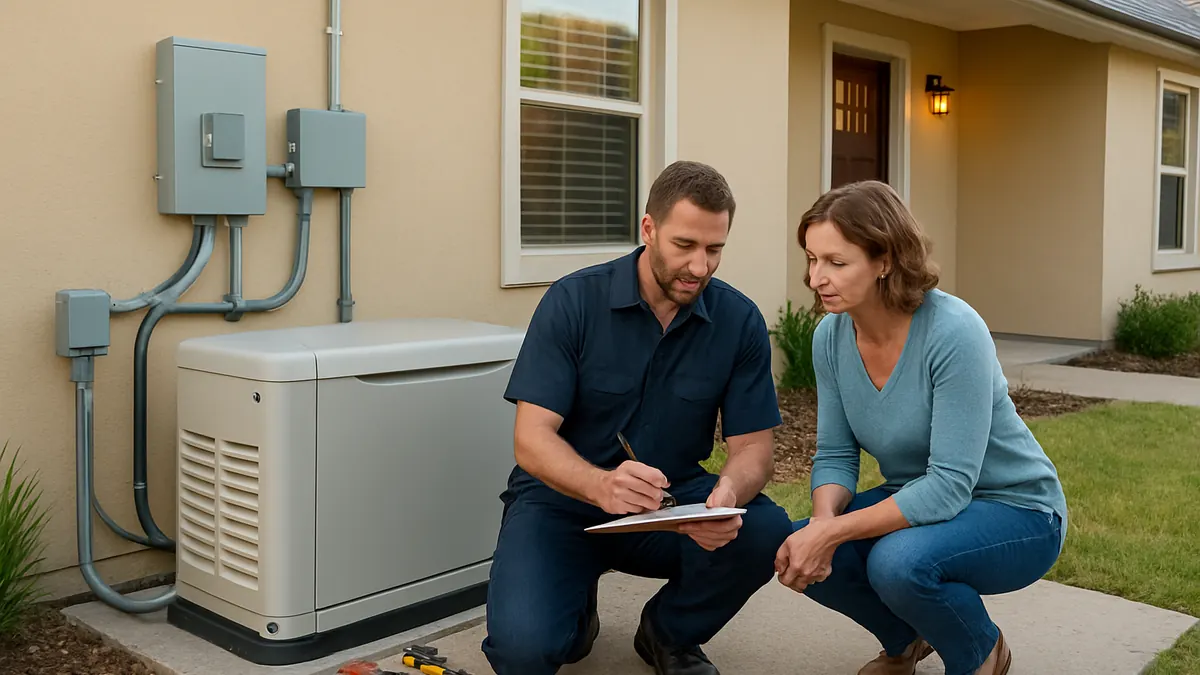
The electrician reviews the service and panels, then creates an inventory of equipment intended for backup. Large fixed loads and motors receive particular attention.
A load calculation estimates demand likely to occur simultaneously. The electrician then checks startup requirements for air-conditioning compressors, pumps, and other motors.
Next, the backup design is developed. Essential circuits may be placed in a dedicated panel, or a whole-home transfer switch may be combined with load-management modules. Priorities are established so comfort and safety loads remain available while optional equipment is delayed.
The inspection also covers conductor sizes, breakers, grounding and bonding, transfer-switch condition, generator placement, and connections. Fuel capacity is verified with the appropriate qualified professional.
For an existing system, testing may include battery voltage, generator output, electrical frequency, transfer timing, fault history, and operation under realistic load. Frequency describes how steadily the generator maintains its alternating-current cycle rate; unstable frequency can affect motors and electronics.
Repair Options From Least Invasive to Most Extensive
Begin by reconsidering which loads truly need backup. Excluding an EV charger, electric dryer, pool heater, or second cooling system may make the current generator sufficient.
Approved load-management controls may be installed, repaired, or reprogrammed. These controls prevent simultaneous operation of large appliances without requiring occupants to manage breakers manually.
A compatible soft-start device may reduce the starting surge of certain HVAC compressors. This can improve startup performance but does not reduce the home's normal running demand.
If the generator has lost performance, targeted service may be enough. Repairs may include battery replacement, engine maintenance, fuel correction, conductor repair, control-board replacement, or transfer-switch service.
Replacement becomes appropriate when the required load remains above usable capacity, the unit is unreliable, or parts and support are unavailable.
Typical Factors Affecting Cost
Cost depends on generator capacity, transfer-switch design, number of backed-up or managed loads, fuel source, fuel-piping requirements, panel condition, equipment location, mounting pad, trenching, electrical distance, access, and permits.
Multiple panels, solar or battery equipment, relocation, or electrical upgrades can add complexity.
Prevention and Maintenance Guidance
Follow the maintenance schedule for the exact model. Typical service includes oil and filters, battery testing, spark plugs where used, cooling inspection, electrical checks, and transfer-switch testing.
Keep the enclosure and air openings clear of vegetation, debris, and stored objects. Watch for corrosion, insect nests, damaged wiring, and fluid leaks.
After a long outage, arrange service based on accumulated operating hours. Reevaluate capacity whenever major electrical equipment is added or replaced.
Get a Load Calculation Instead of Guessing
What size standby generator does your home need in Lynn Haven? It needs enough power for the systems you intend to use, including motor startup, with safe transfer equipment and a fuel supply capable of supporting the generator. A licensed evaluation can show whether the right solution is load management, repair, a targeted upgrade, or replacement.
About this guide: This resource provides general homeowner education, not a remote diagnosis. Actual conditions, code requirements, equipment, and safe repair options must be evaluated at the property.