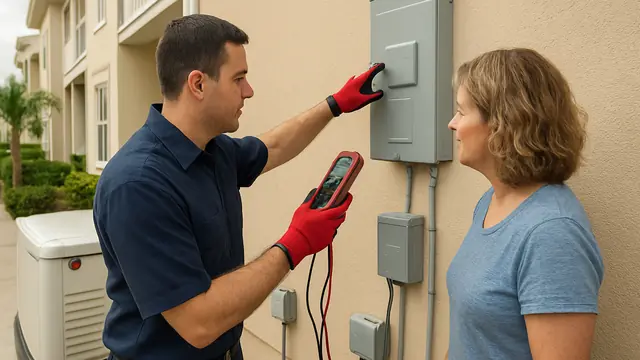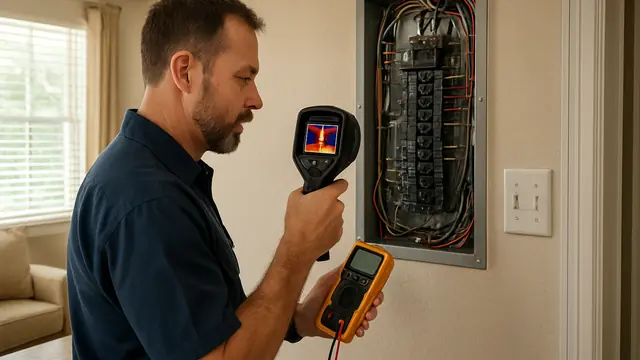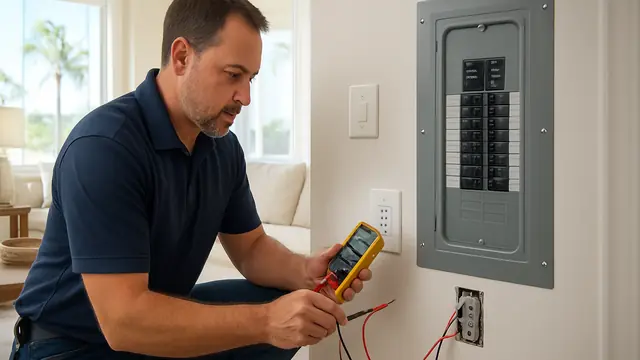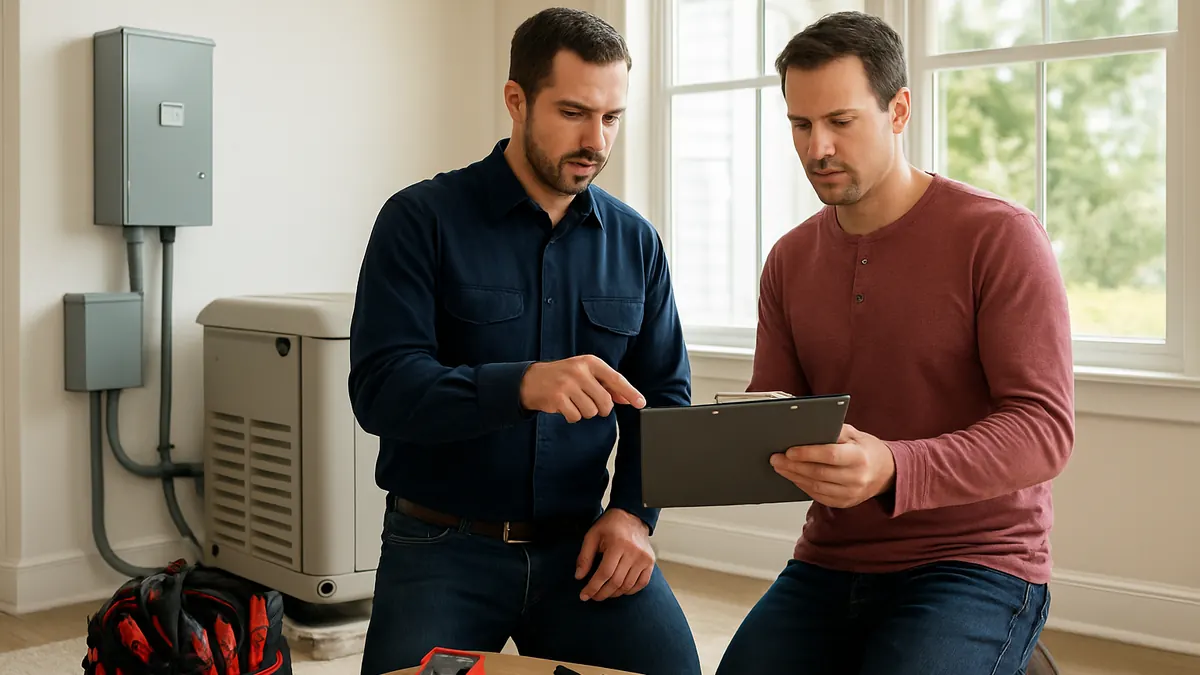
Do not remove an electrical panel cover, touch exposed conductors, bypass protection, or repeatedly reset a fault. Keep clear of smoke, sparks, burning odors, hot equipment, standing water near electricity, and downed lines, then call qualified help.
The power goes out, the air conditioner stops, and someone in the house needs a refrigerator kept cold for medication. You may also need internet service, lights, a garage-door opener, and enough receptacles to charge phones. The safest immediate action is to turn off nonessential appliances, keep refrigerator and freezer doors closed, and avoid opening the electrical panel or attempting to connect a portable generator to the home's wiring.
What size standby generator does your home need in Panama City? The correct answer depends on the electrical equipment you want to operate during an outage, the brief starting demand of motors, and whether the system will support selected circuits or most of the home. A generator should not be chosen from square footage, the main-breaker size, or another homeowner's installation.
Begin With a Realistic Outage Plan
Before calculating generator capacity, decide what the home must be able to do when utility power is unavailable.
For one household, the priority may be one central air conditioner, refrigeration, lights, internet equipment, a television, and several receptacles. Another homeowner may also need an electric water heater, medical equipment, a home office, a second HVAC system, or cooking appliances.
Separate the list into three groups:
- Equipment that must operate
- Equipment you would prefer to operate
- Equipment that can remain off
This prevents two common mistakes: buying more capacity than the home needs or overlooking a critical circuit that should have been included.
The Most Common Reasons Generator Sizing Goes Wrong
Air-Conditioning Startup Is Underestimated
An air conditioner does not use the same amount of power at every moment. Its compressor draws normal running current after it starts, but it may need a much larger burst of power during startup.
A generator can appear large enough when only running watts are added together and still stall when the compressor starts. Severe light dimming, repeated generator shutdowns, and output-breaker trips can all result.
Too Many Electric Appliances Are Expected to Run Together
Electric water heaters, clothes dryers, ranges, ovens, auxiliary heat strips, pool equipment, and EV chargers can consume large portions of generator capacity.
The generator may be able to run each appliance separately but not several at the same time. Automatic load management may be needed to establish priorities.
The Service Rating Is Mistaken for Actual Demand
A 200-amp main breaker does not mean a home requires a generator capable of supplying the full 200 amps. The service rating represents the electrical system's maximum capacity, while generator sizing is based on calculated backup demand.
Safe Checks a Homeowner Can Perform
Make a written list of major equipment and note whether each appliance uses electricity or gas. Include every HVAC system, water heater, refrigerator, freezer, range, dryer, pump, medical device, and EV charger.
Photograph visible equipment labels without removing panels or covers. The outdoor HVAC label may provide voltage, current, model information, and data relevant to compressor startup.
If you already have a standby generator, record the exact fault code and what was operating when the failure occurred. Note whether the problem begins immediately after transfer or several minutes later when another appliance cycles on.
What the Homeowner Should Not Attempt
Never connect a portable generator through a dryer outlet, range outlet, or ordinary receptacle. This can send power backward through the home's wiring and potentially onto utility lines.
Do not install a larger generator breaker to prevent tripping. The breaker is protecting conductors and equipment. Increasing its rating without redesigning the system can create overheating and fire hazards.
Do not bypass load-shedding controls, alter transfer-switch wiring, change grounding connections, or adjust fuel regulators.
Never operate a portable generator in a garage, carport, porch, shed, or other partly enclosed area. Carbon monoxide cannot be seen or smelled. A carbon-monoxide alarm should be treated as an emergency, not as a nuisance warning.
Signs That Make Generator Trouble Urgent
Move away and call emergency services if there is fire, heavy smoke, visible arcing, a strong fuel odor, or an activated carbon-monoxide alarm.
Everyone should leave the building and move into fresh air if anyone develops headache, dizziness, nausea, weakness, unusual sleepiness, or confusion while a generator is operating.
Prompt electrical service is also required when the generator repeatedly stalls, the output breaker trips, lights flicker severely, appliances restart continuously, or the transfer switch rapidly switches back and forth.
How a Licensed Electrician Determines the Correct Size
The electrician begins by identifying the loads requested for backup. Large fixed appliances and motors receive particular attention.
A residential load calculation estimates the amount of power likely to be used at the same time. The electrician then evaluates motor-starting demand separately, especially for air-conditioning compressors, pumps, and refrigeration equipment.
Next, the electrician determines whether essential-circuit backup, managed whole-home backup, or another arrangement fits the homeowner's priorities. Essential-circuit systems supply a defined group of circuits. Managed whole-home systems may connect a larger portion of the home but temporarily delay lower-priority loads.
The service equipment, panels, transfer switch, disconnects, grounding and bonding, conductor sizes, and generator location are inspected. Bonding means electrically connecting metal components so fault current can travel through a safe path and operate the appropriate protective device.
Fuel capacity must also be verified. After installation or repair, the system should be tested during transfer, under realistic load, and while the largest motor starts.
Repair and Upgrade Options, Starting With the Least Invasive
The least invasive solution may be changing the backup-load list. Removing an EV charger, dryer, second air conditioner, or electric water heater from generator operation can restore adequate capacity.
The next option may be approved load-management equipment. These controls temporarily disconnect lower-priority loads when demand is high and reconnect them after capacity becomes available.
A compatible soft-start device may reduce the startup demand of certain air-conditioning compressors. It must be selected for the specific HVAC equipment and does not reduce the running demand of the rest of the home.
If the generator previously worked correctly, targeted repair may be more appropriate than replacement. Possible corrections include battery replacement, fuel-system service, engine maintenance, wiring repair, control-module replacement, or transfer-switch repair.
Generator replacement becomes reasonable when essential loads exceed the unit's usable capacity or the equipment is obsolete, unreliable, severely damaged, or difficult to support.
Typical Factors That Affect Cost
Installation cost is influenced by generator capacity, transfer-switch size, selected-circuit versus whole-home design, number of managed loads, panel condition, fuel source, fuel-line work, equipment placement, trenching, conductor distance, mounting requirements, access, and permitting.
Prevention and Maintenance Guidance
Follow the maintenance schedule for the exact generator model. Typical service may include oil and filter changes, battery testing, spark-plug replacement where applicable, cooling-system checks, electrical inspections, and transfer-switch testing.
Keep vegetation, debris, and stored objects away from the enclosure. Airflow is necessary for cooling. Watch for corrosion, damaged wiring, insect activity, unusual vibration, fluid leaks, and abnormal sounds.
Request another capacity review whenever you add major electrical equipment.
Base the Decision on the Home's Actual Loads
What size standby generator does your home need in Panama City? It needs enough running capacity for the equipment you intend to use, sufficient reserve for motor startup, a properly designed transfer system, and adequate fuel delivery. A licensed evaluation can show whether the right solution is selected-circuit backup, load management, repair of an existing system, or a larger generator.
About this guide: This resource provides general homeowner education, not a remote diagnosis. Actual conditions, code requirements, equipment, and safe repair options must be evaluated at the property.