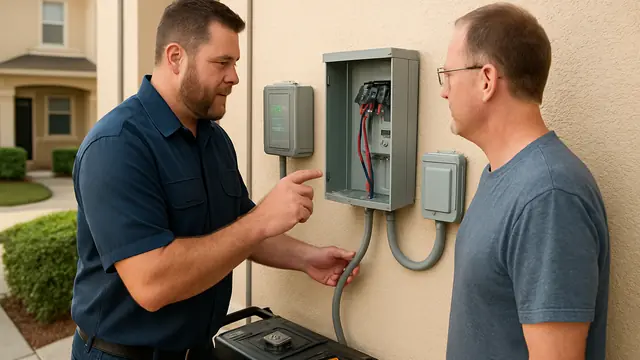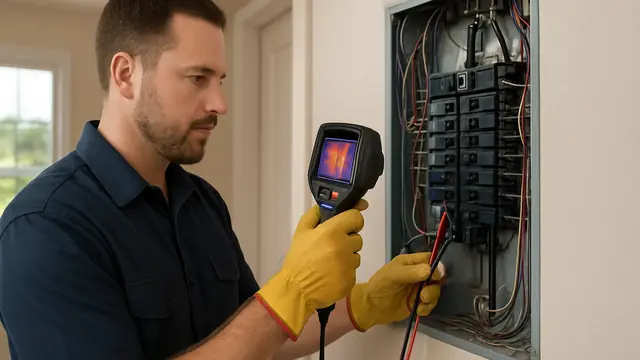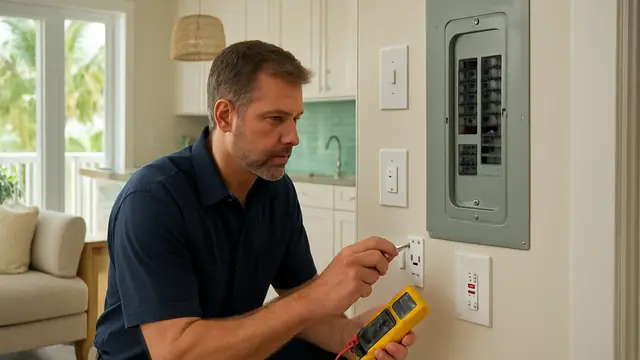
Do not remove an electrical panel cover, touch exposed conductors, bypass protection, or repeatedly reset a fault. Keep clear of smoke, sparks, burning odors, hot equipment, standing water near electricity, and downed lines, then call qualified help.
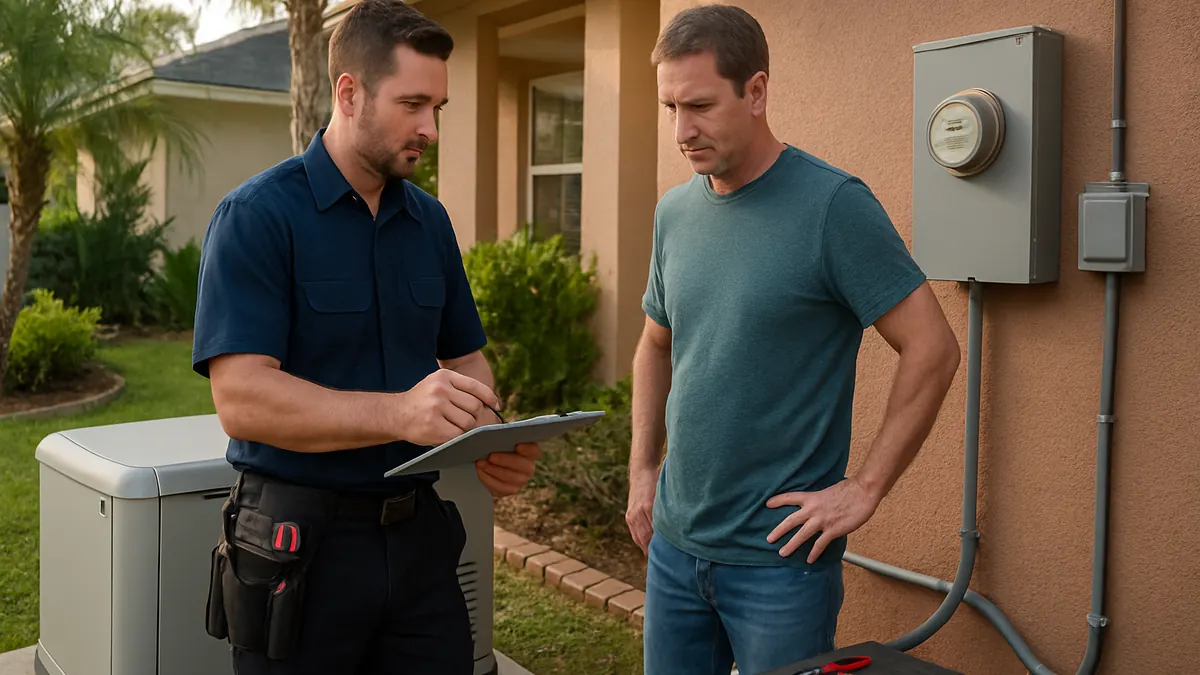
You are comparing standby generators and see models with very different power ratings. One salesperson suggests sizing from the home's square footage, while another says to match the generator to the main breaker. Meanwhile, your real concern is simple: you want cooling, refrigeration, lights, and necessary appliances to keep working when utility power fails. The safe first step is to list those priorities and leave panel inspections, wiring changes, and generator connections to qualified professionals.
What size standby generator does your home need in Parker? The correct generator is the one that can support the home's planned backup load, start the largest motors, and operate safely with the transfer switch and fuel system. It may not need to power every circuit, and it should not be chosen from a single rule of thumb.
Three Questions That Define the Correct Generator
Which Equipment Must Remain Operational?
Start with safety and basic comfort. Refrigeration, selected lighting, communications equipment, security systems, receptacles, and air conditioning are common priorities.
Which Large Loads Might Run at the Same Time?
A generator must support realistic simultaneous demand. The air conditioner may be running when the water heater turns on. A refrigerator compressor may start while another motor is already operating.
Which Loads Can Be Delayed Automatically?
An EV charger, electric dryer, second HVAC system, or other optional load may be assigned a lower priority. Automatic controls can temporarily disconnect it rather than allowing the generator to overload.
The Most Common Generator-Sizing Errors
Adding Every Breaker Rating
Branch breakers are sized to protect individual circuits. Adding their ratings together greatly overstates normal household demand because every circuit does not operate at maximum load simultaneously.
Ignoring Motor-Starting Current
Motors in air conditioners, pumps, refrigerators, and freezers need a short burst of extra power to start. A generator that can carry the normal running load may still fail during this startup period.
Overlooking Electric Resistance Loads
Electric water heaters, ranges, dryers, ovens, and auxiliary heat strips may not have a large motor surge, but they can use substantial continuous power.
Replacing Equipment Before Checking Maintenance and Fuel
Poor generator performance does not always mean inadequate size. Fuel restrictions, weak batteries, overdue service, loose conductors, and transfer-switch faults can reduce available output.
Safe Checks You Can Complete Without Removing Covers
Write down the loads you consider essential, preferred, and optional. Be specific. "Kitchen" is not a load; the refrigerator, freezer, microwave, range, and receptacles should be considered separately.
Photograph visible labels on the HVAC outdoor unit, water heater, dryer, range, and other large equipment. Do not open electrical or appliance covers.
Note which major appliances use electricity and which use another fuel. This changes the calculated backup demand.
If an existing generator is having trouble, record the controller's exact message and the timing. Did it fail as soon as power transferred, when the air conditioner started, or later when hot water or laundry equipment was used?
What a Homeowner Should Never Attempt
- Never plug a portable generator into a household outlet to energize the panel. This unsafe practice can backfeed electrical wiring and utility lines.
- Do not increase a breaker or fuse size because the generator trips. The protective device may be responding to overload or a fault.
- Do not bypass a load-shedding module. If an appliance shuts off temporarily during generator operation, the control may be preserving power for higher-priority circuits.
- Do not open the automatic transfer switch or work on generator output conductors. More than one electrical source may be present.
- Fuel piping, regulators, grounding connections, control boards, and generator programming should not be modified by an unqualified person.
- Never operate portable generation equipment indoors or in a garage, porch, carport, or shed. Maintain working carbon-monoxide alarms and treat an alarm as an immediate emergency.
Warning Signs That Make the Situation Urgent
Call emergency services and move away for fire, heavy smoke, visible electrical arcing, a strong fuel odor, or an activated carbon-monoxide alarm.
If anyone develops headache, dizziness, nausea, weakness, confusion, or unusual drowsiness while a generator is operating, move everyone into fresh air and seek emergency help.
Prompt professional service is required for severe light flicker, repeated breaker trips, transfer-switch chattering, generator stalling, appliances cycling on and off, burning odors, melted insulation, fluid leaks, or abnormal mechanical noise.
How a Licensed Electrician Diagnoses Capacity and Performance
The electrician begins with the intended backup plan. Each major appliance, HVAC system, motor, and special load is identified.
A calculation estimates normal simultaneous demand. The electrician then reviews compressor and motor-starting requirements separately. This step may determine whether the generator can start the air conditioner without an excessive voltage drop.
The electrician evaluates the service equipment, electrical panels, transfer switch, conductor sizes, breakers, grounding and bonding, and generator connections. Existing load-management controls are tested for correct priority and operation.
For a generator that previously worked, the technician investigates whether performance has declined. Testing may include battery condition, voltage, frequency, fault history, transfer operation, and response to a controlled load.
The fuel system must be evaluated by an appropriately qualified professional. A generator cannot produce rated electrical output if fuel pressure or flow is inadequate.
Repair and Upgrade Options Beginning With the Least Invasive
The simplest option may be removing nonessential circuits from generator operation. An electric dryer, EV charger, second air conditioner, or other large optional load can significantly affect total demand.
Approved load-management controls may be added, repaired, or reprogrammed. These controls allow important loads to continue operating while delaying lower-priority equipment.
A compatible air-conditioner soft-start device may reduce startup demand. It must be evaluated for the exact HVAC system and does not reduce the running wattage of other appliances.
Targeted repairs may restore an existing generator that has lost performance. Possible work includes battery replacement, engine maintenance, fuel-system correction, damaged-wiring repair, control-module replacement, or transfer-switch service.
A larger generator is considered after the required load, motor startup, load-management options, fuel capacity, and condition of the existing equipment have been evaluated.
Typical Factors That Affect Cost
Generator cost is influenced by power output, transfer-switch type, essential-load versus broader backup design, number of load controls, panel condition, fuel source, fuel-line work, installation location, mounting surface, trenching, electrical distance, access, and permitting.
Prevention and Maintenance Guidance
Follow the service schedule for the exact generator model. Maintenance commonly includes oil and filter changes, battery testing, ignition-system service where applicable, electrical inspections, airflow checks, and transfer-switch testing.
Keep the enclosure area clear. Look for debris, vegetation, corrosion, insect activity, damaged wiring, or fluid leakage.
Do not rely only on the automatic exercise cycle. The engine may start successfully with little or no load and still fail when the air conditioner or another large appliance begins operating.
Arrange a capacity review before installing major new electrical equipment, replacing HVAC systems, or converting gas appliances to electricity.
Select Capacity Through Calculation, Not Guesswork
What size standby generator does your home need in Parker? It needs enough power for the household's planned backup loads, enough reserve for motor startup, and properly coordinated transfer, protection, load management, and fuel delivery. A professional evaluation helps avoid both an undersized system that repeatedly trips and an unnecessarily large installation that does not match the home's actual priorities.
About this guide: This resource provides general homeowner education, not a remote diagnosis. Actual conditions, code requirements, equipment, and safe repair options must be evaluated at the property.