Do not remove an electrical panel cover, touch exposed conductors, bypass protection, or repeatedly reset a fault. Keep clear of smoke, sparks, burning odors, hot equipment, standing water near electricity, and downed lines, then call qualified help.
A breaker never trips, the lights stay on, and the whole-home surge protector may still show a normal indicator. Yet after a power disturbance, the microwave display is blank, the garage-door opener has stopped working, and the air conditioner is showing a control fault. For a Parker homeowner, this can be confusing because surge damage does not always look like a complete loss of electricity.
The safe first step is to unplug malfunctioning equipment and stop using anything that smells burned, feels hot, makes crackling sounds, or has visible discoloration. Do not remove the electrical panel cover or repeatedly reset breakers. If several unrelated devices changed at the same time, have a licensed electrician determine whether the cause was a voltage surge, loose neutral, damaged connection, or another electrical fault.
Whole-home surge protection helps reduce voltage spikes before they reach circuits across the house. It is designed to limit damage, not make the electrical system invulnerable.
What Whole-Home Surge Protection Actually Protects
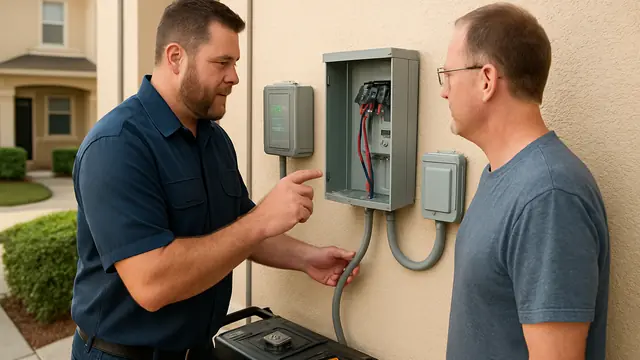
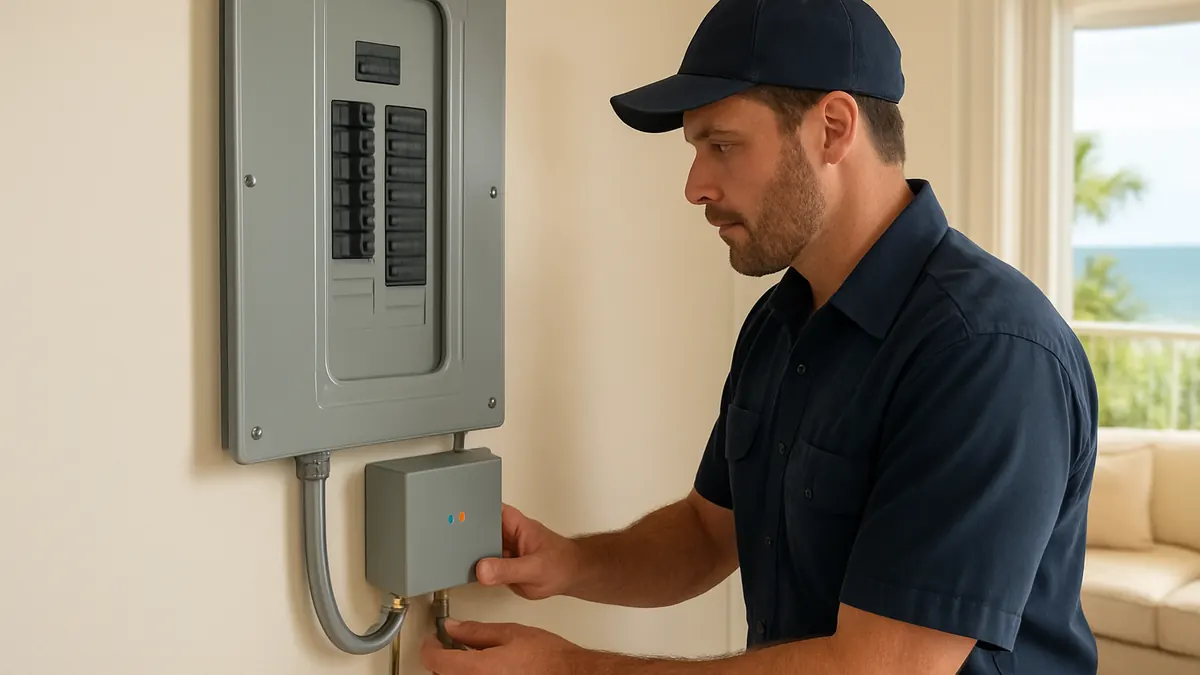
A whole-home surge protective device is connected at the main electrical panel or service equipment. When voltage rises sharply for a very short time, the device provides a path that redirects much of the excess energy toward the grounding system.
It can help protect:
- Central air-conditioning equipment, heat pumps, thermostats, and control boards
- Refrigerators, freezers, dishwashers, ranges, washers, and dryers
- Televisions, computers, monitors, printers, routers, and chargers
- Security systems, cameras, smart doorbells, and electronic locks
- Garage-door openers, ceiling fans, dimmers, and LED lighting components
- Water-heater controls, pumps, and other hardwired electrical equipment
Communication lines such as cable, telephone, satellite, antenna, and data may require separate protection.
Why a Breaker May Not Trip During a Surge
A circuit breaker and a surge protector respond to different problems. A breaker is mainly designed to open when too much current flows for too long or when a short circuit occurs. A voltage surge may last only a fraction of a second, which can be too brief to trip a standard breaker.
That short event can still damage a circuit board, power supply, sensor, or digital display. This is why equipment may fail while the breaker remains in the on position.
Common Causes of Voltage Surges
- Lightning is a familiar source, but a direct strike is not required. A nearby strike can induce voltage on utility or communication lines.
- Utility switching and power restoration can also create short voltage transients.
- Surges can begin inside the home when compressors, motors, pumps, or other large loads turn on and off.
Some conditions that resemble surge damage are not surges at all. A loose neutral can create high voltage on some circuits and low voltage on others. Damaged service conductors, poor grounding, loose panel connections, and failing breakers can also affect multiple devices. These problems require repair, not only added surge protection.
Safe Checks the Homeowner Can Perform
Note which devices failed and whether the issue followed a storm, outage, utility interruption, or startup of a large appliance.
Inspect visible plugs, cords, receptacle faces, and equipment housings. Look for melted plastic, dark marks, cracks, or a burned odor. Leave damaged equipment disconnected.
If the property already has a whole-home surge protector, check only the external indicator. Do not remove the panel cover. Follow the labeling for that model because indicator meanings vary.
Check plug-in protectors for a "protected" indicator. A strip may still provide ordinary power after its protective components have failed.
A standard breaker may be reset once if it is not hot, damaged, buzzing, or associated with wet equipment. If it trips again, leave it off.
What You Should Not Attempt
Do not install or replace a panel-mounted surge protector yourself unless you are qualified.
Do not tighten panel connections, move breakers, or create space using unapproved arrangements. The protector must be compatible with the panel and connected according to its listing.
Do not replace a tripping breaker with a larger breaker. The breaker protects circuit wiring from excessive current.
Do not create an improvised grounding connection. Surge protection relies on correct grounding and bonding, and a convenient metal object is not an acceptable substitute.
Signs That Make the Situation Urgent
Prompt service is important when several devices fail after one event or the protector shows a fault.
Urgent warning signs include burning odors, smoke, sparks, visible arcing, buzzing or crackling from the panel, melted receptacles, a hot panel cover, breakers that trip immediately, or a tingling sensation from an appliance.
Lights that become unusually bright in one part of the home and dim in another can indicate a loose neutral. This condition can expose equipment to excessive voltage and should be evaluated quickly.
If smoke or fire is present, leave the area and contact emergency services. Do not touch the panel or attempt to disconnect equipment in a hazardous area.
How a Licensed Electrician Diagnoses the Problem
The electrician begins with the event history and identifies whether failures involve one circuit or the broader service.
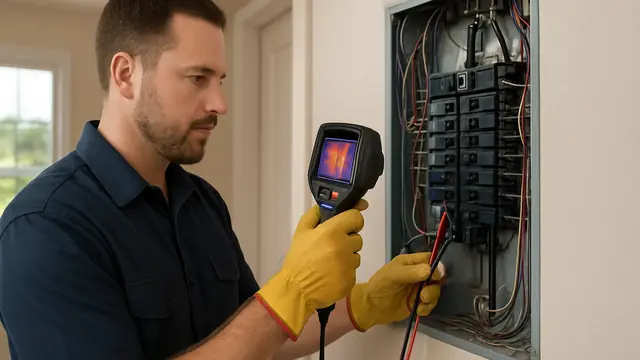
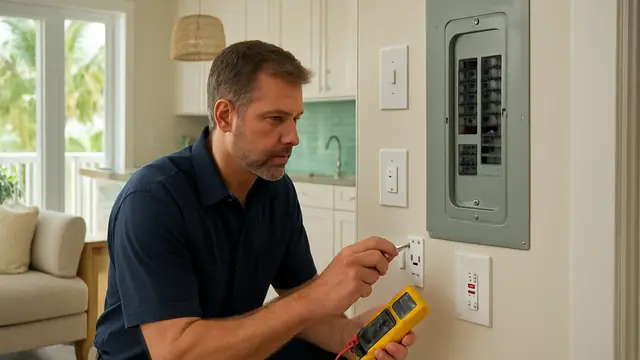
Testing may include incoming voltage, neutral stability, panel connections, breakers, grounding, bonding, and affected circuits. The electrician looks for overheating, loose conductors, corrosion, improper wiring, or evidence of arcing.
An existing surge protector is checked for its status, rating, breaker connection, compatibility, and conductor routing. Short, direct conductors generally allow the device to limit voltage more effectively.
Repair Options Beginning With the Least Invasive
- When testing shows stable voltage and only one plug-in protector has failed, replacing that protector may be the simplest reasonable option.
- If a whole-home device has exhausted its protective capacity, the electrician may replace only that unit.
- If the home has no panel-level protection, a compatible breaker-mounted or externally mounted device may be added.
- Loose neutrals, grounding defects, damaged breakers, overheated conductors, or unsafe connections should be corrected. A new surge protector cannot compensate for those problems.
Panel replacement may be appropriate when the existing equipment is unsafe, severely damaged, obsolete, heavily corroded, or unable to accept a compliant installation. It should be the result of documented conditions, not the first recommendation in every case.
Factors Affecting Cost
Cost depends on the surge device's type and rating, the panel brand and condition, available breaker space, accessibility, installation method, grounding and bonding condition, permitting, and related repairs.
A clear estimate should distinguish required safety work from optional protection upgrades.
Prevention and Maintenance Guidance
- Use layered protection. Whole-home protection works at the panel, while point-of-use protectors add defense for sensitive electronics.
- Check status indicators regularly and after storms or outages. Replace a plug-in protector when its protection light goes out, even if the connected equipment still receives power.
- Keep the panel dry and accessible. Schedule an inspection for recurring flickering, unexplained failures, buzzing, overheating, or breaker trips.
Reduce the Risk Before the Next Voltage Event
What does whole-home surge protection actually protect in Parker? It helps protect HVAC controls, appliances, lighting components, smart-home equipment, televisions, computers, internet hardware, and other devices connected through the electrical panel.
When several systems fail together, do not assume that replacing the damaged equipment is enough. An electrician should confirm that voltage, neutral connections, grounding, breakers, and the surge protector are operating correctly before new equipment is connected.
About this guide: This resource provides general homeowner education, not a remote diagnosis. Actual conditions, code requirements, equipment, and safe repair options must be evaluated at the property.