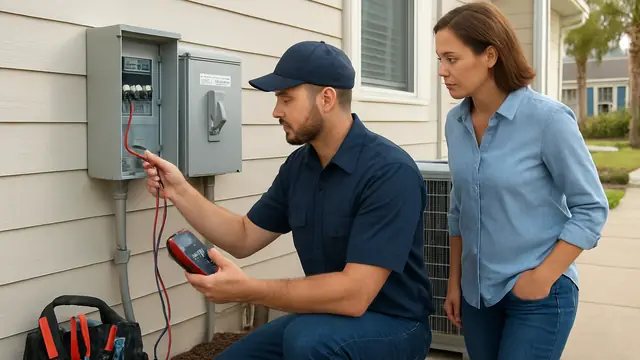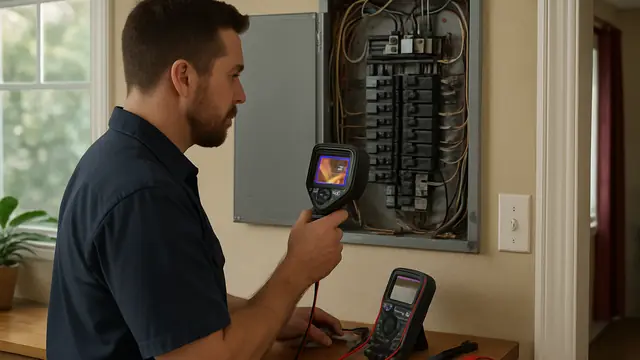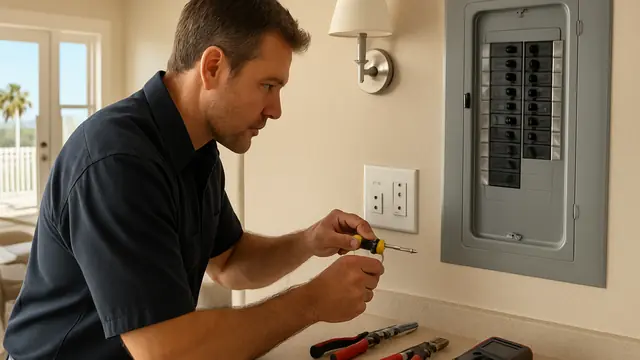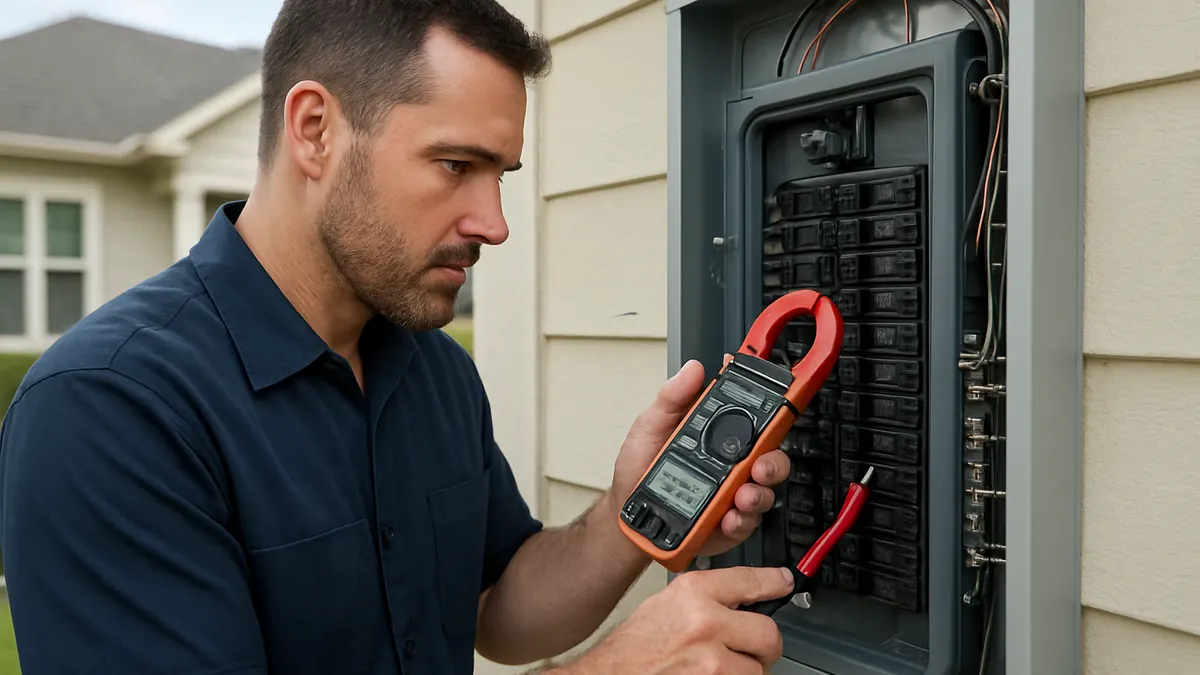
Do not remove an electrical panel cover, touch exposed conductors, bypass protection, or repeatedly reset a fault. Keep clear of smoke, sparks, burning odors, hot equipment, standing water near electricity, and downed lines, then call qualified help.
The breaker trips while you are using a vacuum, microwave, portable heater, or power tool. You reset it and power returns, but the same circuit opens again later. After a few trips, you may begin avoiding certain outlets or using extension cords to work around the problem.
A breaker that keeps tripping is not merely inconvenient. It is interrupting power because electrical current or a fault condition may be placing the wiring and connected equipment at risk. Unplug or turn off devices on the affected circuit, reset the breaker only once, and leave it off if it trips again.
Why Does My Circuit Breaker Keep Tripping in Springfield?
The most common explanations are overload, a defective appliance, a short circuit, a ground fault, electrical arcing, a loose connection, or a worn breaker.
A delayed trip often points toward overload or heat buildup. A breaker that trips instantly may be responding to a short circuit. A trip that follows one appliance or switch gives the electrician a useful starting point.
Overloads Happen When the Circuit Is Asked to Do Too Much
A branch circuit carries a limited amount of current. Portable heaters, hair dryers, cooking appliances, vacuums, compressors, and tools can push demand beyond that limit.
The circuit may work with one device but trip when several run together. A delayed trip can occur as sustained current creates heat. Reducing the load may stop the immediate shutdown, but recurring overloads mean the circuit arrangement should be evaluated.
One Appliance Can Cause Repeated Trips
Motors, heating elements, internal wiring, and cords can deteriorate. A washer may trip during spinning, a microwave while heating, or a refrigerator when its compressor starts.
Stop using any appliance that repeatedly opens the breaker. Moving it to another outlet is not safe because the equipment defect remains.
What a Short Circuit Means
A short circuit occurs when conductors that should remain separated make unintended contact. This creates a low-resistance path, causing electrical current to increase rapidly.
The breaker may trip immediately when reset or when a specific switch or appliance is turned on. Possible sources include damaged cords, burned outlets, failed switches, light fixtures, loose wires, appliances, junction boxes, and concealed cable.
Repeatedly energizing a short circuit can worsen heat damage and should be avoided.
Ground Faults Can Create Shock Hazards
A ground fault happens when electricity leaves its normal path and travels toward grounded metal, moisture, or another unintended route.
GFCI devices compare the current leaving and returning on a circuit. If there is an imbalance, they shut off power quickly.
Ground faults can develop in outdoor equipment, kitchen or bathroom devices, laundry appliances, pumps, cords, and damaged electrical boxes. A device that was exposed to water should be evaluated even if it later appears to operate normally.
Loose Connections and Arc-Fault Trips
- Electricity should flow through secure metal-to-metal connections. When a terminal, splice, outlet, or plug becomes loose, resistance and heat can develop.
- Electricity may begin jumping across the gap, producing arcing. An AFCI breaker can detect patterns associated with this condition and shut off the circuit.
- Arc faults can be intermittent. Movement, vibration, or temperature changes may make the breaker trip only occasionally, which is why apparently random trips should not be ignored.
Safe Checks You Can Perform
Identify the rooms, outlets, lights, and appliances that lost power. Turn off switches and unplug portable devices.
With dry hands and a dry panel, move the breaker fully to OFF and then ON. If it holds, reconnect devices individually and wait for motors or heaters to cycle. Stop using anything that triggers another trip.
Inspect accessible cords, plugs, switches, and outlets for cuts, crushed insulation, melting, discoloration, looseness, heat, or odor. Check nearby GFCI receptacles because one may protect outlets elsewhere.
What You Should Not Do
Do not keep resetting the breaker; each reset reenergizes the unresolved problem.
Never install a larger breaker. Its rating protects the circuit wiring, and oversizing can permit overheating.
Do not remove the panel cover, replace breakers, open outlets, or perform live testing unless qualified. Never bypass AFCI or GFCI protection or use power strips and extension cords as permanent wiring.
When the Situation Is Urgent
Turn the breaker off and arrange prompt electrical service if you notice:
- A burning or melting odor
- Smoke, sparks, or visible arcing
- Scorched outlets, switches, or panel components
- Buzzing, sizzling, or crackling
- A hot breaker, outlet, cord, switch, or appliance
- A shock or tingling sensation
- Water near electrical equipment
- Immediate tripping with accessible devices unplugged
If there is active smoke or fire, leave and call emergency services. Never use water on energized equipment.
How a Licensed Electrician Diagnoses the Problem
The electrician reviews what was operating and how quickly the trip occurred. Breaker type, rating, panel compatibility, wire size, and current draw are checked.
The circuit may be divided into sections while outlets, switches, fixtures, junctions, appliances, and hardwired equipment are tested. Connections are inspected for looseness, heat, moisture, damaged insulation, and improper splices. AFCI and GFCI devices are also evaluated so the cause is identified before parts are replaced.
Repair Options From Least Invasive to More Extensive
The simplest repair may involve removing a defective appliance, replacing a damaged cord, tightening a loose terminal, or replacing one failed outlet, switch, fixture, GFCI, or breaker.
- If overload is confirmed, loads may be redistributed. A dedicated circuit may be added for equipment that draws substantial current.
- Localized cable damage may be repaired when accessible. Concealed or widespread damage may require limited wall access or more extensive rewiring.
- Panel replacement is considered only when the panel itself has documented damage, unsuitable components, insufficient capacity, or other safety deficiencies.
Factors That Influence Repair Cost
Cost depends on diagnostic time, breaker type, panel condition, device count, wiring access, permits, materials, and any new circuit route. A repeatable appliance fault is generally easier to locate than an intermittent problem.
The electrician should explain the failure and the options that address it.
Preventing Future Circuit Breaker Trips
Avoid operating several high-wattage devices on one circuit. Replace damaged cords, loose plugs, and worn receptacles promptly.
Keep exterior outlet covers secured and address moisture intrusion quickly. When adding appliances or equipment, confirm that the existing circuit can support the added load.
Do not make extension cords or power strips part of the permanent electrical setup. Periodic inspection can identify overheated connections, overloaded circuits, and worn protective devices before they cause repeated shutdowns.
Fix the Cause Instead of Working Around It
When you ask, "Why does my circuit breaker keep tripping in Springfield?" avoid temporary workarounds that keep reenergizing the problem. Unplug connected loads, reset the breaker once, and leave it off if it trips again. A licensed electrician can determine whether the cause is overload, equipment failure, damaged wiring, arcing, moisture, or a defective breaker and recommend the least invasive safe solution.
About this guide: This resource provides general homeowner education, not a remote diagnosis. Actual conditions, code requirements, equipment, and safe repair options must be evaluated at the property.