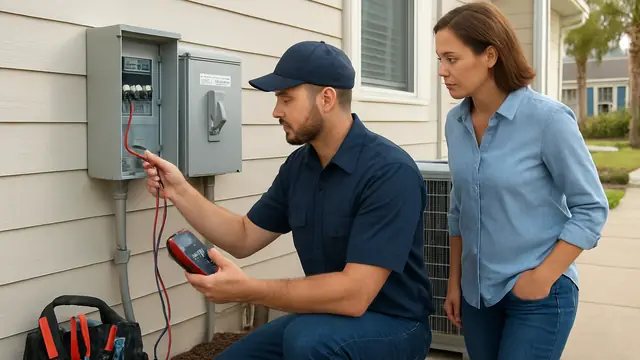
Do not remove an electrical panel cover, touch exposed conductors, bypass protection, or repeatedly reset a fault. Keep clear of smoke, sparks, burning odors, hot equipment, standing water near electricity, and downed lines, then call qualified help.
You turn on the hallway light in your Springfield home and it flashes before staying on. Later, the kitchen lights dim when the microwave runs, and a bedroom lamp flickers even after you install a new bulb. Recurring flickering shows that a bulb, device, circuit, appliance, or service connection is not operating steadily.
Begin by identifying where and when it happens. Turn off any fixture, appliance, or circuit that smells burned, feels hot, buzzes, crackles, sparks, smokes, or shows discoloration. Check only a cooled bulb or unplugged portable appliance; do not open the panel or remove devices. Widespread flickering, unusually bright lights, or partial power loss requires prompt professional attention.
Why Are My Lights Flickering in Springfield?
Flickering occurs when the electrical path to a light is interrupted or voltage changes rapidly. A slight dip when a large motor starts may occur without indicating a major defect. Repeated pulsing, flashing without an obvious load, or lights becoming bright and dim is different.
One light usually suggests a bulb, socket, switch, cord, or fixture. Several lights in one area may share a circuit or loose connection. Flickering throughout the home can involve the panel, neutral conductor, service entrance, or utility supply.
Common Reasons Lights Flicker
A Defective Bulb or Loose Socket Contact
A bulb can loosen as it heats and cools. LED bulbs can also develop failing internal electronics. If a known-good bulb flickers in the same fixture, the socket, control, or wiring becomes more likely.
A Worn Wall Switch
Switch contacts wear with use. A switch that feels loose, makes a crackling sound, or causes flickering when moved may need replacement. Continuing to use a damaged switch can allow heat to build.
A Dimmer Compatibility Problem
An LED bulb and dimmer must be designed to work together. An incompatible combination may flicker at low settings, flash when first turned on, hum, or dim unevenly.
A Loose Receptacle or Splice
A light can be affected by a connection elsewhere on the circuit. Receptacles, switches, and junction boxes may feed other devices downstream. A loose wire at one point can interrupt power to several lights.
A Circuit Under Heavy Load
Hair dryers, countertop appliances, portable heaters, vacuums, and window air conditioners can use much of a circuit's capacity. Lights may dim when one starts, especially when a connection is weak.
A Motor-Driven Appliance Problem
Air conditioners, refrigerators, pumps, and similar equipment need extra current during startup. If a motor or starting component is failing, the high current may last longer and cause severe dimming.
A Neutral, Breaker, or Service Fault
A loose neutral can make some lights dim while others become bright. Loose breaker connections, damaged panel parts, service conductors, or utility connections can also cause widespread flickering.
Safe Checks You Can Make
Record which lights are affected, how long the flicker lasts, and which appliances are operating. Note whether clocks reset or electronics turn off.
For one fixture, turn it off and let the bulb cool. Confirm that it is fully seated, within the fixture's wattage limit, and suitable for the fixture. Replace it with a known-good bulb. If a dimmer is installed, test at full brightness and confirm that the bulbs are dimmable.
Unplug nonessential portable appliances from the suspected circuit. Operate one at a time and observe whether a particular device triggers the flicker. Look at cords, plugs, switches, and cover plates for scorch marks, melting, or looseness without removing anything.
Ask whether nearby homes have the same problem. A shared issue may involve the utility.
What the Homeowner Should Not Attempt
Do not remove the panel cover or meter enclosure. Portions of the service can remain energized even when the main breaker is off.
Do not pull a switch, receptacle, or fixture from its box. Do not tighten panel lugs, neutral terminals, or breaker connections yourself.
Never install a higher-amperage breaker to prevent tripping or dimming. Do not repeatedly reset a breaker after flickering, bypass switches, or use extension cords as permanent wiring.
Signs That Make Flickering Urgent
Contact an electrician promptly if the symptom affects multiple rooms, begins suddenly, becomes more severe, or continues without a large appliance operating. Lights becoming much brighter than normal may indicate an unstable neutral.
Urgent warning signs include a burning odor, warm switch, hot panel, buzzing breaker, crackling in a wall, scorched devices, smoke, sparks, partial power loss, repeated trips, or electronics restarting.
Turn off the affected circuit only if it is clearly identified and safe to operate. If you see fire, smoke, or active arcing, leave the home and call emergency services. Never handle wet electrical equipment.
How a Licensed Electrician Diagnoses the Cause
The electrician determines whether the fault is local to one fixture, shared by a circuit, or present at the service. Inspection may begin with the bulb, socket, switch, dimmer, receptacles, and junction points.
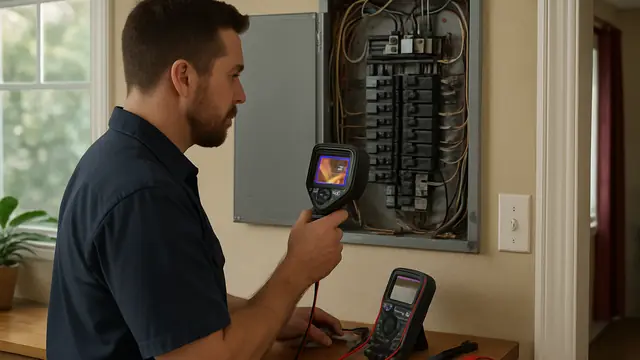
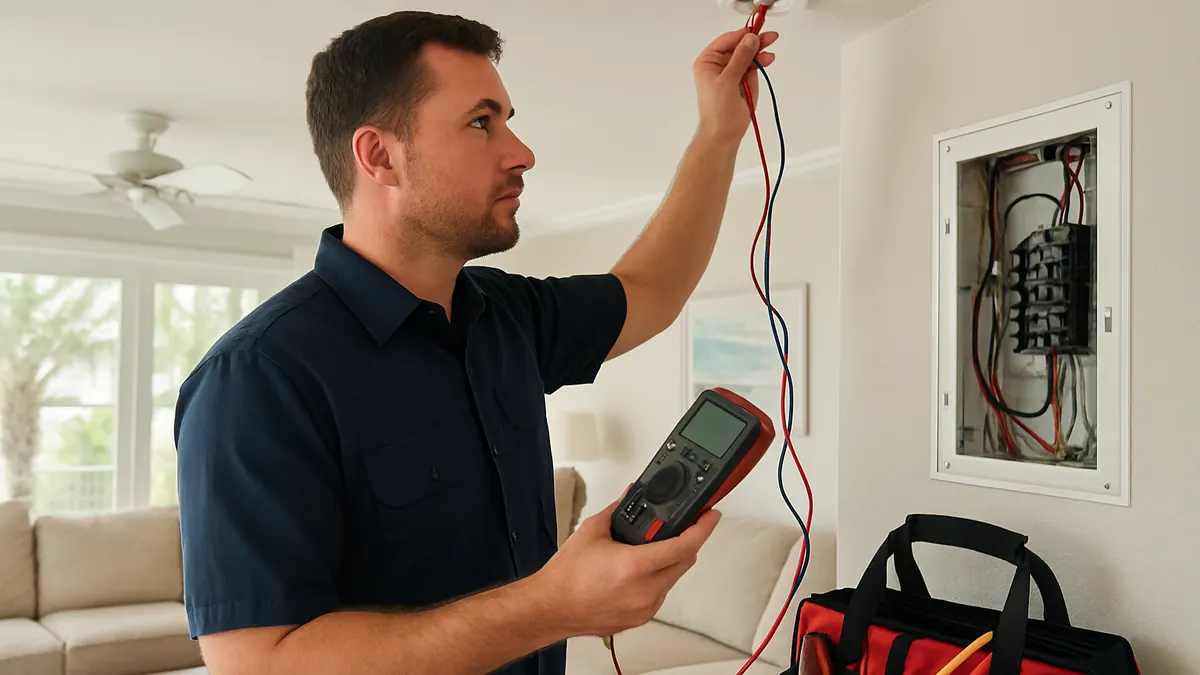
Voltage measurements show whether the supply stays stable. Current testing identifies heavily loaded circuits or equipment drawing abnormal current. Voltage-drop testing can locate resistance at a loose connection.
The electrician then checks breakers, conductor terminations, neutral connections, grounding, panel condition, and evidence of overheating. Service testing helps determine whether utility involvement is necessary.
Repair Options Starting With the Least Invasive
A simple repair may be replacing a failing bulb, installing a compatible dimmer, replacing a worn switch, repairing a socket, or removing a damaged lamp from service.
If an accessible splice, receptacle, or fixture connection is loose, the electrician can de-energize the circuit and reconnect it properly. Heat-damaged devices or wire ends may need replacement.
For a heavily loaded circuit, the first step may be moving portable devices. A dedicated circuit may be added when equipment needs one. If an appliance is drawing excessive startup current, appliance or HVAC repair may correct the dimming.
A damaged breaker may be replaced when the panel bus is sound. Panel replacement is considered when internal damage, unsafe equipment, widespread overheating, or inadequate capacity makes a limited repair unsuitable.
Typical Factors Affecting Cost
Cost depends on the failed component, access, and diagnostic time. Replacing a visible switch is different from tracing an intermittent connection through several boxes.
Other factors include the circuits involved, panel condition, conductor damage, appliance testing, permits, utility coordination, and whether a new circuit is required.
Prevention and Maintenance Guidance
- Use bulbs approved for the fixture, enclosure, wattage limit, and dimmer. Replace loose switches, worn receptacles, damaged cords, and fixtures that operate intermittently.
- Avoid running several high-current appliances on one circuit. Have major loads placed on properly sized circuits and keep the panel directory accurate.
- Do not ignore recurring buzzing, warm cover plates, dimming, or breaker trips. Have new symptoms evaluated after renovations, appliance additions, or major power interruptions.
Homeowner FAQs
Why Do My Lights Flicker When I Use the Microwave?
The microwave may share a circuit with the lights, or its load may expose a loose connection. Severe dimming should be checked.
Can a Bad Switch Cause Flickering Without Tripping a Breaker?
Yes. Worn contacts can interrupt power and create heat without drawing enough current to trip the breaker.
Why Does Replacing the Bulb Not Fix the Problem?
The socket, dimmer, switch, connection, or circuit may be responsible rather than the bulb.
Can a Loose Neutral Affect More Than the Lights?
Yes. It can create unstable voltage that may damage appliances and sensitive electronics.
Is Whole-Home Flickering More Serious Than One Flickering Light?
Generally, yes. Whole-home symptoms may involve the panel, service neutral, meter connection, or utility supply.
Do Flickering Lights Always Mean the Home Needs Rewiring?
No. Many cases are resolved with a bulb, device, connection, circuit, appliance, or breaker repair.
Have the Electrical System Tested Before the Symptom Worsens
Why are my lights flickering in Springfield? The cause may be a defective bulb, worn switch, incompatible dimmer, or loose fixture connection. It may also be an overloaded circuit, failing appliance, damaged breaker, unstable neutral, or service problem. Make only safe checks, stop using anything that shows heat or arcing, and let a licensed electrician identify the least invasive dependable repair.
About this guide: This resource provides general homeowner education, not a remote diagnosis. Actual conditions, code requirements, equipment, and safe repair options must be evaluated at the property.