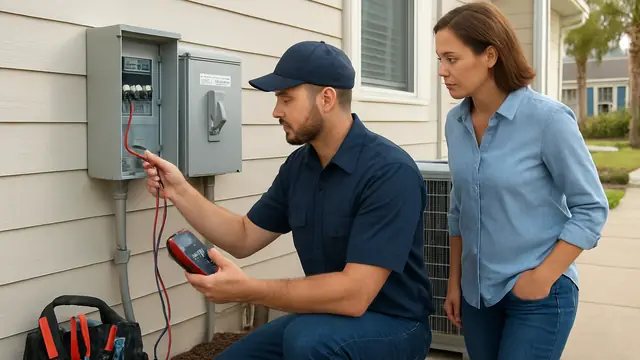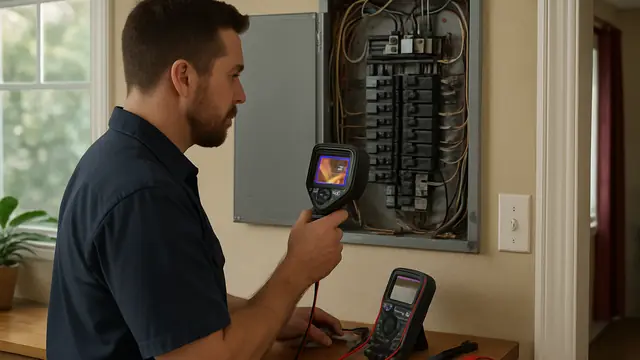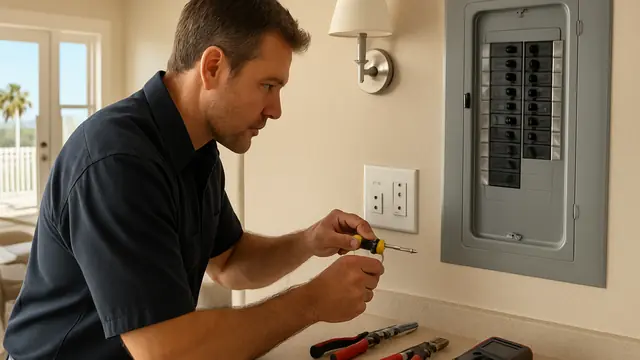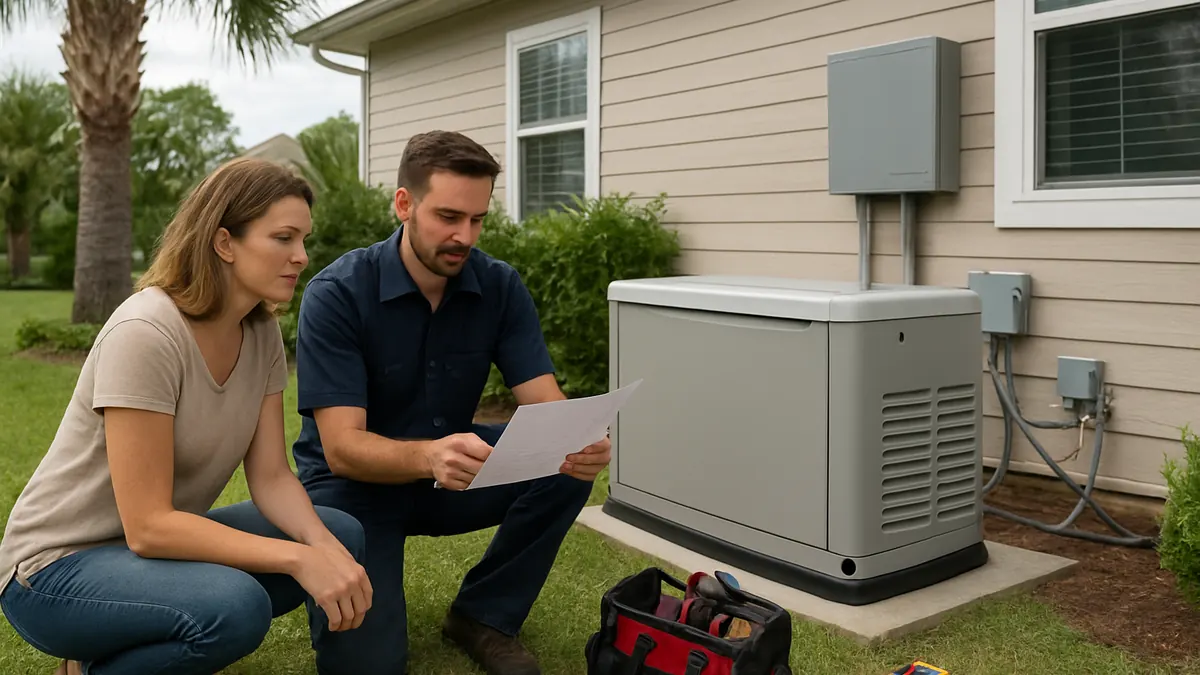
Do not remove an electrical panel cover, touch exposed conductors, bypass protection, or repeatedly reset a fault. Keep clear of smoke, sparks, burning odors, hot equipment, standing water near electricity, and downed lines, then call qualified help.
You want reliable backup power, but you do not necessarily need to operate every appliance as though the utility were still on. Your priorities may be one air conditioner, the refrigerator, lights, internet equipment, medical devices, and several receptacles. The safest first step is to write down those priorities. Do not remove the electrical-panel cover, total breaker ratings, or attempt to connect a generator through a household outlet.
What size standby generator does your home need in Springfield? It needs enough capacity to supply the selected circuits, handle the starting surge of motors, and remain stable when realistic loads operate together. A carefully planned essential-load system may be more appropriate than an unnecessarily large generator, while some homes need broader coverage with automatic load management. Professional sizing is based on the home's equipment and intended backup use.
You May Not Need to Power Everything
Many homeowners ask for "whole-house power" when their real goal is a safe, cool, connected, functional home. An essential-load system can prioritize refrigeration, lighting, communications, security, receptacles, and HVAC while optional equipment remains off.
A managed whole-home system may connect more circuits but temporarily shed lower-priority loads, such as pausing the water heater while the air conditioner starts.
The better design is the one that supports your actual outage priorities predictably.
What Usually Drives the Generator Size Higher?
Electric Heat and Auxiliary Heat Strips
Heat-pump auxiliary or emergency heat strips can use substantial power. The design must determine whether they will be allowed, limited, or blocked on generator power.
Electric Water Heating, Cooking, and Drying
Resistance-heating appliances convert electricity directly into heat. Electric water heaters, ranges, ovens, and dryers can place substantial continuous demand on a generator.
Multiple Motors
Air conditioners, refrigerators, freezers, and pumps may not start at the same time during normal operation, but their starting surges must still be considered. Controls may be used to sequence major loads.
Future Electrical Additions
A generator that suits the home today may no longer fit after an EV charger, larger air conditioner, second refrigerator, workshop equipment, or electric appliance conversion is added. Planned upgrades should be included in the discussion.
Safe Checks You Can Perform Before Scheduling Service
- List specific equipment needed during an outage. "Kitchen" is too broad; the refrigerator, freezer, microwave, range, dishwasher, and receptacles have different demands.
- Identify whether the water heater, range, dryer, heating equipment, and other large appliances use electricity or gas.
- Photograph accessible data labels on the generator, outdoor HVAC equipment, water heater, pumps, and major appliances. Do not remove covers or reach near exposed wiring.
For an existing generator problem, note whether the failure occurs immediately after the transfer switch operates or after another load starts. Record fault codes before clearing them.
You can also verify that carbon-monoxide alarms show normal status and test them according to their instructions.
What the Homeowner Should Not Attempt
Do not add every breaker rating to estimate generator size. Branch breakers protect individual circuits; the total does not represent the home's normal simultaneous demand.
Never use a double-ended cord or connect a portable generator through a receptacle. Safe home backup requires approved transfer equipment that prevents the generator from energizing utility wiring.
Do not enlarge a breaker, bypass overload protection, defeat a load-management module, or alter the transfer switch.
Do not modify gas piping, regulators, grounding conductors, generator controls, or exhaust arrangements.
Portable generators belong outdoors, not in garages, carports, porches, basements, crawlspaces, or sheds. CPSC warns that portable generators can produce lethal carbon monoxide and advises placing them outdoors at least 20 feet from buildings, with exhaust directed away from openings.
Signs That Require Immediate Action
Leave the area and call emergency services if you see fire, heavy smoke, active arcing, or a strong fuel odor. If a carbon-monoxide alarm sounds, move everyone outdoors to fresh air, call emergency services, and do not reenter until responders give permission.
Symptoms such as headache, dizziness, nausea, weakness, unusual drowsiness, or confusion during generator use may indicate carbon-monoxide exposure and require emergency attention.
Arrange urgent electrical service for repeated breaker trips, severe light flickering, transfer-switch chattering, burning odors, melted wiring, continuous appliance restarting, or generator stalling whenever the air conditioner starts.
How a Licensed Electrician Determines the Needed Capacity
The electrician first separates essential loads from optional loads. This prevents the design from being driven by equipment you do not plan to use during an outage.
A residential load calculation estimates realistic simultaneous demand instead of assuming every circuit operates at maximum.
Motor-starting requirements are evaluated separately. The electrician reviews data for air-conditioning compressors, pumps, and other motors to determine whether the generator can start the largest motor while carrying the remaining essential load.
The electrician inspects the service, panels, breakers, conductors, grounding and bonding, and transfer equipment, then chooses selected-circuit or managed broader backup.
Fuel supply is part of the complete system. An appropriately qualified professional must verify that piping, regulators, pressure, and available supply support the selected generator.
Existing-unit testing may cover voltage, frequency, battery condition, transfer timing, fault history, controls, and realistic load.
Least-Invasive Solutions Come First
The simplest solution may be narrowing the backup list. Leaving an electric dryer, range, second HVAC system, or EV charger off generator power can substantially reduce required capacity.
The next option may be installing or correcting automatic load management. This allows the generator to serve more circuits while ensuring lower-priority appliances do not overload it.
A compatible soft-start device may reduce the initial demand of certain air-conditioning compressors. It must be properly selected and is not a substitute for an accurate load calculation.
If an existing generator once performed correctly, repair should be considered before replacement. A weak battery, restricted fuel supply, overdue engine service, damaged conductor, failed control module, or transfer-switch fault may be the true problem.
Replacement is reasonable when the required essential load exceeds usable capacity, or when the generator is unreliable, obsolete, seriously damaged, or no longer supported.
Typical Factors Affecting Installation Cost
Cost depends on generator capacity, transfer-switch design, number of backed-up circuits, load-management equipment, electrical-panel condition, fuel type, fuel-system work, placement, mounting pad, trenching, conductor distance, access, permits, and inspections.
Essential-load systems may require circuit-selection work; broader systems may require more output, more controls, or both.
Prevention and Maintenance Guidance
Follow the model-specific maintenance schedule. Service commonly includes oil and filters, battery testing, electrical and ignition checks, diagnostics, and transfer-switch testing. An exercise cycle does not prove operation under household load.
Keep the enclosure clear of leaves, vegetation, stored objects, and anything that restricts cooling airflow. Report corrosion, damaged wiring, fluid leaks, abnormal noise, or unusual vibration.
After extended outage operation, maintenance may be due sooner because service intervals can depend on operating hours as well as time.
Review generator capacity before installing a new HVAC system, EV charger, electric water heater, or other major load.
Build the Backup Plan Around What You Really Need
What size standby generator does your home need in Springfield? It needs enough capacity for the essential equipment you intend to use, sufficient starting power for major motors, and safe coordination with the transfer switch, electrical system, and fuel supply. The right plan may involve selected circuits, automatic load management, repair of an existing generator, or a larger unit-but it should begin with a calculation rather than a guess.
About this guide: This resource provides general homeowner education, not a remote diagnosis. Actual conditions, code requirements, equipment, and safe repair options must be evaluated at the property.