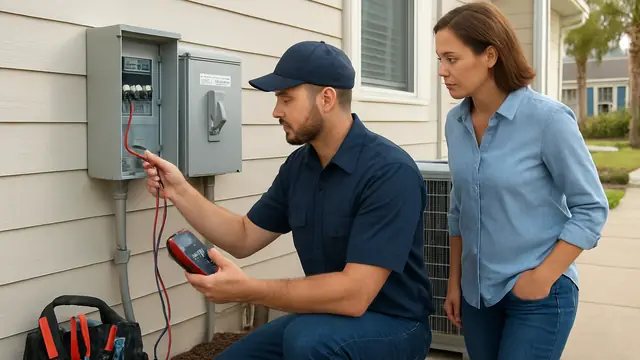
Do not remove an electrical panel cover, touch exposed conductors, bypass protection, or repeatedly reset a fault. Keep clear of smoke, sparks, burning odors, hot equipment, standing water near electricity, and downed lines, then call qualified help.
Your air conditioner starts, the lights dip, and the television briefly loses its picture. A few days later, the thermostat freezes on one screen and the refrigerator begins showing intermittent error messages. Repeated electronic glitches may be caused by small voltage disturbances, one larger surge, or an unstable electrical connection.
Start by unplugging any device that smells burned, feels hot, sparks, or makes unusual sounds. If a breaker trips twice, leave it off rather than continuing to reset it. Do not open the panel or touch damaged wiring. When lights brighten and dim, several devices malfunction, or failures follow an outage, a licensed electrician should determine whether the cause is a surge or another service problem.
Whole-home surge protection is designed to reduce sudden excess voltage before it reaches equipment across the house. It also protects controls hidden inside ordinary appliances and mechanical systems.
What Does Whole-Home Surge Protection Actually Protect?
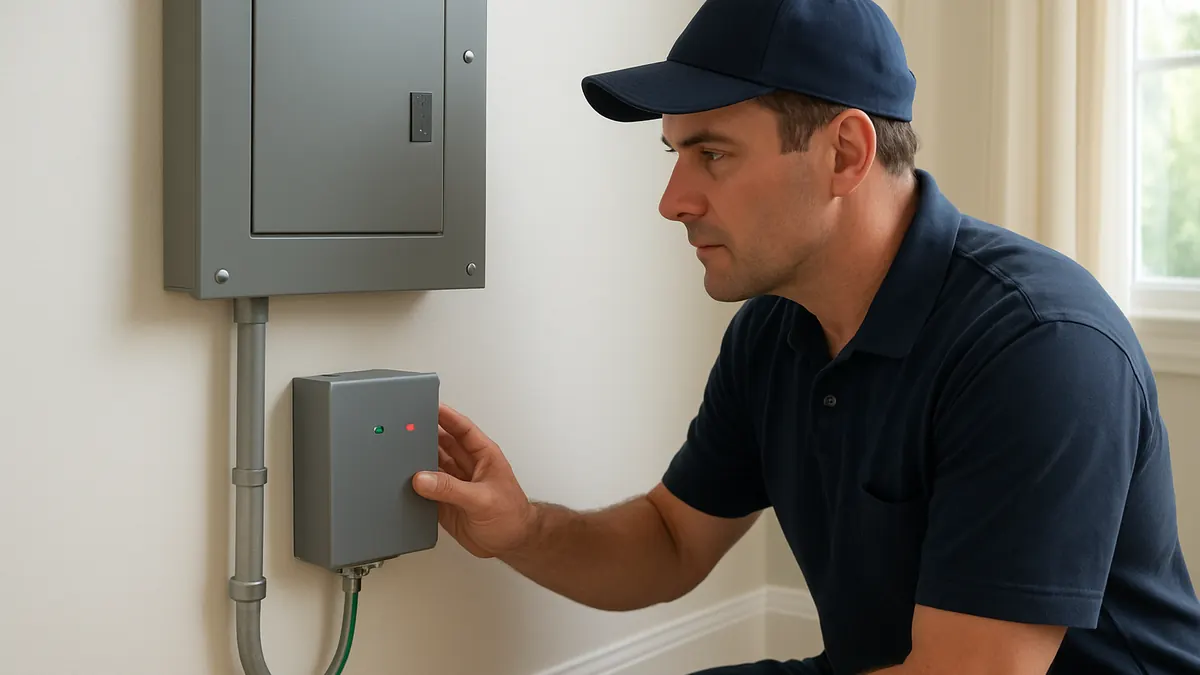
A whole-home surge protective device connects at the main electrical panel or service equipment. Under normal conditions, it remains ready without interfering with household power. When voltage rises sharply, it diverts much of the excess energy toward the grounding system.
That action can help protect:
- HVAC control boards, thermostats, compressors, and variable-speed equipment
- Refrigerators, ranges, dishwashers, washers, and dryers
- Computers, televisions, routers, modems, and charging equipment
- Security panels, cameras, electronic locks, and smart-home devices
- Garage-door openers, fans, dimmers, and LED lighting drivers
- Water-heating controls, pumps, and other hardwired electronics
The device protects equipment supplied through the electrical panel. Surge energy entering through cable, telephone, antenna, satellite, or network lines may require separate protection.
A Surge Does Not Have to Be Dramatic
- Some surges occur during lightning or utility events. Others are smaller and begin when motors or compressors cycle. These brief disturbances are called transient voltage.
- Repeated transients can stress power supplies, sensors, and circuit boards, causing random resets, shortened equipment life, or delayed failure.
- A surge protector is not a voltage regulator. It responds to short spikes, but it does not correct ongoing low voltage, high voltage, overloaded circuits, or loose connections.
Common Causes and Look-Alike Problems
Nearby lightning can place surge energy onto electrical or communication lines. Utility switching and power restoration can also create short spikes.
Inside the home, air-conditioning equipment, refrigerators, pumps, and other motors may contribute smaller disturbances when they cycle.
A loose neutral can create a more serious form of voltage imbalance. The neutral is part of the return path that helps keep household voltage stable. When it becomes loose, some lights may grow unusually bright while others dim. Failing breakers, overheated connections, and grounding defects can also resemble surge damage.
Because the symptoms overlap, an electrician should test the system rather than assuming every failed electronic component was caused by lightning.
Safe Checks You Can Perform
Note which equipment malfunctioned and whether the issue followed a storm, outage, utility flicker, or startup of a large load.
Look at accessible plugs, cords, and receptacle faces. Stop using equipment with melting, scorch marks, cracks, unusual warmth, or a burned odor.
If a whole-home surge device is already installed, look only at its visible status light. Do not remove the panel cover. The device label explains whether it is protected, faulted, or needs replacement.
Check point-of-use surge strips for a protection indicator. A strip may still provide power after its surge components are no longer working.
A breaker may be reset once if it is cool, dry, quiet, and undamaged. Leave it off if it trips again.
What Homeowners Should Not Attempt
- Do not install a panel-level protector without proper electrical qualifications. Conductors ahead of the main breaker may remain energized.
- Do not tighten service connections, move breakers, share a terminal that is not approved for multiple conductors, or install an incompatible device.
- Never increase breaker size to stop nuisance tripping. The wiring may not be designed for the higher current.
- Do not attach grounding wires to convenient plumbing or outdoor metal. Grounding and bonding must follow approved methods.
- Do not replace damaged electronics until unstable voltage or repeated tripping has been diagnosed. New equipment can fail if the original problem remains.
Signs That Require Urgent Attention
Call for prompt electrical service if multiple devices stop working together, the whole-home protector displays a fault, or electronic failures continue.
Treat smoke, sparks, arcing, a burning odor, buzzing in the panel, hot receptacles, melted plugs, or an overheated panel cover as urgent warning signs.
Rapid changes between very bright and dim lighting can indicate a neutral problem. A shock or tingling sensation from an appliance or metal surface also requires immediate attention.
If there is active smoke or fire, leave the area and contact emergency services.
How a Licensed Electrician Diagnoses the Cause
The electrician determines whether the problem affects one circuit, several circuits, or the incoming service.
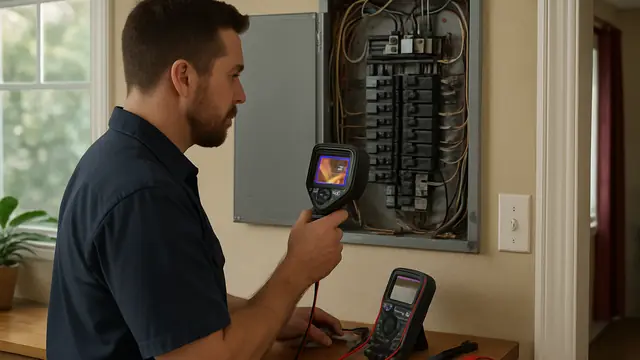
Testing may include line voltage, neutral stability, grounding, bonding, breakers, panel connections, and affected outlets or equipment circuits. The electrician looks for heat damage, looseness, corrosion, improper connections, or evidence of arcing.
An existing surge protector is checked for status, rating, panel compatibility, breaker connection, and conductor routing. Short, direct conductors help the device divert surge energy efficiently.
The electrician may also ask how cable, internet, or other communication services enter the home when connected equipment was damaged.
Repair Options Starting With the Least Invasive
If one plug-in protector has failed and testing confirms stable voltage, replacing that protector may be enough for the connected equipment.
If the whole-home device is no longer active, it may often be replaced without replacing the panel.
A home without panel-level protection may receive a compatible breaker-mounted or externally mounted device. When the panel is full, approved breaker configurations or a separate enclosure may provide a solution.
Loose connections, neutral faults, damaged breakers, grounding defects, or overheated wiring should be repaired as needed. These repairs may be the immediate priority.
Panel replacement is reserved for equipment that is unsafe, extensively damaged, severely corroded, obsolete, or unable to support a compliant installation.
Factors That Influence Cost
Cost depends on the protector's design and rating, panel condition, breaker space, accessibility, installation method, grounding and bonding work, permitting, and additional repairs.
An installation in a serviceable panel differs from correcting damaged conductors or an unstable neutral. Required safety work should be separated from optional upgrades.
Prevention and Maintenance
Combine whole-home protection with listed point-of-use protectors for valuable electronics. This layered approach reduces surge energy at the panel and adds protection near sensitive devices.
Check status lights after outages, storms, or unusual electrical events. Replace a protector that indicates failure even if normal power continues.
Keep the panel dry and accessible. Avoid daisy-chaining power strips. Have recurring flickering, resets, breaker trips, or electronic failures investigated before they become a larger problem.
Protect More Than the Devices You Can See
What does whole-home surge protection actually protect in Springfield? It helps protect visible electronics and the hidden control boards inside HVAC equipment, appliances, lighting systems, security devices, water-heating equipment, and other systems supplied through the panel.
If your home has repeated resets, simultaneous equipment failures, changing light levels, or a failed surge-protection indicator, schedule an electrical evaluation. The least invasive safe solution may involve replacing a protector, correcting grounding, repairing a neutral or connection, or adding panel-level protection.
About this guide: This resource provides general homeowner education, not a remote diagnosis. Actual conditions, code requirements, equipment, and safe repair options must be evaluated at the property.