Stop and call for qualified help when plumbing water is near electrical equipment, sewage is entering occupied space, gas or burning odors are present, or a repair would require opening pressurized piping.
The bathroom is quiet, but the toilet suddenly begins refilling even though nobody flushed it. At another time, the water may run continuously until you lift the handle or tap the tank. In a Panama City Beach property, this usually means water is escaping from the tank into the bowl or the tank's fill valve is not closing correctly.
Start by removing the tank lid and observing the water level. If water is spilling into the overflow tube, leaking onto the floor, or flowing without stopping, turn the toilet's shutoff valve clockwise. Use gentle pressure only. A valve that will not turn should not be forced.
Listen to How the Toilet Is Running
A steady hiss after every flush often points to a fill valve that is not closing or a water level that is too high. A short refill every few minutes usually means the tank is slowly leaking into the bowl. A toilet that stops when the handle is moved may have a sticking handle, chain, or flush seal.
Why Does My Toilet Keep Running in Panama City Beach?
During a normal flush, the handle lifts a flapper or canister seal. Tank water enters the bowl, the float drops, and the fill valve opens. As the tank fills, the float rises and closes the valve.
The toilet keeps running when the seal cannot hold water, the float cannot move correctly, the valve fails to shut, or water is set high enough to enter the overflow tube.
Likely Causes Inside the Tank
A flapper that closes unevenly
A rubber flapper may warp, harden, collect residue, or land off-center, allowing water through the flush-valve opening.
A worn canister seal
A canister-style toilet has a base gasket that can deteriorate, fold, or shift.
A chain or handle problem
The chain may be too tight, tangled, or trapped under the flapper. A sticking handle can also prevent full closure.
An incorrect water level
A float set too high or rubbing the tank wall can keep water moving into the overflow tube.
A fill valve that is wearing out
A worn fill valve may hiss, pulse, fill slowly, or continue passing water after the float rises.
Damage below the visible seal
A rough valve seat, loose valve body, or cracked overflow tube can leak despite a new flapper.
Safe Checks Before Scheduling Service
Place the tank lid on a towel and flush once. The handle should return, the chain should relax slightly, the seal should close flat, and the float should rise freely.
Check where the water stops. It should remain below the top of the overflow tube. If water continues into the tube, gently lift the float. If that stops the flow, the float setting or movement may be the issue. If the valve keeps running, it may have failed internally.
For intermittent refilling, add food coloring to the tank and wait 15 to 20 minutes without flushing. Color in the bowl confirms leakage.
Use a dry paper towel around the supply connection, shutoff valve, tank bolts, and base. External moisture requires prompt attention.
What Not to Try
- Do not force a stiff shutoff valve. If it breaks, the water may no longer be controllable at the toilet.
- Do not use chemical drain opener. Tank components cause most running problems, and drain chemicals cannot repair them.
- Do not overtighten plastic fittings or tank bolts. Plastic can split, and porcelain can crack under uneven pressure.
- Avoid makeshift fixes such as tying up the float, weighting the flapper, gluing a gasket, or cutting the overflow tube. The parts must move and seal as designed.
When the Problem Requires Immediate Attention
- Turn off the supply and call for help when water reaches the floor, sprays from a fitting, flows over the tank edge, or will not stop after the float rises.
- Cracked porcelain is another urgent condition. A crack in the tank or bowl can spread and release a large amount of water.
- A toilet that rocks, repeatedly clogs, drains slowly, gurgles, or allows the bowl level to rise may have a mounting or drainage problem in addition to the running tank.
How a Licensed Plumber Identifies the Failure
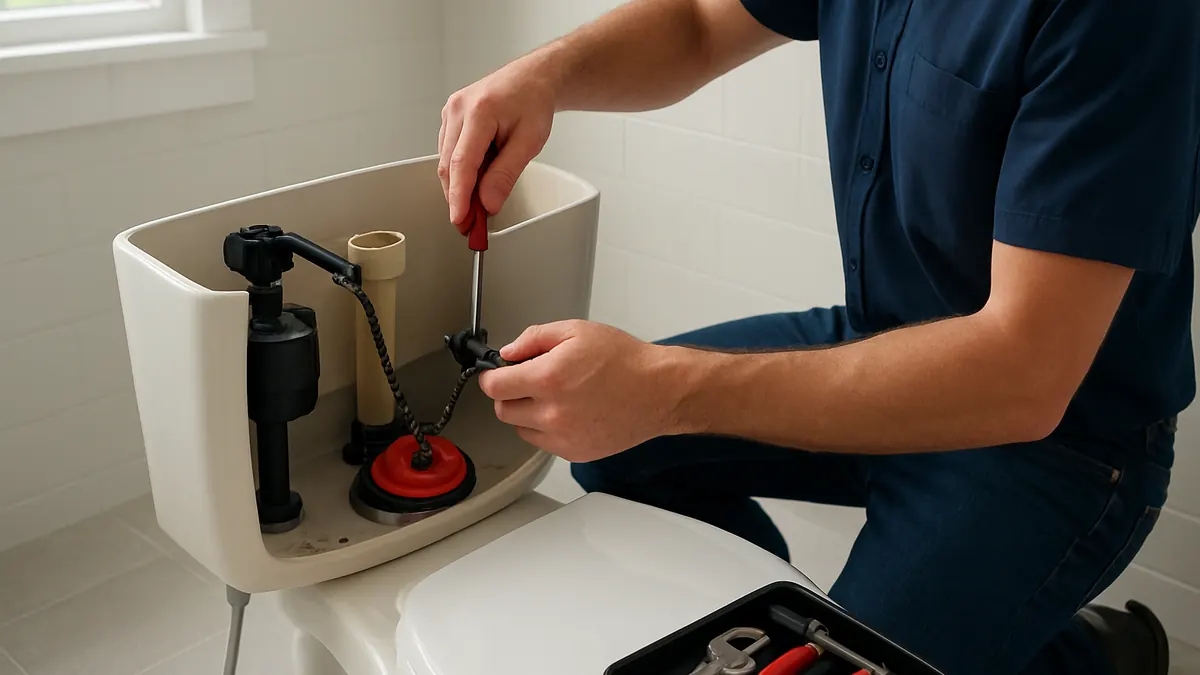
The plumber observes the flush, refill, and shutoff sequence. The technician checks the handle and trip lever, chain tension, flapper or canister gasket, flush-valve seat, float, fill valve, refill tube, and overflow tube.
A dye test confirms silent tank-to-bowl leakage, and the toilet model helps identify compatible parts.
The supply line, shutoff valve, bolts, and porcelain are inspected for external leakage or deterioration. When the toilet is loose, flushes weakly, or clogs repeatedly, the base seal, flange, trapway, and drain connection may also need evaluation.
Repair Options Starting With the Smallest Reasonable Fix
- A simple adjustment may be enough. The chain can be corrected, a handle realigned, the refill tube secured, or the float lowered.
- A leaking flapper or canister seal can often be replaced without disturbing the tank. A fill valve that no longer closes can also be replaced individually.
- When several parts are worn, a tank rebuild may address the fill valve, flush seal, handle, and hardware together.
A damaged flush-valve assembly may require tank removal. Full toilet replacement is generally considered when porcelain is cracked, the fixture is unstable, replacement parts are not available, or repeated repairs are becoming impractical.
Factors That Influence Repair Cost
The failed part and repair scope are the main cost factors. An adjustment is different from replacing a valve, rebuilding the tank, or installing a new toilet.
Some toilets accept common parts; others need model-specific assemblies. Corroded hardware, limited access, a failed shutoff valve, supply leak, or drainage issue can add work.
Preventing Future Running Problems
- Listen for changes after flushing. A longer refill, new hiss, periodic cycling, or handle that does not return smoothly should be checked before the problem worsens.
- Inspect the tank periodically. Verify that the chain is not tangled, the float moves freely, the seal sits flat, and the final water level remains below the overflow tube.
- Avoid in-tank cleaning tablets unless approved by the toilet manufacturer. Certain cleaning chemicals can damage rubber seals and valve components.
- For infrequently used toilets, flush them during routine checks, listen for shutoff, and look for moisture.
Stop the Water Waste and Correct the Cause
If you are asking, "Why does my toilet keep running in Panama City Beach?" focus on the flapper or canister seal, chain, handle, float, fill valve, water level, and overflow tube. A safe inspection and dye test can reveal useful clues, but outside leakage, cracked porcelain, uncontrolled filling, or drainage symptoms require professional attention.
About this guide: This resource provides general homeowner education, not a remote diagnosis. Actual conditions, code requirements, equipment, and safe repair options must be evaluated at the property.