Stop and call for qualified help when plumbing water is near electrical equipment, sewage is entering occupied space, gas or burning odors are present, or a repair would require opening pressurized piping.
The kitchen sink may be slow in the morning, the toilet may gurgle that afternoon, and by evening water may rise in the shower when someone flushes. When several fixtures begin affecting one another, the plumbing system is giving a clear warning. Multiple drains backing up in a Parker home usually mean a shared drain or the main sewer line is restricted and cannot carry wastewater away at the normal rate.
Stop using plumbing fixtures as soon as you recognize the pattern. Do not run the washing machine or dishwasher, take showers, empty full sinks, or continue flushing toilets. Reducing water use can keep a partial blockage from becoming a sewage overflow. If contaminated water is already present, keep people and pets out of the area and avoid touching it.
How to Tell a Main-Line Problem From a Single Clog
A single clogged sink or toilet usually remains isolated. The situation changes when using one fixture produces symptoms in another.
A toilet that bubbles when the tub drains, a shower that fills after a flush, or several fixtures that slow down together usually indicate a restriction after those drains connect. The lowest opening often shows the backup first because trapped wastewater seeks the easiest place to escape.
The Most Common Causes
Waste and Debris in a Shared Drain
Paper, waste, soap residue, hair, and food debris can collect inside a larger drain. A partial opening may pass small flows but fail during laundry, bathing, or simultaneous use.
Wipes and Other Non-Flushable Materials
Wipes, paper towels, hygiene products, and cotton items do not disperse quickly. They can lodge at a bend or joint and trap more waste.
Grease Accumulation
Cooking grease can cool against the pipe wall and collect food or detergent residue, gradually reducing the opening.
Root Intrusion
Roots enter through cracks or separated joints and catch paper. Removing them may reopen the drain, but the damaged pipe can allow their return.
A Sagging or Shifted Pipe
A low section holds water and solids, while an offset joint catches debris. Cracks, crushing, or collapse can also cause repeated backups.
A Restriction Beyond the Immediate Fixture Piping
The problem may be in the building drain, private lateral, or a septic component. A plumber identifies the location before recommending work.
Safe Checks the Homeowner Can Perform
Make a list of every affected fixture and note the sequence of events. Tell the plumber whether the problem began after laundry, a toilet flush, a long shower, or several fixtures were used at once.
Look at the lowest shower, tub, or floor drain for standing water. Do not run additional water to test the system.
Check for leakage around toilet bases and note any sewage odor. If the outdoor cleanout is visible, identify its location but do not remove the cap because backed-up wastewater may spill rapidly.
Review prior drain-service records if available. A history of root cutting, camera inspection, or repeated cleaning can provide useful context.
What You Should Not Attempt
Do not pour repeated chemical drain cleaners into the fixtures. These products cannot correct roots, broken pipe, severe grease buildup, or a blockage far from the opening. They may remain trapped and create a chemical-exposure risk.
Do not continue plunging every toilet or drain. Pressure at one fixture can force wastewater into another.
Avoid operating a large rental sewer cable without training. The machine can bind, twist, damage piping, or injure the operator. Do not remove a toilet or open a backed-up cleanout unless you have the equipment and protective measures required to manage sewage safely.
Signs That Make the Problem Urgent
The backup is urgent when raw sewage enters a tub, shower, floor drain, or living space. It also requires prompt attention when all toilets are unusable or wastewater is nearing flooring, cabinets, drywall, electrical outlets, appliances, or HVAC equipment.
A strong sewer odor, dark water coming from a drain, or wastewater surfacing outside near the home should not be ignored. If the problem returns after the line appears to drain, schedule diagnosis rather than waiting for a larger overflow.
How a Licensed Plumber Diagnoses the Backup
The plumber starts with the symptom pattern. The location of affected fixtures, the lowest backup point, and the activity that triggers the problem help identify where the shared restriction may be.
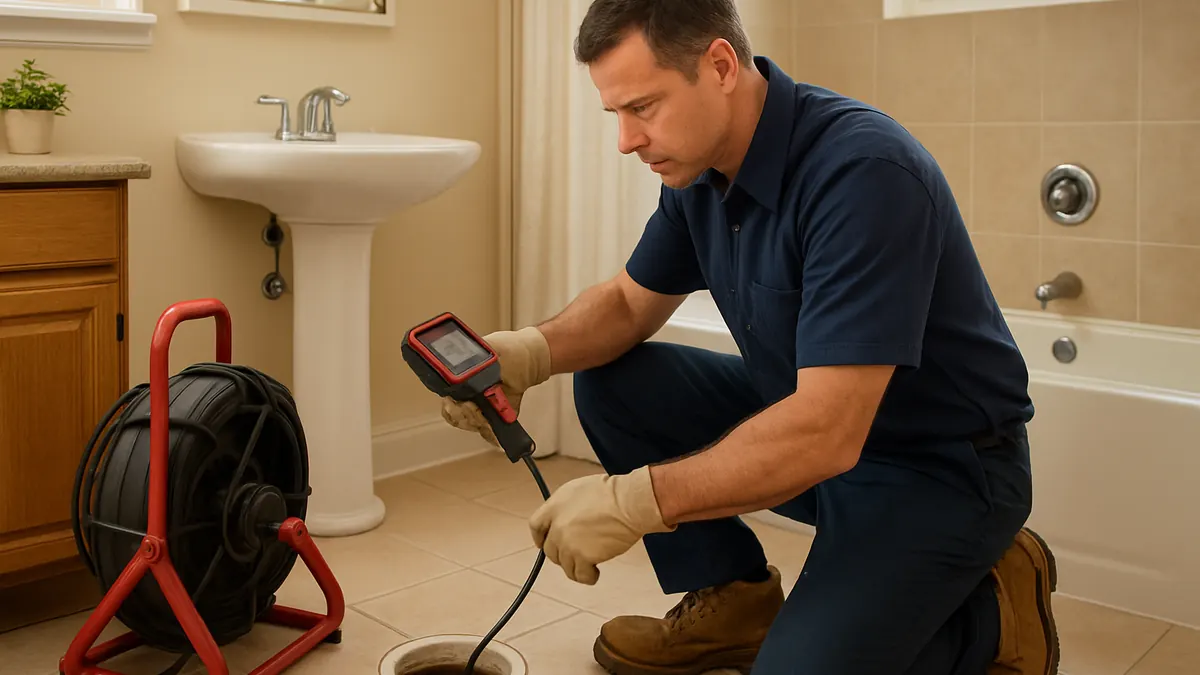
Accessible cleanouts are located, and a professional cable machine may be used to restore flow. Different cable heads can address soft stoppages, roots, or heavier debris.
Hydro jetting may be recommended when grease, sludge, or residue coats the interior. Controlled high-pressure water can clean a larger section more thoroughly than simply opening a narrow path.
After flow is restored, a sewer camera can inspect the line for roots, cracks, offsets, low sections, foreign objects, and standing water. The camera is especially valuable when backups have happened more than once.
Repair Options From Least Invasive to Most Extensive
Mechanical drain clearing is often the first practical option. If the clog is removed and the pipe is structurally sound, the repair may end there.
Hydro jetting may be appropriate for widespread residue or grease. Root cutting can restore service when roots are present, but it does not seal the pipe opening that allowed entry.
If inspection identifies one damaged section, a targeted spot repair may be enough. Some lines may qualify for trenchless repair depending on pipe material, access, and the type of failure.
Complete replacement is generally reserved for widespread deterioration, collapse, severe misalignment, or repeated failure along multiple sections. The plumber should explain the evidence supporting that recommendation.
Typical Factors Affecting Cost
Cost depends on the obstruction's location, severity, pipe diameter, line length, cleanout access, and equipment needed. A blockage near an accessible cleanout is different from one beneath a slab or deep underground.
Camera inspection, hydro jetting, root cutting, underground locating, excavation, permits, materials, and restoration of landscaping or interior finishes can affect the total. Ask whether the work is intended to restore flow, investigate the cause, provide a permanent repair, or accomplish all three.
Prevention and Maintenance Guidance
Flush only human waste and toilet paper. Place wipes, paper towels, hygiene products, cotton items, and household trash in a wastebasket. Never pour cooking grease or oil into a sink. Use strainers to catch food, hair, and debris.
Watch for early warnings such as a bubbling toilet, recurring sewer odor, slow shower drainage during laundry, or a toilet bowl level that changes when another fixture runs.
If camera findings show roots, buildup, or a structural problem, follow the recommended maintenance or repair schedule rather than waiting for the line to overflow again.
Take Action Before the Next Overflow
Multiple drains backing up in Parker indicate that wastewater is restricted in a shared part of the drainage system. Stop using water, avoid unsafe chemical and mechanical attempts, and have the line professionally diagnosed. The solution may be simple clearing, thorough cleaning, root management, a targeted repair, or replacement only when the pipe's condition supports it.
About this guide: This resource provides general homeowner education, not a remote diagnosis. Actual conditions, code requirements, equipment, and safe repair options must be evaluated at the property.