EV ownership is growing across Sandestin, and for many homeowners, the charger becomes part of the home’s daily electrical routine almost immediately. A proper installation is not just about mounting a unit on the wall. It affects the panel, breaker sizing, wiring, grounding, surge protection, and how the rest of the home handles power demand. In a coastal area like Sandestin, where salt air, storms, humidity, and remodels all put extra strain on electrical systems, those details matter even more.
For homeowners comparing options or searching for EV charger installation in Sandestin, FL, the best results usually come from looking at the whole system, not just the charger itself. A Superior Mechanical helps homeowners, rentals, and businesses choose safe, code-compliant charging setups that fit the property’s electrical capacity and long-term needs.
Why EV charging puts a different kind of load on a home
Most household appliances cycle on and off. An EV charger, especially a Level 2 unit, can draw steady power for hours. That kind of demand can expose weak spots in older panels, undersized circuits, loose breakers, and aging wiring. If a home already has frequent tripped breakers, dimming lights, or outlets that feel warm, an EV charger can make those issues worse.
Sandestin homes vary widely. Some are older coastal properties with panels that have seen years of humidity and storm exposure. Others are newer builds or remodeled homes with added rooms, upgraded kitchens, and extra devices competing for power. In both cases, the right charger installation starts with a careful look at available capacity and the condition of the panel, grounding system, and branch circuits.
What local homeowners often overlook before installation
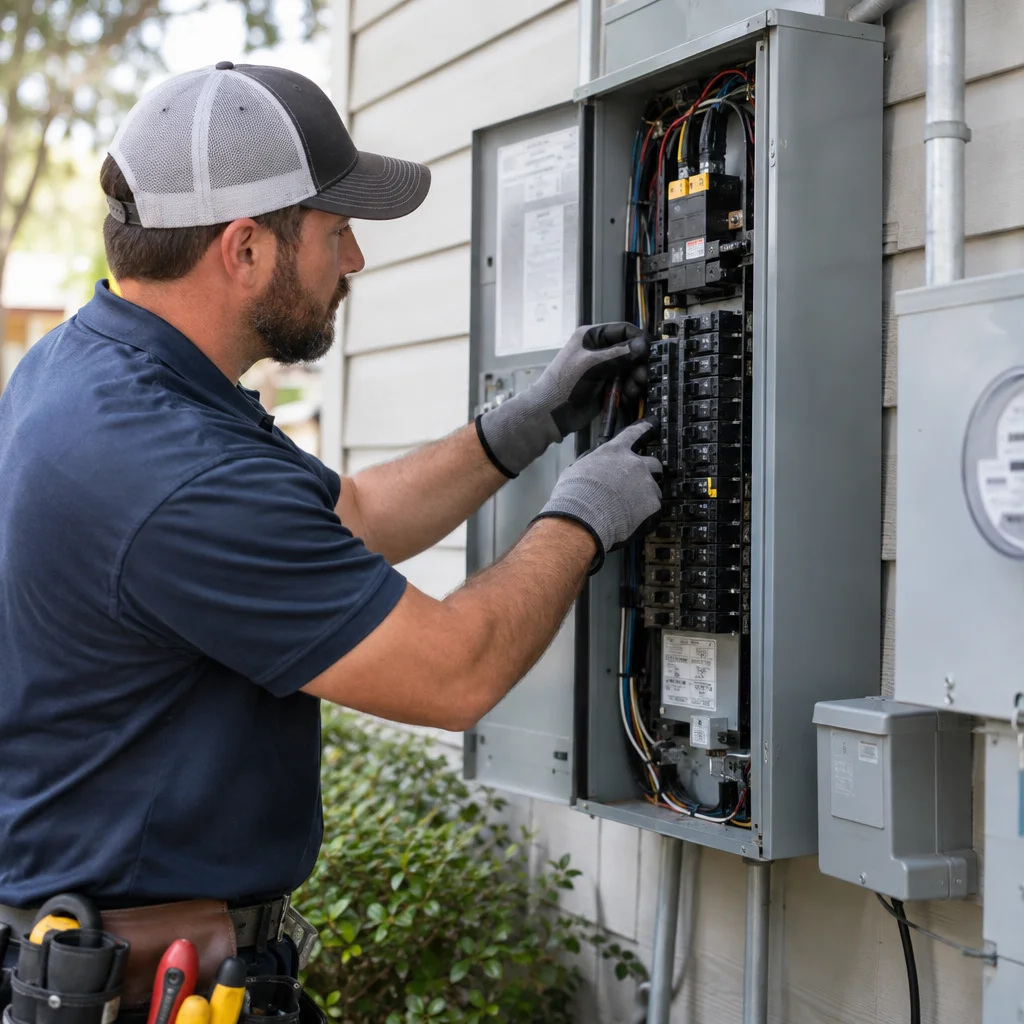
The electrical panel may be the real limiting factor
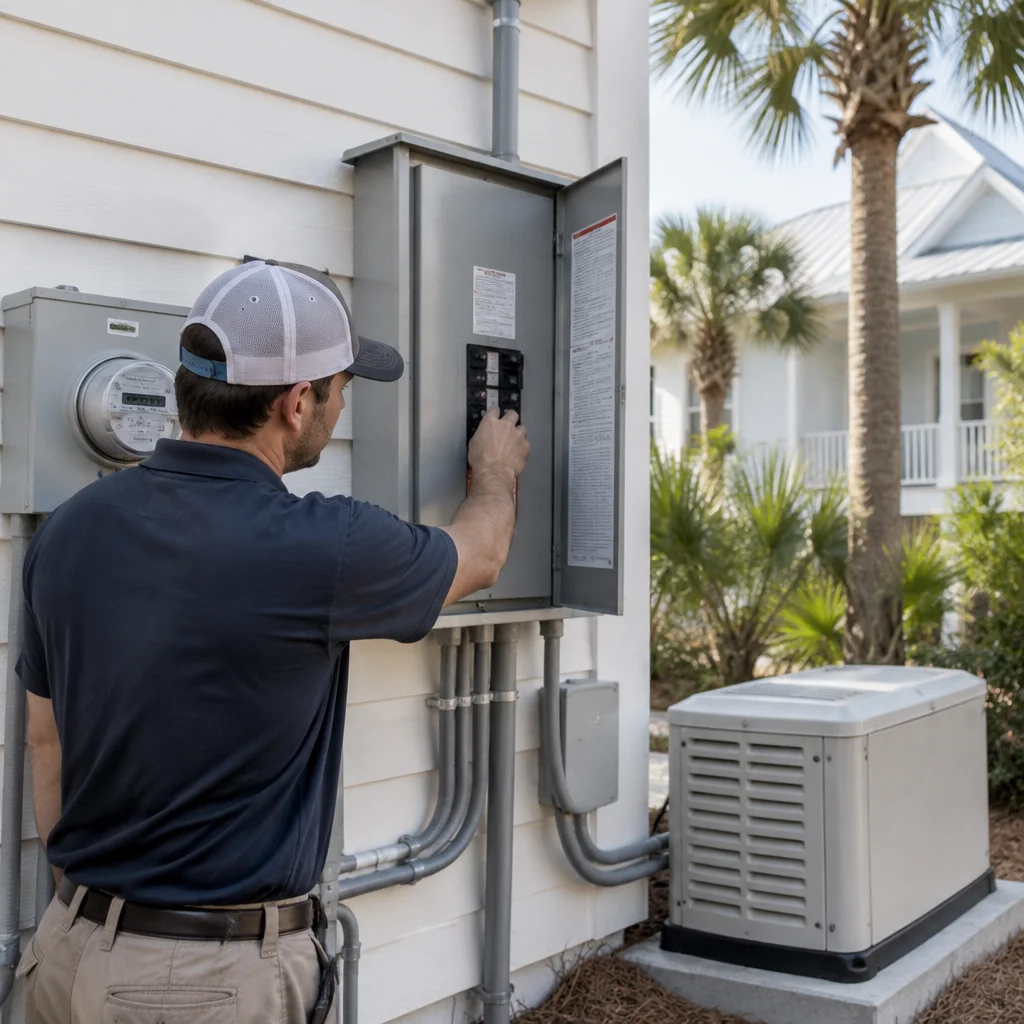
Many homeowners assume a charger can be added as long as there is an open breaker slot. That is not always true. The panel has to support the added load safely, and in some homes that means an electrical panel upgrade or additional load management. If a panel is already crowded, outdated, or showing signs of heat damage, the charger should not be installed until the system is evaluated.
In homes where the panel is near capacity, homeowners searching for electrical panel replacement near me or breaker box replacement near me are often dealing with the same issue in a different form. The charger is simply revealing that the home needs a stronger electrical foundation.
Dedicated circuits are not optional
EV chargers should be installed on a dedicated circuit sized for the charger’s load. Sharing a circuit with outlets, lighting, or garage equipment can cause nuisance trips and overheating. Dedicated circuits also make troubleshooting easier later if the charger stops working or if another part of the garage loses power.
This matters in homes with added refrigerators, workshop tools, or converted garages. A dedicated EV circuit keeps the charger from competing with other equipment and reduces the chance of overloads on nearby outlets and switches.
Grounding and GFCI protection deserve attention
Proper grounding helps protect both the charger and the vehicle. In coastal Florida, where moisture is common and storms can push power quality up and down, grounding becomes even more important. Some installations also require GFCI protection depending on the setup, location, and code requirements. A licensed electrician should verify what applies to the specific charger and location.
Homeowners who have already needed electrical code inspection near me services or who have had outlet issues in garages and exterior walls should be especially careful. A charger should not be treated like a simple appliance plug-in.
How Sandestin weather changes the conversation
Sandestin’s climate brings humidity, salt exposure, and storm season into nearly every electrical decision. Even indoor garage installations can be affected by moisture intrusion, corrosion at connections, and surge events during thunderstorms. Outdoor charging stations or units mounted near open carports need weather-rated equipment, proper sealing, and careful placement to reduce exposure.
Storms can also create hidden damage. A home may appear fine after a power event, but a weakened breaker, loose neutral, or compromised wire can show up later as charger faults, flickering lights, or repeated resets. That is one reason local electrical service matters. A contractor familiar with Walton County homes can spot issues that might be overlooked by someone who only sees the charger as a standalone project.
If your home has already needed keeping Sandestin homes safer when electrical problems hit fast type repairs, it is worth treating EV charger planning as part of the same safety conversation.
Older homes, newer homes, and remodels all need different planning
Older Sandestin homes may have panels that were never designed for today’s electrical demand. Newer homes may have more capacity, but additions like EV charging, home offices, hot tubs, or upgraded lighting can still push the system close to its limit. Remodels often create the biggest surprises because new wiring may connect to older circuits or boxes that were not sized for the added load.
That is why homeowners searching for a local electrician near me often end up needing more than charger installation. They may also need outlet repair, breaker repair, wiring repair, or an inspection before the charger can be added safely. In some homes, the right answer is a full electrical review before any new equipment is installed.
How a proper EV charger installation is usually planned
1. Evaluate the panel and available capacity
The first step is a load calculation. This shows whether the panel can support the charger along with the rest of the home’s electrical demand. If not, the electrician may recommend a panel upgrade, load management device, or a different charger setting.
2. Choose the charger location carefully
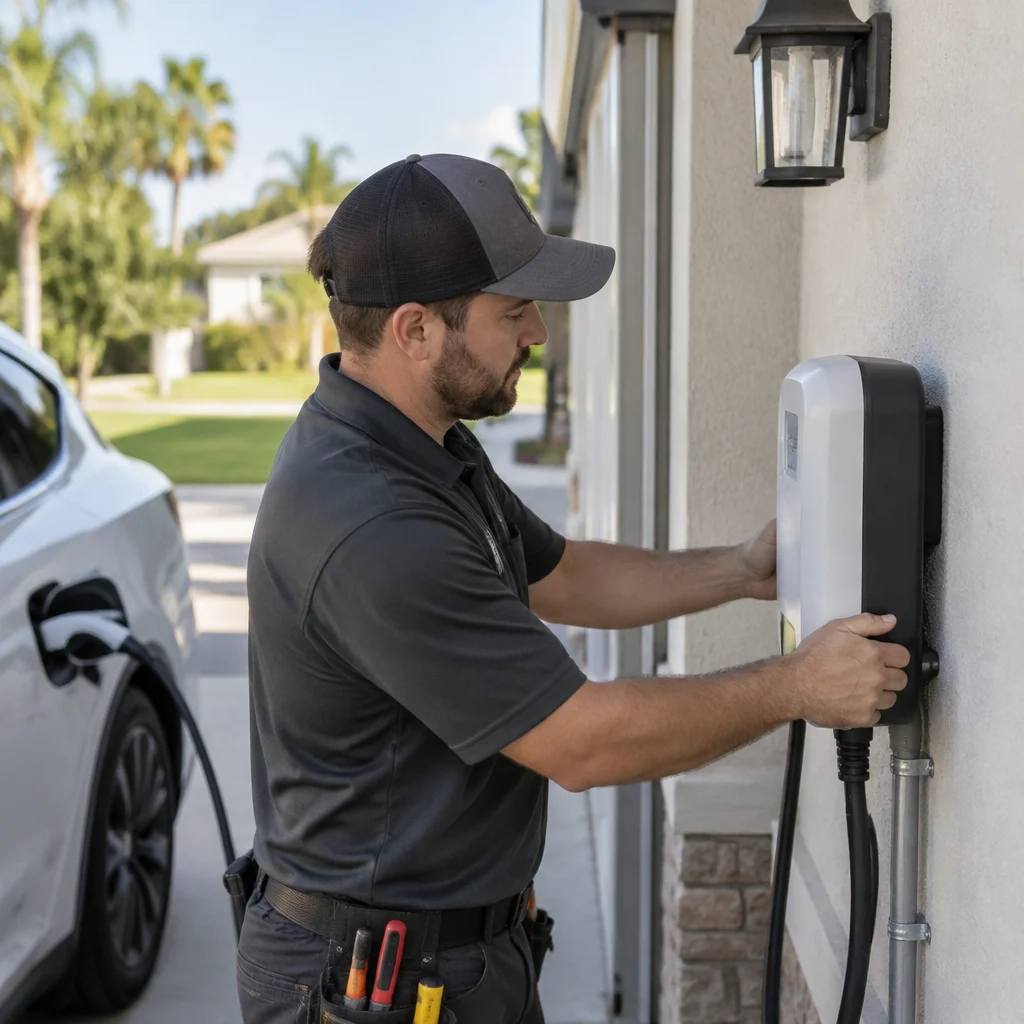
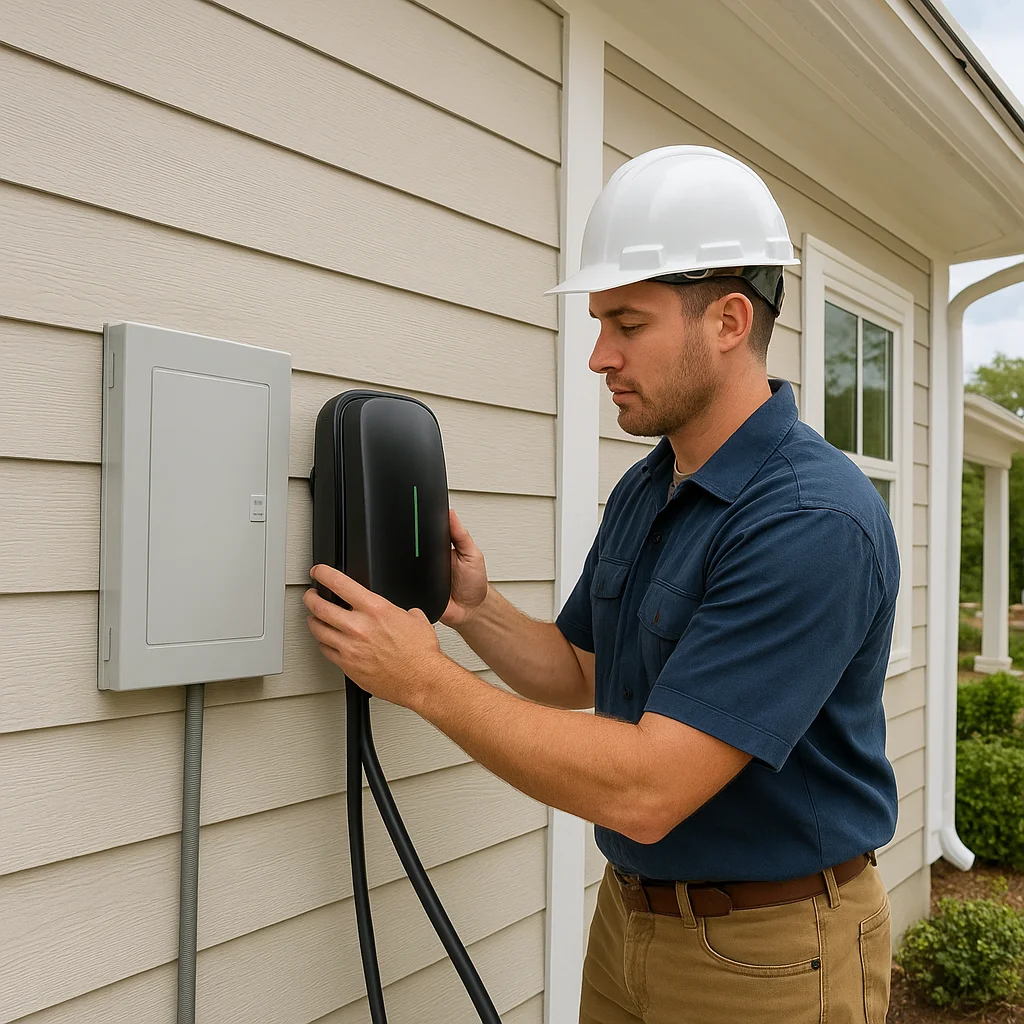
Where the charger is mounted affects convenience, safety, and cable routing. The best location usually keeps the cord away from walkways, water exposure, and vehicle traffic. Garages, covered parking, and protected exterior walls are common choices in Sandestin homes and rentals.
3. Install the proper circuit and breaker
EV chargers need the right wire size, breaker rating, and disconnecting means if required by code. This is where experience matters. A charger that works today but is wired incorrectly can create nuisance trips, overheating, or long-term damage.
4. Check grounding, bonding, and surge protection
Because storms and utility disturbances are part of life on the coast, many homeowners also choose a whole home surge protector near me style solution during the project. Whole-home surge protection helps defend the charger, panel, appliances, and electronics from power spikes. For homes that depend heavily on EV charging, that extra layer can be a smart investment.
5. Test the system under real conditions
Once the charger is installed, the system should be tested for voltage stability, breaker performance, and safe operation. If the home has older outlets, garage lighting, or nearby ceiling fans on the same area of the system, those should be checked too. A garage that has flickering lights or a warm outlet is not the place to ignore a small issue.
Other electrical issues that often show up during charger projects
EV charger installation often reveals other maintenance needs. A homeowner may start by asking about charging, then discover a loose receptacle, a mislabeled breaker, or a circuit that should have been corrected years ago. That is not unusual. Homes with added rooms, new appliances, or patched wiring often need a broader electrical tune-up.
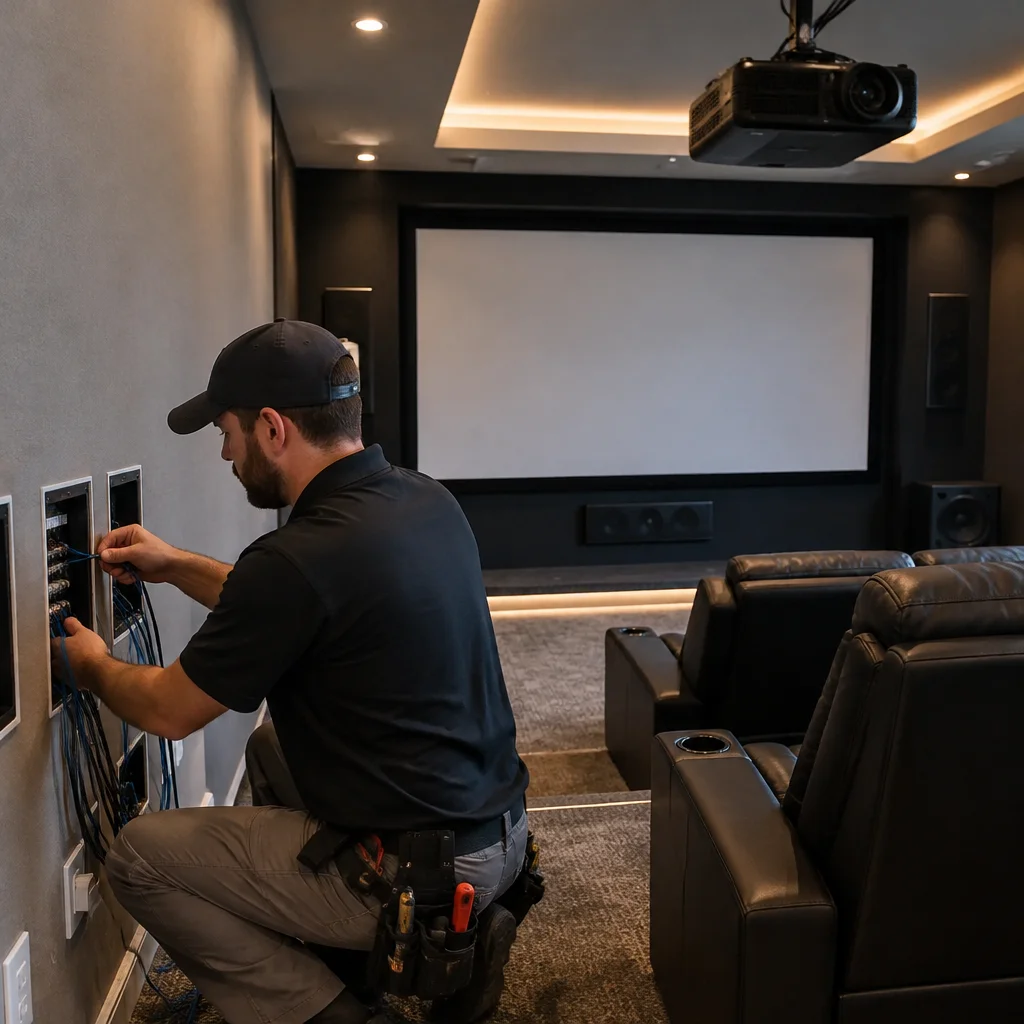
Some common add-ons include electrical inspections and code updates, outlet repair, switch replacement, lighting installation, and ceiling fan services. If a garage or driveway area needs more visibility for nighttime charging, ceiling fan services or home theater and AV wiring may not be related to the charger itself, but they often come up in the same home improvement conversation when homeowners are modernizing their electrical system.
For properties with exterior walkways or parking areas, landscape lighting can also improve safety around charging spots. If a homeowner is already searching for electrical services near me because several small issues are stacking up, it is usually smarter to address them together rather than one at a time.
When an EV charger project points to a bigger repair
Some warning signs mean the home needs electrical repair before or during charger installation. Repeated tripped breakers, a burning smell near the panel, buzzing sounds, warm breaker covers, discolored outlets, or lights that dim when large appliances start are all reasons to pause. In those cases, homeowners may need electrical troubleshooting near me support or a same day electrician near me response if the issue is active and unsafe.
If the panel is outdated or damaged, the project may call for fuse box replacement, breaker repair, or a broader electrical panel replacement near me evaluation. If the home has moisture issues, corrosion, or storm damage, the electrician may also need to inspect grounding, service connections, and any outdoor receptacles near the charging location.
For emergency concerns, especially if there is visible heat, smoke, or a persistent burning odor, do not keep using the circuit. That is the point to shut things down and get help from a qualified residential electrician near me rather than trying to keep the charger running.
Why local service matters in Walton County
Electrical work in Sandestin is not the same as electrical work in a dry inland market. Coastal weather, salt exposure, resort rentals, seasonal occupancy, and mixed-age construction all change the way a system should be evaluated. A local electrician understands how storms affect panels, how humidity affects outdoor connections, and how to plan a charger installation that works with the property instead of against it.
That local knowledge also helps when homeowners need related work such as smoke detector installation, generator installation, portable generator hookup near me service, or whole home generator installation near me planning. EV charging is part of a larger electrical picture, and the best installations are built to support the home for years, not just the next commute.
For homeowners in the area, the city page for Sandestin electrical services and the county page for Walton County electrical services can be helpful starting points when comparing options for panel upgrades, wiring repair, lighting installation, and code corrections.
Keeping the charger reliable after installation
Once the charger is in place, a little maintenance goes a long way. Check the cable for wear, keep the area dry, and make sure the breaker is clearly labeled. If the home experiences a storm, power outage, or surge event, inspect the charger and panel before using them again. If the charger begins to fault, reset repeatedly, or charge more slowly than usual, have it checked before the problem spreads to the rest of the system.
Homeowners who stay ahead of maintenance usually avoid bigger repairs later. That includes keeping an eye on garage outlets, testing GFCI protection, replacing worn switches, and scheduling inspections when the home adds new electrical demand. Whether the project starts with an EV charger or with a search for electrical panel replacement near me, the goal is the same: a safer, more capable electrical system that fits the way the home is actually used.
A Superior Mechanical installs EV chargers with the same attention to safety and code compliance that Sandestin homeowners expect from a trusted electrical contractor. If your home is ready for charging, or if the panel needs attention first, the right installation can make daily driving simpler without creating new electrical headaches.
Find EV Charger Installation in Sandestin, FL
If you need EV Charger Installation in Sandestin, FL, visit our local service page or contact A Superior Mechanical today.
Map of Sandestin, FL
Frequently Asked Questions
Do I need a panel upgrade before EV charger installation in Sandestin?
Not always, but many homes do. A load calculation and panel inspection will show whether the existing system can handle a Level 2 charger safely.
Can an EV charger be installed in a coastal home or rental property?
Yes. The key is choosing the right location, using code-compliant wiring, and protecting the system from moisture, corrosion, and surge damage common in coastal Florida.
What other electrical issues should be checked during charger installation?
It is smart to check the panel, breakers, grounding, outlets, and nearby circuits for wear, heat damage, or code issues. Many homeowners also ask about surge protection and electrical inspections at the same time.
Is a dedicated circuit required for an EV charger?
Yes. EV chargers should have a dedicated circuit sized for the charger’s load. Sharing a circuit with other devices can cause tripped breakers, overheating, or poor charging performance.
Related Articles
Photo Gallery