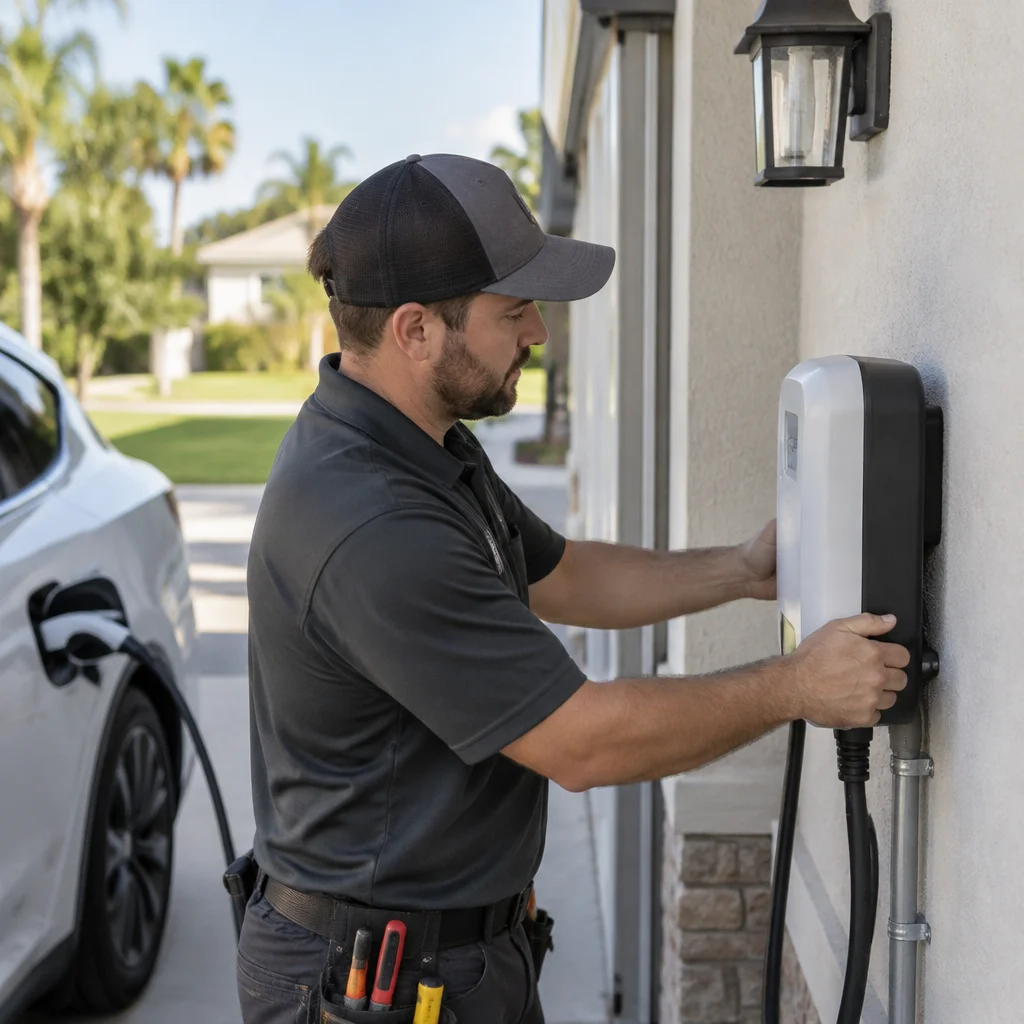
A home EV charger should make daily driving easier, not leave you wondering whether the panel can handle another major appliance. Before equipment goes on the garage wall, someone needs to evaluate the electrical service, circuit route, charging location, and protection required for a long, steady load.
For homeowners considering EV charger installation in Springfield, FL, that planning also means accounting for humid summers, coastal storms, and the differences between older homes and newer construction. A Superior Mechanical provides EV charger installation in Springfield, including Level 2 charging equipment, dedicated circuits, and smart charger integration. Here is how to approach the project before buying equipment or choosing an installation spot.
Start With Your Driving Routine, Not the Biggest Charger
The right charging setup depends on how far you drive, how long the vehicle stays parked, and how much AC charging power it can accept. A higher-output charging station will not make a vehicle charge faster than its onboard charger allows. For many households, a moderate charging rate comfortably replaces the energy used during a normal day.
Level 1 and Level 2 charging serve different needs
Level 1 charging uses a compatible 120-volt outlet and supplies energy relatively slowly. It can work for light driving, but an existing garage receptacle should not automatically be treated as suitable for hours of charging. Its condition, grounding, wiring, and other connected loads need review.
Level 2 charging uses a 240-volt supply and usually provides a more practical daily routine. Homeowners searching for tesla charger installation near me should also verify vehicle compatibility, connector type, and manufacturer-approved adapter requirements. Equipment selection should follow the electrical assessment, rather than force the house to support an unnecessarily large load.
An Empty Breaker Slot Does Not Prove Capacity
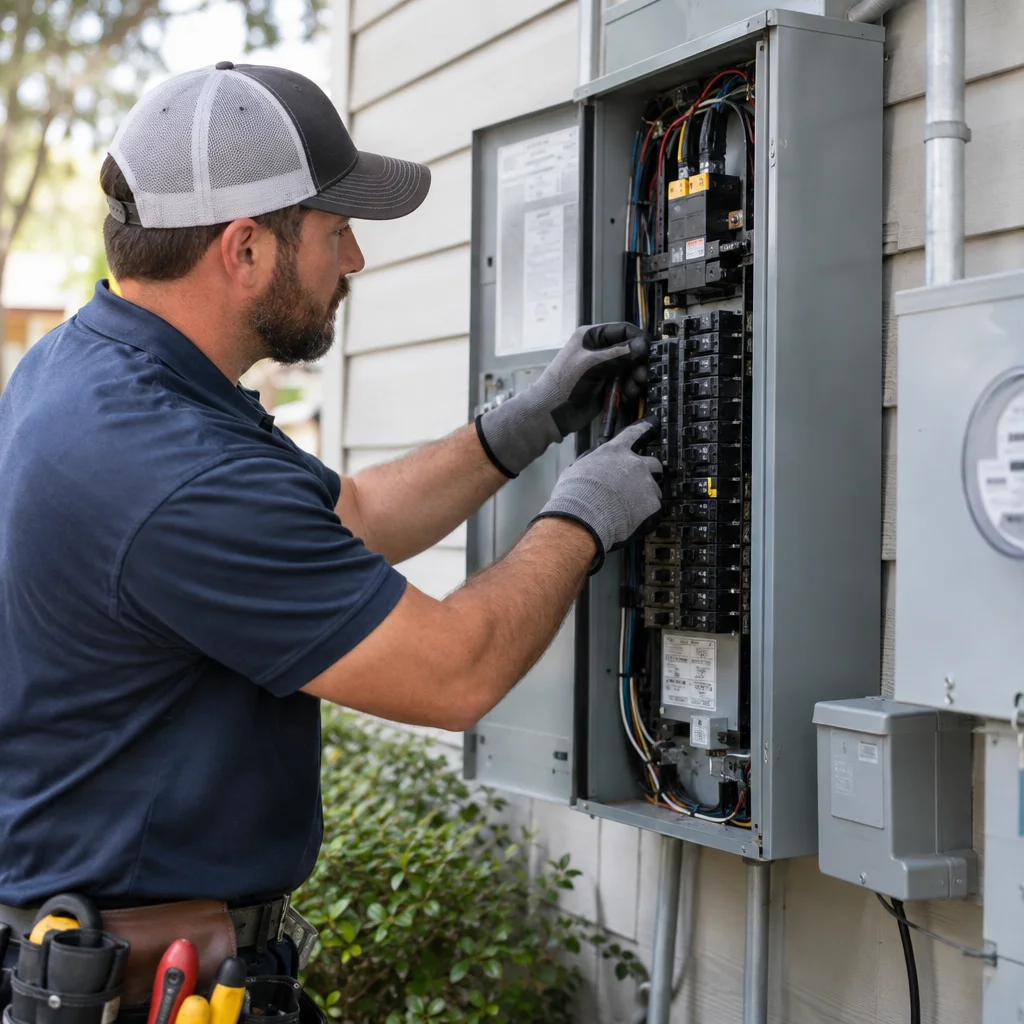
A panel can have room for another breaker without having sufficient capacity for the proposed charger. The electrician needs to consider the service rating, panel rating, existing loads, and a code-compliant load calculation. Cooking equipment, electric water heating, clothes dryers, pool equipment, and other substantial loads affect that assessment.
EV charging operates for extended periods and is generally treated as a continuous load. Circuit sizing must account for that duty. For example, a charger configured to deliver 48 amps commonly requires a 60-amp branch circuit. The final design still depends on equipment instructions, conductor requirements, installation conditions, and applicable code.
A panel upgrade is one option, not an automatic requirement
Depending on the home, the solution might be a lower charging setting, a properly designed circuit, or a listed EV energy management system that limits charging as household demand changes. Other homes genuinely need panel upgrades or service improvements. Adding a subpanel creates circuit space but does not increase the capacity of the existing electrical service.
If a search for breaker box replacement near me started because the panel looks full, ask for a capacity evaluation before assuming replacement is necessary. Panel condition matters too. Corrosion, overheating, unsuitable breakers, or damaged bus connections can require electrical repair independently of the charging project.
Older Homes, Newer Homes, and Remodels Need Different Checks
Springfield homes do not all have the same electrical starting point. An older house may have limited service capacity, an outdated fuse box, or several generations of wiring changes. A newer home may have modern equipment but little spare capacity after additions such as a pool, workshop, or second kitchen.
Remodels and additions can also leave circuit directories inaccurate. Garage outlets, ceiling fans, lighting, and switches may share circuits in ways the current owner does not realize. An electrician should verify the actual layout rather than rely only on labels or the home's age.
Existing problems deserve attention before adding a sustained charging load. Loose connections, damaged insulation, missing grounding paths, and improper splices may require wiring repair or code corrections. Scheduling electrical inspections and code updates can help separate essential safety work from optional improvements.
Give the Charging Circuit a Practical Route
A Level 2 home charger generally needs a dedicated branch circuit sized for the selected equipment and charging current. That circuit should not also supply ordinary garage outlets or unrelated appliances. The route from the panel affects labor, materials, protection requirements, and future access.
A short run through accessible space is different from a route across a finished ceiling or underground to a detached garage. Conductor sizing depends on more than breaker size. Installation method, temperature, terminal ratings, and the number of current-carrying conductors can affect the design. Long runs also warrant a voltage-drop evaluation.
Choose a mounting position that reaches the vehicle's charging port without stretching the cable across a walkway. Think about parking direction, garage door movement, storage shelves, and possible vehicle impact. If a second EV is likely, discuss future conduit or load-sharing options now, while access is available.
Hardwired Equipment or a Charging Outlet?
Some chargers connect directly to the branch-circuit wiring, while others plug into a compatible receptacle. Both approaches require equipment and installation methods suited to the intended charging load. Convenience alone should not decide which arrangement belongs in your garage.
Why homeowners choose hardwired charging
A hardwired installation eliminates the plug-and-receptacle connection, which is one potential source of heat when contacts become loose or worn. It can also support charging levels that are not appropriate for common receptacle configurations. Outdoor installations may benefit from this arrangement, provided the equipment and wiring system are properly rated.
What a plug-in setup requires
A plug-in charger needs the correct receptacle configuration, a suitable circuit, and installation consistent with its listing and manufacturer instructions. EV charging receptacles generally require GFCI protection under modern electrical codes. The electrician must confirm the locally adopted requirements and distinguish branch-circuit protection from protection built into the charger.
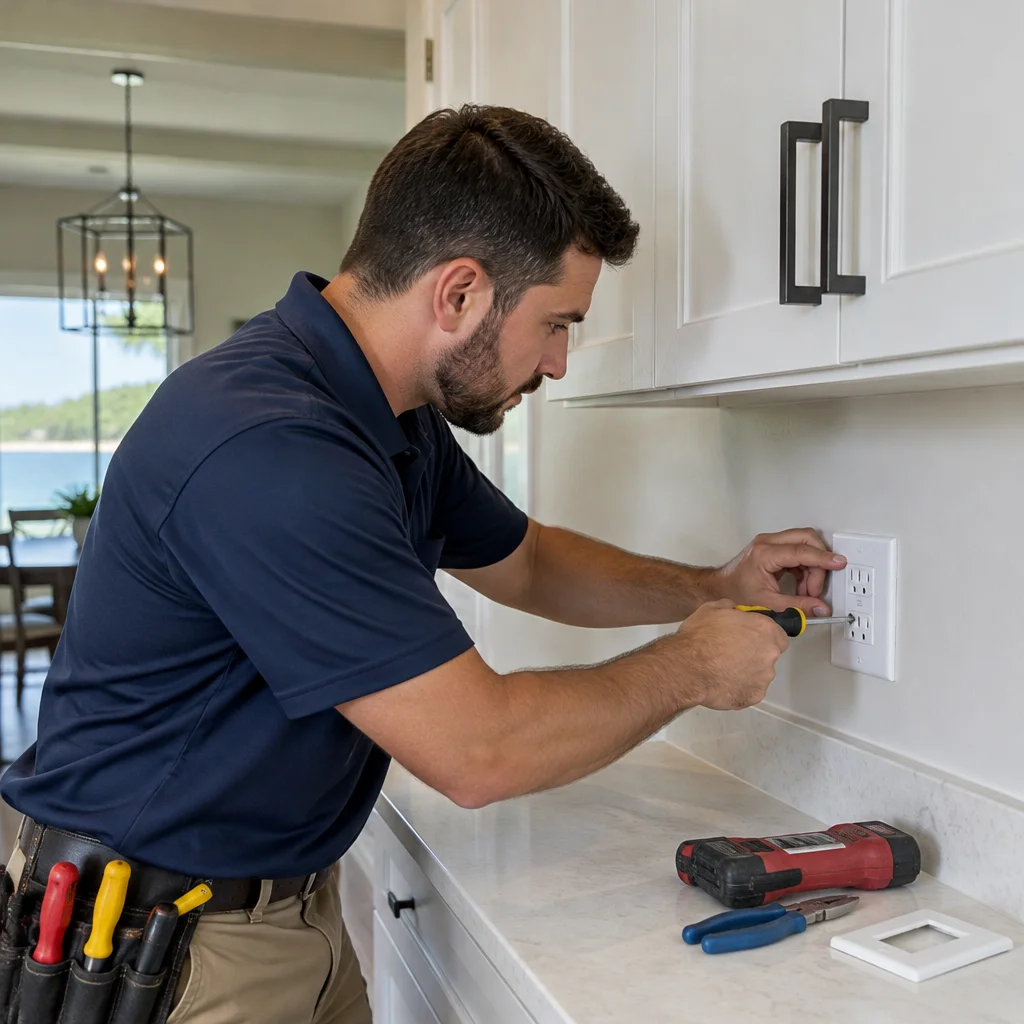
A hot plug, loose fit, discoloration, or recurring charging interruption needs investigation. An outlet repair near me search may lead to a worn receptacle, a loose termination, or a larger wiring issue. Professional outlet and switch service can identify the cause. Do not use household extension cords, power strips, or improvised adapters for vehicle charging.
Plan for Springfield Heat, Humidity, and Storms
Bay County's coastal weather makes equipment placement important. Outdoor chargers need a listing and enclosure rating appropriate for the location. Sun exposure, wind-driven rain, standing water, and corrosion should influence the installation, including fittings, mounting hardware, and the path of exposed conduit.
A garage is not automatically a dry, protected environment. Water intrusion around doors or walls can reach equipment, and summer heat can affect charging performance. Keep the unit accessible and follow required clearances rather than burying it behind stored boxes.
Local electrical service matters because installation conditions vary between properties. An electrical contractor familiar with Springfield homes and electrical needs can plan around local conditions while confirming permit requirements. The same attention to weather exposure matters for charging installations elsewhere in Bay County.
Surge Protection, Grounding, and Generator Compatibility
A charging project is a useful opportunity to review whole-home surge protection and the service's grounding and bonding. A properly selected surge protective device can reduce exposure to certain voltage transients, but it cannot guarantee protection against every storm event or direct lightning strike.
Grounding and bonding serve related but distinct safety functions. The equipment grounding path is essential to fault protection. Adding a ground rod is not a substitute for a missing grounding conductor, and surge protection does not correct loose wiring or damaged electrical equipment.
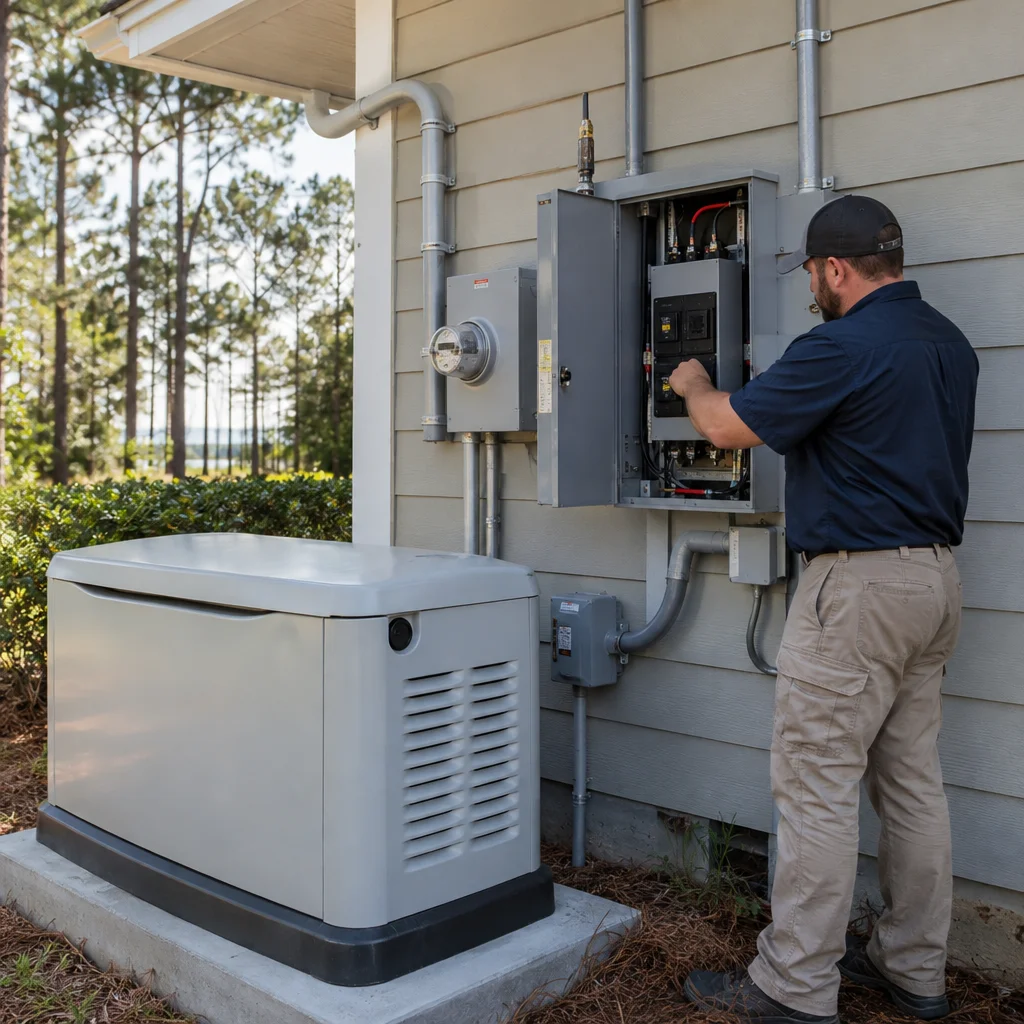
If the home has a standby generator or portable generator hookup, include that system in the planning conversation. EV charging can consume a substantial portion of generator capacity. The design may need to exclude the charger from backup power or use compatible load management. Generator installation requires approved transfer equipment; never improvise a backfeed connection through an outlet.
Handle Nearby Electrical Improvements Without Sharing the EV Circuit
Opening a garage wall or routing new conduit can create a sensible opportunity for separate improvements. Better parking-area lighting, additional general-purpose outlets, or a damaged switch replacement may be easier to coordinate during the project. Those improvements still need appropriate circuits and protection of their own.
For a dim garage entry, indoor lighting installation can improve visibility around the charging cable. The article Better Indoor Lighting Starts Behind the Walls in Springfield Homes explains why fixture selection is only part of that work.
An electrical visit can also identify separate needs involving ceiling fans, smoke detector installation, or security equipment. Reliable cameras and entry lighting depend on sound wiring too, as discussed in electrical planning for Springfield home security systems. Keep these improvements coordinated without treating the EV circuit as spare capacity for other devices.
Electrical Warning Signs That Should Stop Charging
Stop using the charger if you notice a burning odor, melting, visible arcing, a damaged cable, or unusual heat at the receptacle or enclosure. Repeated breaker trips are also a warning. Possible causes include overload, a ground fault, loose connections, failing equipment, or a damaged breaker. Repeatedly resetting it does not fix the problem.
Never install a larger breaker to prevent trips without a complete circuit evaluation. Breaker repair may involve correcting a connection or replacing damaged equipment with an approved component, but the underlying cause must be identified. A breaker protects the wiring, not just the appliance.
If you are searching for an electrician near me because charging causes flickering lights, buzzing, or intermittent power, leave the charger unused until it is assessed. For smoke or fire, leave the area and call 911. Stay away from wet electrical equipment, flooded panels, and downed utility lines. Emergency electrical concerns after storms require professional assessment before reenergizing affected equipment.
Keep the Installation Reliable After Inspection
Before the first regular charging session, the installer should verify circuit protection, configured charging current, grounding, labeling, and operation. Permit and inspection requirements should be addressed through the authority having jurisdiction. Keep the equipment instructions, inspection records, and circuit information for future service.
During normal use, visually check the cable and connector for damage, keep contacts clean according to manufacturer instructions, and return the cable to its holder. Do not open the charger or electrical panel for maintenance. Report recurring faults, unusual warmth, water intrusion, or charging behavior that changes without explanation.
For an installation estimate, have your vehicle model, preferred parking location, charger information, and any available panel details ready. Mention future additions, a second vehicle, or generator plans. A Superior Mechanical can discuss a practical charging layout and necessary electrical work. If the scope includes broader improvements, ask about electrical financing options and eligibility. Request an installation assessment to plan reliable home charging around your Springfield property's actual electrical capacity.
Find EV Charger Installation in Springfield, FL
If you need EV Charger Installation in Springfield, FL, visit our local service page or contact A Superior Mechanical today.
Map of Springfield, FL
Frequently Asked Questions
Will my Springfield home need a panel upgrade for an EV charger?
Not necessarily. An electrician should evaluate service capacity, panel condition, existing demand, and the proposed charging load. Some homes can support a dedicated circuit without an upgrade. Others may benefit from a lower charging rate or an approved energy management system. A panel or service upgrade is necessary when capacity or equipment condition requires it.
Is a hardwired EV charger better than a plug-in charger?
Both can be suitable when properly designed and installed. Hardwiring eliminates a plug-and-receptacle connection and may support higher charging output. Plug-in equipment offers flexibility but needs a suitable receptacle, correctly sized circuit, and required GFCI protection. The best choice depends on the charger, location, and applicable electrical code.
Can an EV charger be installed outdoors in Springfield, FL?
Yes, if the charger is listed for outdoor use and installed with appropriate wiring methods, fittings, and protection. Springfield's heat, humidity, wind-driven rain, and potential water intrusion should influence placement. An electrician should assess the location, mounting, drainage conditions, and applicable permit requirements before installation.
Related Articles
- Behind a Reliable Security System: Electrical Planning for Springfield Homes
- Commercial Electrical New Construction in Springfield, FL: A Practical Guide to Panels, Wiring, Outlets, and Prevention
- Better Indoor Lighting Starts Behind the Walls in Springfield Homes
- Smarter Waterline Replacement for Springfield Homes: Leaks, Pipes, Drains, and Prevention
Photo Gallery