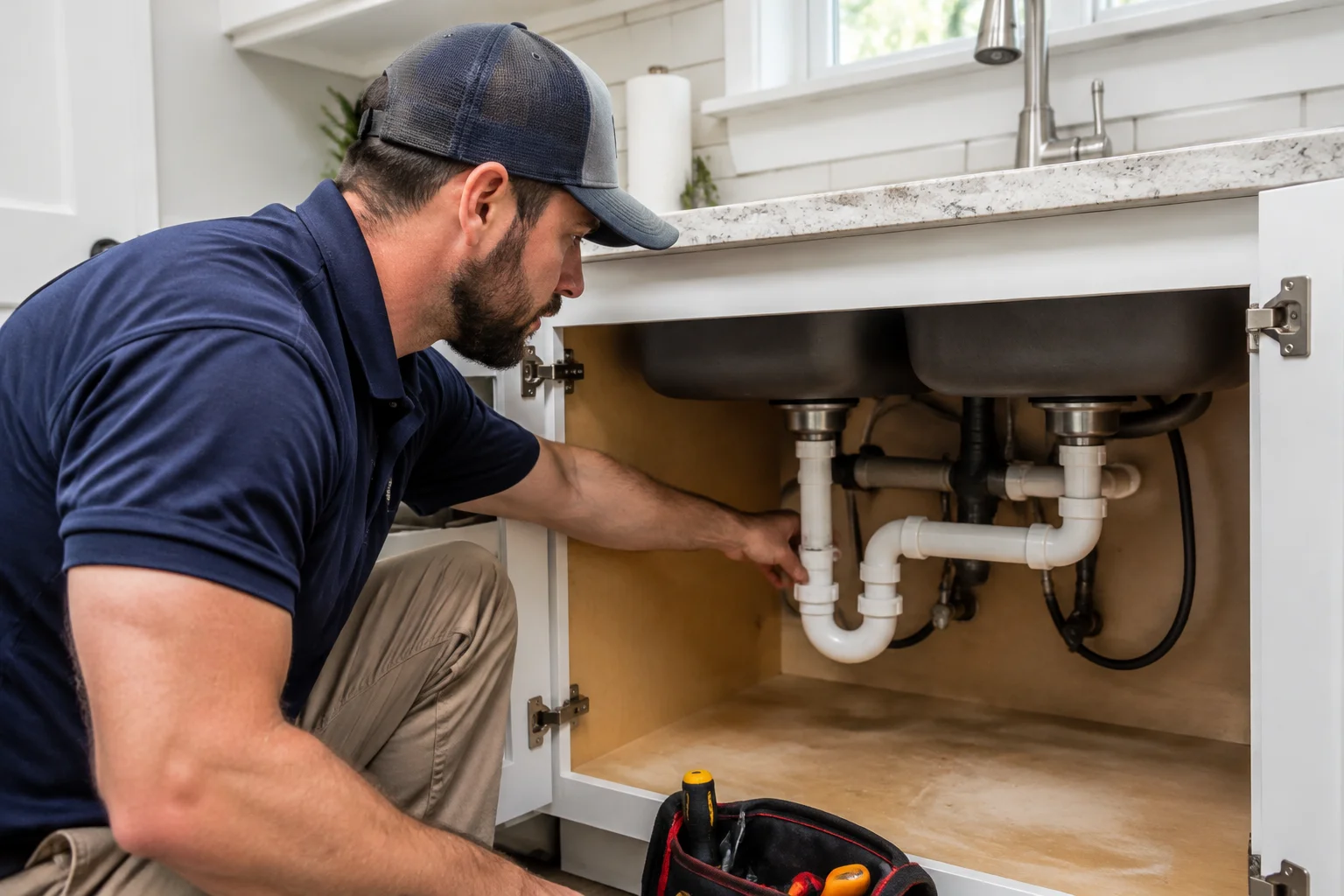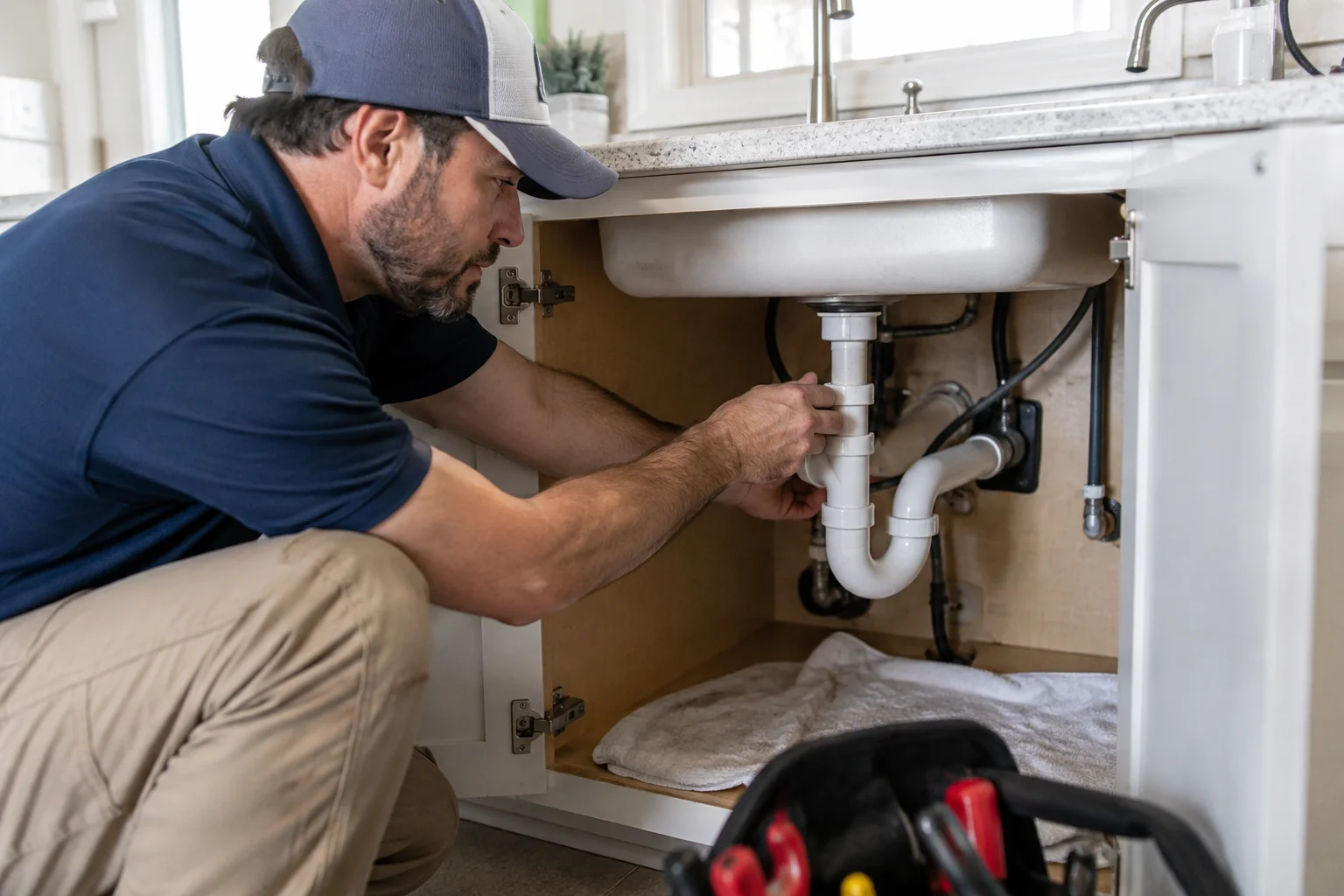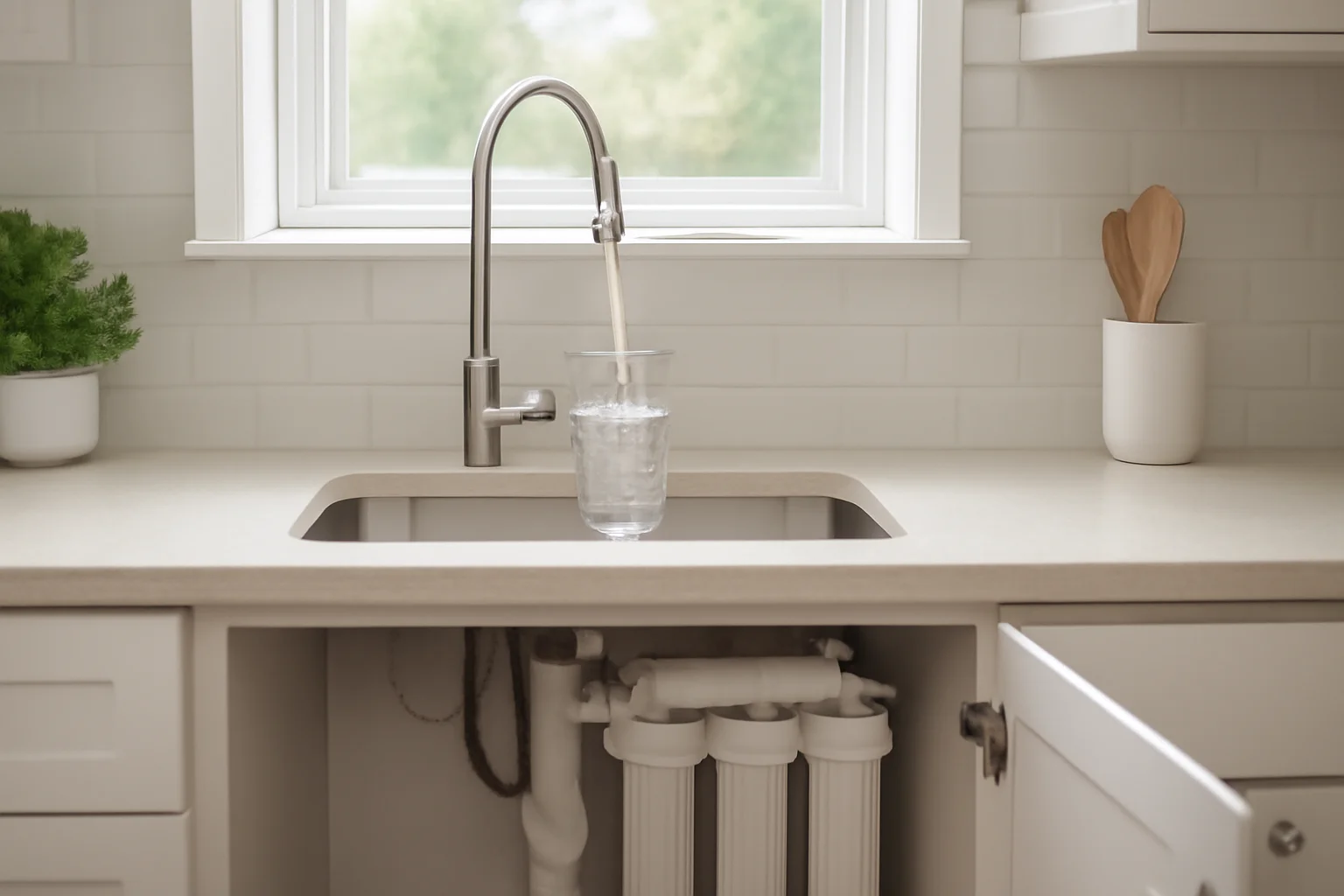
Fort Walton Beach homes see real day to day water impacts from hard water. If you are noticing hard water spots on glass, scale buildup around faucets and showerheads, or soap that does not lather, you are not imagining it. Water softening services can help protect your plumbing, improve bathing and laundry, and make drinking and cooking water taste better. A little planning now can make the installation smoother and help you choose the right system for your household.
Start with what you are seeing in your Fort Walton Beach home
Planning works best when you base it on specific signs. Take a few minutes to look around the places water leaves the strongest clues. Hard water in Fort Walton Beach often shows up as mineral scale and residue, especially as water heats up or evaporates.
Common hard water signs homeowners can spot
These are some of the most familiar indicators that it is time to talk about water softening and whole home water filtration:
- Hard water spots on glass, such as shower doors and drinking glasses that look cloudy even after wiping.
- Scale buildup around faucets, showerheads, and plumbing connections that looks chalky or crusty.
- Dry skin or dull hair after bathing, especially if you feel like soap rinses off poorly.
- Soap does not lather or rinses away without leaving skin feeling clean.
- Metallic, chlorinated, or unpleasant taste, along with concerns about chlorine taste in water and overall odor.
- Cloudy ice cubes that look milky or hazy when they freeze.
- Poor tasting coffee and cooking water, where flavor seems flat or off.
- Visible sediment, discoloration, and odor concerns in sinks or at specific fixtures.
- Appliances wearing out faster, such as water heaters or dishwashers that see scale accumulation.
If you can, note when the problem is most noticeable. For example, is it worse in the morning, after heavy laundry days, or after guests use the showers? Those details help your water treatment professional confirm what kind of filtration and softening you need.
Understand the difference: water softening versus water filtration
Homeowners often hear “water softener” and “water filtration” as if they do the same job. They can work together, but they address different issues.
Water softening targets hardness minerals
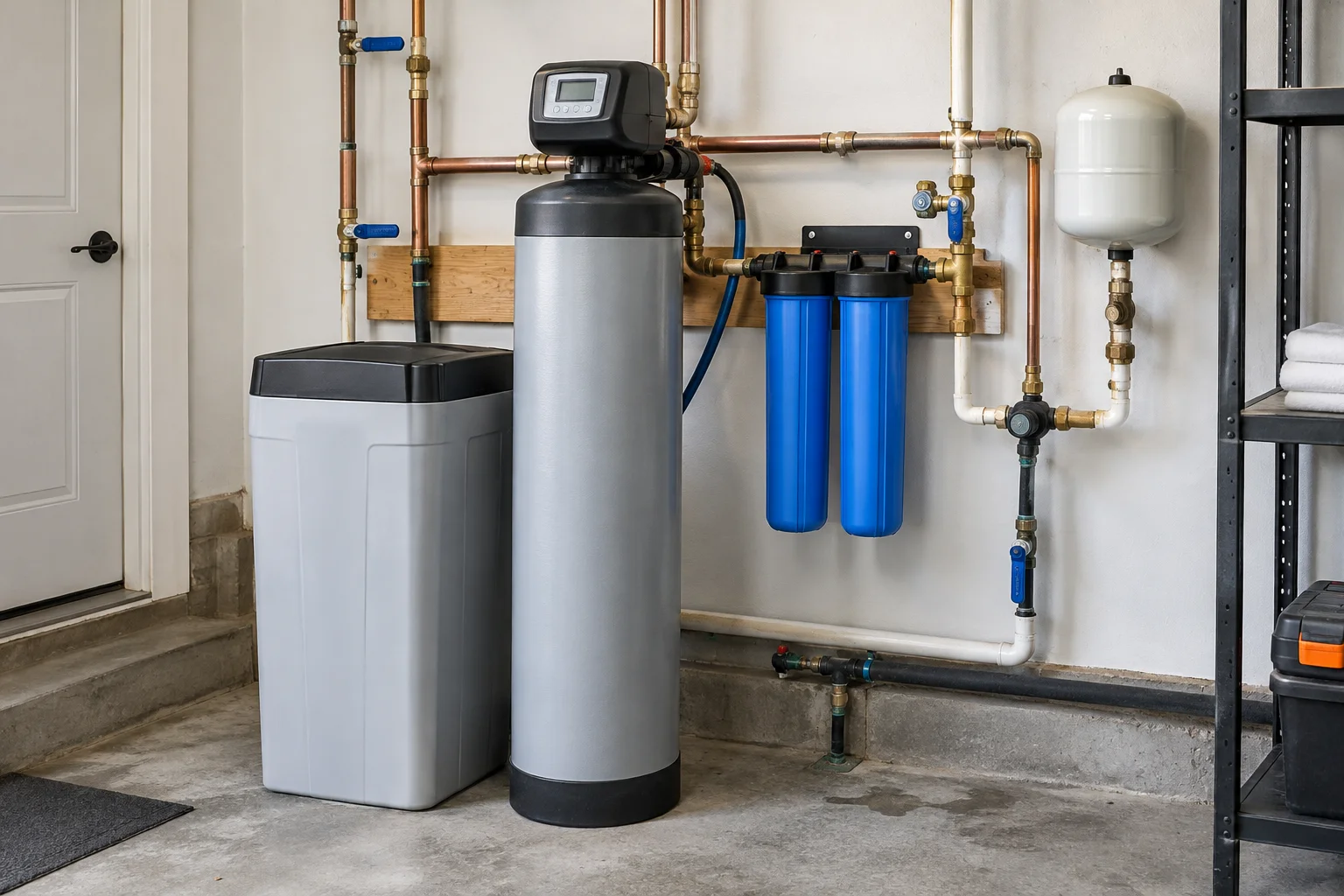
Water softeners reduce hardness minerals that cause scale buildup on faucets, showerheads, and inside plumbing. When hard water becomes part of protecting fixtures and appliances, softening helps reduce the mineral film that can clog lines and reduce efficiency. It also supports better lathering and rinsing, which can make bathing feel more comfortable.
Water filtration targets taste, odor, and sediment
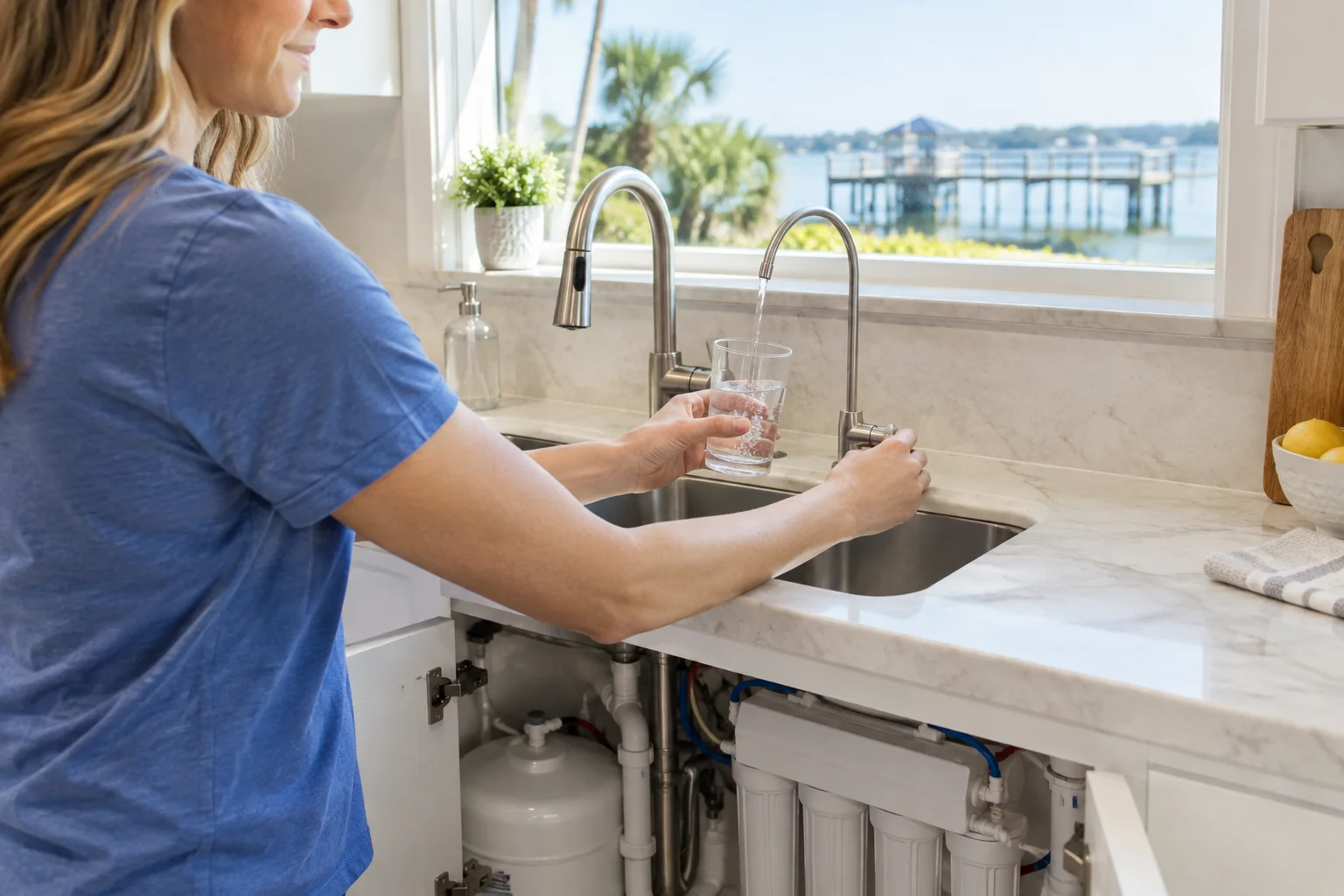
Filtration helps with issues like sediment in household water, cloudiness, and chlorine taste in water. Some systems also improve metallic tasting water concerns and reduce unpleasant odors. Many families prefer a dedicated drinking water filter near the kitchen for everyday use, especially for drinking water and cooking water.
Reverse osmosis and whole home filtration can be part of the plan
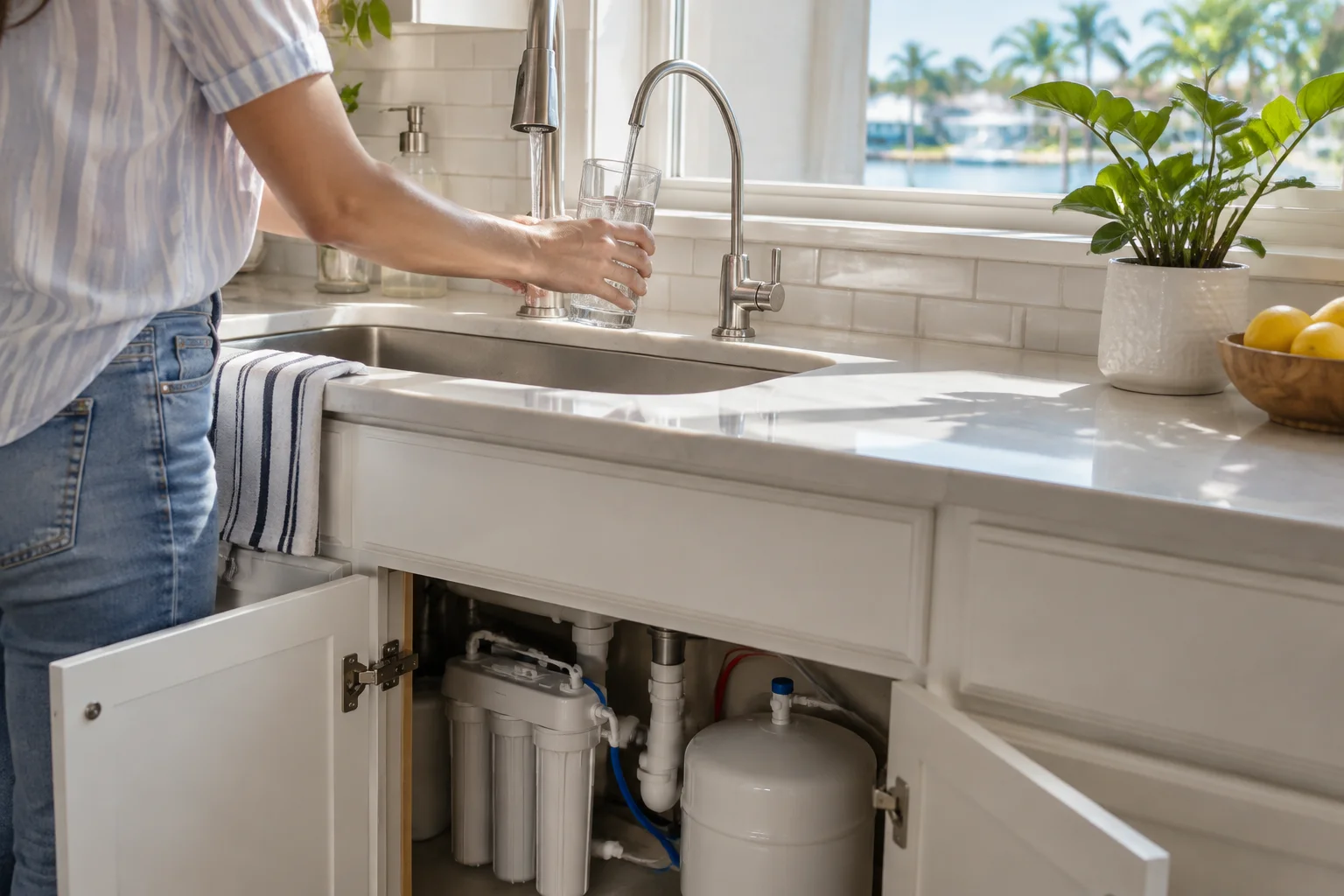
Some households choose reverse osmosis systems for drinking water and ice, while others start with whole home water filtration to protect fixtures and appliances first. Whole home water filtration can also complement a water softener by reducing other contaminants before water reaches your home’s plumbing.
If your main concern is scale and dry skin, water softening is often the priority. If you are also dealing with cloudy ice cubes, metallic tasting water, or unpleasant taste, you may want a layered approach with whole house water filter and, in some cases, AO Smith water filtration or reverse osmosis for drinking water.
Plan your water treatment timeline around real life
Fort Walton Beach schedules are busy. Planning ahead helps your family keep daily routines running smoothly while your system is installed or updated.
Choose a season that fits your home
In coastal Florida, humidity and heavy rain can affect how quickly service teams can access equipment areas and how water usage changes during storms. If you are planning water softener installation near me for your home, consider scheduling when you can handle a short adjustment period and when household water usage is predictable.
Think about how installation affects the household
Most homes have a “kitchen scene” that depends on consistent water quality. Think of morning coffee, a toddler’s bath, laundry cycles, and dishwashing after dinner. Your water treatment plan should include:
- Where your current water treatment equipment is located (garage, utility room, or near the main line).
- How quickly you need drinking water to be ready for daily use.
- Whether you want reverse osmosis installation for drinking water first.
- How you will manage laundry and bathing during any transition period.
A good provider will explain the sequence, so you can keep bathing and cooking water flowing with minimal disruption.
Know what to ask during your consultation
When you are comparing water filtration near me or water softener service options, the best consultations feel specific to your home. Bring a short list of what you are noticing and what you want to protect.
Questions that help you choose the right system
- What is causing the scale buildup around faucets and showerheads? (Hardness, mineral content, or both.)
- Do you recommend a water softener, whole home water filtration, or both?
- Is an AO Smith water filtration system a good fit for my water conditions?
- Would reverse osmosis help with cloudy ice cubes or chlorine taste in water?
- How will you measure current water quality? (Testing helps match the solution to the problem.)
- What maintenance is required? (Salt, filter changes, and system checks.)
- What happens if I only soften or only filter? (Some issues improve with one approach, but others need a layered system.)
Also, ask how the system will be sized for your household. A family of four with frequent laundry and showers will use water differently than a household with fewer occupants. Correct sizing helps the system work efficiently and can reduce long-term costs.
Plan for maintenance so the system keeps working
Water softeners and filtration systems are not set-it-and-forget-it devices. Planning for maintenance protects performance and keeps your water tasting and feeling better over time.
Water softener maintenance basics
Most homeowners can expect routine tasks such as:
- Salt management for the softener tank.
- Periodic checks of system settings and performance.
- Inspection of components that can collect mineral buildup.
When softeners are neglected, scale buildup can creep back. That can mean you start seeing hard water spots on glass again, and you may notice soap does not lather as well.
Whole home water filtration maintenance basics
Filtration systems require filter changes and performance checks. If you have visible sediment, discoloration, and odor concerns, you want to ensure the filtration stage is doing its job. A whole house water filter can help protect plumbing fixtures and appliances, but it still needs scheduled service to avoid reduced flow or decreased water quality.
Drinking water care for the kitchen
Families who care about drinking water and cooking water often add a drinking water filter near the kitchen. If you have issues like metallic tasting water, poor tasting coffee water, or cloudy ice cubes, a reverse osmosis system or dedicated drinking water filtration stage can make a noticeable difference. Planning for filter replacements keeps the taste improvements consistent.
Protect appliances and plumbing before scale costs more
In Fort Walton Beach, water treatment matters because scale buildup does not stay in one place. It travels through your plumbing and accumulates where water heats up or sits. Over time, that can affect:
- Water heaters, which may work harder as scale forms.
- Dishwashers, where mineral residue can reduce cleaning performance.
- Faucets and shower valves, where buildup can restrict flow.
- Plumbing lines, where sediment can contribute to wear and reduced efficiency.
If you are seeing appliances wearing out faster, it is a strong sign that hard water treatment becomes part of a bigger plan for protecting plumbing systems. For homeowners also thinking about plumbing reliability, you can read A Fort Walton Beach Homeowner’s Guide to Water Line Replacement Before Small Problems Spread to connect water quality concerns with long-term plumbing health.
How local water conditions and coastal climate shape your choices
Fort Walton Beach is a coastal community, and the way water behaves in your home is influenced by a mix of factors. Hardness minerals, sediment patterns, and how your home’s plumbing system holds and heats water can all affect the problems you notice. In humid conditions, mineral residue can also appear more quickly on glass and bathroom surfaces.
That is why a local approach matters. When homeowners search for water filtration near me or water softener installation near me, they are looking for solutions that fit the realities of Okaloosa County homes. A local water treatment provider can help you choose equipment that matches your household needs, your plumbing layout, and your goals for clean water systems.
Using trusted brands such as AO Smith water filtration can also be part of a confidence-building plan. When systems are correctly installed and maintained, they help you reduce scale buildup on faucets, improve bathing comfort, and support better drinking water for your family.
Build a “clean water” checklist for your family
Planning ahead is easier when you turn it into a checklist. Here are practical items you can track before and after service.
Before service: document your baseline
- Take photos of hard water spots on glass and shower doors.
- Check scale buildup around faucets and showerheads.
- Notice how laundry comes out and whether clothes feel coated.
- Pay attention to soap does not lather issues and rinse feel.
- Test your everyday water experiences: drinking water, cooking water, ice, and coffee.
After service: confirm the improvements
- Glass surfaces wipe cleaner with less residue.
- Showerheads and faucets show slower scale buildup.
- Skin and hair feel better after bathing.
- Soap lathers and rinses more easily.
- Drinking water tastes cleaner, with less chlorine taste in water or metallic tasting water.
- Ice cubes look clearer, and cooking water performs better.
This approach helps you and your technician confirm the system is working as intended, whether you chose water softening, whole home filtration, reverse osmosis, or a combination.
Where to start for Fort Walton Beach water softening services
If you are ready to plan water softening with a professional team, you can review the service area details for water softening services in Fort Walton Beach, FL. It is also helpful to see how water softening pairs with other upgrades by visiting the water filtration and reverse osmosis landing page.
For a broader look at local service coverage, use the Fort Walton Beach service page and Okaloosa County service area information.
Planning ahead does not need to be complicated. Start with what you are noticing, clarify whether you need water softening, filtration, or both, and schedule service when your household can accommodate a smooth installation. When the right system is installed and maintained, everyday water use becomes more comfortable, from bathing to laundry to the taste of coffee and cooking water.
If you want broader home reliability guidance that connects water quality to plumbing performance, these reads can help: Plumbing warning signs Fort Walton Beach homeowners should not ignore and Planning Sewer Repair Around Fort Walton Beach Homes and Hard Water.
Find Water Softening Services in Fort Walton Beach, FL
If you need Water Softening Services in Fort Walton Beach, FL, visit our local service page or contact A Superior Mechanical today.
For a broader look at whole-home water filtration, reverse osmosis, and water softener options, visit our water filtration, RO, and water softener page.
Map of Fort Walton Beach, FL
Frequently Asked Questions
How do I know whether I need a water softener or a whole home water filter in Fort Walton Beach?
If you are seeing hard water spots on glass, scale buildup around faucets and showerheads, or dry skin and soap that does not lather, water softening is usually the priority. If you also notice chlorine taste in water, metallic tasting water, sediment in household water, or cloudy ice cubes, whole home water filtration and possibly reverse osmosis for drinking water may be the better match.
Can a reverse osmosis system replace water softening?
Reverse osmosis is designed to improve drinking water quality, taste, and clarity. It does not always address the hardness minerals that cause scale buildup on fixtures and inside plumbing. Many homes use a layered approach, such as water softening for scale control and reverse osmosis for drinking water and ice.
What maintenance should I plan for after water softener installation near me?
Most water softeners require routine salt refills and periodic performance checks. Whole home water filtration systems also need filter changes on a schedule. Planning maintenance helps prevent the return of scale buildup, reduced lathering, and less consistent water taste.
Will better water really affect bathing, laundry, and cooking water?
Yes. When hardness minerals are reduced, soap lathers and rinses better, which can help with dry skin or dull hair after bathing. Laundry often comes out cleaner with less residue. And when you improve drinking water quality, you can also see improvements in poor tasting coffee water and cooking water flavor.
Related Articles
Photo Gallery