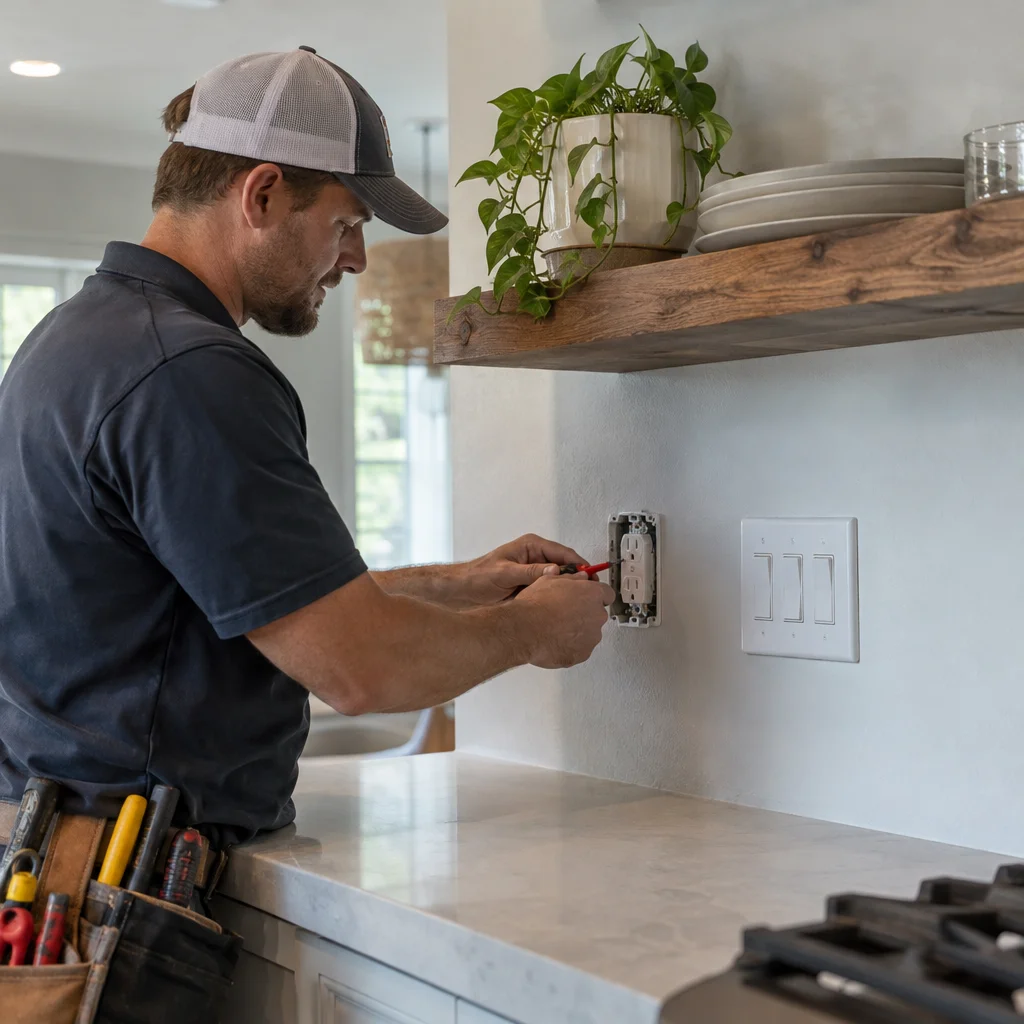
A loose kitchen outlet or a flickering bathroom light can seem like a small inconvenience. Sometimes the fix is straightforward. Other times, that symptom points to damaged wiring, an overloaded circuit, or a connection that needs attention before it overheats. The useful question is not just whether a device needs replacing, but why it stopped working properly.
Along the 30A corridor in Walton County, electrical planning also means accounting for humidity, storm exposure, vacation rental use, and changing household demand. A Superior Mechanical provides outlets and switches service in 30A, FL with those practical concerns in mind. A good plan connects everyday convenience with the condition of the wiring, breakers, and panel behind the walls.
Small electrical symptoms deserve a closer look
Outlets and switches experience years of plugging, unplugging, and repeated operation. A worn receptacle may no longer grip a plug securely. A failing switch may crackle, work intermittently, or feel different when operated. These are reasons to arrange electrical repair, not simply replace the cover plate.
Watch for heat, discoloration, and unreliable operation
Scorch marks, melted plastic, a burning odor, or a hot faceplate require prompt attention. Stop using the affected device. If you can safely identify and access its breaker, turn that circuit off. Do not touch damaged components or remove a cover to investigate. Smoke, flames, or active arcing call for evacuation and 911.
A dead outlet without visible damage still needs context. Did several receptacles stop working together? Did it happen after rain or when a hair dryer started? Those details help distinguish a failed device from a tripped protective device, a circuit problem, or moisture intrusion.
A switch problem may actually involve the lighting
Flickering can come from an incompatible LED dimmer, a failing lamp, a loose connection, or a supply issue. Homeowners searching for switch repair near me should describe whether the problem affects one fixture, one room, or several areas. Sudden widespread brightening and dimming deserves urgent professional evaluation.
Start with the circuit, not the faceplate
An outlet is the visible endpoint of a larger electrical system. Before adding or replacing devices, an electrician should evaluate the circuit rating, conductor condition, grounding, connections, and existing loads. Installing a new receptacle does not correct undersized wiring or create additional circuit capacity.
Several rooms may share a branch circuit, especially in older homes. A portable heater in one room and a vacuum in another can trip the same breaker. The solution might involve redistributing loads or installing a dedicated circuit, rather than replacing an otherwise functional outlet.
Repeated breaker trips should never be handled by continually resetting the breaker or installing a larger one. Breakers protect wiring from excessive current. For someone searching for circuit breaker repair near me, the first priority is finding the cause of the trip. A defective breaker may require compatible replacement, but overloads, shorts, and ground faults need different repairs.
Accurate circuit labeling is worth including in the work. Knowing which breaker controls a bathroom, porch, or bedroom makes maintenance easier and helps occupants respond safely when something goes wrong.
Plan outlets and switches around how each room works
Kitchens and bathrooms need protection and usable placement
Kitchen counters carry substantial electrical demand from coffee makers, toasters, and other appliances. Outlet placement should support normal use without extension cords stretched across sinks or cooking areas. Required small-appliance circuits and appliance-specific circuits need to be considered during a remodel.
Bathroom planning should account for grooming appliances, lighting, ventilation, and moisture exposure. GFCI protection reduces shock risk by detecting an imbalance in current flow. It is required in bathrooms and many other locations under applicable code. An electrician can determine the correct protection for the location and scope of work.
If you are searching for gfci outlet installation near me, ask about the entire circuit rather than just the visible receptacle. A standard-looking outlet may already have upstream GFCI protection, while a GFCI receptacle that will not reset may indicate a fault or loss of power.
Bedrooms and living areas benefit from intentional controls
Think about bedside charging, television equipment, desk locations, and furniture layouts before choosing new outlet positions. Permanently relying on power strips or extension cords often signals that the room needs a better electrical layout.
Switch placement matters just as much. Controls at practical entry points reduce the need to cross dark rooms. Compatible dimmers can improve comfort, while smart switches may require a neutral conductor that is absent in some older switch boxes. Coordinate these changes with indoor lighting installation in 30A so fixtures and controls work together.
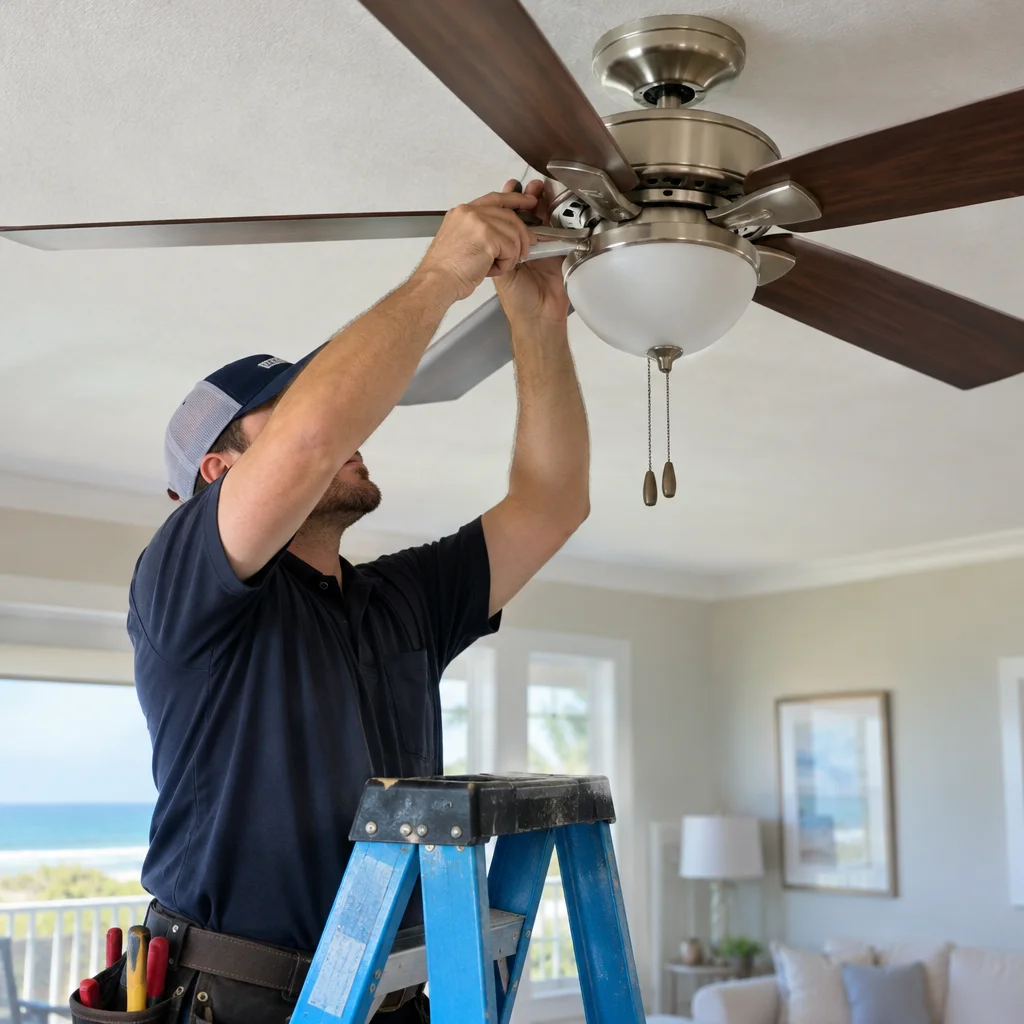
Ceiling fans need properly rated support boxes and suitable wiring. A box that supports a light fixture is not automatically suitable for a fan. Separate fan and light controls should also be planned before walls are closed.
Porches and garages need equipment suited to the location
Outdoor receptacles need appropriate weather-resistant devices, covers, and GFCI protection where required. Garages may need additional capacity for tools, refrigeration, or charging equipment. Our room-by-room outlet and switch planning guide offers useful layout ideas that also apply to many 30A homes.
Coastal conditions change the maintenance conversation
Salt-laden air, high humidity, wind-driven rain, and storms can accelerate deterioration of exposed electrical equipment. On 30A, pay particular attention to porch outlets, exterior boxes, pool-area equipment, and connections near outdoor living spaces. A cracked cover or loose seal can allow moisture into an enclosure.
Corrosion is not always limited to the visible cover. Rust staining, damaged seals, or recurring outdoor GFCI trips warrant inspection. If equipment has been flooded, do not energize it just because the outside appears dry. Flood-exposed electrical components require professional evaluation and may need replacement.
Vacation rentals also experience frequent turnover and unfamiliar appliance use. Between stays, owners or property managers can look for broken plates, loose plugs, and damaged outdoor covers without opening electrical boxes. For nearby coastal properties, this guidance on keeping Rosemary Beach outlets and switches safe explains why small defects should not sit on a maintenance list indefinitely.
Know when outlet work calls for panel planning
Adding receptacles does not always require a panel upgrade. The answer depends on available capacity, equipment condition, circuit arrangement, and calculated demand. An electrical inspection is more useful than assuming that an older panel must be replaced or that an empty breaker space guarantees capacity.
Remodels and additions often introduce loads that were not part of the original design. An expanded kitchen, workshop, or EV charger can change the picture. Homeowners searching for electrical panel upgrade near me should ask for a load calculation and an explanation of any equipment limitations before selecting a panel size.
A 200 amp upgrade is appropriate for some properties, but it is not a universal requirement. A subpanel can provide distribution space without increasing the capacity of the main electrical service. Older fuse equipment should likewise be evaluated on its condition, suitability, and the planned work.
Panel replacement and substantial circuit changes may require permits, inspections, and utility coordination. Local electrical service matters because requirements depend on the property's jurisdiction and the code adopted for the work. A Superior Mechanical's 30A service area page provides a starting point for discussing the property and project.
Older wiring and new devices must be compatible
Older coastal cottages may have ungrounded circuits, deteriorated insulation, or alterations made during several renovations. Newer homes can also develop loose connections or have layouts that no longer fit their occupants. Building age alone cannot establish electrical safety.
If aluminum branch-circuit wiring is present, connections require methods and components specifically suitable for that wiring. Ordinary device replacement is not an adequate substitute for evaluation. Likewise, installing a three-slot receptacle does not create an equipment ground. Certain GFCI-protected replacement arrangements are permitted with required labeling, but they still do not provide grounding.
Targeted wiring repair may resolve a localized defect. Widespread deterioration or extensive renovation may justify discussing whole home rewiring. The scope should follow inspection findings rather than a blanket recommendation.
Leave room for backup power, charging, and protection
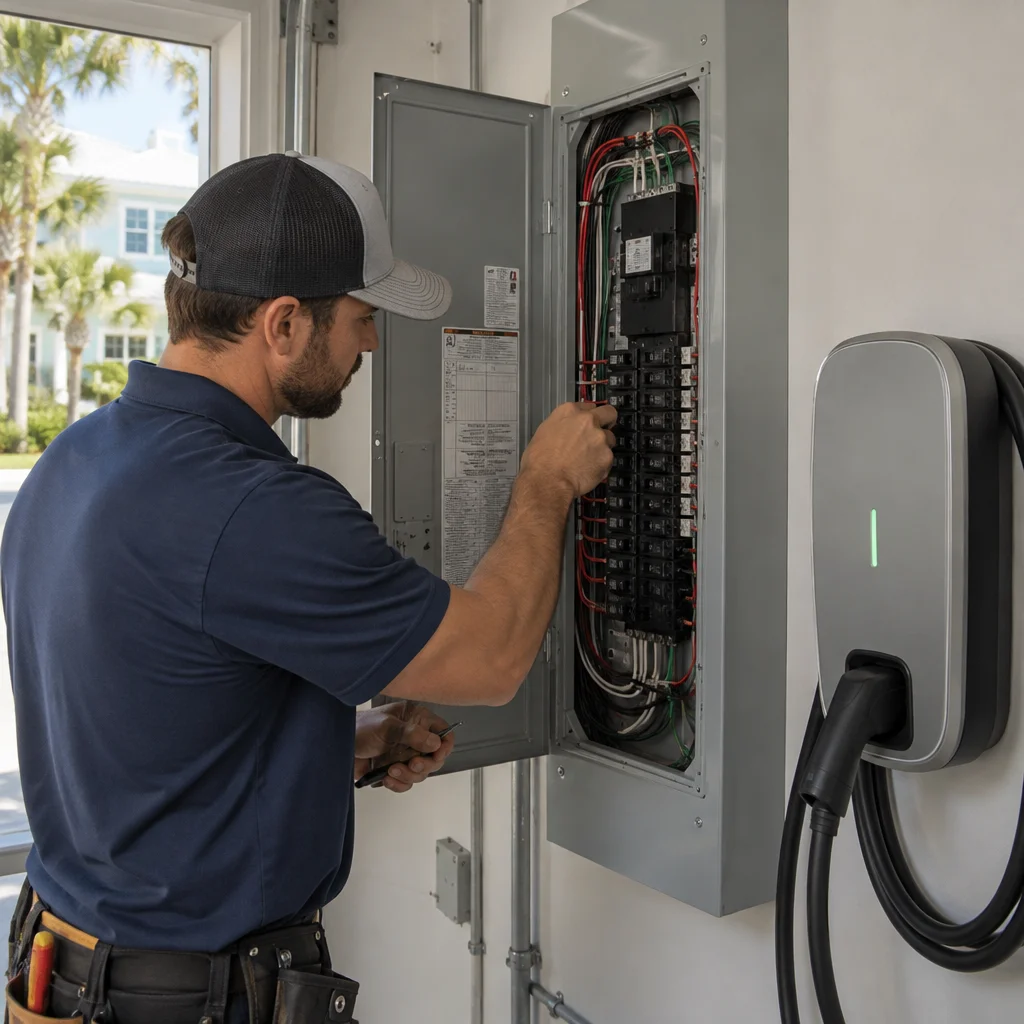
Outlet and switch planning is a useful time to discuss future electrical demand. EV charger installation typically requires a dedicated circuit sized for the selected equipment and assessed against service capacity. An existing garage or dryer receptacle should not be assumed suitable for vehicle charging.
Generator installation also affects circuit planning. Decide which loads matter during an outage, then select a properly designed system with approved transfer equipment. Never connect a generator through a household receptacle. Portable generators must operate outdoors, at least 20 feet from doors, windows, and vents, with exhaust directed away from buildings. Our article on backup power planning on 30A explores these decisions further.
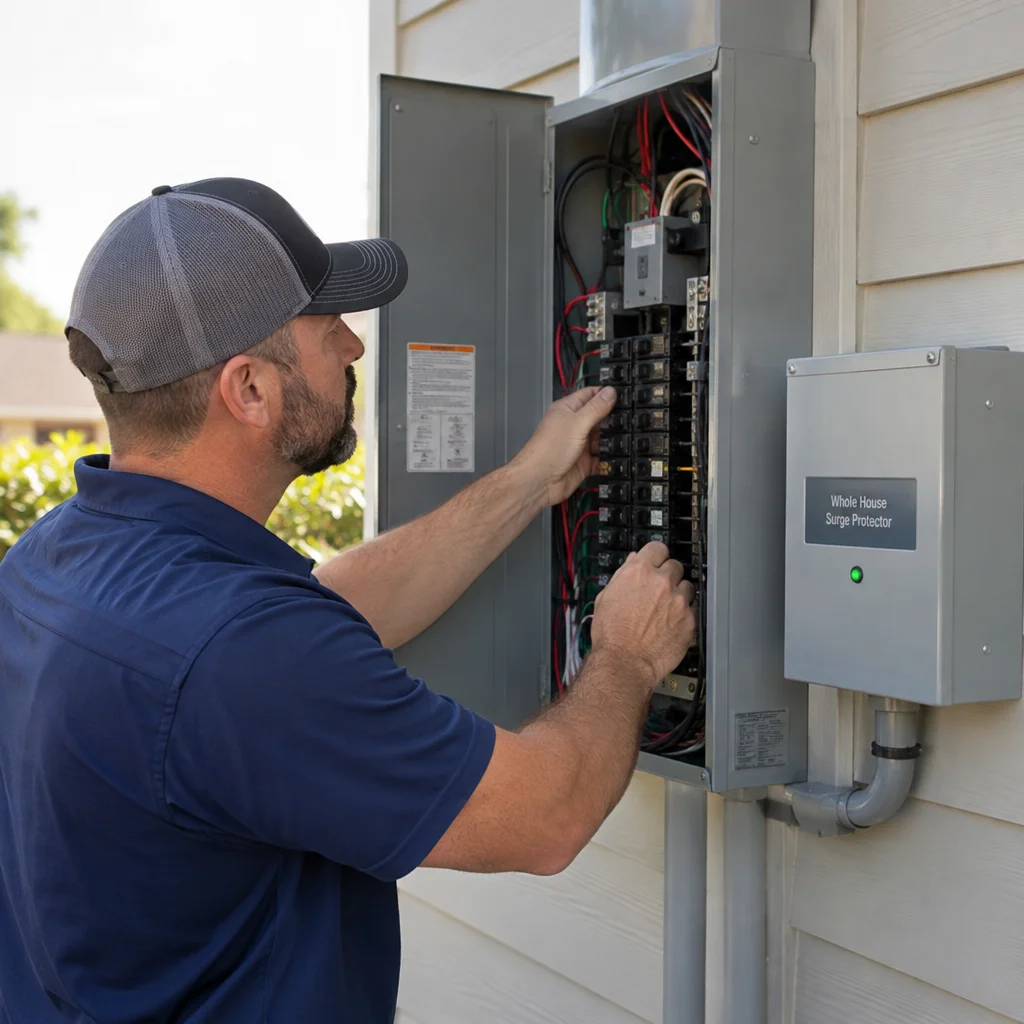
Whole-home surge protection can reduce damage from some voltage surges, but it cannot guarantee protection from every lightning event. Proper grounding and bonding remain essential. Coordinated protection at the service and sensitive equipment can be part of a broader storm-readiness plan.
During a remodel, include smoke detector installation and carbon monoxide alarm requirements in the discussion. Alarm placement, interconnection, and power arrangements depend on applicable rules and the project scope.
Practical prevention between service visits
Test GFCI devices according to their manufacturer's instructions, commonly monthly, and arrange service if they fail the test. Check smoke and carbon monoxide alarms as directed by their manufacturers. Keep panel access clear, and avoid concealing extension cords under rugs or routing them through doors.
Look periodically for loose faceplates, damaged cords, plugs that fall out easily, and outdoor covers that no longer close properly. These are visual checks only. Tightening internal connections, opening panels, and testing exposed wiring belong with a qualified electrician.
Electrical maintenance across Walton County should reflect exposure and use. A heavily occupied rental or storm-exposed property may need a different inspection schedule from a lightly used home. Record recurring problems and arrange evaluation after flooding, suspected lightning damage, or unexplained circuit failures.
Arrange the right help for your 30A property
For nonurgent work, prepare a room-by-room list of unreliable outlets, awkward switch locations, and planned appliances. Share any history of trips, recent storm damage, or previous repairs. That helps the electrician separate immediate safety needs from convenience improvements.
For burning odors, damaged equipment, or urgent loss of power within the home, seek emergency electrical services. Report neighborhood outages to the utility, and stay away from downed lines. To discuss outlet repair, switch replacement, code corrections, or a larger electrical plan, contact A Superior Mechanical with your property's location and the symptoms you have noticed.
Find Outlets and Switches in 30A, FL
If you need Outlets and Switches in 30A, FL, visit our local service page or contact A Superior Mechanical today.
Map of 30A, FL
Frequently Asked Questions
Does adding outlets to a 30A home require a panel upgrade?
Not necessarily. An electrician should check circuit capacity, panel condition, available breaker space, and calculated electrical demand. Some projects can use existing circuits, while others need a new dedicated circuit or service upgrade. More outlets alone do not increase available power.
Why does an outdoor GFCI outlet keep tripping after rain?
Moisture may be entering the receptacle box, an attached appliance, or another device protected by the same GFCI. Damaged covers, seals, and wiring are possible causes. Stop using affected equipment and have the circuit evaluated rather than repeatedly resetting or bypassing the protection.
Can I replace an older two-slot outlet with a three-slot outlet?
Not without checking the circuit's grounding and applicable replacement requirements. A three-slot receptacle does not create a ground. An electrician can determine whether a grounding connection is available or whether a permitted, properly labeled GFCI-protected replacement arrangement is appropriate.
Related Articles
Photo Gallery