A new air conditioner should do more than lower the temperature. In Seagrove Beach, it also needs to manage moisture, move air evenly, and withstand a demanding coastal environment. A system that looks right on paper can still leave upstairs bedrooms warm or living spaces clammy if the installation overlooks the house around it.
For homeowners planning air conditioning installation in Seagrove Beach, FL, the best starting point is a whole-home assessment. A Superior Mechanical provides installation services for coastal homes, vacation rentals, condos, and businesses. Here is what deserves attention before choosing equipment and scheduling the work.
Plan for Seagrove Beach weather, not just summer heat
Along the 30A corridor, cooling equipment faces long stretches of warm, humid weather. Moisture can remain a comfort problem even when outdoor temperatures are moderate. Salt air can accelerate corrosion on outdoor units, while storms bring wind-driven debris, heavy rain, and power interruptions.
The home itself matters just as much. Older homes may have leaky ductwork, limited insulation, or returns that were never designed for today's room layouts. Newer homes may be tighter, making ventilation and moisture control especially important. Remodels and additions change cooling requirements, even when the original equipment still runs.
Working with a contractor familiar with HVAC service in Seagrove Beach helps connect those conditions to practical installation decisions instead of treating every replacement as an equipment swap.
Start with a load calculation, not the old unit's size
Replacing a three-ton system with another three-ton system is not automatically the right choice. The original equipment may have been oversized, or the home may have changed since it was installed. Square footage alone cannot account for window exposure, ceiling height, insulation, air leakage, and occupancy.
Ask for a recognized residential cooling load calculation, commonly called Manual J. Room-by-room results help identify where cooling is needed and support equipment selection and duct design. This is particularly useful for homes with large glass doors, upstairs bedrooms, or enclosed porches.
Why bigger can feel worse
An oversized AC can cool the thermostat area quickly and shut off before removing enough moisture. Frequent starts also reduce efficiency and can increase wear. An undersized system may struggle to maintain temperature during peak conditions. Long cycles alone, however, do not prove a problem, especially with variable-capacity equipment designed to run steadily.
Choose a complete system that works together
Central cooling depends on the relationship between the outdoor condenser, indoor evaporator coil, air handler or furnace blower, refrigerant piping, and controls. A replacement plan should specify a compatible equipment combination rather than assume every existing component can remain.
Ask about the system's certified efficiency rating, available capacity range, sound levels, warranty terms, and maintenance requirements. SEER2 measures seasonal cooling efficiency, but actual energy use also depends on installation quality, ducts, thermostat settings, and the building envelope. Higher efficiency cannot compensate for major air leaks.
Homeowners searching for high efficiency AC installation near me should compare the proposed installation scope, not just the equipment label. A clear quote should explain what happens to the indoor equipment, refrigerant lines, drain system, thermostat, and any necessary duct connections.
Consider heating during the cooling decision
A heat pump provides cooling and can reverse operation to heat the home during cooler weather. Ask whether a heat pump fits your needs and how supplemental heat would be controlled. If the home uses a furnace, confirm that its blower and controls are compatible with the new AC. Existing heating repair needs should be evaluated rather than hidden inside a cooling-only proposal.
Fix airflow problems before they follow the new equipment
A powerful new unit cannot reliably fix a bedroom served by a crushed duct. Uneven temperatures, weak vents, excessive blower noise, and doors that move when the system starts can point to airflow or pressure problems. These symptoms deserve investigation before installation.
A duct assessment should look for disconnected runs, damaged insulation, restrictive fittings, and leaks. Supply and return airflow both matter. A room with a supply vent but no adequate return-air path may become uncomfortable when its door is closed.
Ductwork repair and duct sealing can reduce losses in an attic or other unconditioned space. Proper sealing uses approved materials, not ordinary cloth duct tape. Airflow measurements and static pressure testing help determine whether the duct system can support the selected equipment.
Keep furniture and rugs away from vents. Closing several registers to force air elsewhere can increase pressure and reduce performance. Zoning may help some homes, but it requires compatible controls, equipment, and duct design.
Make humidity control part of the installation
Sticky rooms, condensation on cool surfaces, and persistent musty odors can signal excess moisture. They do not automatically mean the AC needs replacement. Air leaks, duct leaks, drainage problems, and moisture entering from elsewhere in the building can produce similar symptoms.
A practical indoor relative humidity target is often around 40 to 50 percent, with conditions kept below 60 percent when possible. A simple hygrometer can reveal whether the home is staying humid even when the thermostat reaches its setting.
Variable-capacity equipment may improve moisture removal through longer, lower-output operation when properly selected and configured. Some homes also benefit from a dedicated dehumidifier. Set the thermostat fan to auto unless your contractor recommends otherwise, since continuous fan operation can reintroduce moisture from a wet coil in some systems.
Moisture problems require source control. Air fresheners and a lower thermostat setting are not substitutes for finding the cause.
Protect indoor air quality without restricting airflow
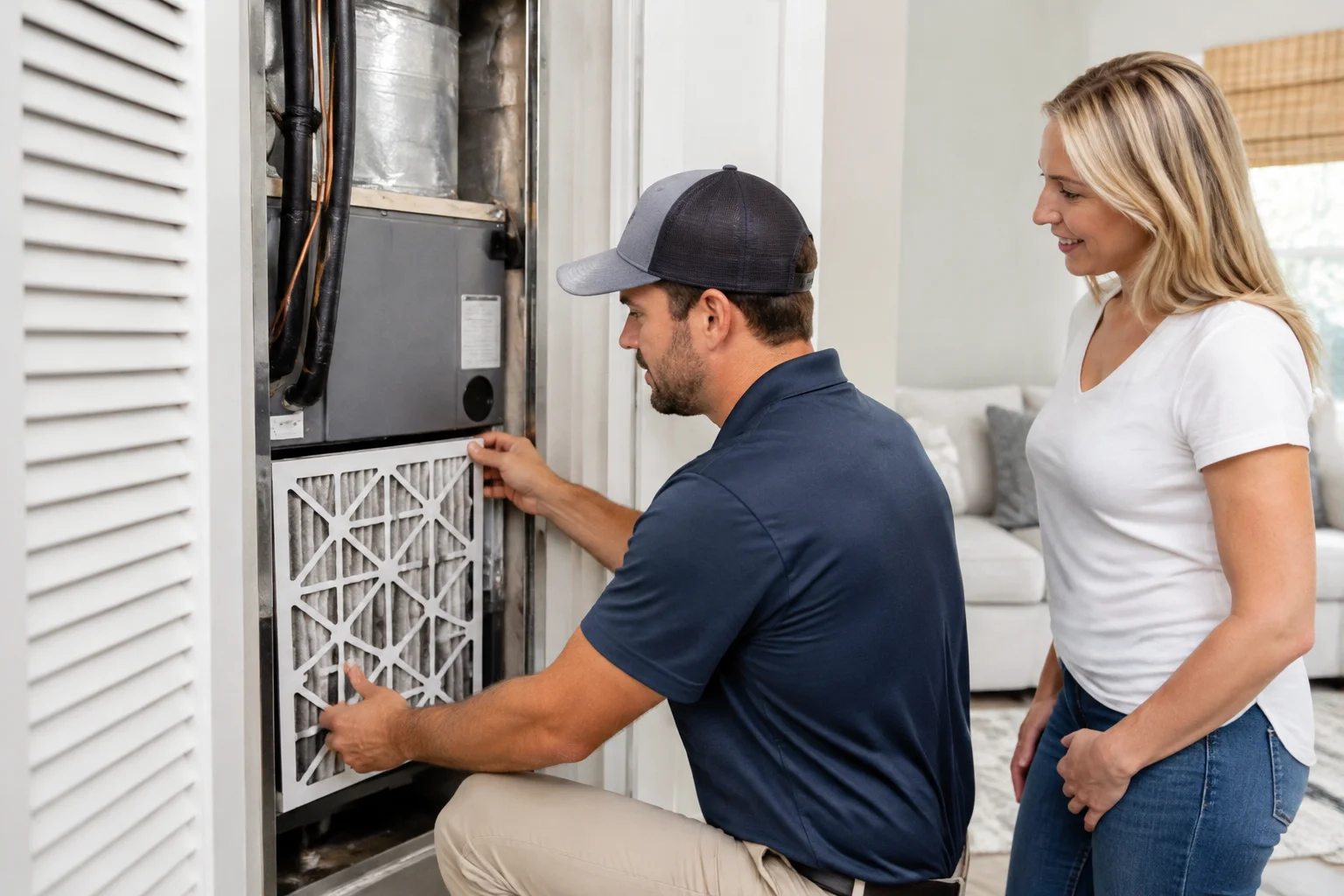
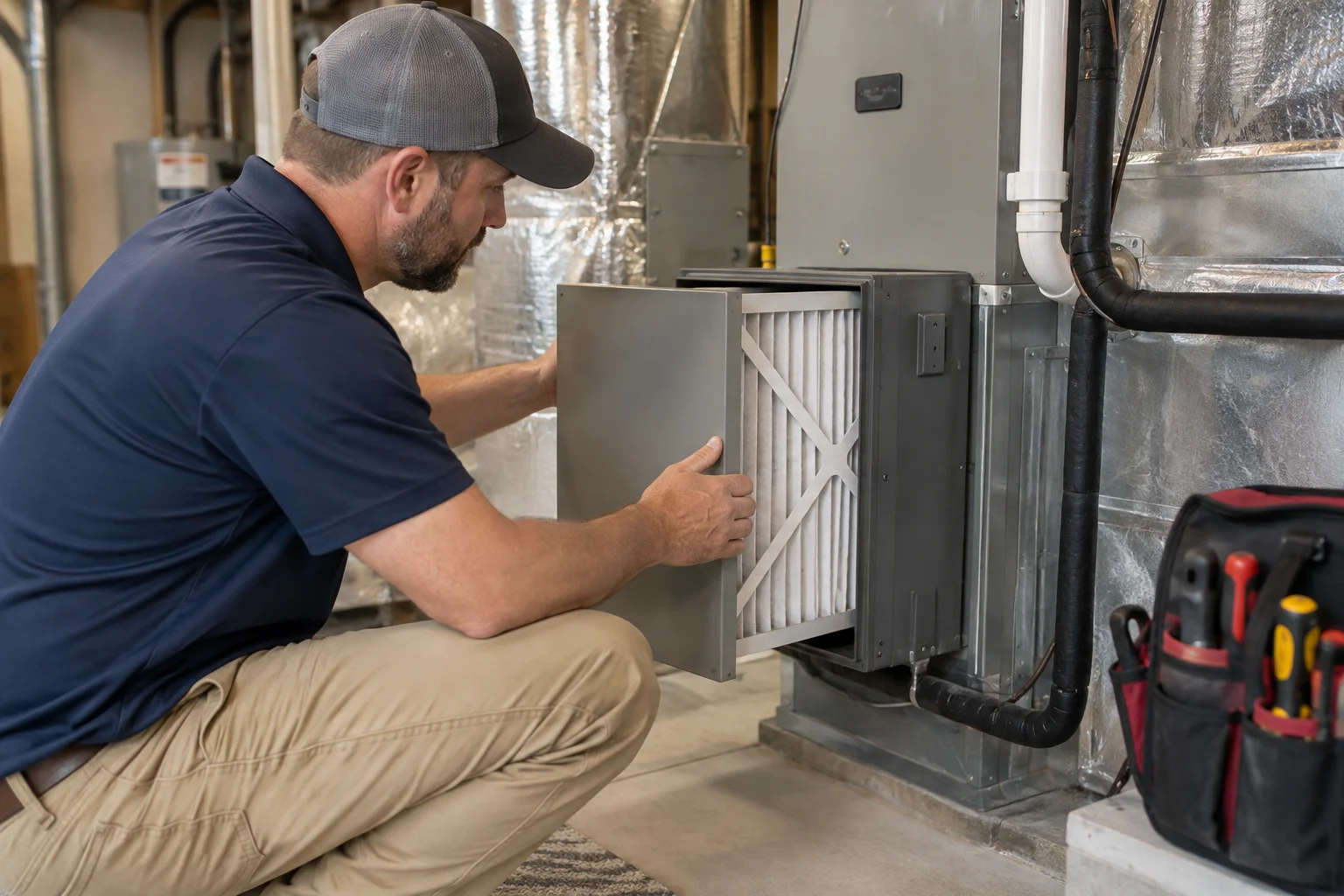
Filters protect equipment and help capture airborne particles, but filtration needs to match the system. An overly restrictive filter can reduce airflow, especially in a small return grille or filter rack. Ask which filter size, thickness, and efficiency the installation can accommodate.
For persistent dust, odors, or concerns after renovation, indoor air quality testing can help guide further investigation. It should complement an inspection for moisture and ventilation problems, not replace one.
Discuss air filtration and purifier options based on the specific concern. Particle filters do not remove every gas or odor, and no purifier fixes a water intrusion problem. Good indoor air quality starts with clean equipment, controlled moisture, appropriate ventilation, and consistent filter care.
Give outdoor equipment a coastal installation plan
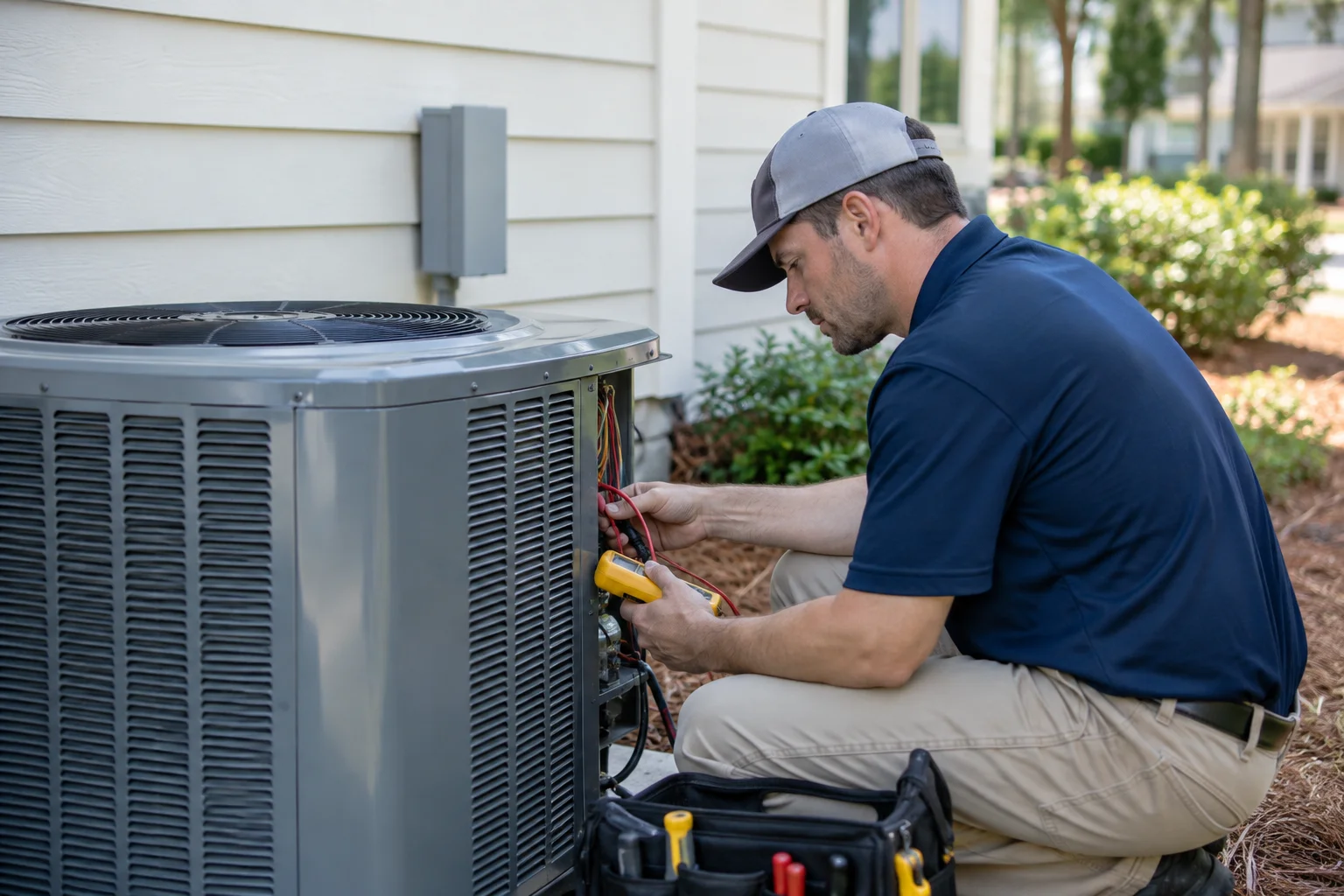
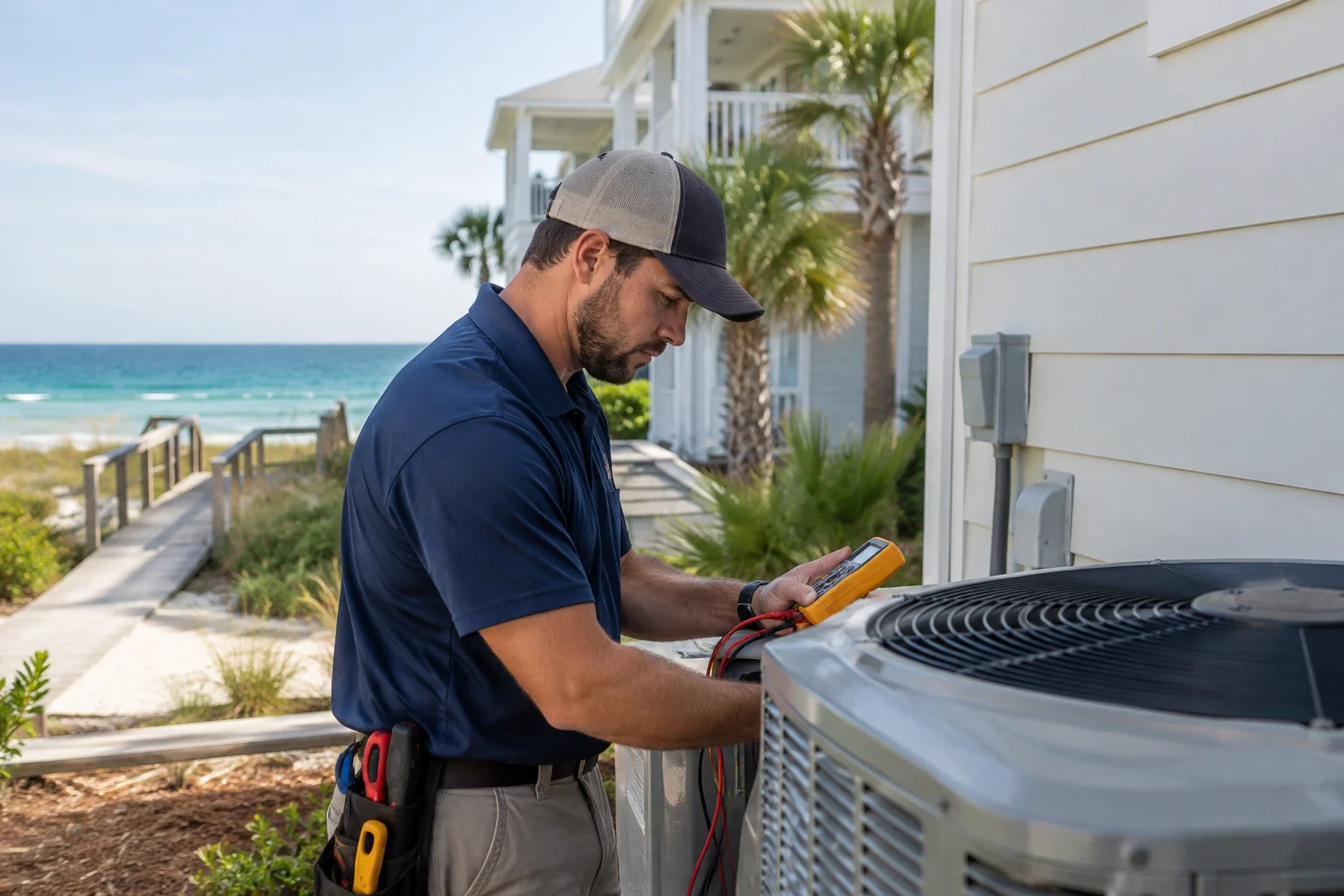
Condenser placement affects service access, airflow, noise, and exposure. Outdoor units need manufacturer-required clearance from walls, vegetation, and other obstructions. Fencing or landscaping intended to hide equipment should not trap discharge air or block maintenance.
Ask about applicable anchoring, elevation, permitting, and local code requirements. Flood exposure and storm conditions should be considered for the specific property. Coastal-rated features or manufacturer-approved corrosion protection may help, but they do not make equipment immune to salt exposure.
Keep leaves and sand from accumulating around the unit. Follow manufacturer guidance for any rinsing, and leave chemical coil cleaning to a professional. Pressure washing can damage delicate fins. Never wrap or tightly cover a condenser while it is operating.
Match the approach to additions, remodels, and rentals
An added bedroom or converted garage should not simply receive a branch from the nearest duct. The existing equipment and distribution system may lack the capacity. During larger projects, new construction HVAC planning can coordinate equipment space, duct routes, returns, and service access before finishes go in.
For an isolated room or addition, ductless mini splits may offer independent temperature control without extending central ducts. If you are searching for ductless mini split installation near me, ask about indoor head placement, condensate routing, cleaning access, and whether adjacent rooms will receive adequate conditioning.
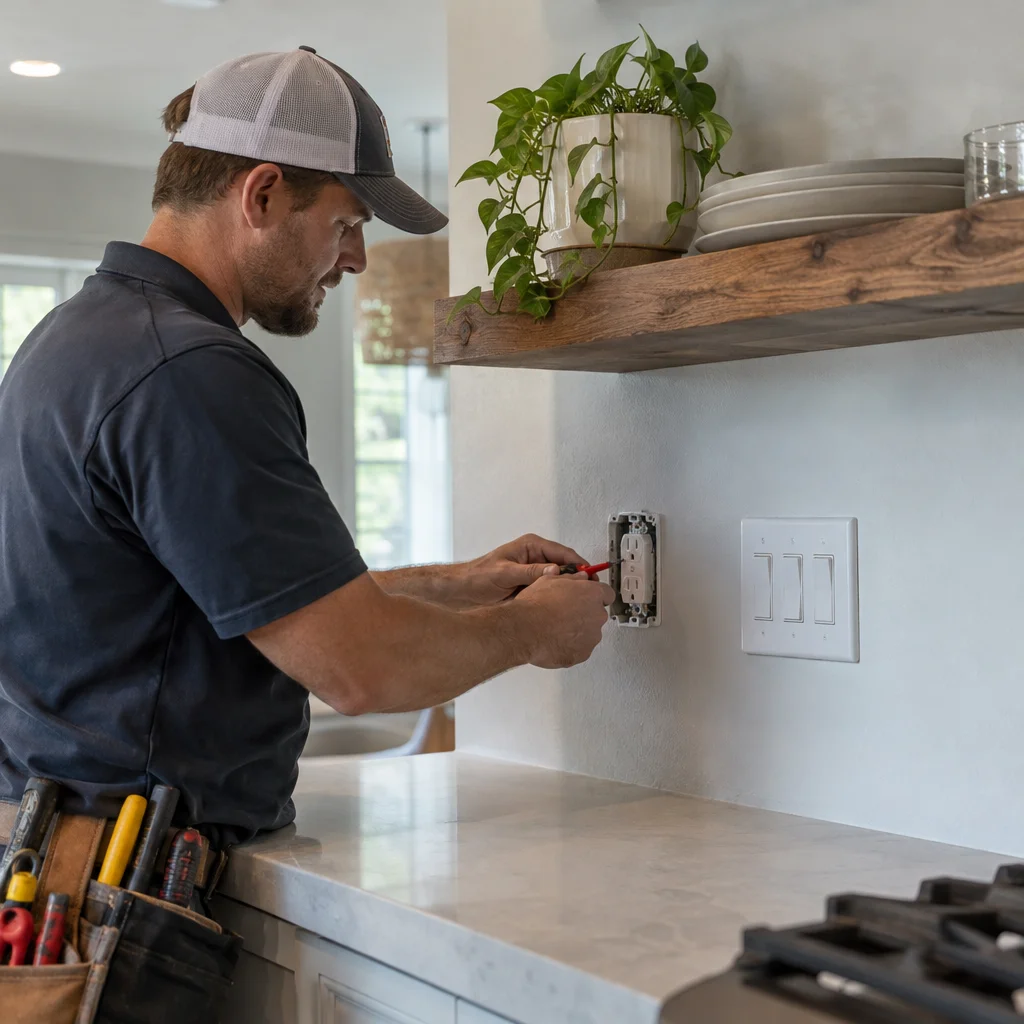
Vacation rentals benefit from straightforward thermostat controls and a plan for filter changes between busy periods. Smart thermostat installation should include compatibility checks and sensible humidity settings. During a major remodel, coordinating the HVAC work with an electrical plan for the home can also prevent equipment power requirements from becoming a late surprise.
Require startup testing, not just a cooling demonstration
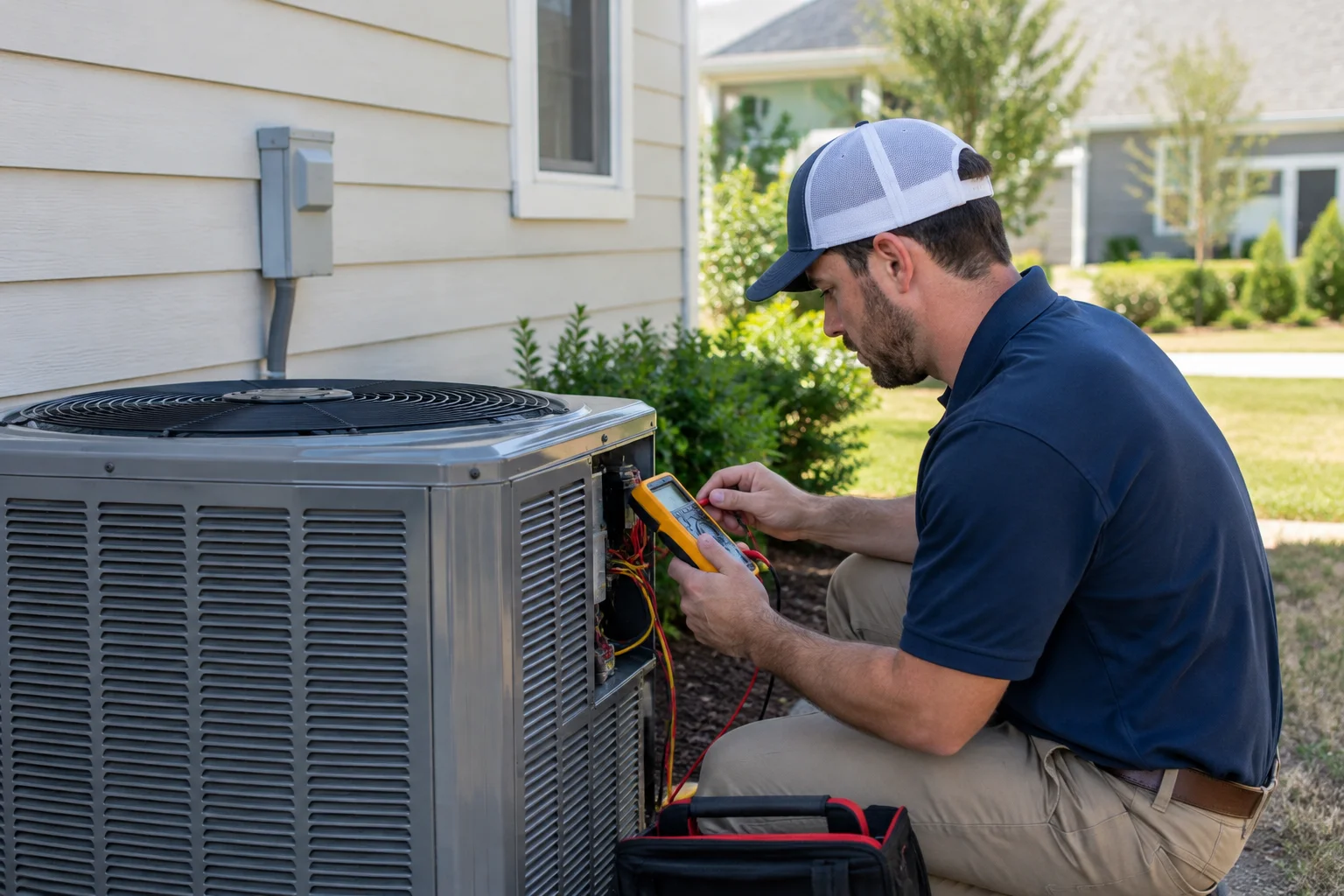
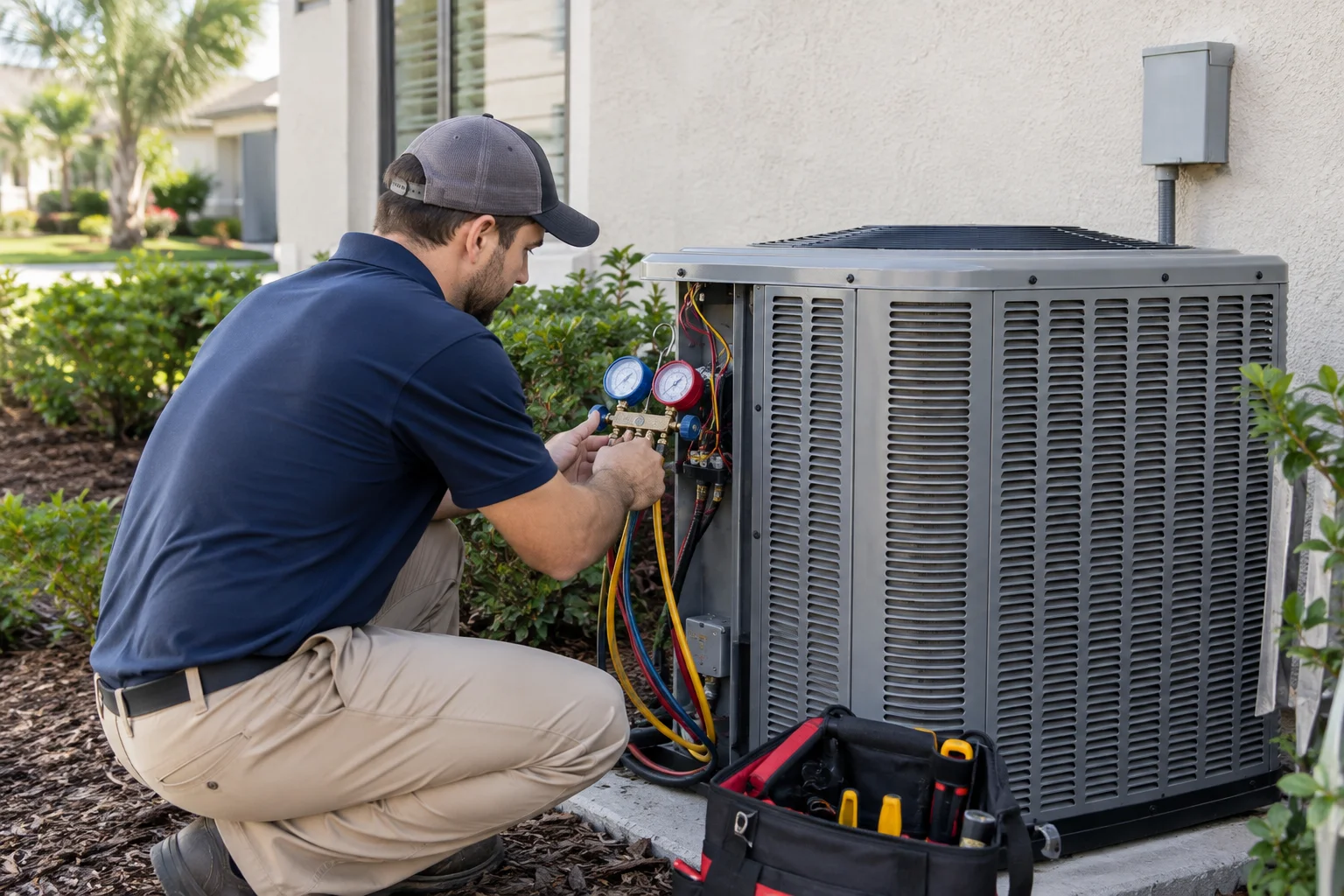
Installation is not finished because cold air comes from a vent. Commissioning should verify airflow, refrigerant charge using the manufacturer's procedures, thermostat operation, and condensate drainage. Refrigerant piping must be properly prepared and tested before operation.
Ask the installer to check the drain pan, drain lines, and applicable overflow protection. A blocked drain can cause a shutdown or water damage, particularly when an air handler sits above finished space. Service access should remain usable after the installation.
Before the crew leaves, learn how to replace the filter, operate the thermostat, and recognize a drainage shutdown. Keep the model information, warranty paperwork, and maintenance instructions together.
Separate repairable faults from replacement problems
Not every cooling failure calls for new equipment. A failed capacitor, clogged drain, dirty coil, or thermostat issue may be repairable. Homeowners looking for home AC repair near me should request a diagnosis before deciding that an uncomfortable house needs a larger system.
Refrigerant does not normally get used up. A low charge can indicate a leak or an earlier charging problem, and repeated refills are not a lasting solution. Compare repair and replacement based on equipment condition, repair history, compatibility, operating costs, and the scope of necessary work.
For smoke, a burning smell, repeated breaker trips, or water threatening ceilings, stop operating the system if safe and seek help. A search for emergency HVAC repair near me should lead to professional diagnosis, not repeated resets. If there is fire or immediate danger, leave the area and contact emergency services.
Keep the installation performing through every season
Check filters regularly and replace them according to their condition and manufacturer guidance. Schedule HVAC maintenance before peak cooling demand when possible. Professional service should address coils, electrical components, refrigerant performance, drainage, and airflow. Heat pumps and furnaces also need heating maintenance appropriate to their equipment type.
Across Walton County, seasonal demand can make advance planning valuable, especially for occupied rentals. Local service matters because follow-up visits, coastal exposure, and changing occupancy all influence long-term comfort.
To plan air conditioning installation in Seagrove Beach, contact A Superior Mechanical with your home's cooling concerns, renovation plans, and repair history. Ask for a proposal that addresses sizing, airflow, moisture control, and startup testing so the new system solves the right problems.
Find Air Conditioning Installation in Seagrove Beach, FL
If you need Air Conditioning Installation in Seagrove Beach, FL, visit our local service page or contact A Superior Mechanical today.
Map of Seagrove Beach, FL
Frequently Asked Questions
How is the right AC size determined for a Seagrove Beach home?
A contractor should use a cooling load calculation that considers insulation, windows, air leakage, ceiling heights, room layout, and local design conditions. Square footage and the existing unit's tonnage are not enough, especially after a remodel or addition.
Will a new air conditioner solve indoor humidity problems?
A properly sized and configured system can improve moisture removal, but it cannot fix every humidity source. Leaky ducts, outdoor air infiltration, drainage faults, or building moisture problems may also need attention. Some homes benefit from a dedicated dehumidifier.
Should existing ductwork be replaced during AC installation?
Not necessarily. Ductwork should be inspected for leakage, damage, insulation problems, and adequate airflow capacity. Sound ducts may remain, while specific sections may need sealing, repair, or redesign. Testing helps determine which work is necessary.
Related Articles
- A Smarter Electrical Plan for Seagrove Beach Homes, From Panels to Connected Living
- A Practical Guide to Water Heater Installation in Seagrove Beach and the Plumbing Problems That Shorten System Life
- What Seagrove Beach Homes Reveal About Their Water
- The Water Clues Seagrove Beach Homes Should Not Ignore
Photo Gallery