A brighter kitchen or a more comfortable living room starts with fixture choices, but the electrical system behind those fixtures matters just as much. Panel capacity, circuit condition, switch locations, and outlet placement all affect how well indoor lighting works. Planning them together helps avoid repeat repairs and walls that need to be opened twice.
For homeowners in Mary Esther, FL, that planning should also account for coastal humidity, thunderstorms, and changing household power demand. A Superior Mechanical provides indoor lighting installation, upgrades, and repairs in Mary Esther, helping homeowners connect lighting improvements with practical electrical decisions.
Start With How Each Room Actually Gets Used
Before selecting recessed lights or pendants, walk through the house after dark. Notice where you cast a shadow while preparing dinner, where reading requires a portable lamp, and where glare makes a television difficult to watch. These observations are more useful than simply counting existing fixtures.
Build layers instead of adding brightness everywhere
Ambient lighting provides general illumination. Task lighting supports activities such as cooking, reading, and grooming. Accent lighting highlights shelving, artwork, or architectural details. Combining these layers usually produces a more comfortable room than installing one very bright ceiling fixture.
In kitchens, undercabinet lights can illuminate work surfaces without forcing recessed lights to do everything. In bathrooms, light beside a mirror can reduce facial shadows. Hallways and bedrooms benefit from convenient switching that does not require crossing a dark room.
Homeowners searching for kitchen lighting installation near me should bring an electrician a simple room sketch, cabinet layout, and list of daily frustrations. Those details help establish useful fixture locations before wiring begins.
Check the Panel Before Expanding the Lighting Plan
LED fixtures generally use less electricity than comparable incandescent lighting, so a lighting upgrade does not automatically require a new panel. Still, the panel deserves attention when the project includes a remodel, addition, new appliances, or other major loads.
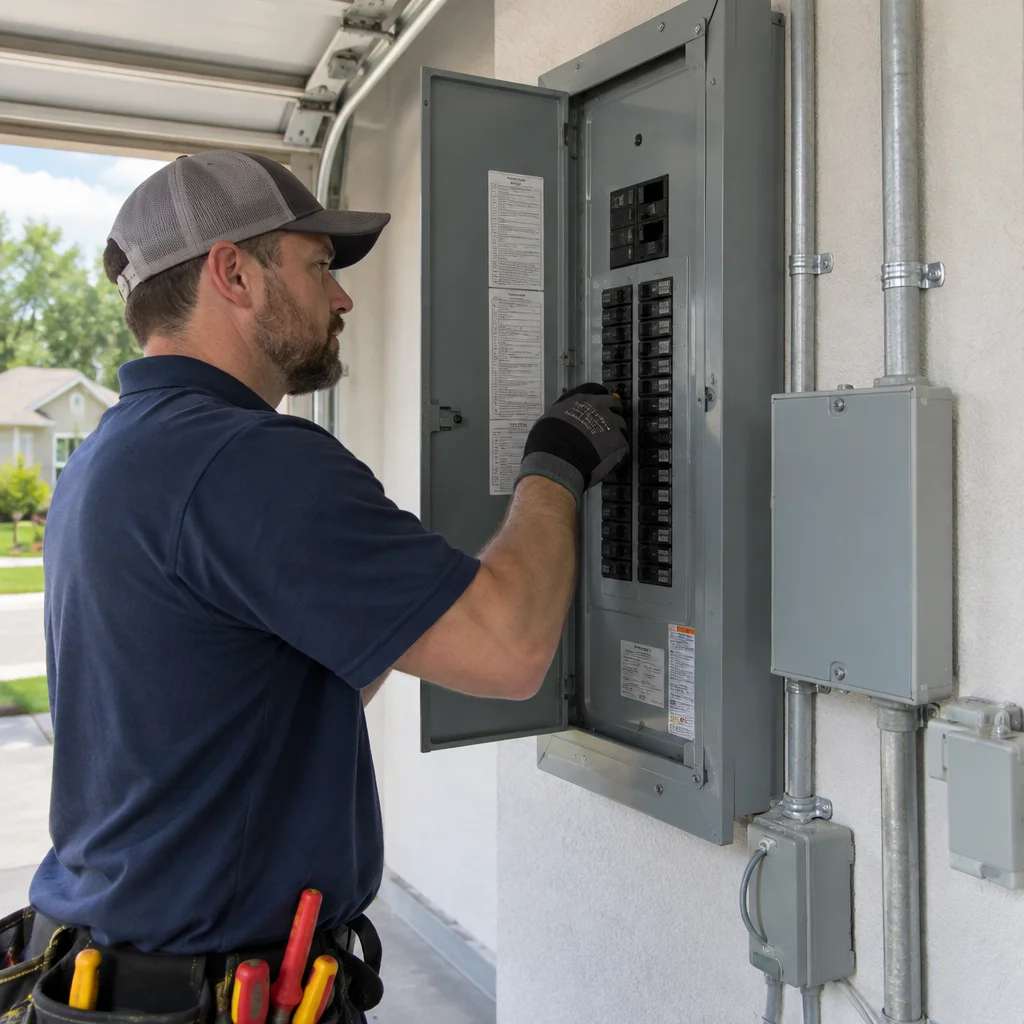
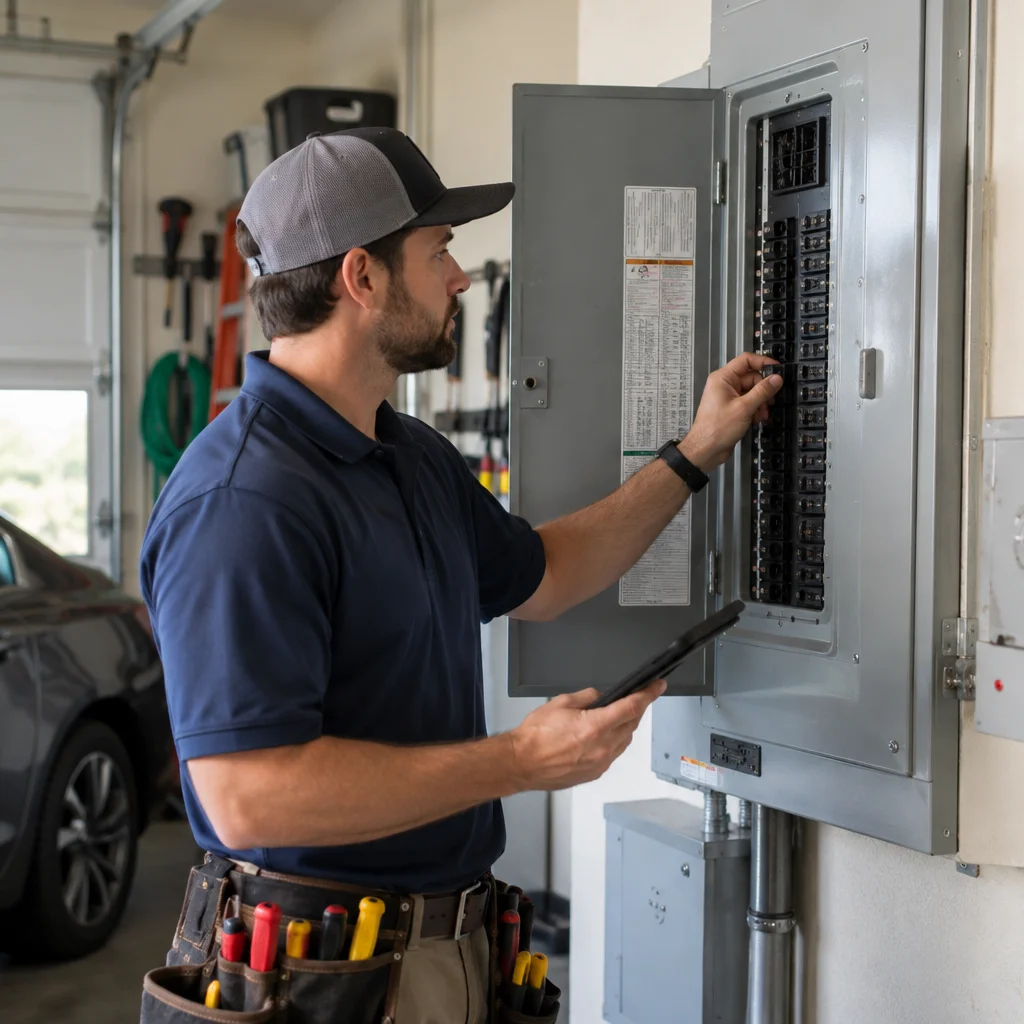
An electrician should evaluate the service rating, calculated load, panel condition, breaker compatibility, and available circuit space. Empty breaker positions alone do not prove the system can support more demand. Likewise, a full panel does not always mean the entire service must be replaced.
Keep breaker problems separate from fixture problems
A breaker that trips repeatedly may be responding to an overload, short circuit, ground fault, or another wiring problem. A defective breaker is only one possibility. Circuit breaker repair should begin with diagnosis, not repeated resetting or installation of a larger breaker.
If a search for electrical panel upgrade near me began because the lights dim whenever an appliance starts, describe exactly which appliance and rooms are involved. Brief dimming can have several causes, while new, pronounced, or persistent changes warrant electrical inspection. Breakers must remain correctly sized for the conductors and equipment they protect.
Look Beyond the Fixture When Lights Flicker
Flickering does not always mean a bulb is failing. An incompatible LED and dimmer pairing can cause pulsing, buzzing, or uneven low-level performance. Other possibilities include a loose connection, damaged socket, failing LED driver, or a problem affecting the circuit or electrical service.
One troublesome lamp points toward a different investigation than lights changing brightness throughout the house. Note whether the problem appears when a dimmer is used, when a large appliance starts, or following a storm. Do not remove switches, open junction boxes, or investigate a live panel yourself.
Older wiring needs a condition-based assessment
Older Mary Esther homes may have electrical work from several renovation periods. Hidden splices, deteriorated insulation, missing grounding paths, and incorrectly extended circuits can complicate an otherwise straightforward lighting installation. Age alone does not establish whether wiring needs replacement, but visible damage and improper alterations need attention.
Wiring repair should correct the underlying defect using approved methods, accessible junction boxes, and appropriate conductors. During remodels, inspecting accessible wiring before drywall closes is much easier than discovering an issue after painting.
Choose LEDs and Controls as a Compatible System
Compare lumens for brightness rather than relying on wattage alone. Color temperature also changes the feel of a room. Many homeowners prefer warmer light in living areas and somewhat more neutral light for detailed tasks. Test a sample when possible, especially near countertops and paint colors.
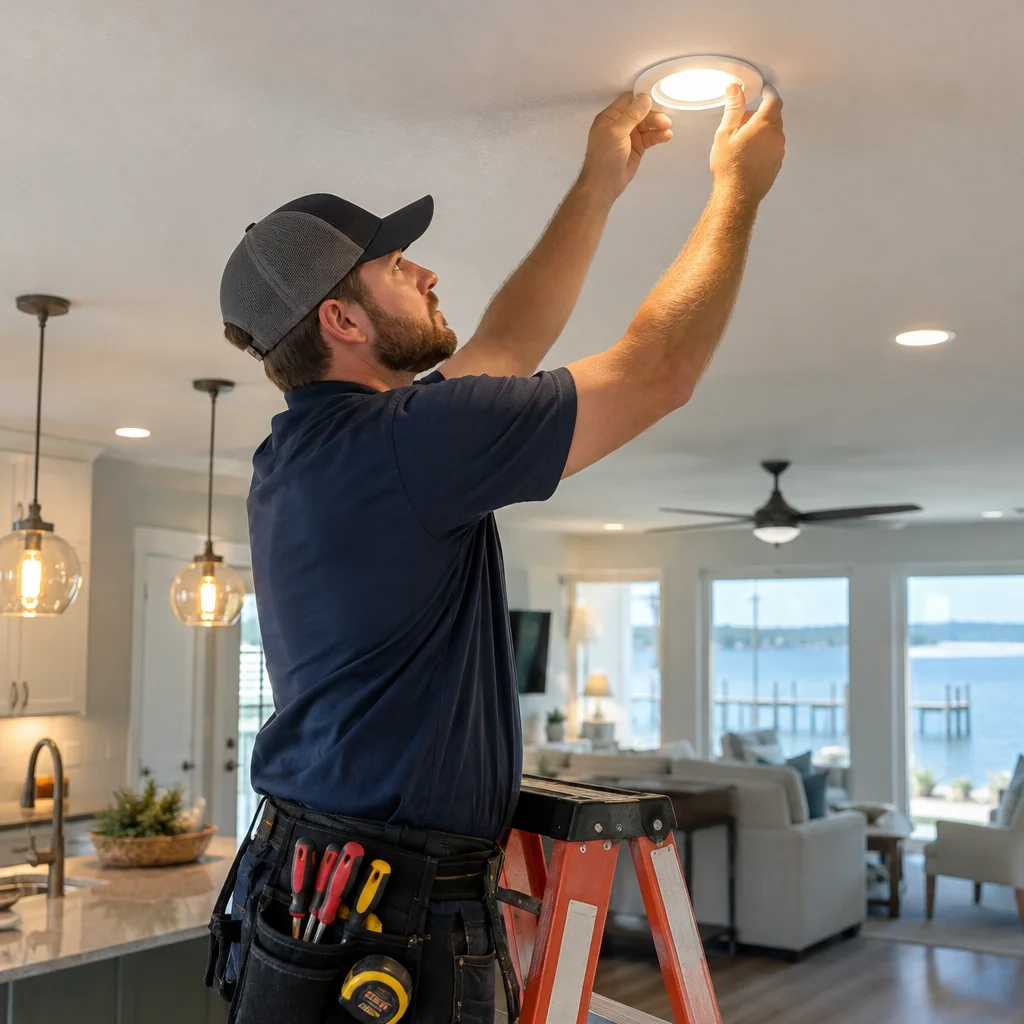
For recessed lighting, fixture depth, ceiling construction, insulation contact, and installation location matter. Fixtures installed near insulation must be rated for that application. Bathroom fixtures need appropriate damp or wet location ratings where required by their placement.
A search for led lighting installation near me should lead to a conversation about light distribution and glare, not just the number of recessed cans. Thoughtful spacing can prevent bright spots on the floor and dark work surfaces.
When arranging dimmer switch installation near me, check that the selected control is compatible with the actual LED fixtures and their combined load. Some smart controls require a neutral conductor that may not be present in an older switch box. Smart home integration can also coordinate schedules, occupancy sensing, and manual control without making everyday lighting unnecessarily complicated.
Coordinate Outlets, Switches, and Ceiling Fans
Lighting plans often reveal outlet problems. A reading corner may depend on an extension cord, or a home office may have too few receptacles for lamps and equipment. Permanent outlet installation is a better long-term approach than routing cords under rugs or connecting multiple power strips together.
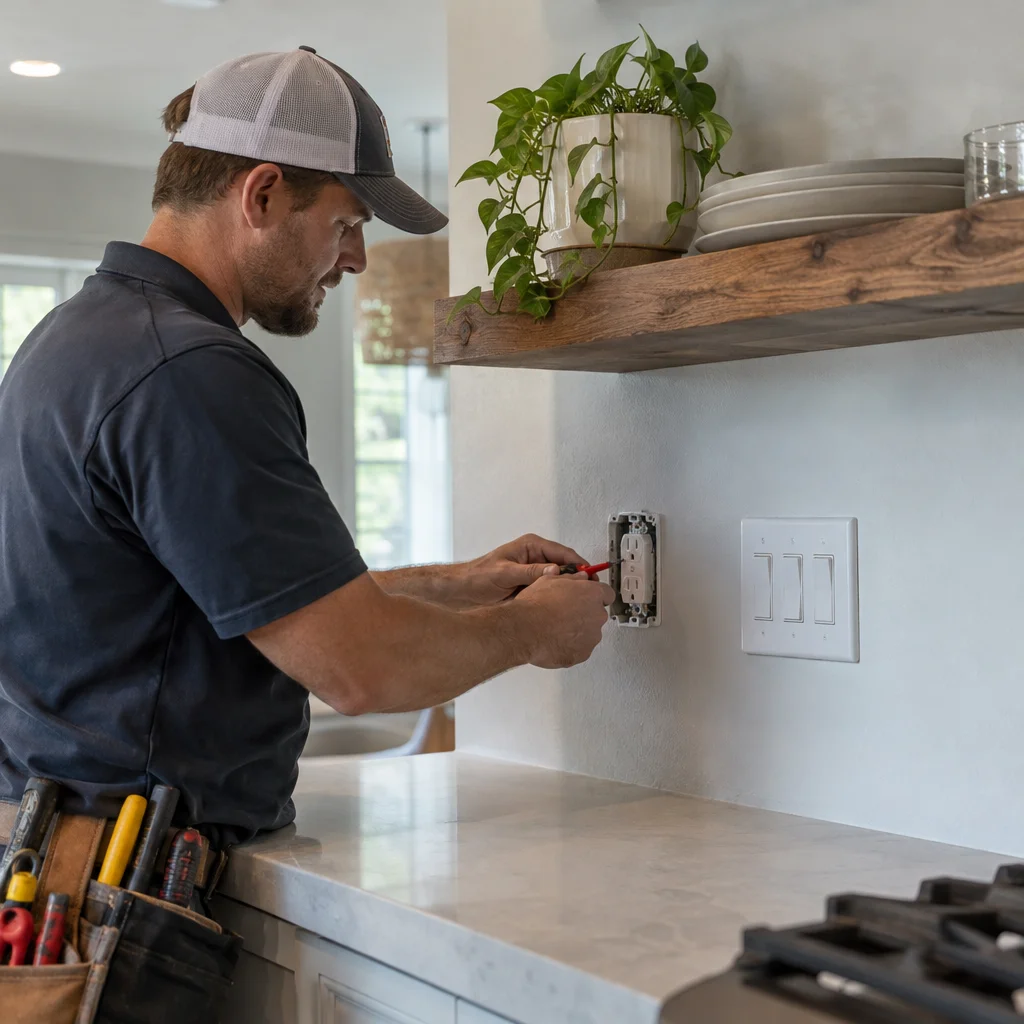
Outlet repair is appropriate when a receptacle is cracked, loose, discolored, or no longer holds a plug securely. Heat, buzzing, or a burning odor requires prompt attention. Adding a USB receptacle also calls for checking box space, circuit condition, and the device's installation requirements.
GFCI protection is required in many locations where shock exposure is a concern, including bathrooms and kitchen areas under applicable code. AFCI protection may also apply to lighting and receptacle circuits. An electrician can identify which protections and code corrections the specific project requires. GFCI protection does not create an equipment grounding path where none exists.
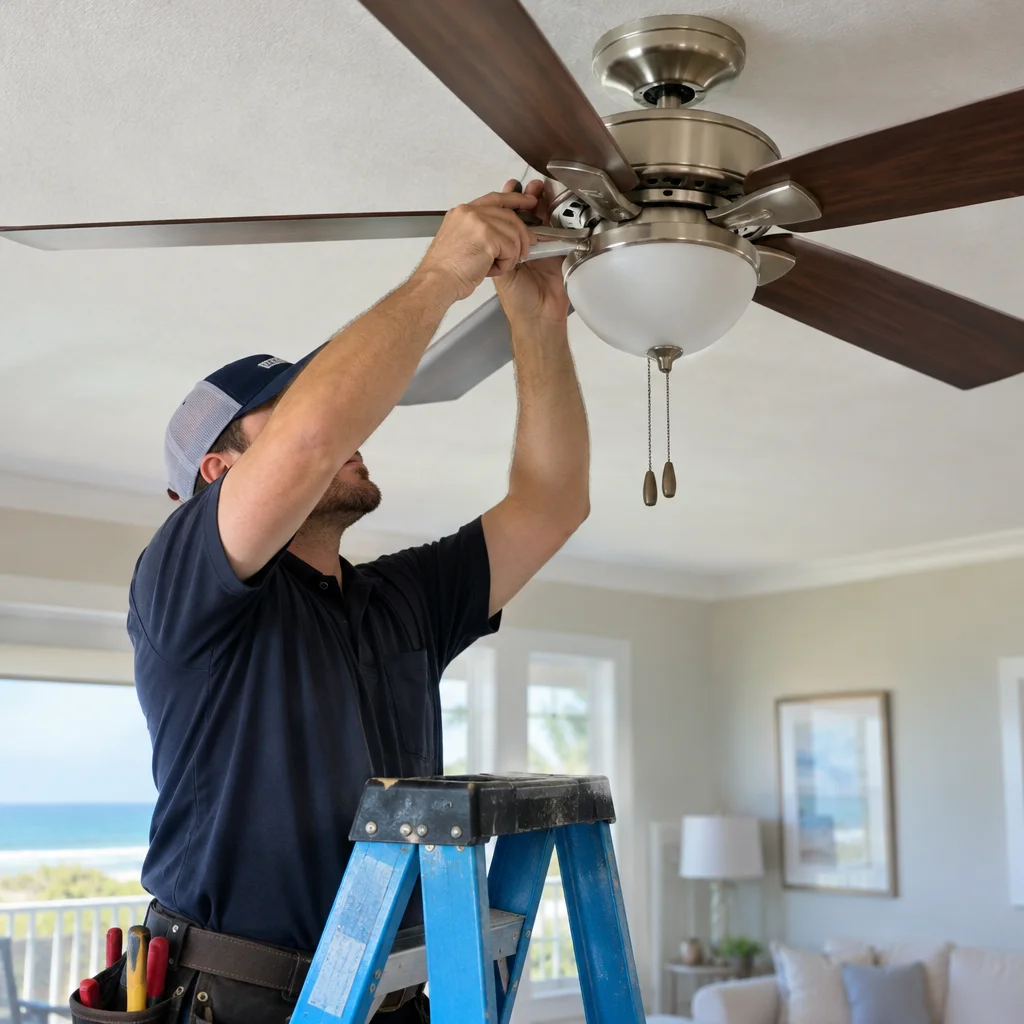
Ceiling fans require listed fan-rated support, not merely a box that previously held a light. Plan separate fan and light controls when practical, and confirm compatibility with the fan manufacturer's controls. Fan motors should not be operated by an ordinary lighting dimmer.
Plan for Appliances, EV Charging, and Backup Power
A lighting project is a useful time to discuss future electrical demand. A kitchen renovation may add appliances, while a garage update may eventually include an EV charger. Sharing those plans early helps an electrical contractor avoid placing new wiring where future equipment or cabinets will interfere.
Dedicated circuits for appliances separate equipment that requires its own circuit from other household loads. Appliance requirements, applicable code, and circuit calculations determine the design. Moving a troublesome appliance onto a properly designed circuit may address overloads that previously interrupted nearby lighting.
EV charger installation also needs an evaluation of service capacity, charging demand, conductor sizing, and protection requirements. A panel upgrade is not always necessary; an approved load management approach may be an option after assessment.
For generator installation, decide which lighting and essential circuits should operate during an outage. Portable generator hookups and standby systems need approved transfer equipment that prevents utility backfeeding. Never connect a generator through a household receptacle. Operate portable generators outdoors, at least 20 feet from the home, with exhaust directed away from doors, windows, and vents.
Coastal Weather Makes Prevention Worth Planning
Mary Esther's coastal setting brings humidity, wind-driven rain, and thunderstorms into the maintenance picture. Indoor lighting equipment is sheltered, but it still depends on service equipment, grounding and bonding, and wiring that may pass through moisture-prone areas.
Corrosion at exposed equipment, roof leaks near ceiling wiring, and water intrusion around exterior electrical penetrations deserve professional evaluation. After storm damage, do not assume a fixture or circuit is safe simply because it still works. Water-damaged equipment may require replacement rather than drying out and reenergizing.
Use surge protection as one layer of defense
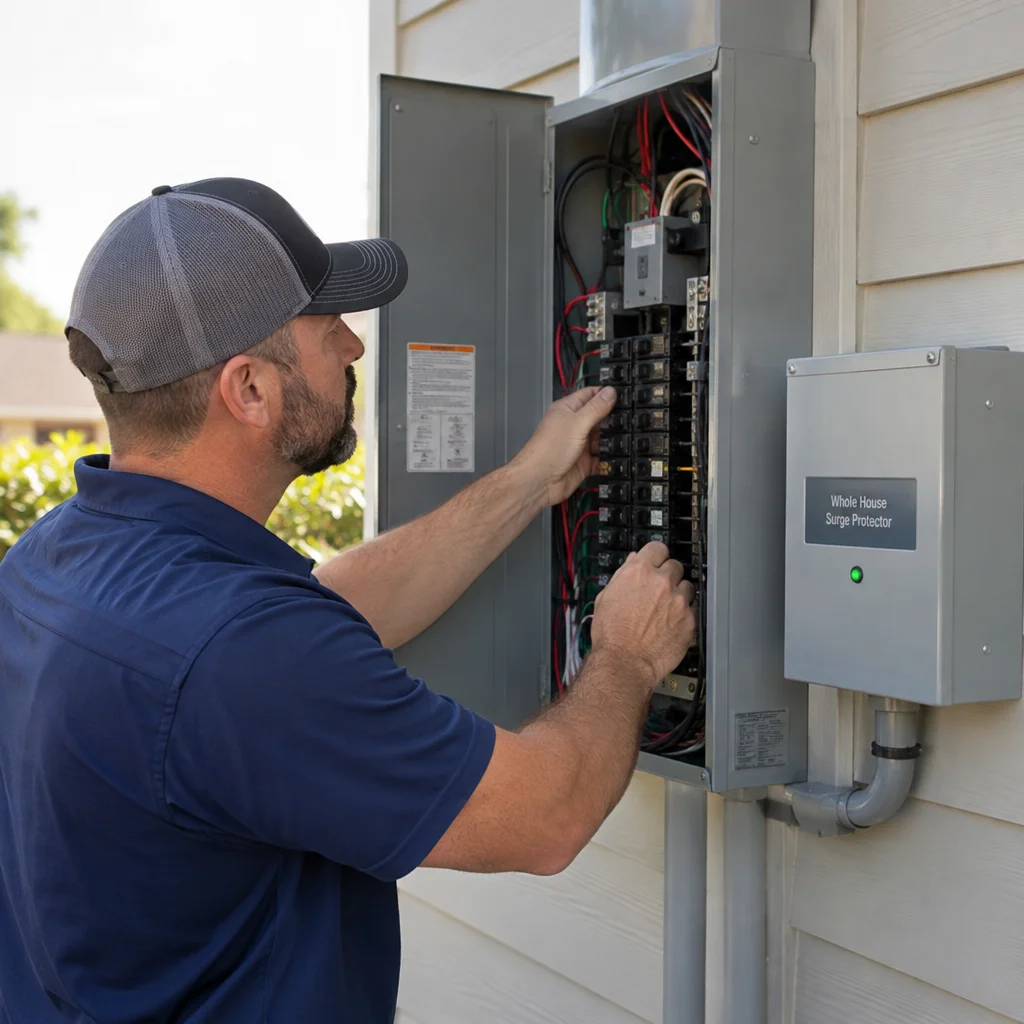
Surge protection can help reduce damage to LED drivers, smart switches, and other sensitive electronics from transient overvoltages. A properly selected panel-mounted surge protective device can work alongside suitable point-of-use protection. Neither provides a guarantee against every surge or a direct lightning strike.
Grounding and bonding should be evaluated as part of the system, not treated as optional accessories. Homeowners across Okaloosa County benefit from electrical planning that accounts for local storm exposure as well as ordinary household wear.
Use Remodels and Additions to Correct Hidden Problems
Open walls create an opportunity to address more than new fixture wiring. An electrician can review box fill, cable protection, junction accessibility, circuit identification, and grounding. Permit and inspection requirements depend on the work and the authority having jurisdiction. Confirm them before installation begins.
Newer homes need planning too. Builder-installed lighting may not suit a changed furniture layout, converted office, or addition. New construction does not automatically mean every proposed circuit extension is appropriate.
Coordinate electrical work with smoke detector and carbon monoxide detector installation when renovations affect alarm placement or requirements. Keeping life-safety devices in the project scope helps avoid missed coverage.
If the scope grows, separate urgent safety repairs from optional lighting features. This guide to budgeting for panels, wiring, and prevention in Mary Esther offers a useful starting point for organizing those priorities.
Know Which Problems Cannot Wait
Smoke, sparks, a burning smell, severe buzzing, or electrical equipment that is unusually hot should not wait for a scheduled lighting consultation. Stop using the affected equipment. If you can safely reach the breaker without approaching damaged, wet, or smoking equipment, switch off the affected circuit.
For fire, active smoke, or immediate danger, leave the area and call 911. Stay away from downed utility lines and report them to the utility or emergency services. Never touch wet electrical equipment.
If you are searching for emergency electrician near me because lights suddenly become unusually bright in some rooms and dim in others, report those symptoms promptly to an electrician and the utility. A service or neutral connection problem is one possible cause. Do not keep testing appliances to reproduce it.
Keep the Lighting Plan Working Over Time
Routine electrical maintenance starts with observation. Note new flickering, loose switches, failed controls, and repeated trips. Test GFCI devices and smoke alarms according to manufacturer instructions. Keep the panel accessible and its circuit directory accurate, and have unexplained changes evaluated rather than accepting them as normal.
Local electrical service matters because project scheduling, permit requirements, storm exposure, and the condition of existing homes all influence the work. Explore A Superior Mechanical's Mary Esther service information, then request an indoor lighting consultation. Bring your room priorities, electrical symptoms, and future equipment plans so the discussion covers both better light and the system supporting it.
Find Indoor Lighting in Mary Esther, FL
If you need Indoor Lighting in Mary Esther, FL, visit our local service page or contact A Superior Mechanical today.
Map of Mary Esther, FL
Frequently Asked Questions
Does installing indoor LED lighting require a panel upgrade?
Usually not by itself. LEDs generally draw less power than comparable incandescent fixtures. A panel upgrade may be appropriate if the existing equipment is damaged, lacks suitable circuit capacity, or cannot support the home's calculated demand. An electrician should evaluate the full project before recommending replacement.
Why do my new LED lights flicker when I dim them?
The LED fixtures and dimmer may be incompatible, or the connected load may fall outside the dimmer's operating range. Loose connections and failing components can also cause flickering. Have an electrician verify compatibility and inspect the circuit if the problem persists, especially if other lights are affected.
What should Mary Esther homeowners check before a lighting remodel?
Review fixture placement, switch locations, outlet needs, existing wiring, panel condition, and applicable permit requirements. Include plans for ceiling fans, appliances, EV charging, or generator backup so the electrical design accounts for future demand. Coastal storm exposure also makes surge protection and moisture-related damage worth discussing.
Related Articles
- A Smarter Electrical Budget for Mary Esther Homes: Financing Panels, Wiring, and Prevention
- A Smarter Electrical Blueprint for Data Cabling in Mary Esther Homes
- A Practical Guide to Specialty and Smart Electrical Services in Mary Esther, FL
- Why Preventive Electrical Service Matters for Security System Wiring in Mary Esther, FL
Photo Gallery