A rental home can reach its thermostat setting and still feel uncomfortable. A back bedroom stays warm, the hallway smells musty, or tenants keep lowering the temperature because the air feels damp. For property managers in Wright, FL, those complaints often point to issues that a quick thermostat adjustment cannot solve.
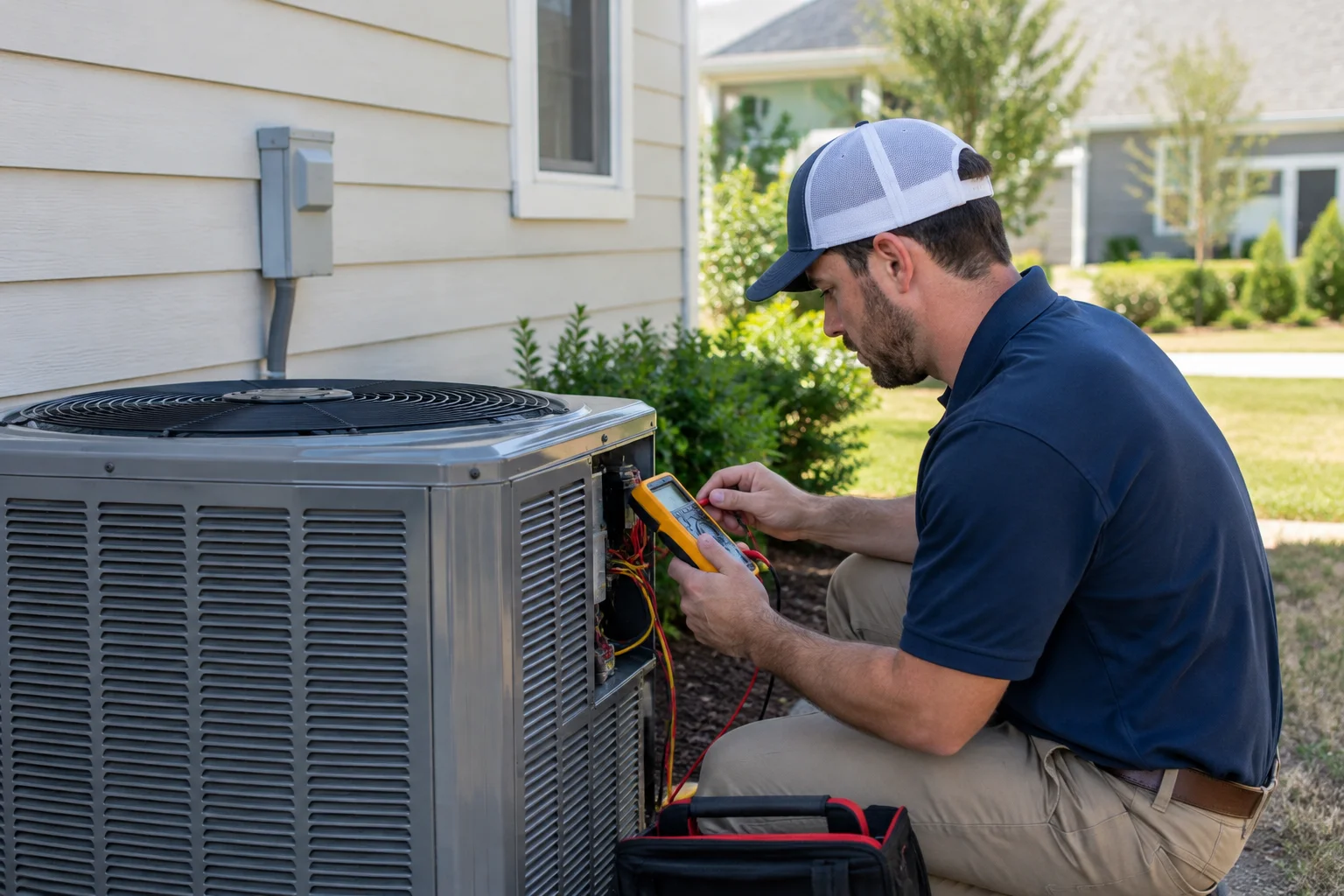
Good HVAC planning connects comfort, equipment condition, maintenance, and communication. A Superior Mechanical provides property management HVAC services in Wright, FL, including repairs, maintenance, inspections, and replacement planning for rental homes, vacation properties, and commercial buildings. A practical plan helps owners address developing problems before they interrupt occupancy or damage finishes.
Wright's climate makes cooling only part of the job
Wright shares the Florida Panhandle's long cooling season, humid summers, and occasional cold snaps. Air conditioning must remove moisture as well as heat. When a system runs briefly, moves the wrong amount of air, or pulls humid attic air through leaking ductwork, rooms may feel sticky even with a reasonable temperature reading.
Coastal weather adds another consideration. Depending on exposure, salt air can accelerate corrosion on outdoor units, condenser coils, and cabinet components. Storms can leave debris around equipment, interrupt power, or introduce water where it does not belong. Outdoor equipment should be checked after severe weather once conditions are safe.
Local HVAC service matters because these conditions affect maintenance needs and equipment choices. Older homes, newer homes, remodels, and additions each present different comfort challenges. An approach that works for one property may not suit another across Okaloosa County.
Start with a usable record for every property
Before setting a maintenance schedule, build a basic equipment record. Include model and serial numbers, installation dates if known, warranty documents, filter sizes, thermostat models, and service history. Note whether the property has a heat pump, a furnace with central AC, ductless mini splits, or multiple systems serving separate areas.
Record access details too. Air handlers may be in closets, garages, or attics, while outdoor units may sit behind locked gates. Knowing the locations of condensate drain lines, access panels, and filters prevents wasted time during an appointment. Tenants should know how to report trouble without opening equipment cabinets.
Track recurring complaints by room and circumstance. A bedroom that gets hot only with the door closed suggests a different problem from an entire house that warms up every afternoon. Good records help an HVAC contractor investigate causes instead of repeatedly treating symptoms.
Resolve airflow problems before lowering the thermostat
Uneven temperatures often start with airflow. Dirty filters, blocked return grilles, damaged ducts, and blower problems can reduce circulation. Furniture placed over vents or a closed bedroom with an inadequate return air path can also leave one room uncomfortable while the hallway thermostat appears satisfied.
Look beyond the supply vents
A technician may need to inspect the blower, evaporator coil, supply ducts, and return ductwork together. An overly restrictive filter can create problems when the system cannot accommodate its pressure drop. Closing multiple vents to force air elsewhere can increase duct pressure rather than deliver balanced comfort.
In older Wright homes, duct joints or insulation may have deteriorated. In newer homes, disconnected ducts, balancing issues, or installation defects can still occur. After a remodel or addition, the original duct design may no longer match the layout. A professional duct inspection helps determine whether duct sealing, ductwork repair, balancing, or replacement is appropriate.
Owners searching for ductwork repair near me should describe the affected rooms and any recent changes. Measurements of airflow and static pressure can help distinguish a distribution problem from equipment that is too small, poorly configured, or operating incorrectly.
Manage humidity without turning the property into a refrigerator
Persistent dampness deserves attention even when cooling still works. Musty odors, condensation on cold surfaces, and clammy bedding can indicate moisture trouble. However, those symptoms do not establish the source. HVAC performance, outdoor air leakage, exhaust ventilation, and building moisture sources may all need review.
For many homes, indoor relative humidity around 40 to 50 percent is comfortable when practical, and keeping it below 60 percent helps limit conditions favorable to mold growth. A humidity monitor provides more useful information than guessing. Lowering the thermostat aggressively is not a reliable moisture-control strategy and may increase condensation on cold surfaces.
Match the solution to the moisture source
A professional should check equipment sizing, cooling cycles, blower settings, coil condition, and drainage. An oversized AC may satisfy the thermostat before removing enough moisture. In many systems, leaving the fan set to ON can re-evaporate moisture from a wet coil between cooling cycles; AUTO is generally the better starting point unless the system design calls for another approach.
If humidity remains high after underlying issues are corrected, whole-home dehumidifiers may provide more consistent control. Filtration serves a different purpose: air filtration and purifiers can help address certain airborne contaminants, but they do not repair moisture problems or replace source control.
Build maintenance around occupancy and seasonal demand
A useful maintenance schedule considers equipment condition, manufacturer guidance, filter loading, and occupancy. A busy vacation property with frequent turnover may need different attention from a lightly occupied home. Scheduling cooling service before sustained summer heat also reduces reliance on appointments during peak seasonal demand.
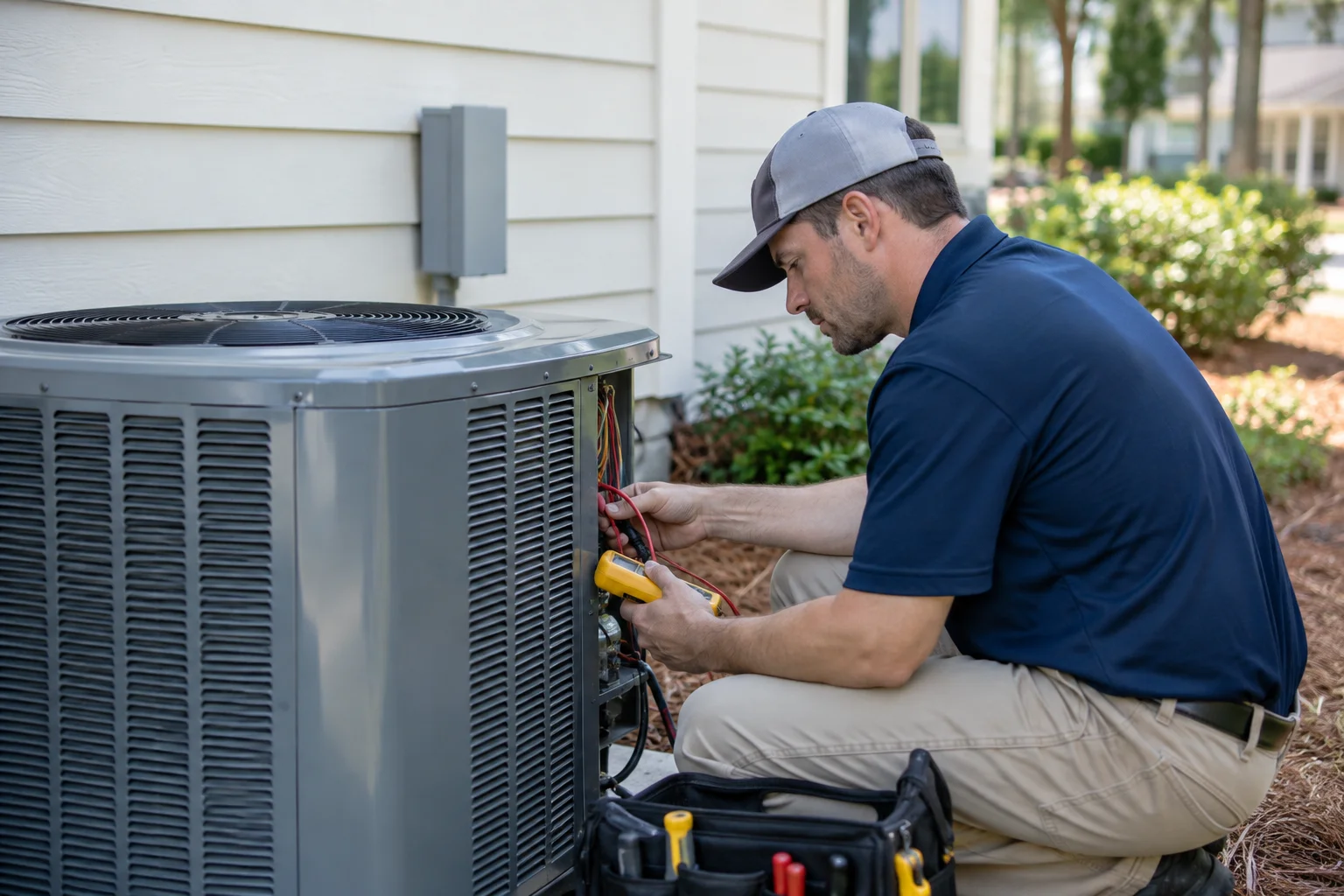
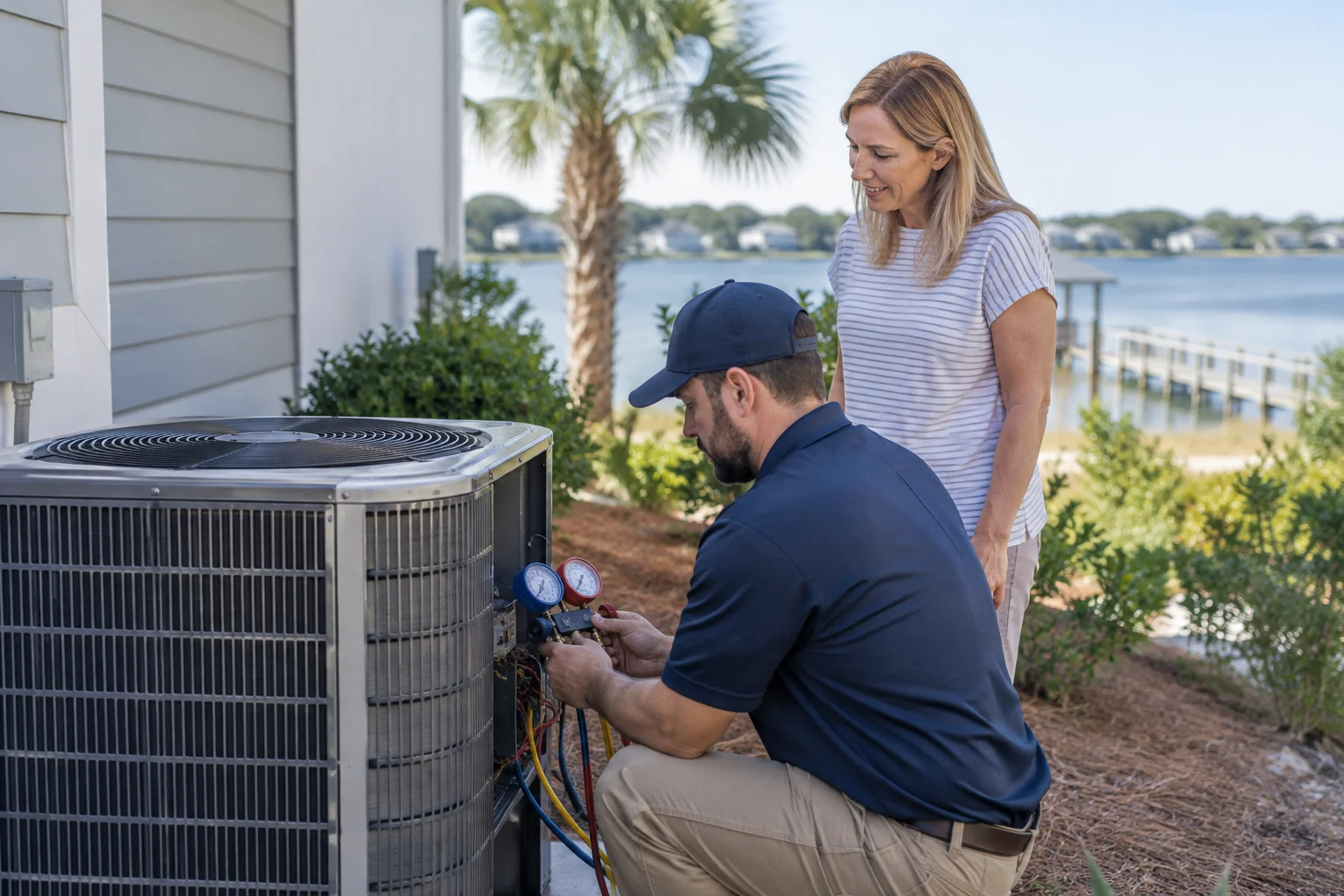
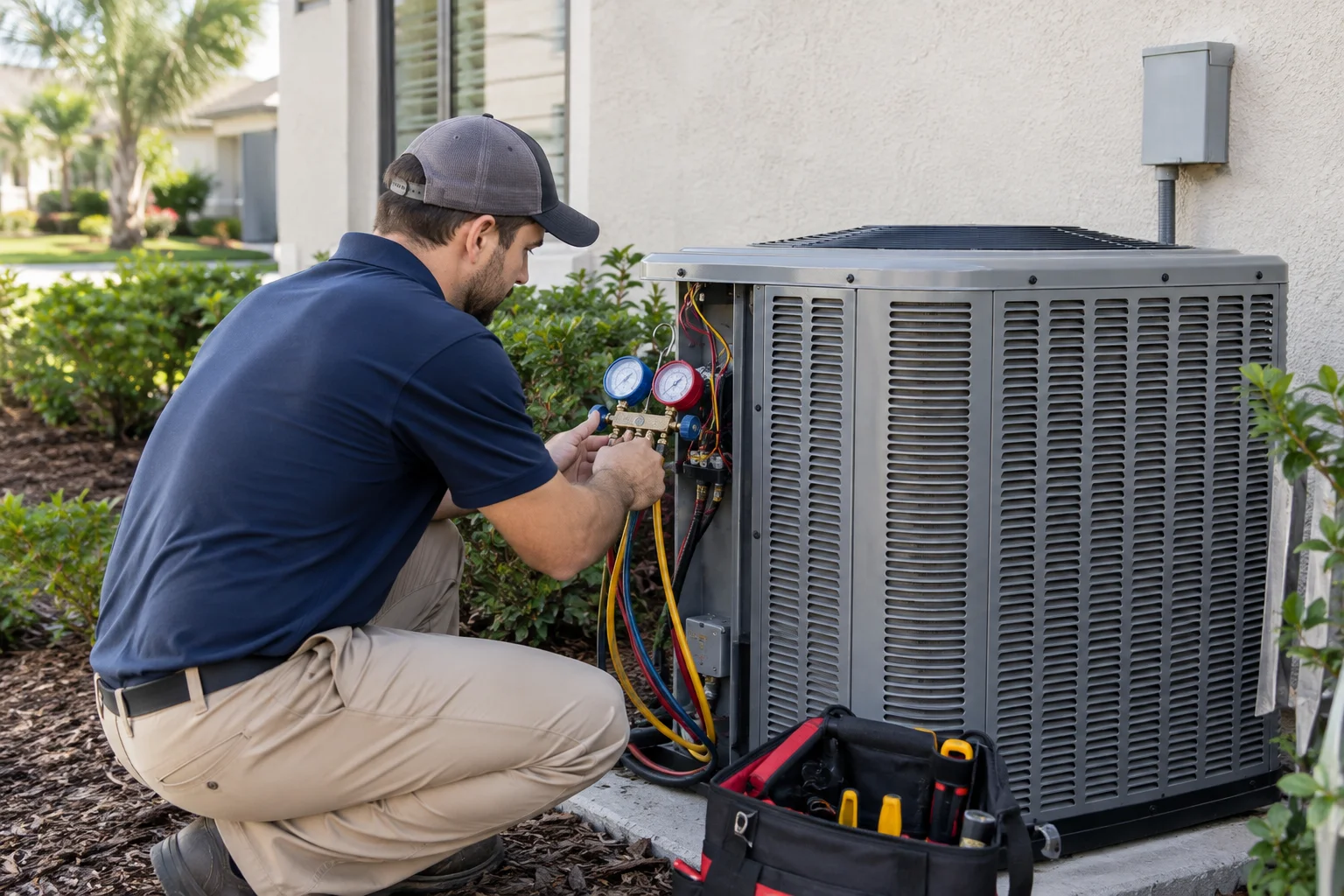
When property owners search for HVAC maintenance near me, the useful question is what the visit covers. Depending on the system, maintenance may include checking electrical connections, blower operation, coils, thermostat response, condensate drainage, and operating readings. Refrigerant evaluation should follow appropriate diagnostic procedures rather than assuming every cooling complaint means low refrigerant.
Give filters and drain lines their own checks
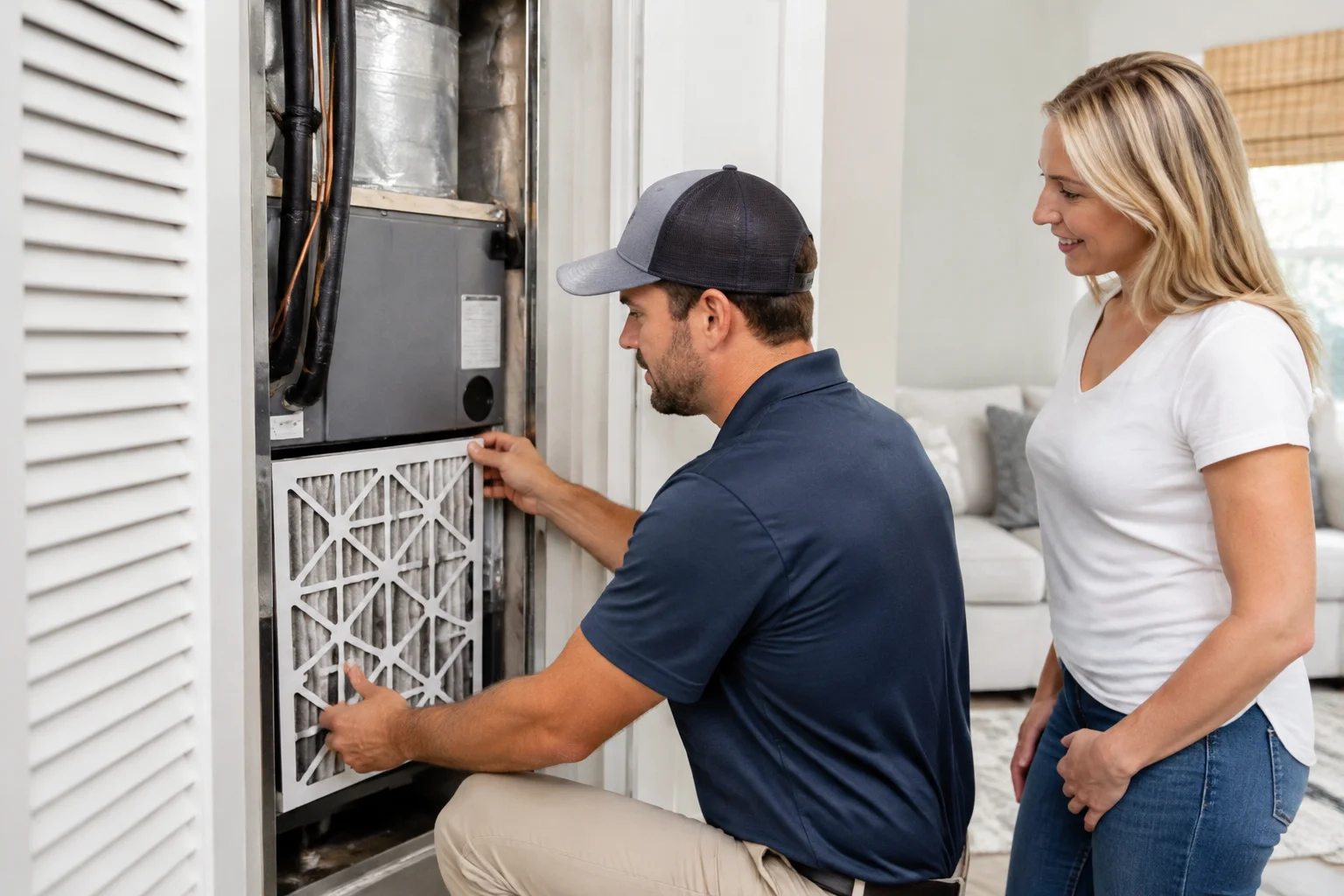
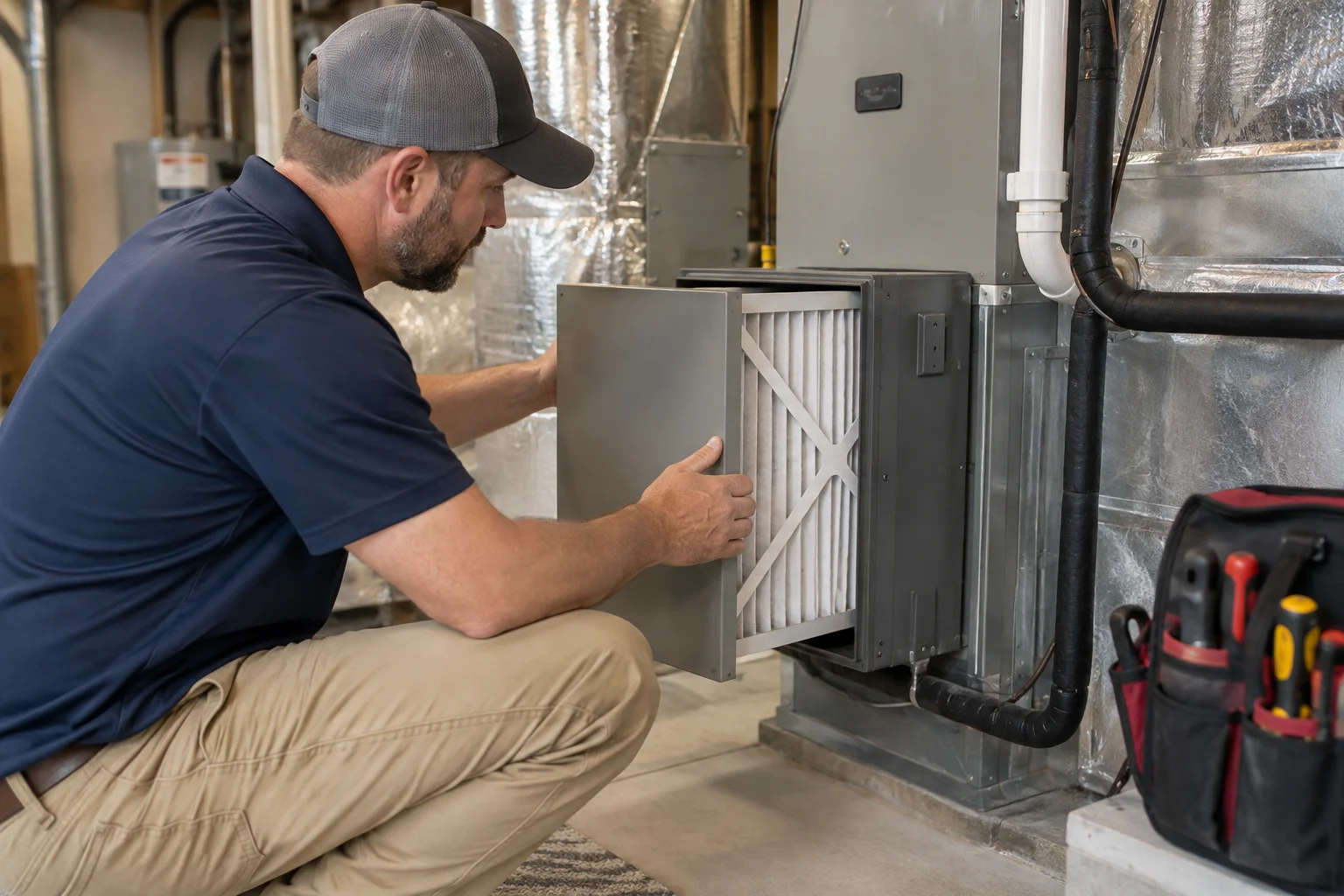
Check filters regularly, often monthly at first, then adjust replacement timing to actual conditions and manufacturer instructions. Use the correct size and a filtration level compatible with the system. Higher filtration is not automatically better if it restricts airflow excessively.
Condensate drain lines deserve special attention in Wright's humid climate. A blockage can shut down cooling through a safety switch or allow water to damage nearby materials. During service, ask about drain condition, pan condition, and applicable overflow protection. Never bypass a safety switch to keep the AC running.
Keep vegetation and stored items away from condensers according to manufacturer clearance requirements. After storms, visually check for displaced equipment, damaged wiring, or heavy debris. Leave cabinet removal, electrical testing, and coil-cleaning methods to a qualified professional.
Use thermostats to support comfort, not hide problems
Thermostat installation should account for equipment compatibility and placement. A thermostat in direct sunlight, near a supply vent, or beside a heat-producing appliance can misread conditions. Smart controls also need correct setup for heat pumps, auxiliary heat, and any connected humidity equipment.
Provide tenants with simple operating instructions and an approved comfort range. For vacant periods, use moderate setbacks rather than shutting cooling off throughout humid weather. The appropriate setting depends on the building and moisture conditions. Large temperature setbacks can lead to long recovery times without solving humidity concerns.
Remote alerts may help managers notice abnormal temperatures or a disconnected device, but they cannot confirm every mechanical fault. Agree on account access, notifications, and privacy expectations. A repeated thermostat complaint should prompt equipment and airflow checks before assuming a new control will fix it.
Separate routine service requests from urgent HVAC concerns
A clear reporting process helps tenants explain what happened and helps managers prioritize service. Ask whether the system is running, whether air is moving, which rooms are affected, and whether water, ice, unusual odors, or unusual sounds are present. Photos can help, provided taking them does not require approaching damaged equipment.
Homeowners searching for AC repair near me may notice long run times, weak airflow, or warmer supply air. These symptoms can have several causes, including dirty coils, blower faults, duct leakage, and refrigerant leaks. Refrigerant does not normally get used up. A confirmed low charge calls for leak evaluation rather than repeated top-offs without investigating the cause.
If ice appears, stop cooling operation and arrange service rather than scraping the coil or continuing to run the system. Water near an air handler also needs prompt attention. Do not open electrical compartments or handle wet equipment.
Smoke, sparking, burning odors, flood exposure, or suspected electrical damage require immediate caution. For a gas odor or carbon monoxide alarm, leave the building and contact emergency services or the gas utility from a safe location. Do not operate switches inside.
Loss of cooling during extreme heat can also become urgent, particularly for vulnerable occupants. If searching for 24 hour AC repair near me, confirm actual availability directly and arrange a safe, cooler place for occupants when necessary.
Keep heating equipment in the plan
Wright's milder winters do not eliminate the need for heating maintenance. Heat pumps need correct defrost operation, thermostat staging, and auxiliary heat control. Excessive reliance on electric resistance backup can raise bills, although some backup operation is normal under certain conditions.
For properties with furnaces, furnace service should address safe operation, airflow, and manufacturer-required checks. Fuel-burning equipment requires appropriate combustion and venting evaluation. Report unusual cycling, persistent loss of heat, or new operating noises for professional heating repair or heat pump repair instead of waiting for the next cold night.
Plan replacements around the building, not just equipment age
Age matters, but replacement planning should also consider repair history, corrosion, comfort, refrigerant type, and operating costs. Repeated failures or expensive repairs may justify comparing replacement options. A newer system with duct problems may need distribution repairs rather than a larger unit.
Before air conditioning installation, request a load calculation that reflects insulation, windows, orientation, occupancy, and renovations. Correct sizing and commissioning matter for energy efficiency and moisture removal. A high efficiency heat pump cannot compensate for major duct leakage or poor installation.
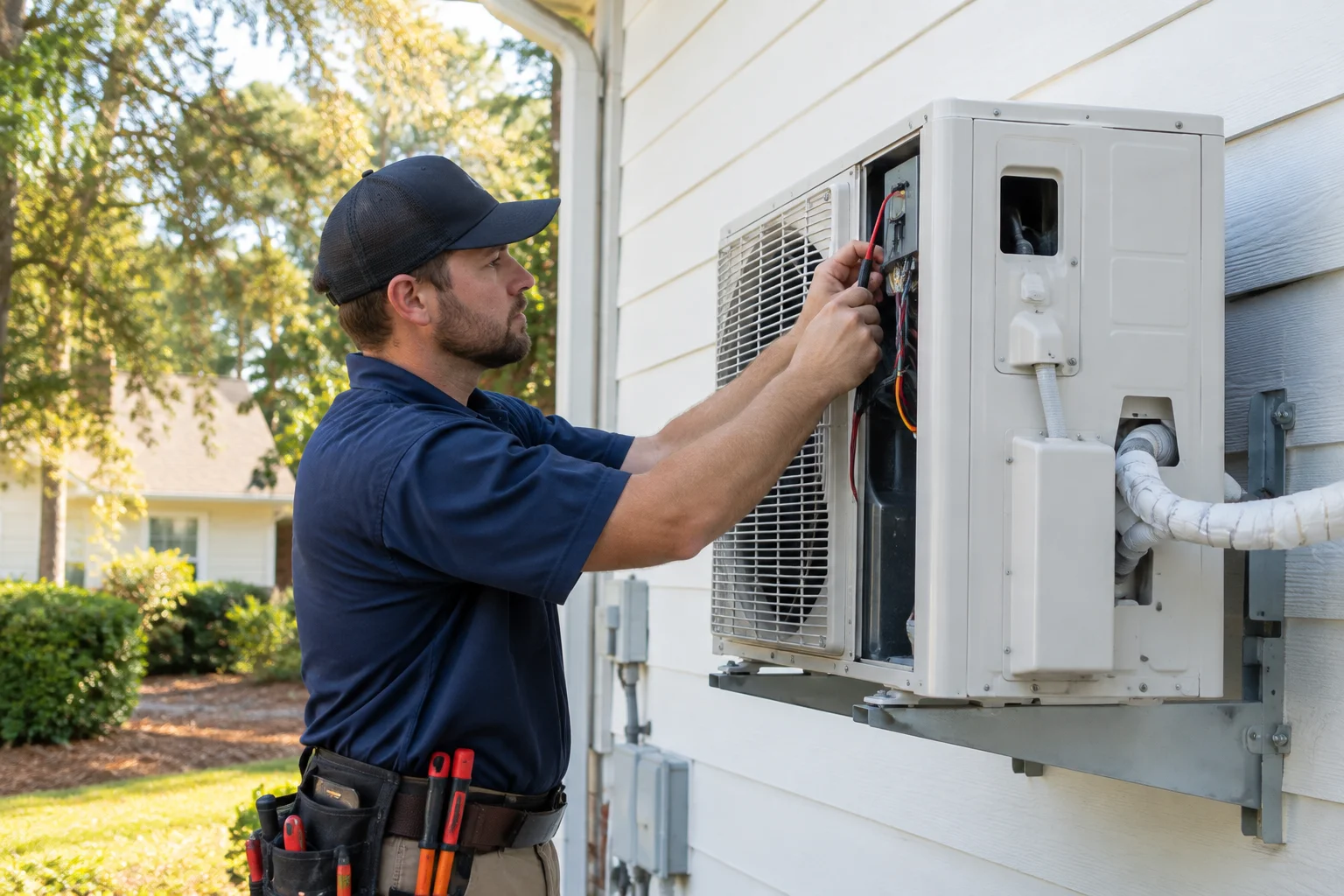
For an addition, converted garage, or isolated room, a ductless system may be worth evaluating. It still needs proper sizing, condensate drainage, electrical coordination, and maintenance access. This guide to ductless planning for Wright homes explains room-by-room considerations.
Make the next service visit easier to act on
Set approval limits for diagnostics and repairs, identify the person authorized to approve larger work, and arrange tenant access in advance. Request service notes that distinguish immediate repairs from maintenance needs and longer-term recommendations. This keeps owners informed without treating every finding as an emergency.
A Superior Mechanical can help organize inspections, repairs, maintenance, and replacement planning for managed properties. Explore HVAC services in Wright and bring your equipment records and recurring comfort concerns to the conversation. A plan built around each building gives property managers a clearer path to dependable comfort between turnovers and throughout the year.
Find Property Management HVAC Services in Wright, FL
If you need Property Management HVAC Services in Wright, FL, visit our local service page or contact A Superior Mechanical today.
Map of Wright, FL
Frequently Asked Questions
How often should a managed property in Wright receive HVAC maintenance?
A common starting point is professional service before the cooling season and a heating check before colder weather, adjusted to manufacturer guidance and equipment needs. Filters should be checked regularly, often monthly at first. High occupancy, pets, construction dust, or recurring drainage issues may justify more frequent attention.
Why does a rental home feel humid even when the AC reaches its setting?
Possible causes include short cooling cycles, oversized equipment, incorrect airflow, duct leaks, outdoor air infiltration, or other moisture sources. A technician should evaluate the system and building conditions before recommending changes. A whole-home dehumidifier may help when humidity remains high after underlying problems are addressed.
What should property managers provide before an HVAC service appointment?
Provide the property address, equipment details if available, symptoms, previous repair records, tenant contact information, and access instructions. Identify who can approve repairs and any spending limits. Mention water leaks, ice, unusual odors, or vulnerable occupants so the service request can be prioritized appropriately.
Related Articles
Photo Gallery