A ceiling fan should make a room more comfortable without adding noise, flickering lights, or another breaker that keeps tripping. Getting that result involves more than choosing the right blade finish. The mounting support, ceiling wiring, wall controls, and existing circuit all need to suit the equipment.
For homeowners in Laguna Beach, FL, salt exposure, humidity, storm outages, and previous remodeling work can complicate an otherwise straightforward project. A Superior Mechanical provides ceiling fan installation and repair in Laguna Beach with attention to the electrical system behind the fixture. Here is how to plan the work, recognize trouble, and prevent avoidable repairs.
Start With the Room, Not Just the Fan
Older beach cottages, newer homes, and vacation rentals can have very different installation needs. An older bedroom may have a switched receptacle but no ceiling wiring. A newer living room may have a prewired fan location, although the support box and available conductors still need verification. A porch requires equipment rated for its actual exposure.
Match the equipment to coastal conditions
Indoor fans are not suitable for every covered outdoor space. Damp-rated models serve protected areas without direct water exposure, while wet-rated models are designed for locations exposed to rain. The exact installation must follow the manufacturer's instructions. Wind-driven rain can reach farther under a porch roof than homeowners expect.
Salt air can also corrode fasteners, brackets, and exposed metal. Coastal-suitable finishes help, but no finish eliminates maintenance. Choose a fan size and mounting arrangement that meet the required blade clearances, generally at least seven feet above the floor and 18 inches from walls, subject to manufacturer instructions and applicable requirements. Low ceilings, sloped ceilings, and bunk beds deserve extra attention.
The Ceiling Box Is a Safety Component
A light fixture box is not automatically strong enough to support a fan. Fans create movement and torque as well as downward weight. The box and support assembly must be listed for fan support and installed within their rated limits. Tightening screws into an unsuitable box does not solve the problem.
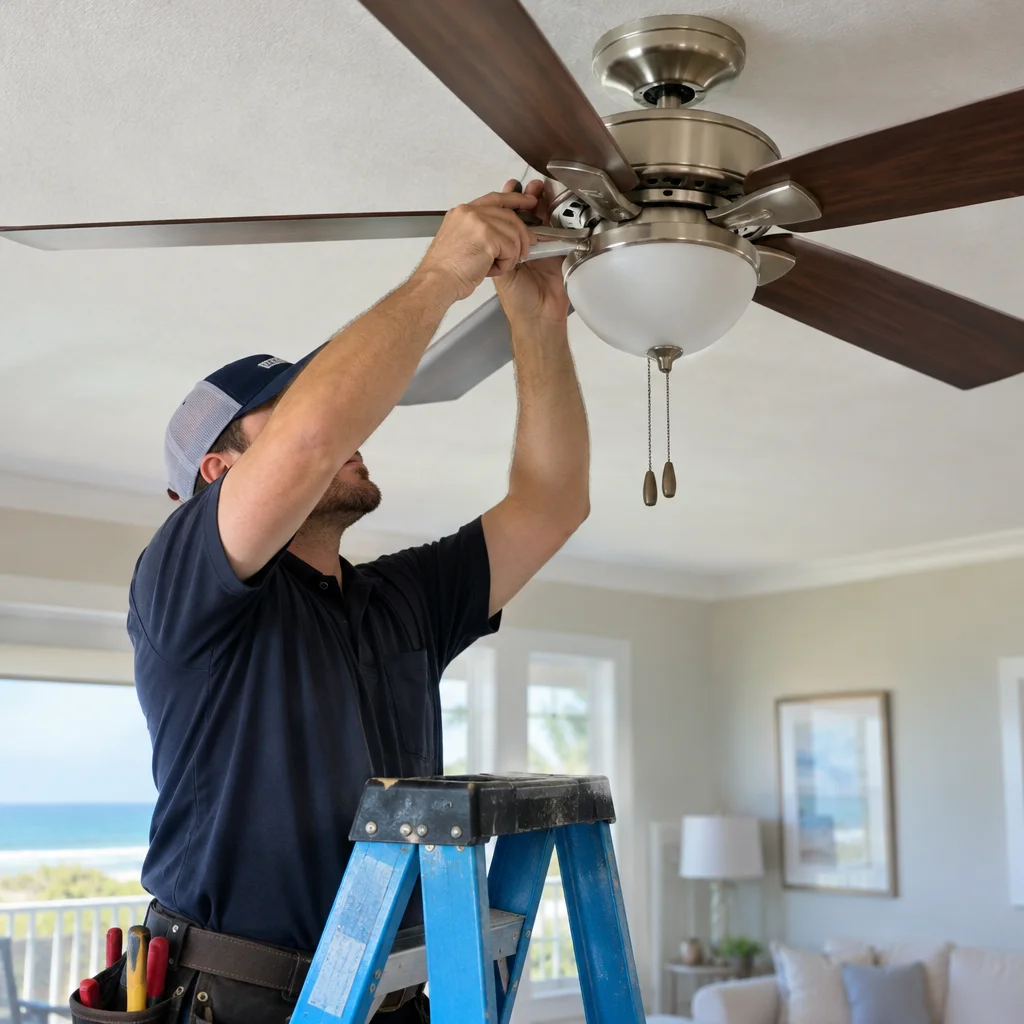
During a replacement, an electrician should check the mounting bracket, support, conductor condition, and connections before hanging the new unit. If the existing opening hides an unsupported box or damaged wiring, correcting that condition comes first.
Homeowners searching for ceiling fan installation near me should ask whether the work includes checking the existing box and circuit. That question is especially useful when replacing a heavy decorative fixture, adding a larger fan, or working in a room with an unknown remodeling history.
Wiring and Controls Need to Work Together
A fan with a light kit can be controlled several ways, but the wiring determines which options are practical. Separate wall switches generally require an appropriate conductor arrangement. A compatible remote receiver may offer independent fan and light control without adding a second switched conductor, but it still needs correct installation and sufficient box or canopy space.
A lighting dimmer is not a fan speed control
Ordinary lighting dimmers should not control fan motors unless the equipment specifically allows that arrangement. An incompatible control can cause humming, erratic operation, overheating, or damage. Fans with integrated electronic controls may require their own listed controls rather than a generic wall-mounted speed controller.
An electrician should also verify grounding, secure connections, and insulation condition. Older homes may contain brittle insulation, ungrounded wiring, or alterations that need wiring repair or replacement. If aluminum branch-circuit wiring is present, connections require approved methods and components suitable for the conductors. Replacing a switch without addressing an unsuitable connection can leave the hazard in place.
Coordinating electrical device upgrades with fan work can make controls easier to use while addressing worn switches or loose receptacles nearby.
A Small Fan Load Can Reveal a Larger Circuit Problem
Most residential ceiling fans use relatively little power, and a fan installation alone does not usually justify a panel upgrade. The important question is what else shares the circuit and whether the wiring and protection are appropriate.
A bedroom circuit might also serve receptacles used by a portable heater, vacuum, or window air conditioner. If the breaker trips after adding a fan, the fan may not be the main cause. Excess load, a loose connection, damaged insulation, or a defective device could be involved.
Repeated breaker trips need diagnosis
Do not keep resetting a breaker or replace it with a higher-rated breaker to stop trips. Breakers protect circuit conductors, and increasing the rating without a properly designed circuit can create a fire risk. A malfunctioning breaker generally requires replacement with a type approved for the panel, not an improvised repair.
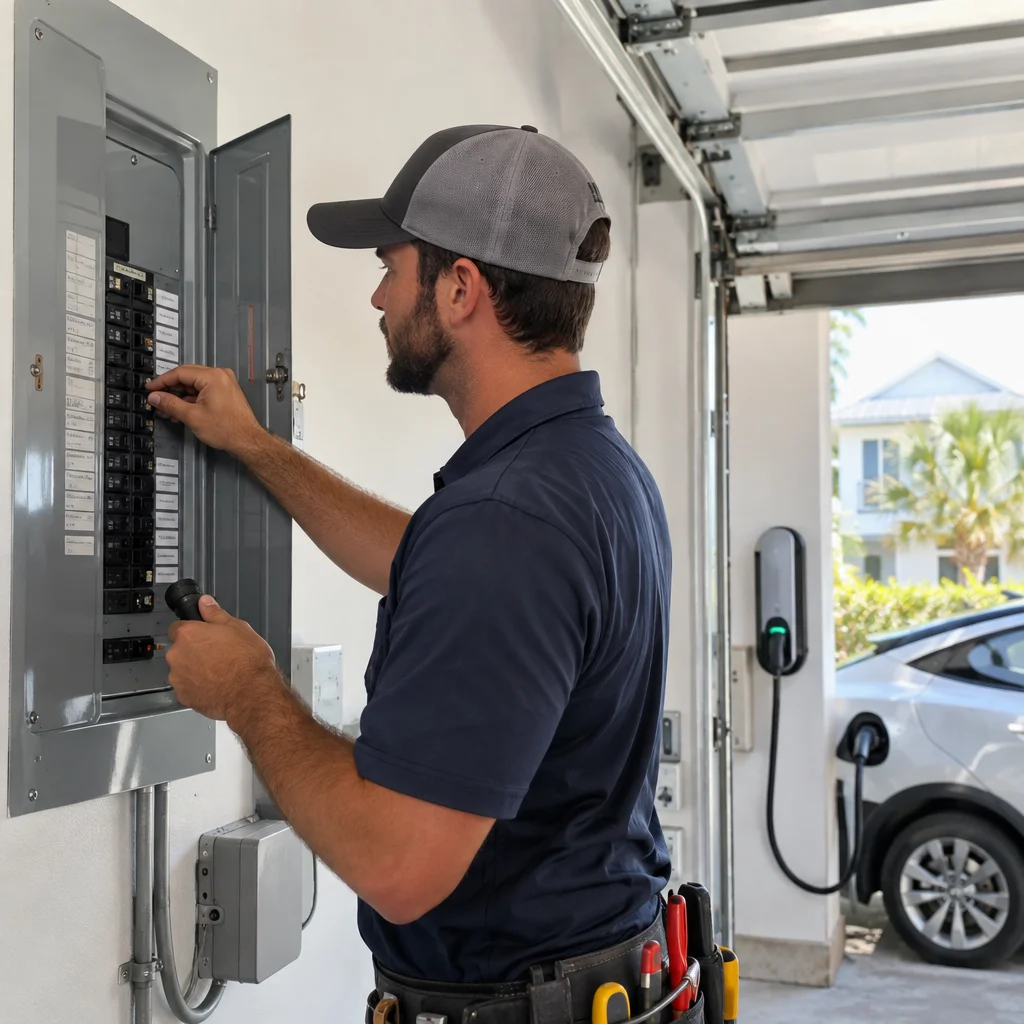
A breaker panel repair near me search should lead to troubleshooting rather than an automatic panel replacement recommendation. Panel condition, corrosion, compatible breakers, service capacity, and calculated load help determine whether the answer is a circuit repair, added circuit, or panel upgrade.
Separate Fan Problems From Electrical Warning Signs
A wobbling fan may have dirty blades, loose hardware, an incorrect downrod connection, or inadequate support. A fan that hums but does not start could have a motor, capacitor, receiver, or control problem. Clicking can come from a loose component, but sound alone is not a reliable diagnosis.
Light flickering deserves context. An incompatible LED lamp or control can cause flickering limited to the fan light. Flickering across multiple rooms, especially when other equipment starts, may indicate a connection or supply issue that needs broader investigation.
Turn the fan off if it shakes heavily, smells hot, sparks, or makes a new grinding noise. Do not reach toward moving blades or remove the canopy while energized. Homeowners looking for electrical troubleshooting near me should describe whether the problem affects only the fan, its light, nearby outlets, or several rooms. Those details help narrow the investigation.
Use Remodels and Additions to Plan Better Circuits
Open walls and ceilings offer an opportunity to improve wiring routes before finishes go back up. During a bedroom addition or living room remodel, plan fan locations alongside lighting, furniture placement, switches, smoke detectors, and receptacles. A fan directly over a seating area may work better than one positioned only to match an old light box.
Coordinate lighting and fixture installation so recessed lights and fan blades do not create distracting moving shadows. Smoke detector installation should also account for required locations and manufacturer guidance about separation from fans and air movement.
Where electrical and plumbing work share open wall cavities, trade coordination helps prevent damaged cables and inaccessible connections. The planning principles in Better Plumbing Starts Behind the Walls in Laguna Beach are relevant to that broader remodeling schedule, even though each system needs its own qualified trade.
New appliances and other substantial loads may need dedicated circuits. A ceiling fan can often use a suitable existing circuit, but kitchen equipment, laundry additions, and other upgrades should not simply be connected wherever a nearby cable is available.
Outlets, GFCI Protection, and Grounding Still Matter
Fan work is a useful time to report nearby outlet problems. Loose plug retention, discoloration, buzzing, or a faceplate that feels unusually warm can indicate an outlet repair need. Avoid using a damaged receptacle until it has been evaluated.
Outdoor areas, bathrooms, garages, kitchens, and other locations may require GFCI protection under the applicable code. Whether a particular fan needs GFCI protection depends on its location, listing, installation instructions, and local requirements. A porch fan does not eliminate the need to evaluate outdoor receptacles separately.
Grounding and GFCI protection perform different functions. Adding a GFCI does not create an equipment grounding conductor where none exists. Electrical inspections can identify missing grounds, improper connections, required AFCI protection, and other code corrections. The scope of required updates depends on the work and the rules adopted by the jurisdiction.
Plan for Storms and Growing Household Demand
Coastal storms in Bay County can bring outages, water intrusion, and electrical disturbances. Surge protection can help reduce damage from some transient overvoltages, including those affecting electronic fan controls. It cannot guarantee protection against every event or make wet electrical equipment safe.
A properly selected whole-home surge protective device works as part of a broader protection strategy. The electrician should assess the panel arrangement, grounding and bonding, and manufacturer requirements rather than treating installation as a universal plug-in solution.
Generators and EV chargers need separate planning
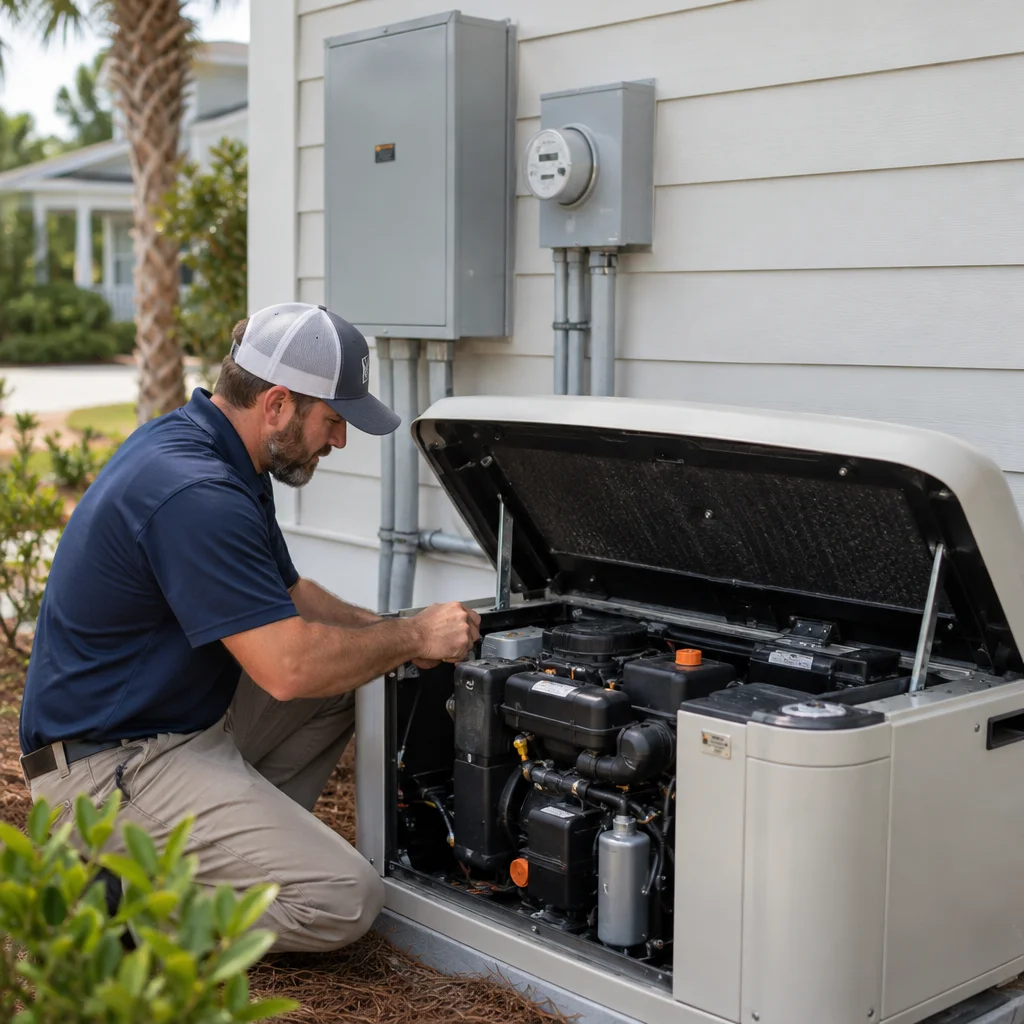
If you are considering Kohler power backup generators, identify which household circuits you want available during an outage. Fans and selected lights may be practical priorities. Generator installation requires proper transfer equipment to prevent dangerous backfeeding, along with load planning and applicable permits.
EV charger installation introduces a different demand on the electrical system. Charging equipment commonly needs a dedicated branch circuit and a service load calculation. Depending on the home, approved load management may be an alternative to a service upgrade. Discuss future charging plans before spending money on panel changes so today's repairs fit tomorrow's needs.
A Practical Maintenance Routine for Coastal Homes
With the fan off and stopped, clean accessible blades according to the manufacturer's directions. Watch for new wobbling, rust, loose trim, or changes in sound. Avoid spraying cleaners into the motor housing or controls. Leave canopy removal, connection checks, and electrical testing to a qualified professional.
Vacation rental owners should make fan operation part of routine property checks. A guest may mention a noisy fan without recognizing a loose mounting issue. Recording when symptoms occur and which controls are affected makes service visits more productive.
After roof leaks or storm damage, do not assume a fan is safe because it still runs. Water can affect hidden connections and electronic components. Arrange an inspection before using equipment that may have become wet, and discuss maintenance intervals based on exposure and system condition.
Know Which Electrical Problems Cannot Wait
Sparks, burning odors, shock sensations, a hot panel, or repeated trips with no clear cause need prompt professional attention. If there is smoke or an active fire, leave the building and call 911. Do not touch wet equipment or approach a panel through standing water.
If it is safe to reach a dry, undamaged panel, switching off the affected circuit may help isolate a problem while you arrange service. Do not attempt energized repairs. An emergency electrician near me search should be followed by a direct call to confirm availability and explain the hazard, rather than assuming every provider offers immediate response.
Arrange Ceiling Fan Service With the Whole Home in Mind
Before scheduling, note the ceiling height, fan model, indoor or outdoor location, and any history of breaker trips or control problems. Mention planned remodels, generator work, or an EV charger so the electrical contractor can consider those needs together.
A Superior Mechanical serves homeowners through its Laguna Beach service area and across Bay County. Local electrical service matters because coastal exposure, existing construction, and applicable inspection requirements shape the job. To discuss a repair or new installation, contact A Superior Mechanical with your fan location and symptoms so the next step addresses the cause, not just the fixture.
Find Ceiling Fan Services in Laguna Beach, FL
If you need Ceiling Fan Services in Laguna Beach, FL, visit our local service page or contact A Superior Mechanical today.
Map of Laguna Beach, FL
Frequently Asked Questions
Does installing a ceiling fan require a panel upgrade?
Usually not. Most ceiling fans add a relatively small load. An electrician should check the existing circuit, wiring, and panel condition before deciding whether repairs or additional capacity are needed. Larger projects, such as an addition or EV charger installation, may change that assessment.
Can an existing light fixture box support a new ceiling fan?
Only if the box and its support assembly are listed for ceiling fan support and suitable for the fan's weight and installation. An ordinary light fixture box may not handle a fan's movement and torque. Have the support verified before installing the fan.
What type of ceiling fan works best on a Laguna Beach porch?
Choose a fan rated for the actual exposure. A damp-rated fan may suit a protected porch without direct water exposure, while a wet-rated model is needed where rain can reach the equipment. Wind-driven coastal rain, corrosion resistance, required clearances, and manufacturer instructions should all guide the selection.
Related Articles
Photo Gallery