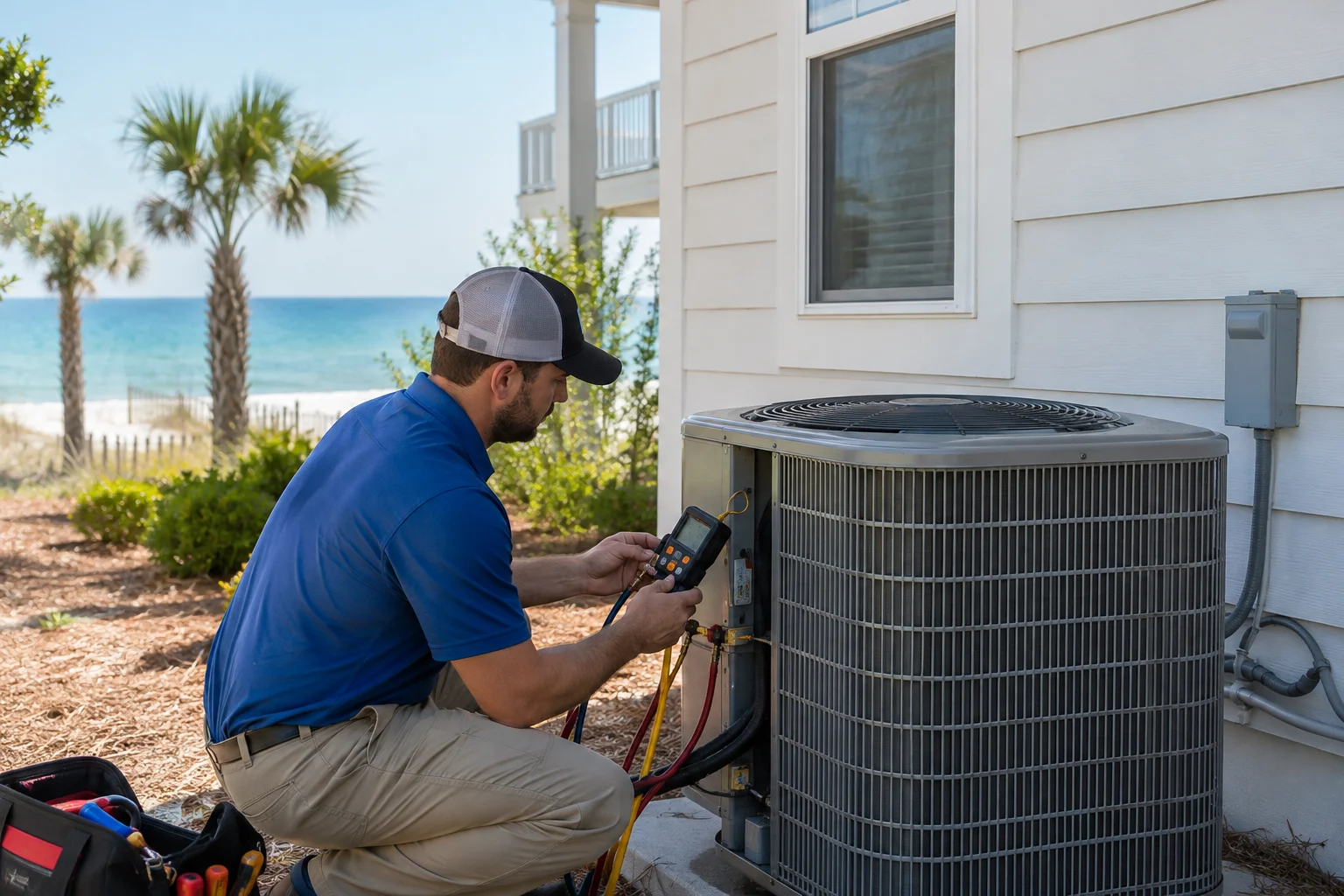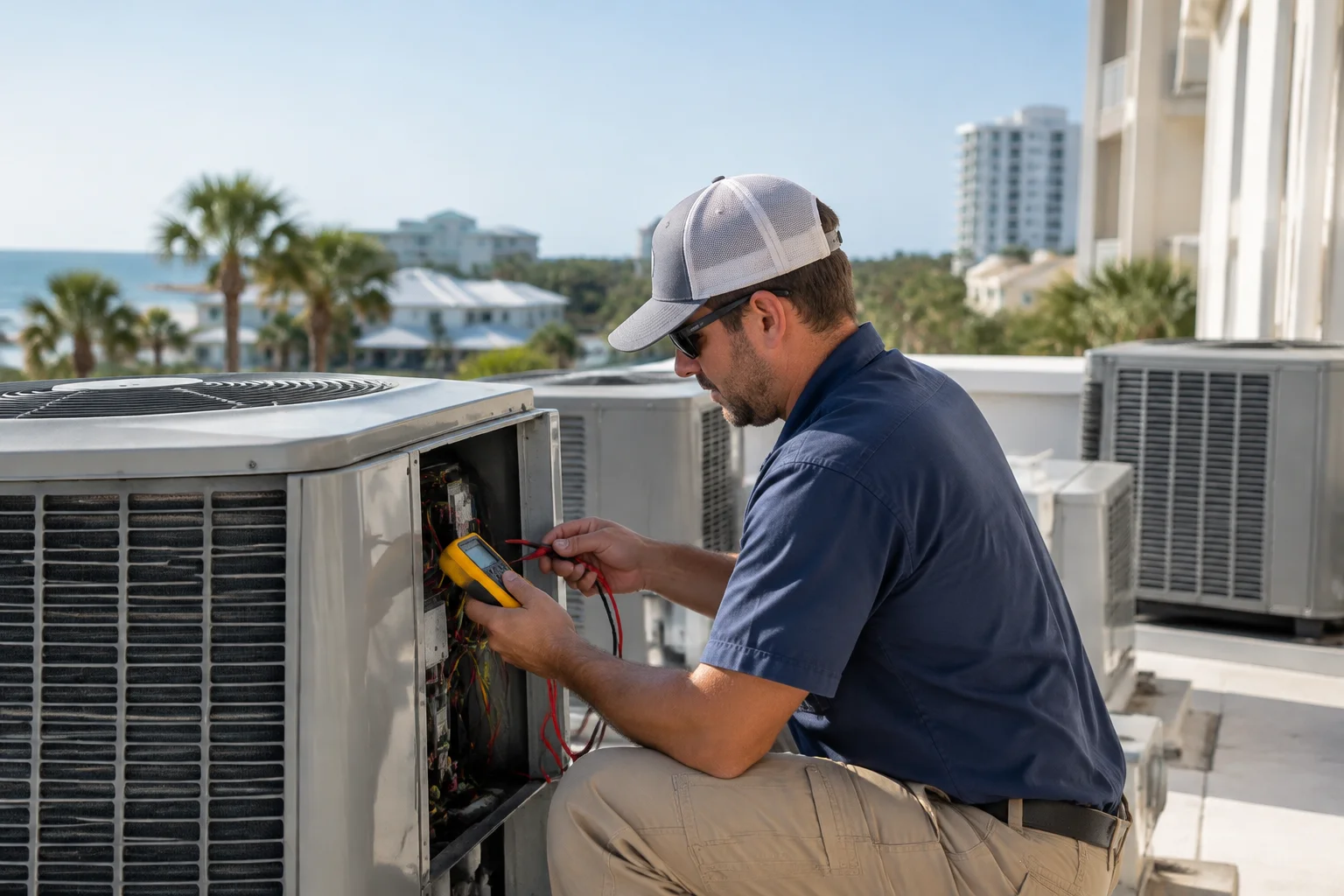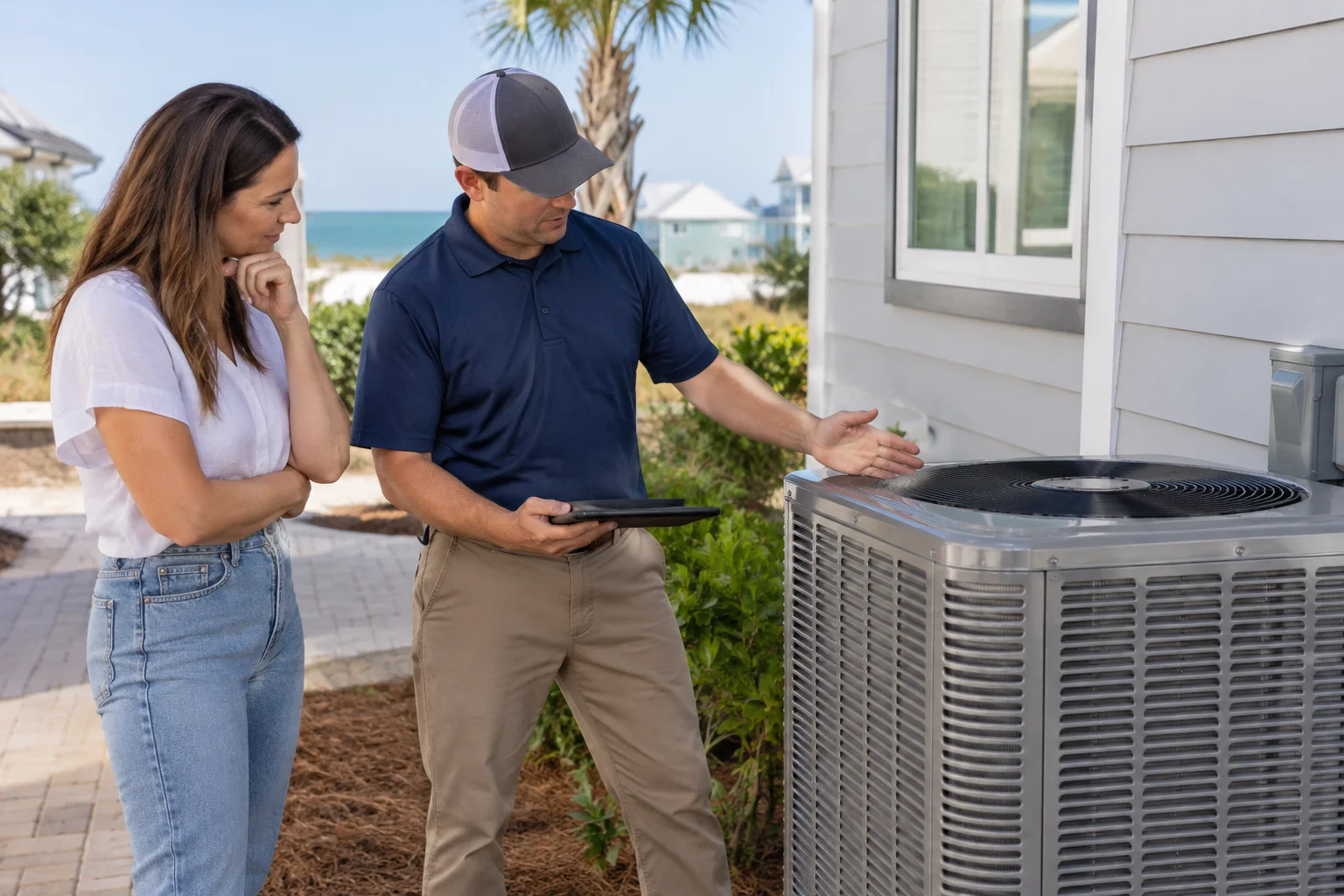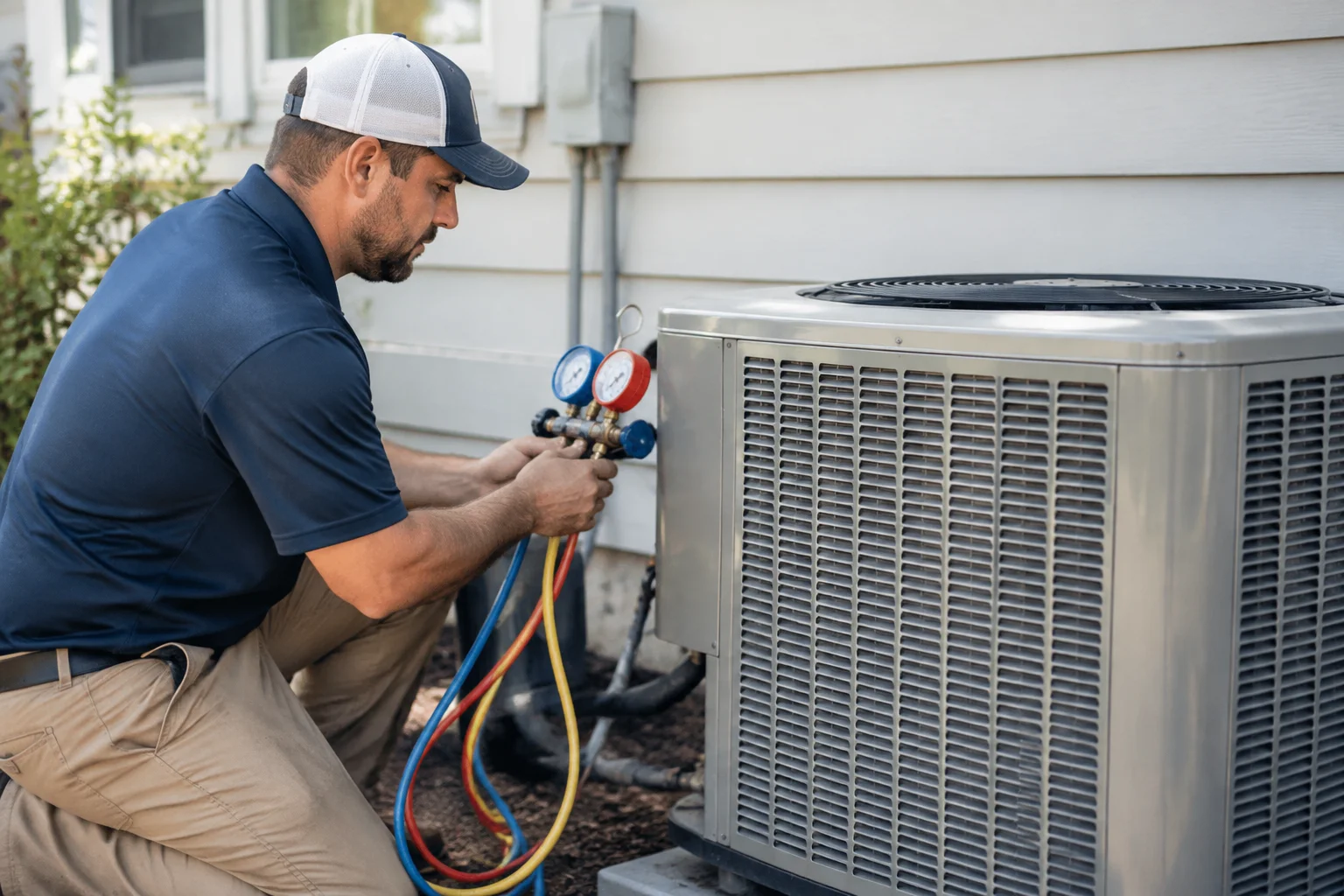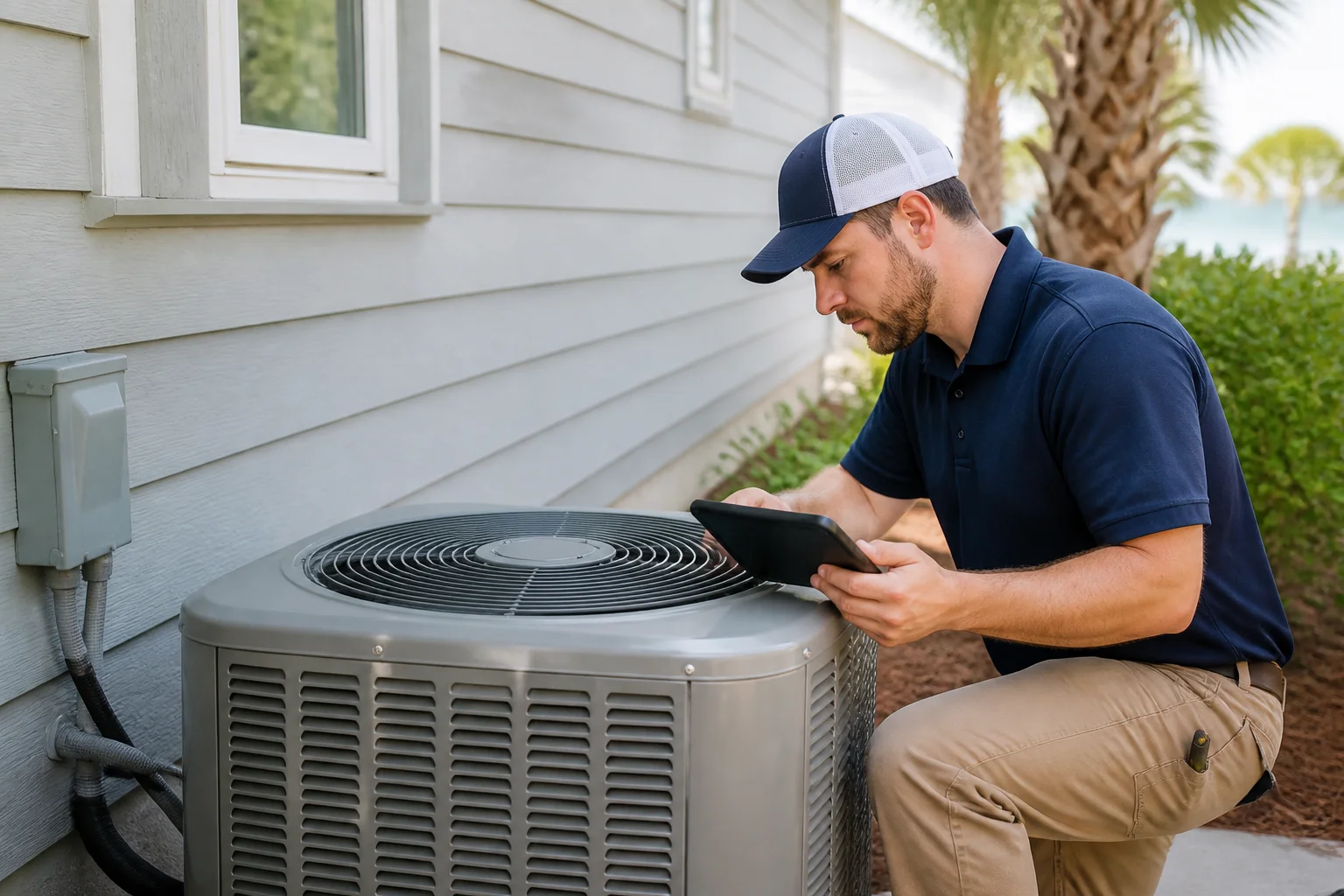
Air conditioning problems in Fort Walton Beach rarely stay small for long. A weak capacitor, clogged drain line, dirty evaporator coil, or restricted return vent can quickly affect cooling, humidity, and energy use during coastal Florida weather. Smart repair planning means looking beyond the immediate symptom to understand how the entire HVAC system is operating.
A Superior Mechanical provides air conditioning repair in Fort Walton Beach for homeowners and businesses dealing with warm rooms, unusual noises, water around an air handler, poor airflow, and complete cooling failures. Careful diagnostics help identify the actual cause instead of relying on a temporary fix.
Why Fort Walton Beach AC Systems Work So Hard
Fort Walton Beach has long cooling seasons, high humidity, intense summer heat, and salt carried inland from the Gulf. Outdoor units must release heat while exposed to moisture, sand, lawn debris, and corrosive coastal air. Condenser coils that become dirty or corroded cannot transfer heat as effectively, causing the compressor to run longer and use more electricity.
Indoor equipment faces a different set of challenges. Air handlers are often installed in garages, closets, attics, or other warm spaces. Evaporator coils collect moisture as they cool and dehumidify the air. Drain lines must carry that water away without backing up. Ductwork routed through a hot attic can lose conditioned air through loose connections, damaged insulation, or gaps created during remodeling work.
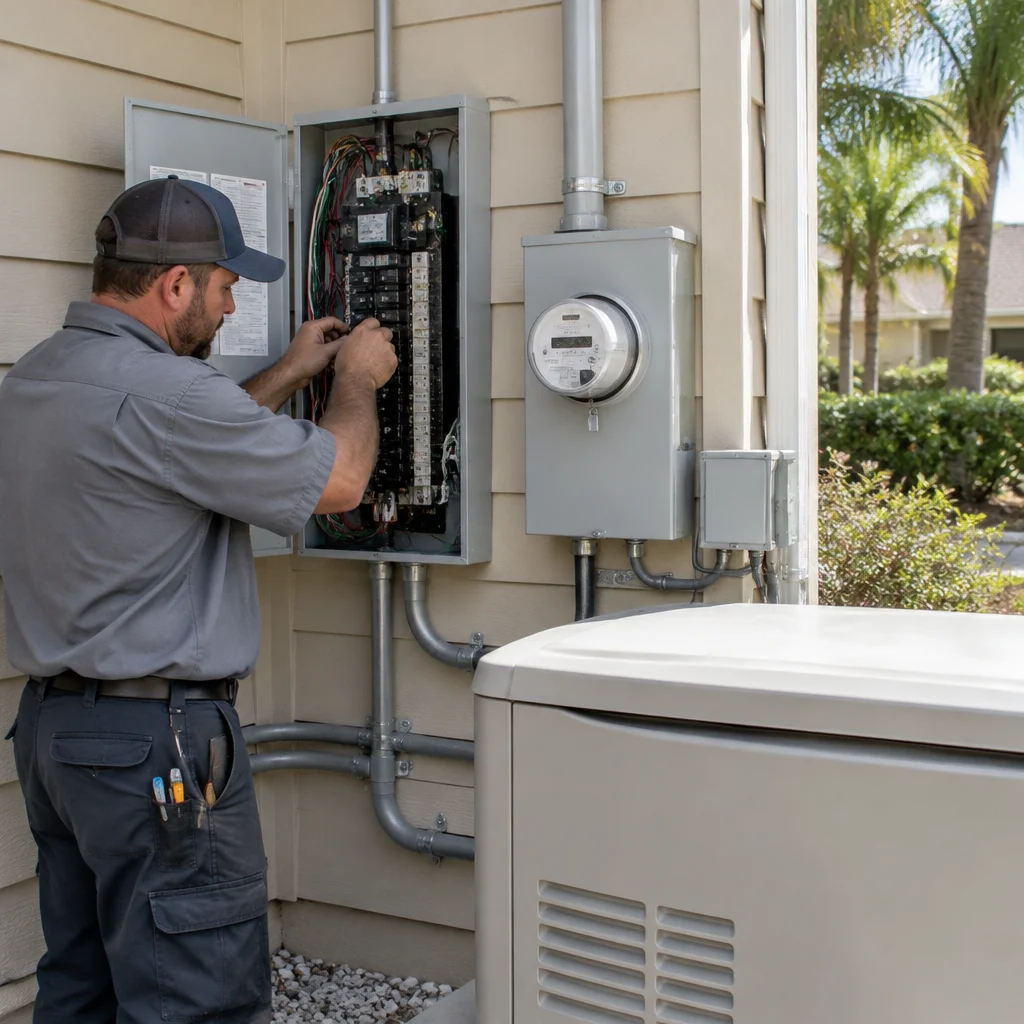
Storms also contribute to HVAC wear. Power interruptions and voltage fluctuations can damage capacitors, contactors, control boards, and thermostats. Wind driven debris may bend condenser fins or block airflow around an outdoor unit. Local knowledge matters because HVAC systems across Okaloosa County operate under these coastal conditions year after year.
Cooling Symptoms That Deserve Attention
An air conditioner does not need to stop completely before it needs service. Changes in comfort, sound, runtime, or moisture can provide an early warning. Homeowners searching for an air conditioner repair near me often report one or more of the following problems:
- Air from the vents feels cool but is noticeably weaker than usual.
- The thermostat reaches the set temperature slowly or not at all.
- Some bedrooms remain warm while central rooms feel comfortable.
- The system starts and stops every few minutes.
- The indoor air feels sticky even while the temperature appears normal.
- Water collects near the air handler or stains the ceiling below it.
- The outdoor condenser hums, clicks repeatedly, or fails to start.
- Ice forms on refrigerant lines or the evaporator coil.
- Energy bills rise without a major change in thermostat settings.
These symptoms can come from simple issues, such as a dirty filter, but they can also point to failed motors, refrigerant loss, electrical control problems, clogged drain lines, or damaged ductwork. Continuing to run the equipment may turn a manageable repair into compressor damage or extensive water cleanup.
Warm air does not always mean low refrigerant
Low refrigerant can reduce cooling, but warm air may also result from a failed compressor, dirty coil, incorrect thermostat setting, stuck reversing valve, blocked return, or malfunctioning blower motor. Refrigerant is not consumed like fuel. If the charge is low, the system should be checked for a leak rather than repeatedly topped off. A homeowner searching for refrigerant leak repair near me should expect pressure measurements, temperature readings, and leak detection when appropriate.
Weak airflow can imitate an equipment failure
Restricted airflow prevents the evaporator coil from absorbing enough heat. The coil may become too cold and freeze, leaving the home warm even though the system is running. Common causes include clogged filters, closed vents, dirty blower wheels, undersized return ducts, crushed flexible ductwork, and furniture blocking return grilles.
A Complete Diagnosis Looks Beyond the Outdoor Unit
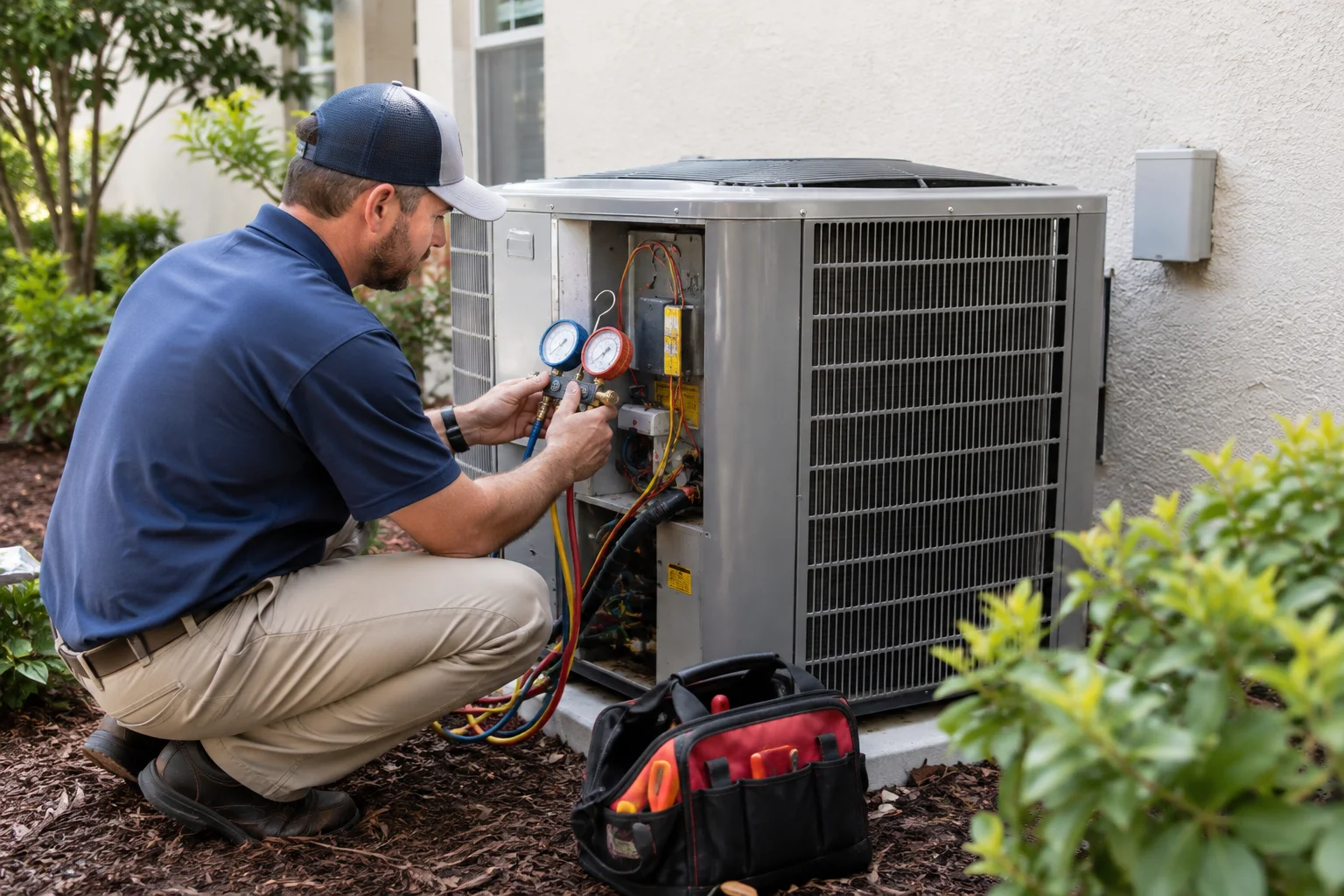
Reliable AC repair begins with the whole system. A technician may check thermostat operation, filter condition, supply and return temperatures, blower performance, electrical components, refrigerant pressures, coil cleanliness, condensate drainage, and the condition of accessible ductwork. The goal is to connect the homeowner's complaint with measurable system performance.
For example, a hot second floor may not be caused by the condenser. The actual issue could be a disconnected attic duct, inadequate return airflow, poor insulation, or a balancing problem. Water around an air handler could come from a clogged drain line, cracked drain pan, frozen coil, or missing insulation that allows condensation to form outside the cabinet.
An air conditioning inspection can be useful when performance has changed but the cause is not obvious. It can also help people buying an older Fort Walton Beach home understand the condition of the air handler, condenser, drain system, thermostat, and ductwork before peak summer demand arrives.
Comfort Depends on Airflow and Humidity Together
Temperature is only part of indoor comfort. An AC system must move the right amount of air and run long enough to remove moisture. Oversized equipment can cool a home quickly, shut off, and leave humidity behind. Undersized equipment may run constantly during hot weather without maintaining the desired temperature. Incorrect blower settings can also affect moisture removal.
Fort Walton Beach homes commonly develop airflow problems after remodels and additions. A converted garage, enclosed porch, or new bedroom changes the cooling load. Extending a small existing duct into the new space may reduce airflow elsewhere. Before adding equipment or replacing ductwork, a contractor should consider room size, windows, insulation, sun exposure, occupancy, and the capacity of the current system.
Ductless mini splits can be a practical option for additions, garages, workshops, and rooms that cannot be connected efficiently to central ductwork. A properly planned mini split installation can provide targeted comfort without overloading the existing air handler. Larger homes may benefit from multi zone mini splits, but placement and sizing still matter for humidity control and even temperature distribution.
Duct leakage affects comfort and indoor air quality
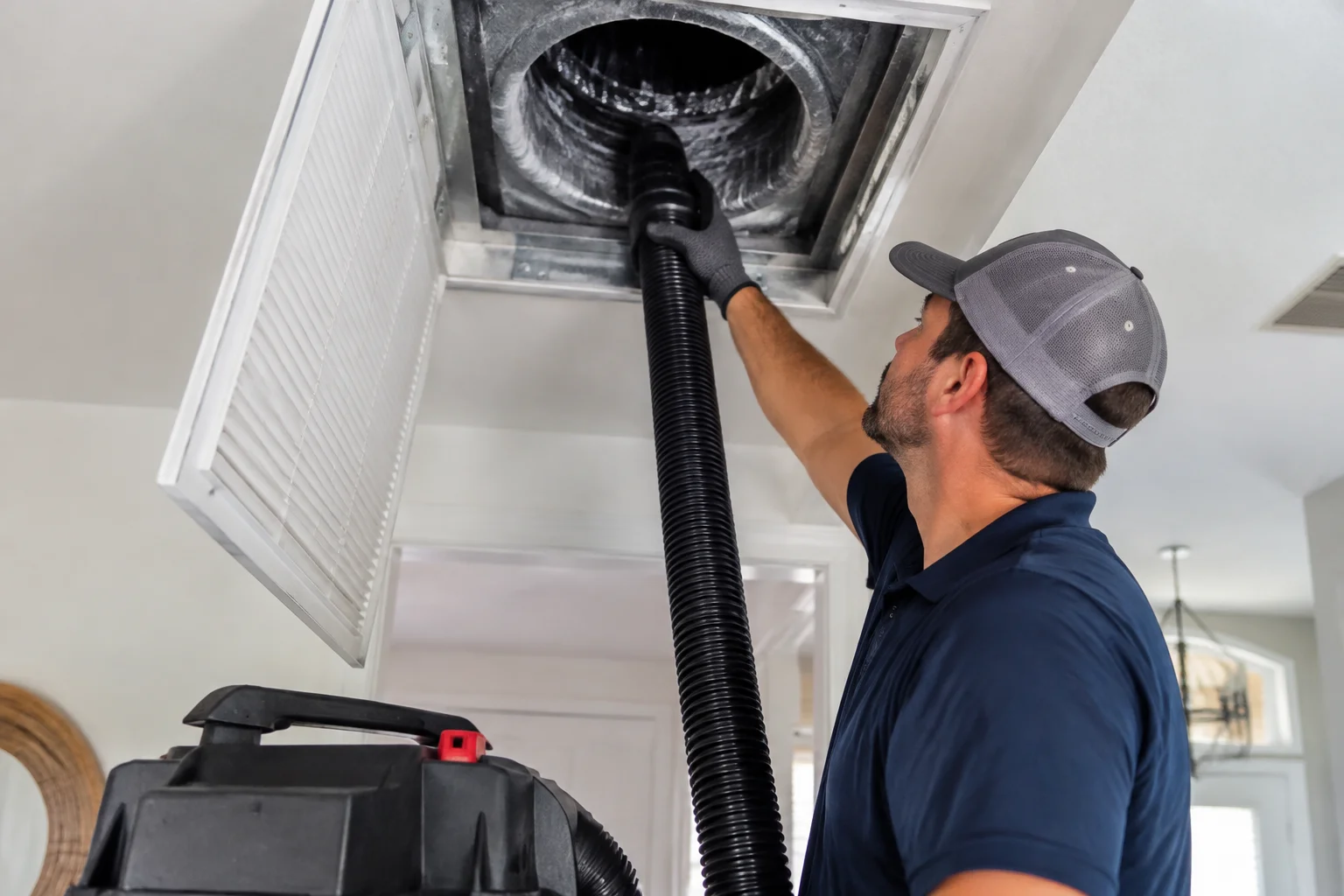
Leaky return ducts can pull hot, dusty, or humid air from an attic or garage. Supply leaks send paid cooling into unconditioned spaces before it reaches the vents. Duct sealing and ductwork repair can improve airflow, reduce system runtime, and limit the entry of insulation particles and outdoor moisture. Severely damaged or poorly designed systems may require new ductwork installation rather than patching isolated sections.
Humidity Problems Need Their Own Diagnosis
A home that feels damp at 74 degrees may be less comfortable than a drier home at 77 degrees. Persistent indoor humidity can encourage musty odors, condensation on vents, and microbial growth on dusty surfaces. It may also cause homeowners to lower the thermostat repeatedly, increasing energy use without addressing the underlying moisture problem.
Possible causes include oversized cooling equipment, short cycling, low refrigerant, dirty coils, incorrect fan settings, duct leakage, clogged drainage, and outdoor air entering through gaps in the building. Bathroom exhaust issues, frequent door opening, and moisture from recent construction can contribute as well.
Humidity control may involve an AC repair, airflow correction, duct sealing, thermostat adjustment, or a dedicated dehumidification strategy. Indoor air quality products can help with particles and odors, but no filter or air cleaner can replace proper moisture management. Filters should fit securely and provide appropriate filtration without creating excessive resistance for the blower.
Repair Decisions Should Consider Age, Condition, and Cost
Not every breakdown means the system needs replacement. Capacitors, contactors, drain components, thermostats, blower motors, and some refrigerant leaks can often be repaired. The decision becomes more complicated when an older system has a failed compressor, heavily corroded coils, obsolete refrigerant, repeated leaks, or several major components nearing the end of their service life.
A good repair discussion should include the equipment's age, maintenance history, efficiency, comfort performance, warranty status, and expected cost of continued operation. Homeowners can review broader air conditioning services in Fort Walton Beach when comparing repair, maintenance, and replacement options.
Heat pumps need additional consideration because they provide both cooling and heating. A reversing valve, defrost control, auxiliary heat component, or outdoor coil issue can affect winter performance. Local heat pump services can address cooling problems as well as heating repair. Homes with gas furnaces should schedule furnace service before cooler weather, especially if there are ignition, airflow, or venting concerns.
Prevention That Makes Future Repairs Less Disruptive
Preventive HVAC maintenance cannot stop every component failure, but it can reveal developing problems before the hottest part of summer. Demand for local HVAC contractors rises quickly during prolonged heat, so planning service during milder weather can provide more time to address drainage, airflow, corrosion, and worn parts.
A useful maintenance visit may include cleaning accessible coils, flushing the condensate drain, checking electrical connections, testing capacitors, measuring system temperatures, checking refrigerant performance, inspecting the blower, and reviewing thermostat operation. Outdoor units should have adequate clearance from shrubs, fences, storage, and accumulated debris.
Homeowners can help by checking filters regularly, keeping supply vents open, watching for water near the air handler, and noting changes in sound or runtime. Salt deposits and corrosion around the condenser should not be ignored. The article What Fort Walton Beach Homes Can Learn From Commercial HVAC Maintenance explains how consistent recordkeeping and scheduled inspections can benefit residential equipment. Similar coastal prevention principles are discussed in this guide to preventive AC service in 30A.
People searching for AC maintenance near me should look for service that evaluates performance rather than offering only a quick visual check. Temperature split, airflow, drainage, electrical condition, and refrigerant operation all provide useful information about system health.
Thermostats and Efficiency Improvements
A modern thermostat can improve scheduling and provide better control, but it cannot correct a mechanical or airflow defect. Before thermostat installation, compatibility with the air conditioner, heat pump, furnace, wiring, and staging controls should be confirmed. An incorrectly configured thermostat can cause short cycling, poor humidity control, or unnecessary auxiliary heat use.
Efficiency improvements often start with basic system corrections. Sealing ducts, cleaning coils, correcting refrigerant charge, replacing a restrictive filter, and restoring blower performance may reduce runtime. In older homes, attic insulation and air sealing can lower the cooling load. Newer homes may still have comfort problems if ducts were poorly balanced or rooms were changed after the original HVAC design.
Situations That Should Not Wait
Some cooling issues require prompt professional attention. Shut the system off if there is a burning smell, smoke, severe electrical buzzing, repeated breaker tripping, or significant ice buildup. Water leaking near ceilings, walls, or electrical components also needs quick action. A stopped blower or nonworking outdoor fan can cause additional equipment damage if the system continues running.
Households with infants, older adults, pets, or people with medical conditions should treat a complete cooling failure during extreme heat as urgent. If an emergency HVAC repair near me search becomes necessary, explain the symptoms, equipment location, thermostat behavior, and any unusual sounds or odors when requesting service. Do not open sealed electrical panels or attempt to handle refrigerant.
Businesses have their own urgent comfort and equipment concerns. Restaurants, offices, retail spaces, and other facilities can use commercial HVAC repair in Fort Walton Beach for packaged units, split systems, airflow problems, and cooling interruptions.
Build a Cooling Plan Around the Home
Every property has a different service history and comfort pattern. Older homes may have patched ductwork, limited return air, and equipment added over several decades. New construction may have tightly sealed spaces that need careful humidity and ventilation control. Remodels and additions can change loads that the original system was never designed to handle.
When an HVAC service near me search leads to A Superior Mechanical, homeowners can discuss the immediate repair along with airflow, humidity, drainage, thermostat settings, and realistic prevention steps. Service is available throughout Fort Walton Beach and surrounding Okaloosa County communities. Planning around the whole system helps protect comfort, indoor air quality, and energy efficiency through summer heat, coastal storms, and changing seasonal demand.
Find Air Conditioning Repair in Fort Walton Beach, FL
If you need Air Conditioning Repair in Fort Walton Beach, FL, visit our local service page or contact A Superior Mechanical today.
Map of Fort Walton Beach, FL
Frequently Asked Questions
Why is my Fort Walton Beach air conditioner running but not cooling well?
Possible causes include a dirty filter, restricted airflow, a dirty evaporator or condenser coil, low refrigerant from a leak, a weak capacitor, duct leakage, or compressor trouble. A technician can test temperatures, pressures, airflow, and electrical components to identify the cause.
Can high indoor humidity mean my AC needs repair?
Yes. High humidity can result from short cycling, oversized equipment, low refrigerant, dirty coils, incorrect blower settings, duct leakage, or drainage problems. Building air leaks and moisture sources may also contribute, so the whole home should be considered.
How often should an AC system be serviced near the coast?
Most Fort Walton Beach homes benefit from professional service at least once a year. Heat pumps that provide both cooling and heating may benefit from twice yearly checks. Coastal salt air, long cooling seasons, and heavy humidity make coil, drain, electrical, and corrosion inspections especially important.
Related Articles
- What Fort Walton Beach Homes Can Learn From Commercial HVAC Maintenance
- Why Preventive HVAC Service Pays Off for Air Conditioning Repair in 30A, FL
- From Spotted Glasses to Better Coffee: Softer Water for Fort Walton Beach Homes
- Why Fort Walton Beach homes benefit from preventive drain cleaning and pipe care
Photo Gallery