Finding water under the heater just before the morning showers raises two questions: Is the tank leaking, and can anyone still use the water? The answer depends on where the water starts, not where it collects. A drip from a supply fitting can run down a perfectly good tank. A leak through the tank wall needs a different response.
In Wright, a heater might sit on a garage slab, in a utility closet beside a bedroom, or in a laundry room shared with other plumbing. Its location matters almost as much as its age. If you are planning water heater replacement in Wright, FL, use the visit to address how water gets to the heater and where it will go if anything leaks again.
Read the puddle before you write off the tank
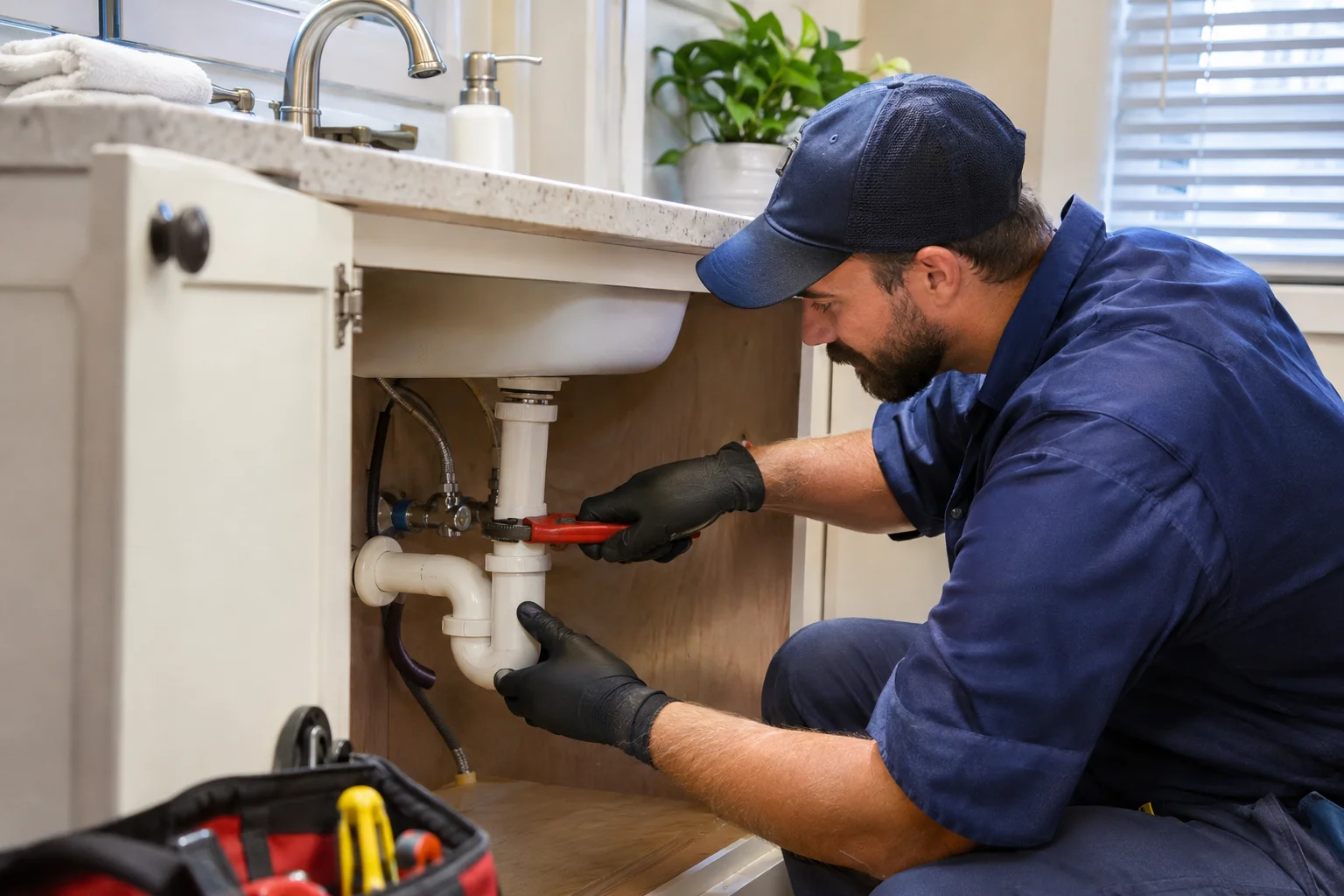
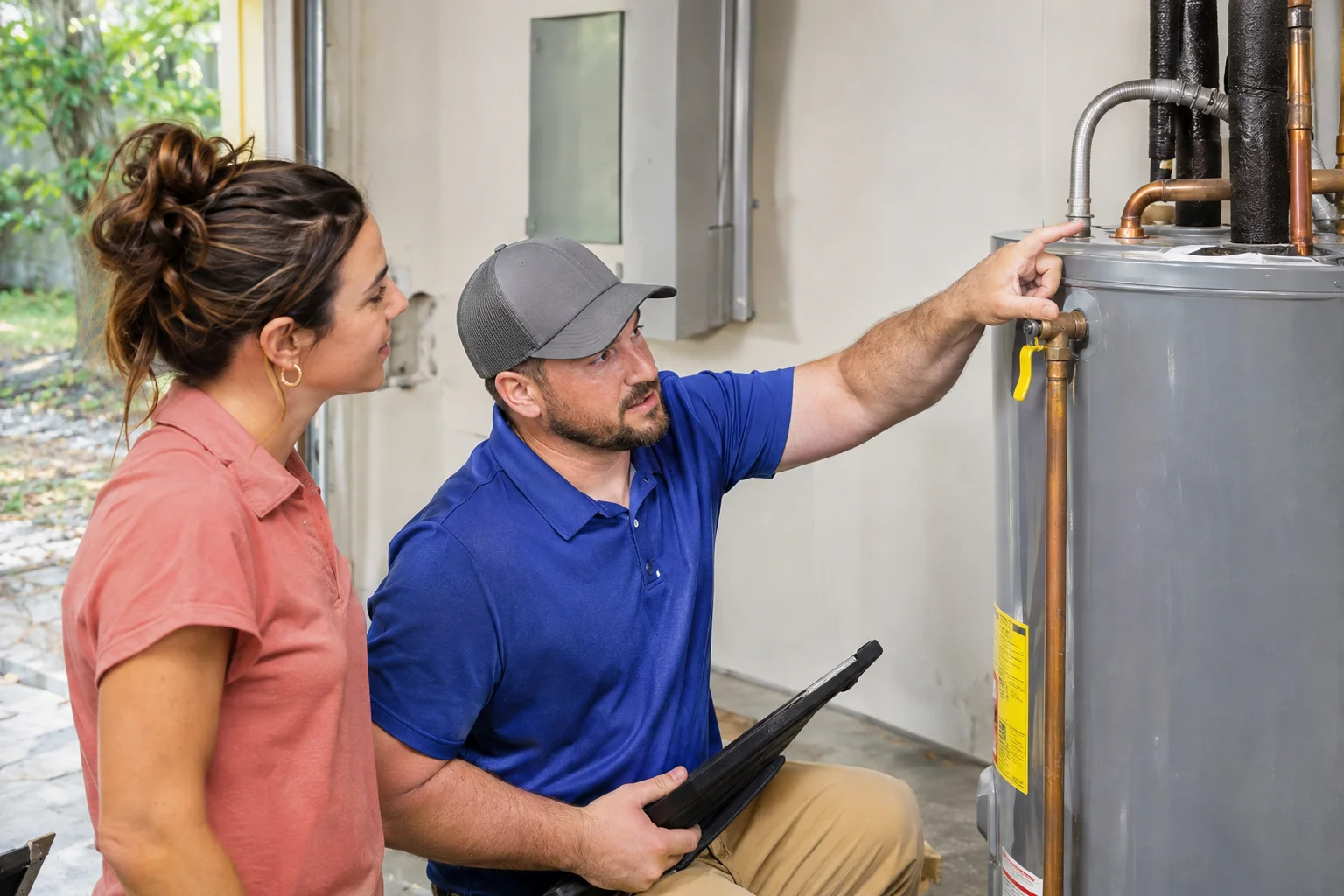
Start with a look from a dry spot. Is there a bead of water on the cold inlet above the heater? A mineral trail below a threaded fitting? A wet patch directly beneath the drain valve? Tell the plumber which part looks wet highest up. A photo taken before someone wipes the floor can help distinguish a leaking connection from water escaping beneath the tank jacket.
Wright's humid Gulf Coast summers can complicate that first look. A cold pipe in a warm garage can sweat, particularly after a long shower brings fresh cold water through the line. Condensation tends to form along a length of cool pipe. A drop that keeps forming at one joint deserves closer inspection. Humidity is not a good explanation for a repeatedly wet drain pan without checking the fittings, valves, and tank.
Separate urgent leaks from ordinary service calls
If water is spreading, stop using the heater. If you can safely reach a clearly identified cold water shutoff serving it, close that valve without forcing it. This limits the incoming supply but does not empty the tank or guarantee the leak will stop. Stay out of standing water around powered equipment. If the valve will not close, water is reaching living space, or hot water is discharging forcefully, keep people clear and request emergency plumbing service in Wright.
A small drip from an accessible connector usually allows more time for a diagnosis, provided the water is contained and not reaching wiring or building materials. Ask whether leak repair will solve the problem without replacing the appliance. A failed storage tank itself is not a faucet with a replaceable washer: once the tank wall leaks, replacement is the practical remedy.
Measure the hot water problem at the tap
Before searching for “hot water heater replacement near me,” note which fixtures actually lose hot water. If the kitchen tap stays hot while one shower turns lukewarm, the shower's mixing valve may need service. If every tap starts hot but cools after the same short interval, the plumber will want to check the heater's operation and compare its usable capacity with your demand. Those observations can save you from buying a larger unit to solve a bathroom fixture problem.
Also distinguish temperature from flow. A weak stream on both hot and cold at one basin points toward a local restriction such as a clogged aerator. Good cold flow but poor hot flow throughout the house suggests checking the heater shutoff, connectors, and hot distribution piping. For more on symptoms that show up away from the tank, see how a failing heater can affect plumbing in Wright homes.
Size the replacement for the busiest hour
Think about a weekday morning rather than your monthly water bill. Two consecutive showers followed by a load of laundry create a different demand from two showers running at once. For a storage heater, compare the first hour rating, which accounts for stored hot water and recovery. Tank volume alone does not tell you how much usable hot water the system can deliver during that busy stretch.
For a tankless unit, list the fixtures likely to run together. The installer needs their combined flow and the temperature rise needed to heat incoming water to the delivery setting. Tankless service can suit a household that takes several showers in succession, but an undersized model may struggle with simultaneous use. Ask for the comparison using your fixtures, not just the number of bathrooms on the property listing.
Give the new heater sound pipes and predictable pressure
Replacement day offers a useful opportunity to inspect connections that normally sit behind or above the appliance. Ask the plumber to check for corrosion, poorly supported piping, and a shutoff that no longer isolates the heater. In a home with an older plumbing system and a renovated kitchen or bath, pipe materials may change along the route. The new connections should be compatible with the existing lines, without putting their weight on the heater fittings.
Water pressure is worth measuring rather than guessing from shower spray. A plumber can take a static pressure reading and, if needed, check what happens as the heater recovers after hot water use. In a closed plumbing system, heated water expands but cannot readily move back toward the public supply. The resulting pressure rise may expose a weak connector or cause the temperature and pressure relief valve to discharge.
Ask whether the house has a pressure regulator or a device that prevents backflow, and whether thermal expansion control is needed or already in place. An existing expansion tank should be checked for condition, sizing, and proper charge. Never plug a dripping relief outlet. It is a safety device, and replacing it without investigating the discharge can leave the underlying problem untouched.
Follow the drain route all the way to its outlet
A shiny new drain pan offers little protection if its outlet is blocked or the drain line runs uphill. This matters particularly in a Wright utility closet where a small overflow can soak baseboards before it appears in the hallway. Have the installer identify the pan drain termination and explain what you should do if you see water there. A pan is a warning and a way to limit damage, not a reservoir for a failing tank.
The pan drain, tank drain valve, and relief discharge pipe serve different jobs. The tank drain valve is for servicing the tank; the relief pipe carries potentially very hot discharge. A condensing tankless unit also produces condensate that needs appropriate drainage. Ask the installer to show you each line that applies to your setup and verify that its routing and termination meet local requirements. Do not assume every pipe can empty into the nearest laundry standpipe.
A slow floor drain may be a separate plumbing problem
If the laundry drain overflows when the washer pumps out, mention it before anyone drains the old tank. A single sluggish fixture may need local drain cleaning. Water rising in the shower when a toilet flushes, particularly if more than one bathroom is affected, points farther downstream. Stop running fixtures if wastewater is coming back inside. A replacement heater will not clear a blocked sewer line; sewer inspection and repair in Wright addresses that separate concern.
Look beyond the utility room for hidden hot water loss
In a slab foundation home, a hot water pipe can leak below the floor without leaving a puddle beside the heater. Clues include an unfamiliar warm patch on tile, water movement you hear when fixtures are off, or a heater that recovers repeatedly overnight. None proves a slab leak on its own. A dripping hot faucet or a leaking shower valve can also keep a heater working between uses.
If a high bill has you looking for “leak detection near me,” first note whether irrigation, the ice maker, or a running toilet could account for water use. A toilet can waste substantial cold water without explaining a shortage of hot water. Give the plumber both observations rather than assuming one repair will fix everything. This guide to leaks beneath Wright homes explains why locating the line should come before opening a floor for pipe repair.
Plan maintenance around the water in your home
White crust on a faucet aerator is a reason to ask about mineral buildup, not proof that the heater is ruined. Where hard water is present, scale can collect in a tank or restrict a tankless heat exchanger. Ask whether a hardness test makes sense and which service interval the manufacturer recommends for your water and usage. A busy rental with frequent turnovers may need a different inspection schedule from a lightly used guest suite.
With a storage heater, ask about sediment flushing and whether the model has a serviceable anode rod that helps protect the tank from corrosion. For tankless equipment, make sure there is room to reach the isolation valves for descaling. Rather than opening an old drain valve yourself and discovering it will not reseal, arrange water heater maintenance in Wright and have the plumber demonstrate the checks that are safe for you to do.
Get the installation details in writing
When comparing estimates from a “water heater installation near me” search, look beyond the model and tank size. Ask whether the quote includes removal of the old unit, new connectors where needed, pressure checks, drain work, applicable permits, and a check for leaks after the heater reaches operating temperature. If the proposed location changes, ask how much longer hot water will take to reach the farthest tap. A shorter wait can matter every morning for the life of the installation.
A Superior Mechanical provides local plumbing service in Wright and serves homes and businesses across Okaloosa County. When booking, describe the heater location, the symptoms, and any tight access such as a narrow closet door. Before the installer leaves, have everyone responsible for the property see the shutoff, the pan outlet, and the model label. For a rental, leave those details with the property manager so the next report of water on the floor gets a prompt, informed response.
Find Water Heater Replacement in Wright, FL
If you need Water Heater Replacement in Wright, FL, visit our local service page or contact A Superior Mechanical today.
Map of Wright, FL
Frequently Asked Questions
Does water in the drain pan mean my water heater needs replacement?
Not necessarily. A supply fitting, drain valve, or connection above the heater can drip into the pan. Have a plumber locate the source. An accessible fitting may be repairable, while a storage tank that leaks through its wall needs replacement.
Can I switch from a tank to a tankless water heater in my Wright home?
Often, but it is not always a direct swap. An installer should check the flow needed by fixtures you use together, the available energy supply, service access, and any venting or condensate drainage requirements. Ask for an estimate that includes those changes.
Why does the plumber need to check water pressure during replacement?
High supply pressure or pressure that rises as water heats can stress the new heater and its connections. Measuring pressure helps the plumber distinguish a supply regulation issue from thermal expansion in a closed system.
What information helps when scheduling a water heater replacement?
If it is safe to do so, photograph the model label and take a wider photo showing the pipes and space around the unit. Note which fixtures lose hot water, whether there is an active leak, and any stairs, narrow doors, or other access limits.
Related Articles
Photo Gallery