At 75 degrees, your Panama City Beach living room might feel just right while the back bedroom feels like someone left a window open. Turning the thermostat down may cool the living room enough to need a sweater without fixing the bedroom. That difference between rooms is worth mentioning at your next AC tune-up. It tells the technician something a temperature reading at the thermostat cannot.
On the Bay County coast, a useful maintenance plan accounts for where the outdoor unit sits, how air moves through the house, and where the moisture goes. Here is how to plan air conditioning maintenance in Panama City Beach around the way your home actually feels and performs.
Schedule the first visit before the house depends on cooling every day
A mild spring day gives you some breathing room. If a technician finds a slow drain or a struggling blower, you can address it before the afternoon sun makes the west side of the house uncomfortable. If you rent out the property, book ahead of the first busy stretch. A problem that goes unnoticed in an empty two-bedroom condo can become apparent the first evening a family cooks dinner, showers, and closes the bedroom doors.
If you start with a search for “spring AC tune up near me,” ask what the visit includes. A visual inspection of an outdoor condenser is useful, but it will not tell you whether the indoor coil drains properly or the return duct is pulling attic air. Tell the contractor about specific conditions, such as a musty smell at startup or low airflow only when a door is closed. Those details help determine which checks deserve extra time.
Give the outdoor unit a maintenance plan that fits its exposure
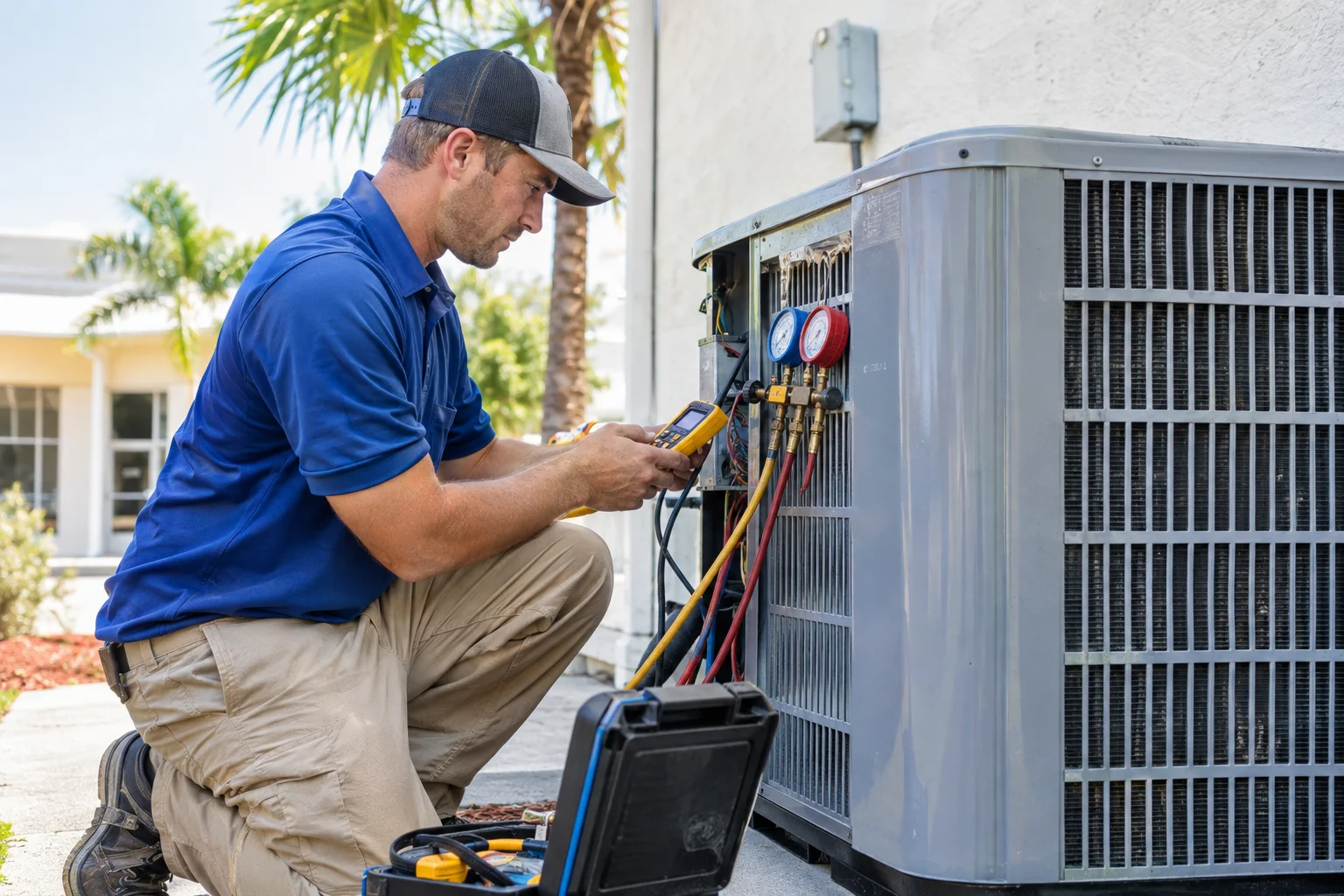
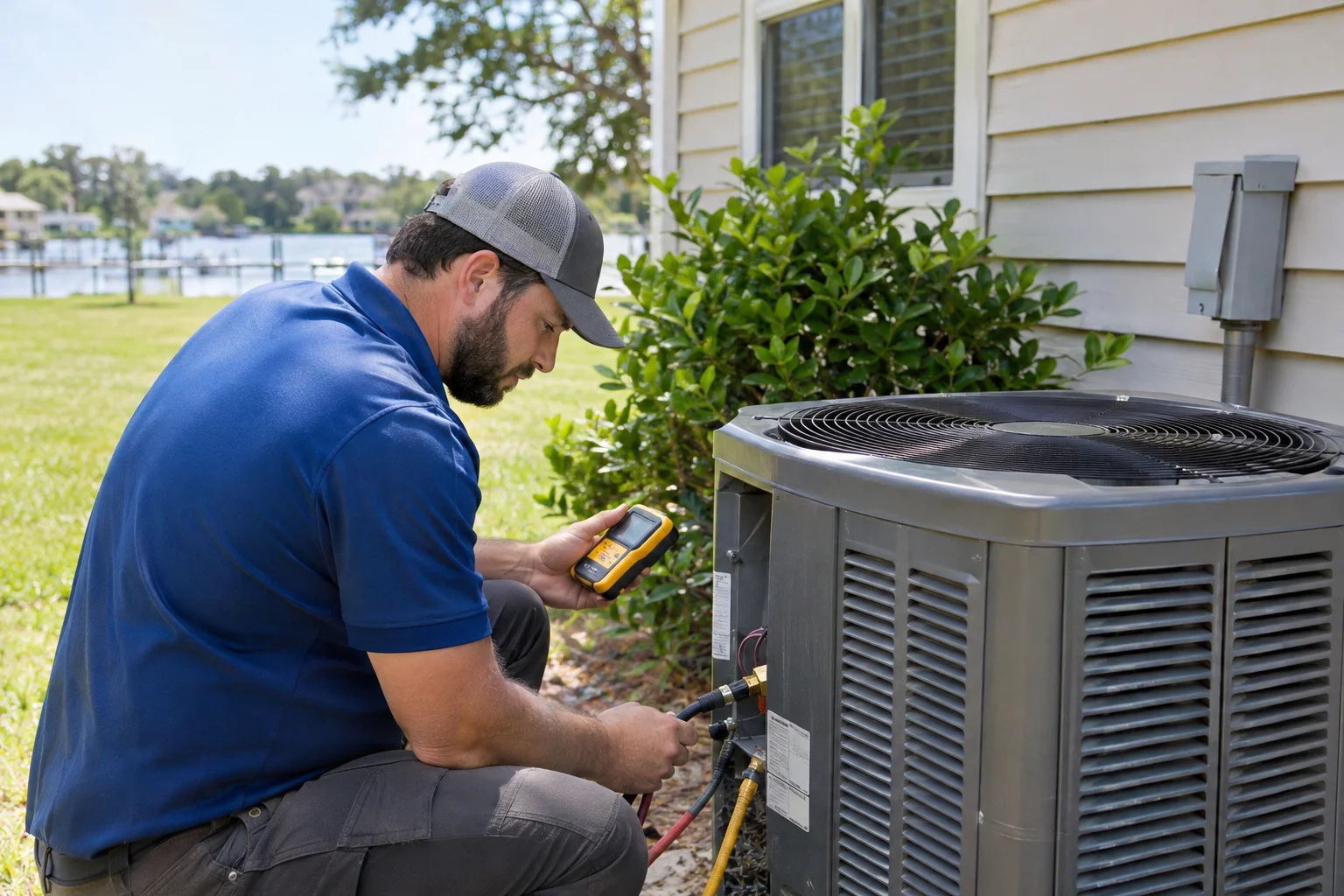
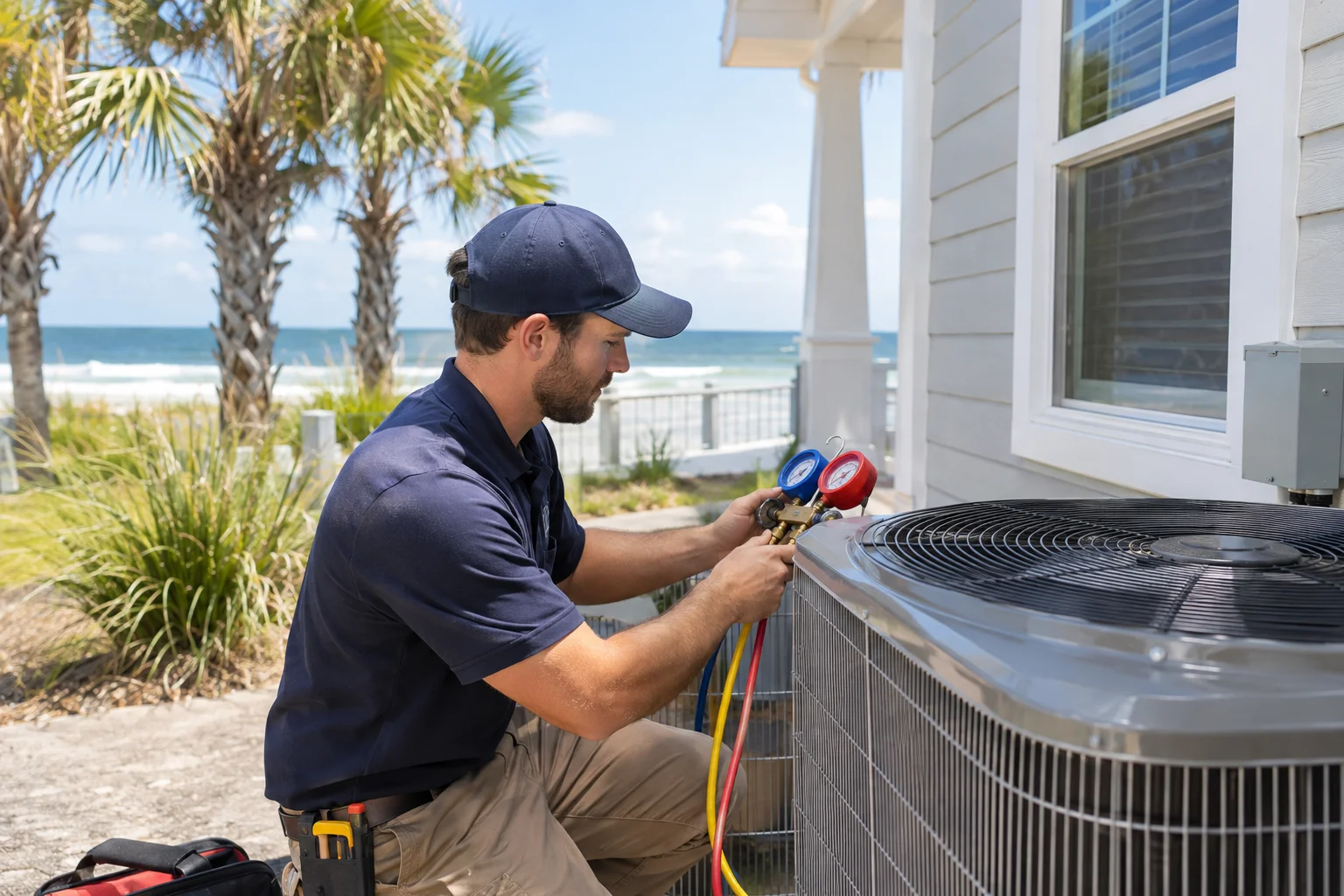
Two condensers a few blocks apart can age differently. One may sit behind a wall sheltered from onshore winds; the other may take salt spray on the same face of the coil all season. The outdoor coil needs air moving across its fins to release heat. Salt deposits and debris can interfere with that process, and corrosion can eventually damage the metal. Ask the technician to show you which side of your unit is most exposed and whether its condition warrants more frequent inspection.
Leave room for the coil to breathe
Between visits, pick up loose leaves and keep beach gear, bins, and growing shrubs outside the manufacturer's required clearances. Check again after a landscaping visit. Grass clippings can mat against the intake side even when the top of the unit looks spotless. Skip the pressure washer and household cleaners. Thin coil fins bend easily, and a cleaner that's fine for patio furniture may damage a coil coating. Follow the equipment maker's guidance about fresh water rinsing.
After a storm, look from a safe, dry location for a shifted cabinet, impact damage, or a waterline on the equipment. Do not run a system that was submerged or has visible electrical damage. Have it inspected before restarting. A local HVAC contractor familiar with coastal installations can distinguish routine salt exposure from damage that calls for AC repair rather than ordinary cleaning.
Follow the airflow from the filter to the farthest room
Start with the filter. Check it monthly during heavy use, then replace it according to its condition and the equipment instructions. Note the size, airflow arrow, and replacement date so the next person buys the right one. A filter that bows inward or slips out of its slot is worth showing the technician. Air passing around the edges carries dust straight toward the evaporator coil instead of through the filter.
For better indoor air quality during pollen season, it can be tempting to buy the densest filter on the shelf. Not every air handler can move enough air through it. Ask what filtration the system supports and whether the technician can check static pressure, a measure that helps reveal resistance to airflow. The right filter captures particles without starving the blower. It also fits snugly enough to do its job.
Notice what changes when a bedroom door closes
If a bedroom cools with its door open but warms up overnight with it shut, check that furniture hasn't covered a supply vent or return grille. Conditioned air needs a path back to the air handler, not just a path into the room. Don't close several other vents to force more air down the hall. That can raise duct pressure and reduce total airflow without correcting the return path.
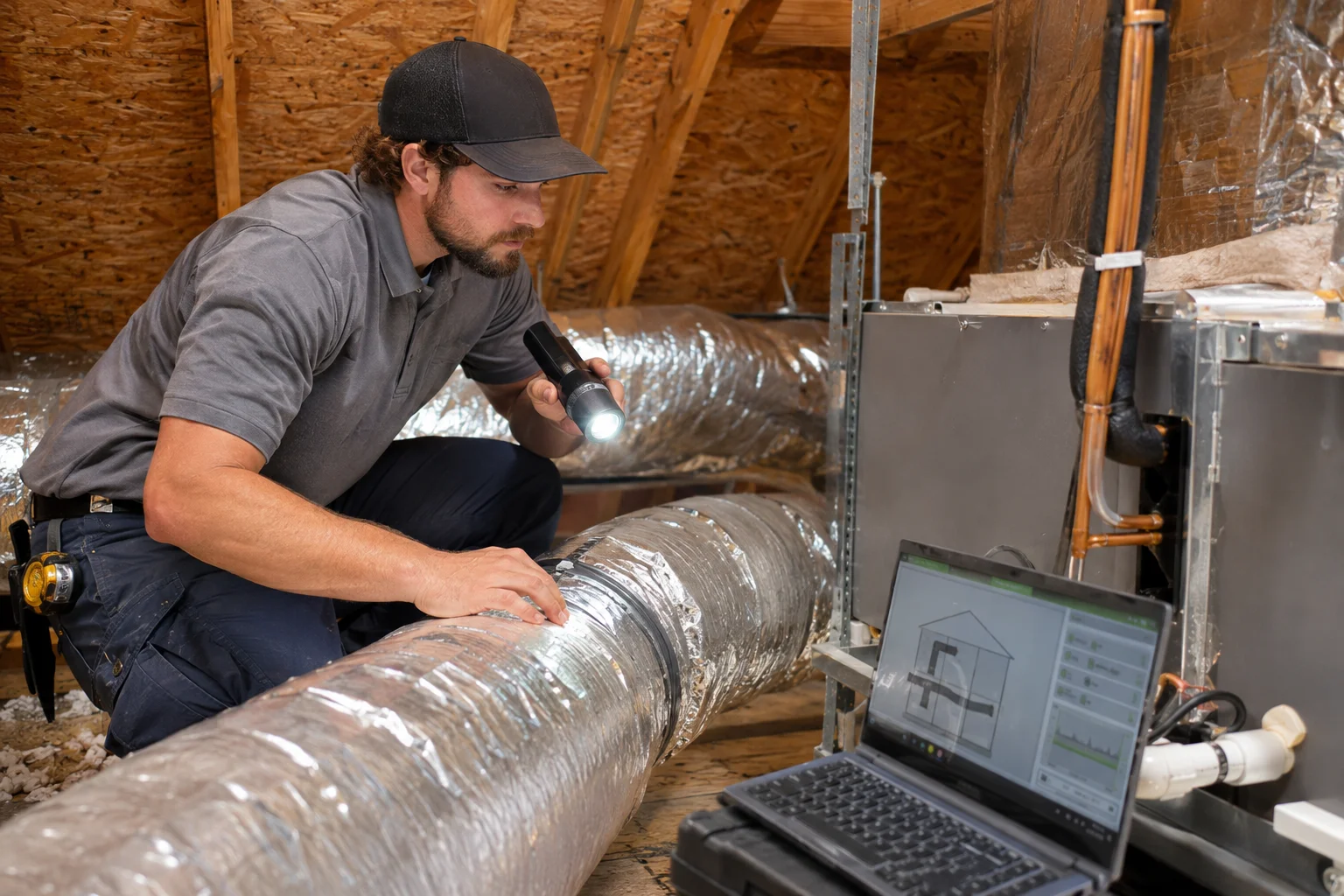
In an older beach house, a sagging branch duct or a separated connection in the attic may explain why one register barely blows. In a newer home, a remodel or addition can leave a once adequate duct layout serving more space than it was designed for. Ask about ductwork inspection and repair before assuming the AC is too small. This local guide to duct sealing and Aeroseal explains options for leakage. A crushed or disconnected duct needs physical repair, not just sealing.
A cool house should not feel clammy
During a cooling cycle, indoor air passes over the cold evaporator coil. Moisture condenses there, collects in a pan, and leaves through a drain line. That is why temperature, airflow, and drainage belong in the same air conditioning service visit. A dirty coil can restrict airflow, and a unit that repeatedly shuts off after short cycles may reach the thermostat setting without removing enough moisture.
A small indoor humidity meter is useful if the thermostat doesn't show relative humidity. Keep it away from supply vents and showers. Readings that stay above about 60 percent deserve attention, especially if you notice a damp smell or condensation on vents. Record the temperature and humidity together for a few days. A brief rise after everyone showers tells a different story from high humidity every morning in an unoccupied home.
Try the fan setting before lowering the temperature
On many conventional systems, setting the thermostat fan to Auto rather than On lets the blower stop between cooling cycles. Continuous fan operation can blow moisture from a wet coil back into the rooms. Use bath exhaust during showers and keep windows closed while cooling. If humidity stays high, have the contractor check cycle length, blower setup, and return duct leakage before you pay for a dehumidifier or a new thermostat installation.
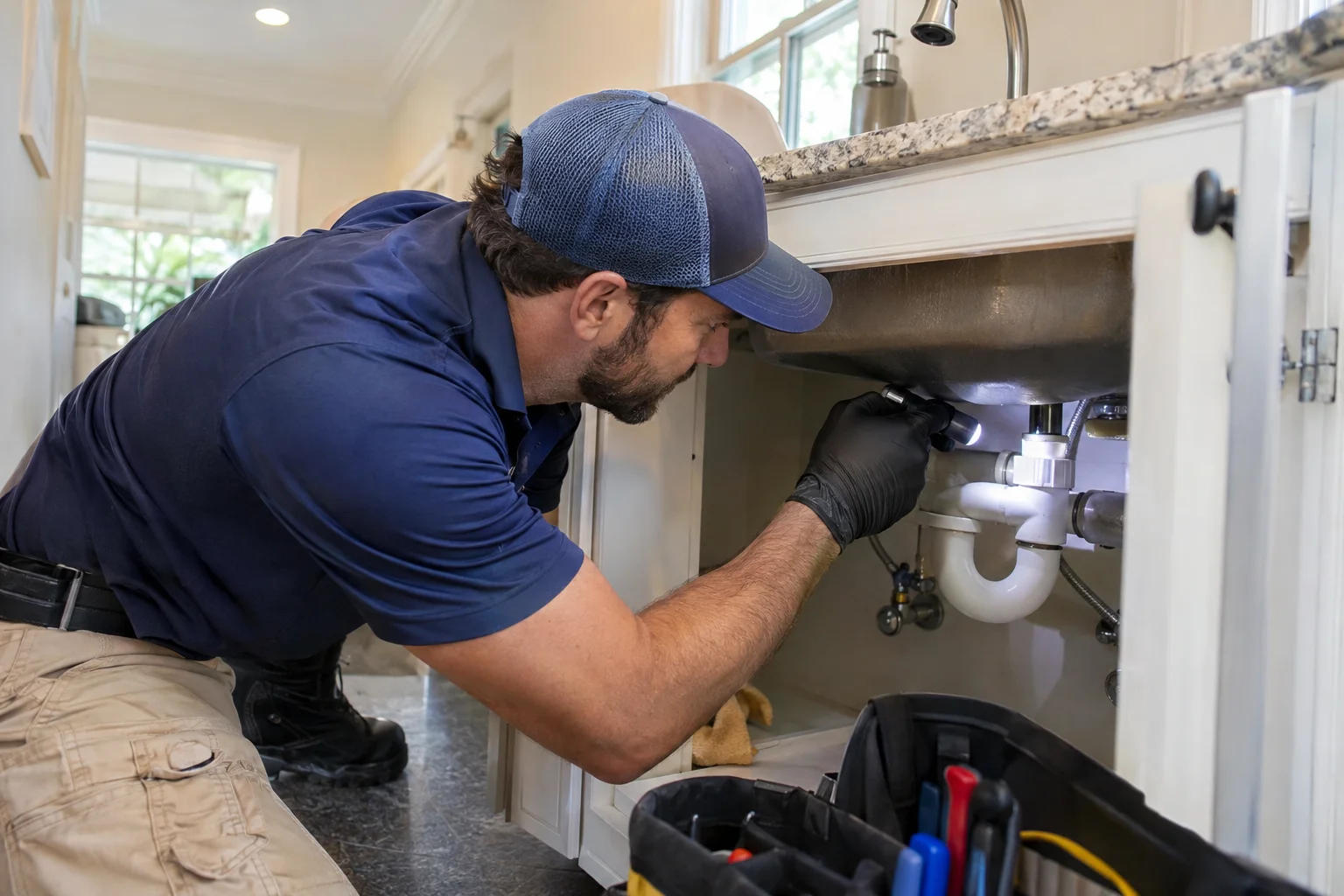
Water near an indoor air handler is a different matter. Algae or debris can block the condensate line, and a working float switch may stop cooling to prevent an overflow. Never bypass the switch. If you see water collecting under the cabinet or a new ceiling stain beneath an attic unit, shut cooling off and arrange service. During maintenance, have the technician check the pan, confirm drainage, and test the safety switch if one is fitted.
Separate a routine tune-up from a repair call
Gradually longer cooling cycles during hotter weather aren't necessarily a fault. A sudden change on an otherwise typical afternoon is more useful information. If the outdoor unit runs but the air from the vents turns warm, check the thermostat mode and filter, then call if cooling doesn't recover. Ice on a refrigerant line or indoor coil is a reason to stop cooling, not to turn the setpoint lower. Don't chip ice away from the tubing.
Low airflow and refrigerant leaks can both cause icing. Refrigerant is not consumed like fuel, so repeated top-offs are not preventive maintenance. Ask how the technician will distinguish an airflow restriction from a charge problem and, if a leak is suspected, how it will be located. If you're searching for “AC repair near me” during a heat advisory, mention any vulnerable occupants and arrange a cooler place for them while you wait. Smoke or an active fire calls for leaving the home and contacting emergency services.
Match the maintenance calendar to the equipment you own
A heat pump uses many of the same components for summer cooling and winter heating. Schedule a heating check before the first cold spell rather than discovering a problem when you change modes. Mention any trouble switching modes so the technician can evaluate whether heat pump repair is needed. If your central AC shares a blower with a furnace, keep furnace service on the calendar, too. A cooling visit alone does not replace a heating safety inspection.
Ductless mini splits in converted garages and additions have their own filters, indoor coils, and drains. Put each head on the service list, even if it only runs when guests visit. For vacation rentals, leave filter sizes and air handler locations with the person who handles turnovers. A Superior Mechanical's property management HVAC services are an option for owners coordinating maintenance between stays.
Use the service record to decide where your money goes next
Keep a short record of filter changes, drain issues, repairs, and which rooms get uncomfortable. Compare utility use in kilowatt-hours rather than dollars, allowing for weather and occupancy. A higher bill during a hot week with houseguests doesn't prove declining energy efficiency. Rising use alongside longer cycles and a recurring comfort problem gives the technician a much better starting point.
Ask for findings you can act on: a photo of coil deterioration, a pressure reading that points to a restrictive filter, or a note identifying a leaking duct connection. If the equipment faces a major repair, compare that cost and its recent history with air conditioning replacement options. For a remodeled house, request a cooling load calculation rather than copying the old unit size. A larger system is not automatically better at humidity control.
When comparing local companies after an “HVAC maintenance near me” search, ask who will review the findings with you and which items can safely wait. A Superior Mechanical serves Panama City Beach homeowners and the surrounding Bay County service area. When you schedule, mention the age of the system, its exposure to salt spray, and the room that gives you the most trouble. That conversation makes the visit about your home, not just the equipment outside it.
Find Air Conditioning Maintenance in Panama City Beach, FL
If you need Air Conditioning Maintenance in Panama City Beach, FL, visit our local service page or contact A Superior Mechanical today.
Map of Panama City Beach, FL
Frequently Asked Questions
How often should I schedule AC maintenance in Panama City Beach?
An annual cooling tune-up before peak summer use is a practical starting point. If your outdoor coil gets direct salt spray, your rental stays occupied most of the year, or your drain has clogged before, ask whether those components need an additional check between visits.
Can AC maintenance help if the thermostat reads correctly but the house feels damp?
Yes, if the cause is a dirty coil, an unsuitable fan setting, restricted airflow, or another correctable issue. Bring a few indoor temperature and humidity readings to the visit. If the system checks out, the technician may recommend evaluating duct leaks, equipment sizing, or how outdoor air enters the home.
Should I wait for my scheduled tune-up if I see ice on the AC line?
No. Turn cooling off and contact an HVAC contractor. A clogged filter, a blower problem, and low refrigerant can produce similar symptoms. Leave the ice to thaw naturally and tell the technician where you first saw it.
Related Articles
- Where the Cool Air Goes: A Panama City Beach Guide to Duct Sealing and Aeroseal
- Less Scale, Better Taste: Clean Water Services in Panama City Beach, FL
- Fewer Spots, Fresher Taste: Water Purification for Panama City Beach Homes
- A Better Water Heater Replacement Starts with Your Panama City Beach Plumbing
Photo Gallery