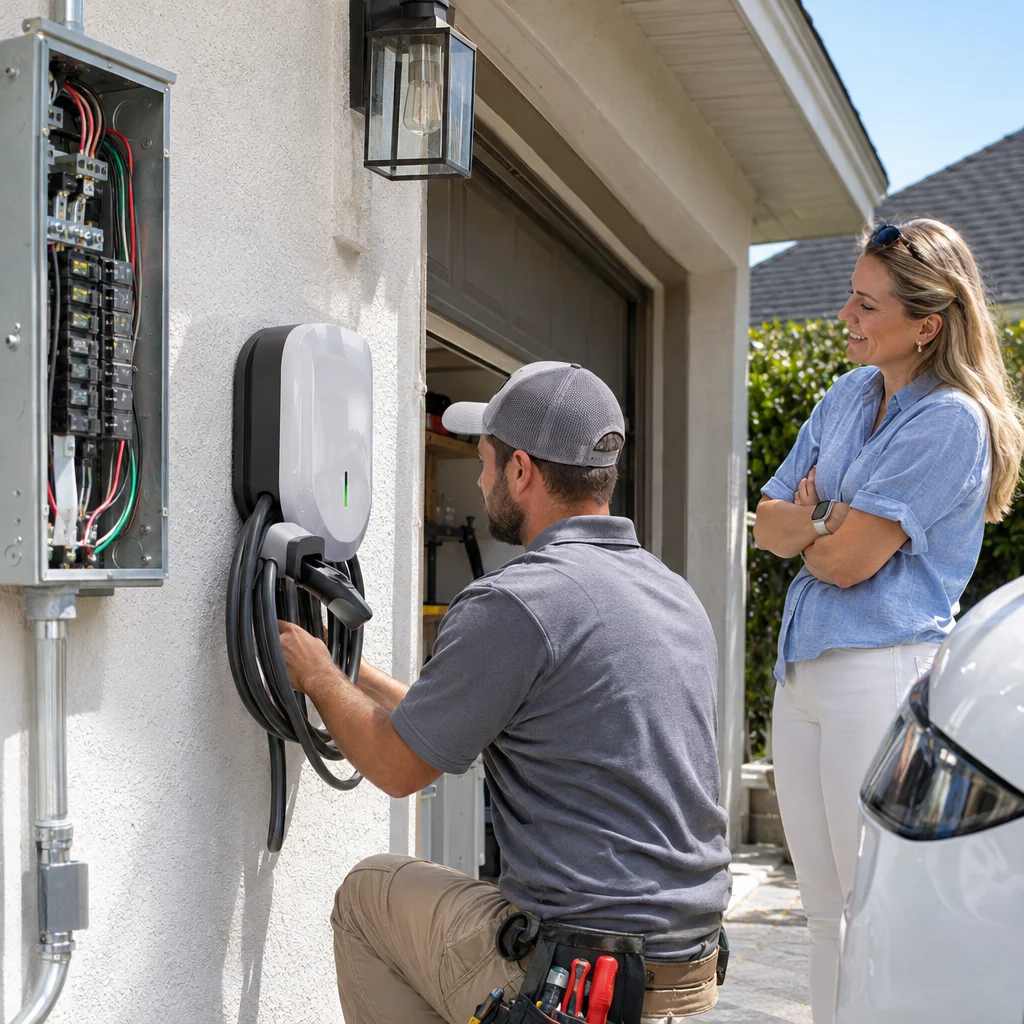
A home EV charger should make daily life easier, not leave you wondering whether the breaker will trip overnight. Before choosing equipment, it helps to understand how charging will fit into your home's electrical system, parking arrangement, and everyday power demand.
For homeowners considering EV charger installation in Miramar Beach, FL, coastal exposure matters alongside panel capacity and wiring. A Superior Mechanical can help plan a charging setup around the property, whether it is an older beach cottage, a newer home, or a vacation rental with changing drivers.
Start with your driving habits, not the biggest charger
Most home charging decisions begin with a choice between Level 1 and Level 2 equipment. Level 1 typically uses a compatible 120-volt outlet and adds range slowly. Level 2 uses a 240-volt circuit and generally provides faster charging. Actual speed depends on the vehicle's onboard charger, the charging equipment, the configured current, and battery conditions.
A homeowner with a short commute and long overnight parking window may not need the highest available output. Someone returning from frequent regional trips may benefit from more charging capacity. Matching equipment to actual use can reduce unnecessary electrical work without sacrificing convenience. Also consider whether a second EV is likely within the next few years.
Make the parking location part of the plan
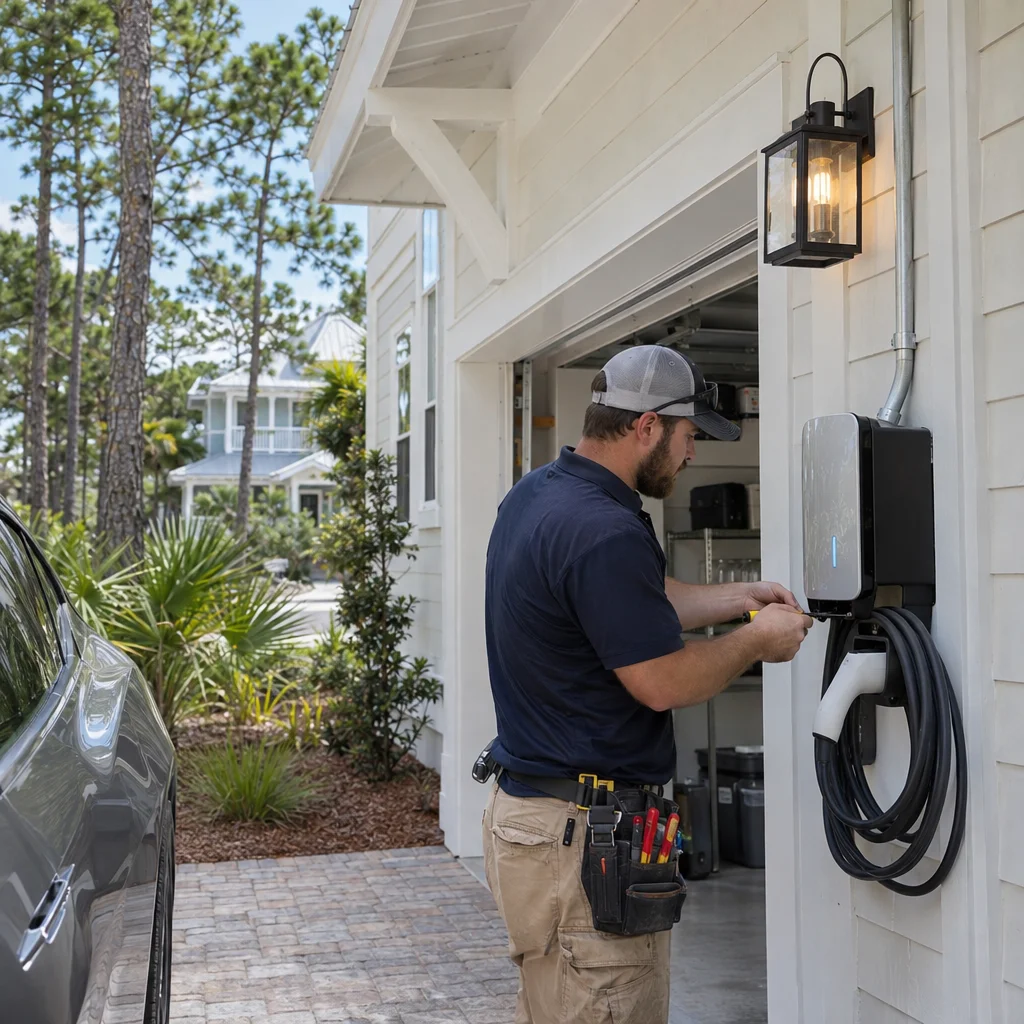
Locate the charger so its cable reaches the vehicle without crossing a walkway, stretching tightly, or being pinched under a garage door. Think about the charging port location on your current vehicle and possible replacements. Outdoor equipment needs an appropriate environmental rating, secure mounting, and protection from vehicle impact where required. Avoid locations prone to standing water or storm flooding.
Your panel needs a load calculation, not a quick glance
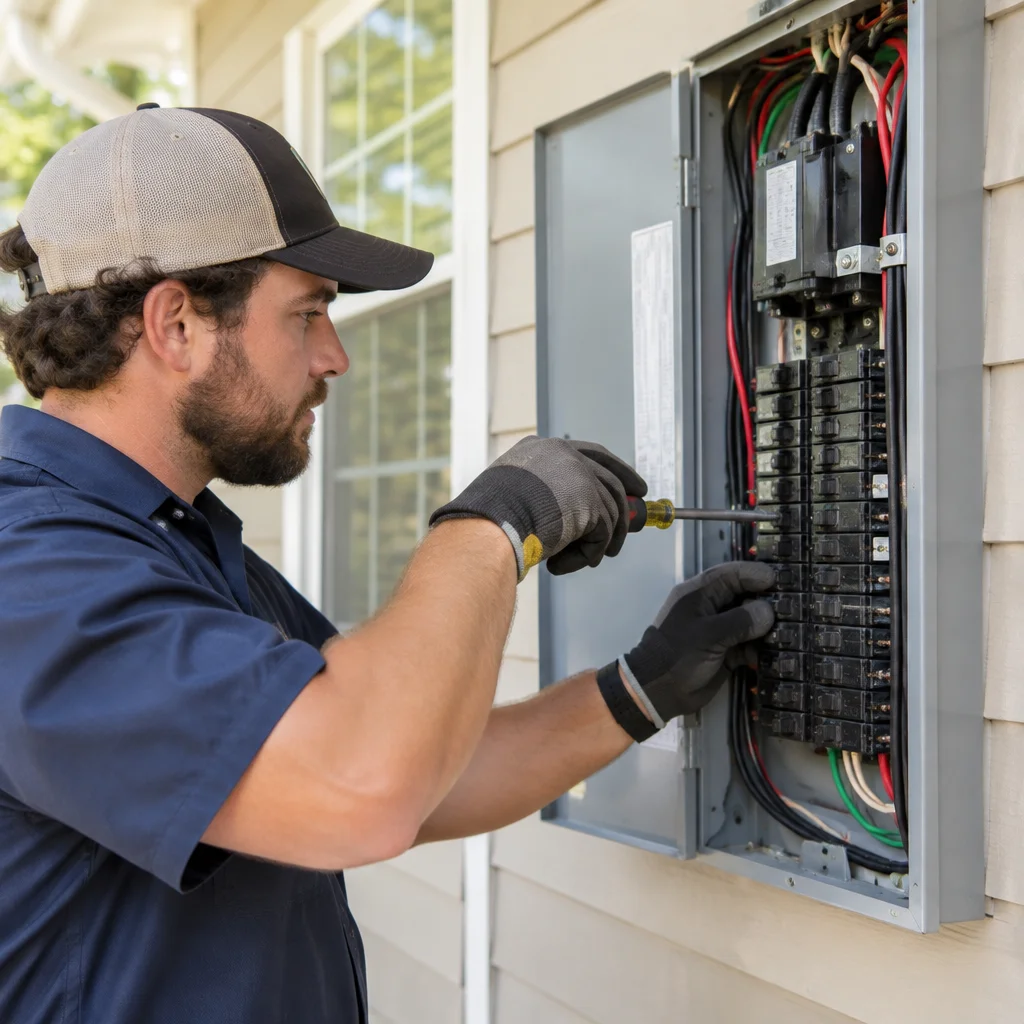
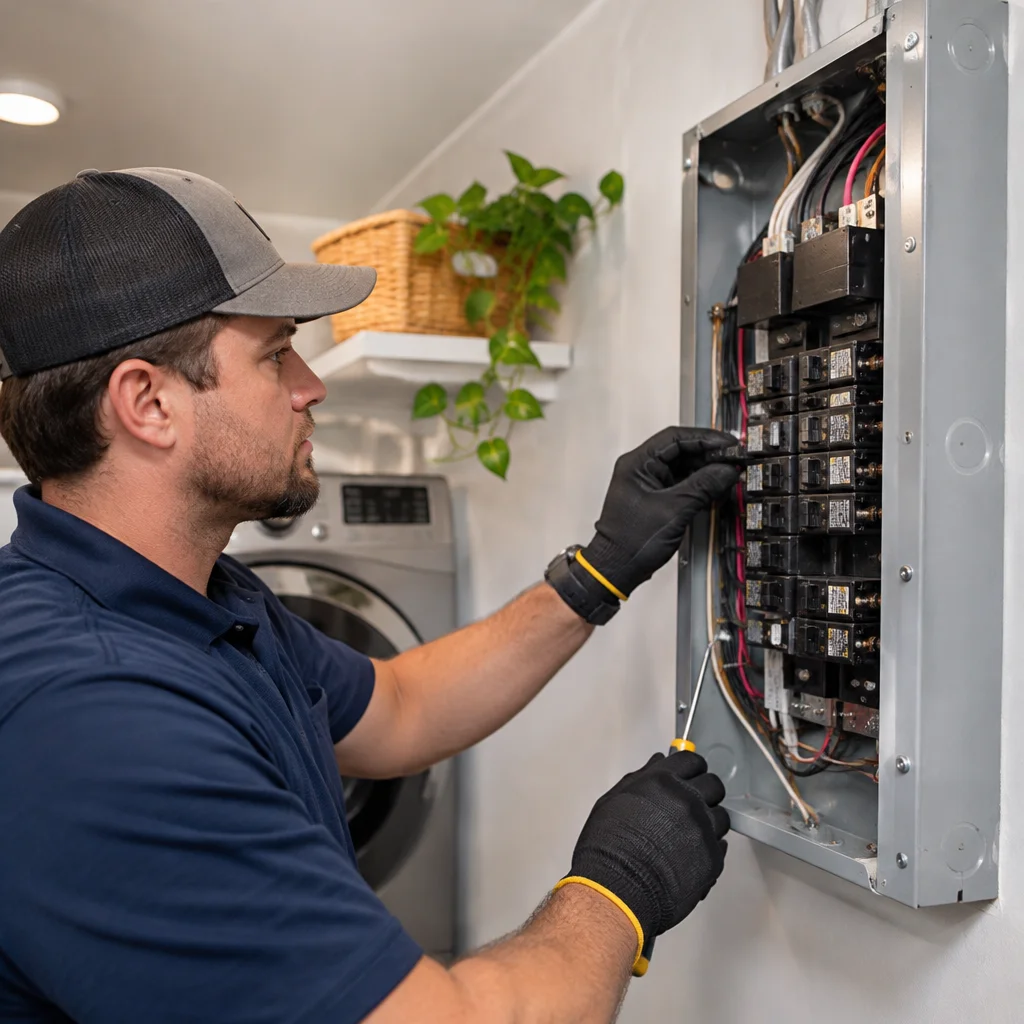
An empty breaker space does not prove that an electrical panel can support an EV charger. The electrician must evaluate the service rating, panel condition, existing loads, and proposed charging demand. EV charging can run for hours, making it different from an appliance that operates briefly. The service conductors and other upstream equipment also need to support the planned installation.
In Miramar Beach homes, that evaluation may include electric cooking, water heating, dryers, pool equipment, and heating and cooling equipment. Remodels and additions can increase demand even when the original service remains unchanged. Older homes may have aging connections or limited capacity. Newer homes can also need adjustments, particularly when several major electric appliances operate together.
A panel upgrade is one possible solution, not the automatic answer
Depending on the load calculation, options may include a lower charging setting, an approved EV energy management system, or a service and panel upgrade. A properly designed management system can limit charging when other household demand is high. A subpanel can provide additional circuit spaces, but it does not create more service capacity by itself.
If your search began with “breaker box replacement near me,” ask the contractor to explain whether the problem is capacity, equipment condition, insufficient spaces, or a combination. Those are different problems with different solutions. For larger projects, planning panels, wiring, and protection with electrical financing offers a useful starting point for organizing the scope and budget.
Dedicated wiring makes charging more dependable
A typical residential Level 2 charger needs a dedicated branch circuit designed for the equipment and installation conditions. The electrician selects conductors, overcurrent protection, wiring methods, and terminations according to applicable requirements and manufacturer instructions. Circuit sizing accounts for continuous charging demand. For example, a charger configured to deliver 48 amps generally requires a 60-amp circuit, with properly sized conductors.
Wire size cannot be chosen from the breaker rating alone. Conductor material, temperature ratings, installation method, distance, and other factors affect the design. A longer run to a detached garage or distant parking area may require additional attention to voltage drop and routing. Outdoor and underground installations require wiring methods suitable for the environment.
Homeowners searching for “dedicated circuit installation near me” should ask whether the estimate includes the complete route, penetrations, trenching if needed, mounting, permits, and testing. A clear scope helps prevent surprises. Do not substitute an extension cord, improvised adapter, or an existing dryer circuit for a professionally evaluated charging installation.
Hardwired charging and receptacle charging have different needs
Hardwired equipment
A hardwired charger connects directly to the branch circuit rather than plugging into a receptacle. This removes a plug-and-receptacle connection that could loosen or overheat. It is often worth considering for outdoor locations, frequent charging, and higher-output equipment. The model must still suit the environment, and installation must follow its listing and instructions.
Plug-in equipment
A plug-in charger can be suitable when the manufacturer permits that arrangement and the circuit is correctly designed. The receptacle must match the charger, be properly rated, and be installed with secure terminations. Required GFCI protection depends on the adopted code and installation details. An electrician should coordinate the receptacle, breaker, and charger requirements rather than bypassing protection to stop nuisance trips.
An “outlet installation near me” search may uncover inexpensive receptacle-only offers, but EV charging calls for more than adding a socket. Ask about grounding, enclosure suitability, required weather protection, and the condition of the entire circuit. A loose-fitting plug, discoloration, burning odor, or unusual heat warrants stopping use and arranging an inspection. Never continue charging through a visibly damaged outlet.
Coastal weather changes the protection plan
Miramar Beach's humidity, salt exposure, intense rain, and storms can be hard on electrical equipment. Exterior boxes, fittings, and mounting hardware should be appropriate for their exposure. Corrosion around a panel enclosure or outdoor connection deserves attention because it can compromise reliability and safety. An outdoor rating does not make equipment safe to submerge.
Storm planning also includes whole home surge protection. A properly selected and installed surge protective device can help reduce damage from certain voltage transients, but it cannot guarantee protection from every lightning event. Grounding and bonding must also be correct. A surge device does not repair a faulty ground, loose neutral, or deteriorated connection.
Coordinate charging with backup power
If you are planning generator installation, include the charger in the load discussion. EV charging can consume a substantial share of a generator's output, so it may need to remain outside the backed-up circuits or be controlled by load management. Transfer equipment must prevent dangerous backfeeding. Never improvise a connection between a generator, charger, and household wiring.
The same planning applies to battery backup systems. Charging a vehicle can drain stored energy quickly. Decide which household loads matter most during an outage before assuming the charger should operate. Vehicle-to-home backup requires compatible vehicles, approved equipment, and a specifically designed installation, not simply a bidirectional-looking cable.
Use the project to catch existing electrical problems
An EV installation is a useful opportunity to identify defects, although it does not replace a whole-home electrical inspection. Repeated breaker trips, buzzing, damaged panel components, loose outlets, or flickering lights should be evaluated before adding charging demand. Causes can include overloads, failing devices, loose connections, or wiring damage. Diagnosis comes before choosing breaker replacement or wiring repair.
Breakers must be listed or otherwise approved for the specific panel. Installing a larger breaker to prevent trips without verifying the circuit design can create a fire hazard. If trouble is already present, electrical repair services in Miramar Beach can address the underlying defect before the charging circuit is commissioned.
During a remodel, mention planned lighting installation, ceiling fans, kitchen appliances, and outdoor equipment as well. Worn switches, ungrounded outlets, and damaged wiring may need separate corrections. Smoke detector installation and carbon monoxide alarm placement can also be reviewed where relevant to the project. These improvements should be scoped clearly rather than assumed to be included with the charger.
Permits and local coordination belong in the estimate
Permit and inspection requirements depend on the work and the authority having jurisdiction. Ask who will obtain required permits, which inspections apply, and whether utility coordination is needed for service changes. Code compliance includes more than choosing the right breaker. Working clearances, conductor protection, grounding, labeling, and manufacturer requirements all matter.
Condominiums, shared parking areas, and some rental communities may also require association or property-management approval. Confirm ownership of the parking space and electrical source before proceeding. Local experience helps an electrical contractor coordinate these practical details. Explore A Superior Mechanical's Miramar Beach service area or its broader Walton County coverage when arranging service for multiple properties.
Keep charging safe after installation
Before the installer leaves, ask for a demonstration of normal operation, the configured charging limit, shutdown procedures, and any app settings. The panel directory should clearly identify the EV circuit. For vacation rentals, leave simple instructions explaining cable storage, compatible use, and how guests should report faults. Avoid encouraging guests to troubleshoot electrical problems themselves.
Periodically inspect accessible equipment for cracked housings, damaged cables, loose mounting, corrosion, or discoloration. Keep the connector clean and stored as directed, and keep panel access clear. Follow manufacturer maintenance guidance and arrange professional electrical maintenance when conditions warrant it. Do not open energized equipment or attempt to tighten internal connections yourself.
Know which problems should not wait
Stop charging if you notice a burning smell, smoke, arcing, unusual heat, or repeated protective-device trips. Do not repeatedly reset a breaker or GFCI. If safe, stop the session using normal controls and keep people away from damaged equipment. For smoke, fire, or an immediate shock hazard, move to safety and call 911. Never touch flooded electrical equipment.
If you are searching for an “emergency electrician near me” after a charging fault, describe the symptoms and ask about current availability. Do not assume same-day service is guaranteed. Before installation becomes urgent, contact A Superior Mechanical to discuss your vehicle, parking location, panel condition, and future electrical plans. Those details help shape a charging installation that fits your Miramar Beach home.
Find EV Charger Installation in Miramar Beach, FL
If you need EV Charger Installation in Miramar Beach, FL, visit our local service page or contact A Superior Mechanical today.
Map of Miramar Beach, FL
Frequently Asked Questions
Will I need a panel upgrade for an EV charger in Miramar Beach?
Not necessarily. An electrician needs to evaluate your electrical service, panel condition, existing loads, and proposed charger output. Some homes can support charging without an upgrade, while others may benefit from a lower charging setting, approved load management, or a service upgrade. Empty breaker spaces alone do not establish available capacity.
Is a hardwired EV charger better than a plug-in charger?
Both can be appropriate when correctly installed. Hardwiring eliminates a receptacle connection and can be a practical choice for outdoor or higher-output installations. Plug-in equipment requires a suitable dedicated circuit, matching receptacle, and applicable GFCI protection. The best choice depends on the equipment instructions, location, and electrical design.
Can an EV charger be installed outdoors near the coast?
Yes, provided the equipment and installation are suitable for the exposure. In Miramar Beach, the design should account for rain, humidity, corrosion, vehicle impact, and potential flooding. An outdoor rating does not permit submersion. Have an electrician select an appropriate location, wiring method, and protective equipment.
Related Articles
Photo Gallery