A house can reach the temperature on the thermostat and still feel uncomfortable. Bedrooms may stay stuffy, dust may collect quickly, or the air may feel damp even while the AC runs. In DeFuniak Springs, those complaints often involve several connected issues: moisture, filtration, duct leakage, and how the HVAC system moves air.
A Superior Mechanical offers indoor air quality services in DeFuniak Springs, FL that address these concerns as part of the home's overall comfort system. A useful plan starts with identifying the cause, then choosing equipment or repairs that fit the house rather than adding accessories without a clear purpose.
Why Local Conditions Matter to Your Indoor Air
DeFuniak Springs is inland, but it shares Northwest Florida's long humid season, frequent summer rain, and exposure to tropical weather. Outdoor moisture enters through open doors, building leaks, and ventilation. Pollen and other outdoor particles can come along with it.
Coastal weather also affects the broader region. Salt air is generally a greater concern closer to the Gulf than in DeFuniak Springs, so outdoor unit corrosion should be assessed based on actual exposure. Storm debris, heavy rain, and vegetation around condensers are more immediate concerns at many inland homes.
Older homes may have leaky building assemblies or aging ductwork. Newer homes can retain moisture and indoor pollutants if ventilation is inadequate. Remodels and additions change airflow needs, sometimes without corresponding HVAC changes. Local HVAC service matters because a contractor needs to account for the house, weather exposure, and seasonal operating conditions together.
Start With the Symptoms, Not the Product
Before buying an air cleaner, note where and when discomfort occurs. Is one bedroom stuffy only with its door closed? Does a musty odor begin when the air handler starts? Does the house feel clammy during rainy weather even though the temperature is normal?
Clues worth documenting
Recurring window condensation, persistent odors, unusual dust near vents, weak airflow, and frequent filter loading can help narrow the investigation. None proves a specific problem by itself. Dust can come from indoor activities, while a musty smell may involve moisture outside the HVAC system.
A professional assessment may include indoor humidity readings, inspection of accessible coils and drain components, filter compatibility checks, and duct evaluation. Depending on the symptoms, airflow measurements and static pressure testing can show whether the blower is struggling against excessive resistance. Share recent roof leaks, water damage, renovations, or changes in household occupancy, too.
Humidity Control Is Central to Comfortable Air
Air conditioning removes moisture when water vapor condenses on a cold evaporator coil and drains away. That process depends on proper airflow, refrigeration performance, runtime, and drainage. A system that cools quickly but cycles off repeatedly may leave the home feeling damp.
For many homes, indoor relative humidity around 40 to 50 percent is comfortable, with a general goal of staying below 60 percent. A separate hygrometer helps verify conditions instead of relying on how the room feels. Readings vary by room and time of day, so look for patterns rather than reacting to one measurement.
Fix moisture sources before adding capacity
Check bathroom exhaust operation, dryer venting, building leaks, and condensate drain lines. Exhaust fans should discharge outdoors, not into an attic. If humidity remains high after HVAC and building issues are addressed, a properly sized whole-home dehumidifier may help during rainy or mild weather when cooling demand is low.
Leaving the thermostat fan set to ON can re-evaporate moisture from a wet coil on some systems. AUTO is often preferable during humid weather, unless the equipment's ventilation or humidity strategy calls for different operation.
Choose Filtration That Your HVAC System Can Handle
A higher-rated filter is not automatically the best choice for every system. Filters capture different particle sizes, but they also add resistance. An overly restrictive filter can reduce airflow, affect comfort, and contribute to evaporator coil icing when other conditions are unfavorable.
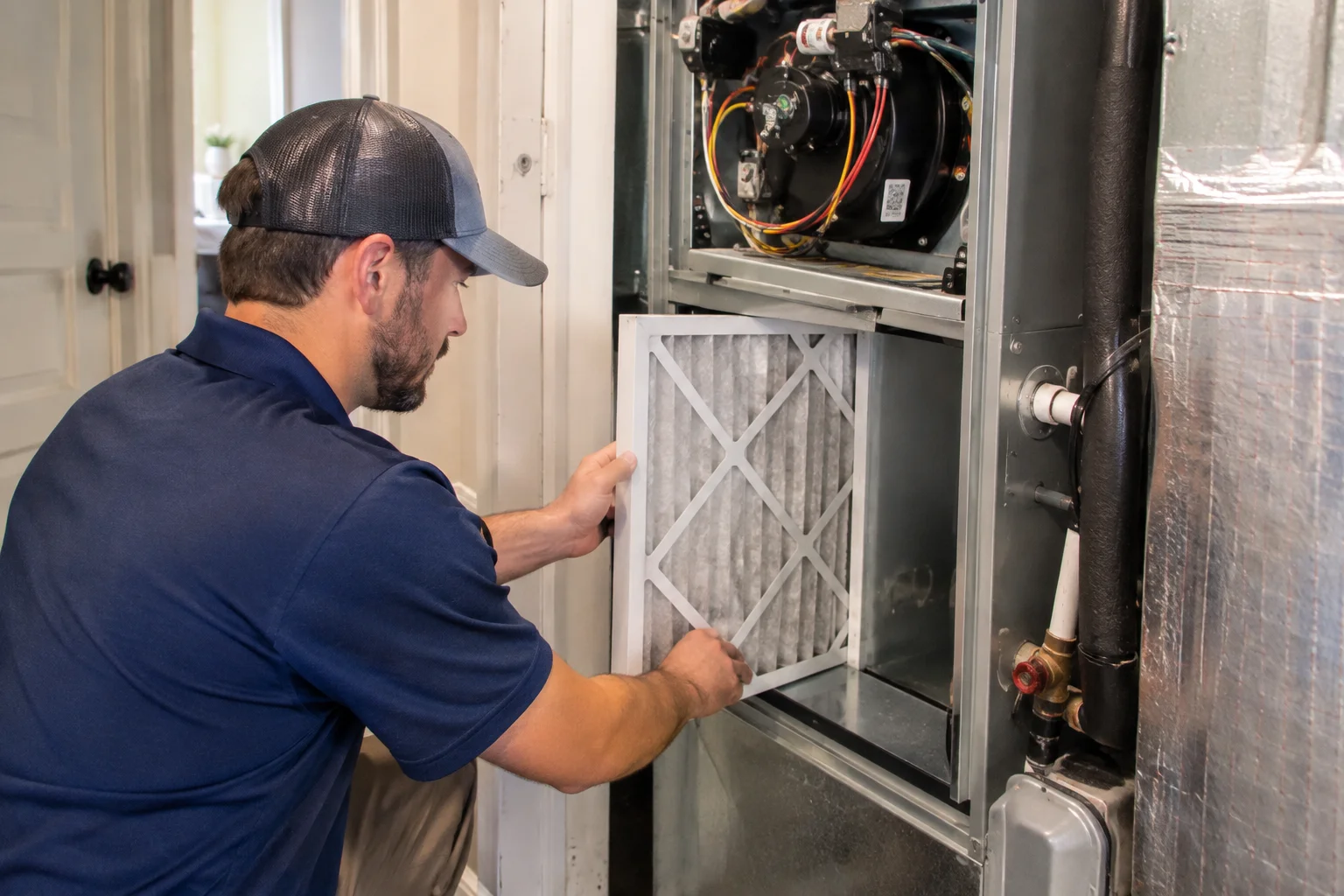
Have the contractor check the filter cabinet, blower capability, available surface area, and pressure drop. A properly designed media cabinet may provide better filtration without the problems of forcing a dense filter into an undersized slot. Fit matters as much as the label because air bypassing gaps around the filter is not being filtered.
Homeowners searching for a whole home air purifier near me should ask which pollutant the proposed equipment targets. Particle filters do not remove every gas or odor. Air scrubbers and other active devices vary in technology and supporting evidence; ask about ozone emissions, independent testing, maintenance, and realistic performance. Avoid ozone generators in occupied spaces. No purifier replaces moisture correction or routine cleaning.
Airflow and Ductwork Often Explain Uneven Rooms
A room that feels stale may not need a separate purifier. It may need a better path for air to enter and return. Closed bedroom doors, blocked return grilles, crushed flexible ducts, and disconnected branches can create uncomfortable differences across the house.
Leaking return ducts in an attic or crawlspace can draw in unwanted particles and humid air. Leaking supply ducts waste conditioned air and can contribute to pressure imbalances. Ductwork repair and duct sealing should address verified leakage, damaged connections, and insulation problems rather than just covering visible surfaces.
Measure before changing vents
For homeowners searching for airflow balancing near me, useful service includes evaluating room delivery, return pathways, and system pressure. Closing several supply vents to force air elsewhere can increase resistance and worsen performance.
Duct cleaning may be appropriate for specific contamination or debris, but it does not repair leaks or prevent moisture from returning. If materials are wet or visibly contaminated, the underlying source needs attention first. Severely damaged duct sections may need replacement rather than repeated patching.
Separate Air Quality Problems From AC Repair Problems
Filtration upgrades cannot correct a failing blower motor, dirty evaporator coil, or refrigeration fault. If cooling has weakened, the system runs unusually long, or ice appears on refrigerant tubing, the HVAC equipment needs diagnosis before an air quality accessory is considered.
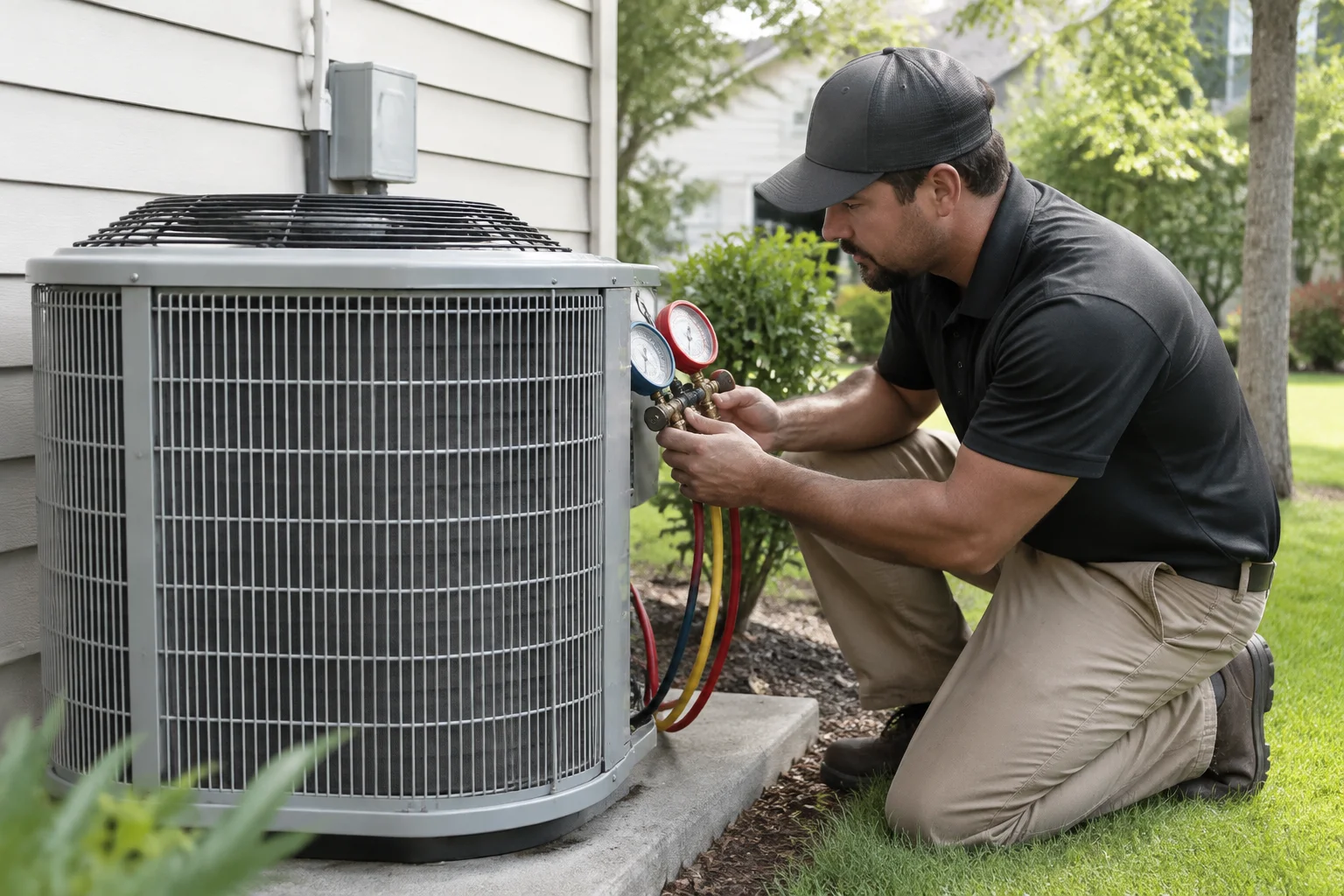
Refrigerant is not consumed during normal operation. A low charge may indicate a refrigerant leak or an earlier charging problem. Adding refrigerant without evaluating the cause can leave both comfort and moisture removal unresolved.
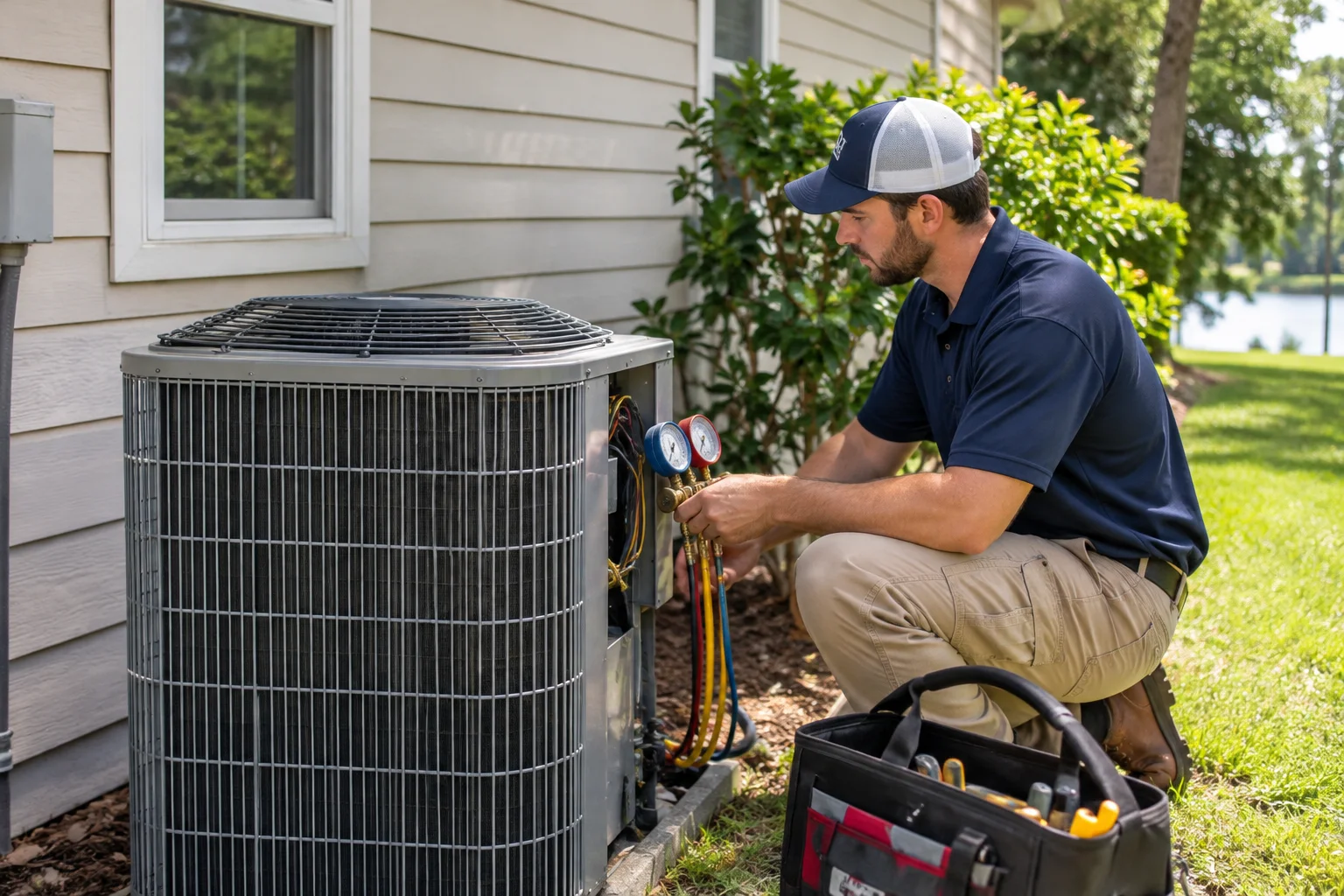
A search for air conditioning repair near me may therefore lead to an indoor air quality conversation. A Superior Mechanical's DeFuniak Springs air conditioning repair services can help address equipment problems that interfere with airflow and humidity control. Outdoor condensers also need adequate clearance and clean heat-transfer surfaces. Avoid pressure washing coils or applying cleaners not approved for the equipment.
Plan Replacement Equipment Around the Whole House
When aging equipment needs replacement, bigger is not necessarily better. Oversized air conditioning can cycle too quickly to manage moisture effectively. Proper selection should consider a load calculation, duct capacity, insulation, windows, occupancy, and changes made during renovations.
Discuss humidity performance alongside efficiency ratings when comparing air conditioning systems in DeFuniak Springs. Variable-capacity equipment may support longer, lower-output operation, but installation quality and controls remain essential. A high efficiency rating cannot overcome severely leaking ducts or incorrect airflow.
Heat pumps and mini splits need the same planning
Heat pumps provide cooling and heating, making year-round maintenance important. Our guide to building a better heat pump plan for DeFuniak Springs homes explains broader planning considerations. Existing performance concerns can also be evaluated through local heat pump services.
Ductless mini splits can suit additions, converted garages, and sunrooms, but they are not automatically whole-home ventilation or purification systems. Indoor heads need filter and coil care, and their drain lines need attention. Mini split repair may be necessary if weak airflow or drainage problems develop.
Use Thermostats and Heating Maintenance to Support the Plan
A thermostat should be placed where it reads representative indoor conditions, away from direct sun, supply vents, and unusual heat sources. Before responding to a search for thermostat installation near me, a contractor should verify equipment compatibility, wiring requirements, and which humidity features the system can actually support.
Use moderate settings and avoid large temperature changes that create uncomfortable recovery periods. Lowering the setpoint dramatically is not a substitute for dehumidification. Zoning may help some layouts, but it requires compatible controls and duct design that maintain safe equipment airflow.
Cooler weather brings different concerns. Heat pump repair, heating repair, and furnace service should address unreliable operation rather than simply adjusting controls. For homes with fuel-burning furnaces, professional maintenance should include appropriate combustion and venting checks. Working carbon monoxide alarms are essential. Heating services in DeFuniak Springs help keep the comfort plan relevant beyond cooling season.
Prevent Small Problems From Becoming Seasonal Breakdowns
Check filters regularly and replace them according to the manufacturer's guidance and actual loading. Pets, remodeling dust, and heavy use can shorten the interval. Keep furniture clear of returns and supply vents, and inspect accessible areas around the air handler for moisture.
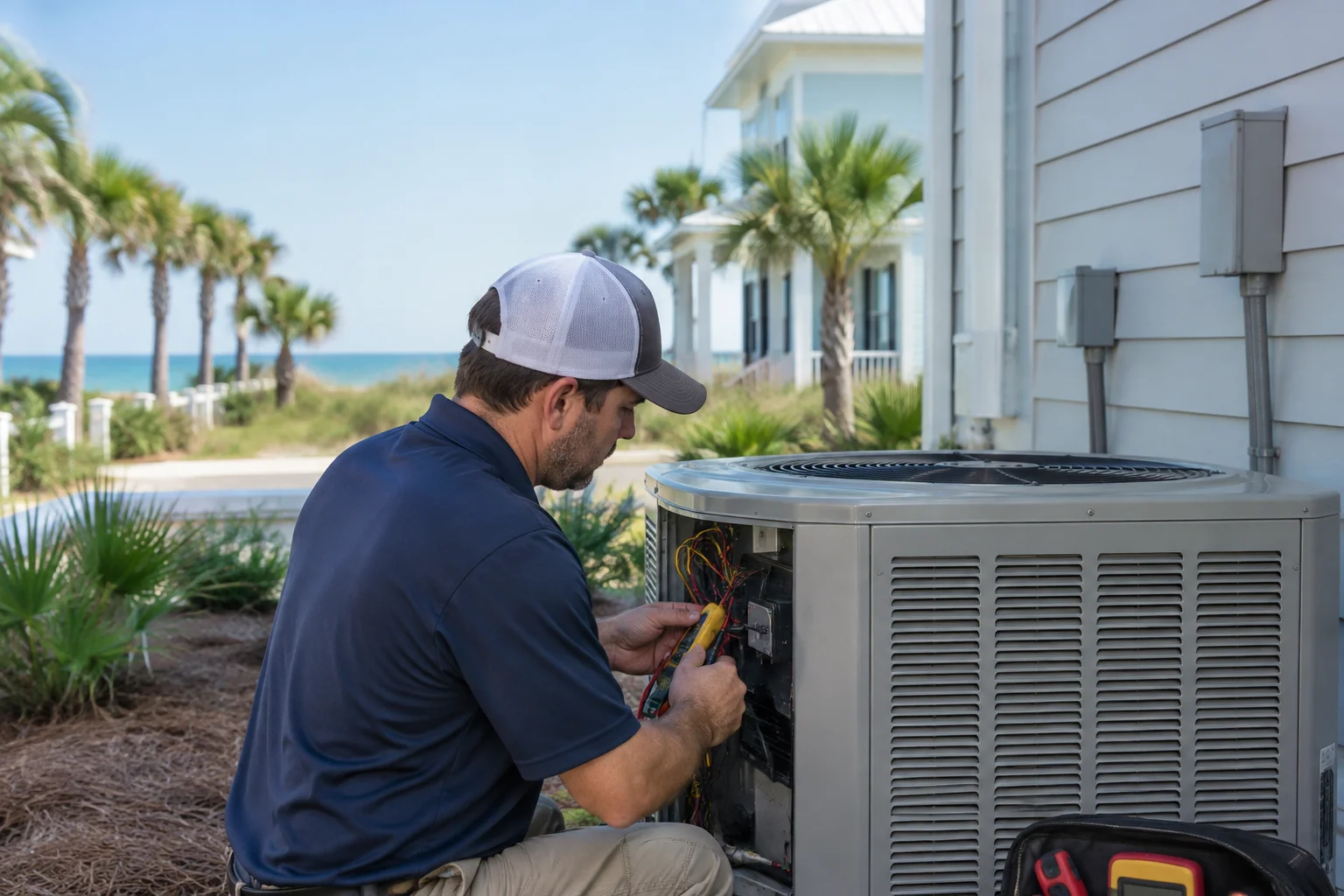
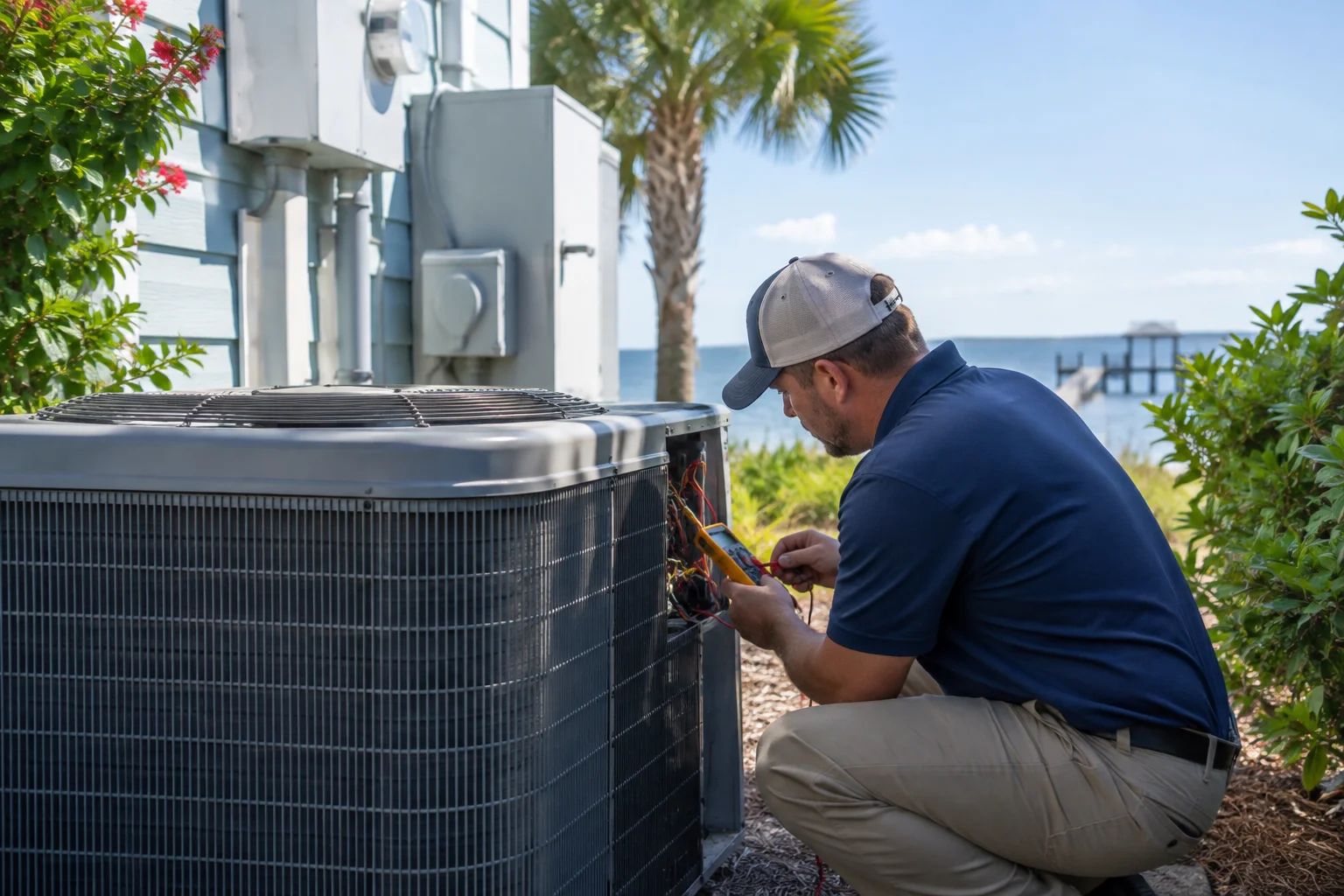
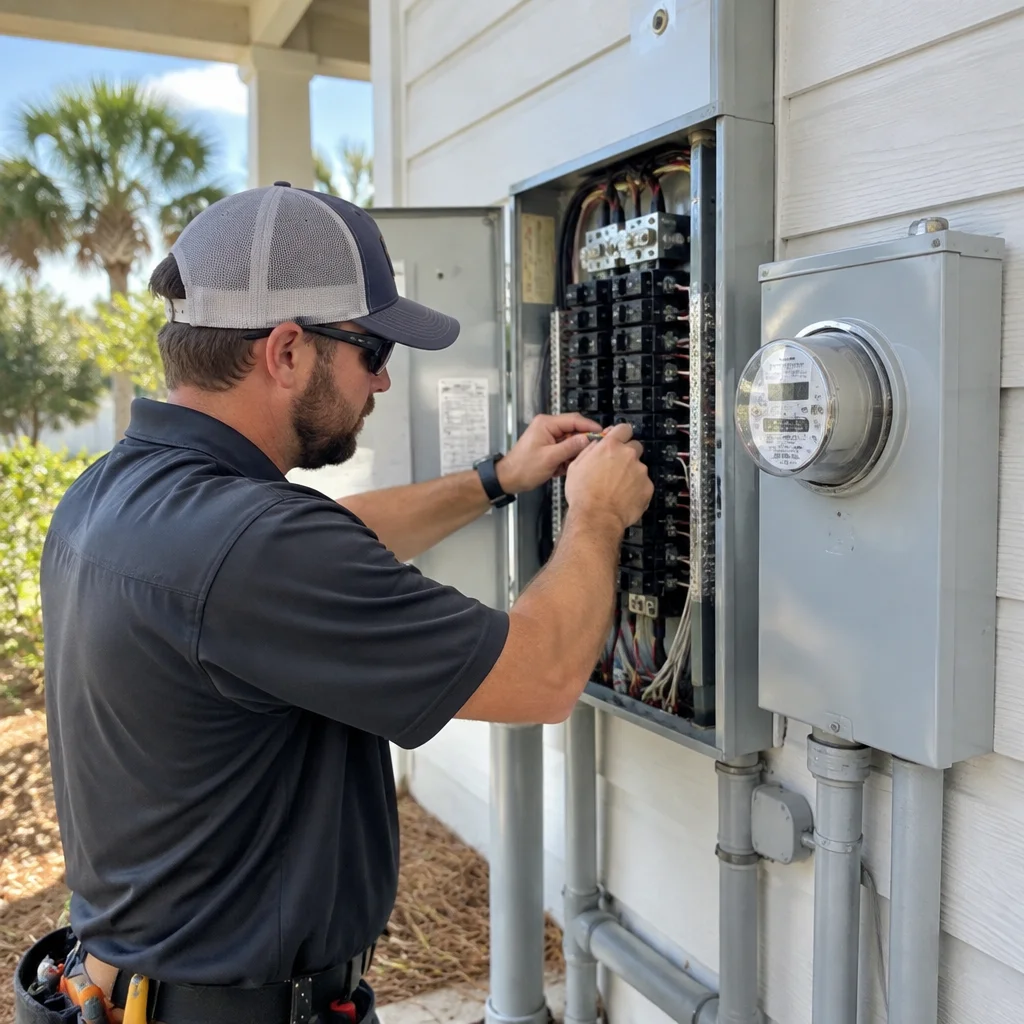
Schedule HVAC maintenance before peak summer demand when practical, with heating checks ahead of cooler weather. A useful visit addresses coil condition, blower performance, drainage, electrical components within the HVAC equipment, and operating measurements. Ask what was measured and what needs follow-up.
After storms, look for debris around outdoor units from a safe distance. Do not operate flooded equipment until it has been evaluated. Standing water, storm damage, or repeatedly tripping breakers requires professional attention, not repeated restart attempts.
Know Which Problems Need Prompt Help
Water overflowing from an air handler, extensive icing, or sudden loss of airflow warrants prompt service. Shut cooling off if the coil is frozen or condensate is overflowing, and avoid chipping away ice. Persistent burning odors or smoke require stopping equipment use if safe; evacuate and contact emergency services for smoke, fire, suspected gas leaks, or a carbon monoxide alarm.
Loss of cooling during extreme heat can also become urgent for vulnerable occupants. Move to a cooler location if needed, and confirm scheduling and emergency availability directly rather than assuming every contractor provides round-the-clock response.
For ongoing comfort concerns, ask A Superior Mechanical to help prioritize equipment repairs, moisture control, filtration, and duct improvements. Explore HVAC service in DeFuniak Springs or the company's Walton County service area to plan local support. The best starting point is a clear description of the problem and measurements that guide the next step.
Find Indoor Air Quality Services in DeFuniak Springs, FL
If you need Indoor Air Quality Services in DeFuniak Springs, FL, visit our local service page or contact A Superior Mechanical today.
Map of DeFuniak Springs, FL
Frequently Asked Questions
Why does my DeFuniak Springs home feel humid even when the AC is running?
Possible causes include short cooling cycles, outdoor air leakage, duct leaks, drainage problems, or equipment faults that reduce moisture removal. Mild, rainy weather can also create humidity without enough cooling demand. Have indoor humidity, airflow, and system operation checked before lowering the thermostat or adding a dehumidifier.
Should I install a whole-home air purifier or upgrade my HVAC filter first?
Start by identifying the concern and checking your existing filtration and airflow. A compatible filter upgrade can improve particle capture, while other air cleaning equipment may address different needs. Ask about verified performance, ozone emissions, replacement costs, and maintenance. Neither option replaces fixing leaks, damp materials, or inadequate ventilation.
Can duct sealing improve indoor air quality and energy efficiency?
Yes, when testing or inspection identifies duct leakage. Sealing return leaks can reduce air drawn from attics or crawlspaces, while sealing supply leaks can reduce conditioned air loss. Results depend on the leakage location, duct condition, and installation quality. Damaged or wet duct materials may require repair or replacement as well.
Related Articles
Photo Gallery