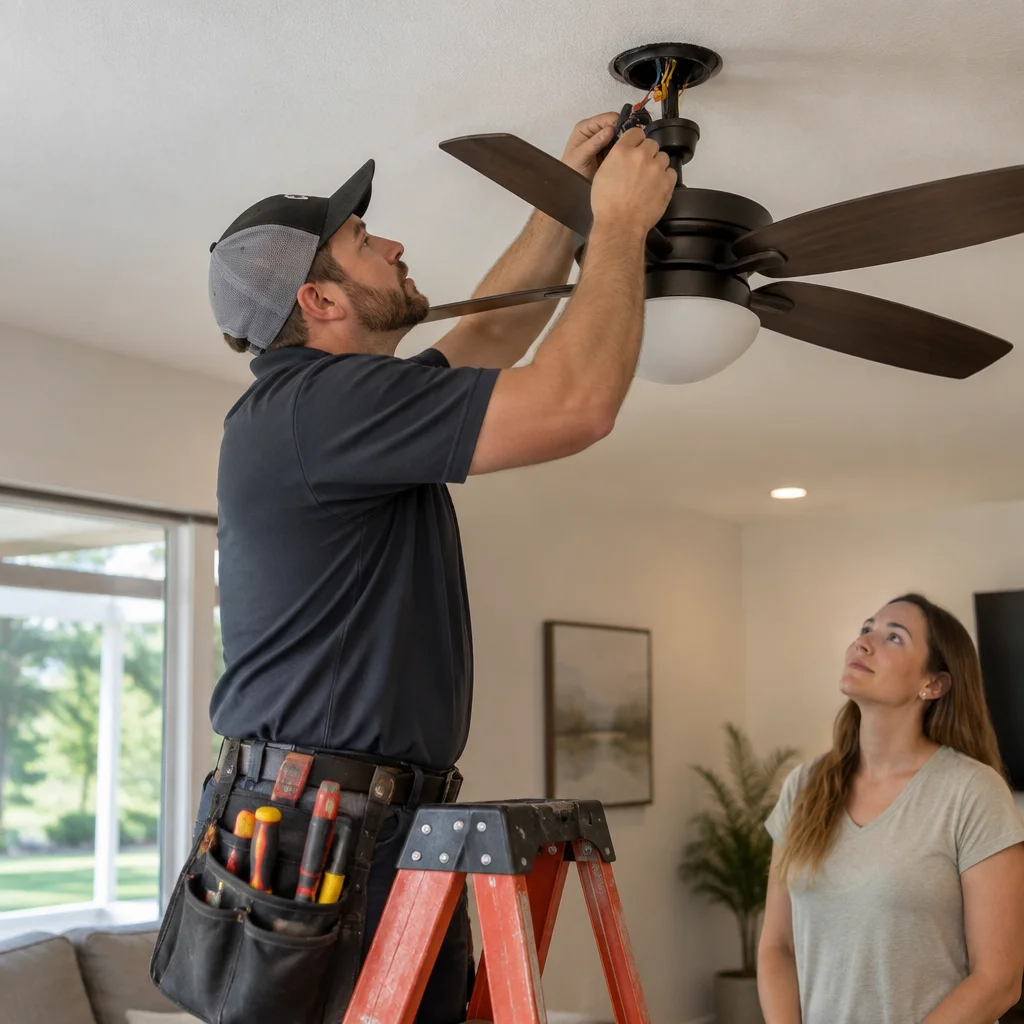
A kitchen can have brand-new fixtures and still feel dim at the counters. A living room can look brighter after an LED upgrade but develop flickering when the dimmer is lowered. Good indoor lighting depends on more than choosing an attractive fixture. The circuits, wiring, switches, and connections behind it need to support the design.
For homeowners in Springfield, FL, planning also means accounting for older electrical systems, changing household demand, and Bay County's storm exposure. A Superior Mechanical provides indoor lighting installation in Springfield, including recessed lights, fixture replacement, LED upgrades, dimmers, and smart controls. Understanding the electrical groundwork helps you decide what your home actually needs before installation begins.
Start With How Each Room Gets Used
Before selecting fixtures, identify where you cook, read, work, and walk after dark. General lighting illuminates the room, task lighting supports specific activities, and accent lighting highlights features. Using these layers together often works better than installing one exceptionally bright ceiling fixture.
Kitchens, bathrooms, and work areas
In kitchens, place light where it reaches counters without your body casting a shadow over the work surface. Under-cabinet lighting can help, but its power supply and wiring should remain accessible as required. Bathroom fixtures need appropriate ratings for their location, especially around showers and tubs. Home offices benefit from balanced light that does not reflect directly off screens.
Bedrooms and living spaces
Separate controls make these rooms more flexible. Reading lights can stay bright while general lighting dims for television viewing. With ceiling fans, choose lighting that provides useful illumination rather than relying on a small decorative light kit to cover the entire room. Fan installation also requires a properly rated support box.
Check the Panel Before Expanding the Lighting Plan
LED fixtures generally use less electricity than comparable incandescent lighting, so a modest replacement project does not automatically require a panel upgrade. The question changes when lighting is part of a remodel, addition, kitchen expansion, or broader electrical improvement.
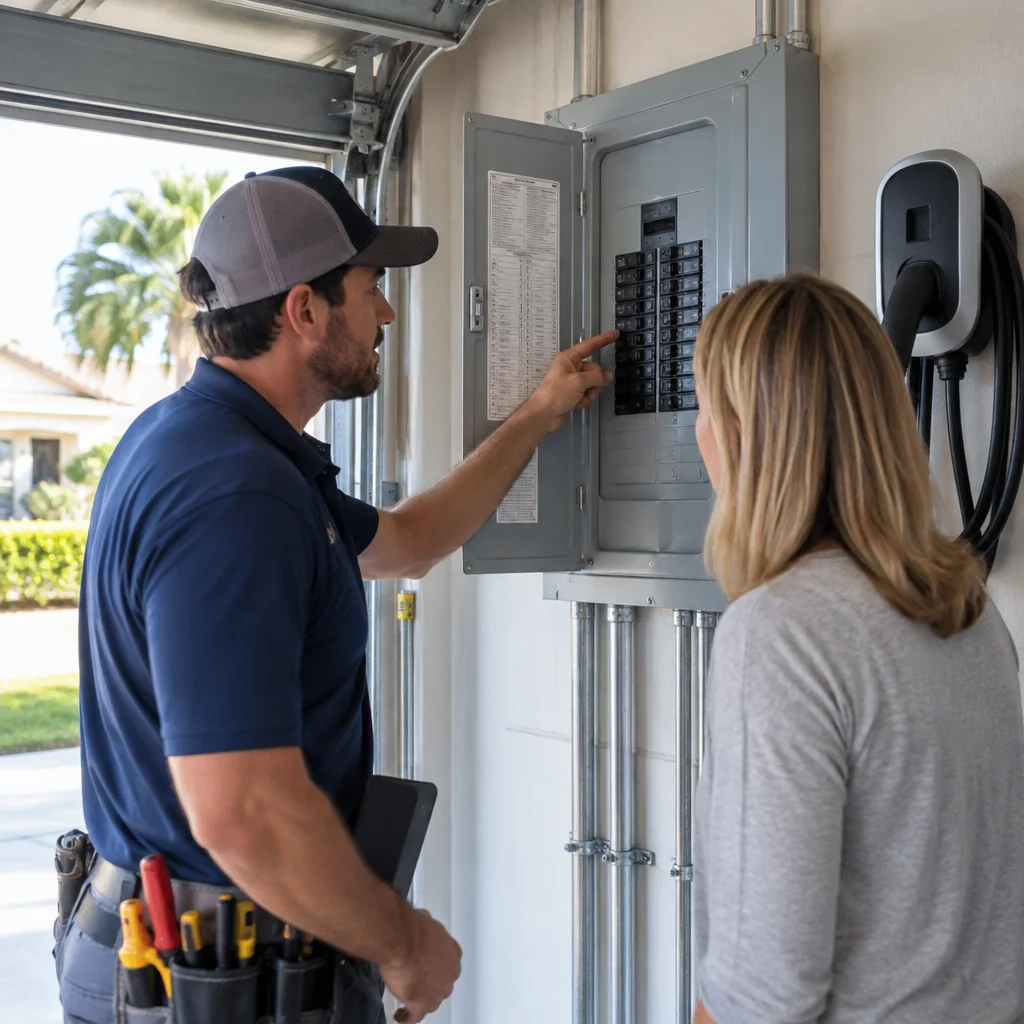
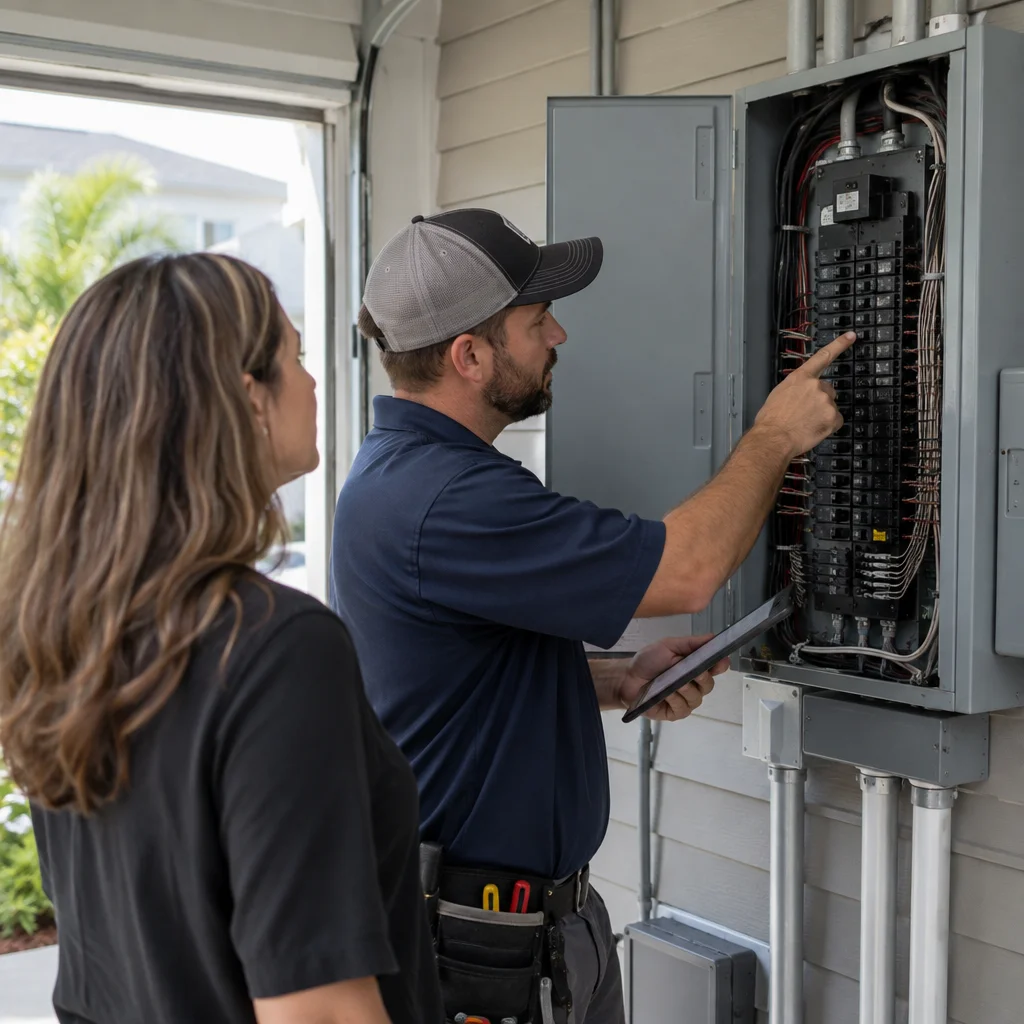
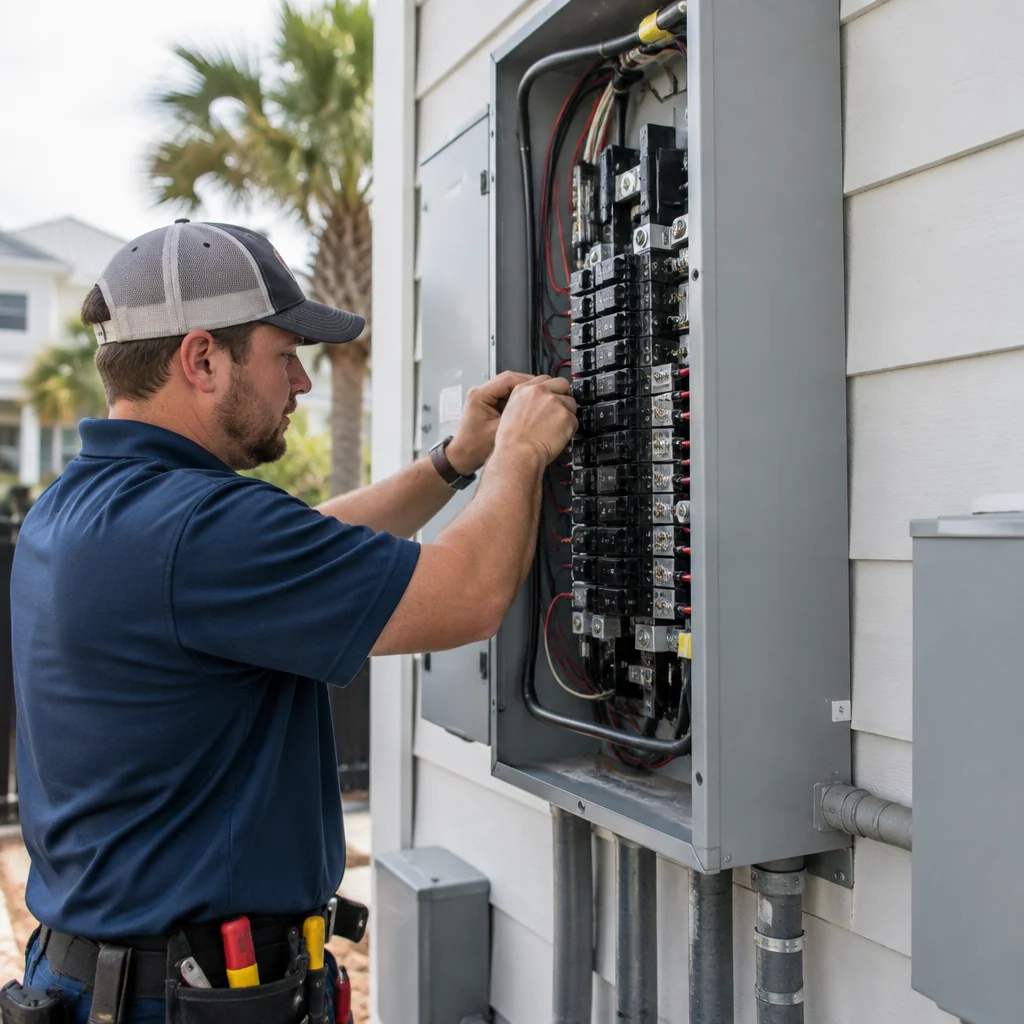
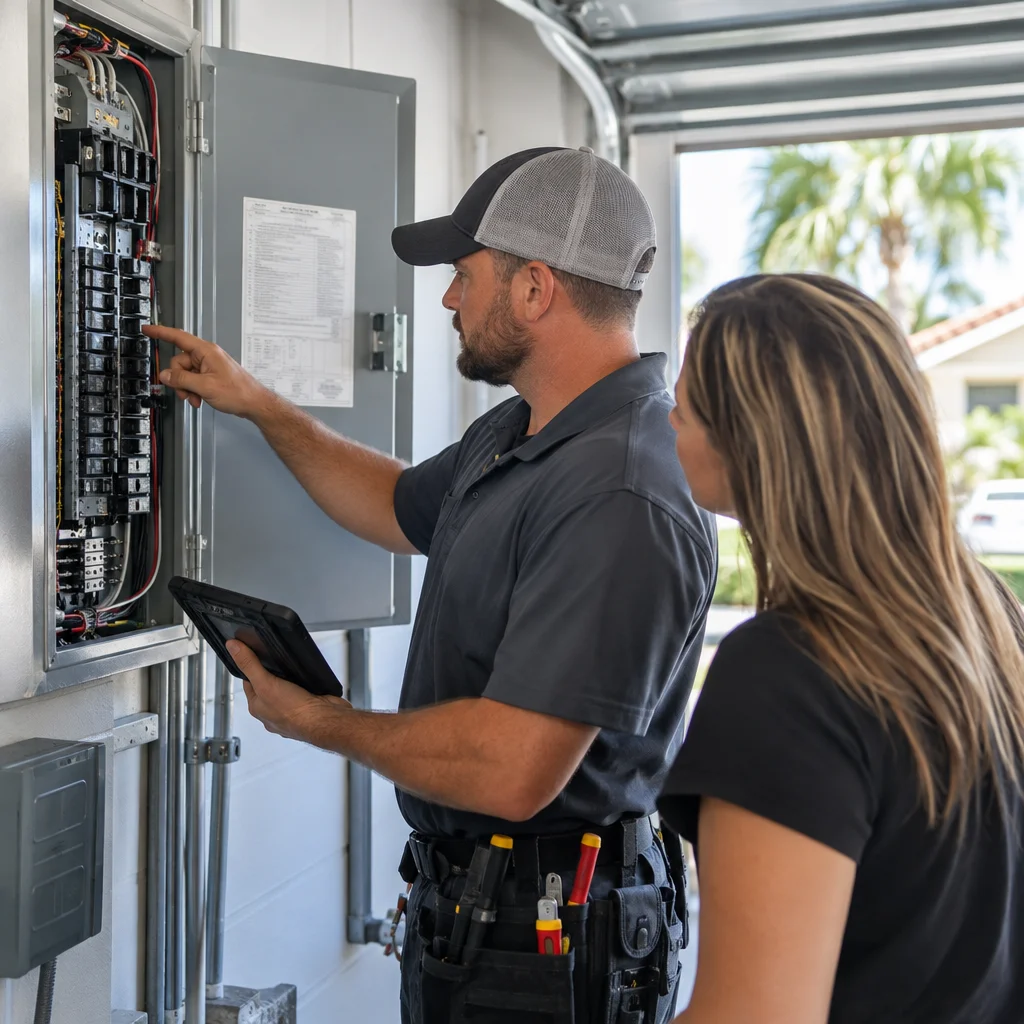
An electrician should review panel condition, available breaker positions, existing circuit loading, and service capacity. Empty spaces alone do not establish that a panel can support additional demand. Likewise, a full panel does not always mean the entire service must be replaced. A load calculation and equipment evaluation guide the decision.
Homeowners searching for electrical panel upgrade near me should ask what finding supports the recommendation. Is there damaged equipment, insufficient capacity, an incompatible breaker arrangement, or a planned major load? A panel and service upgrade evaluation should distinguish necessary safety corrections from optional future capacity.
Breaker repair also means identifying why a breaker trips. Replacing it with a larger one without verifying conductor size and circuit requirements can create a fire hazard.
Older Wiring Can Change a Simple Fixture Replacement
Springfield includes older homes with generations of electrical changes as well as newer homes built around today's equipment. Age alone does not determine whether wiring is safe. Condition, installation quality, grounding, and previous alterations matter.
A fixture replacement may uncover brittle insulation, loose splices, an undersized box, or connections concealed outside an approved enclosure. Some older switch boxes also lack the neutral conductor required by many smart switches. These issues deserve proper wiring repair rather than being hidden behind a new fixture.
During remodels, accessible walls and ceilings provide an opportunity to correct wiring routes and add useful controls. Ask the electrician to document findings and explain which code corrections are required for the work. Permits and inspections depend on the project scope and the authority having jurisdiction.
Recessed Lighting Needs More Than Even Spacing
Homeowners searching for recessed lighting installation near me often begin with a photo of a room they like. That is useful inspiration, but ceiling height, beam angle, furniture placement, and wall color affect how the finished room feels. Too many downlights can create glare without improving task lighting.
Installation planning should account for joists, insulation, attic access, and other concealed obstacles. Fixtures installed in contact with insulation must be rated for that use. Airtight products and properly treated ceiling penetrations can also help limit unwanted air movement between the attic and living space.
For LED upgrades, compare light output in lumens rather than matching wattage alone. Choose a consistent color temperature across connected spaces unless there is a deliberate design reason to vary it. Check the fixture's dimming specifications before purchasing controls.
Give Outlets and Switches a Place in the Design
Good lighting plans reduce dependence on extension cords. If reading lamps, desk lights, or holiday decorations regularly require cords across walkways, discuss adding properly located receptacles. New outlet placement must follow applicable requirements, not just furniture preferences.
Outlet repair becomes important when plugs fit loosely, a receptacle is discolored, or power cuts out when a cord moves. Those symptoms can indicate worn contacts or damaged connections. Stop using the affected outlet and arrange an evaluation rather than covering the problem with a power strip.
GFCI protection is required in specified locations where shock risks are higher, including many areas near water. AFCI protection addresses certain arcing hazards and may also be required depending on the circuit and work performed. Neither substitutes for sound wiring or proper grounding.
For switches, consider access from room entrances and both ends of frequently traveled routes. Compatible dimmers, clearly grouped controls, and accessible locations make lighting easier to use every day.
Do Not Dismiss Flickering or Repeated Breaker Trips
A single flickering LED may have a failing driver or an incompatible dimmer. Several lights flickering together can point to a shared connection or circuit issue. Lights that repeatedly brighten and dim across different rooms deserve prompt investigation because the problem may extend to the service or utility supply.
Note whether symptoms occur when a particular appliance starts, after rain, or only at low dimmer settings. That information helps with electrical repair, but it is not a reason to open a panel or investigate energized wiring yourself.
If there is smoke, active sparking, a burning odor, or an unusually hot switch or outlet, stop using the affected equipment. If you suspect a fire, leave the home and call 911. Do not approach wet or visibly damaged electrical equipment. An emergency electrician near me search should not delay evacuation or contacting the utility about downed lines.
Plan for Springfield Storms Without Overpromising Protection
Springfield's hot, humid climate and coastal storm exposure make electrical condition especially important. Wind-driven rain, roof leaks, and flooding can affect wiring and equipment even when the first visible symptom is a light that stops working. Water-exposed electrical equipment needs professional evaluation before reuse; drying out does not necessarily make it safe.
Whole-home surge protection can help limit transient overvoltages that damage LED drivers, smart switches, appliances, and other electronics. It does not guarantee protection from every lightning event and does not provide backup power. Appropriate point-of-use protection may complement protection at the service.
Grounding and bonding also deserve attention during electrical inspections. They serve essential safety functions, but a grounding rod alone does not correct every electrical fault or provide complete lightning protection. Local electrical service matters because evaluating storm damage often requires coordination with the utility and local permitting authorities.
Choose Which Lights Should Stay On During an Outage
Backup planning starts with priorities. Hallways, stairs, bathrooms, and a kitchen work area may matter more during an outage than decorative lighting. Efficient LEDs help stretch available battery energy, but backup duration still depends on battery capacity and all connected loads.
Battery backup systems can support selected circuits when properly designed. Generator installation requires compatible transfer equipment that prevents dangerous backfeeding. A portable generator must operate outdoors, well away from windows, doors, and vents according to manufacturer instructions, never inside a garage.
Some homeowners also consider smart electrical panels for circuit monitoring or compatible load management. Features vary by product. Ask specifically which circuits can be controlled during an outage and what additional equipment is required.
Leave Room for the Next Electrical Project
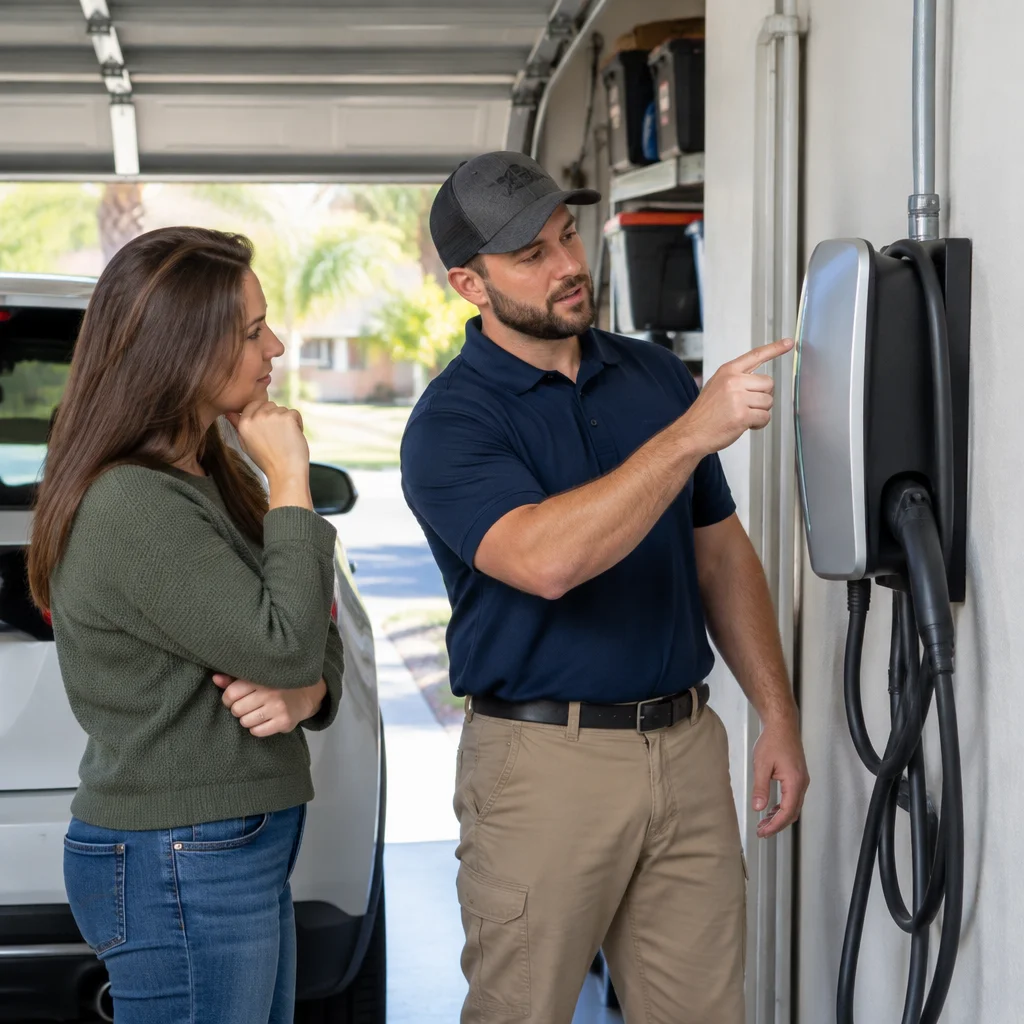
Lighting may be the immediate goal, but an EV charger, workshop, addition, or new appliance can change the home's power demand. EV charger installation commonly involves a dedicated circuit and requires an assessment of available capacity. Certain appliances also need dedicated circuits rather than sharing general lighting and receptacle circuits.
Planning these improvements together can reduce repeated wall openings and avoid equipment choices that limit future work. It does not mean every Springfield home needs a 200 amp service. The appropriate solution depends on calculated loads, existing equipment, and realistic future plans.
For owners also planning a business property, this guide to commercial electrical new construction in Springfield explores related planning issues. Residential and commercial requirements differ, so each property needs its own design and code review.
Make Electrical Maintenance Part of Home Upkeep
Between professional visits, watch for changes rather than attempting internal electrical repairs. Keep the panel accessible, maintain a readable circuit directory, and follow manufacturer instructions for testing GFCI devices. Replace damaged lamp cords and avoid bulbs that exceed a fixture's rating.
Clean light fixtures only with power off and according to their instructions. Enclosed fixtures need compatible lamps because trapped heat can shorten LED life. If a bulb repeatedly fails in the same location, have the fixture and connections checked instead of assuming the bulbs are defective.
Smoke detector installation and replacement should also be considered during renovations. Alarm type, placement, interconnection, and power requirements depend on applicable rules and project scope. Test alarms as directed and replace them at their specified service life.
An electrical inspection near me search is especially worthwhile after storm damage, before a major remodel, or when unexplained symptoms recur. Give the electrician a written list of affected rooms and recent changes.
Bring a Clear Lighting Plan to Your Springfield Electrician
Before scheduling, gather room photos, fixture preferences, dimming goals, and details about flickering or breaker trips. Ask whether the estimate includes wiring corrections, fixture support, controls, patching responsibilities, permits where required, and testing. Confirm the contractor's licensing, insurance, and scope of work.
A Superior Mechanical can help you discuss lighting improvements through its Springfield service page, with broader local information available for Bay County homeowners. For a fixture replacement, LED conversion, or room-by-room lighting project, request a consultation that considers the electrical system behind the fixtures as carefully as the finished appearance.
Find Indoor Lighting in Springfield, FL
If you need Indoor Lighting in Springfield, FL, visit our local service page or contact A Superior Mechanical today.
Map of Springfield, FL
Frequently Asked Questions
Does installing new indoor lighting require a panel upgrade?
Not necessarily. Replacing existing fixtures with compatible LEDs often reduces lighting demand. A panel upgrade may be appropriate if equipment is damaged, capacity is insufficient, or the project adds substantial new loads. An electrician should evaluate the panel and perform any needed load calculation before recommending an upgrade.
Why do my LED lights flicker after installing a dimmer?
The lamps and dimmer may be incompatible, the connected load may fall outside the dimmer's operating range, or a fixture driver may be failing. Loose connections can also cause flickering. Have an electrician check persistent symptoms, especially if multiple rooms are affected or flickering occurs with heat, buzzing, or a burning odor.
Can indoor lighting stay on during a Springfield power outage?
Selected lighting circuits can receive backup power from a properly designed battery or generator system. Available runtime depends on system capacity and connected loads. Generator systems need appropriate transfer equipment to prevent backfeeding, while surge protection alone cannot keep lights operating during an outage.
Related Articles
- Commercial Electrical New Construction in Springfield, FL: A Practical Guide to Panels, Wiring, Outlets, and Prevention
- Smarter Waterline Replacement for Springfield Homes: Leaks, Pipes, Drains, and Prevention
- Keeping Tankless Water Heater Repairs Smaller for Springfield Homeowners
- Keeping Springfield Drains Clear Before Small Plumbing Problems Spread
Photo Gallery