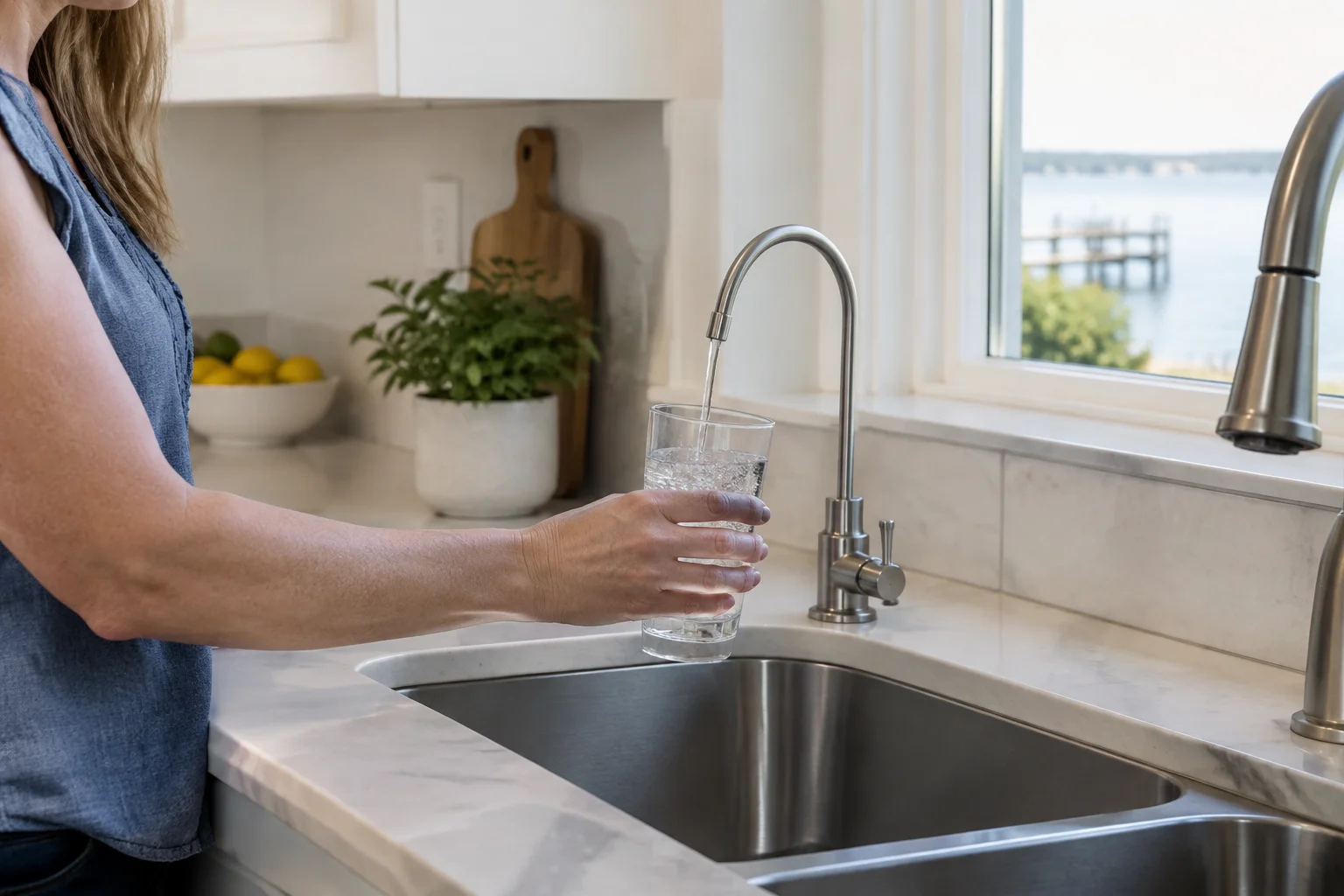
A child fills a water bottle before school while coffee brews and a pot of water heats for breakfast. Nobody wants those everyday routines interrupted by an unpleasant taste, a chlorine smell, or glasses that look spotted straight out of the dishwasher. Yet those complaints do not always have the same cause or need the same solution.
For homeowners considering reverse osmosis systems in Freeport, FL, the useful starting point is understanding what happens at the kitchen tap versus throughout the house. An RO drinking water system can improve drinking and cooking water. Hard water spots, shower scale, and laundry problems may call for water softening or additional filtration alongside it.
Freeport Water Needs a Household-Specific Approach
Freeport's warm, humid climate makes drinking water a regular part of life, whether the family is returning from outdoor activities or refilling bottles for another hot afternoon. Homes across this part of Walton County vary, from established properties with older fixtures to newer houses with large kitchens and multiple bathrooms. Water treatment should fit both the incoming supply and the household's daily use.
Water conditions can differ by utility service area, private well, plumbing materials, and existing equipment. Regional groundwater can contain dissolved minerals, but that does not establish the hardness or contaminant levels at an individual Freeport address. For utility customers, the current water quality report provides background. A household sample helps identify conditions at the tap. Private wells need testing appropriate to their source and potential risks.
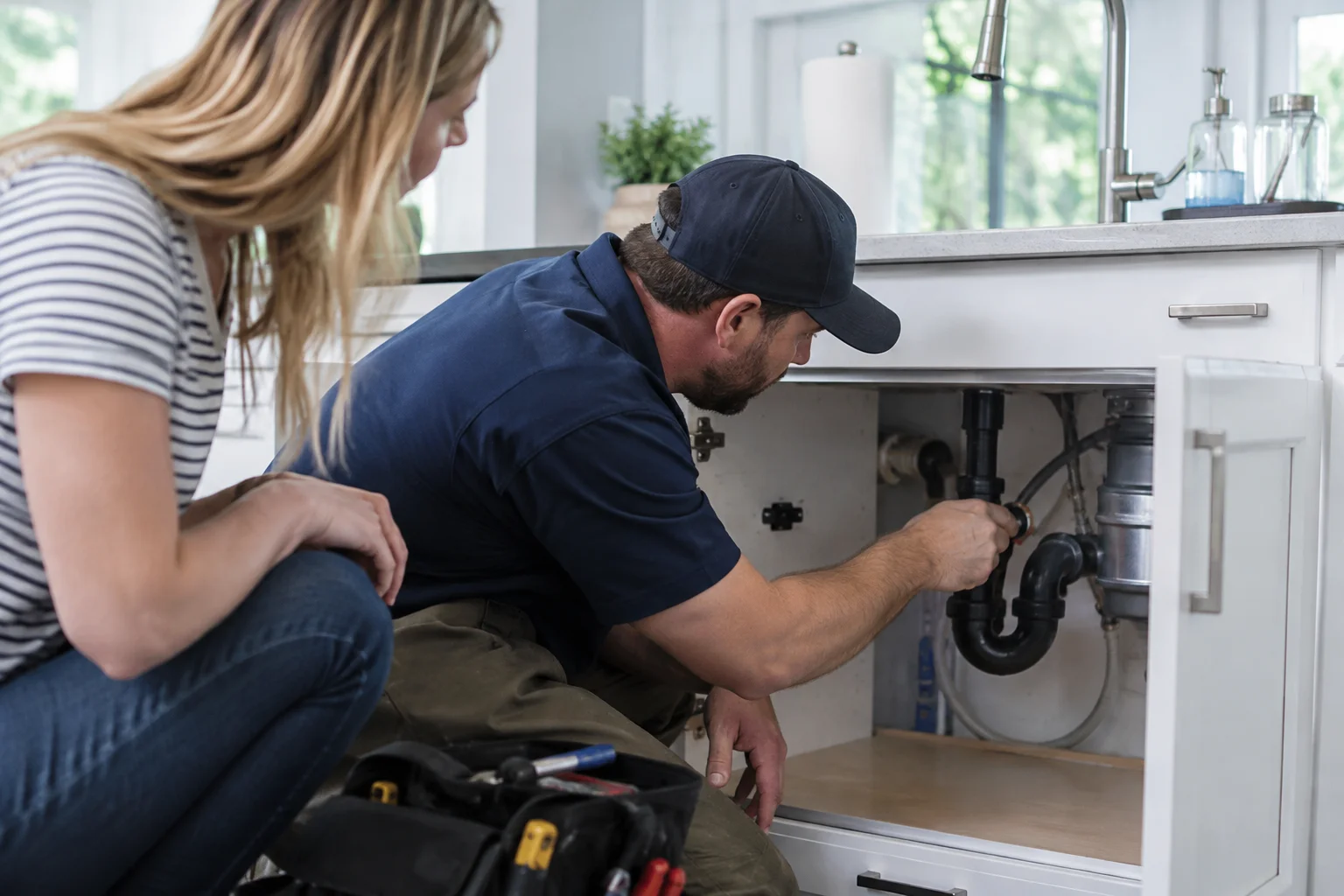
Local service matters because equipment must suit the water entering your home, available installation space, and actual demand. A Superior Mechanical provides reverse osmosis installation, replacement, and maintenance for Freeport homeowners, with service information available for the broader Walton County area.
The Clues Around Your Home Tell Different Stories
Spots, scale, and stubborn soap residue
Hard water spots on glass, dishes, and fixtures often appear when droplets evaporate and leave dissolved minerals behind. White crust around faucets and showerheads can indicate scale buildup. Inside plumbing and water-heating equipment, mineral deposits may also restrict flow or reduce heat transfer over time. A kitchen drinking water filter will not address those deposits throughout the home.
Another clue is soap that does not lather or rinse well. Hardness minerals react with soap, making washing feel less effective and leaving residue on shower walls or fabrics. Some people notice dry skin or dull hair after bathing. If you suspect dry skin from hard water, remember that water temperature, cleansers, and skin conditions can also contribute. Persistent irritation deserves medical advice rather than a water treatment diagnosis alone.
Taste, cloudy ice, sediment, and odor
Metallic tasting water can relate to dissolved metals or corrosion in household plumbing. A chlorinated taste may reflect the disinfectant used by a utility. Other unpleasant tastes and odors can come from source water, stagnant lines, treatment equipment, or even the sink drain. Identifying the source matters before choosing a filter.
Cloudy ice cubes may contain trapped air and dissolved minerals, so cloudiness alone does not prove contamination. Visible sediment in household water, recurring discoloration, or a sudden odor change deserves closer attention. Compare hot and cold taps and note whether the problem affects one fixture or the entire house. If a utility advisory is active, follow its instructions. Do not assume a household RO unit makes affected water safe.
Where Reverse Osmosis Makes the Biggest Difference
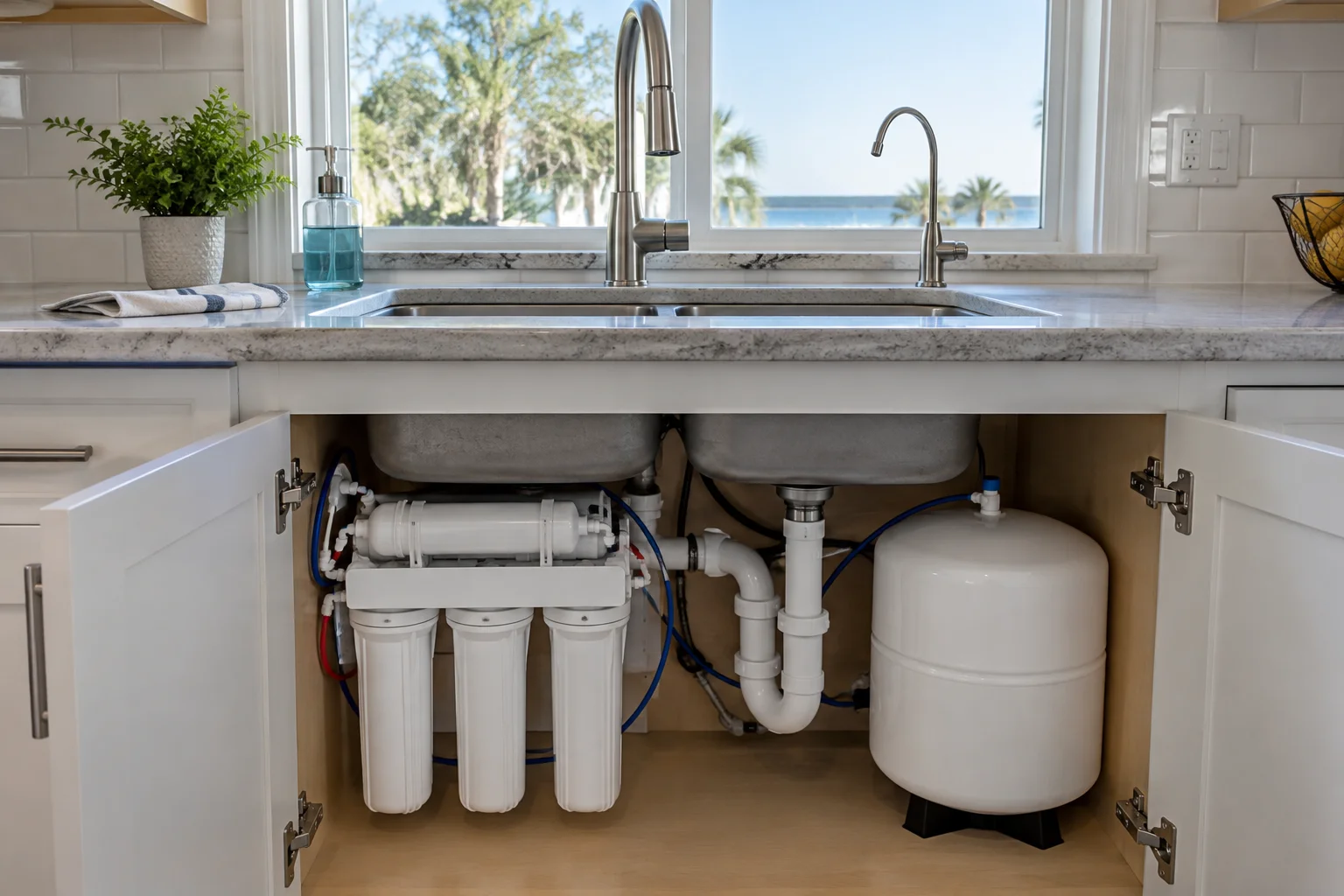
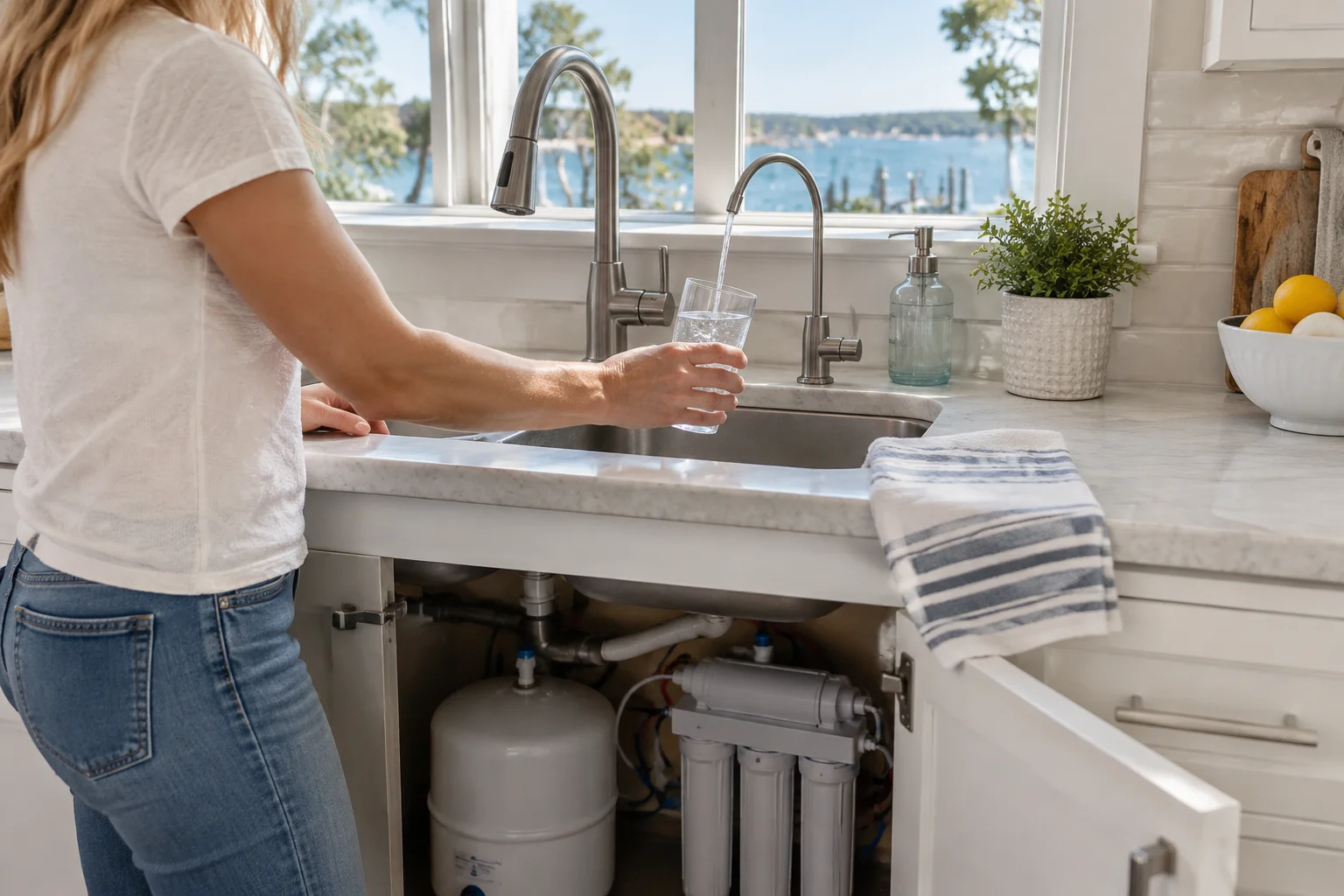
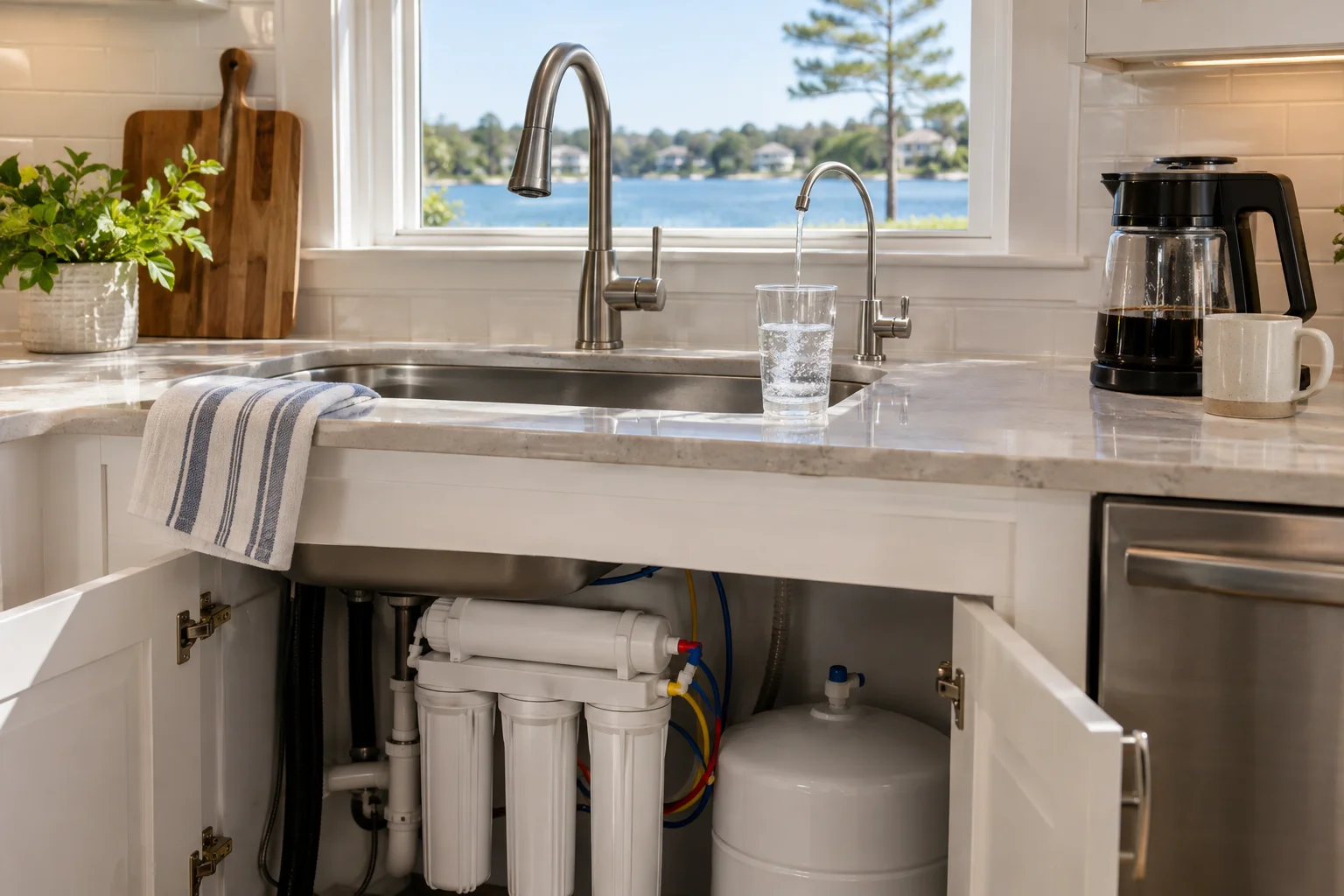
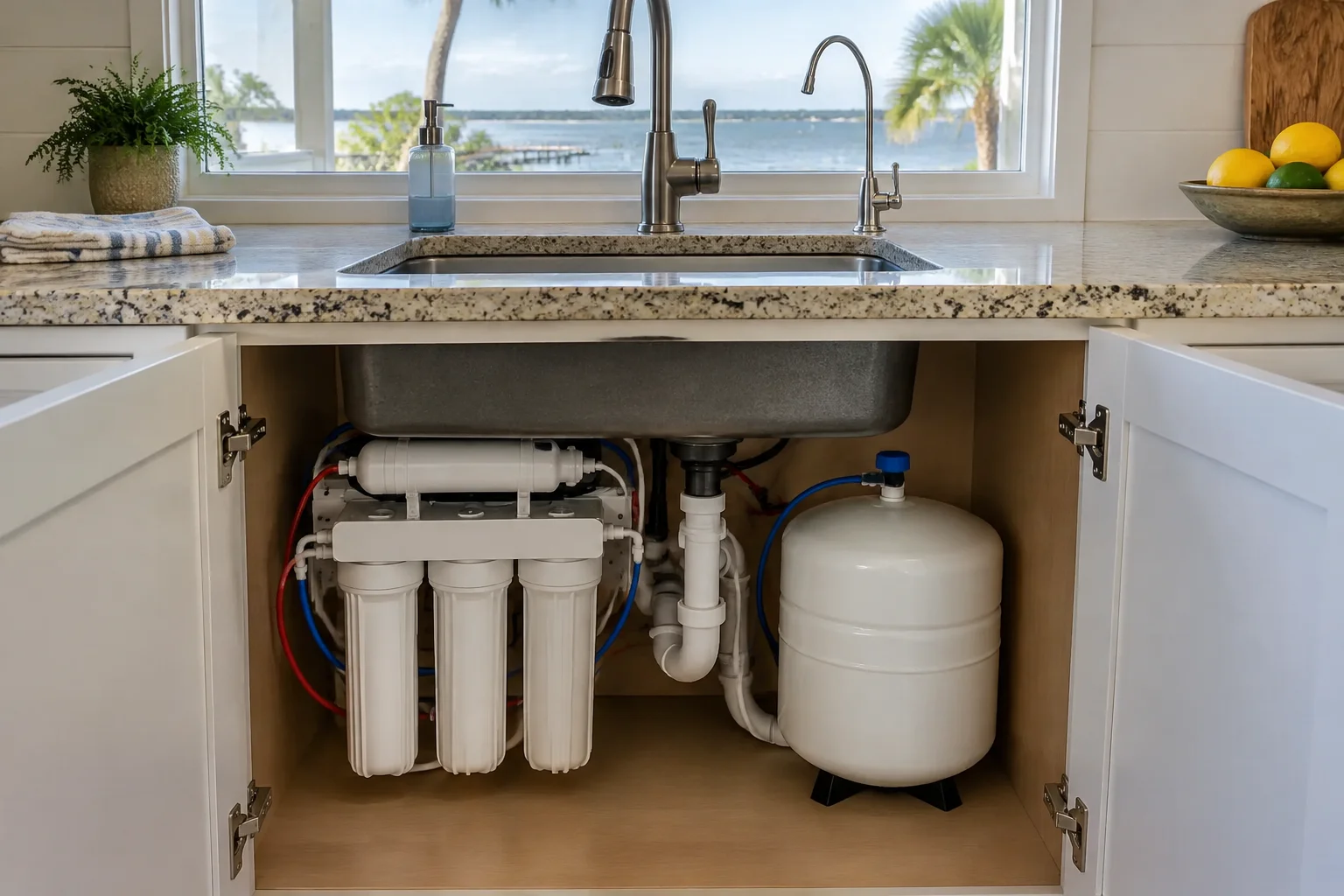
Reverse osmosis uses pressure to move water through a semipermeable membrane. A typical residential system combines that membrane with sediment and carbon filtration, and many units include a storage tank. The system sends treated water to a dedicated faucet while a separate drain connection carries away the concentrate containing rejected substances.
Depending on its design and independently verified performance claims, an RO system can reduce many dissolved substances that a basic carbon filter does not address. Carbon stages help manage certain taste and odor concerns and protect membranes sensitive to disinfectants. Check certification for the specific substances you want reduced. No single system should be assumed to remove every possible contaminant.
In a family kitchen, the practical payoff is often better tasting drinking water, clearer flavor in tea, and less interference with coffee. Treated cooking water can also improve the experience of making soup, rice, or pasta when the untreated supply has an objectionable taste. These are everyday benefits, not a promise that every recipe or appliance will perform differently.
A Superior Mechanical's reverse osmosis systems service in Freeport, FL covers installation, replacement, and maintenance. The right choice depends on incoming water quality, pressure, household demand, and whether you want treated water at a dedicated faucet, refrigerator, or both.
RO, Water Softeners, and Whole Home Filters Have Separate Jobs
Reverse osmosis for drinking and cooking
Most residential RO installations are point-of-use systems. They treat water at the kitchen rather than every bathroom, laundry connection, and outdoor faucet. That targeted approach makes sense when the main concern is drinking water quality. It also explains why a new RO faucet will not eliminate scale on a showerhead elsewhere in the house.
Water softening for hardness minerals
A conventional ion-exchange water softener reduces calcium and magnesium, the minerals responsible for hardness. It is often the more direct hard water treatment for recurring scale, soap residue, and mineral spotting throughout the home. Where hardness is contributing to buildup, softening can help protect fixtures and water-using equipment. It does not automatically remove disinfectants, pathogens, or all contaminants.
Appliances wearing out faster can raise questions about water quality, especially when heating elements or valves show mineral deposits. Still, installation, maintenance, age, and usage also affect service life. Water softening should follow a hardness measurement, not a guarantee that treatment will prevent every repair. Softened water may also benefit an RO system where hardness would otherwise contribute to membrane scaling.
Whole home filtration for broader concerns
Whole home water filtration treats incoming water before it reaches multiple fixtures. Depending on the media and configuration, it may target sediment, chlorine, or other identified concerns. This can extend benefits to bathing and laundry, but a standard carbon filter is not a substitute for a softener. Iron, sulfur odors, or microbiological concerns may require specialized treatment.
If you are comparing AO Smith water filtration products, look at the exact model rather than the brand name alone. Review its purpose, flow capacity, replacement requirements, and certified reduction claims. The same principle applies to all clean water systems: choose equipment around measured conditions. Explore the distinctions through A Superior Mechanical's water filtration, reverse osmosis, and water softener information.
Start With Testing, Not a Cart Full of Filters
Homeowners searching for water filtration near me often have a clear complaint but little information about its source. Useful initial checks can include hardness, total dissolved solids, disinfectant levels, and sediment observations. Additional laboratory testing may be appropriate for metals, bacteria, or other concerns based on the supply and symptoms. A total dissolved solids meter alone cannot establish whether water is safe.
Describe where and when the issue appears. Does only hot water smell? Are particles coming from one faucet? Did the taste change after plumbing work? These details help separate supply problems from conditions inside the house. Sudden discoloration, suspected contamination, or a persistent metallic taste should be investigated rather than covered up with a new filter.
Plan the Installation Around Your Kitchen
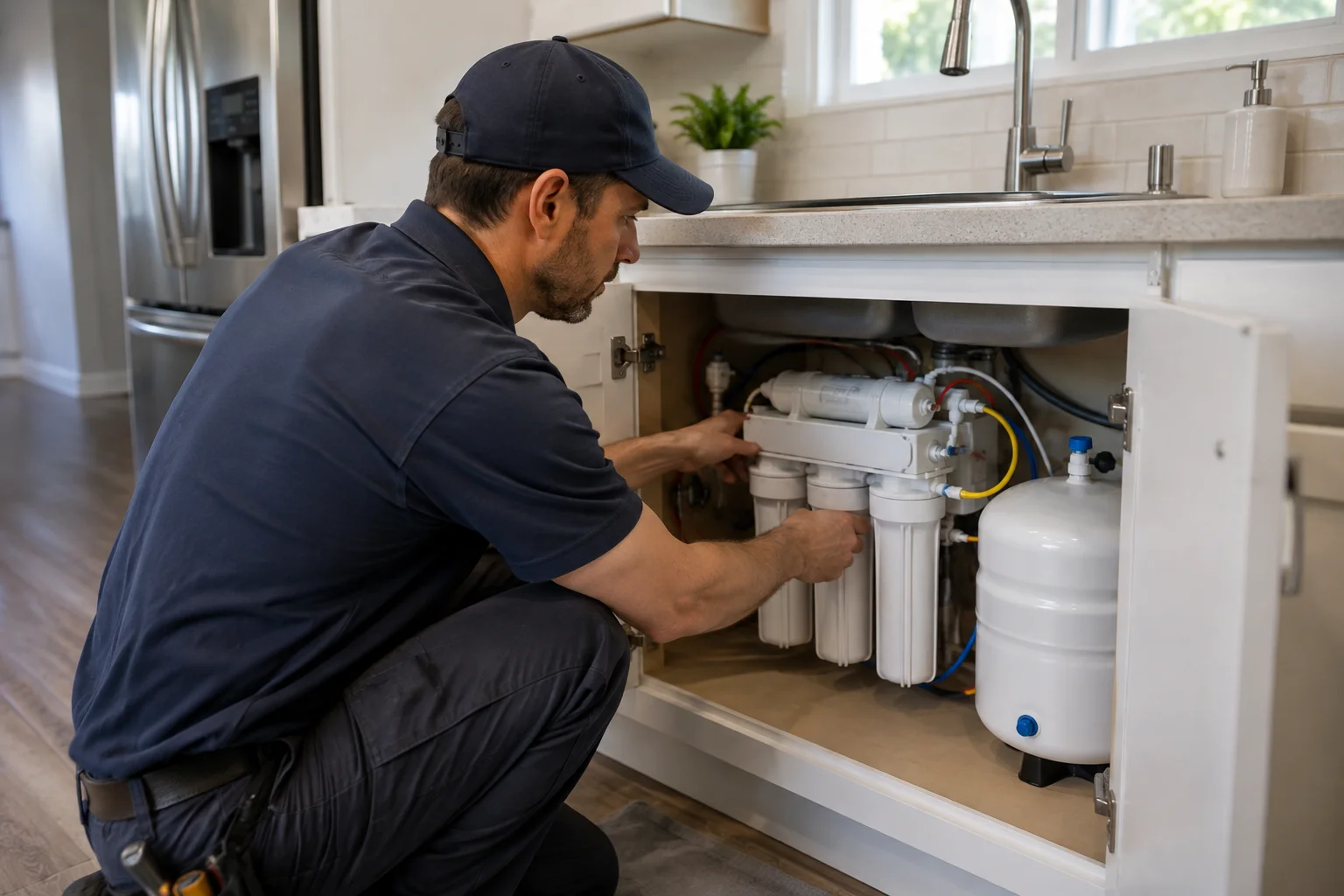
When comparing reverse osmosis installation near me, ask how the installer will check pressure, supply connections, drainage, and cabinet clearance. Storage tanks and filters need room for future service, not just enough space to squeeze behind the cleaning supplies. The faucet location and drain connection should meet the equipment instructions and applicable plumbing requirements.
Refrigerator connections need special attention. Some ice makers and dispensers require pressure and flow that a particular RO setup may not provide without additional equipment. Better filtered water may improve ice flavor, but it does not guarantee perfectly transparent cubes. Discuss demand during busy mornings so tank capacity and production rate suit your household.
A kitchen remodel is a convenient time to coordinate these details before cabinets and counters limit access. The article A Smarter Way to Handle Plumbing Installation in Freeport Homes offers related planning context. Thoughtful routing and accessible shutoffs make later filter changes and leak checks simpler.
Maintenance Keeps Good Water From Becoming an Afterthought
RO systems need ongoing care. Sediment and carbon cartridges require replacement on the manufacturer's schedule, adjusted when necessary for water conditions and usage. Membrane life varies, so performance should be assessed rather than judged by age alone. Sanitizing the system at recommended intervals is also important, particularly during service or after extended inactivity when the manufacturer calls for it.
Check periodically for moisture under the sink, loose connections, reduced production, and changes in taste. A slow faucet can reflect clogged filters, low supply pressure, tank problems, or other issues. Unusual or persistent drain flow deserves evaluation, although some concentrate flow during production is normal. Never disconnect the drain or bypass protective components to save water.
For households using a softener or whole home filter alongside RO, those systems need their own maintenance schedule. Check salt levels where applicable and replace filtration media as directed. The guidance in Smart Plumbing Habits for Reverse Osmosis Systems in 30A Homes provides nearby coastal homeowners with another useful maintenance resource.
Choose Service That Matches the Problem You Want Solved
If your priority is better drinking and cooking water, start with an RO assessment. If the main complaints involve shower scale, laundry residue, and spotted fixtures, request a broader hardness and filtration evaluation. Homeowners searching for whole home water filtration near me should clarify whether they need sediment removal, disinfectant reduction, specialized treatment, or a combination.
Likewise, a search for water softener installation near me addresses a different need than selecting a drinking water system. Ask for a clear explanation of what each recommended component treats, what it leaves untreated, and what maintenance will cost. That keeps the plan practical instead of adding equipment without a defined purpose.
For reverse osmosis systems in Freeport, FL, contact A Superior Mechanical to discuss installation, replacement, or maintenance. Bring your water report if available and describe the tastes, odors, deposits, or performance changes you have noticed. A well-matched system starts with those details and aims for water that works better at the family table every day.
Find Reverse Osmosis Systems in Freeport, FL
If you need Reverse Osmosis Systems in Freeport, FL, visit our local service page or contact A Superior Mechanical today.
For a broader look at whole-home water filtration, reverse osmosis, and water softener options, visit our water filtration, RO, and water softener page.
Map of Freeport, FL
Frequently Asked Questions
Will a reverse osmosis system remove hard water spots throughout my Freeport home?
A typical under-sink RO system reduces dissolved minerals in water delivered through its dedicated faucet, but it does not treat showers, laundry, or other household fixtures. Recurring spots and scale throughout the home may require water softening based on measured hardness.
Can reverse osmosis improve chlorine taste, metallic flavors, and cloudy ice?
An RO system with appropriate carbon filtration can address certain taste concerns and reduce dissolved substances according to its verified performance claims. Metallic flavors should be investigated for their source. RO water may improve ice flavor, but trapped air and freezing conditions can still make cubes cloudy.
How often does a reverse osmosis system need maintenance?
Follow the manufacturer's schedule for filter replacement, sanitizing, and performance checks. Water quality and household usage affect service needs, while membrane replacement depends on condition and performance. Contact A Superior Mechanical if you notice reduced output, returning tastes, leaks, or unusual drain flow.
Related Articles
Photo Gallery