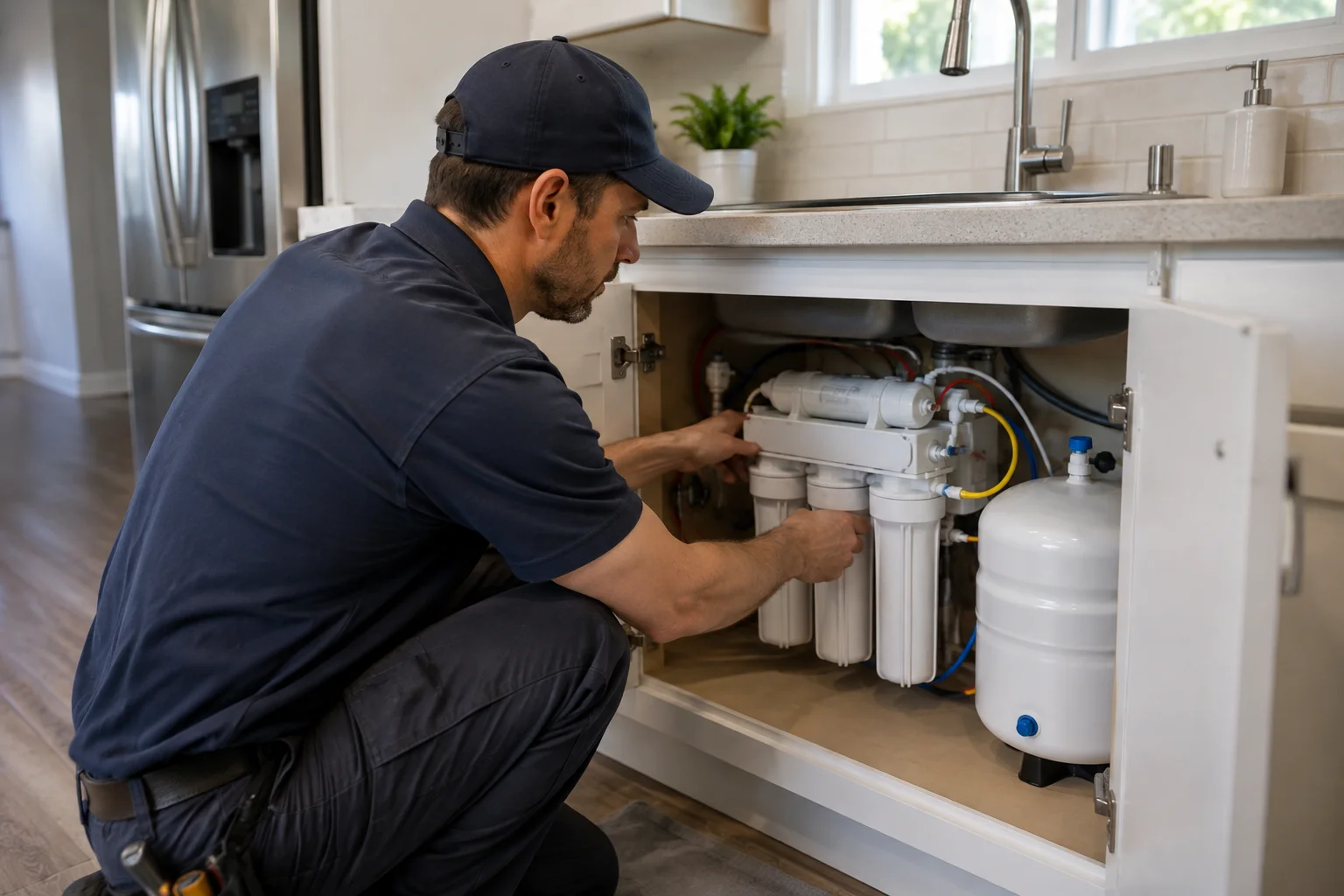
A reverse osmosis system can improve drinking water at the kitchen sink, but its performance depends on more than the filters. The supply valve, small tubing connections, storage tank, faucet, and drain connection all need to work together. A slow drip or restricted drain can turn a useful water treatment upgrade into a cabinet repair.
For homeowners in Callaway, FL, practical maintenance starts with understanding those connections. Whether your home has older plumbing or a recently remodeled kitchen, the goal is dependable drinking water without hidden leaks or unnecessary water waste. A Superior Mechanical installs and services reverse osmosis systems in Callaway, helping match equipment to the water supply and the plumbing around it.
Start With What Your RO System Actually Serves
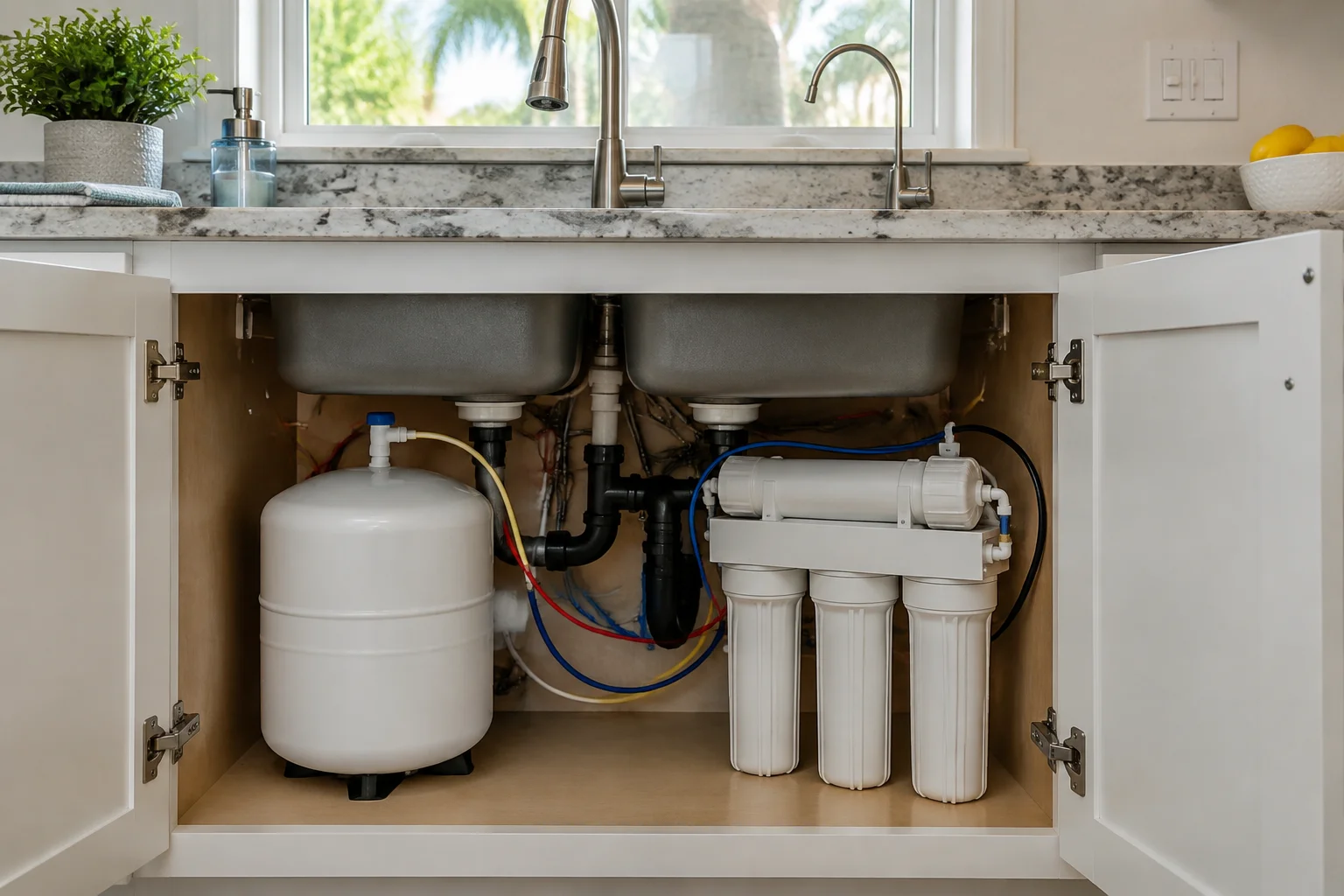
Most residential reverse osmosis systems are point-of-use units installed beneath a kitchen sink. They treat water for a dedicated drinking faucet and sometimes a compatible refrigerator connection. They generally do not treat water flowing to showers, toilets, laundry equipment, or the water heater.
That distinction matters when troubleshooting. If the RO faucet slows down but every other fixture works normally, the issue may involve its filters, membrane, tank, or tubing. If several fixtures lose pressure together, the cause is more likely elsewhere in the supply plumbing.
Know the basic water path
Cold water enters through a supply connection, passes through treatment stages, and reaches either a storage tank or the faucet, depending on the design. A separate line carries concentrated reject water to an approved drain connection. Some reject flow during production is normal. Continuous flow after a tank-based system should have finished refilling deserves investigation.
Keep the model number and installation manual accessible. Filter schedules, operating pressures, sanitizing procedures, and drain requirements vary by manufacturer.
Callaway Conditions Make Cabinet Checks Worthwhile
Callaway's warm, humid climate makes moisture control important. A damp sink cabinet may have a plumbing leak, condensation, or both. Humidity can slow drying, so a small leak can remain unnoticed behind cleaning supplies until the cabinet floor swells or develops a musty smell.
Local homes also differ in age, pipe material, previous renovations, and water treatment equipment. A newer faucet may still connect to an aging shutoff valve. A rental property may have an RO unit with no reliable filter replacement record.
After a tropical storm or extended vacancy, check for visible damage and follow any utility drinking water advisories. An ordinary residential RO system should not be assumed to make water safe during a boil-water notice. Follow public health guidance and the manufacturer's instructions for returning the equipment to service.
Water Pressure Can Explain Weak Flow and Recurring Leaks
RO membranes require adequate incoming pressure to work as designed. Low supply pressure can reduce production and make a storage tank refill slowly. Excessive pressure can stress housings, valves, and tubing connections. Neither problem should be diagnosed by faucet flow alone.
Separate an RO problem from a house pressure problem
Compare the dedicated RO faucet with the regular cold-water faucet. If only the RO outlet is weak, possible causes include clogged prefilters, a partially closed feed valve, kinked tubing, or a tank problem. Heavy drinking water use can also empty a small storage tank faster than the system replenishes it.
If pressure changes throughout the home, have a plumber measure it and inspect the supply system. A pressure regulator, restricted piping, or an active leak may need attention. Do not add a booster pump or adjust tank air pressure without checking the equipment specifications. Storage tank air pressure must be evaluated using the manufacturer's procedure, typically with the water side empty.
Trace Small Leaks Before Replacing Parts
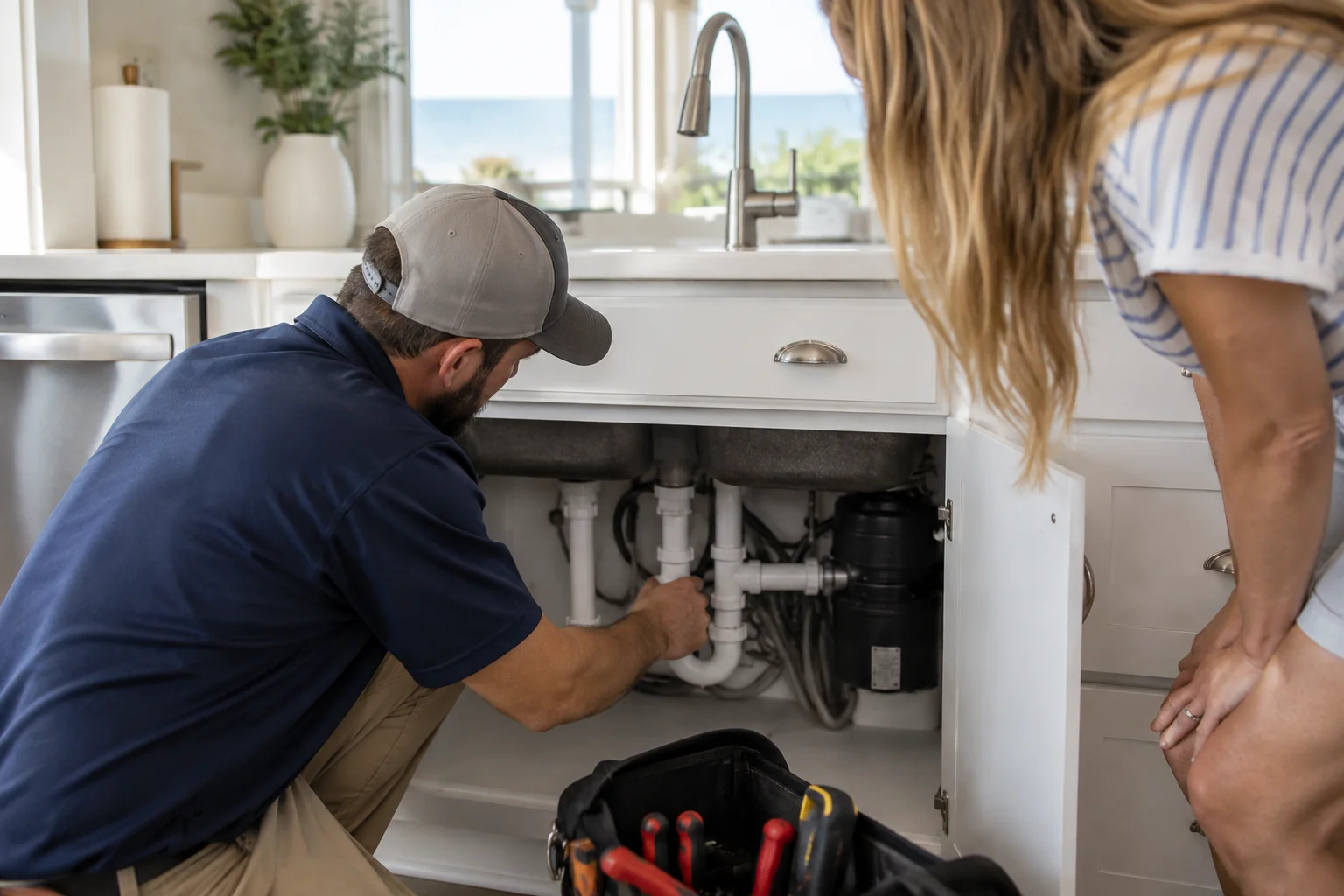
A puddle under the sink does not automatically mean the RO unit is leaking. Water can travel along pipes and tubing from a faucet connection, sink drain, disposal, or dishwasher hose. Dry the accessible area and look for where fresh moisture first appears.
Check the connections most likely to be disturbed
Inspect the feed valve, filter housing seams, tubing fittings, tank valve, and underside of the drinking faucet. Stored supplies can pull on tubing or push it into a sharp bend. Recent filter changes can also leave a seal out of position or a connection improperly seated.
Do not try to stop every leak by tightening harder. Plastic housings and fittings can crack, and push-fit tubing connections do not work like threaded compression fittings. Replacement seals and tubing must match the system's requirements.
If you find active leakage, close the RO feed valve if it is accessible and operates safely. A storage tank may continue supplying water, so its valve may also need to be closed. If the leak continues or you cannot isolate it, shut off the home's water supply when safe and arrange service. Homeowners searching for pipe leak repair near me should describe whether the water comes from the RO assembly or the house piping.
The Drain Connection Deserves as Much Attention as the Filters
An RO system needs a reliable route for reject water. Its drain connection must follow the manufacturer's instructions and applicable plumbing requirements, including required protection against wastewater backing into the treatment system. The right arrangement depends on the equipment and sink plumbing.
Understand gurgling and air-gap faucet leaks
Some systems use an air-gap faucet. Brief operating sounds can be normal, but persistent gurgling or water escaping from the air-gap opening can indicate restricted drain tubing, an obstructed connection, or an installation problem. A kink or tubing run that traps water can interfere with drainage.
A slow kitchen sink can make these symptoms worse. If the sink backs up while the RO unit produces water, the branch drain needs attention rather than another filter change. Avoid pouring drain chemicals into RO tubing or the faucet opening. Tell the plumber if chemicals have already been used in the sink.
A search for slow drain repair near me may lead to a simple local blockage, but multiple backing-up fixtures suggest a broader drain or sewer line problem. Stop using affected fixtures and have the drainage system evaluated.
Protect the Pipes and Fixtures Connected to the System
Use only tubing, fittings, and storage components approved for the RO system and suitable for drinking water. Treated water chemistry can differ from the incoming supply, so material compatibility matters. Do not extend a drinking water line with whatever spare tubing happens to be available.
Refrigerator connections need particular care. A long tubing run, pressure loss, or an incompatible arrangement can affect ice production and dispenser flow. Have the complete route checked before assuming the refrigerator or RO membrane has failed.
Older feed valves and deteriorating supply lines should also be addressed during installation. If corrosion or recurring leaks extend beyond the treatment unit, pipe replacement in Callaway may be more appropriate than repeatedly patching individual connections. During a larger kitchen renovation, coordinated plumbing replacement can help avoid awkward routing and inaccessible shutoffs.
Hard Water and Water Heater Problems Need a Separate Plan
Do not assume every Callaway home has the same hardness or treatment needs. Water quality can vary with the supply source and existing equipment. Testing, along with current utility information where applicable, helps determine whether hardness, sediment, disinfectant taste, or another concern needs attention.
Hardness minerals can contribute to membrane scaling under certain conditions. A correctly selected softener may help protect an RO membrane when the source water and manufacturer guidance support that approach. However, an under-sink RO unit does not prevent scale in a home's water heater or shower fixtures.
If mineral deposits keep returning around faucets or hot-water performance changes, consider the whole plumbing system. Someone searching for water heater repair near me may have a heater maintenance issue that a drinking water filter cannot solve. A Superior Mechanical's Callaway water filtration services can help clarify treatment options.
For a closer look at the distinction, read about how water softening helps protect Callaway plumbing and water heaters. Treatment should address a verified condition, not substitute for diagnosing a mechanical problem.
A Practical Maintenance Routine for Busy Households
Look inside the cabinet regularly
Check for dampness, staining, mineral residue, damaged tubing, and unusual sounds. Leave enough space around the equipment to inspect connections and replace cartridges without pulling on nearby drain pipes. A battery-powered leak alarm on the cabinet floor can provide an early warning, though it does not replace inspections.
Track filter changes and performance
Follow the manufacturer's replacement schedule, adjusted for actual water quality and usage. A busy household may place different demands on the system than a lightly occupied rental. Record service dates and watch for changes in taste, production rate, or refill time.
Sanitize the system according to its instructions during recommended service intervals. A handheld total dissolved solids meter can help track membrane performance trends, but it cannot establish that water is free of all contaminants or microorganisms.
Include the surrounding plumbing
During maintenance, check the regular faucet, sink drain, supply valves, and nearby appliance connections. A running toilet elsewhere in the home can explain increased water use that is mistakenly blamed on the RO drain. For rentals, clear maintenance records and tenant leak-reporting instructions help prevent missed problems, as discussed in this guide to property management plumbing in Callaway.
Recognize Problems That Need Prompt Plumbing Service
Active flooding, a cracked housing, sewage backing into fixtures, or a supply valve that will not close needs prompt professional attention. If water is near electrical equipment, avoid contact with wet equipment or receptacles. Isolate the water only when you can do so safely.
Unexplained water use, damp flooring away from the kitchen, or the sound of flowing water with fixtures off may indicate a concealed pipe leak. A slab leak requires proper detection rather than assuming the under-sink equipment is responsible. Likewise, several clogged fixtures can point to a sewer line issue rather than an RO drain restriction.
When searching for a licensed plumber near me, explain which fixtures are affected, whether the leak stops with the RO feed isolated, and whether you have noticed pressure changes. Those details help guide diagnosis.
Plan RO Service Around Your Callaway Home
A useful service visit considers water quality, household demand, supply pressure, drainage, and access for future maintenance. It should also distinguish a repairable filter or valve issue from equipment that no longer suits the property. This guide to why reverse osmosis systems struggle in Callaway homes explores additional performance concerns.
Contact A Superior Mechanical for installation or service of your reverse osmosis system and describe any related leaks, drain trouble, or fixture problems. Explore plumbing services in Callaway or the company's Bay County service area to plan care for your property. Accessible shutoffs, sound connections, and a documented maintenance schedule make dependable drinking water easier to maintain.
Find Reverse Osmosis Systems in Callaway, FL
If you need Reverse Osmosis Systems in Callaway, FL, visit our local service page or contact A Superior Mechanical today.
Map of Callaway, FL
Frequently Asked Questions
Why does my reverse osmosis system keep sending water to the drain?
Reject water is normal while an RO system produces treated water. If a tank-based system continues draining after it should have finished refilling, possible causes include low incoming pressure, a tank problem, or a faulty shutoff or check valve. A plumber can check operation against the manufacturer's specifications.
Can a clogged kitchen drain make my RO faucet leak?
A restricted sink drain or RO drain tube can cause water to escape from the opening on some air-gap faucets. That is different from a leaking faucet supply connection. Have the drain connection and tubing inspected, and avoid putting chemical drain cleaner into any RO component.
Will an under-sink RO system protect my Callaway home's water heater from hard water?
No. A typical under-sink RO system treats water only for its dedicated faucet and any approved connected appliance. It does not treat the supply to the water heater. Water testing can help determine whether separate softening or other treatment is appropriate for the rest of the home.
Related Articles
- Why Reverse Osmosis Systems Struggle in Callaway Homes and What Water Treatment Can Fix
- How better property management plumbing keeps Callaway homes running smoothly
- How Better Water Softening Helps Callaway Homes Protect Plumbing, Fixtures, and Water Heaters
- Cleaner Water, Easier Plumbing: Why Better Reverse Osmosis Systems Fit Seaside Homes
Photo Gallery