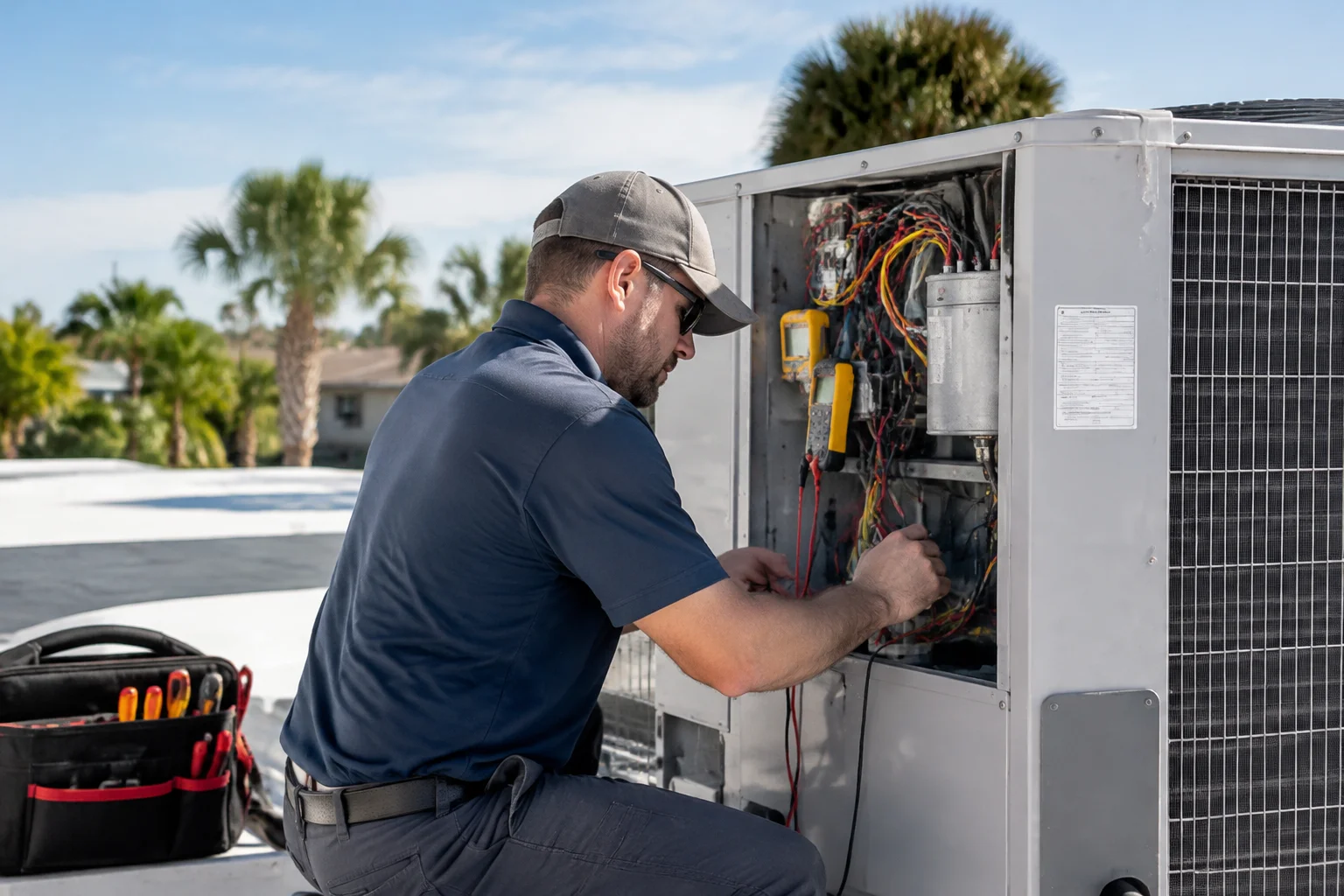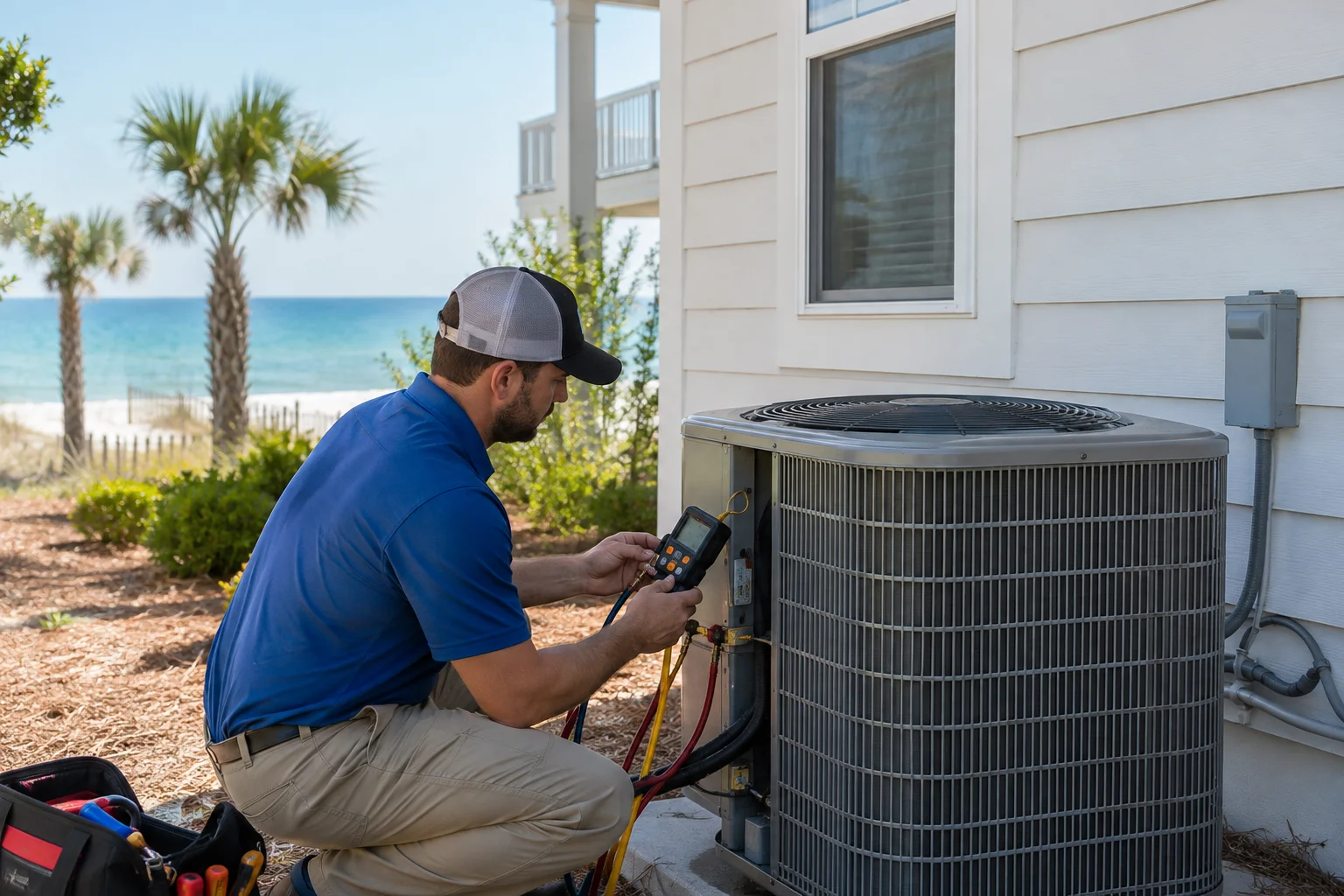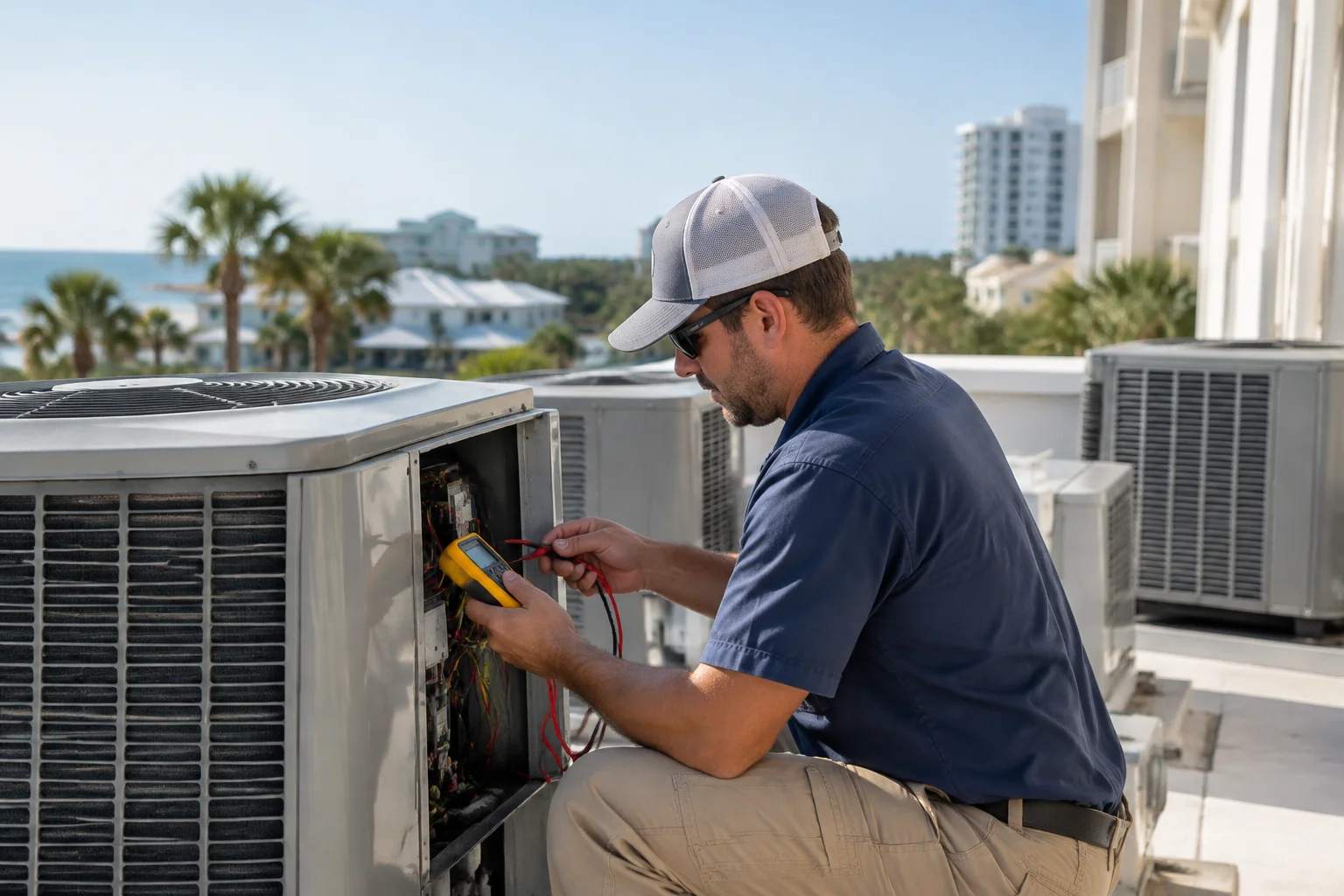
A comfortable business should not depend on which room you enter or how early you arrive. If the reception area feels sticky, an office stays warm, or the air conditioner struggles every afternoon, the problem deserves more than another thermostat adjustment.
For businesses in Crestview, FL, smart HVAC planning connects repairs with airflow, moisture control, and prevention. A Superior Mechanical provides commercial HVAC repair in Crestview to help restore comfort and reduce downtime. The same diagnostic principles also help homeowners understand problems in local homes, especially properties with additions, converted garages, or home offices.
Crestview's Climate Makes HVAC Performance a Daily Concern
Long stretches of warm, humid weather put sustained demand on air conditioning equipment in northern Okaloosa County. A system must remove heat and moisture while serving rooms with different occupancy levels, window exposure, and equipment loads. Businesses also have doors opening throughout the day, bringing humid outdoor air inside.
Crestview is inland, so salt air exposure is generally lower than along the immediate coast. Still, regional coastal weather, tropical systems, wind-driven rain, and storms affect maintenance planning. Outdoor condensers need clear airflow, secure components, and checks for corrosion or storm debris. Lightning and power disturbances can also interrupt operation.
Seasonal demand matters, too. Scheduling an assessment before peak summer heat gives owners more room to address developing problems rather than waiting for a breakdown during a busy workday.
Start With the Pattern, Not a Guess at the Part
Before requesting service, note where the problem occurs and when it starts. Is the entire building warm, or just the back office? Does cooling decline after lunch? Does the thermostat reach its setting while the space still feels damp? These details help narrow the diagnosis.
Changes worth reporting
Useful warning signs include longer run times, frequent cycling, weak airflow, unusual vibration, water around an air handler, musty odors, and energy use that rises without a clear change in business activity. Ice on refrigerant lines or an evaporator coil also needs attention. Ice does not automatically mean low refrigerant; restricted airflow can cause it as well.
A small-business owner searching for central air repair near me should describe these symptoms rather than request a particular replacement part. A capacitor, blower problem, dirty coil, or control fault can produce overlapping complaints, but each requires a different repair.
Airflow Problems Can Look Like Cooling Failures
An air conditioner cannot deliver its rated performance without adequate airflow. Filters, blower assemblies, air handlers, ductwork, and vents all influence how much conditioned air reaches occupied rooms. Stock stacked against a return grille or furniture covering a supply vent can create a comfort problem even when the refrigeration circuit works properly.
Check restrictions before lowering the thermostat
Keep supply and return openings clear, and inspect accessible filters according to the equipment's maintenance requirements. Avoid installing a more restrictive filter without checking whether the system can handle its pressure drop. Better filtration should not come at the expense of necessary airflow.
A technician can measure static pressure, inspect blower operation, and evaluate duct restrictions. Closing several vents to push air elsewhere can increase pressure and make performance worse. Balancing or duct modifications may be the better solution.
Leaky ducts waste more than cooled air
Leaks in unconditioned spaces can lose conditioned air or draw humid, dusty air into the system. Disconnected branches, damaged insulation, and poorly sealed joints deserve inspection. Property owners comparing duct sealing near me should ask about testing and repair methods. A Superior Mechanical's Crestview duct sealing services offer a starting point for discussing suspected leakage.
Humidity Needs Its Own Diagnosis
A room can reach the thermostat setting and still feel uncomfortable. Excess moisture makes surfaces feel clammy, encourages musty odors, and can contribute to microbial growth when damp conditions persist. Many occupied spaces benefit from relative humidity around 40 to 60 percent, with a practical goal of staying below 60 percent when feasible.
Short cycling, oversized equipment, leaking ducts, excessive outdoor air, and drainage problems can interfere with moisture control. In commercial buildings, exhaust fans and ventilation settings also matter. Outdoor air should not simply be shut off to reduce humidity; required ventilation must be maintained while the system handles the added moisture load.
A technician should evaluate equipment operation and building conditions before recommending supplemental dehumidification. For residential properties and home offices, whole home dehumidifiers in Crestview may be appropriate. Commercial spaces need equipment selected for their ventilation, occupancy, and moisture demands.
Refrigerant, Coils, and Drain Lines Work Together
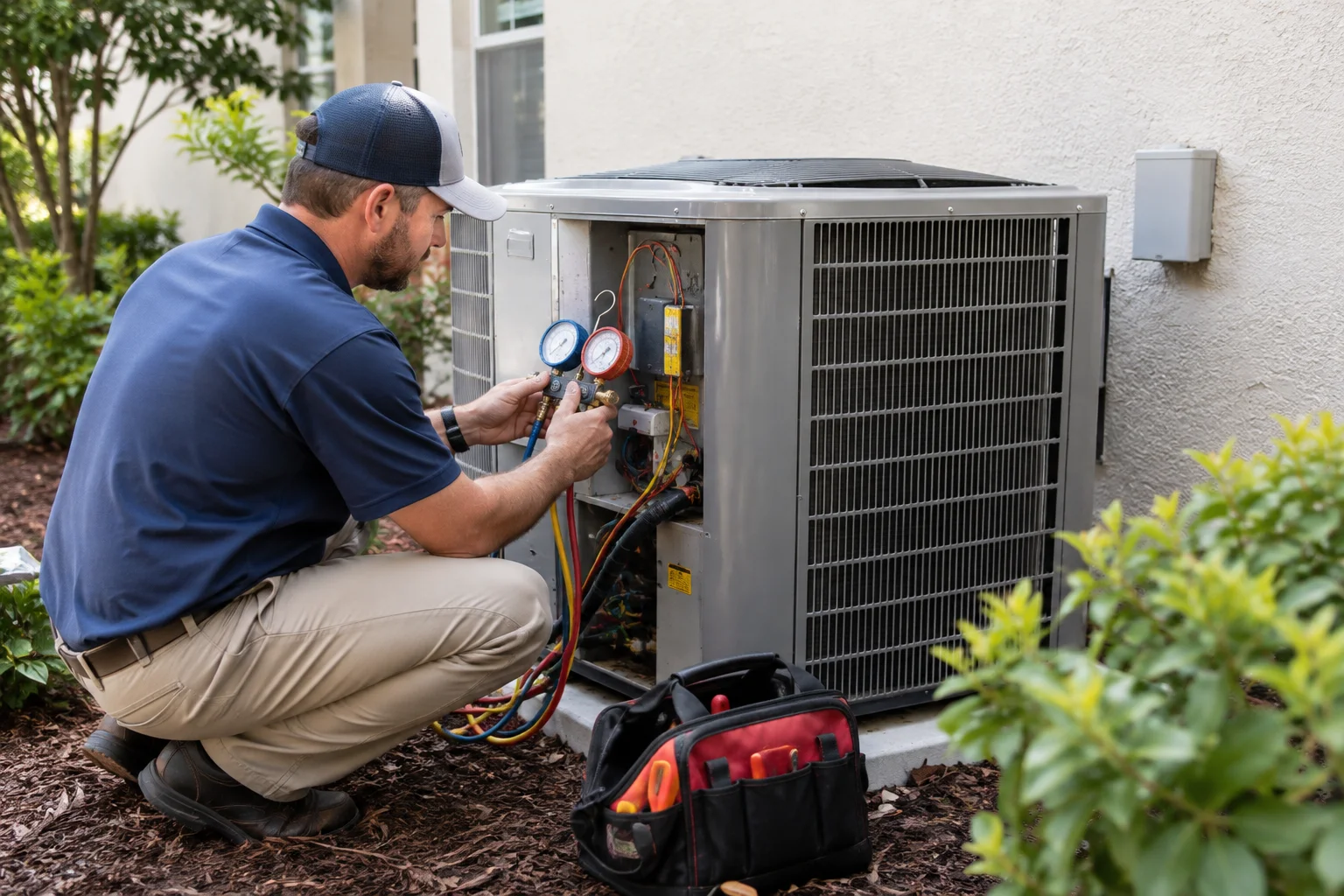
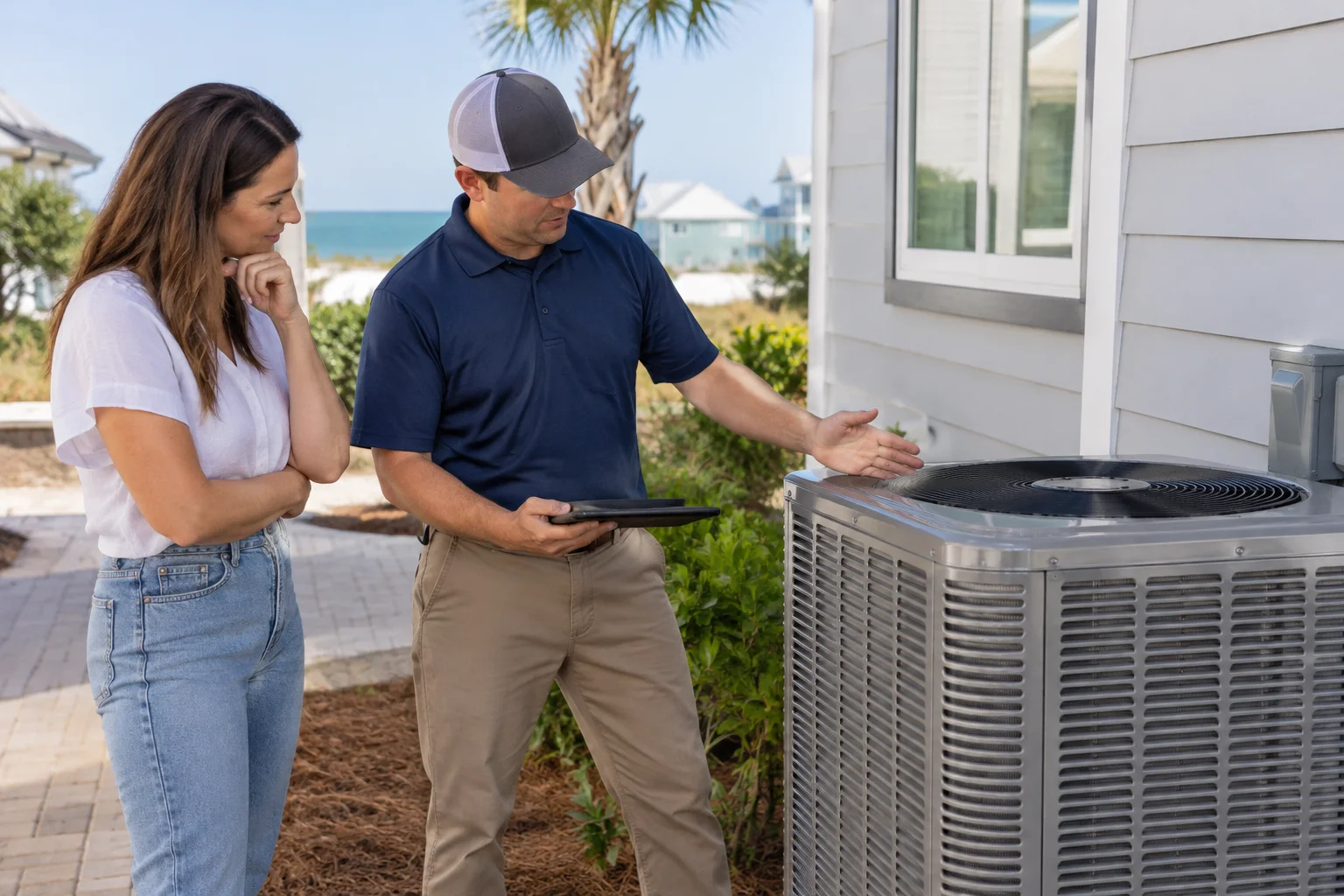
Evaporator coils absorb heat indoors, while outdoor condensers release it outside. Dirt on either coil can reduce heat transfer and efficiency. Restricted indoor airflow can cause freezing, and blocked outdoor airflow can increase operating stress. Coil cleaning should use methods appropriate for the equipment to avoid damaging fins or protective coatings.
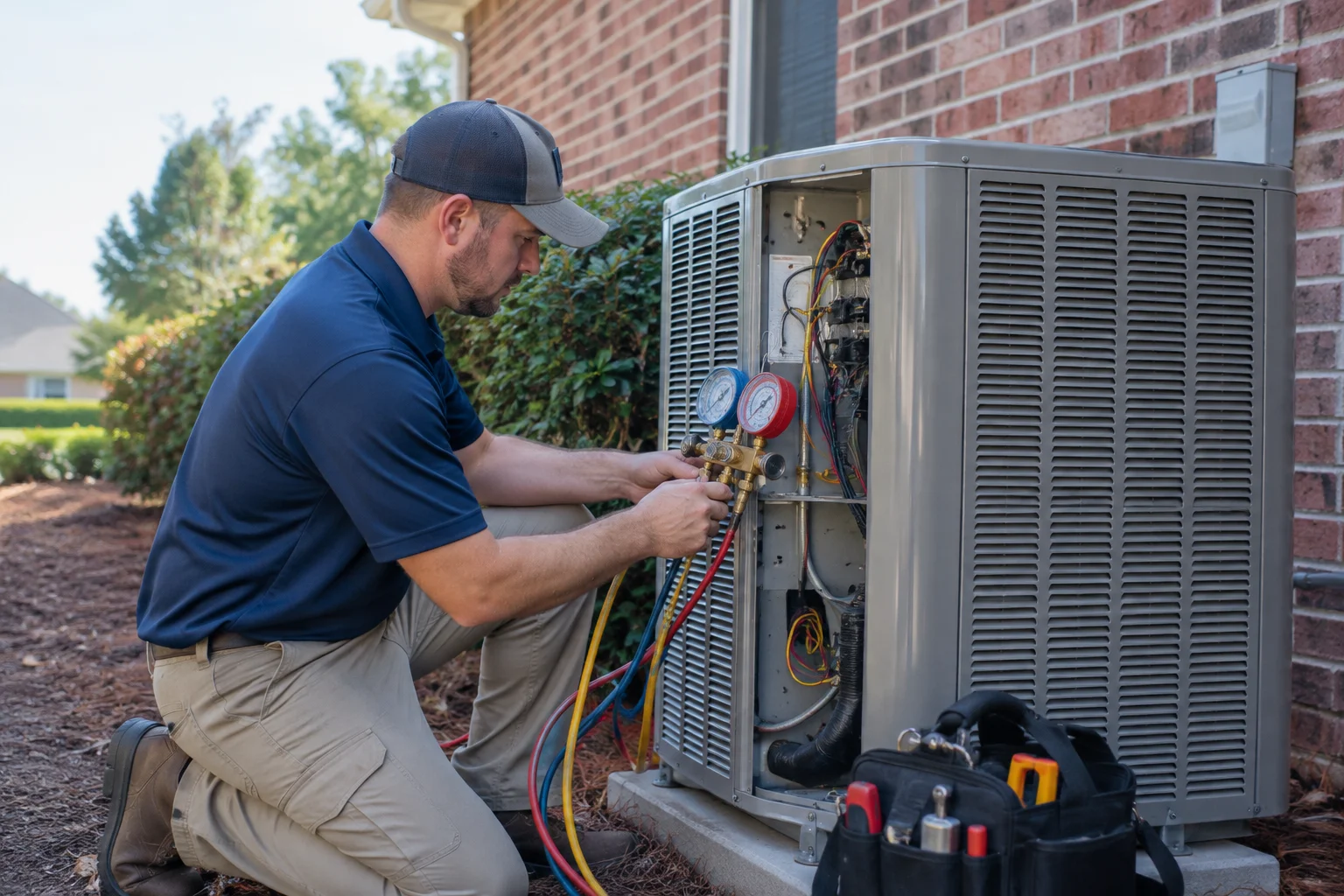
Refrigerant is not normally consumed during operation. If a system is low, a leak or an earlier charging problem needs investigation. Simply adding refrigerant may restore cooling temporarily without addressing the cause. Repair decisions should consider leak location, equipment condition, refrigerant type, and cost.
As indoor air cools, moisture collects on the evaporator coil and drains away. A clogged drain line, damaged pan, or failed condensate pump can cause water damage or trigger a safety shutoff. Water near an air handler should be investigated promptly rather than treated as normal condensation.
Thermostats Should Match How the Building Is Used
A thermostat near direct sunlight, an exterior door, or heat-producing equipment may not represent the temperature people actually experience. Incorrect schedules, sensor issues, and incompatible controls can also produce uneven comfort. Thermostat installation should include checking equipment compatibility and setup, not just attaching a new display.
Use occupied and unoccupied schedules that reflect business hours, but avoid extreme setbacks that allow humidity to build or require lengthy recovery. Leaving the fan running continuously can re-evaporate moisture from a wet coil on some systems. Ask which fan setting supports both ventilation requirements and humidity control for your equipment.
For homes and small offices, comfort complaints often start with thermostat habits but end with airflow corrections. A lower setting will not repair a struggling blower, leaking duct, or dirty coil.
Older Buildings, Remodels, and Additions Change the Load
Older Crestview homes and commercial buildings may have aging ductwork, limited return-air paths, or equipment selected for a previous layout. Newer homes and buildings can also experience problems when insulation, ventilation, and equipment sizing are not coordinated. New equipment alone does not guarantee balanced comfort.
Remodels and additions deserve particular attention. Dividing an open room into offices changes airflow paths. Adding windows increases solar heat gain. A busy retail area has different cooling needs than a lightly occupied office. Extending an existing duct without evaluating capacity can leave both spaces uncomfortable.
Ductless mini splits may help serve a separate office, addition, or room with a different schedule. They still require proper sizing, condensate drainage, maintenance access, and a plan for fresh air where required. The article Comfort Beyond the Thermostat explores useful ductless planning considerations for Crestview properties.
Heating Equipment Still Needs Attention in Florida
Crestview's cooler winter periods make dependable heating important, even though cooling dominates much of the year. Heat pumps can develop refrigerant, reversing valve, defrost, or auxiliary heat problems. Some outdoor frost during heating operation is normal, but persistent heavy ice or failure to recover after defrost warrants inspection.
Gas furnaces require a different service approach, including attention to ignition, combustion, venting, and safety controls. Furnace service and heat pump repair should follow the equipment's actual operating symptoms. A heating complaint should not be dismissed because the system cooled adequately last summer.
Schedule heating checks before the first sustained cold spell, especially where reliable temperatures protect vulnerable occupants or support essential business operations.
Know Which Problems Should Not Wait
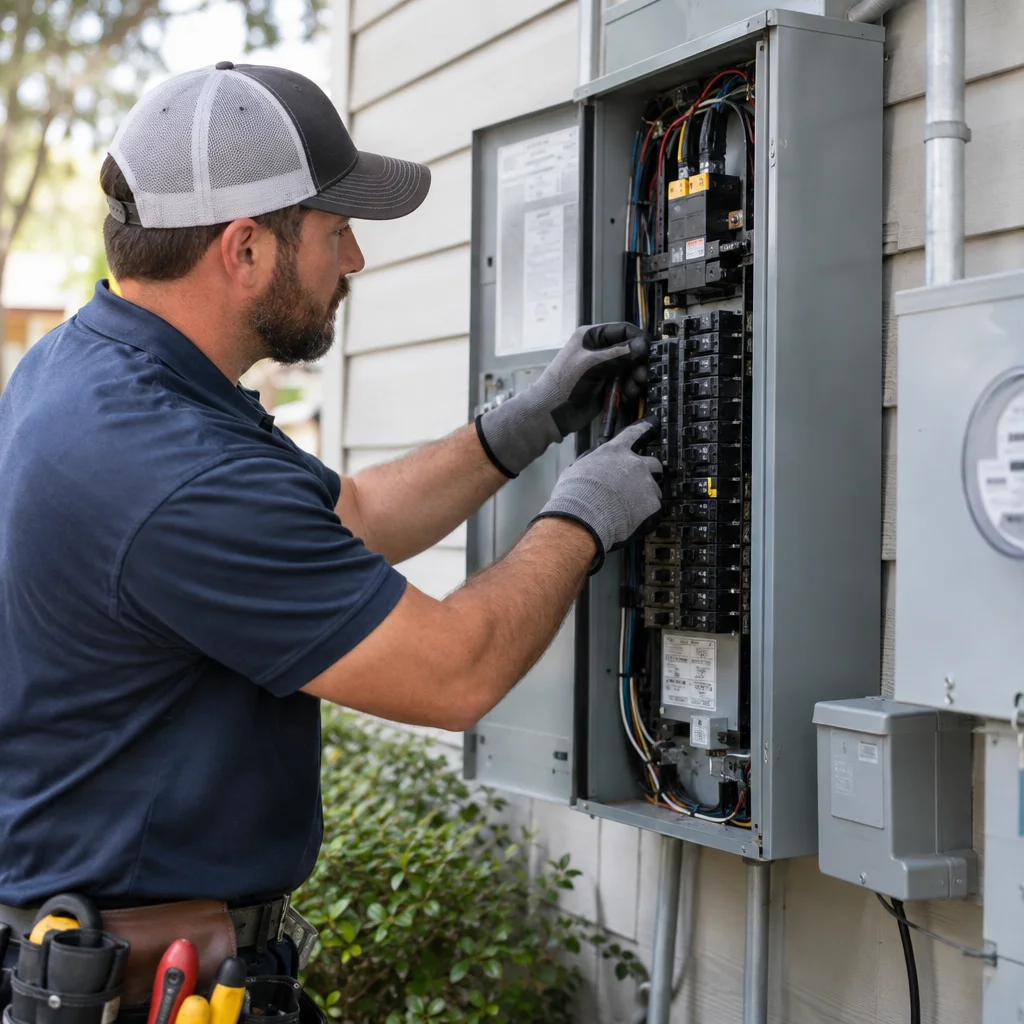
Smoke, a burning odor, sparking, repeated breaker trips, or water reaching electrical components requires prompt action. Stop using affected equipment if it is safe to do so. Do not repeatedly reset a breaker or bypass a condensate safety switch. If you smell gas, leave the building without operating switches and contact the gas utility or emergency services from a safe location.
People searching for emergency HVAC repair near me should explain whether the problem involves complete cooling loss, a safety concern, or a temperature-sensitive operation. Severe indoor heat can require relocating occupants while service is arranged. Ask directly about current availability instead of assuming emergency or same-day appointments are guaranteed.
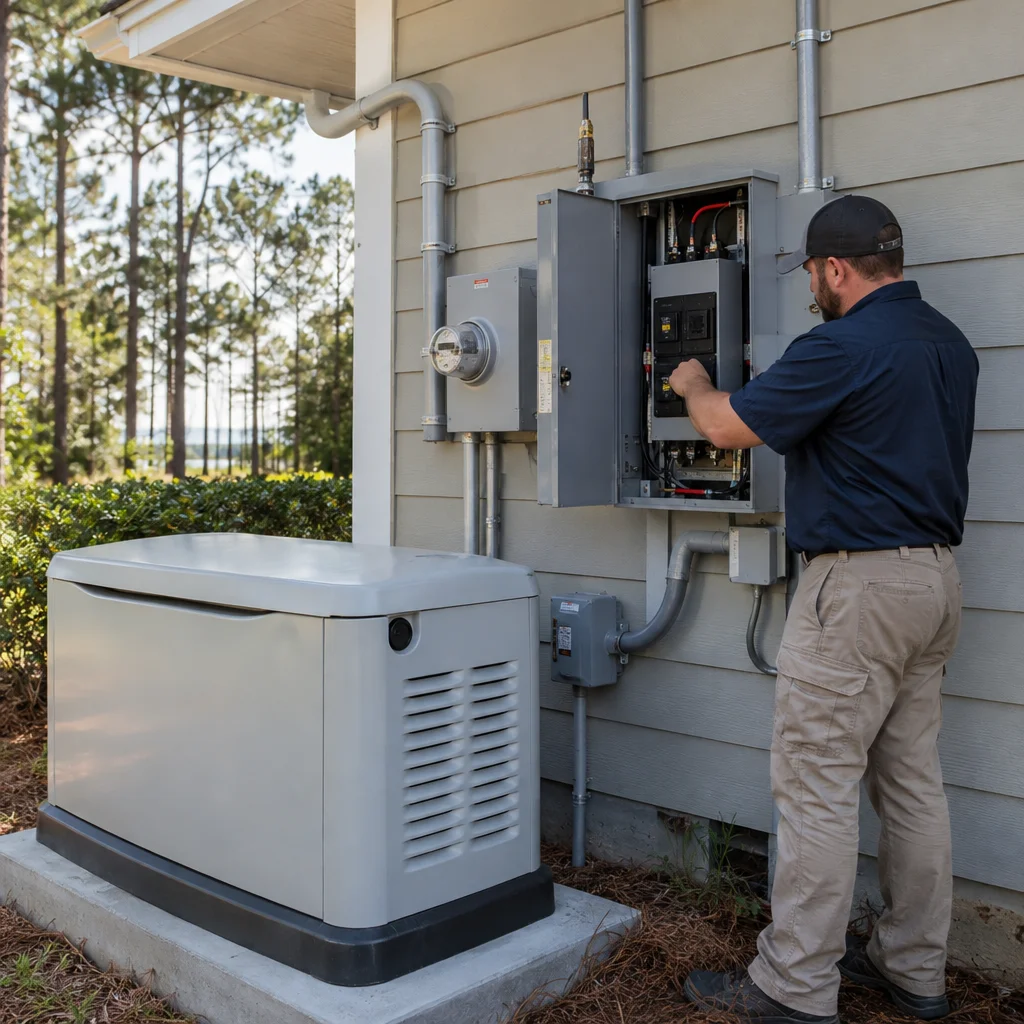
After storms, inspect accessible outdoor areas from a safe distance. Do not operate submerged equipment before professional evaluation. For residential storm planning, this Crestview surge protection guide discusses a complementary precaution, though surge protection cannot prevent every equipment failure.
Build a Maintenance Plan Around Actual Conditions
Maintenance intervals should reflect operating hours, equipment instructions, occupancy, dust, and site conditions. A busy storefront may need more frequent filter checks than a lightly used office. A useful plan includes inspection of coils, drains, blower components, controls, accessible connections, and outdoor-unit clearances.
Keep a simple service record with repair dates, recurring symptoms, filter changes, and unusual energy use. Review repeated failures instead of treating each visit as an unrelated event. Preventive HVAC maintenance can catch developing issues, but it cannot guarantee that equipment will never break down.
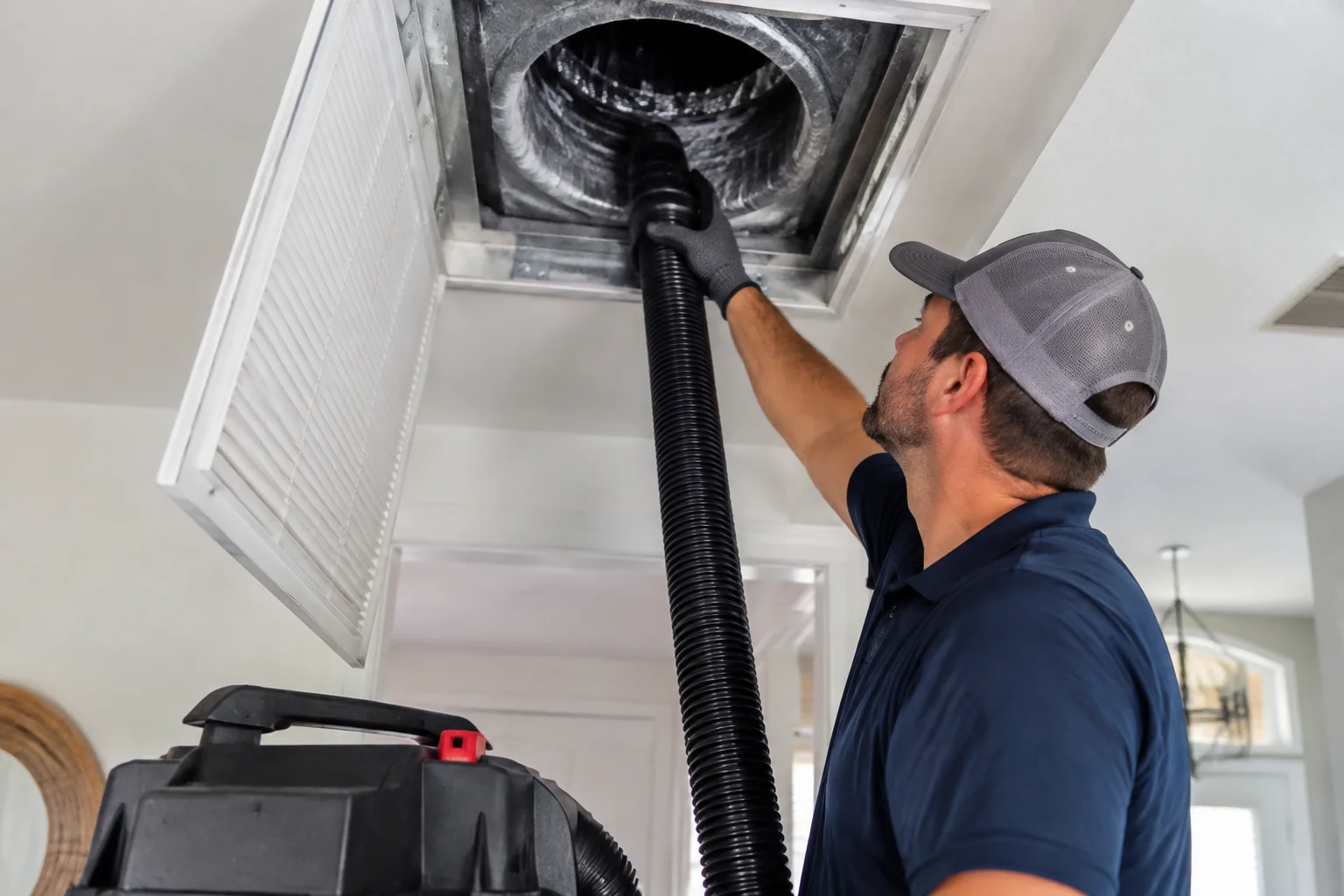
Indoor air quality work should address the source of the problem. Dust may involve filtration or duct leakage, while musty odors may indicate moisture. Duct cleaning in Crestview may be appropriate for documented contamination, but it does not replace ductwork repair, moisture correction, or routine filter care.
Choose Repairs That Support Lasting Performance
The least expensive immediate fix is not always the most economical decision. Compare the repair scope, equipment condition, service history, parts availability, and expected reliability. Ask whether the proposed work addresses the cause and whether follow-up testing will verify airflow, drainage, and operation. Energy efficiency usually improves through correct performance, not colder thermostat settings.
Local HVAC service matters because building conditions, humid weather, and seasonal demand influence practical recommendations. A Superior Mechanical serves Crestview properties and businesses across Okaloosa County. For commercial repair planning, share your equipment information, business hours, affected spaces, and recent symptoms. Those details help turn a comfort complaint into a focused service visit.
Find Commercial HVAC Repair in Crestview, FL
If you need Commercial HVAC Repair in Crestview, FL, visit our local service page or contact A Superior Mechanical today.
Map of Crestview, FL
Frequently Asked Questions
Why does my Crestview business feel humid even when the AC is cooling?
The system may be reaching the thermostat setting without removing enough moisture. Possible causes include short cycling, oversized equipment, duct leakage, ventilation problems, or incorrect controls. A technician should assess humidity, airflow, and operating cycles before recommending repairs or supplemental dehumidification.
How often should commercial HVAC equipment receive maintenance in Crestview?
Many systems benefit from professional inspections before the cooling and heating seasons, but commercial equipment may need more frequent attention. Operating hours, dust, occupancy, manufacturer requirements, and service history should determine the schedule. Filters and condensate drainage may need checks between professional visits.
Should a commercial HVAC system be repaired or replaced after repeated breakdowns?
Compare the current repair cost with the equipment's condition, repair history, parts availability, and ability to meet the building's needs. Repeated failures justify a broader evaluation, but replacement is not automatically necessary. Ask whether airflow, controls, or building changes are contributing to the problems before deciding.
Related Articles
Photo Gallery