The dishwasher finishes, but the glasses still look spotted. A white crust returns around the bathroom faucet, and the morning coffee tastes different than it should. These small frustrations can point to water quality issues, but they do not necessarily share the same cause.
For homeowners considering water softening in Niceville, FL, the starting point is understanding what is actually in the water. Hardness minerals, sediment, disinfectant taste, and odors require different approaches. A properly selected softener can reduce mineral buildup throughout the house, while filtration or reverse osmosis may address separate drinking water concerns. Matching treatment to the problem makes everyday water easier to live with without buying equipment you do not need.
Why water quality deserves a local look in Niceville
Niceville's warm, humid climate keeps showers, laundry rooms, and kitchens busy through much of the year. After yardwork, outdoor play, or a trip toward the coast, families depend on water for bathing, washing clothes, and refilling drinking glasses. Frequent use can make mineral residue especially noticeable, but humidity itself does not make water hard.
Water conditions depend on the source, treatment, distribution system, and plumbing inside the home. Groundwater can pick up calcium and magnesium as it moves through mineral-bearing formations. That does not mean every Niceville property has the same hardness level. Public water customers should review their supplier's current water quality report, while private well owners need testing appropriate to their source.
Older homes may also have accumulated deposits or aging pipes that affect water at the tap. Newer homes can still experience hard water if the incoming supply contains elevated hardness. Local service matters because equipment selection should account for the actual supply, installation conditions, and household demand, not a generalized claim about all of Okaloosa County.
Read the clues around your kitchen and bathroom
Spots, scale, and cloudy glasses
Hard water spots on glass, dishes, and fixtures appear when droplets evaporate and leave minerals behind. Scale buildup around faucets and showerheads can become chalky or crusty. Deposits may narrow spray openings, and mineral accumulation inside plumbing or water-heating equipment can create additional maintenance concerns.
Not every cloudy glass has a removable mineral film. Dishwasher detergent, loading practices, and permanent glass etching can produce a similar appearance. Cloudy ice cubes are also not a reliable hardness test because trapped air and the way water freezes can cause cloudiness. Testing helps separate these everyday clues from an actual diagnosis.
Soap residue and uncomfortable bathing
If soap does not lather easily or seems difficult to rinse away, hardness may be contributing. Calcium and magnesium react with traditional soap, leaving residue on tubs, shower walls, and fabrics. Laundry can feel stiff, and towels may lose some of their softness.
Some homeowners also notice dry skin or dull hair after bathing. Softened water may improve the washing experience by reducing mineral and soap residue, but it is not a treatment for skin or scalp conditions. Hot water, fragrances, and existing sensitivities can cause similar discomfort.
Taste, color, and odors need separate attention
A metallic, chlorinated, or unpleasant taste deserves investigation rather than an automatic softener recommendation. Metallic notes may involve iron, copper, or corrosion. Chlorinated taste can reflect the disinfectant used in public water treatment. Visible sediment, discoloration, and odors may have different causes again, including water heater conditions or changes in the supply.
Compare hot and cold water and check whether the issue occurs at one faucet or throughout the home. Do not assume unpleasant water is unsafe, or that clear water is safe. Sudden changes warrant advice from your utility or a qualified water treatment professional.
Choose treatment by what it actually removes
Water softening targets hardness minerals
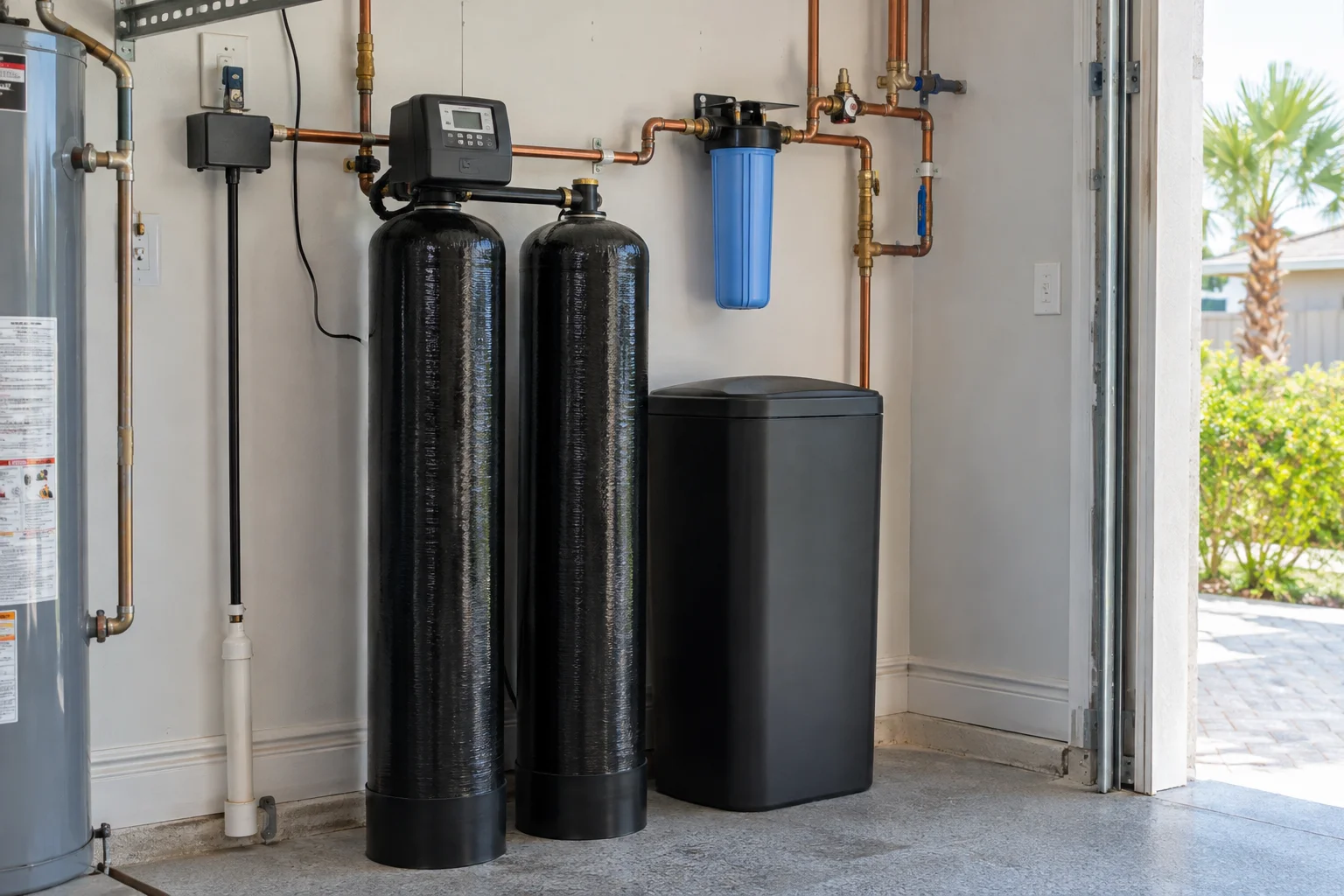
A conventional ion-exchange water softener removes calcium and magnesium by exchanging them for sodium or potassium ions. This is hard water treatment aimed at reducing new mineral scale, improving soap performance, and limiting mineral deposits on fixtures and water-using equipment.
It does not disinfect water or reliably solve every taste, odor, or sediment problem. Softening also should not be presented as a way to restore damaged plumbing or instantly clear existing scale. For property-specific options, A Superior Mechanical provides water softener installation, replacement, repair, and maintenance in Niceville, including whole-home A. O. Smith systems selected for the application.
Whole home water filtration addresses other concerns
A whole house water filter treats water near its entry point, but its capabilities depend on the media and design. Sediment filters capture particles within their rated range. Activated carbon can reduce chlorine taste and odor; chloramine reduction requires equipment specifically designed and rated for that purpose.
Iron, manganese, sulfur-related odors, and microbial concerns may require specialized treatment. Whole home water filtration is therefore a category, not a guarantee that one tank removes everything. Homeowners searching for water filtration near me should ask which measured concern each proposed component addresses.
AO Smith water filtration products and an AO Smith water softener perform different jobs. Compare the exact model's capacity, maintenance requirements, and certified reduction claims where applicable. Brand familiarity is useful, but model-specific performance matters more than a broad promise of cleaner water.
Reverse osmosis focuses on drinking and cooking water
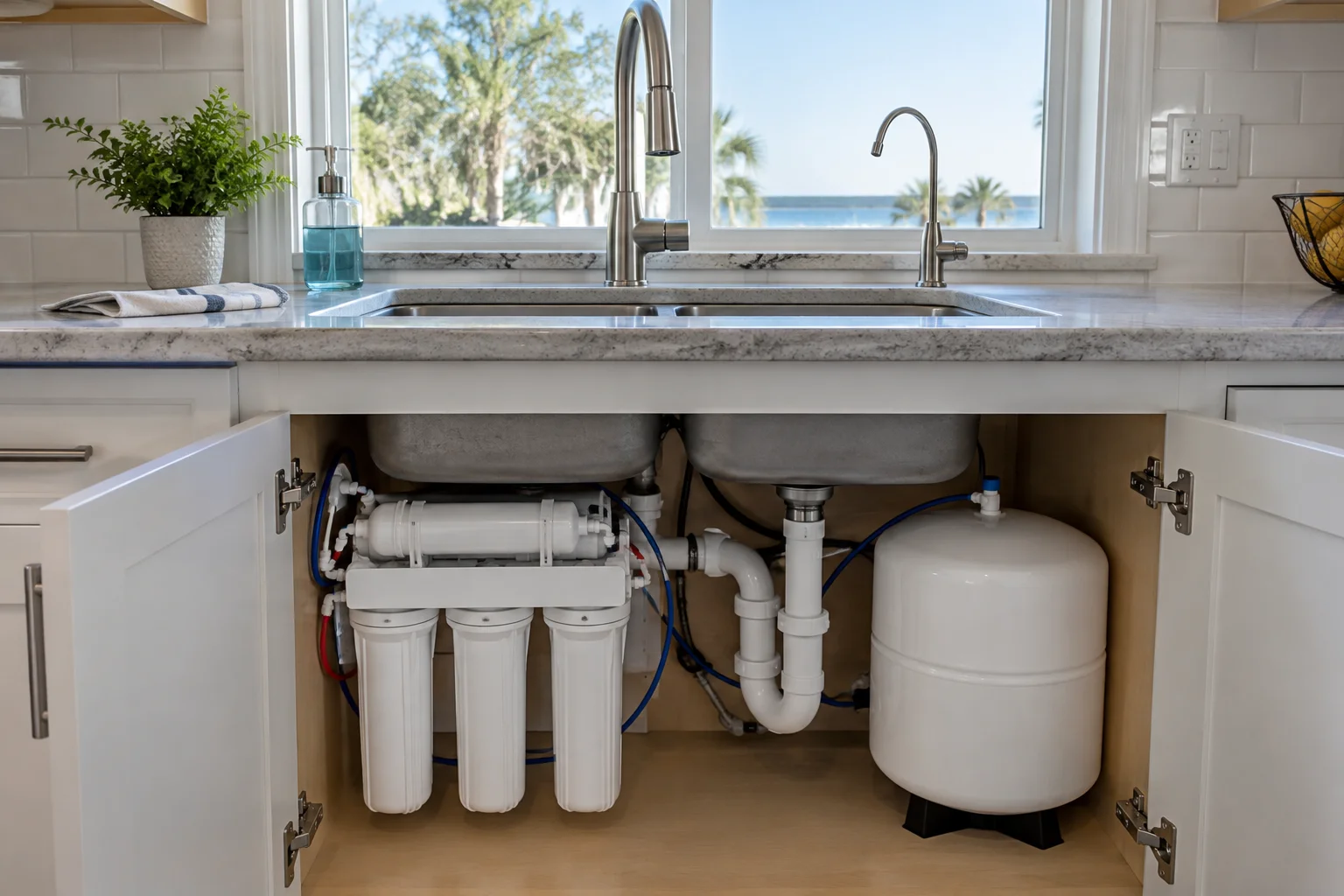
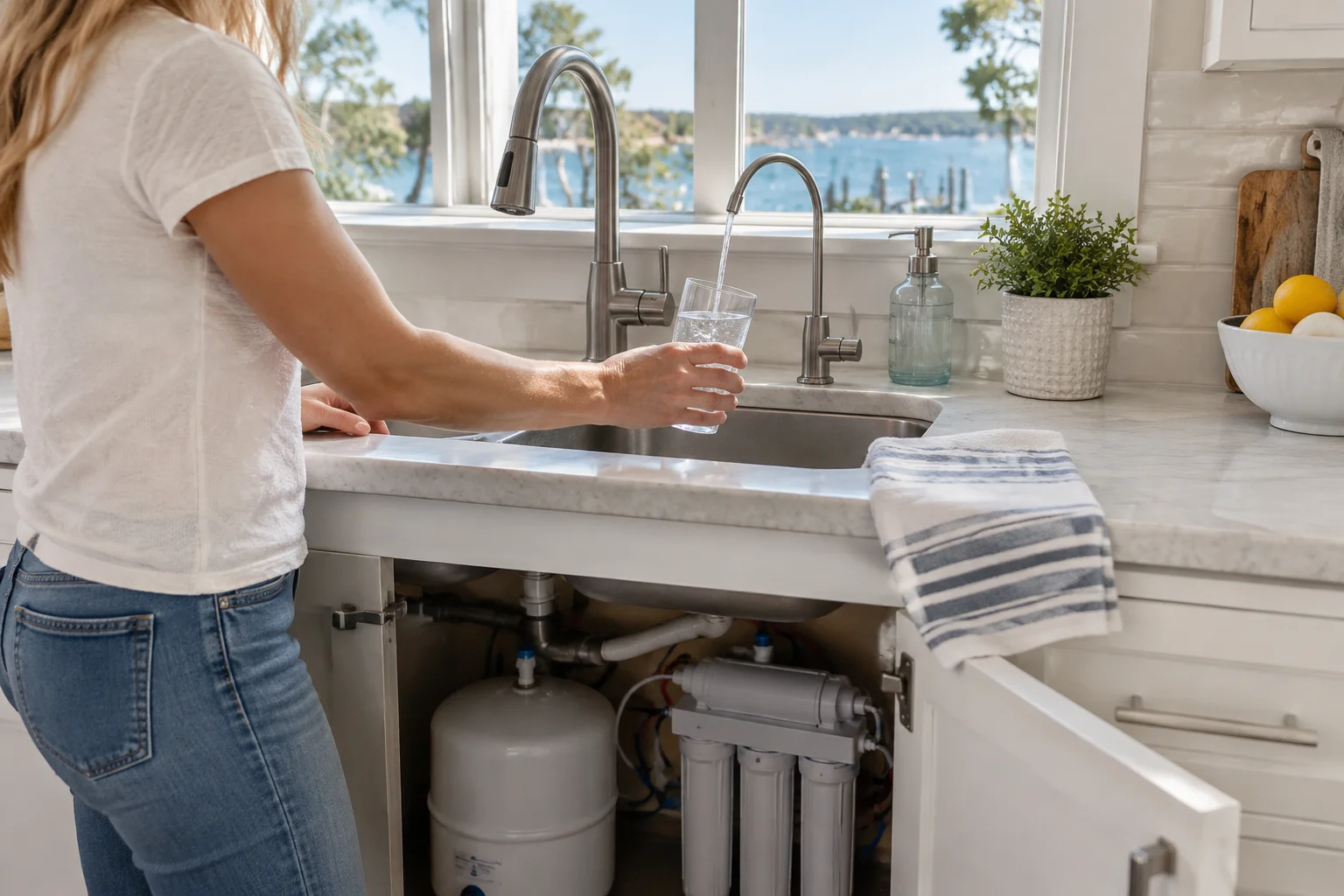
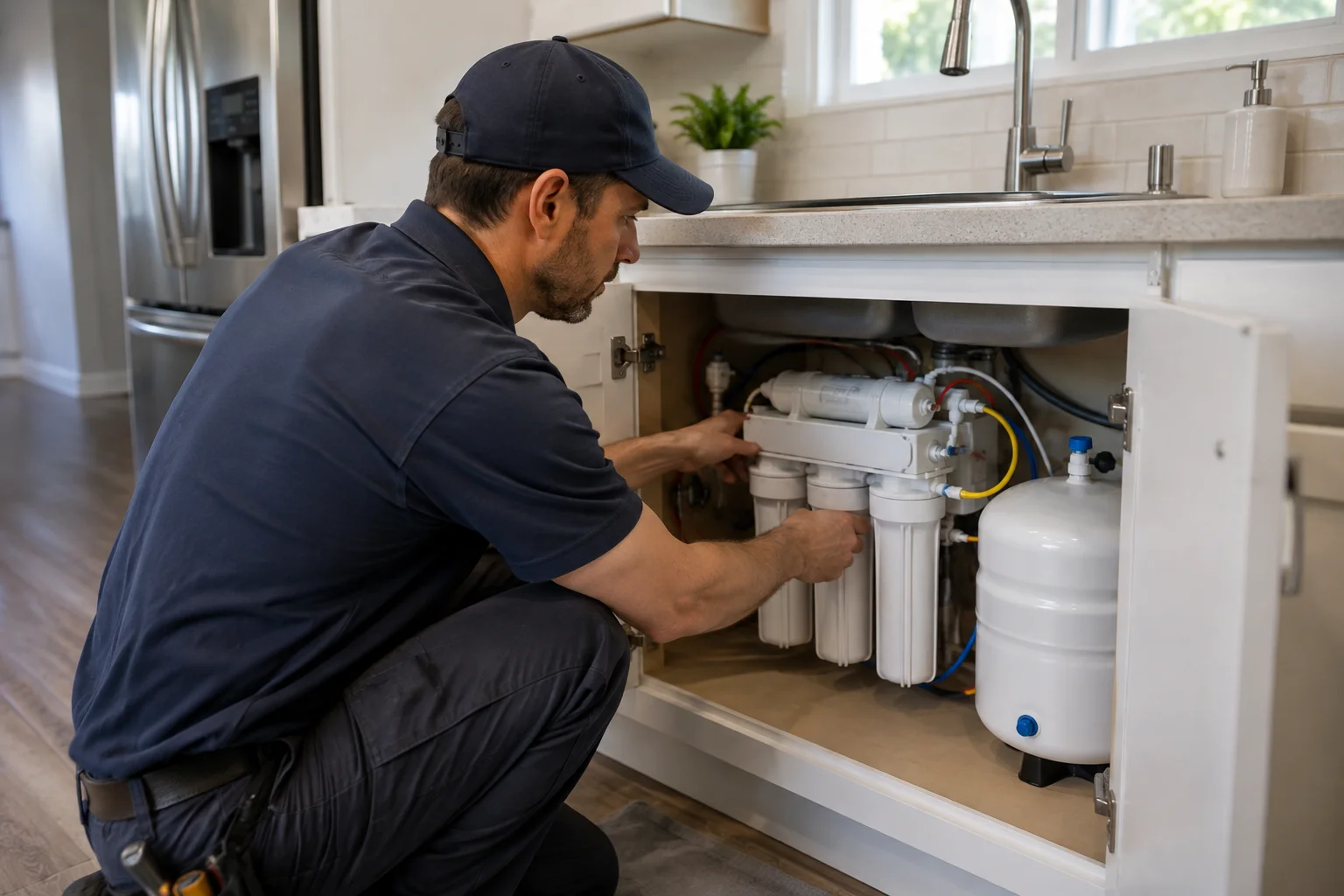
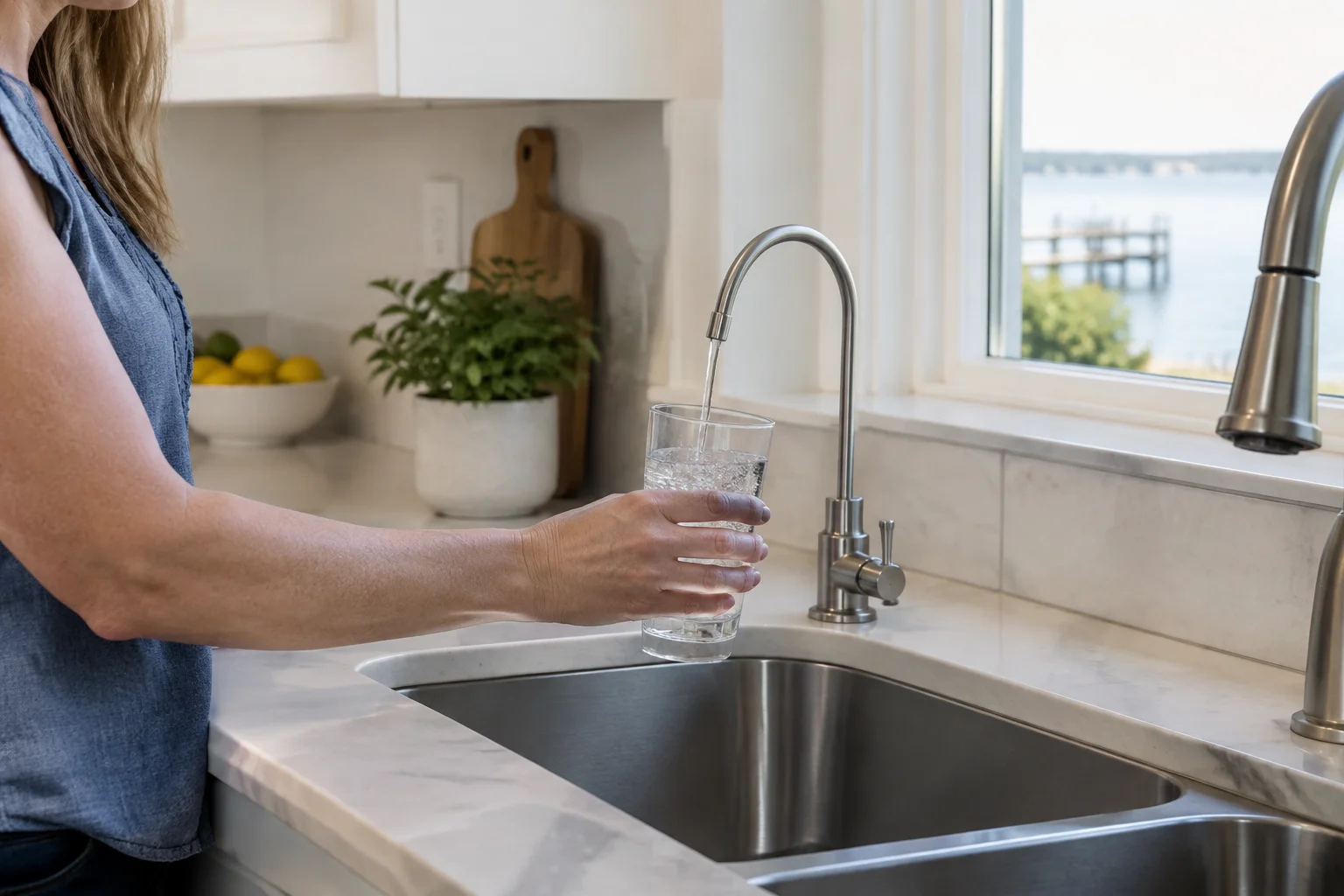
A reverse osmosis system is commonly installed under the kitchen sink to reduce many dissolved substances at a dedicated drinking water faucet. Performance depends on the system, incoming water, and maintenance. Select equipment with verified reduction claims for the contaminants or water characteristics you want to address.
Reverse osmosis can complement a softener when the goal includes better drinking water, clearer-tasting tea, or more consistent cooking water. A softener reduces hardness throughout the home, while the kitchen system treats water used for drinking and food preparation. A Superior Mechanical's water filtration, reverse osmosis, and water softener overview explains these treatment options together.
How better water changes ordinary household routines
At breakfast, water goes into the coffee maker, oatmeal pot, reusable bottles, and children's cups. Poor tasting coffee water can affect the finished drink even when the beans are fresh. Reducing an identified taste issue may help, although coffee flavor also depends on brewing technique and mineral balance. Very low-mineral water does not suit every brewer's preference or equipment recommendation.
At dinner, the same water may become soup, rice, or pasta cooking water. A dedicated drinking water filter can serve these tasks without requiring every outdoor hose bib to receive the same treatment. Families searching for a reverse osmosis system near me should consider daily output, storage capacity, and whether a refrigerator connection is practical.
Elsewhere in the house, softening can mean less scrubbing of mineral spots and less soap residue in showers and laundry. Follow detergent instructions and adjust amounts carefully rather than assuming more product means cleaner results.
Hardness can also contribute to appliances wearing out faster by adding scale to heating surfaces and water passages. The actual effect depends on hardness, temperature, usage, and equipment design. Softening can reduce that mineral burden, but appliances still need manufacturer-recommended cleaning and service.
A good installation starts with testing and sizing
Before recommending a system, a professional should measure hardness and discuss the concerns at each tap. Depending on the source and symptoms, additional testing may include iron, manganese, pH, or specific contaminants. Private wells require a testing plan that includes health-related concerns, not just taste and appearance.
Softener sizing involves more than counting bedrooms. Household occupancy, water consumption, hardness, regeneration capacity, and peak flow all matter. An undersized unit may struggle during busy periods; an oversized or poorly programmed unit may use more salt and water than necessary.
Installation planning should cover a suitable drain, electrical supply where required, a bypass valve, service access, and protection appropriate to the location. Niceville's climate does not mean every system can sit outdoors unprotected. Follow the manufacturer's requirements for exposure, temperature, and enclosure.
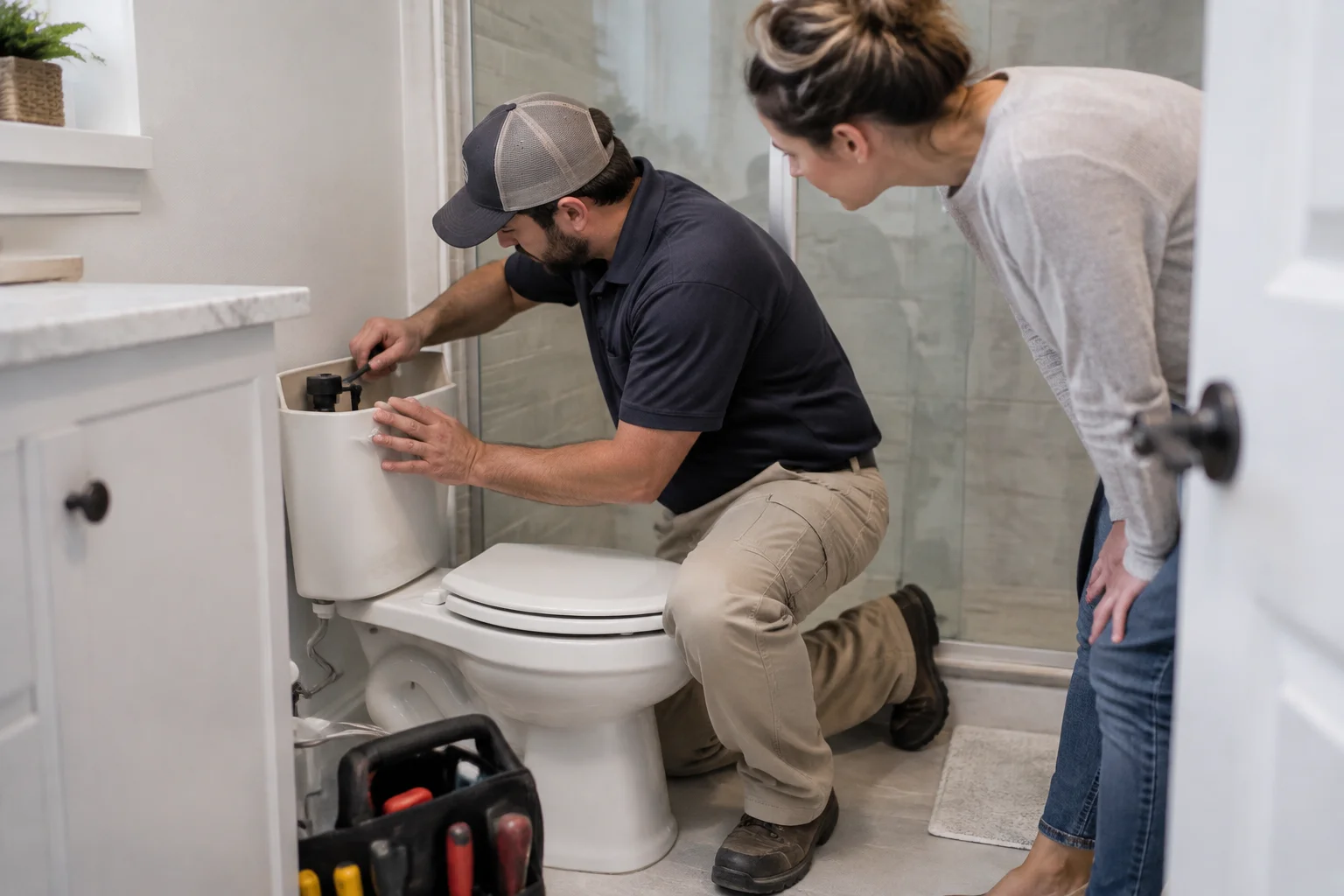
When comparing water softener installation near me, request a proposal explaining equipment capacity, installation work, startup testing, and ongoing costs. Good connections and thoughtful placement matter, as discussed in how better plumbing installation helps Niceville homes stay reliable year round.
Keep the improvement going with routine maintenance
Salt-based softeners need the correct regenerant and periodic checks of the brine tank. A salt bridge can leave a tank looking full while preventing proper regeneration. Watch for changes in water feel, returning spots, unexpected salt consumption, or a system that runs excessively.
Service should include checking settings, inspecting the injector and drain components as appropriate, and measuring treated-water hardness. Resin condition and iron fouling may also need attention. Do not change regeneration settings blindly to chase a taste or odor that the softener was never designed to remove.
Filtration cartridges and reverse osmosis components have separate replacement schedules. Replace them according to manufacturer guidance, usage, and water conditions, and sanitize equipment as directed. Reduced flow or returning taste can signal a problem, but some filters need replacement before any noticeable change occurs.
For a nearby perspective on keeping minerals from becoming recurring maintenance trouble, see water softening and plumbing care in Cinco Bayou. The same principle applies in Niceville: test performance instead of assuming an installed system is still working correctly.
Get help when the symptoms do not fit a simple hardness problem
Persistent discoloration, sudden sediment, a strong new odor, or a major taste change calls for investigation before purchasing treatment. Contact the water supplier about unexpected changes in public water, and follow any drinking water advisory. If contamination is suspected, use an appropriate alternative drinking water source until you receive guidance. An ordinary softener or carbon filter does not make unsafe water safe.
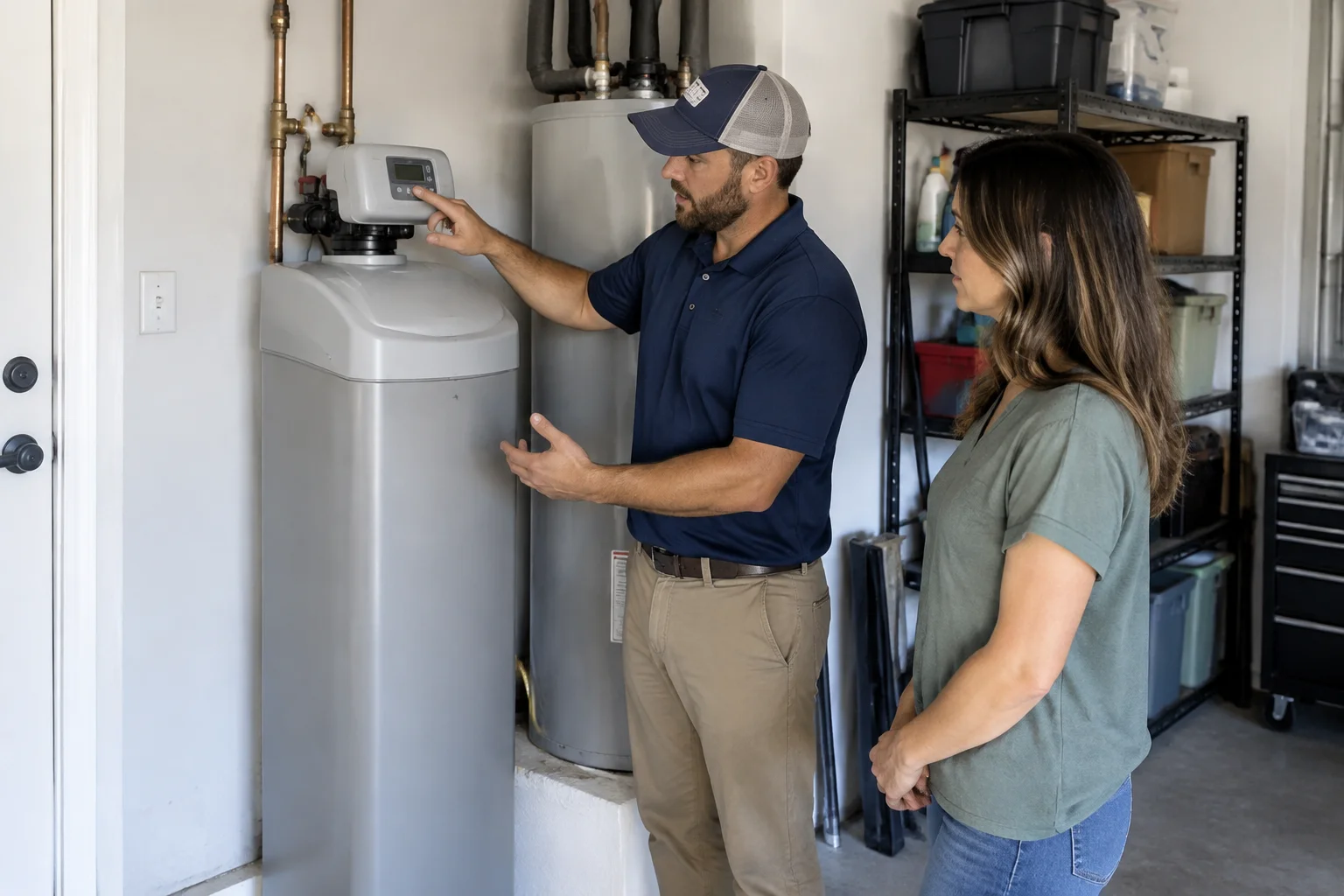
Professional water softener service is also appropriate when hardness returns, the unit leaks, regeneration fails, or household demand has changed. A repair may be enough; replacement should follow an assessment of equipment condition and performance.
A Superior Mechanical helps Niceville homeowners evaluate water softening alongside filtration and drinking water treatment. Bring a short list of concerns, such as spotted glasses, scale buildup on faucets, unpleasant shower water, or disappointing coffee. That gives the conversation a practical starting point: what your water contains, what you want to improve, and which treatment can reliably do the job.
Find Water Softening in Niceville, FL
If you need Water Softening in Niceville, FL, visit our local service page or contact A Superior Mechanical today.
For a broader look at whole-home water filtration, reverse osmosis, and water softener options, visit our water filtration, RO, and water softener page.
Map of Niceville, FL
Frequently Asked Questions
Will a water softener fix chlorine taste or unpleasant odors?
A conventional water softener primarily removes calcium and magnesium, not chlorine or every odor-causing substance. Carbon filtration may address chlorine taste, while other odors can require specialized treatment or water heater service. Testing helps identify the right solution.
Do Niceville homes need both a water softener and reverse osmosis?
Some homes benefit from both, but it depends on the water and household goals. A softener reduces hardness throughout the home. Reverse osmosis typically treats drinking and cooking water at the kitchen sink. Neither should be recommended solely because of the home's location.
How can I tell whether my water softener needs service?
Returning mineral spots, increased soap residue, unusual salt use, leaks, or regeneration problems can indicate a service need. Measuring hardness before and after the softener is a useful performance check. A Superior Mechanical provides water softener maintenance, repair, and replacement in Niceville, FL.
Related Articles
- How Better Plumbing Installation Helps Niceville Homes Stay Reliable Year Round
- Practical ways Niceville homeowners can handle plumbing financing without delaying repairs
- Less Scale, Fewer Surprises: Water Softening and Plumbing Care in Cinco Bayou
- How Plumbing Wear and Tear Changes the Way Water Softening Works in Inlet Beach
Photo Gallery