In WaterColor, comfortable indoor air takes more than a low thermostat setting. Long cooling seasons, coastal humidity, and changing occupancy can leave a home feeling damp even when the temperature looks right. Geothermal heating and cooling can be a strong fit, but the equipment needs to work with the home's ductwork, moisture loads, and daily routines.
A Superior Mechanical designs, installs, repairs, and maintains geothermal energy systems in WaterColor, FL. For homeowners considering a replacement or troubleshooting an existing system, thoughtful planning helps connect energy efficiency with the comfort you actually feel.
How Geothermal Fits a Coastal Florida Home
A geothermal heat pump, also called a ground-source heat pump, moves heat between a building and the ground through a buried loop system. In cooling mode, it transfers heat out of the home. In heating mode, it draws heat from the ground. It uses electricity to move heat rather than generating all its heating output through electric resistance.
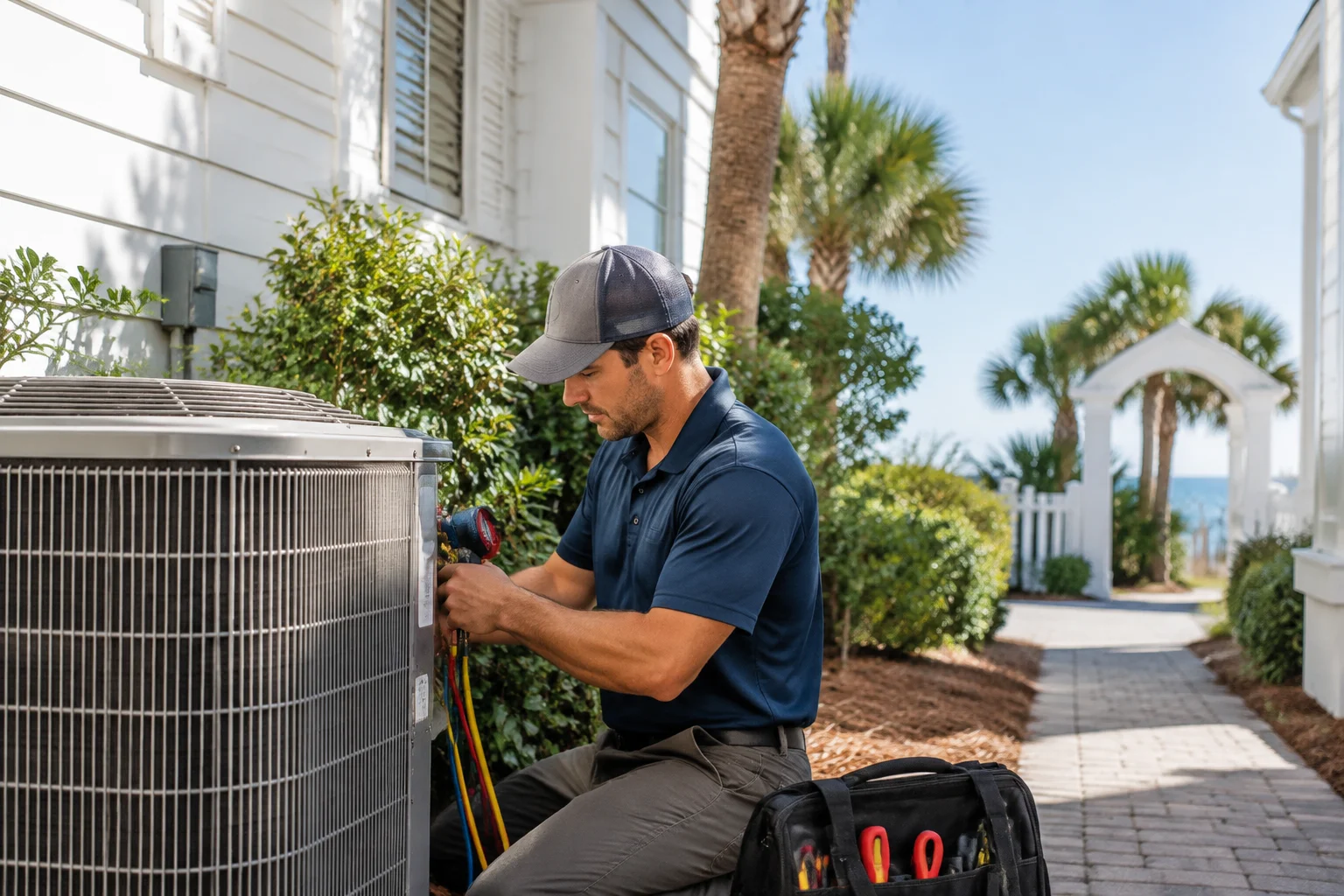
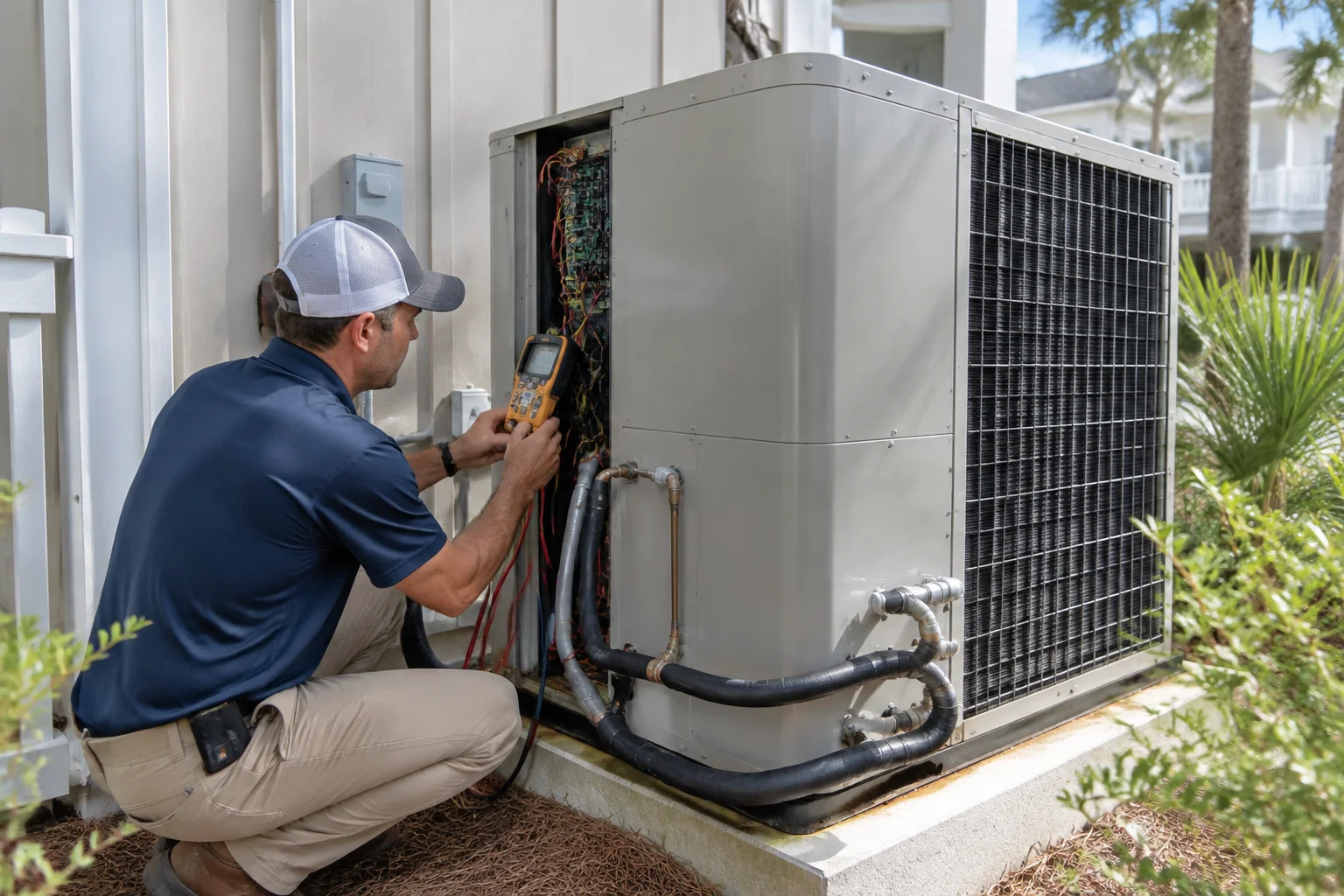
Unlike conventional air-source heat pumps, many residential geothermal configurations do not have an exposed outdoor condenser. That can reduce exposure of refrigeration equipment to salt air and windblown debris. It does not make the entire installation stormproof or maintenance-free.
Ground conditions are generally more stable than outdoor air temperatures, which can support efficient operation. Actual savings depend on equipment selection, loop design, pump energy, duct losses, utility rates, and the system being replaced. A proposal should explain those assumptions rather than promise a universal percentage reduction.
Start With the Property, Not the Equipment Catalog
Confirm that a ground loop is practical
WaterColor properties vary in available yard space, landscaping, access, and proximity to neighboring structures. Horizontal loops typically need more land, while vertical loops require drilling access and appropriate subsurface conditions. Neither option should be selected solely because it fits a sales estimate.
A site assessment should address soil and groundwater conditions, buried utilities, installation access, applicable permitting, and community approval requirements. Open-loop systems involve additional water quality, supply, and discharge considerations. They are not interchangeable with closed-loop designs. Ground-loop piping is also separate from the home's drinking-water lines.
Calculate the home's heating and cooling needs
A load calculation should account for insulation, window exposure, air leakage, ceiling height, and occupancy. Older homes may have leaky ducts or uneven insulation. Newer homes may be tighter but still need deliberate ventilation and humidity control. Equipment capacity should follow those conditions, not simply match the old unit's label.
Remodels and additions deserve special attention. Added bedrooms, enclosed porches, and larger windows can change room-by-room loads. Oversizing the heat pump to cover an addition may create short cycling elsewhere. Compare a properly redesigned central system with options such as a dedicated ductless mini split before extending existing ducts.
Humidity Control Belongs in the Original Design
WaterColor's coastal weather makes moisture removal a major part of air conditioning service. A system that quickly satisfies the thermostat may shut off before removing enough moisture. The result can be cool rooms that still feel sticky, with musty odors or condensation around supply vents.
Proper sizing, suitable staging or variable-capacity operation, and manufacturer-approved airflow settings help the system manage latent load, the moisture portion of cooling. During cooling, the refrigerant-to-air coil functions as an evaporator coil and collects condensate. Its condition and drainage affect both comfort and reliability.
A practical indoor relative humidity target is often around 45 to 55 percent, adjusted for the home and conditions. Persistent readings above 60 percent warrant investigation. A whole-home dehumidifier may help during mild, humid weather when cooling demand is low. It should supplement a sound design, not conceal duct leakage or water intrusion.
For many systems, leaving the thermostat fan on AUTO rather than continuous ON can limit moisture re-evaporation after cooling stops. Ask your technician how that choice interacts with ventilation and filtration. Avoid deeply raising the temperature in an unoccupied rental without a separate plan for humidity control.
The Ductwork Still Determines Where Comfort Goes
An efficient ground-source unit cannot overcome a poorly distributed air supply. Long duct runs, crushed flex duct, disconnected branches, and undersized returns can produce hot upstairs bedrooms and chilly living areas. Closed interior doors may worsen pressure imbalances when rooms lack adequate return-air pathways.
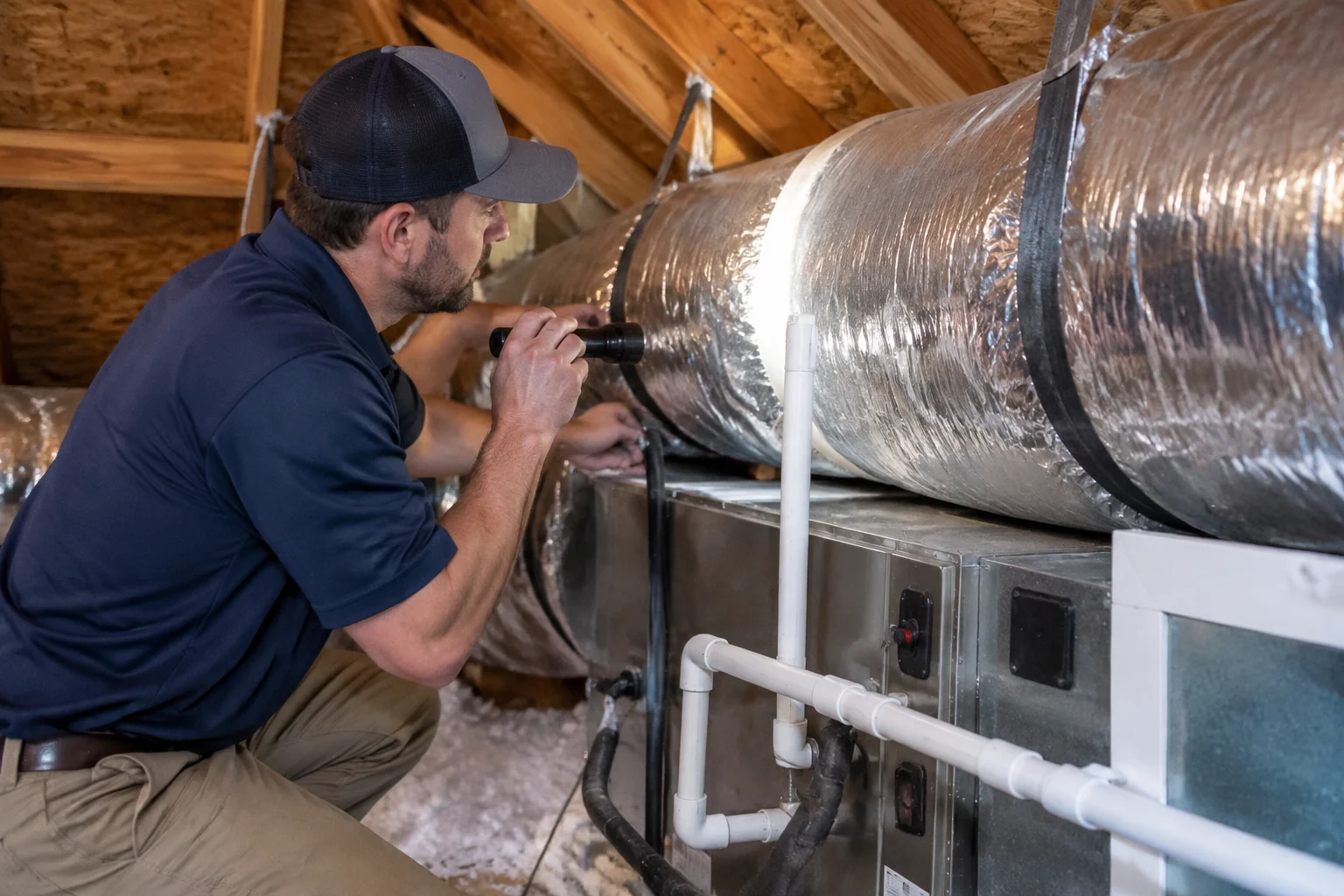
Homeowners searching for ductwork repair near me often notice these symptoms before they see a damaged duct. A useful assessment includes static pressure, airflow measurements, and inspection of accessible supply and return runs. Measured results help distinguish a distribution problem from an equipment problem.
Through WaterColor ductwork services, repairs can address leakage, damaged insulation, and poor connections. Duct sealing should use approved materials rather than ordinary cloth-backed tape. Airflow balancing can then help match delivery to each room's needs.
Keep supply vents and return grilles clear of furniture and rugs. Avoid closing numerous registers to force air into another room, because that can increase system resistance. If duct contamination is also a concern, this guide to duct cleaning for WaterColor homes explains another part of maintaining a clean air path. Cleaning does not replace sealing or moisture correction.
Controls and Filtration Need to Match the System
Choose a thermostat for the actual equipment
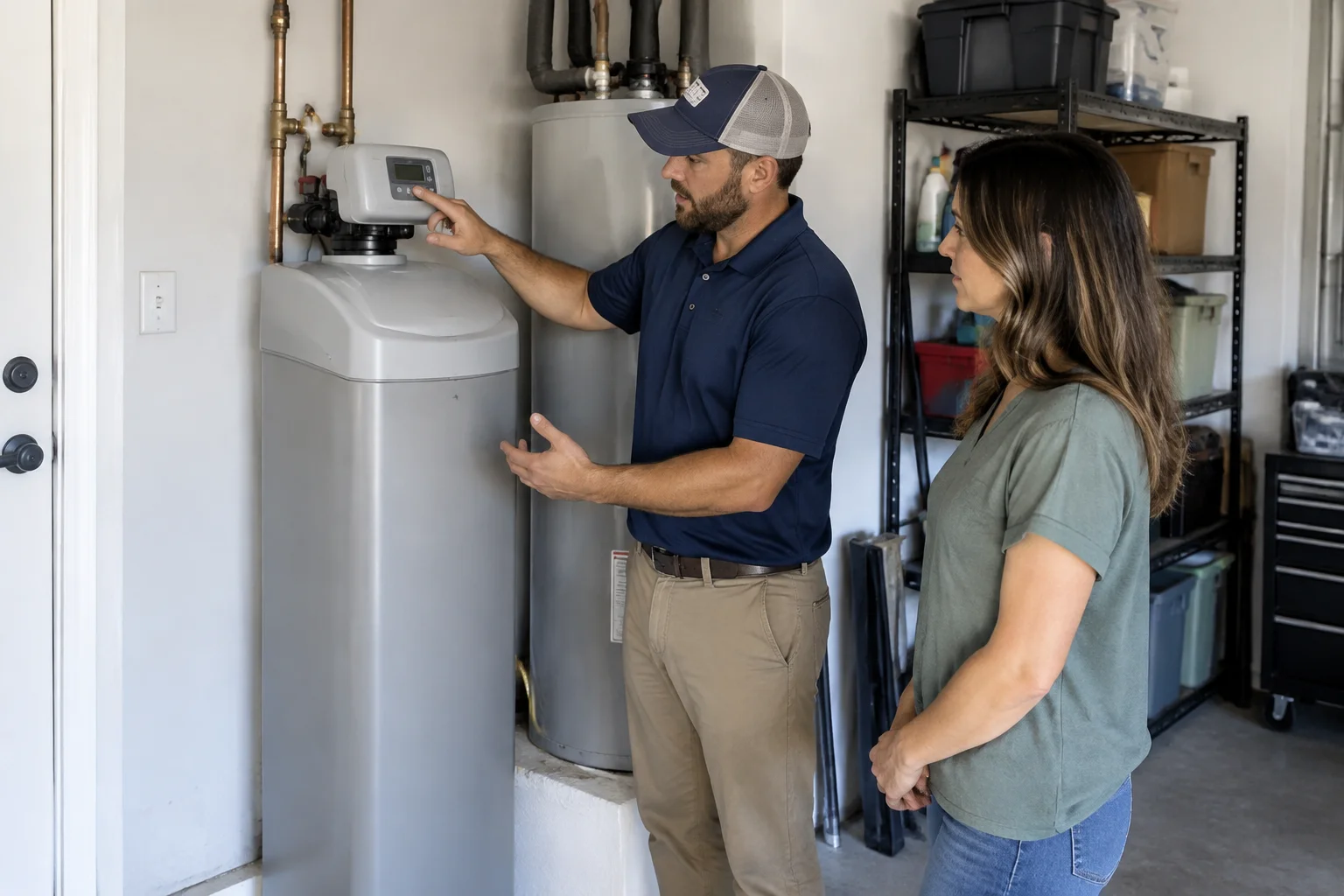
Geothermal systems may use multiple compressor stages, variable-capacity controls, auxiliary electric heat, and separate dehumidification functions. A thermostat must support the specific equipment and control sequence. Some systems require proprietary communicating controls to retain their full capabilities.
If you are searching for smart thermostat installation near me, ask about compatibility before purchasing a device. Incorrect wiring or configuration can cause unnecessary auxiliary heat use, poor staging, or humidity problems. A Superior Mechanical's heating control systems service can help align controls with the equipment. Large heating setbacks can also trigger costly backup heat on some configurations.
Improve air quality without restricting airflow
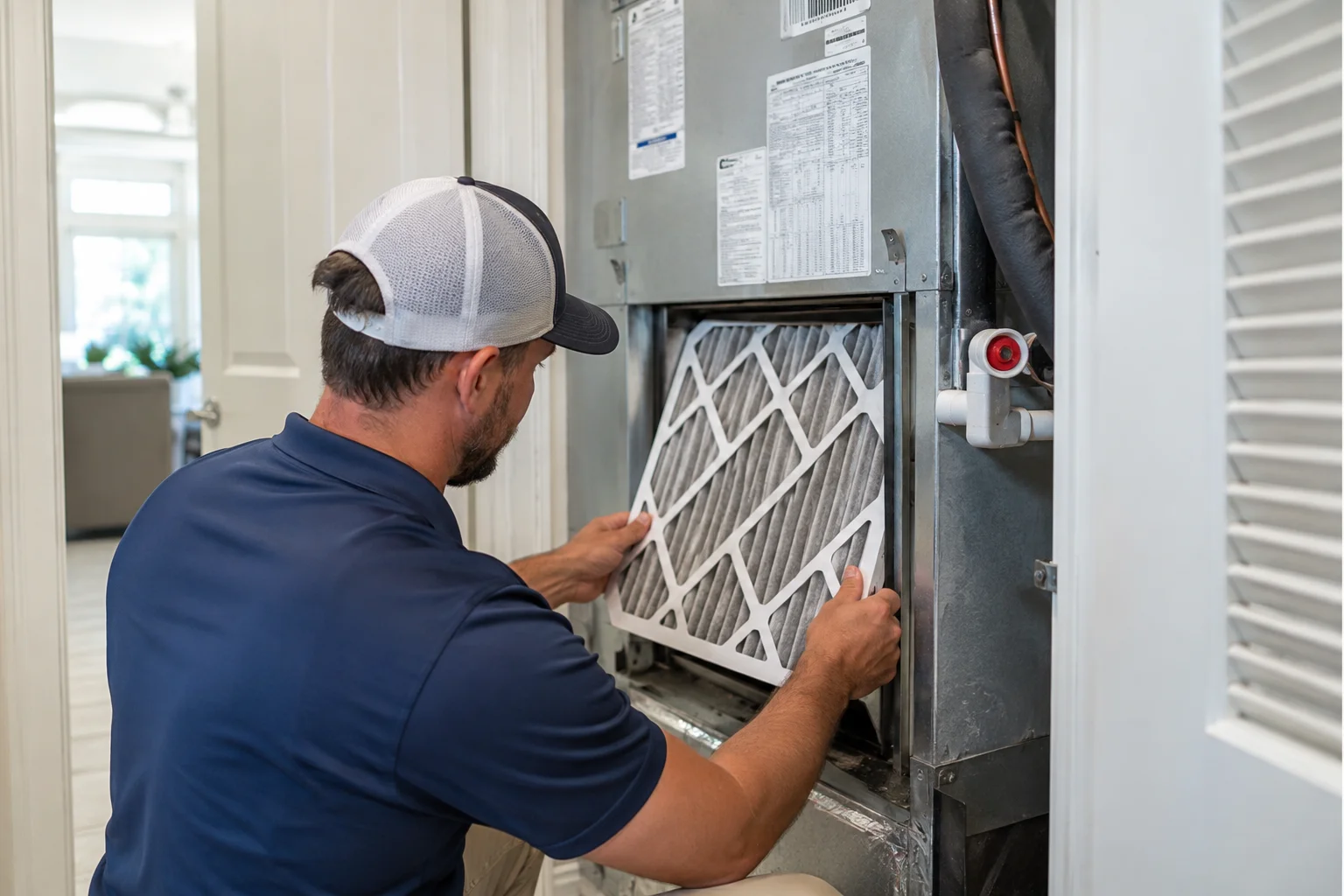
Filters protect the coil and help manage airborne particles, but higher filtration resistance is not automatically better. Choose a filter size and rating that the air handler can accommodate. An overly restrictive or dirty filter can reduce airflow and contribute to icing or shutdowns.
Check filters monthly during heavy use and replace them according to their condition and manufacturer guidance. Homes with pets, renovation dust, or frequent guest turnover may need closer attention. Indoor air quality also depends on moisture control, source reduction, and appropriate ventilation. Filtration alone cannot resolve damp building materials or active mold growth.
Read Repair Symptoms Before Replacing Parts
Geothermal equipment shares many service issues with other heat pumps: dirty coils, blower problems, control faults, refrigerant leaks, and clogged drain lines. It also has ground-loop and water-side components that require specialized diagnosis. A thermostat error does not automatically mean the thermostat itself has failed.
Weak airflow or cooling that fades
Start with an accessible filter check and confirm that grilles are unobstructed. Ice, unusually long run times, or declining cooling can indicate airflow restrictions, refrigerant problems, or inadequate loop-side heat transfer. If ice is visible, stop cooling operation and arrange service rather than repeatedly lowering the setpoint.
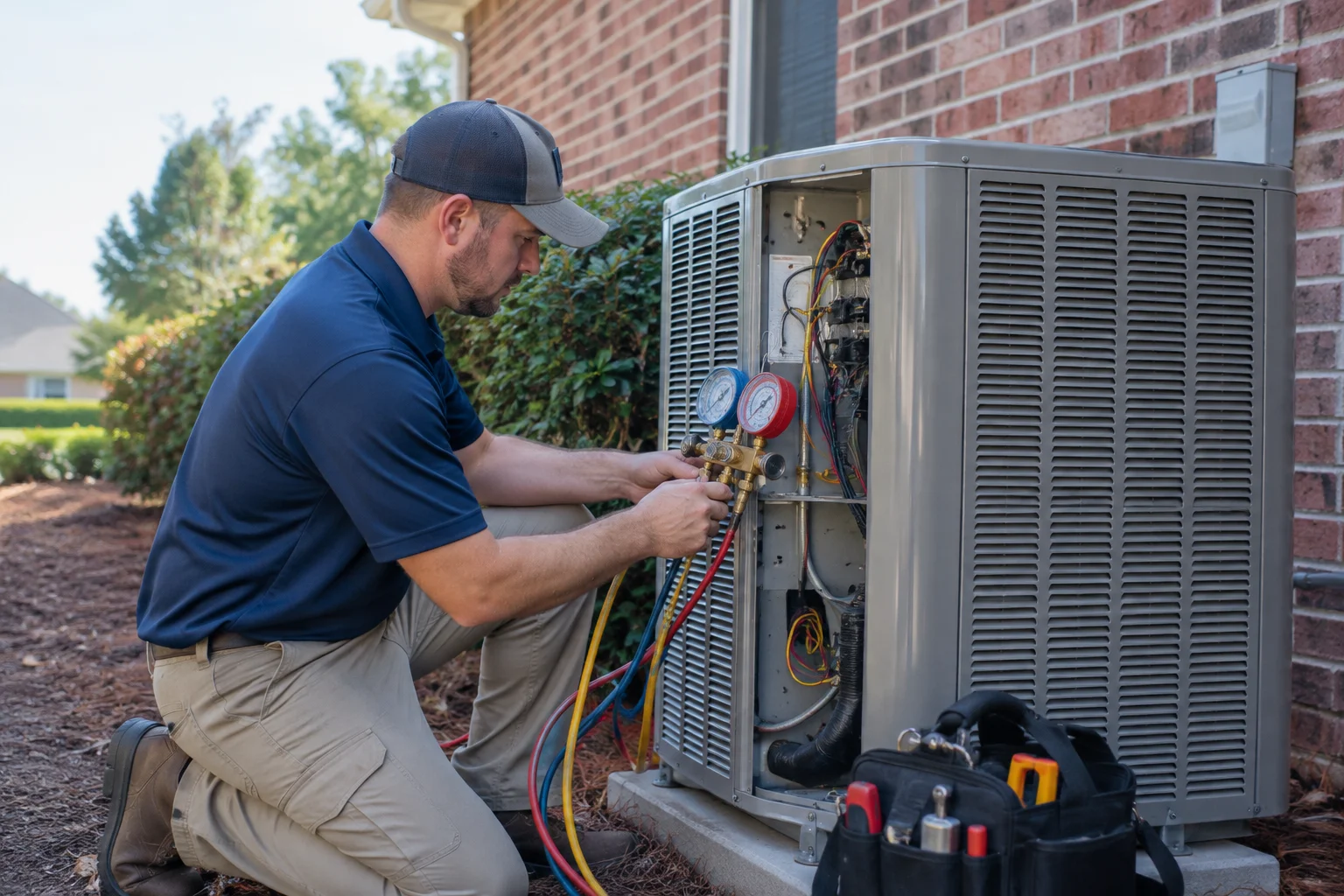
Homeowners looking for heat pump repair near me should identify the equipment as geothermal when scheduling. Technicians may need to evaluate loop flow, entering and leaving water temperatures, pump operation, refrigerant conditions, and manufacturer fault information. Correct diagnosis matters more than guessing at a replacement part.
Water around the air handler or repeated shutdowns
A backed-up condensate drain, damaged pan, or drainage slope problem can cause water near the indoor unit. A float switch may shut the equipment off to prevent overflow. Do not bypass that safety device. Keep the system off if continued operation could cause water damage, and request service.
If an AC repair near me search starts with poor cooling, share any alarms, leaks, or unusual noises with the technician. Air conditioning repair in WaterColor should address the cause, not just restore operation temporarily. Refrigerant does not normally need routine topping off; a low charge calls for leak evaluation and appropriate repair.
Preventive Care for a Long Cooling Season
Schedule professional maintenance before peak summer demand, with additional visits based on equipment requirements, usage, and condition. A seasonal rental that runs continuously may need a different schedule from a lightly occupied home. Keep service records, fault histories, and filter information available for future visits.
A geothermal maintenance visit should cover air handlers, coils, blower operation, electrical connections, controls, condensate management, and accessible ductwork. The ground-loop side also needs attention to pressure, circulation, fluid condition where applicable, and evidence of leakage. Refrigerant testing should follow manufacturer procedures and observed operating conditions.
A planned air conditioning inspection can establish a performance baseline. Track changes in humidity, room temperatures, runtime, and electricity use between visits. A sudden bill increase may reflect weather or occupancy, but it can also point to backup heat operation, circulation problems, or declining airflow.
Prepare for Storms Without Overlooking HVAC Safety
Geothermal systems still rely on electrical power and can be affected by outages, surges, flooding, and wind-driven water intrusion. Indoor equipment location and elevation should reflect applicable requirements and site risks. After flooding, do not energize equipment that may have been submerged until it has been professionally evaluated.
If the property also has conventional outdoor units serving an addition or separate zone, keep surrounding drainage and clearances maintained. Salt exposure can affect condenser coils and cabinets. Follow manufacturer-approved care instructions rather than applying harsh cleaners or improvised coatings.
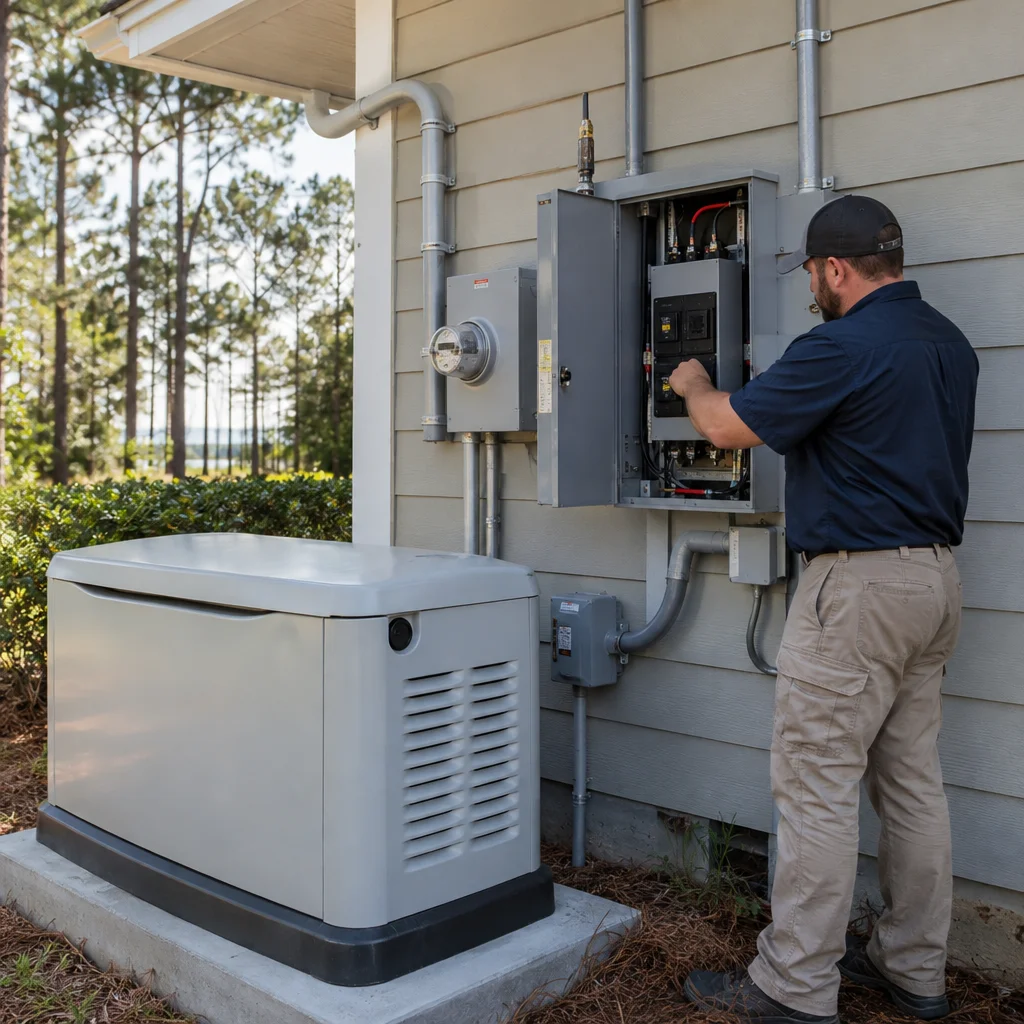
Backup power planning must account for compressor starting requirements, loop pumps, blowers, and any auxiliary heat. The article Before the Storm: Planning Generator Power for Your WaterColor Home offers related preparation guidance. Never assume a generator can run the whole HVAC system without a professional load review.
Smoke, burning odors, repeated breaker trips, or water reaching electrical components require immediate attention. Stop operation if safe, avoid repeated resets, and seek urgent professional help. For smoke or fire, leave the home and contact emergency services.
Build a Plan Around Your WaterColor Home
Geothermal is not automatically the best replacement for every property. Compare installation feasibility, expected operating costs, warranty coverage, maintenance access, and projected ownership time. Existing furnaces, conventional heat pumps, and mini splits may justify repair or targeted upgrades before a whole-home conversion.
A Superior Mechanical provides HVAC services in WaterColor and serves properties throughout Walton County. Local service matters when coastal exposure, seasonal demand, and changing occupancy affect both system design and repair scheduling.
For a useful first appointment, gather the equipment model numbers, recent utility bills, service history, and notes about uncomfortable rooms. Ask for a plan that addresses capacity, loop feasibility, duct performance, humidity, and controls together. That gives your geothermal investment a practical foundation for reliable comfort.
Find Geothermal Energy Systems in WaterColor, FL
If you need Geothermal Energy Systems in WaterColor, FL, visit our local service page or contact A Superior Mechanical today.
Map of WaterColor, FL
Frequently Asked Questions
Can a geothermal system control humidity in a WaterColor home?
Yes. A geothermal heat pump removes moisture while cooling, but results depend on proper sizing, airflow, controls, and duct condition. During mild, humid weather, a separate whole-home dehumidifier may be useful because the home may not need enough cooling to manage moisture.
Can geothermal HVAC use my existing ductwork?
Often, but the ductwork should be evaluated first. A contractor should check sizing, leakage, insulation, return-air capacity, and static pressure. Existing ducts may need repairs or modifications to support the new system and distribute air evenly.
Does a geothermal heat pump need an outdoor condenser?
Many residential geothermal systems do not use a conventional outdoor air-cooled condenser. They exchange heat through a buried ground loop instead. The indoor equipment, loop pumps, controls, filters, and condensate drainage still require maintenance, and the system still needs electrical power.
Related Articles
Photo Gallery