You unload the dishwasher before dinner, and the glasses still look spotted. The showerhead has a chalky crust, towels feel stiff, and your morning coffee tastes different than it should. These frustrations can share a water quality connection, but they do not necessarily share one solution.
For homeowners considering water softening services in Panama City, FL, the useful starting point is understanding what is actually in the water. Hardness, sediment, chlorine, and dissolved metals require different treatment approaches. A Superior Mechanical helps homeowners address hard water through softener installation and service, with filtration options considered alongside the household's needs.
What your water leaves behind tells part of the story
Hard water contains dissolved calcium and magnesium. These minerals are not usually a health concern at typical drinking water levels, but they can make cleaning harder and encourage scale formation. As water evaporates from glass, dishes, and fixtures, dissolved material remains behind.
Spots, crusty fixtures, and soap that struggles
Hard water spots on dishes often appear as pale dots or a cloudy film. Around bathroom fixtures, you might notice white deposits near the faucet opening or showerhead nozzles. Scale buildup around faucets can return quickly after cleaning when the incoming water remains hard. Inside plumbing and water heating equipment, mineral deposits may also accumulate over time.
Soap behavior offers another clue. Hardness minerals react with traditional soap, reducing lather and leaving residue that does not rinse well. That can mean more scrubbing around the tub, extra detergent in the laundry, or a slippery-looking film on shower doors. Dishwasher film can also come from detergent settings or permanent glass etching, so appearance alone does not confirm hardness.
Bathing comfort and laundry feel
Some households notice dry skin or dull hair after bathing. Soap residue may contribute to that feeling, especially when people keep adding product to get more lather. If you suspect dry skin from hard water, testing can establish whether hardness is a factor. Softening may improve rinsing, but it is not a treatment for eczema or other skin conditions.
Laundry may feel different, too. Towels can become stiff, and fabrics may retain detergent or mineral residue. With softened water, detergent amounts often need adjusting. Start with the detergent and appliance manufacturers' guidance rather than assuming every load needs the same amount you used before.
Panama City water treatment should start with the actual supply
Panama City's warm, humid coastal climate means frequent showers, sweaty laundry, and plenty of water poured into bottles before school or outdoor activities. Those routines make water quality noticeable every day. Heat and humidity do not cause hardness, however, and living near saltwater does not automatically mean a home's tap water contains excess salt.
Water conditions can differ between utility service areas and private wells. Plumbing materials, treatment already installed, and time spent sitting in household pipes can also affect what reaches the faucet. Older homes and recently renovated properties may need different installation plans even when they receive water from the same source.
Review your utility's current water quality report, then test at the house for the concerns you actually have. A hardness test helps size a softener. Persistent staining, odor, or sediment may justify additional testing. For private wells, follow Florida health guidance for routine bacteria and nitrate testing as well as testing prompted by changes in water quality.
Working with a provider serving Panama City homeowners makes it easier to plan around local homes, installation locations, and ongoing service access. Across Bay County, the best treatment choice still depends on the individual supply rather than a blanket assumption about every neighborhood.
What water softening handles, and what it does not
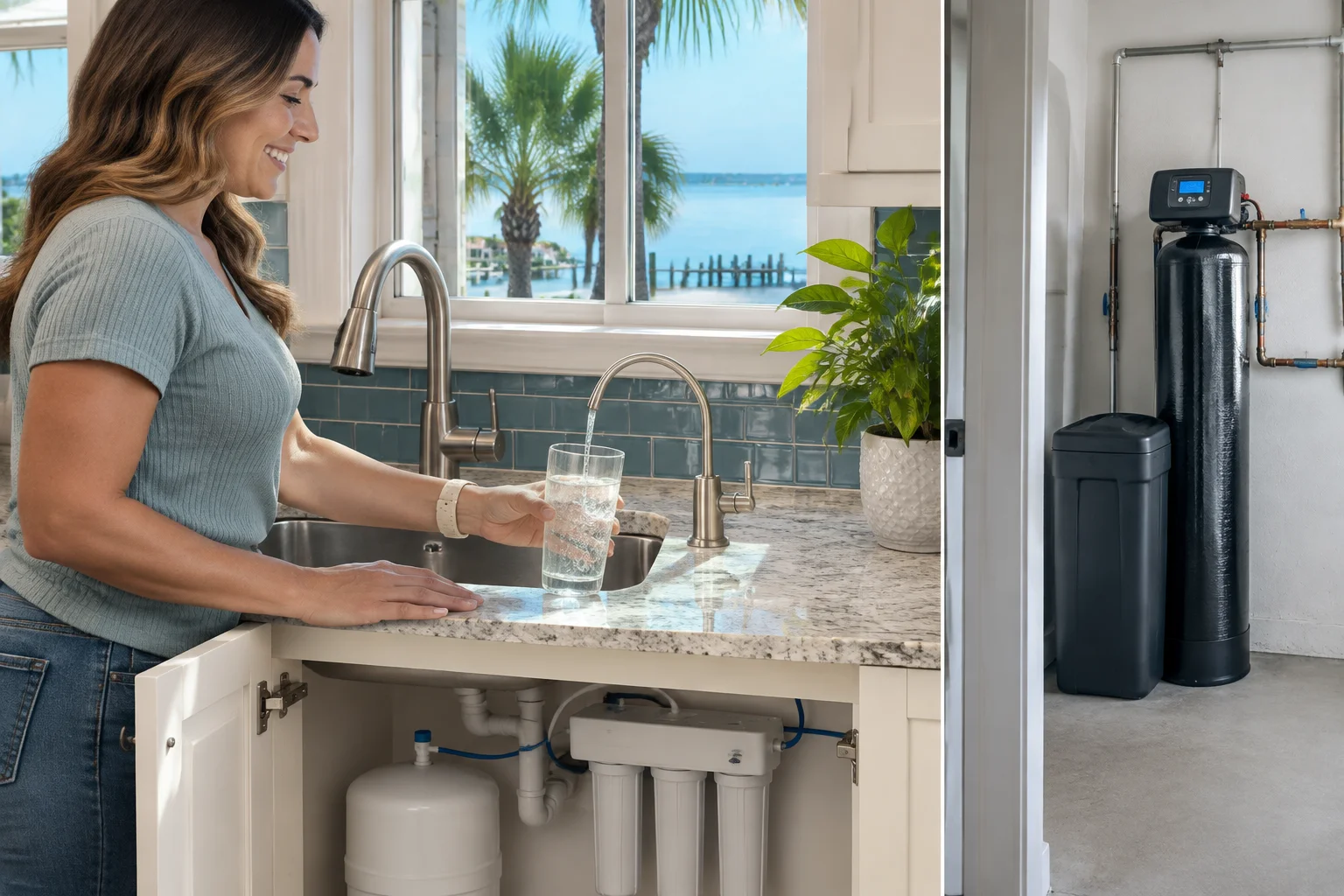
A conventional salt-based water softener uses ion exchange to remove calcium and magnesium. Water passes through resin that exchanges hardness minerals for sodium or potassium ions. Periodic regeneration restores the resin's working capacity using a brine solution.
Properly selected equipment can reduce new hardness scale, improve soap performance, and make fixtures easier to maintain. It may also reduce mineral-related stress on appliances. It should not be presented as a way to instantly remove existing deposits throughout a home or reverse damage that has already occurred.
Softening is not the same as filtration or disinfection. A standard softener does not reliably remove chlorine, bacteria, all dissolved contaminants, or every source of taste and odor. Salt-free scale-control equipment also differs from a conventional softener: it may help limit scale under suitable conditions, but it generally does not remove hardness minerals.
A Superior Mechanical's water softening services in Panama City, FL include installation, repair, and maintenance. Homeowners searching for water softener installation near me should ask how the proposed system matches measured hardness, household demand, and available installation space.
Better drinking and cooking water may need another layer
Picture a typical family kitchen: someone fills a pot for pasta, another person makes coffee, and a child asks why the ice tastes strange. Softening can help with mineral deposits, but taste deserves its own evaluation. Metallic, chlorinated, or otherwise unpleasant water should not simply be labeled hard.
Chlorine, metallic taste, and odor
Activated carbon filtration can reduce chlorine taste and odor when the product is designed and rated for that purpose. If the supply uses chloramine, the filter must be suitable for chloramine reduction and sized for adequate contact time. A small filter is not automatically capable of treating the flow entering an entire house.
Metallic taste can have several causes, including dissolved metals or corrosion within plumbing. Rotten-egg odor may involve sulfur compounds or conditions in a water heater, especially if only hot water smells. Identifying whether the issue affects cold water, hot water, or one fixture helps guide testing and avoids buying the wrong equipment.
Reverse osmosis for the kitchen tap
A reverse osmosis system commonly serves a dedicated drinking water faucet. Its membrane reduces many dissolved substances, while associated filters address other specified concerns. The result can be more consistent drinking water, better tasting coffee, and cooking water that does not carry an unwanted flavor into soup, rice, or tea.
Cloudy ice cubes are not a reliable contaminant test. Trapped air and the way water freezes can create cloudiness even with treated water. Reverse osmosis may improve ice taste and reduce mineral-related cloudiness, but it cannot promise perfectly clear cubes. Refrigerator connections also need compatible tubing, pressure, and flow.
If you are comparing options for a reverse osmosis system near me, ask about certified contaminant reduction claims, filter costs, wastewater production, and storage capacity. Softening adds sodium when sodium chloride is used; households with sodium restrictions should discuss suitable drinking water arrangements with their clinician and treatment provider.
Where whole home filtration and AO Smith systems fit
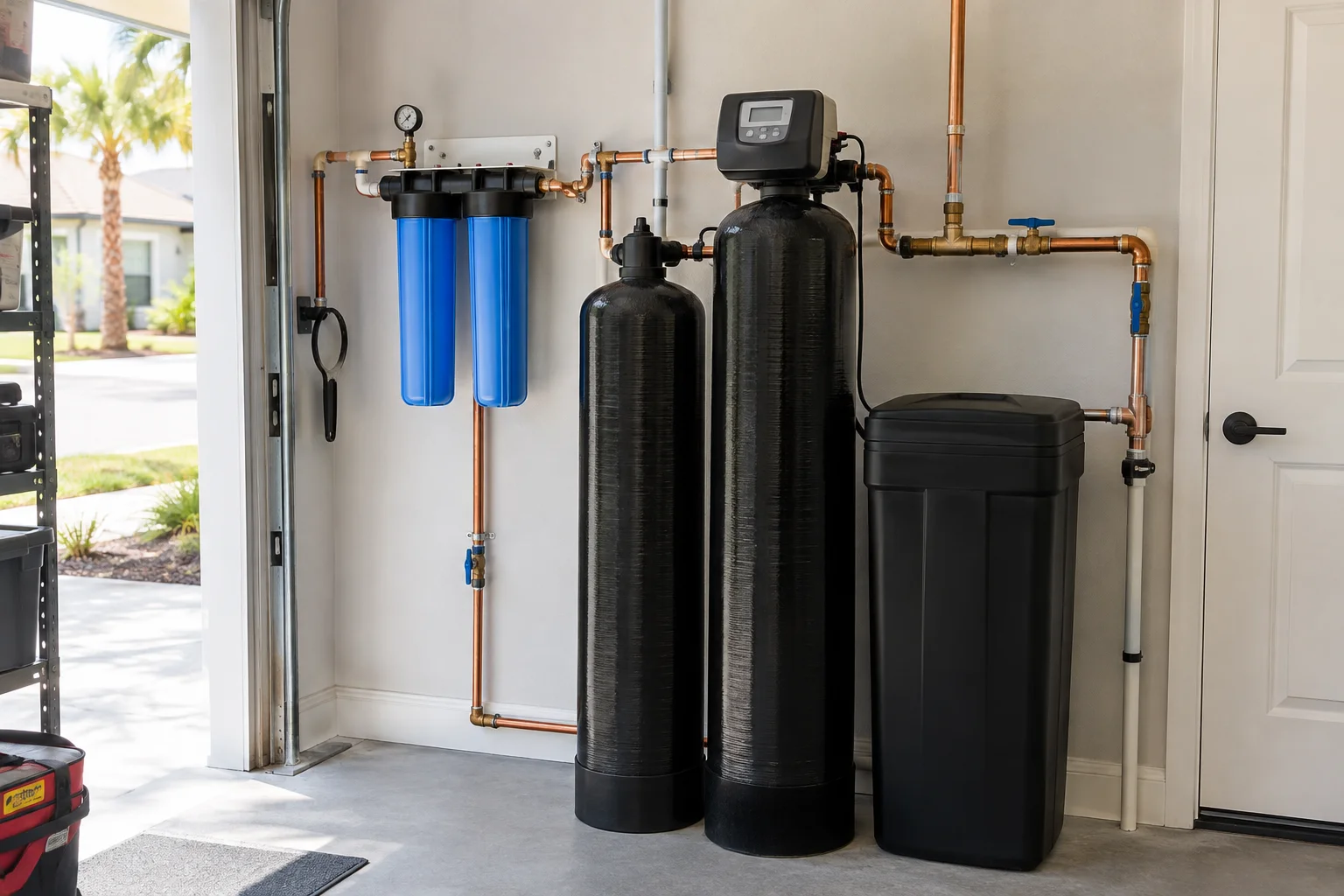
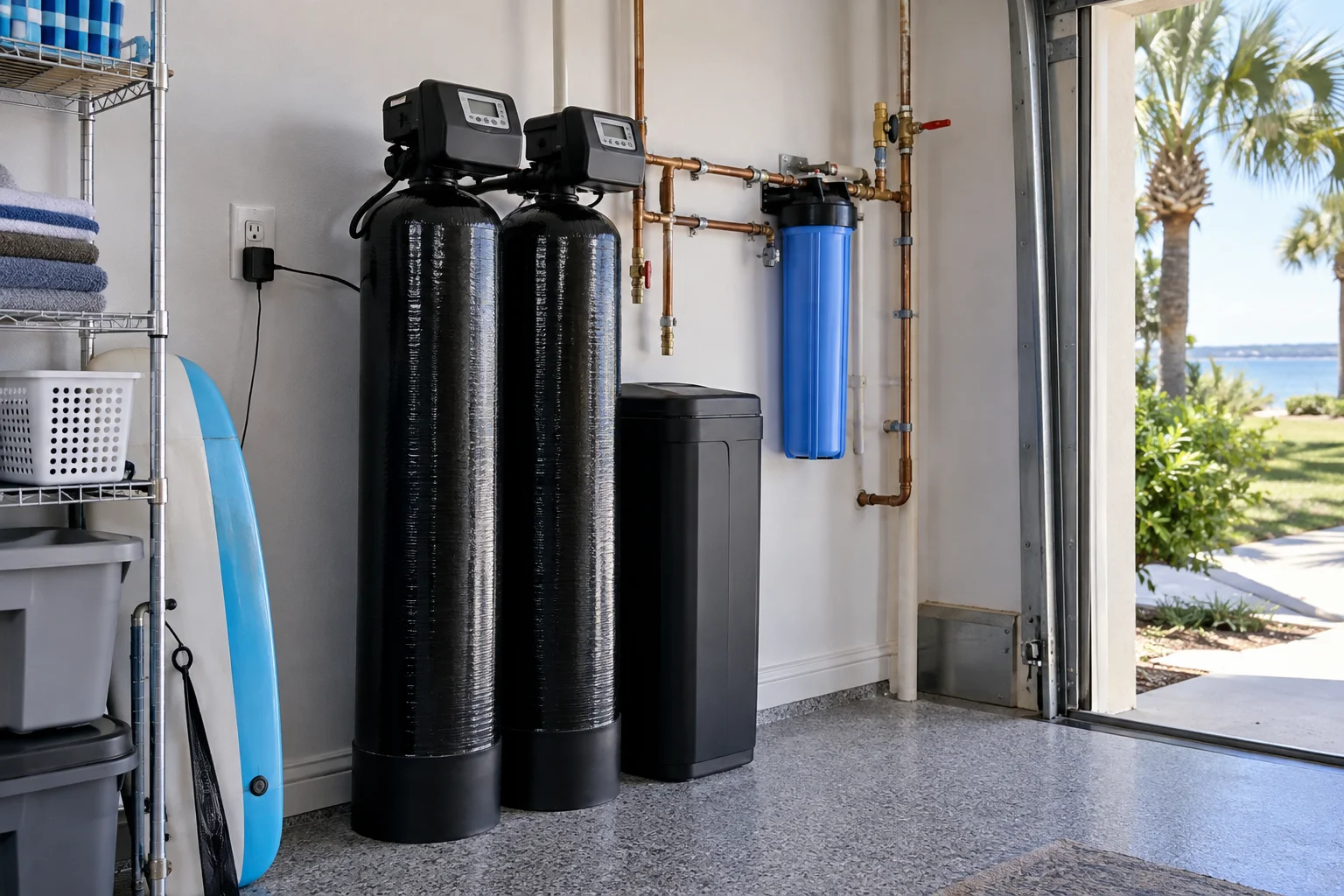
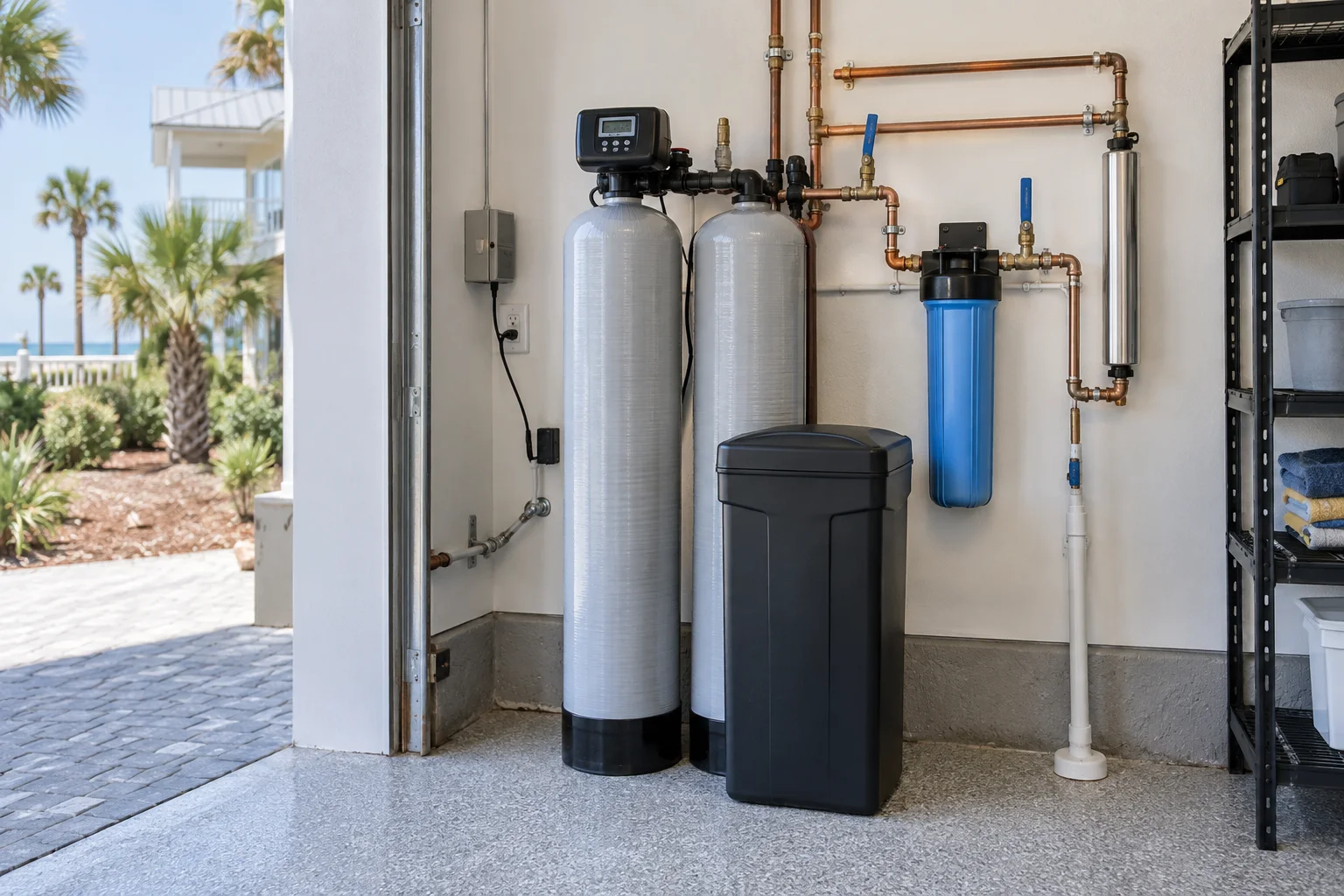
Whole home water filtration treats water near the point where it enters the house. Depending on the media and design, a whole house water filter may reduce sediment, chlorine, or specific other contaminants. It does not automatically soften water, and a softener does not replace every filter.
Sediment in household water can collect in faucet aerators, affect cartridges, and create visible particles in a glass. An appropriately sized sediment prefilter may protect downstream equipment. However, visible sediment or discoloration should be investigated, particularly if it appears suddenly. Rust-colored water might originate in the supply or household plumbing, not simply from hardness.
AO Smith water filtration products are among the options homeowners may compare. Evaluate the particular model's treatment purpose, flow rating, replacement schedule, and independent certifications. A brand name alone does not establish which contaminants a system reduces or whether it fits a specific household.
For homeowners researching water filtration near me, A Superior Mechanical's water filtration, reverse osmosis, and water softener options provide a starting point for discussing combined treatment. Some homes benefit from sediment filtration, carbon filtration, and softening, with reverse osmosis reserved for drinking and cooking water. Others need a simpler arrangement.
Protecting appliances without overselling the benefits
Hardness scale can accumulate on heating surfaces and interfere with water flow. Water heaters, dishwashers, and other water-using appliances may need more cleaning or experience mineral-related wear. Hard water treatment can help manage that exposure, but appliances wearing out faster can also point to installation problems, heavy use, or missed maintenance.
Water heater care remains important after a softener is installed. Follow the manufacturer's maintenance instructions and have performance problems evaluated separately. Our article on planning water heater replacement in Panama City Beach offers nearby homeowners additional context about equipment and plumbing compatibility.
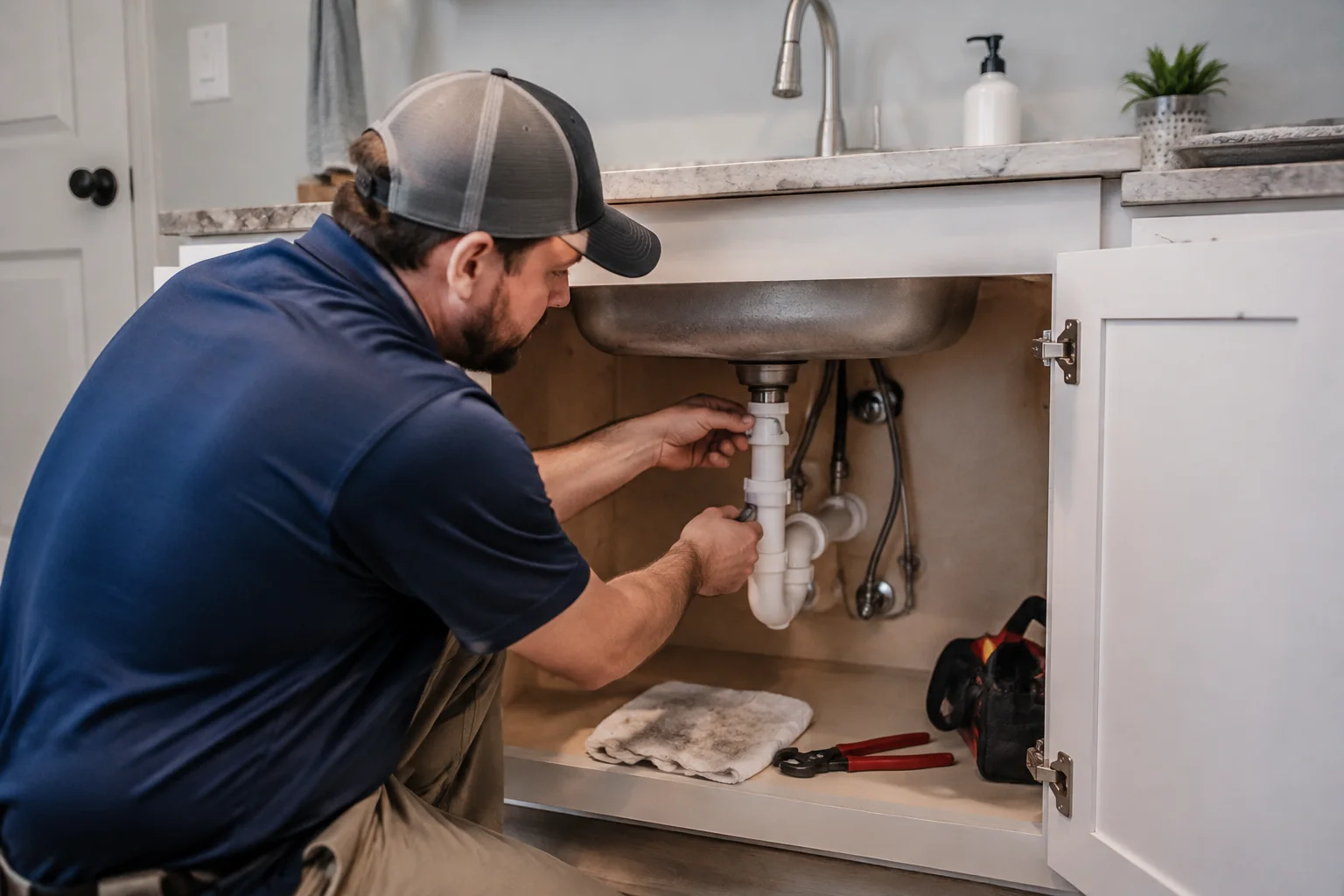
Installation quality matters just as much as equipment selection. The treatment layout needs suitable shutoffs, a bypass, service clearance, and any required drain and electrical connections. Our guide to plumbing installation in Panama City explains why access and leak prevention deserve attention when household systems are updated.
Keep the system working after installation
Check the softener's salt level regularly and use the salt type recommended by its manufacturer. Watch for salt bridging, where a hardened crust forms above an empty space and prevents proper brine production. Do not change regeneration settings at random when performance slips; verify hardness, usage, and system operation first.
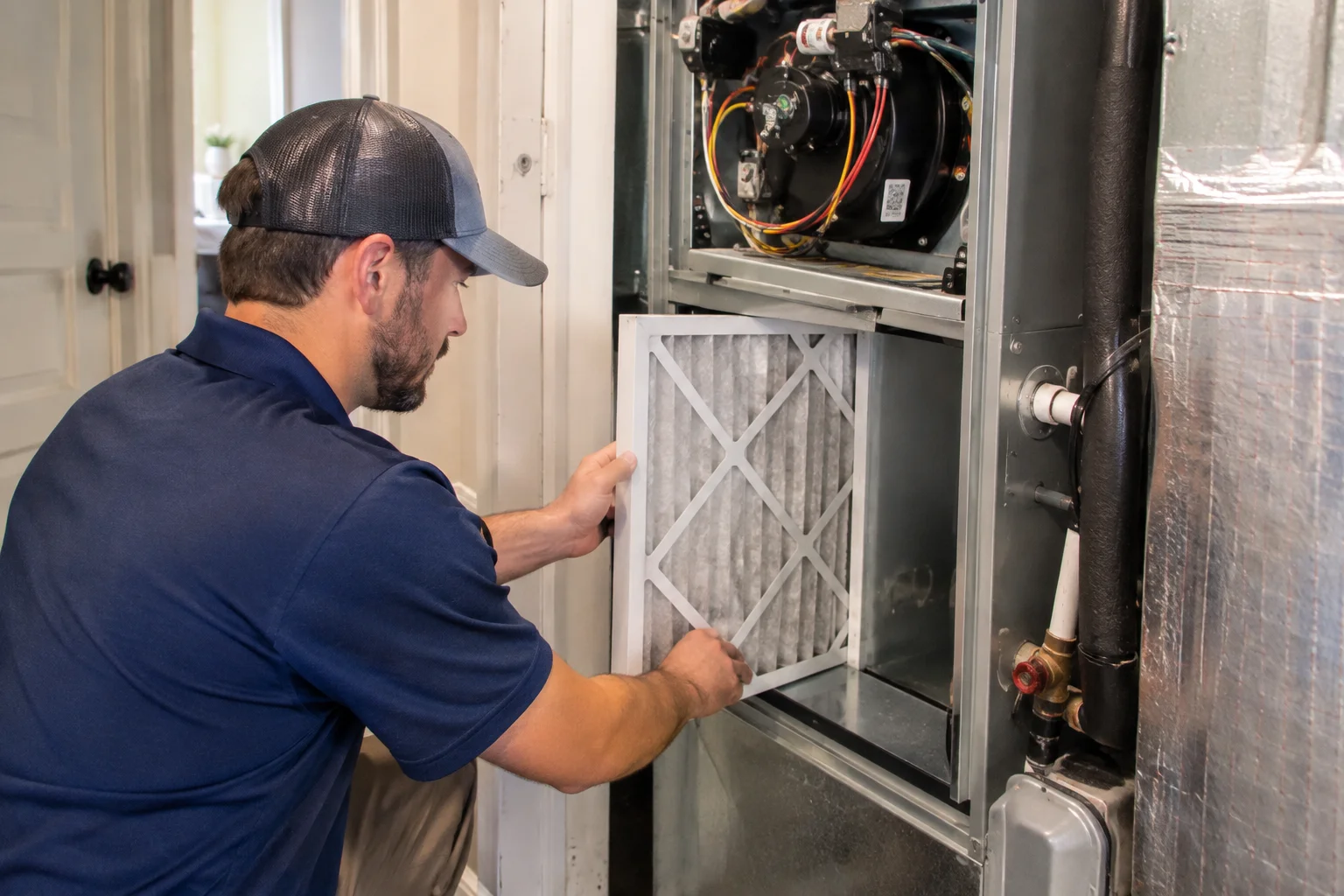
Replace sediment and carbon filters on the recommended schedule, adjusted for actual conditions. Restricted flow can indicate a loaded cartridge, but not every exhausted filter produces an obvious warning. Reverse osmosis systems also need filter changes, membrane evaluation, and sanitation according to manufacturer instructions.
Outdoor equipment needs protection appropriate to its rating and Panama City's weather exposure. Keep service access clear and check accessible connections for leaks. If spotting returns, compare untreated and treated water hardness instead of immediately adding more soap or dishwasher rinse aid.
Get help when the water changes or treatment stops helping
Arrange professional evaluation for persistent hardness after treatment, repeated regeneration failures, leaks, declining pressure, or recurring taste and odor. Sudden discoloration or a new strong odor deserves investigation rather than being masked with another filter. Contact the utility for supply-related changes, and follow any drinking water advisory. Ordinary softeners and filters do not replace boil-water instructions.
When comparing water treatment near me, look for a recommendation tied to testing and daily use. Share what happens at the kitchen sink, in the shower, and during laundry. A Superior Mechanical can help Panama City homeowners assess water softening needs and plan service, whether the goal is less scale on fixtures or a coordinated approach to softer household water and better drinking water.
Find Water Softening Services in Panama City, FL
If you need Water Softening Services in Panama City, FL, visit our local service page or contact A Superior Mechanical today.
For a broader look at whole-home water filtration, reverse osmosis, and water softener options, visit our water filtration, RO, and water softener page.
Map of Panama City, FL
Frequently Asked Questions
Will a water softener remove chlorine taste and unpleasant odors?
A conventional water softener primarily removes calcium and magnesium. Chlorine taste generally requires suitable carbon filtration, while metallic tastes and other odors need testing to identify their source. Some homes benefit from softening combined with targeted filtration.
How do I know whether my Panama City home needs water softening?
Recurring mineral spots, crusty showerheads, poor soap lather, and stiff laundry can suggest hardness, but testing should confirm it. A professional can measure incoming hardness, evaluate water use, and determine whether a softener is appropriate.
Can I use whole home filtration, a softener, and reverse osmosis together?
Yes. These systems can address different needs: whole home filtration targets specified sediment or contaminants, a softener removes hardness minerals, and reverse osmosis treats water at a dedicated drinking water outlet. Equipment order and sizing should follow test results and manufacturer requirements.
Related Articles
Photo Gallery