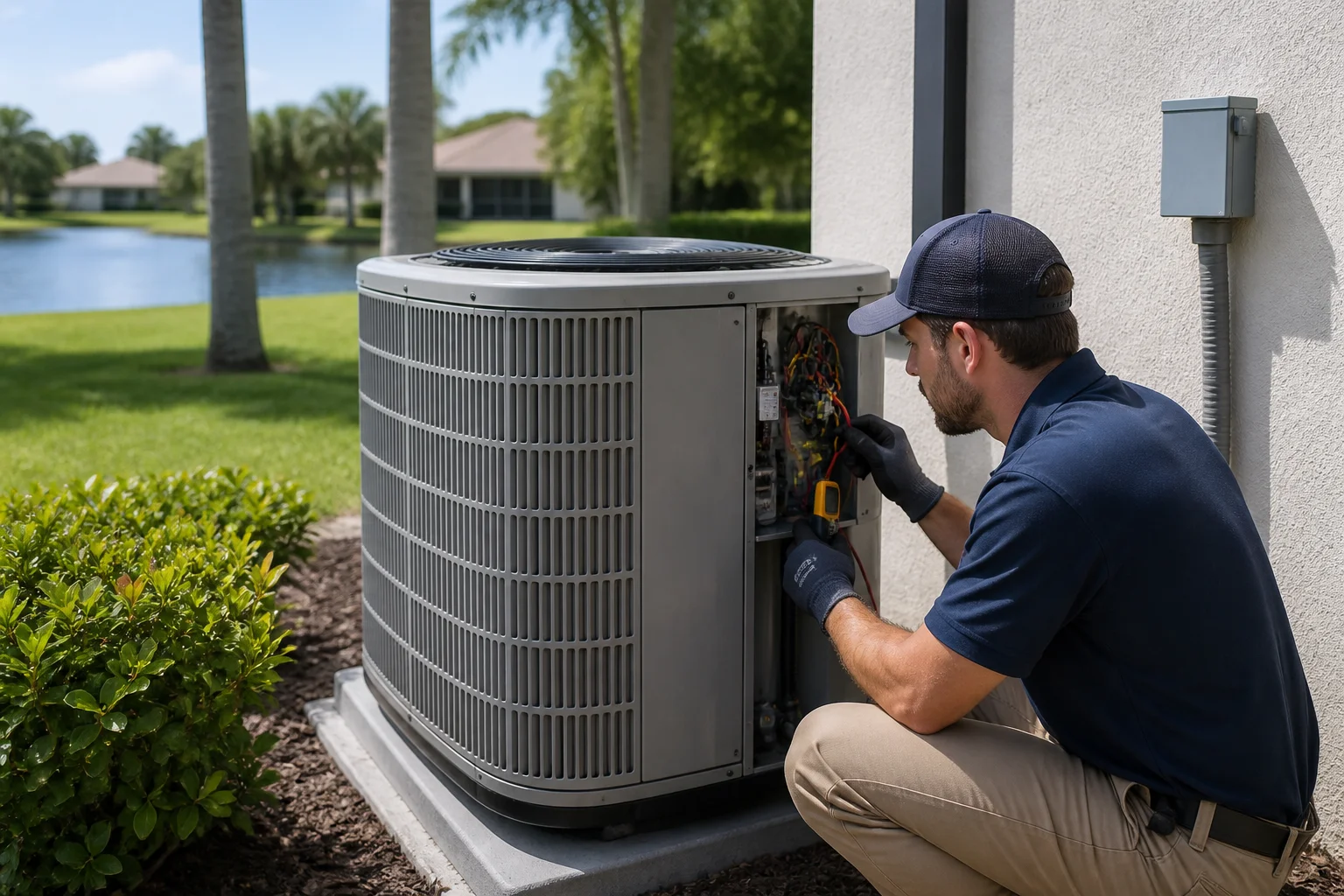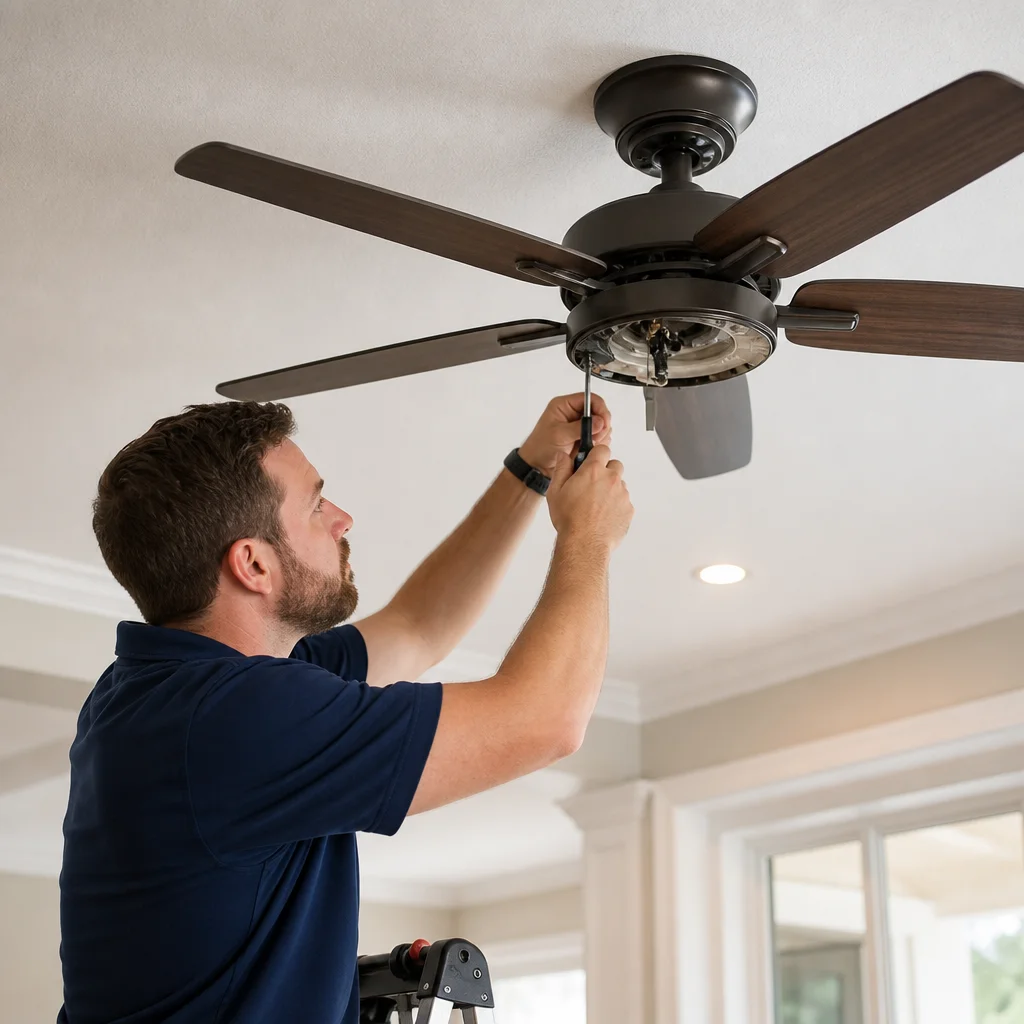
A ceiling fan may look like a simple fixture, but safe installation depends on much more than connecting a few wires. The electrical box must support the fan, the circuit must be suitable for the load, and the panel, breaker, switches, grounding, and controls all need to work together. That planning is especially important in Callaway, where coastal humidity, summer heat, storms, renovations, and changing household power demands can expose electrical weaknesses.
For homeowners considering a new fan, replacing an aging model, or troubleshooting one that no longer works properly, professional ceiling fan installation and repair in Callaway can address the fan itself and the electrical system supporting it.
Ceiling fan service begins above the ceiling
A light fixture and a ceiling fan do not place the same demands on an electrical box. A fan creates movement, vibration, and ongoing mechanical force. The box must be listed for fan support and securely attached to framing or an approved brace. An ordinary light fixture box may loosen, crack, or pull away from the ceiling when used to support a fan.
This is one of the most important details during a replacement. The existing box may look sturdy from below, yet still be attached with hardware that was never intended for a moving fan. An electrician can inspect the box, mounting method, conductors, grounding connection, and available ceiling space before the new unit is installed.
Homeowners searching for ceiling fan wiring near me are often dealing with more than a disconnected wire. The project may require a fan rated box, a new cable, a wall control, a separate conductor for the light kit, or repairs to splices hidden above the canopy. Correcting these details during installation helps prevent wobbling, intermittent operation, overheated connections, and damage to the ceiling.
Panel and breaker condition affect fan performance
Most ceiling fans use relatively little electricity, but the condition of the branch circuit still matters. A fan may share a circuit with lights, receptacles, smoke detectors, or other equipment. If that circuit is overloaded or has a loose connection, adding a new fan can reveal a problem that was already developing.
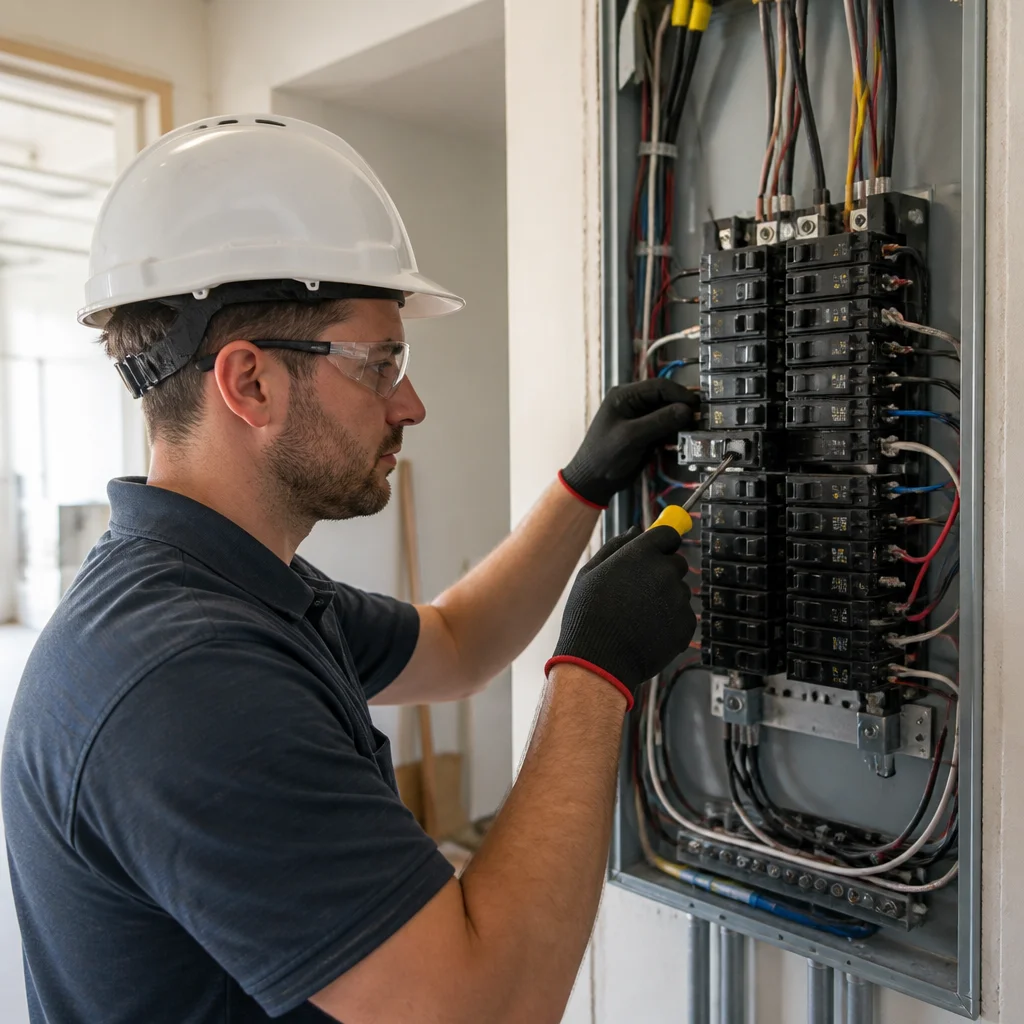
An electrician may check the breaker size, conductor size, circuit load, neutral connections, grounding, and signs of overheating. A breaker that trips repeatedly should not be replaced with a larger breaker unless the wiring and circuit design are specifically rated for it. Increasing breaker size without evaluating the conductors can create a serious fire risk.
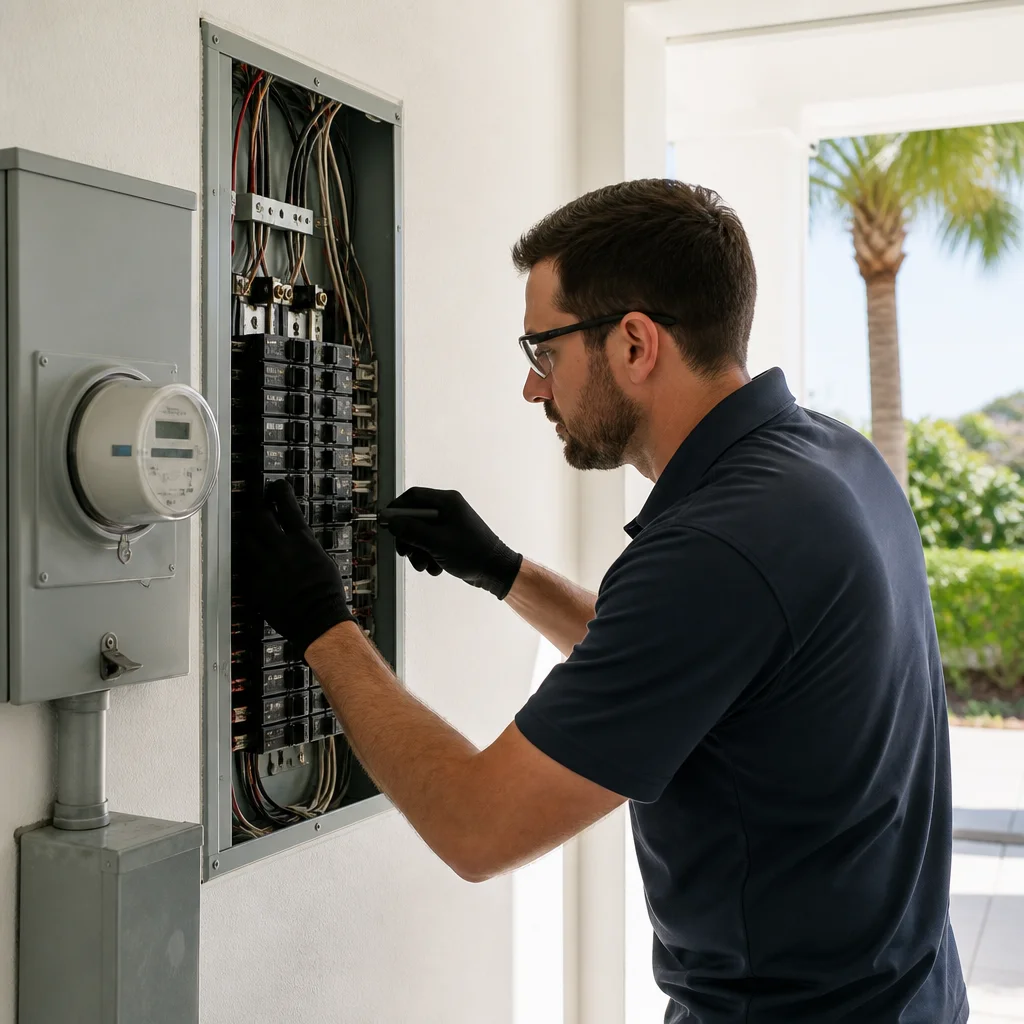
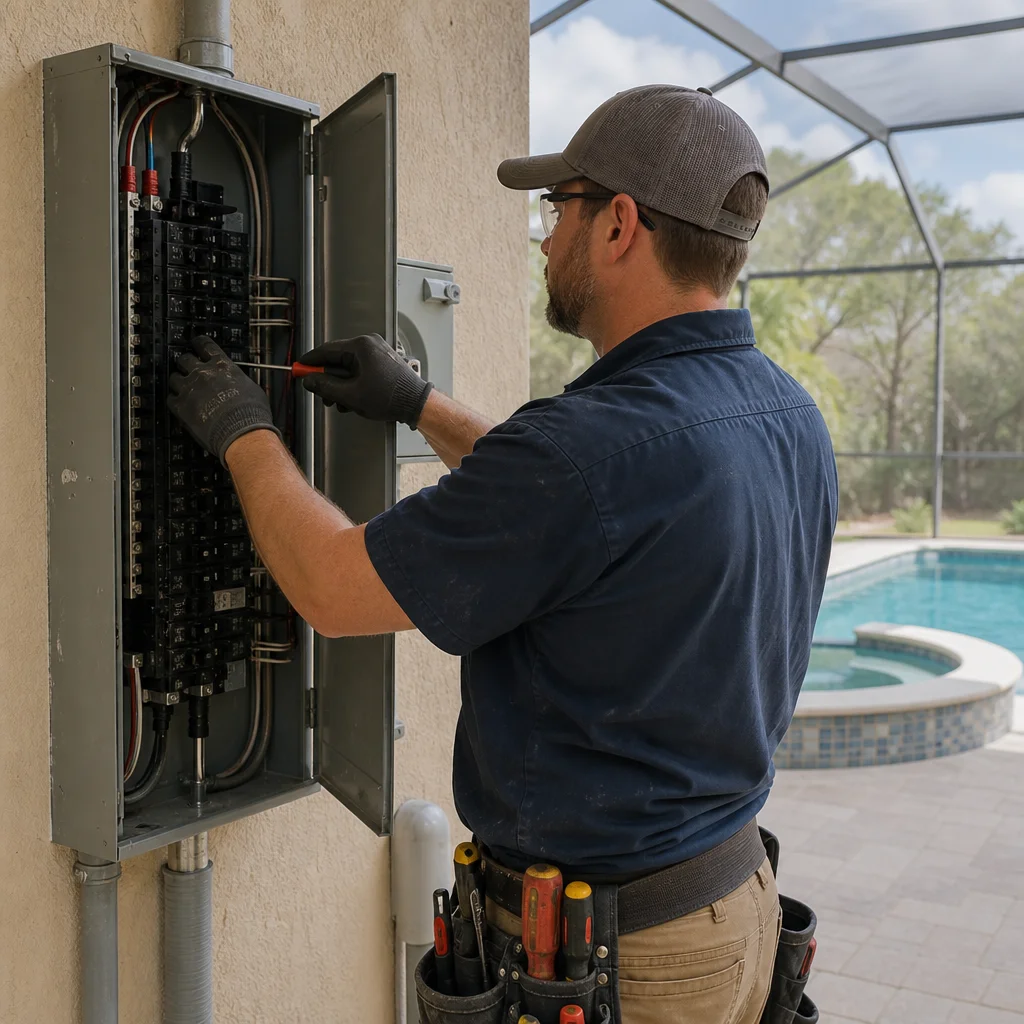
Older Callaway homes may have panels with limited capacity, aging breakers, crowded wiring, or past modifications that are difficult to trace. Newer homes can also develop issues if additions, workshops, outdoor equipment, or major appliances were installed without enough circuit planning. Homeowners making a breaker box replacement near me search should request an evaluation of the full service rather than assuming every trip requires a new panel.
A panel upgrade might be appropriate when the equipment is damaged, obsolete, corroded, undersized, or unable to support planned loads. However, some problems can be resolved through breaker repair, wiring repair, load balancing, or correction of a loose connection. The goal is to identify the actual fault before recommending replacement. More information about broader system planning is available in Smart Electrical Planning for Callaway Homes.
Wiring choices determine how the fan can be controlled
A basic fan can sometimes operate from a single wall switch with pull chains used for speed and lighting. Other installations need separate wall controls for the motor and light. Smart fans, remote receivers, and advanced speed controls may have different wiring requirements, including an available neutral conductor at the switch location.
Before choosing a fan or control, it helps to decide how the room should function. A bedroom fan may need quiet speed adjustment and independent light control. A living room fan may be connected to recessed lighting or smart home controls. A covered patio fan needs equipment rated for the location and wiring protected from moisture.
Existing wiring should be inspected for damaged insulation, improper splices, missing grounding, loose wire connectors, and heat discoloration. In older homes, an electrician may find cables or switch loops that do not match the needs of a modern electronic control. That does not always mean a full rewiring project is necessary. A targeted electrical wiring repair can often provide a safe path for the selected fan and controls.
Remodels and additions deserve extra planning. Opening walls or ceilings creates an opportunity to install the correct cable, improve switch placement, add lighting, and correct inaccessible junctions. Homeowners can review why electrical replacement matters for Callaway homes when deciding whether older components should remain during renovation.
Outlets, switches, and lighting can point to a larger circuit issue
A ceiling fan problem does not always begin at the fan. A loose connection at a switch, receptacle, junction box, or shared neutral can cause flickering, humming, slow starts, or intermittent operation. If lights dim when the fan starts, or if several devices on the circuit behave strangely, the entire circuit should be evaluated.
Switches must be rated for the load they control. A standard dimmer intended for lighting should not be used to control a fan motor unless the manufacturer specifically approves that use. Fan speed controls and compatible smart switches manage motor loads differently from ordinary light dimmers. Using the wrong device can cause noise, erratic speed, overheating, or shortened motor life.
An outlet repair near the fan room may also uncover loose feed through connections that affect downstream lights and fans. Homeowners searching for flickering lights repair near me should note which fixtures flicker, whether the problem changes when appliances start, and whether it affects one room or the entire house. Those details help distinguish a fixture issue from a branch circuit, panel, meter, or utility problem.
If the project includes updated wall controls, USB receptacles, occupancy sensors, or smart devices, electrical device upgrades in Callaway can be coordinated with the fan work. Better device placement can make the room easier to use while reducing extension cords and overloaded power strips.
Outdoor fans need coastal weather protection
Callaway's warm climate makes ceiling fans useful on porches, patios, and covered outdoor living areas. Outdoor installations require more care than indoor replacements. Damp rated fans are intended for covered locations exposed to humidity and condensation. Wet rated fans are designed for locations where direct rain or spray may reach the equipment. An indoor fan should not be installed outdoors simply because the area has a roof.
Coastal air, moisture, wind driven rain, and storm debris can contribute to corrosion at fasteners, boxes, terminals, and controls. Outdoor wiring methods, covers, fittings, and boxes must be suitable for their exposure. GFCI protection may be required depending on the location and circuit configuration. A homeowner searching for GFCI outlet installation near me can ask whether nearby outdoor receptacles and the fan circuit have the protection required for the space.
Pool, spa, and hot tub areas introduce additional grounding and bonding rules. Fans, lights, receptacles, pumps, and metal components must maintain required clearances and electrical protection. Projects near these areas should be evaluated as part of pool, spa, and hot tub wiring service, not treated as an ordinary patio fan installation.
Storms and surges can damage fans quietly
Bay County storms can produce lightning, voltage changes, outages, and water intrusion. A fan may stop working immediately after a storm, but surge damage can also appear later as a failed receiver, unreliable speed control, humming motor, or light kit that flickers. Electronic fan controls are often more sensitive than older pull chain models.
Whole home surge protection installed at the electrical panel can reduce risk from many incoming voltage spikes. Point of use protection may add another layer for sensitive electronics, but it does not replace proper grounding and panel protection. Surge devices also have finite service lives and should be inspected after significant electrical events.
If a fan, outlet, switch, or panel smells burned, feels unusually hot, crackles, sparks, or shows smoke, turn off power only if it is safe to reach the breaker and contact an electrical professional promptly. Water inside a panel, meter area, fixture, or ceiling is also an emergency concern. Do not touch wet electrical equipment. A storm electrical repair near me search should lead to an electrician who can inspect the affected circuit before it is energized again.
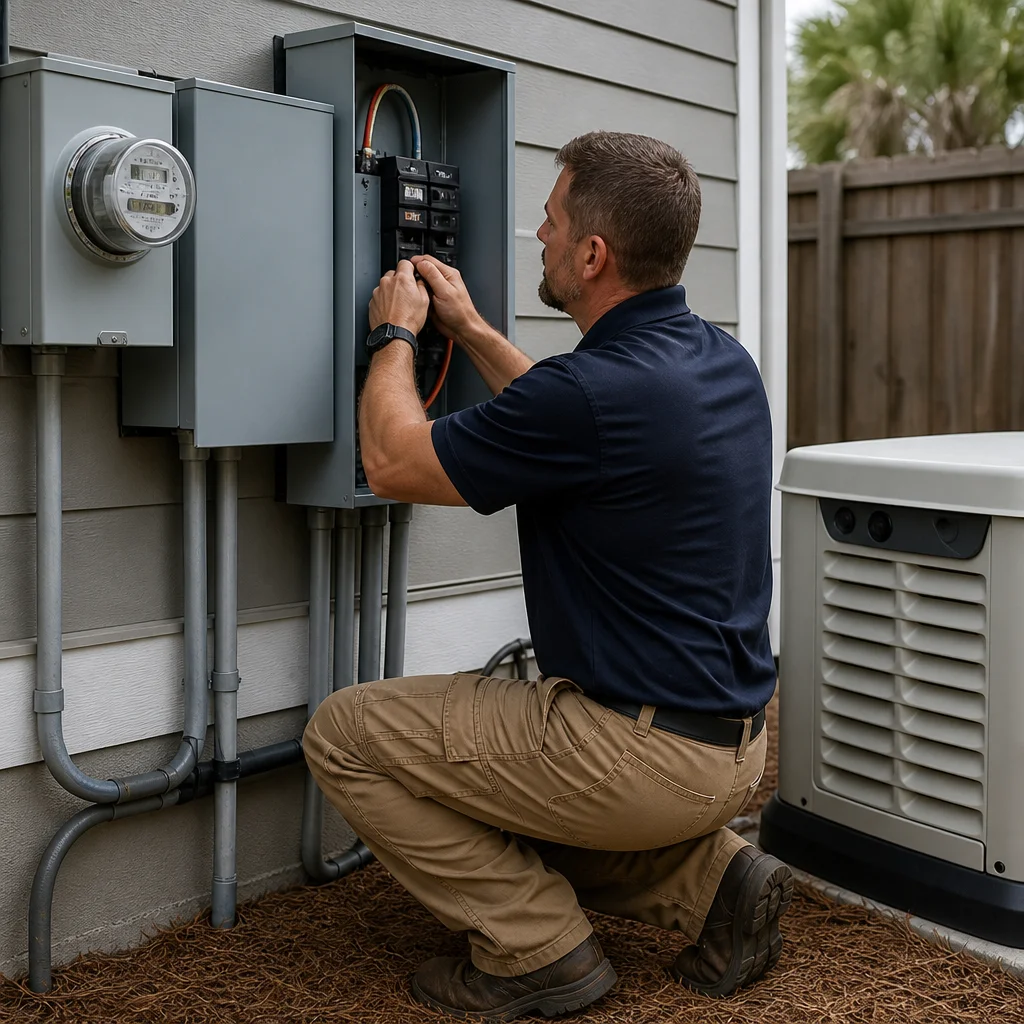
Portable and standby generators require safe transfer equipment so generated power cannot flow back onto utility lines. Homeowners considering generator installation near me should also review service capacity, grounding, fuel placement, and which circuits need backup power. A ceiling fan may be a practical backup load during a summer outage, but it should be included in a properly designed generator plan.
Growing electrical demand changes the bigger picture
Ceiling fan work is sometimes part of a larger home improvement plan. Callaway households are adding EV chargers, workshops, accessory spaces, larger kitchens, smart controls, security lighting, and backup power. Each project affects available panel capacity and circuit planning.
An EV charger commonly requires a dedicated circuit sized for the charger and the home's service capacity. Large appliances, pool equipment, and some outdoor features also need dedicated circuits. A subpanel may help organize new loads in an addition or detached structure, but it must be sized, grounded, and connected correctly. Load calculations should guide these decisions rather than the number of empty spaces visible in the panel.
Smoke detector installation should also be considered during remodels and additions. Interconnected alarms, proper placement, and suitable power sources improve warning coverage. Local code requirements can vary with the scope and age of the project, so permits and inspections may be necessary.
A professional electrical inspection and code update can identify unsafe alterations, missing GFCI protection, grounding defects, damaged devices, and panel concerns. Code corrections should follow the requirements currently adopted by the local authority for the specific work being performed.
Maintenance that helps fans last longer
Routine attention can prevent many fan problems. Keep blades clean so dust does not create imbalance. Check for visible movement at the canopy, listen for new clicking or grinding sounds, and confirm that speed and light controls respond normally. Loose blade screws may cause wobble, but severe movement can also indicate a mounting or box problem that requires professional inspection.
Do not continue operating a fan with a burning odor, hot switch, buzzing control, or exposed wiring. Avoid pulling hard on chains, hanging objects from blades, or using an indoor fan in a humid outdoor location. After a roof leak or major storm, inspect ceilings for stains near fans and light fixtures. Moisture above the ceiling can reach electrical boxes before water becomes visible inside the room.
Annual local electrical maintenance can include panel inspection, breaker testing, GFCI testing, surge protector review, smoke detector checks, and examination of frequently used switches and outlets. Lighting maintenance is also connected to safe fan operation, especially when fans and lights share boxes or controls. Homeowners can read Better Lighting Starts With Better Electrical Maintenance in Callaway for additional guidance.
Choosing professional ceiling fan service in Callaway
A straightforward replacement can become complicated when the existing box is not fan rated, grounding is missing, conductors are damaged, or the circuit behaves unpredictably. Professional service is appropriate when a new location needs wiring, a fan is being installed on a high or sloped ceiling, an outdoor fan is planned, or a smart control needs circuit changes.
Call an electrician promptly if a breaker keeps tripping, the fan shocks anyone, the switch or canopy becomes hot, lights pulse across several rooms, or there are signs of arcing. These symptoms can involve the panel, service conductors, meter base, branch wiring, or utility supply rather than the fan alone. A search for electrical repair near me should result in troubleshooting that identifies the source instead of repeatedly replacing parts.
A Superior Mechanical serves homeowners and businesses through its Callaway electrical service area and across Bay County. Fan service can include new installation, replacement, balancing, outdoor fan setup, wiring corrections, and compatible control installation. If broader repairs or upgrades are discovered, the work can be prioritized around safety, budget, and planned home improvements. Electrical financing options may also help with qualifying projects that involve larger panel, wiring, or code correction needs.
For a fan that is wobbling, unresponsive, outdated, or planned for a new room, contact A Superior Mechanical to arrange an electrical evaluation in Callaway.
Find Ceiling Fan Services in Callaway, FL
If you need Ceiling Fan Services in Callaway, FL, visit our local service page or contact A Superior Mechanical today.
Map of Callaway, FL
Frequently Asked Questions
Can an existing light fixture box support a ceiling fan?
Not always. Ceiling fans require a box listed and secured for fan support because the motor creates movement and vibration. An electrician should verify the box, brace, mounting hardware, wiring, and grounding before installing the fan.
Why does my ceiling fan trip the breaker?
A tripping breaker can result from damaged fan wiring, a failed motor or receiver, a short circuit, an overloaded branch circuit, or a weak breaker. Do not install a larger breaker as a shortcut. The fan and circuit should be tested to identify the actual fault.
Do outdoor ceiling fans need special wiring in Callaway?
Outdoor fans need equipment and wiring methods suited to moisture exposure. The fan must have the correct damp or wet location rating, and the installation may require weather resistant boxes, fittings, grounding, and GFCI protection based on its location.
Related Articles
- Built for the Load: Smart Electrical Planning for New Commercial Construction in Callaway
- Why Electrical Replacement Matters for Callaway Homes
- Better Lighting Starts With Better Electrical Maintenance in Callaway, FL
- Smart Electrical Planning for Callaway Homes: Panels, Wiring, Outlets, and Prevention
Photo Gallery