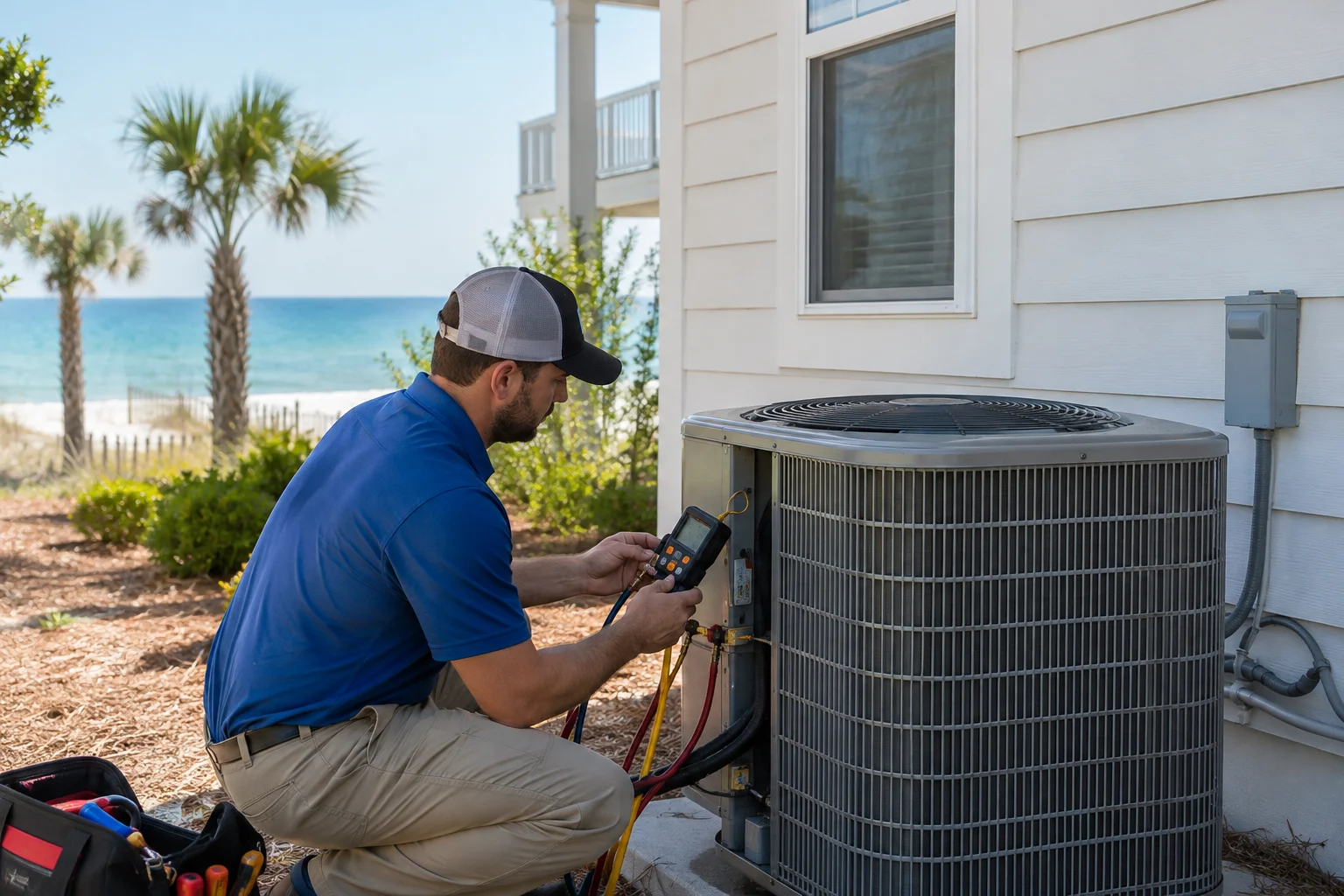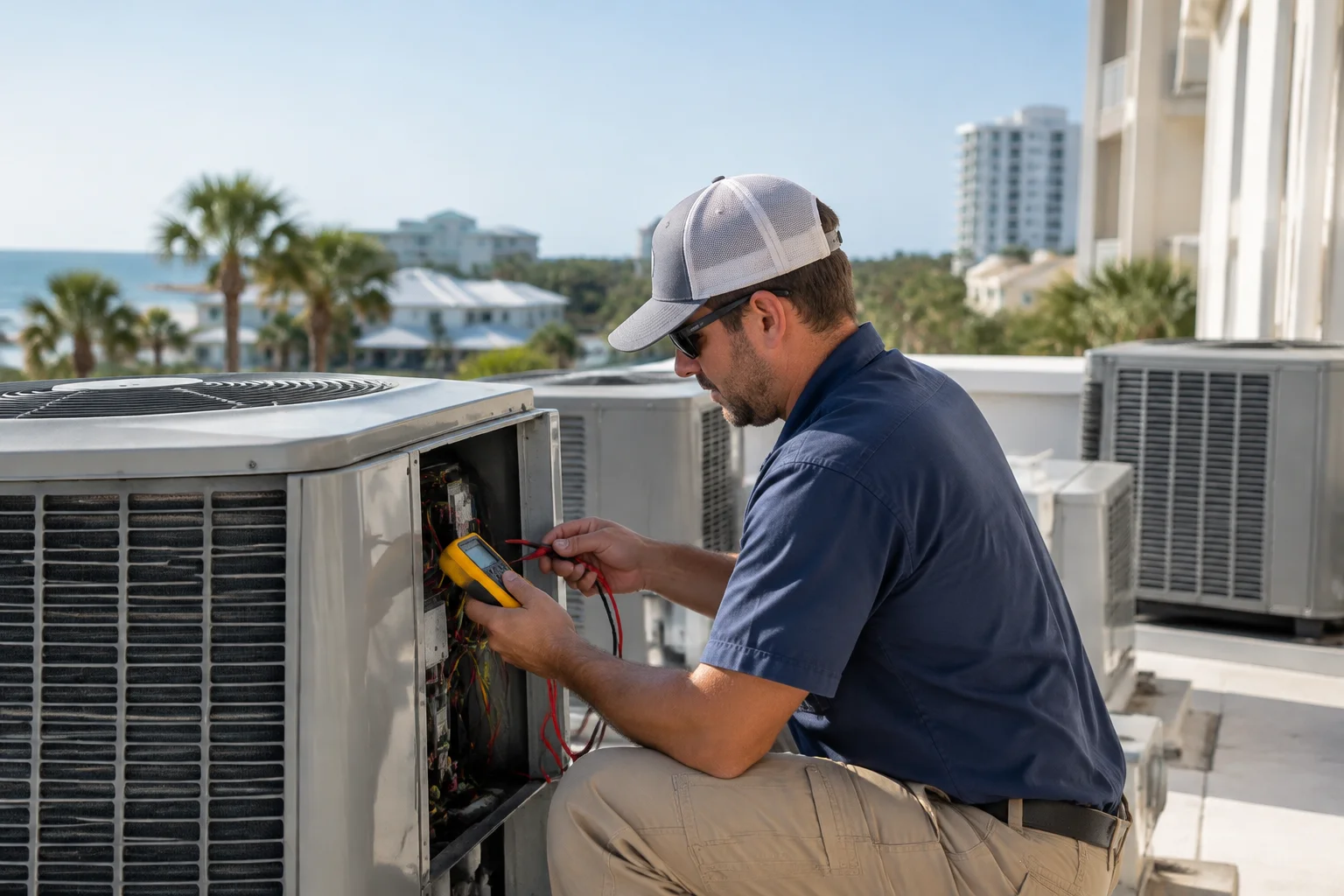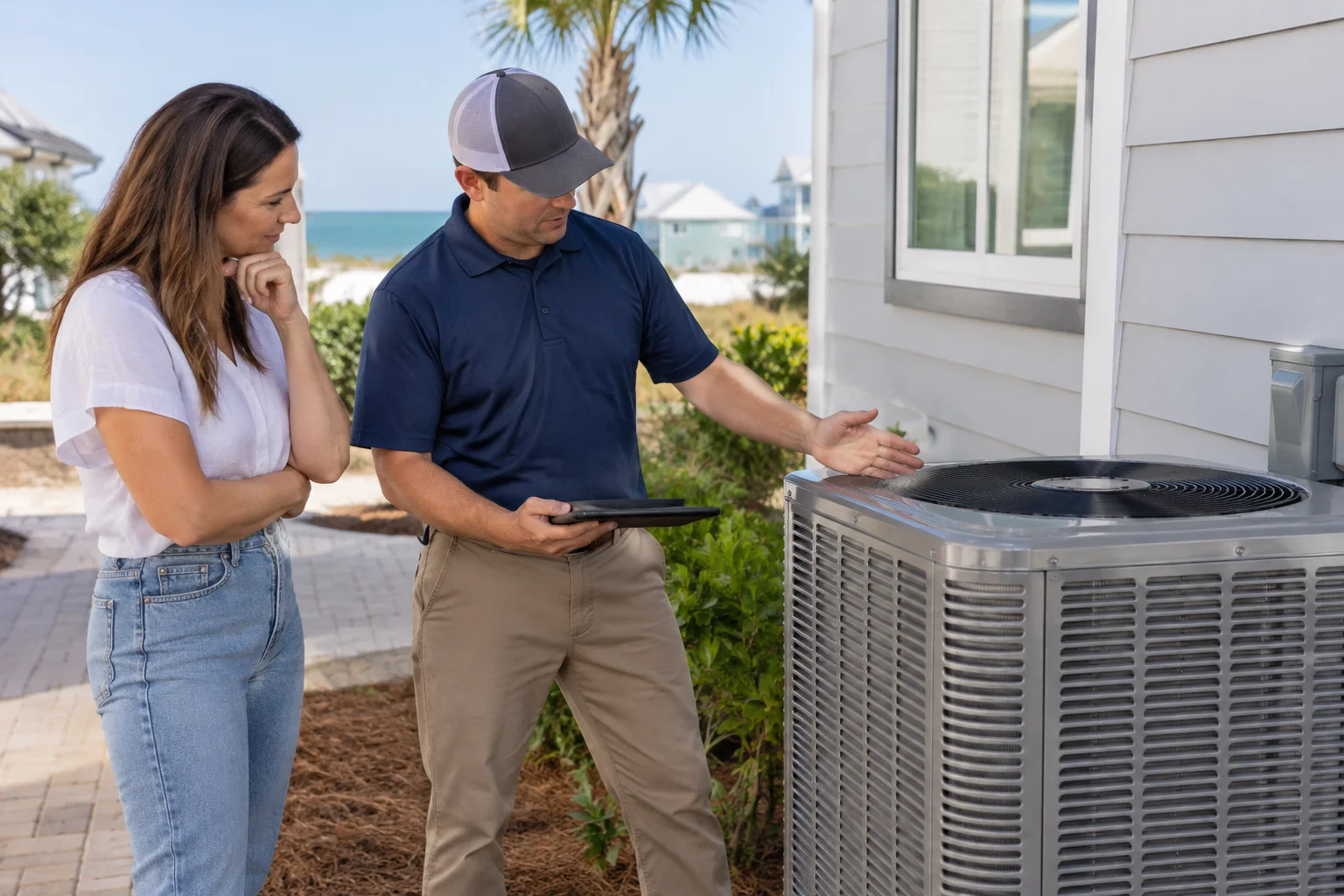
Seaside, FL is beautiful, but the coastal environment is hard on HVAC systems. Heat pumps have to manage Florida heat, high humidity, and salt air while keeping airflow steady through your ductwork. When airflow, refrigerant system conditions, or condensate drainage get out of balance, the system can struggle and eventually fail during the moments you need it most.
This guide focuses on practical steps homeowners can take to reduce the odds of emergency HVAC calls for heat pump services in Seaside. It also explains when it is worth contacting a local HVAC company like A Superior Mechanical for professional heat pump service, duct inspection, and preventive HVAC maintenance.
Why Seaside heat pumps are more likely to hit “emergency mode”
Emergency HVAC repair requests usually follow the same pattern: a problem starts small, then accelerates when outdoor conditions and indoor demand peak. In Seaside and across Walton County, the combination of warm temperatures, persistent humidity, and coastal salt exposure can push heat pumps beyond what a homeowner can safely troubleshoot.
Humidity and dehumidification strain
Heat pumps cool and heat by moving heat through a refrigerant system. In humid Florida conditions, comfort depends on moisture removal and airflow. If the indoor air handler does not move enough air across the coil, or if ductwork airflow is restricted, the system may not dehumidify well. That can lead to musty odors, room-to-room discomfort, and increased cycling.
When humidity is high, the system often runs longer. Longer run times can magnify issues like dirty filters, coil buildup, drainage problems, and thermostat settings that do not match the home’s comfort needs.
Salt air and outdoor unit buildup
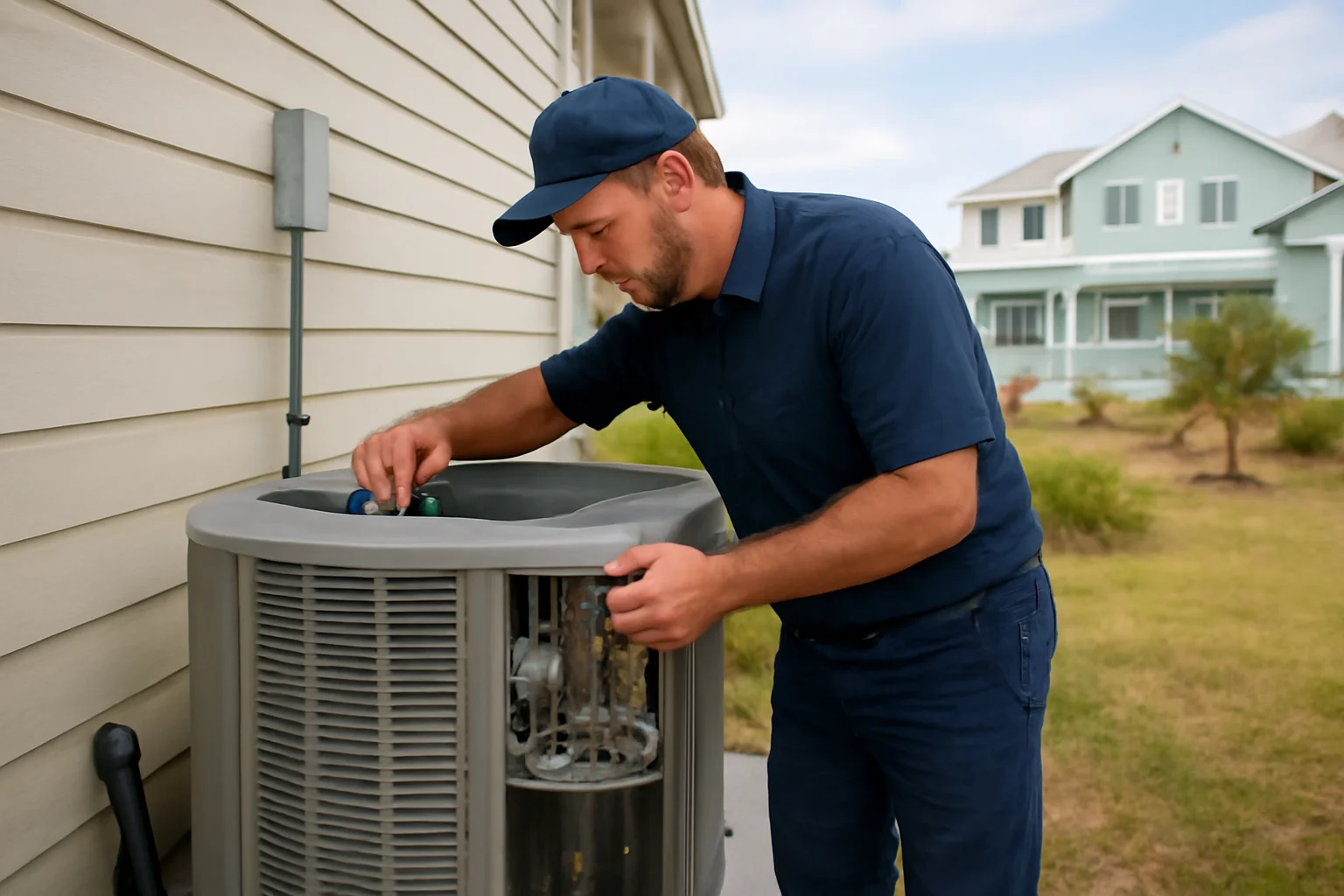
Salt air can increase corrosion risk and contribute to grime accumulation on outdoor components. Over time, debris and coastal residue can interfere with heat transfer. When an outdoor unit cannot exchange heat efficiently, the heat pump may run continuously, struggle to maintain temperature, and become more sensitive to airflow and refrigerant system conditions that require professional evaluation.
Airflow problems in ductwork and returns
Even a well-installed heat pump can underperform if ductwork is restricted, undersized, poorly sealed, or clogged with dust and debris. In many Seaside homes, renovations, new insulation, or changes to ductwork over the years can affect airflow. Restricted airflow can also cause the system to work harder, increasing wear and raising the chance of a sudden breakdown during peak cooling periods.
Condensate drainage issues
During cooling, heat pumps produce condensate. If condensate drainage is slow, blocked, or improperly routed, water can back up and create operational issues. Homeowners may notice water around the indoor unit, damp drywall, or recurring musty smells. Condensate drainage problems are often a major trigger for urgent calls, because they can lead to shutdowns and indoor air quality concerns.
Simple homeowner checks that prevent most heat pump emergencies
Some problems are visible, and catching them early can prevent escalation. These checks are designed to be safe and practical. They do not replace professional HVAC maintenance, but they reduce risk.
Keep air filters clean and properly fitted
Start with the basics: check your air filter monthly during heavy use seasons. Replace it when it is dirty or clogged. If a filter is the wrong size or not seated correctly, unfiltered air can carry dust and moisture into the system. That can reduce airflow, contribute to coil buildup, and worsen dehumidification performance.
If you have pets, vacation rental turnovers, or dusty coastal conditions, you may need more frequent filter changes. If you are unsure which filter type fits your system and indoor air quality goals, ask a local HVAC contractor to recommend an approach that supports airflow.
Confirm thermostat settings match Florida comfort needs
A common reason heat pumps feel “broken” is incorrect thermostat behavior. If your thermostat is set to a mode that does not align with the season, or if it is set to extreme temperatures, the system may run longer than necessary. That increases humidity stress in cooling mode and can contribute to frequent cycling.
Homeowners should also verify that the fan setting is appropriate. Continuous fan can improve circulation, but in humid conditions it can sometimes worsen comfort if the system cannot dehumidify effectively. A Superior Mechanical can help you dial in comfort settings and discuss how airflow and moisture removal work together in a heat pump system.
Watch for early airflow warnings
Before a system fails, homeowners often notice symptoms tied to airflow and ductwork. Look for:
- Rooms that never reach the set temperature
- Weak airflow from vents even though the system is running
- Cold or warm spots that suggest uneven air distribution
- Increased noise from the air handler or ductwork
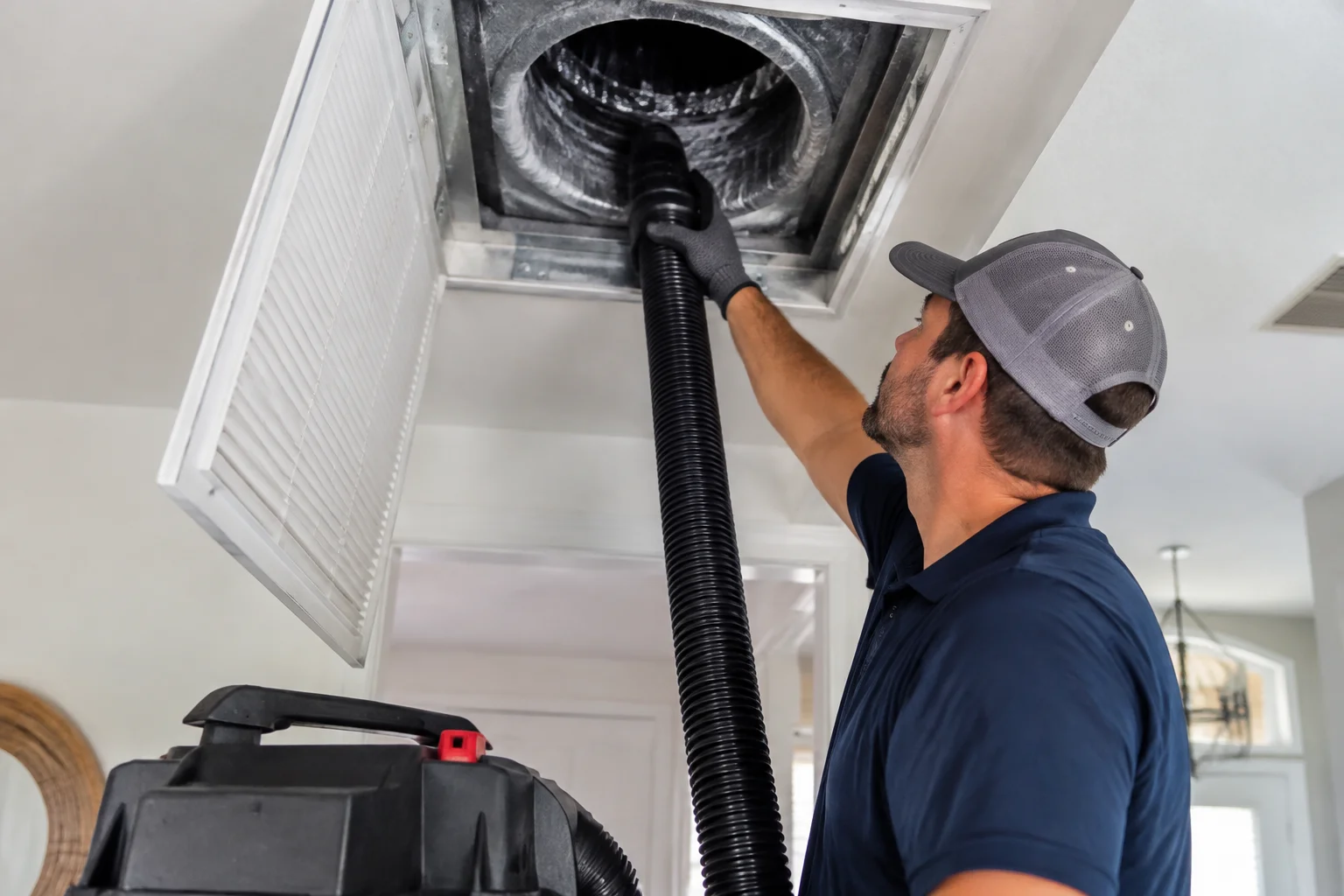
These issues can point to ductwork restrictions, blocked returns, closed dampers, or dirty components. A duct inspection can identify where airflow is being lost and help prevent emergency HVAC repair calls later.
Pay attention to condensate drainage signs
During cooling, check around the indoor unit and drainage area. Early warning signs include:
- Water pooling near the system
- Frequent shutdowns or error messages
- Musty odors that return after the system runs
- Visible moisture on nearby surfaces
If you suspect condensate drainage issues, do not attempt risky DIY repairs. Condensate systems are part of the overall operation of your heat pump and can involve components that require safe handling and proper diagnosis.
Coastal maintenance habits that protect your heat pump year-round
Preventive HVAC maintenance does not have to be complicated. The goal is to keep airflow efficient, manage humidity, and protect components that are exposed to salt air and Florida weather.
Schedule heat pump maintenance before the hottest weeks
In Seaside, peak cooling demand often arrives quickly. A seasonal tune-up helps ensure your heat pump is ready for long run times and high humidity. HVAC maintenance near me searches are common for a reason: homeowners want a local HVAC company familiar with coastal conditions, common airflow challenges, and indoor air quality priorities.
During a professional maintenance visit, a technician can inspect key operational areas, review thermostat operation, and check for issues that can cause poor comfort or system strain. If you manage a vacation rental, keeping your system maintained between guest seasons can reduce the odds of an emergency cooling concern when occupancy spikes.
Keep outdoor airflow pathways clear
Outdoor units need space for airflow. After storms or windy coastal days, debris can accumulate around the unit. Trim vegetation that blocks airflow and remove leaves or clutter near the intake and discharge areas.
Avoid over-pruning. The goal is clear airflow, not creating a situation where the unit is exposed to more salt and debris than necessary. If you are unsure how much clearance is appropriate, ask your HVAC contractor to review your outdoor setup.
Do not ignore ductwork and return air issues
In many homes, ductwork is the difference between a heat pump that maintains comfort and one that constantly struggles. Poor duct sealing, clogged vents, or blocked returns can raise energy use because the system must run longer to reach the thermostat setpoint.
If you notice uneven comfort, increased humidity indoors, or rising energy bills that do not match your usage habits, consider a duct inspection near me. Duct inspection can also help identify where indoor air quality can be affected by dust buildup and airflow imbalance.
Support indoor air quality while managing humidity
Indoor air quality is tied directly to comfort. When airflow is restricted or coils are dirty, moisture can linger and contribute to odors and irritants. If your home feels stuffy even when the temperature seems correct, the issue may involve humidity control and airflow, not just the thermostat.
For homeowners who want to prevent comfort problems from spreading, this resource can help: Why Seaside Homes Benefit From Indoor Air Quality Testing Before Comfort Issues Spread. If humidity is a recurring challenge, you may also benefit from whole home dehumidification strategies and careful maintenance of the systems that support them. Learn more here: Why Better HVAC Maintenance Matters for Whole Home Dehumidifiers in Sandestin.
How to recognize heat pump problems before they become emergencies
Some issues are obvious. Others build gradually. The key is to respond early to patterns instead of waiting for complete failure.
Common early warning signs
- Short cycling: The system turns on and off frequently without stabilizing room temperature.
- Temperature swings: The home never holds steady comfort, especially on humid days.
- Rising humidity: Condensation on windows, lingering dampness, or discomfort that improves only briefly.
- Unusual sounds: Banging, grinding, or persistent rattling from the air handler or outdoor unit.
- Weak airflow: Vents feel underpowered or airflow changes room to room.
- Drainage concerns: Water around the indoor unit or repeated musty odors.
Any of these can point to airflow issues, condensate drainage problems, control problems, or refrigerant system performance concerns that require professional HVAC repair.
What not to do
Homeowners should avoid actions that can make things worse:
- Do not open or tamper with refrigerant system components.
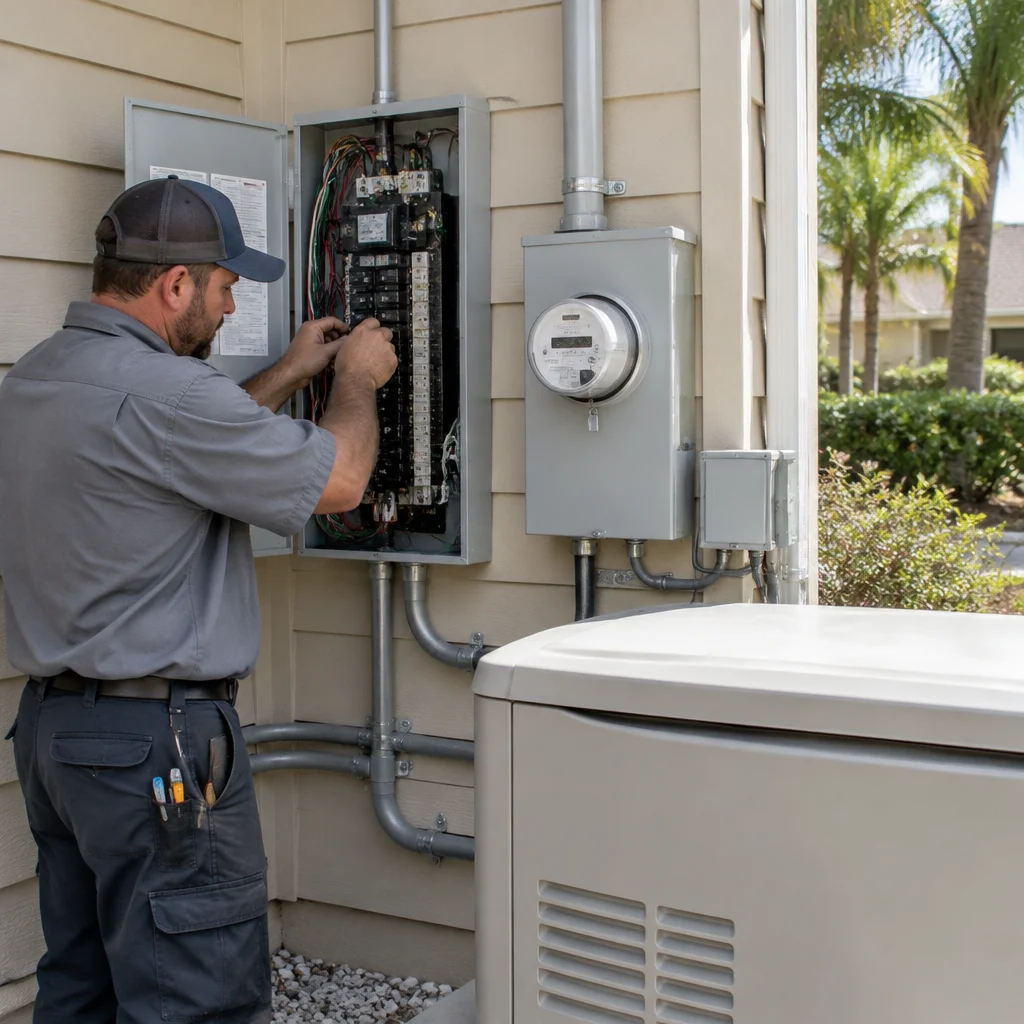
- Do not attempt electrical troubleshooting or bypass safety controls.
- Do not keep resetting the thermostat to force operation after repeated shutdowns.
- Do not ignore water near the indoor unit, even if it seems minor.
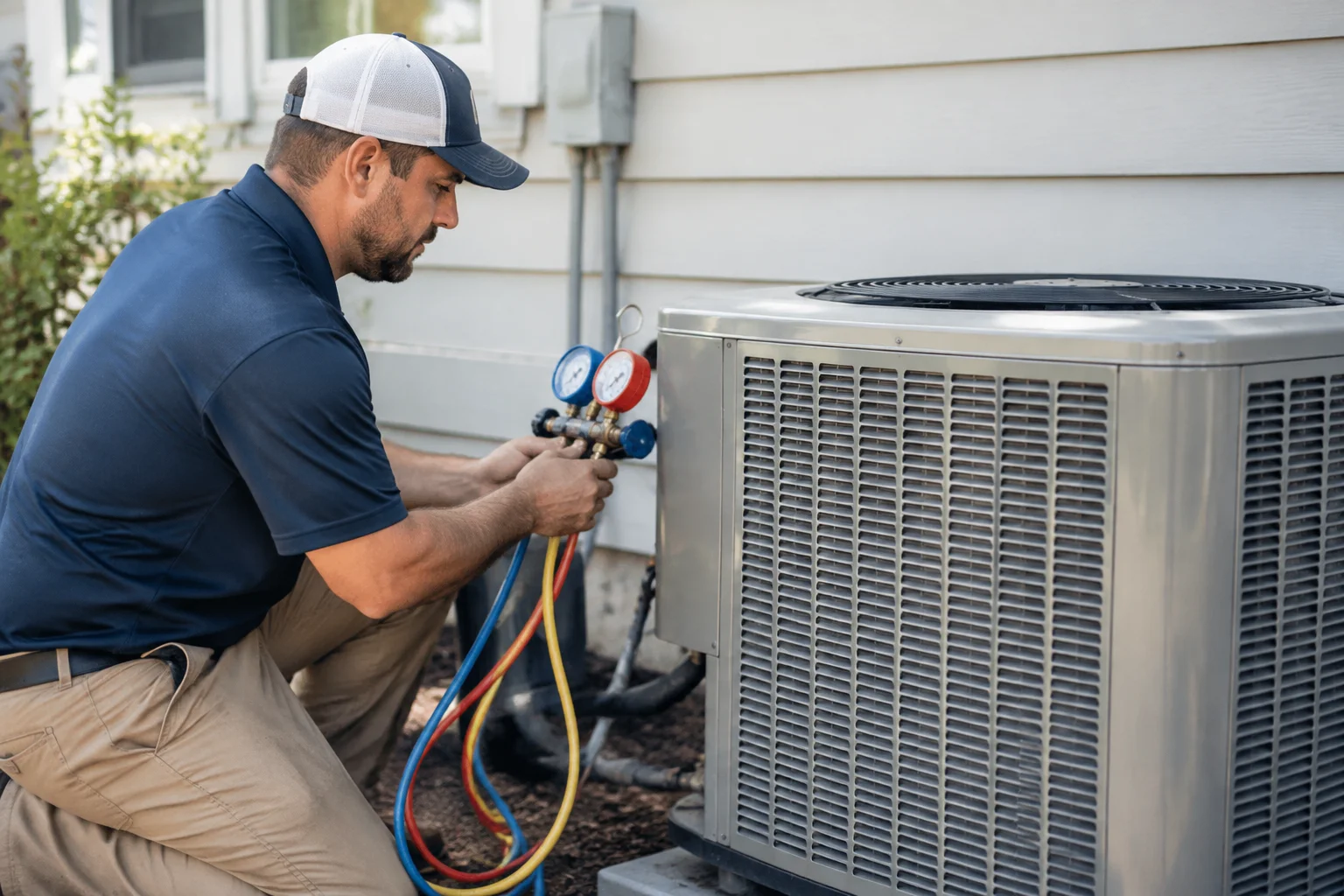
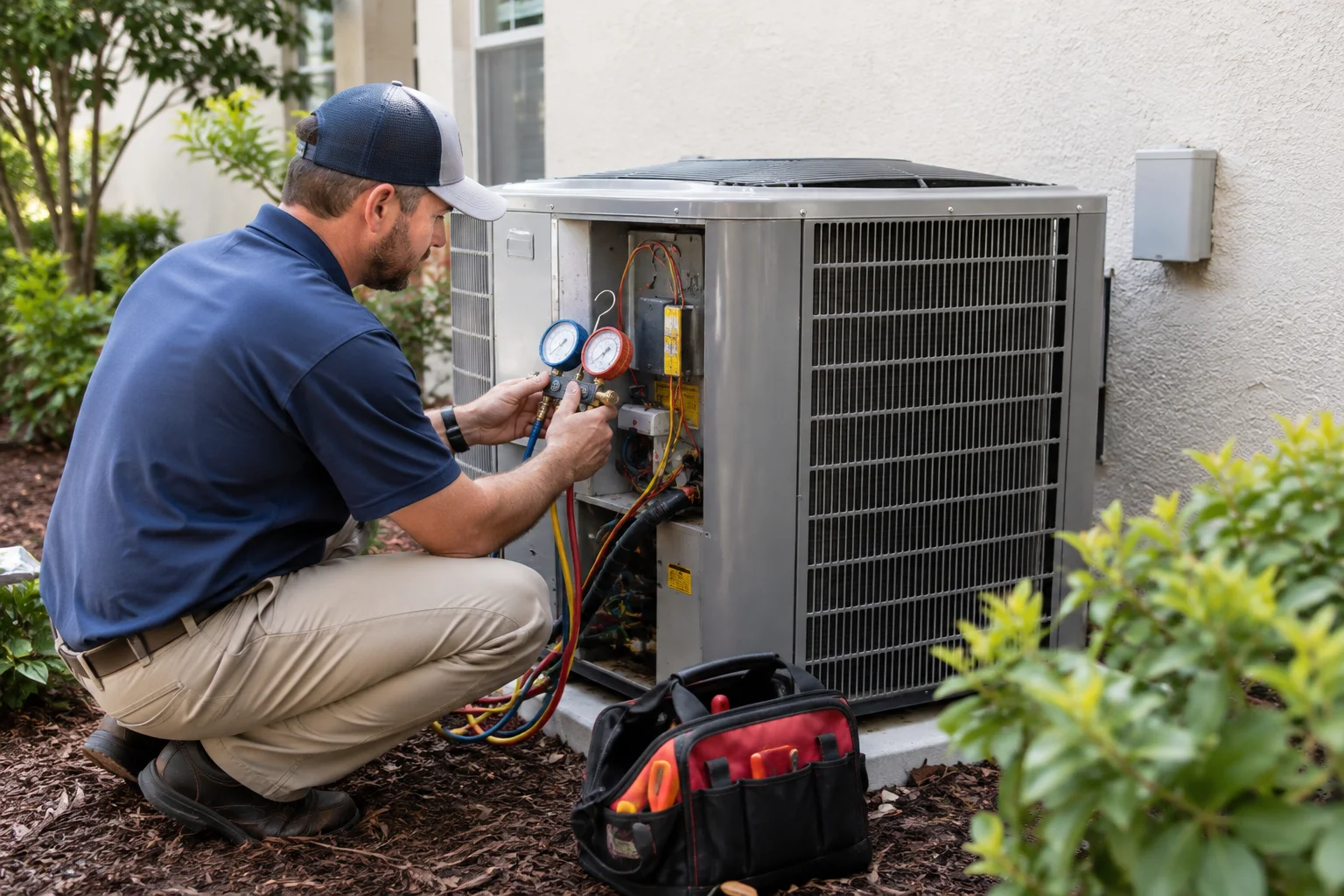
Heat pump systems involve refrigerant systems and safety components that should be evaluated in person. If you are dealing with refrigerant-related performance concerns, a professional must assess the system to determine the cause.
When you should call A Superior Mechanical for heat pump service
Some situations are not “wait and see” problems. If you want to avoid emergency HVAC calls for heat pump services in Seaside, watch for these triggers.
Call sooner for comfort and humidity issues
If your heat pump runs constantly but does not cool evenly, or if humidity remains high indoors despite normal thermostat settings, schedule service. These symptoms can be linked to airflow problems in ductwork, coil performance, or condensate drainage concerns.
Homeowners searching for air conditioning repair near me often have heat pump cooling issues. Since heat pumps handle cooling in Seaside, “AC repair” concerns can overlap with heat pump service needs. A Superior Mechanical can evaluate your system and recommend the right path, whether you need repair, ductwork attention, or preventive maintenance.
Call right away if you see water or repeated shutdowns
Water around the indoor unit, blocked or overflowing condensate drainage, and recurring shutdowns are reasons to contact a professional promptly. These issues can affect indoor air quality and can escalate quickly during humid Florida weather.
Consider system replacement only after an in-person evaluation
Homeowners sometimes search heat pump replacement near me after repeated repairs. Replacement may be the right option in some cases, but it must be based on an in-person assessment of system condition, airflow, indoor comfort performance, and refrigerant system operation. A technician can also help you consider options that match your home’s ductwork and indoor air quality goals.
If you are exploring replacement, you may also want to review how ductwork configuration affects airflow. This related post may help: Smart HVAC Planning for Rosemary Beach Homes: Comfort, Airflow, and Coastal Protection.
Lowering energy use while preventing breakdowns
Heat pump energy use is influenced by airflow efficiency, thermostat behavior, and how well the system manages humidity. When ductwork is restricted or filters are dirty, the system must work longer to achieve set temperature. That can increase strain on components and make problems more likely to surface during peak weather.
Professional tune-ups and duct inspection can help you address underlying comfort and airflow issues. If you are noticing higher energy use alongside comfort problems, it is a strong sign that the heat pump is not operating as efficiently as it should.
Heat pump service options for different Seaside home setups
Seaside homes vary, including coastal single-family houses, older neighborhoods, and vacation rentals. Some properties also use ductless systems for certain rooms. Your prevention strategy should match your setup.
Ducted heat pump systems and ductwork considerations
If your heat pump is connected to ductwork, airflow and duct sealing matter. A duct inspection near me can help identify where air distribution is failing. If you are also concerned about indoor air quality, ask about how airflow and moisture removal work together in your specific configuration.
Ductless mini split systems in coastal homes
For homeowners with ductless mini splits, the same coastal factors apply, including airflow, humidity, and outdoor unit exposure. If you are thinking about ductless mini split installation near me or you already have a ductless system, professional service can help with maintenance planning that fits your home’s layout. Explore related service here: Ductless Mini-Splits.
Preventive maintenance that reduces emergency cooling concerns
Emergency cooling concerns are most likely when multiple small issues overlap: a slightly dirty filter, airflow restriction in ductwork, condensate drainage that is starting to slow down, and a thermostat schedule that increases run time during peak humidity. Preventive HVAC maintenance near me searches often reflect the same reality: homeowners want fewer surprises during the hottest, most humid stretches of the year.
If you want to be proactive, start with a seasonal plan. Keep up with filter changes, monitor airflow and drainage, and schedule professional heat pump maintenance before peak demand. That approach can help keep comfort steady and reduce the chance of needing emergency AC repair near me during a coastal heat wave.
If you are ready to discuss your system, you can explore heat pump services in your area here: /service-areas/walton-county/seaside/heat-pump-services-ssfl. To learn more about local coverage and service locations across Seaside, visit /service-areas/walton-county/seaside, and for the broader Walton County area, see /service-areas/walton-county.
For homeowners who also need other HVAC work as part of a broader comfort plan, consider these options: Air Conditioning Repair for cooling-related issues, and Commercial HVAC Services if your property is used for business or larger occupancy needs. If you manage a larger site and want long-term planning, you can also review Commercial HVAC Installation.
Find Heat Pump Services in Seaside, FL
If you need Heat Pump Services in Seaside, FL, visit our local service page or contact A Superior Mechanical today.
Map of Seaside, FL
Frequently Asked Questions
What are the most common causes of heat pump emergencies in Seaside, FL?
In coastal Florida homes, emergencies often follow airflow restrictions (dirty filters, ductwork issues), condensate drainage problems during cooling, and outdoor unit performance problems caused by debris or salt air buildup. When humidity is high, small comfort issues can escalate quickly.
How can I tell if my heat pump has an airflow or ductwork problem?
Look for weak airflow from vents, rooms that stay too hot or too cool, and changes in comfort that do not match thermostat settings. These symptoms can point to ductwork restrictions, blocked returns, or issues with air distribution that benefit from a professional duct inspection.
Is it safe for me to check refrigerant or recharge my heat pump?
No. Refrigerant system work should be handled by a qualified technician. A professional needs to evaluate the system in person to determine what is causing performance issues before any refrigerant-related action is taken.
What should I do if I see water near my indoor heat pump unit?
Stop and contact a professional. Water near the indoor unit can indicate condensate drainage problems. Because these issues can affect indoor air quality and can worsen in Florida humidity, it is best to have the drainage and system operation checked promptly.
How often should I schedule preventive heat pump maintenance in Seaside?
Many homeowners benefit from seasonal maintenance before peak heating and cooling periods. If your home has heavy humidity exposure, frequent vacation rental turnover, or older ductwork, you may want a maintenance plan tailored to your usage patterns and comfort goals.
Related Articles
- Keeping Seaside Homes Ready for HVAC Emergencies
- Why Seaside Homes Benefit From Indoor Air Quality Testing Before Comfort Issues Spread
- Smart HVAC Planning for Rosemary Beach Homes: Comfort, Airflow, and Coastal Protection
- Why Better HVAC Maintenance Matters for Whole Home Dehumidifiers in Sandestin
Photo Gallery