The dishwasher finishes, but the glasses still look spotted. A white crust returns around the bathroom faucet, and the morning coffee tastes different than it should. These small frustrations can point to water quality issues, although they do not necessarily share the same cause.
For homeowners considering water softening services in Wright, FL, the first step is separating hardness from problems that need filtration or another treatment. A softener can reduce mineral deposits and improve washing. It does not automatically remove chlorine, sediment, or every source of unpleasant taste. A Superior Mechanical helps homeowners approach water treatment with the household's actual needs in mind, from the kitchen tap to the laundry room.
Why water treatment deserves a local approach in Wright
Wright sits in coastal Okaloosa County, where warm weather, humid summers, and regular outdoor activity make showers, laundry, and cold drinking water part of a busy household routine. That climate does not cause hard water, but frequent water use can make existing spotting, soap residue, and mineral buildup more noticeable.
Water conditions also depend on the property's supply, the utility's treatment process, and what happens inside the home's piping. Florida groundwater can acquire calcium and magnesium as it moves through mineral-bearing formations. However, a Wright address alone does not establish how hard the water is. A current utility water quality report provides useful background, while testing at the home helps identify the treatment needed there.
Established homes, updated properties, and rentals can have different pipe materials, water heaters, and existing filters. Local service matters because equipment must fit those conditions. A Superior Mechanical serves homeowners in Wright and the surrounding Okaloosa County area, where treatment planning should start with the property rather than a standard equipment package.
The clues left on glass, fixtures, and laundry
Spots and scale that keep coming back
Hard water spots on glass often appear when droplets evaporate and leave minerals behind. You might notice them on shower doors, drinking glasses, dishes, and polished fixtures. Dishwasher detergent residue or permanently etched glass can look similar, so spots alone are not a complete diagnosis.
Scale buildup around faucets and showerheads is another clue. Mineral deposits may clog spray openings and collect inside water heaters or portions of the plumbing. A softener helps reduce new hardness deposits, but it will not necessarily clear existing scale or restore a damaged fixture.
Soap struggles and uncomfortable bathing
Hardness minerals react with soap, making it harder to lather and contributing to residue that does not rinse away easily. Towels can feel stiff, laundry may look dull, and shower surfaces may need more scrubbing. Hair can feel coated or dull after bathing.
Some homeowners describe this as dry skin from hard water. Hardness may contribute to soap residue and irritation, but hot showers, cleansers, humidity changes, and skin conditions also matter. Softening may improve the bathing experience; it is not a medical treatment or a guaranteed cure for dry skin.
Appliances working under a mineral load
Scale can interfere with heat transfer in water heaters and accumulate in dishwashers, washing machines, and other water-using equipment. Over time, that may contribute to reduced efficiency or appliances wearing out faster. Water treatment can address one stressor, but installation quality, age, and routine maintenance still affect appliance life.
Match the treatment to the problem
Water softening targets calcium and magnesium
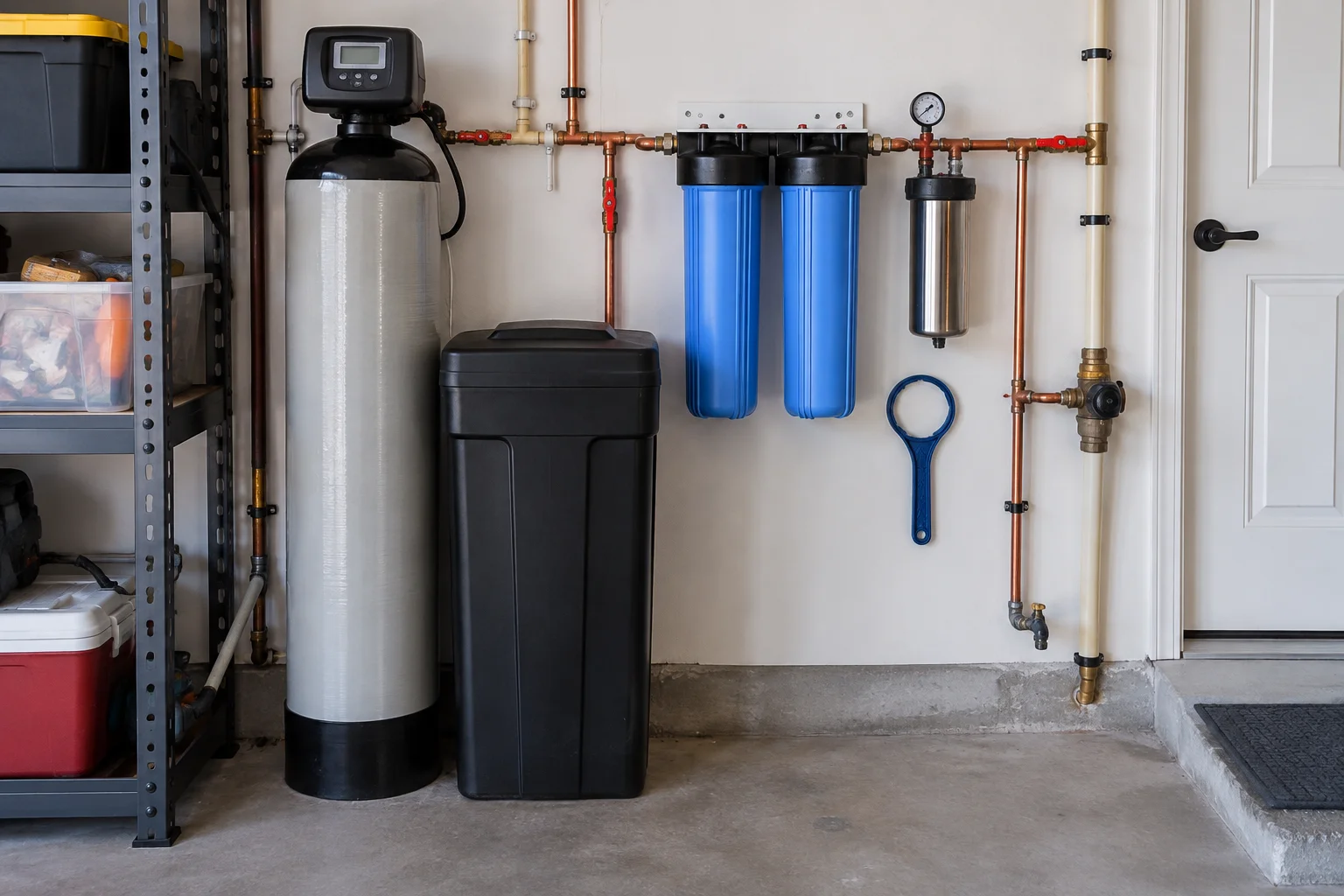
A conventional salt-based softener uses ion exchange to remove hardness minerals, replacing them with sodium or potassium ions, depending on the regenerant used. Its main job is reducing hardness, not disinfecting water or removing every dissolved substance.
Professional water softening services in Wright, FL should begin with a hardness measurement and a review of household demand. For a family dealing with recurring scale, soap residue, and spotted fixtures, softening may be the most direct solution. Salt-free scale-control equipment operates differently and should not be described as removing hardness minerals.
Whole home filtration addresses other water concerns
Whole home water filtration treats water as it enters the house. A sediment filter can capture particles within its rated range, while properly selected carbon media can reduce chlorine and certain taste or odor compounds. Chloramine reduction requires equipment designed and rated for that purpose.
A whole house water filter is not automatically a water softener. Likewise, a basic carbon filter is not a universal solution for metals, bacteria, or every chemical. Visible sediment, discoloration, and persistent odor need investigation so the filter matches the cause. In some homes, filtration and softening work together as parts of one treatment plan.
Reverse osmosis serves drinking and cooking water
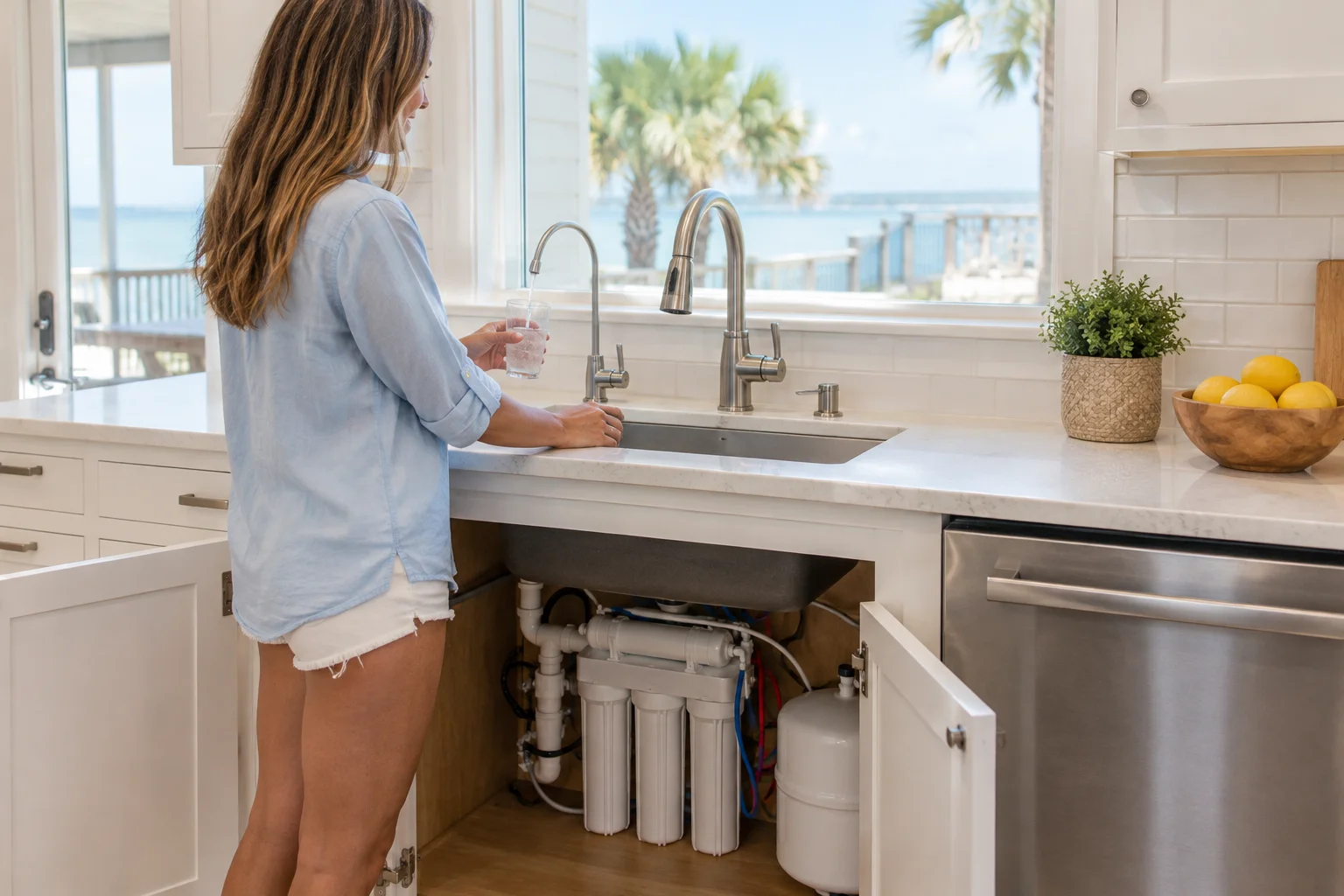
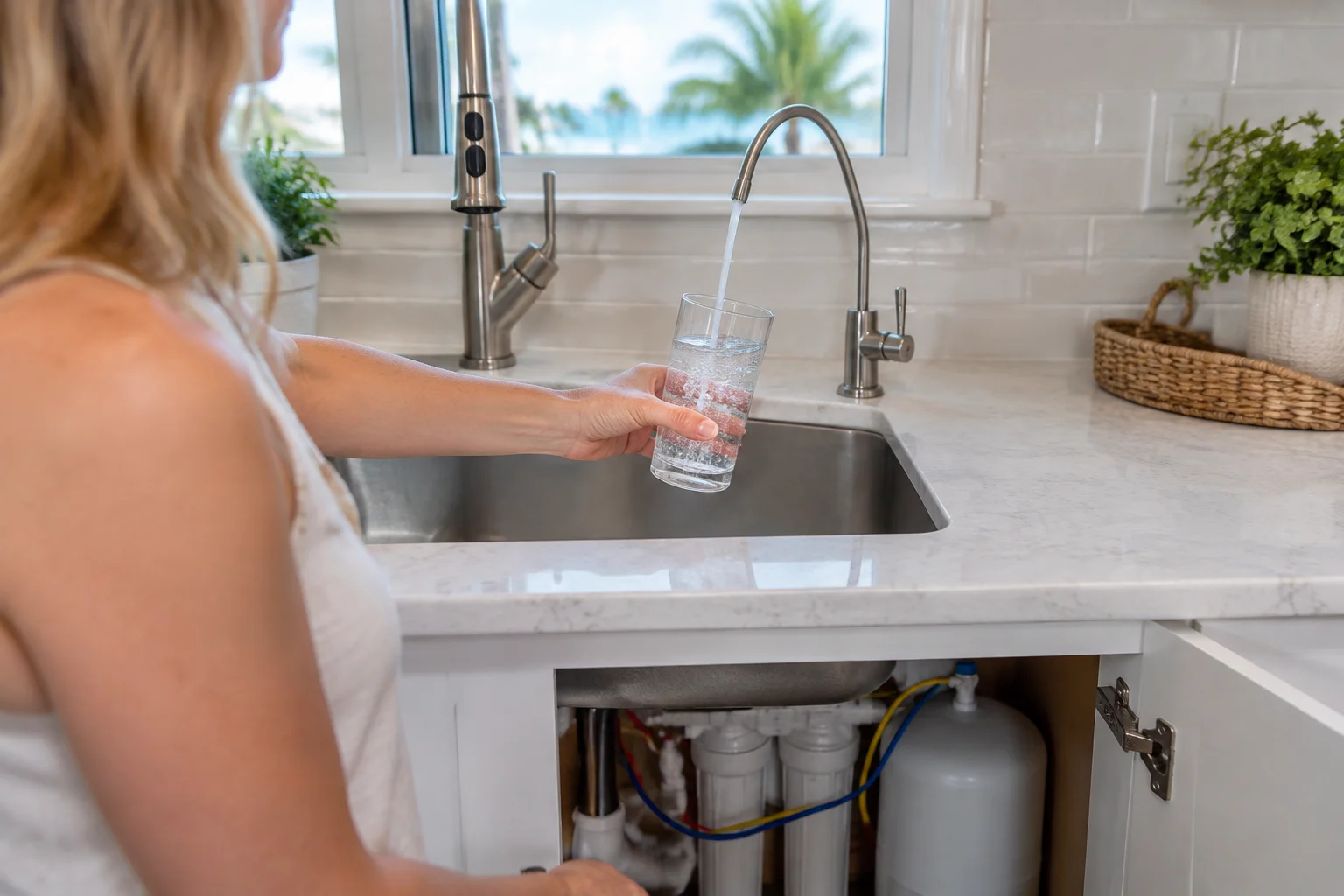
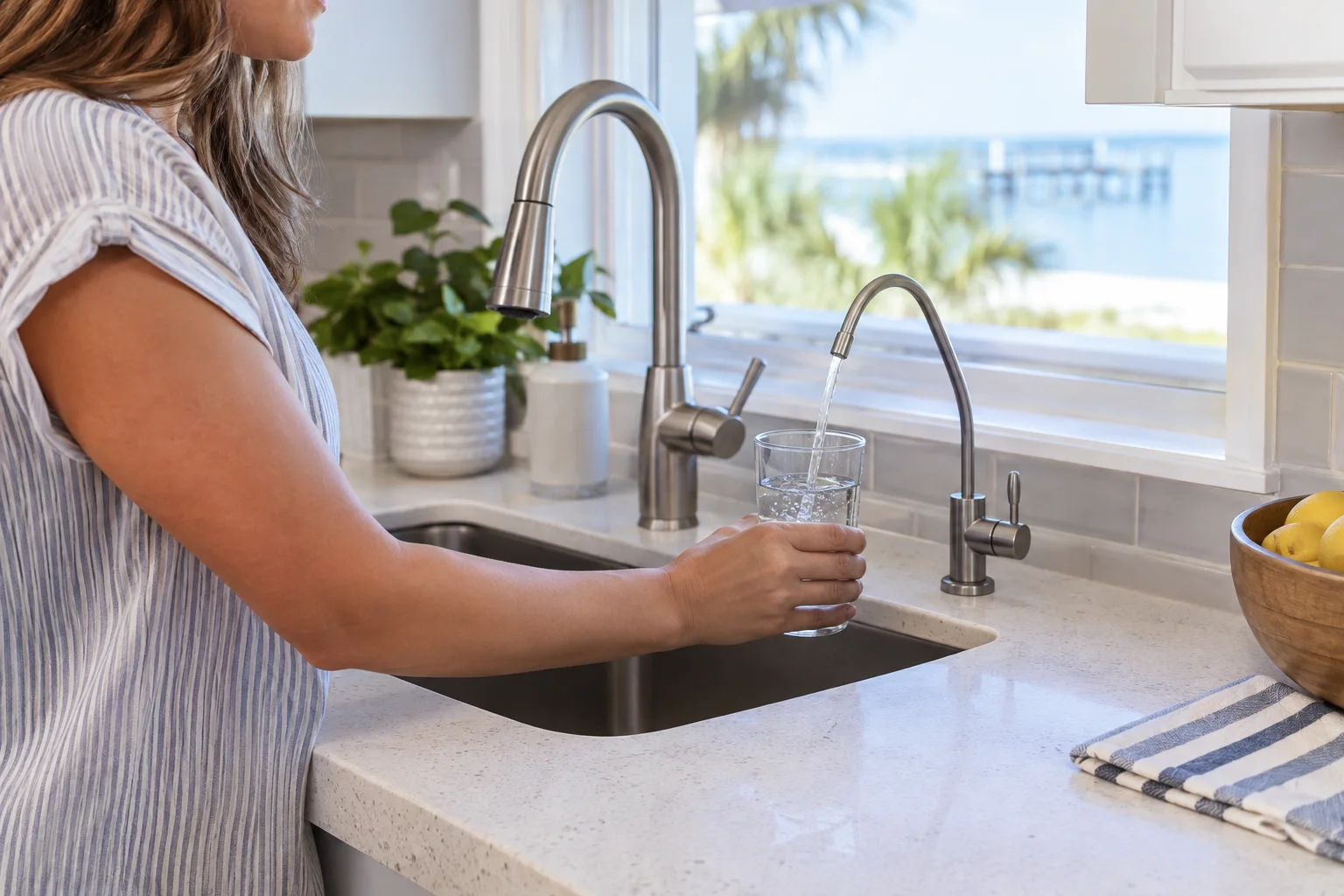
Reverse osmosis typically treats water at a dedicated kitchen faucet. It can reduce many dissolved substances, but performance depends on the membrane, system design, maintenance, and the specific contaminants for which the equipment is certified. It complements a softener rather than replacing whole-home hardness treatment.
For homeowners searching for reverse osmosis installation near me, useful questions include available cabinet space, feed-water pressure, drain connections, filter costs, and daily production capacity. A system should supply enough water for drinking, filling bottles, and cooking without being selected solely on its advertised output.
Taste, odor, and cloudy ice need their own diagnosis
Metallic tasting water can be associated with iron, manganese, copper, or corrosion, among other causes. A chlorinated taste may reflect the disinfectant used in a public supply. Other unpleasant tastes or odors may originate in household plumbing, a water heater, or an overdue filter. Hardness alone does not explain all of these conditions.
Compare cold and hot water, and check more than one faucet. An odor only in hot water points toward a different investigation than an odor present throughout the house. Also check whether the smell comes from the water itself or the sink drain.
Cloudy ice cubes are not proof of unsafe water or excessive hardness. Trapped air and the way ice freezes can create cloudiness, while dissolved minerals can contribute. Reverse osmosis may improve ice quality in some situations, but perfectly clear cubes are not guaranteed.
Sudden discoloration, an unusual chemical or fuel-like odor, or a utility advisory deserves prompt attention. Contact the water provider or an appropriate professional before assuming a filter will make the water suitable for use. Follow any public health instructions rather than relying on taste, appearance, or a treatment device alone.
Better water at the family kitchen counter
Picture the kitchen before school: one person fills a reusable bottle, another starts coffee, and a pot goes on the stove for breakfast. Drinking water and cooking water influence everyday meals, not just the glass served at dinner. Chlorine or an unwanted mineral taste can carry into coffee, tea, soup, and ice.
A kitchen drinking water filter or reverse osmosis system can target concerns that a softener leaves behind. Meanwhile, softened water can make cleaning the sink and washing dishes easier. These are separate benefits, which is why combining technologies sometimes makes more sense than expecting one appliance to do everything.
A Superior Mechanical's water filtration, reverse osmosis, and water softener options provide a starting point for discussing that combination. The goal is a practical system for the way the household drinks, cooks, bathes, and washes clothes.
Choosing equipment without buying more than you need
Homeowners searching for water softener installation near me should expect more than a recommendation based on bedroom count. Sizing should consider tested hardness, household occupancy, daily use, and peak demand when showers and appliances run together. Iron or manganese, if present, can require additional treatment or affect equipment selection.
The installation also needs an appropriate location, service access, a bypass arrangement, and suitable connections. Salt-based softeners require regeneration drainage and periodic salt replenishment. Outdoor locations need equipment suitable for the exposure and protection consistent with manufacturer instructions and local requirements.
If you are comparing AO Smith water filtration products, review the specific model rather than choosing by brand alone. Check its rated flow, replacement cartridge availability, operating limits, and independent certification for the reduction claims you need. Different products within one brand perform different jobs.
For anyone comparing clean water systems, a written proposal should explain what each component treats, what it does not treat, and the ongoing maintenance cost. Someone searching for whole home water filtration near me benefits more from that clarity than from broad promises of universally pure water.
Keep the improvement going with routine care
A softener needs attention after installation. Check the salt supply as directed, watch for salt bridging in the brine tank, and keep settings aligned with tested hardness and household use. An unexpected return of spotting can indicate depleted salt, bypassed equipment, a regeneration problem, or changed water conditions.
Replace sediment and carbon filters according to the manufacturer's schedule and actual operating conditions. A loaded cartridge may restrict flow. Reverse osmosis systems also need scheduled filter changes, membrane assessment, and sanitation according to their instructions. Water that still tastes acceptable is not proof that every component is performing correctly.
Continue maintaining fixtures and appliances. Clean aerators and showerheads with methods approved for their finish, and follow the water heater manufacturer's maintenance guidance. Our discussion of water heater problems in Wright homes explains why equipment condition deserves attention alongside treatment.
If a faucet remains corroded or restricted after the water issue is addressed, planning fixture replacement carefully can help avoid replacing parts without understanding the underlying problem.
Get a clear answer before adding another filter
Professional evaluation is worthwhile when scale returns quickly, multiple fixtures lose flow, water changes color, or an existing softener stops reducing hardness. Homeowners searching for water softener service near me should describe when the problem started, whether it affects hot or cold water, and any recent equipment or utility work.
Bring photos of deposits, a recent water quality report if available, and the model information for existing treatment equipment. Those details help distinguish a maintenance issue from a system that was never designed for the concern.
Contact A Superior Mechanical to discuss water softening services in Wright, FL and whether filtration or reverse osmosis belongs in the same plan. Start with the water test, identify the household priorities, and choose treatment that makes daily use easier without promising more than the equipment can deliver.
Find Water Softening Services in Wright, FL
If you need Water Softening Services in Wright, FL, visit our local service page or contact A Superior Mechanical today.
For a broader look at whole-home water filtration, reverse osmosis, and water softener options, visit our water filtration, RO, and water softener page.
Map of Wright, FL
Frequently Asked Questions
Will a water softener remove chlorine taste and odors?
A conventional water softener primarily removes calcium and magnesium. It is not designed to resolve every taste or odor concern. Properly selected carbon filtration can reduce chlorine, while other odors may require testing and different treatment. Some homes benefit from both filtration and softening.
How can I tell whether my Wright home needs water softening?
Recurring mineral deposits, spotted dishes, soap residue, and stiff laundry can suggest hard water, but testing should confirm the hardness level. A professional can use that result, household water demand, and installation conditions to recommend an appropriately sized system.
Can I use reverse osmosis with a whole home water softener?
Yes. A softener can address hardness throughout the house, while a kitchen reverse osmosis system treats drinking and cooking water. Softened feed water may also help limit mineral scaling on the RO membrane. The equipment must be compatible and maintained according to manufacturer instructions.
Related Articles
Photo Gallery