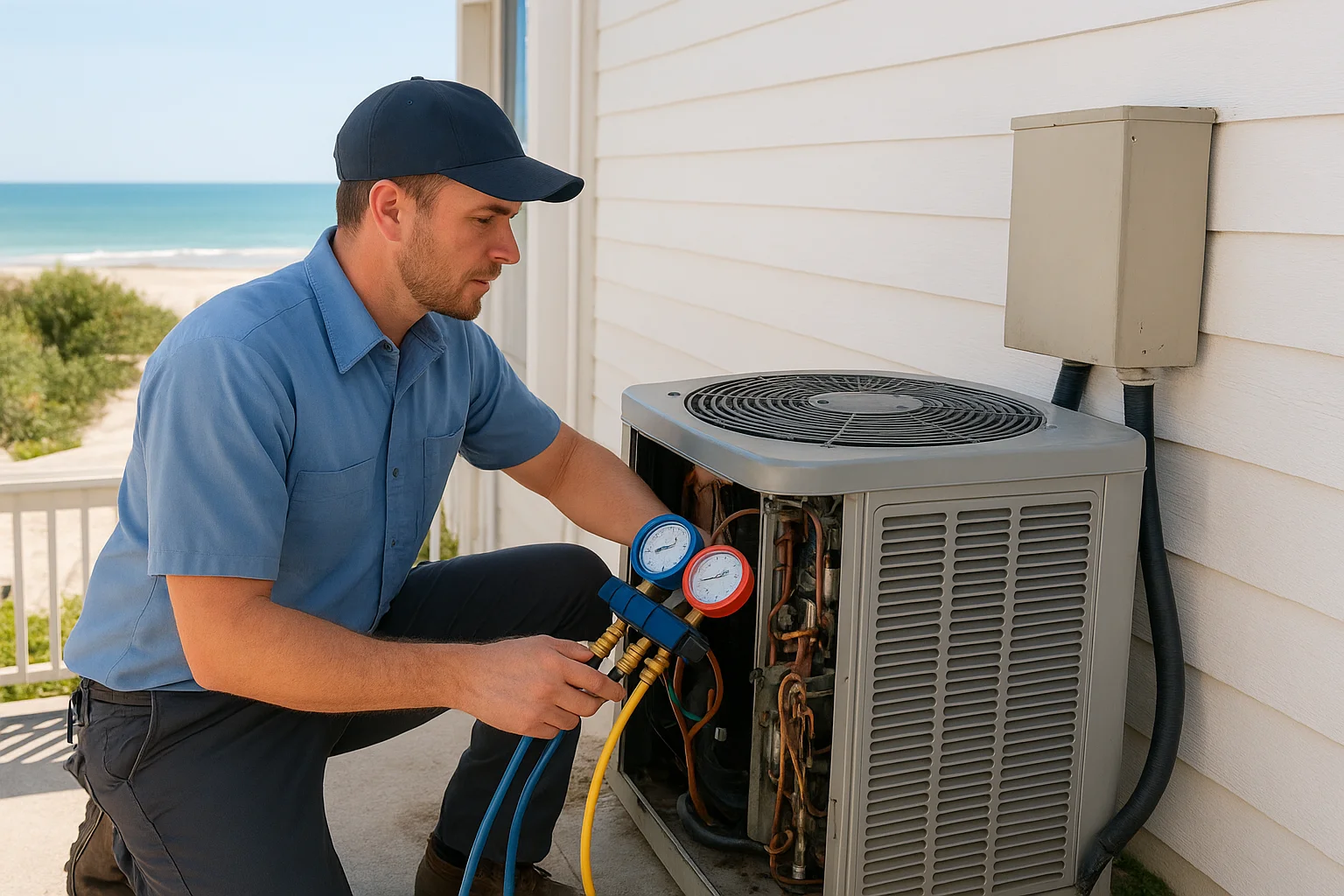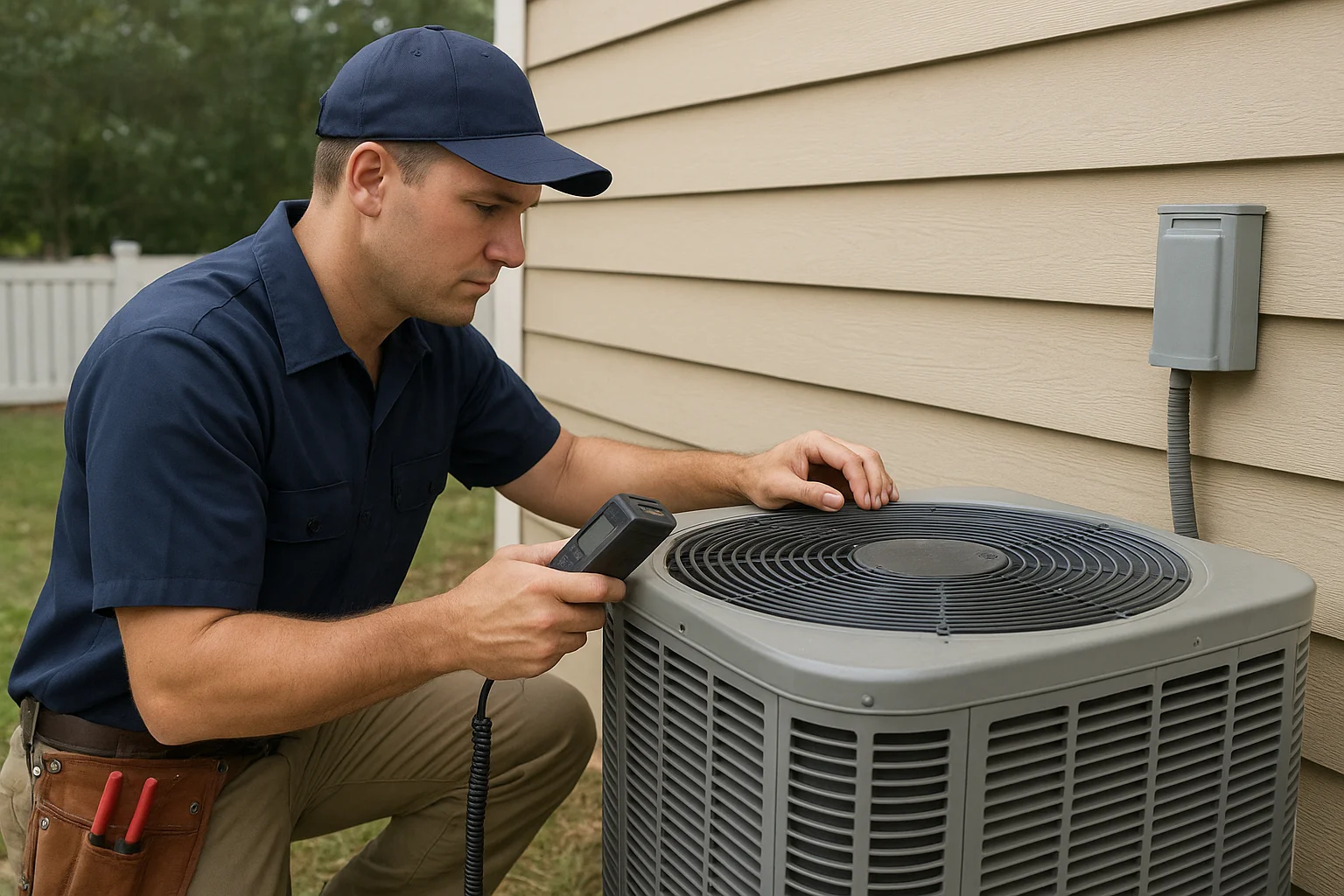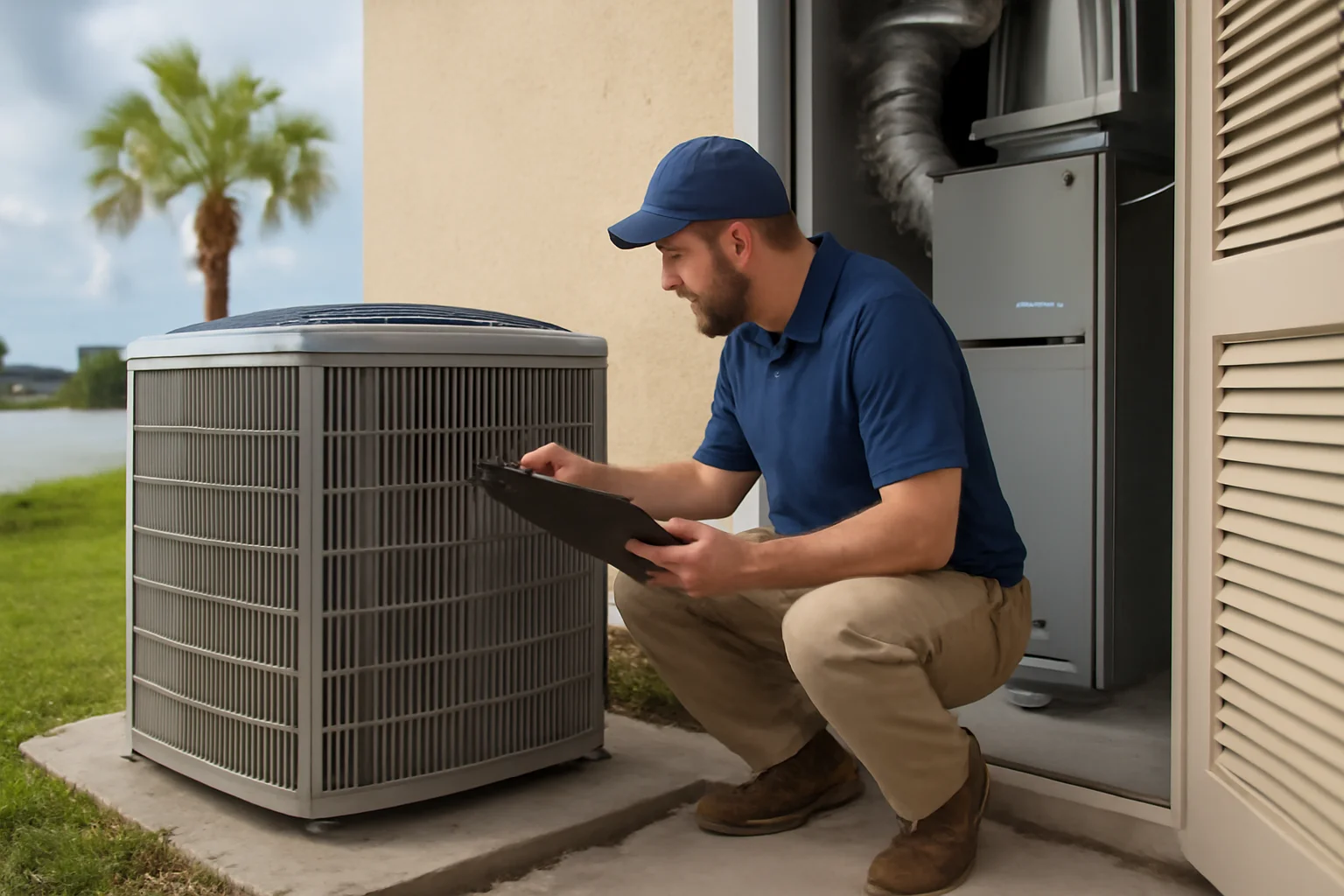
Panama City, FL homes work hard for their air conditioning. Long summers, sticky humidity, and coastal salt air push HVAC systems to run more often, for longer hours, and in conditions they were not designed to “rest.” Over time, that wear and tear changes how your system performs and what an air conditioning inspection in Panama City, FL needs to catch.
At A Superior Mechanical, we see how the same outdoor unit can look “fine” at a glance while key components are struggling. This guide explains how wear affects inspection results for homeowners, what to look for between visits, and why a professional HVAC company matters in Bay County.
Why Panama City conditions speed up AC wear
Air conditioning in Panama City is not just about temperature. It is about humidity, airborne contaminants, and the way airflow and condensate drainage behave when the system runs constantly.
Florida heat changes system stress
When daytime highs stay high and nights do not cool down much, your AC runs longer cycles. That increases wear on moving parts, raises the likelihood of refrigerant system inefficiencies, and can contribute to indoor comfort issues like uneven room temperatures.
Humidity affects comfort, corrosion, and condensate drainage
High humidity makes the system remove moisture from indoor air. That moisture leaves through condensate drainage. If drainage is slow, partially blocked, or routed poorly, it can lead to leaks, musty odors, and higher indoor humidity. It can also contribute to microbial growth in areas where moisture collects.
Salt air and coastal dust can affect coils and airflow
Near the coast, airborne salt and coastal dust can settle on the outdoor coil and surrounding surfaces. Even if you do not see heavy buildup, fine deposits can reduce heat transfer. Reduced heat transfer can force the system to work harder, which can increase energy use and accelerate component wear.
How wear and tear shows up during an AC inspection
A good inspection is more than a quick visual check. Wear changes system behavior, and an experienced technician uses that behavior to guide what to inspect next. For homeowners, the biggest value is catching problems early, before they become an emergency cooling concern during the hottest weeks.
Airflow problems become harder to ignore
Air conditioning relies on consistent airflow across indoor components and through ductwork. Wear and tear can show up as weak supply airflow, hot spots, or rooms that never feel comfortable. Common contributors include clogged filters, dirty indoor coil surfaces, duct restrictions, and air leaks.
During an inspection, technicians typically evaluate airflow patterns and system performance as a whole. If airflow is restricted, the system can run longer to reach set temperatures, which increases wear and energy use.
Ductwork issues can worsen indoor air quality
When dust, humidity, and airflow problems combine, indoor air quality can suffer. Even if the system cools, occupants may notice dryness, odors, or allergy-type symptoms. Duct leakage can also pull in unconditioned air from attics, crawlspaces, or garages, which can add heat and moisture load.
If you are searching for duct inspection near me or duct cleaning near me, keep in mind that duct cleaning is not always the first step. A proper inspection helps determine whether the issue is airflow, duct leakage, contamination, or a combination.
Refrigerant system strain can develop gradually
Your refrigerant system is designed to move heat out of the home. Wear and coastal conditions can contribute to inefficiencies over time, and refrigerant-related issues can develop gradually. That is why inspection matters even when the unit still runs.
Homeowners should not try to diagnose refrigerant problems at home. Refrigerant diagnosis requires an in-person evaluation and appropriate tools. If anything seems off, an HVAC professional should verify system operation before recommending repairs or next steps.
Corrosion and coil performance changes over seasons
Outdoor coils can collect salt, dust, and organic debris. Over time, that buildup can reduce heat transfer. Coil corrosion can also develop, especially when the system runs in humid conditions and when airflow is restricted.
In an inspection, the goal is to identify whether coil performance is being limited by buildup, corrosion, or airflow restrictions. It also helps determine whether cleaning and maintenance are enough or whether additional repairs may be needed.
Condensate drainage concerns can create moisture problems
Wear and tear often shows up at the “wet” side of the system. If the condensate line is partially blocked, the drain pan can overflow. Homeowners may notice water around the indoor unit, damp drywall, or recurring musty smells.
Because moisture can affect indoor air quality and comfort, condensate drainage is a key inspection item in Panama City homes.
Thermostats, controls, and the comfort complaints you hear
Many homeowners report “AC repair near me” problems that are not actually mechanical failures. Sometimes the system is working, but controls are not. A worn thermostat, inaccurate sensor readings, or control issues can cause short cycling or temperature swings.
In an inspection, technicians consider how the thermostat is communicating with the system and whether settings match how the home actually behaves in Bay County heat. If you need thermostat installation near me or thermostat troubleshooting, it should be based on what the system is doing during operation.
Common wear-related issues in Bay County homes
Panama City has a mix of newer builds, older neighborhoods, and many vacation rentals. Each type of property can experience wear differently, but the themes are consistent.
Filters and airflow restrictions
Dirty filters reduce airflow and can cause the indoor coil to work less effectively. For homes with pets, renovations, or frequent dust, filter changes may need to be more frequent than the default schedule.
Drain line blockage and overflow risk
Humidity plus debris can slow condensate drainage. If the system does not drain properly, it can create moisture and comfort issues even when cooling seems “okay.”
Outdoor unit fin damage and debris buildup
Outdoor units can collect leaves, sand-like debris, and coastal grit. Over time, impacts can damage coil fins and reduce airflow through the outdoor coil.
Refrigerant system inefficiency from long run times
Extended run time in Florida heat increases the demand on the refrigerant system. Even when the unit starts and runs, inefficiencies can develop. Inspection helps determine whether the system is operating as expected and whether repairs are needed.
What a homeowner can do before the inspection
You do not need to become an HVAC technician to prepare. A few checks help your technician focus the inspection and helps you spot patterns.
Track comfort and cooling patterns
Write down when issues happen. Is it only in the afternoon heat? Does one room stay warm? Does the system struggle after a storm when humidity spikes? Patterns help explain whether the issue is airflow, ductwork, thermostat control, or coil performance.
Check the filter and airflow at vents
Look at the return filter and confirm it is installed correctly. If you notice weak airflow coming from supply vents, that can indicate airflow restrictions. Do not ignore persistent airflow complaints, especially during peak summer humidity.
Watch for moisture clues
Check around the indoor unit for signs of moisture. If you notice water, dampness, or recurring odors, mention it during your appointment. Condensate drainage and indoor humidity concerns are often connected.
Why preventive HVAC maintenance matters more in Panama City
In a coastal climate, wear and tear is not a one-time event. It is a gradual process driven by heat, humidity, and airborne contaminants. Preventive HVAC maintenance near me helps reduce the chance that a small issue turns into a larger repair or an emergency cooling situation.
Scheduling an inspection as part of routine maintenance can also support more consistent energy use. When airflow is restricted or coils are dirty, the system often runs longer than necessary. A professional maintenance plan addresses those performance drivers.
If you want to compare approaches, you may find these helpful:
- Air Conditioning Inspection in Panama City, FL: Smarter Maintenance for Coastal Homes
- A Practical Look at Air Conditioning Inspection for Homes in Panama City, FL
How inspections connect to repair decisions and system replacement planning
An inspection often clarifies whether repairs are likely to solve the problem or whether you are heading toward a longer-term decision like system replacement. That determination depends on what the technician finds in person, including how the system performs under real operating conditions.
Homeowners sometimes worry that an inspection is just a sales step. A professional inspection should focus on measurable performance and practical next steps, such as:
- Addressing airflow and ductwork concerns that limit comfort and efficiency
- Improving condensate drainage and moisture control
- Identifying component wear that may lead to future failures
- Confirming thermostat and control behavior
If you are considering upgrades, it can also be a good time to discuss options like heat pump services or reviewing whether your current setup fits the cooling load your home experiences in Bay County.
Airflow, ductwork, and indoor air quality are not separate issues
Many comfort complaints sound like “the AC is weak,” but the cause can be more complex. Wear and tear can reduce airflow, and duct leakage can increase humidity and heat load. Together, those issues can lead to higher energy use and indoor air quality concerns.
If you suspect ductwork problems, an inspection can help determine whether you need targeted work like duct sealing, additional airflow improvements, or further evaluation of system performance. For homeowners searching for duct inspection near me, the most helpful approach is to start with the system and airflow picture, not just the ducts in isolation.
Emergency cooling concerns: why early detection is your best protection
Florida summers do not pause for equipment failures. Even if your system is “usually fine,” wear can accumulate quietly. When the hottest stretch hits, small issues can become bigger ones.
If you want to reduce risk, it helps to know the value of reliable service coverage. You can also read: Why 24/7 HVAC Response Matters in Panama City Homes.
Choosing an HVAC company for inspection in Panama City
Hiring the right local HVAC contractor matters because coastal wear is not the same as inland wear. A licensed, experienced technician will know what to look for in Panama City homes and how to evaluate the system as a whole.
When you are comparing options for HVAC company near me or licensed HVAC contractor near me, consider whether the company:
- Inspects airflow and comfort patterns, not just the outdoor unit
- Checks condensate drainage and moisture risk
- Evaluates ductwork and its impact on indoor air quality
- Talks through findings based on an in-person evaluation
- Helps you plan next steps for repairs, preventive HVAC maintenance, or replacement
For air conditioning service in Bay County, you can explore Air Conditioning Services and Air Conditioning Systems. For scheduled inspections specifically, book through this Panama City air conditioning inspection service page.
If you want to see how the service area is covered across Bay County, visit this Bay County HVAC service overview and then select your city.
Schedule an AC inspection before the hottest weeks
Wear and tear is easiest to manage when it is still small. An air conditioning inspection in Panama City, FL helps identify issues related to airflow, refrigerant system performance, condensate drainage, thermostat control, and indoor air quality before they become urgent.
When homeowners schedule preventive HVAC maintenance, they are not just protecting comfort. They are also protecting energy use and reducing the chances of a mid-summer breakdown when humidity is high and coastal air is working its way into every surface of the system.
Find Air Conditioning Inspection in Panama City, FL
If you need Air Conditioning Inspection in Panama City, FL, visit our local service page or contact A Superior Mechanical today.
Map of Panama City, FL
Frequently Asked Questions
How does salt air in Panama City affect an AC inspection?
Salt air can contribute to buildup and corrosion on outdoor coils and nearby surfaces. During an inspection, a technician evaluates coil condition, airflow pathways, and overall system performance to see whether coastal wear is limiting heat transfer.
Can humidity cause problems that look like AC failure?
Yes. High humidity increases condensate drainage demand. If drainage is slow or blocked, homeowners may notice moisture, odors, or uneven comfort even when the unit seems to run. An inspection checks condensate drainage and indoor humidity-related comfort issues.
What should I expect during a residential air conditioning inspection?
A professional inspection focuses on system operation and performance, including airflow, ductwork-related comfort issues, condensate drainage, thermostat/control behavior, and refrigerant system operation. It is done in person so the technician can verify conditions safely.
Is duct cleaning the first step if my home has indoor air quality concerns?
Not always. Duct cleaning can be appropriate in some situations, but an inspection should first determine whether the issue is airflow, duct leakage, moisture, filtration, or contamination. That helps you avoid unnecessary steps.
How often should I schedule preventive HVAC maintenance in Bay County?
Many homeowners schedule maintenance before the hottest part of the year and follow their technician’s recommendations based on system age, usage, and observed wear. If you are noticing comfort issues, it is worth scheduling an inspection sooner.
Related Articles
Photo Gallery