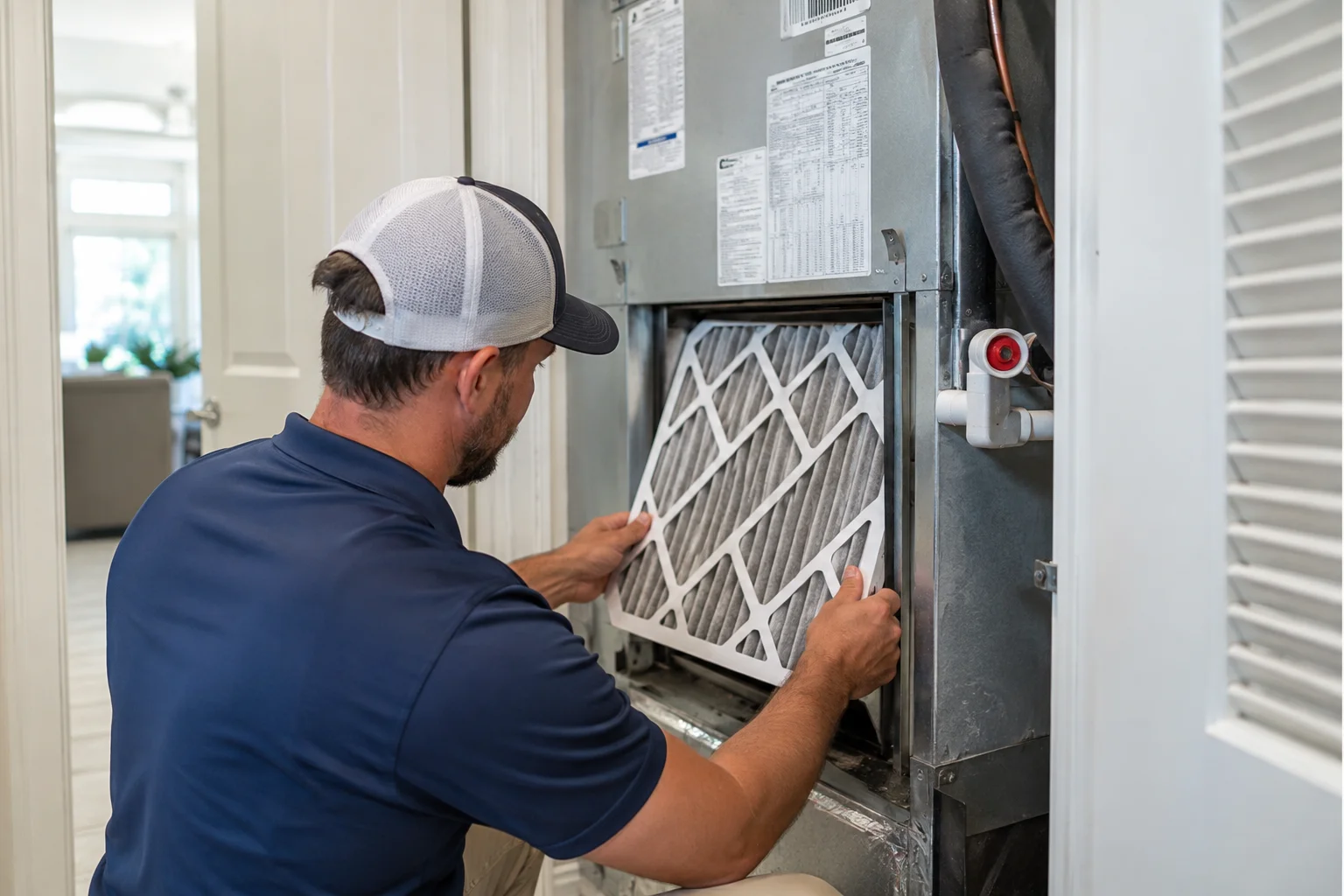
In a 30A home, cleaner indoor air depends on more than the filter behind the return grille. Coastal humidity, open doors, sandy shoes, busy rental schedules, and the condition of your HVAC system all affect what circulates through the rooms. A purifier can help with certain pollutants, but it cannot repair leaking ductwork or make an oversized air conditioner remove moisture effectively.
Planning air filtration and purifiers in 30A, FL starts with understanding the whole system. A Superior Mechanical helps homeowners connect indoor air quality improvements with airflow, humidity control, and preventive care rather than treating each concern as a separate purchase.
Coastal living puts different demands on indoor air
Along Scenic Highway 30A in Walton County, long cooling seasons keep air conditioners and heat pumps working through extended periods of hot, humid weather. Pollen and outdoor particles enter through doors and windows. Showers, cooking, and crowded vacation homes add moisture indoors. During milder weather, shorter cooling cycles may leave rooms feeling damp even when the thermostat shows a comfortable temperature.
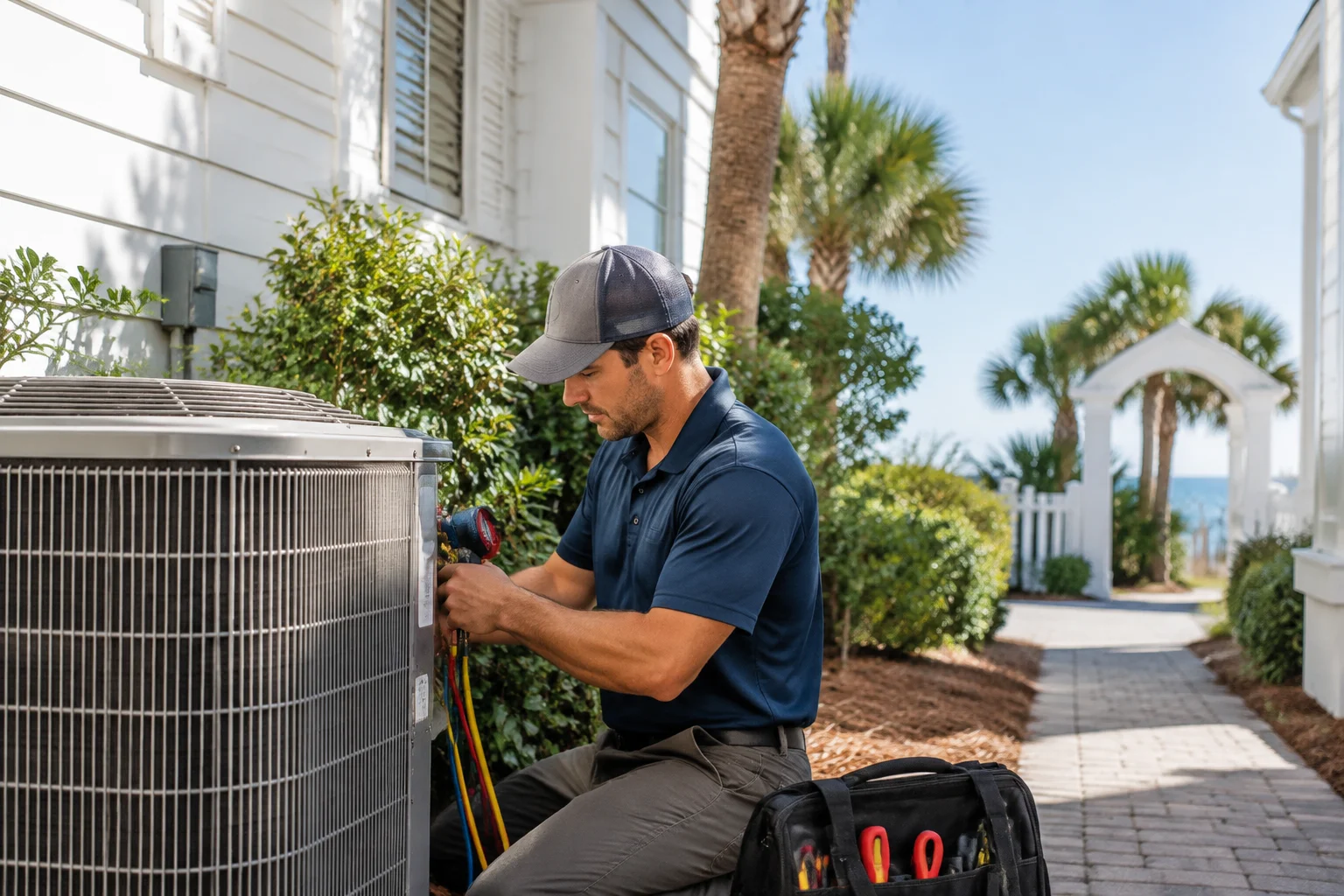
Salt air primarily threatens exposed HVAC components, especially outdoor condensers and their coils. Corrosion, debris, and storm damage can affect reliability and heat transfer. Indoor filtration does not protect an outdoor unit from coastal exposure, so equipment care remains a separate part of the plan.
Older homes may have leaky ducts or limited return airflow. Newer, tighter homes may need carefully managed ventilation to keep indoor pollutants from building up. Remodels and additions can change both conditions, particularly when an existing system serves more space without a new load calculation.
Identify the problem before choosing the product
Dust on furniture, lingering cooking odors, uneven temperatures, and musty rooms can have different causes. Before investing in equipment, note where the problem occurs, whether it changes with system operation, and whether it began after construction, a storm, or a change in occupancy.
Dust and allergy concerns
A poorly fitted filter can allow air to bypass the media. Return duct leaks may draw dusty air from an attic or wall cavity. Renovation debris, pet dander, and outdoor pollen can add to the load. Homeowners searching for allergy air filtration near me should ask about filter fit, duct condition, and particle removal rather than assuming the highest filter rating is automatically best.
Odors and dampness
Persistent musty odors deserve an inspection for moisture sources, including drain pans, evaporator coils, condensate drain lines, and nearby building materials. Filtration does not correct water intrusion or remove established mold growth. If an odor returns quickly after cleaning, finding the source matters more than masking it with an air treatment device.
Match filtration to the HVAC system's airflow
A central filter must capture particles without restricting airflow beyond the equipment's operating limits. MERV ratings describe particle capture performance, but resistance also depends on filter design, dimensions, and how much dirt it holds. A higher rating is not a complete buying guide.
MERV 13 filtration can improve capture of smaller particles when the system can accommodate it. Some homes need a deeper media cabinet, a larger filter area, or return duct improvements first. An HVAC contractor should evaluate available space, manufacturer requirements, airflow, and static pressure before recommending an upgrade.
Too much resistance can reduce cooling performance and contribute to evaporator coil icing. In a furnace, inadequate airflow may cause overheating and safety limit trips. A better filter should not come at the expense of reliable cooling or heating.
A Superior Mechanical's air filtration and purifier services in 30A provide a starting point for discussing whole-home filtration and air treatment options that fit your equipment and concerns.
Filters, purifiers, and air scrubbers do different jobs
Mechanical filters capture airborne particles as air passes through them. They do not remove moisture, and standard particle filters do little for gases or many odors. Products sold as air purifiers or air scrubbers use different technologies, so the product name alone does not tell you how well a device will address your problem.
Particle filtration and room-level support
A properly sized portable HEPA cleaner can supplement central filtration in a bedroom or other frequently used room. Choose it using a clean air delivery rate appropriate for the space, and consider noise at the fan speed you will actually use. True HEPA filtration in a central HVAC system generally requires a purpose-designed arrangement rather than a restrictive drop-in replacement.
Odor media and UV equipment
Activated carbon can adsorb some gases and odors, but results depend on the pollutant, the amount of media, and replacement frequency. Thin carbon pads have limited capacity. Certain UV systems can help control microbial growth on illuminated coil surfaces when properly selected and maintained, but they do not capture dust or replace moisture correction.
Ask for independent performance information and ozone emissions testing when considering electronic or active air treatment products. Avoid devices that intentionally produce ozone. No purifier should be presented as a guarantee against illness or a substitute for cleaning, source control, and appropriate ventilation.
Humidity control belongs in the same conversation
For coastal homes, relative humidity around 40 to 50 percent is often a practical comfort target, while sustained readings above 60 percent warrant attention. Use a reliable humidity monitor and compare readings in several rooms. A thermostat's temperature reading alone cannot tell you whether the home is too damp.
If humidity stays high, a technician should check equipment sizing, runtime, airflow, duct leakage, and condensate drainage. An oversized air conditioner may cool the house quickly and shut off before removing enough moisture. Refrigerant leaks or dirty coils can also undermine performance, but neither should be diagnosed from humidity readings alone.
Homeowners searching for dehumidifier installation near me may benefit from a dedicated whole-home unit when cooling alone cannot manage the moisture load. Proper sizing, duct connections, controls, and drainage are essential. Lowering the thermostat repeatedly is not a reliable substitute for resolving excess humidity.
Follow the air through ducts, vents, and returns
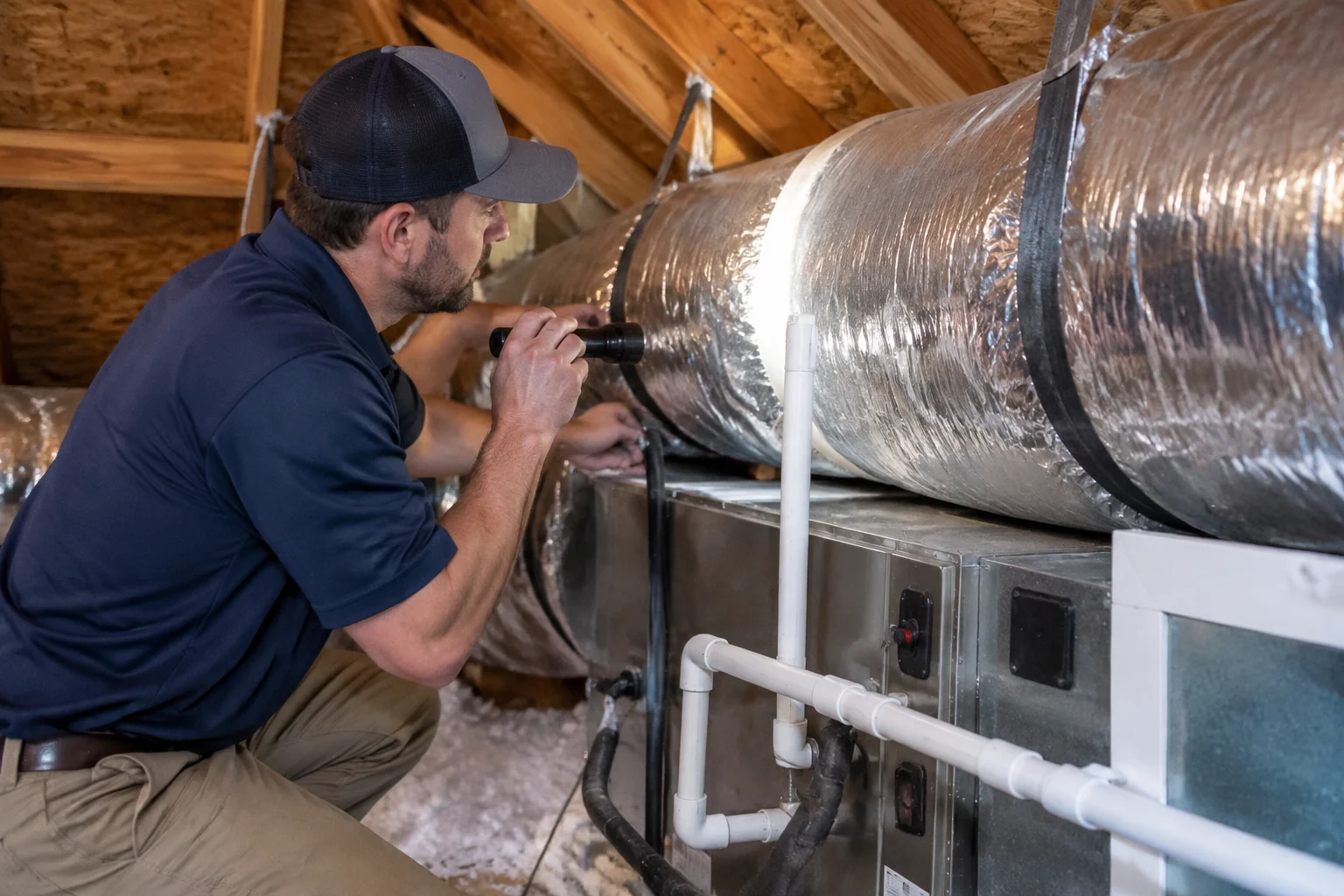
Filtration only treats the air that reaches the filter. Leaking return ducts, damaged insulation, blocked vents, and inadequate return paths can interfere with comfort and indoor air quality. Furniture over a return grille or a closed bedroom door without an adequate return path can create pressure differences and uneven temperatures.
Duct sealing and ductwork repair can address accessible leaks and damaged connections. When ducts are deteriorated, poorly sized, or unsuitable for a remodeled layout, duct replacement in 30A may be more appropriate than repeated patching. Testing helps determine which approach is justified.
Ductless mini splits need separate attention because they do not send room air through a central filter. Their washable filters, indoor coils, blowers, and drains need regular care. Check manufacturer instructions before adding any filter material that could restrict airflow.
Use controls to support comfort and efficiency
Smart thermostat installation can improve scheduling and provide useful alerts, but controls cannot compensate for an equipment or duct problem. For many cooling systems, keeping the fan in AUTO rather than continuous ON helps limit moisture re-evaporating from a wet coil between cycles. Follow the equipment manufacturer's guidance, especially with variable-speed systems and dedicated humidity controls.
In vacation properties, avoid leaving the cooling system off for long periods during humid weather. A moderate setback with humidity monitoring is usually more practical than allowing the building to become hot and damp. Remote alerts can help owners notice trouble before the next arrival.
If replacement is being considered, discuss load calculations, moisture removal, and filtration compatibility as part of air conditioning installation planning. High efficiency equipment performs best when correctly sized and connected to suitable ductwork.
Build maintenance around coastal conditions and occupancy
Check filters monthly at first, then establish a replacement schedule based on actual loading and manufacturer guidance. Pets, remodeling, and frequent guest turnover can shorten filter life. Use the specified dimensions, install the filter in the correct airflow direction, and avoid stacking filters unless the system was designed for that arrangement.
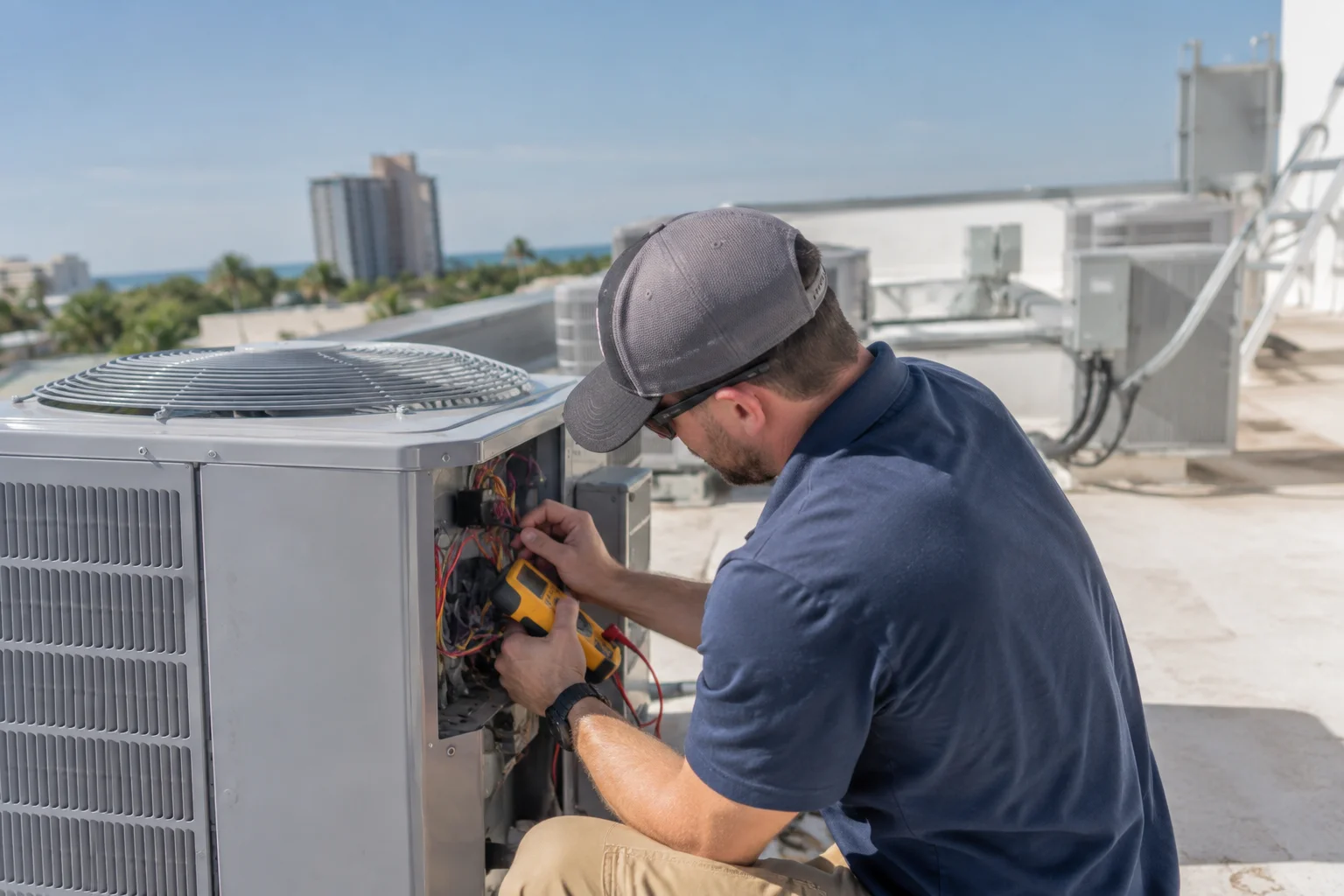
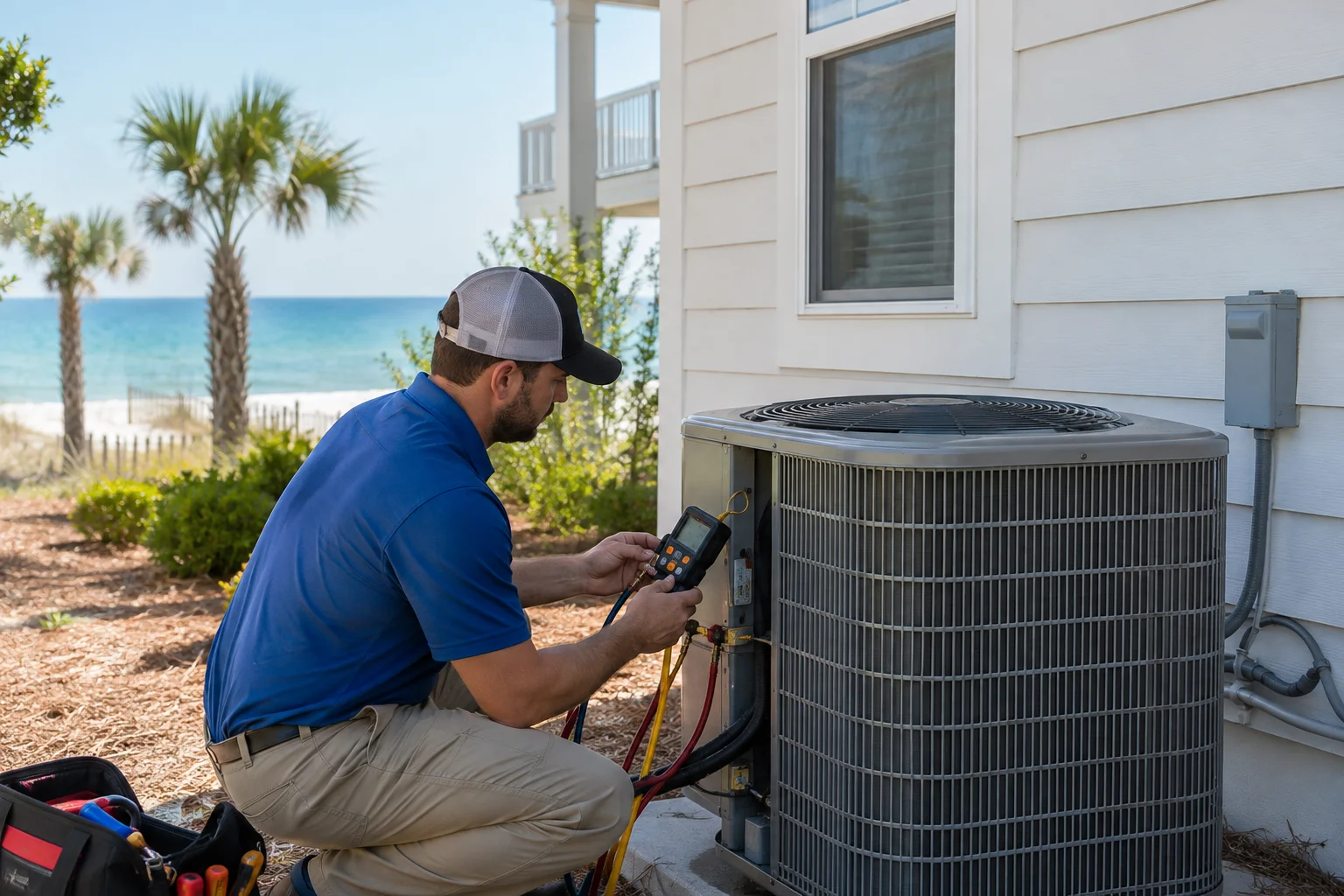
Professional air conditioning maintenance should address more than the filter. Appropriate checks include coil condition, blower operation, condensate drainage, electrical components, operating performance, and duct concerns. Air handlers tucked into closets or attics still need safe service access.
For owners searching for ac maintenance near me, scheduling before peak summer demand gives more time to resolve problems. Heat pumps also need heating-mode checks before cooler weather. Homes with furnaces should have manufacturer-recommended heating service, including combustion safety checks where applicable.
Keep vegetation and stored items clear of outdoor units according to manufacturer requirements. After storms, look for obvious debris or damage from a safe distance. Do not pressure-wash coils or apply cleaners without approved instructions, since fins and protective coatings can be damaged.
Know which symptoms need prompt HVAC attention
Weak airflow, repeated shutdowns, rising indoor humidity, or a suddenly ineffective system call for diagnosis rather than another filter upgrade. Ice on refrigerant lines or an evaporator coil can indicate restricted airflow or a refrigerant problem. Stop cooling operation and contact a professional; do not chip away the ice or keep running the system.
Water around an air handler can come from a blocked drain, a damaged pan, or thawing ice. If safe to do so, shut the system off to limit damage and arrange service. Refrigerant leaks require professional repair, not repeated topping off without addressing the cause.
Smoke, a burning smell, or repeated breaker trips are more urgent. Stop using the equipment if it is safe, and seek appropriate help. For fire, a suspected gas leak, or a carbon monoxide alarm, leave the building and contact emergency services. Never bypass a safety switch or keep resetting a breaker.
Storm outages also require planning. The article on backup power planning for 30A homes explains a related consideration, but backup power does not make flooded or damaged HVAC equipment safe to operate.
A practical plan for your 30A property
When comparing local contractors through an hvac service near me search, ask how they evaluate airflow, humidity, and the pollutants you want to reduce. A useful recommendation should explain equipment compatibility, expected benefits, maintenance needs, and ongoing filter or media costs.
A Superior Mechanical provides HVAC service in the 30A area within its Walton County service area. Local experience matters when planning for salt exposure, seasonal occupancy, storm recovery, and heavy summer demand. Start with a system assessment, correct moisture and airflow problems, and select filtration or purification equipment that supports the way your home actually operates.
Find Air Filtration and Purifiers in 30A, FL
If you need Air Filtration and Purifiers in 30A, FL, visit our local service page or contact A Superior Mechanical today.
Map of 30A, FL
Frequently Asked Questions
What air filter rating is best for a home in 30A?
The best rating depends on your HVAC system's airflow capacity and your particle removal goals. MERV 13 can improve capture of smaller particles if the equipment can handle it. A technician should check filter dimensions, static pressure, and manufacturer requirements before recommending a higher-rated filter.
Will a whole-home air purifier reduce coastal humidity?
No. Air purifiers and particle filters do not remove excess moisture. Humidity control may require correcting duct leaks, drainage issues, or cooling performance, and some homes benefit from a properly sized whole-home dehumidifier.
How often should filters and air purifiers be serviced in a 30A rental home?
Inspect HVAC filters monthly at first and replace them based on visible loading, system requirements, and manufacturer instructions. Heavy occupancy, pets, and renovation dust may require more frequent replacement. Purifier media, UV lamps, and other components have separate service schedules that should follow the specific product's instructions.
Related Articles
Photo Gallery