Your thermostat reads 74 degrees, but the bedrooms still feel sticky. Towels dry slowly, a closet smells musty, and lowering the temperature only makes the house colder. In Lynn Haven, that combination often means temperature control and humidity control are not keeping pace with each other.
A whole home dehumidifier can help, but good results start with understanding the entire HVAC system. Equipment sizing, ductwork, drainage, and controls all matter. For homeowners considering whole home dehumidifiers in Lynn Haven, FL, the goal should be reliable moisture removal without hiding an AC problem or wasting energy.
Why Lynn Haven Homes Can Feel Damp Even With the AC Running
Lynn Haven's warm, humid climate creates a long cooling season, but moisture problems do not disappear when temperatures ease. Rainy periods and mild, humid days can leave a home needing moisture removal when it needs very little cooling. The air conditioner may satisfy the thermostat before removing enough water from the air.
Coastal weather also affects equipment condition. Salt air exposure can contribute to corrosion on outdoor units and condensers, while storms can leave debris around equipment or introduce water through building leaks. A dehumidifier addresses moisture in indoor air, not roof leaks, flood damage, or standing water.
Older homes may admit humid air through aging windows, wall penetrations, or leaky return ducts. Newer homes can hold moisture from showers, cooking, and occupants inside a tighter building envelope. Neither age nor construction style automatically determines whether a home needs additional humidity control.
Measure Humidity Before Changing Equipment
A small digital hygrometer is a useful starting point. Check several rooms over several days, including after showers and during rainy weather. Keep the device away from supply vents, direct sunlight, and bathroom steam so it measures typical room conditions rather than a temporary local spike.
Indoor relative humidity generally should stay between 30 and 50 percent when practical, and below 60 percent. A setting around 45 to 50 percent is often a reasonable starting point for a humid Florida home. The right target depends on comfort, building conditions, and equipment capability.
Clues that deserve a closer look
Persistent clamminess, recurring musty odors, condensation, and damp-feeling fabrics warrant investigation. None proves that a dehumidifier is the only answer. Condensation on one vent may indicate missing insulation or air leakage. A musty closet may have a building leak. Record where symptoms occur and whether they change with AC operation.
Separate an AC Repair Problem From a Moisture-Control Problem
An air conditioner removes moisture as indoor air passes over its cold evaporator coil. Reduced performance can come from dirty filters, coil buildup, incorrect blower settings, refrigerant leaks, or restricted airflow. An oversized system may cool quickly and shut off before completing enough moisture removal.
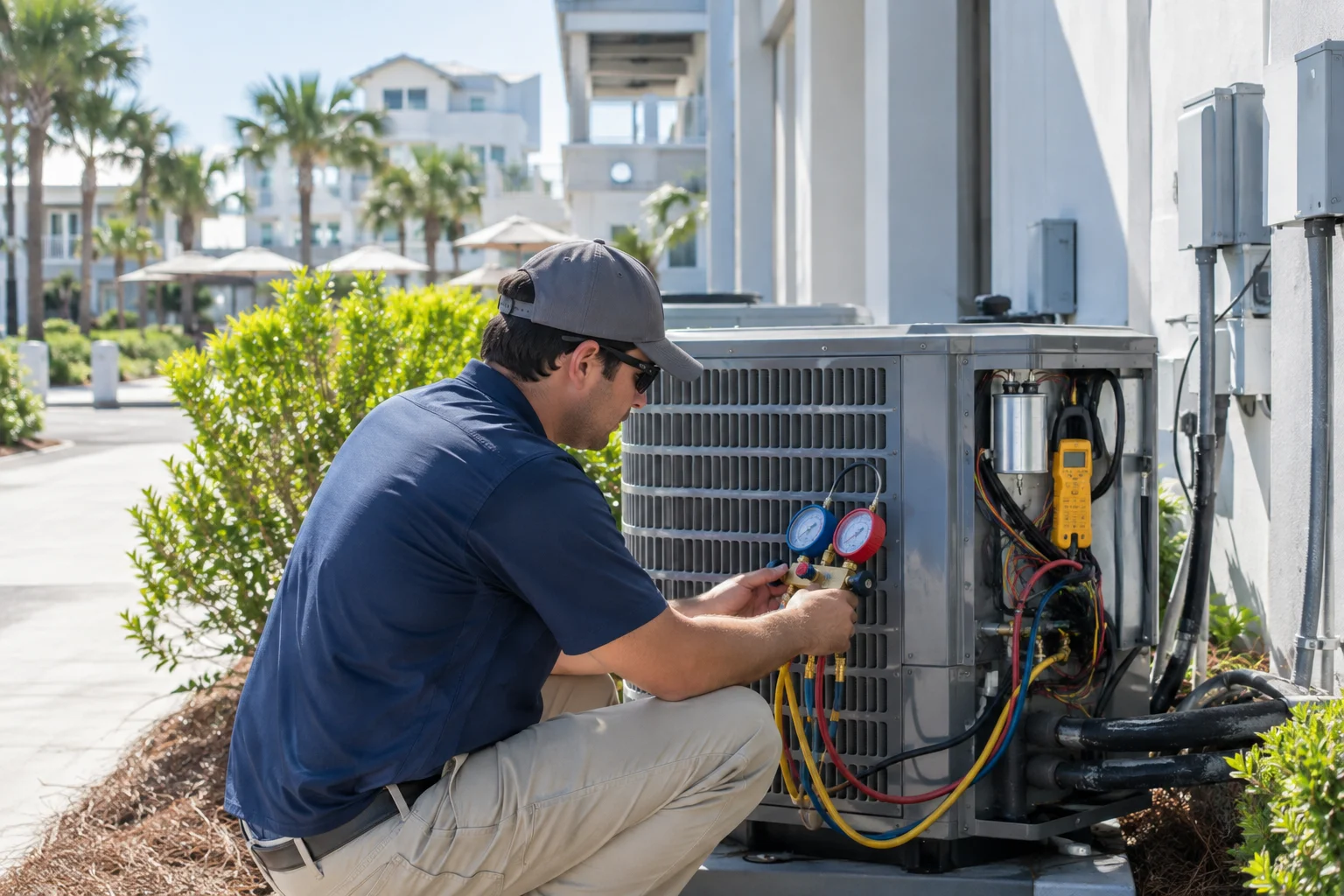
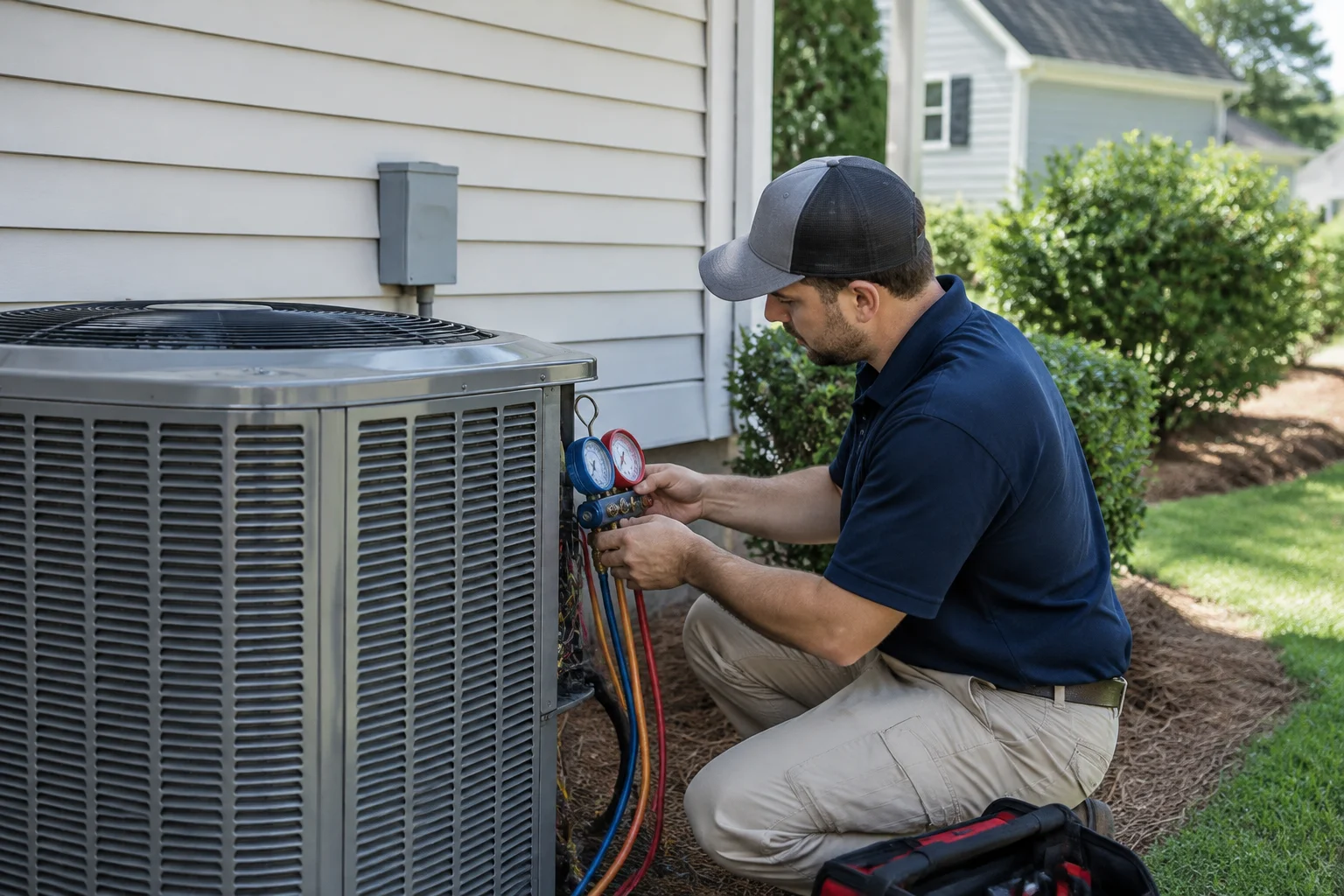
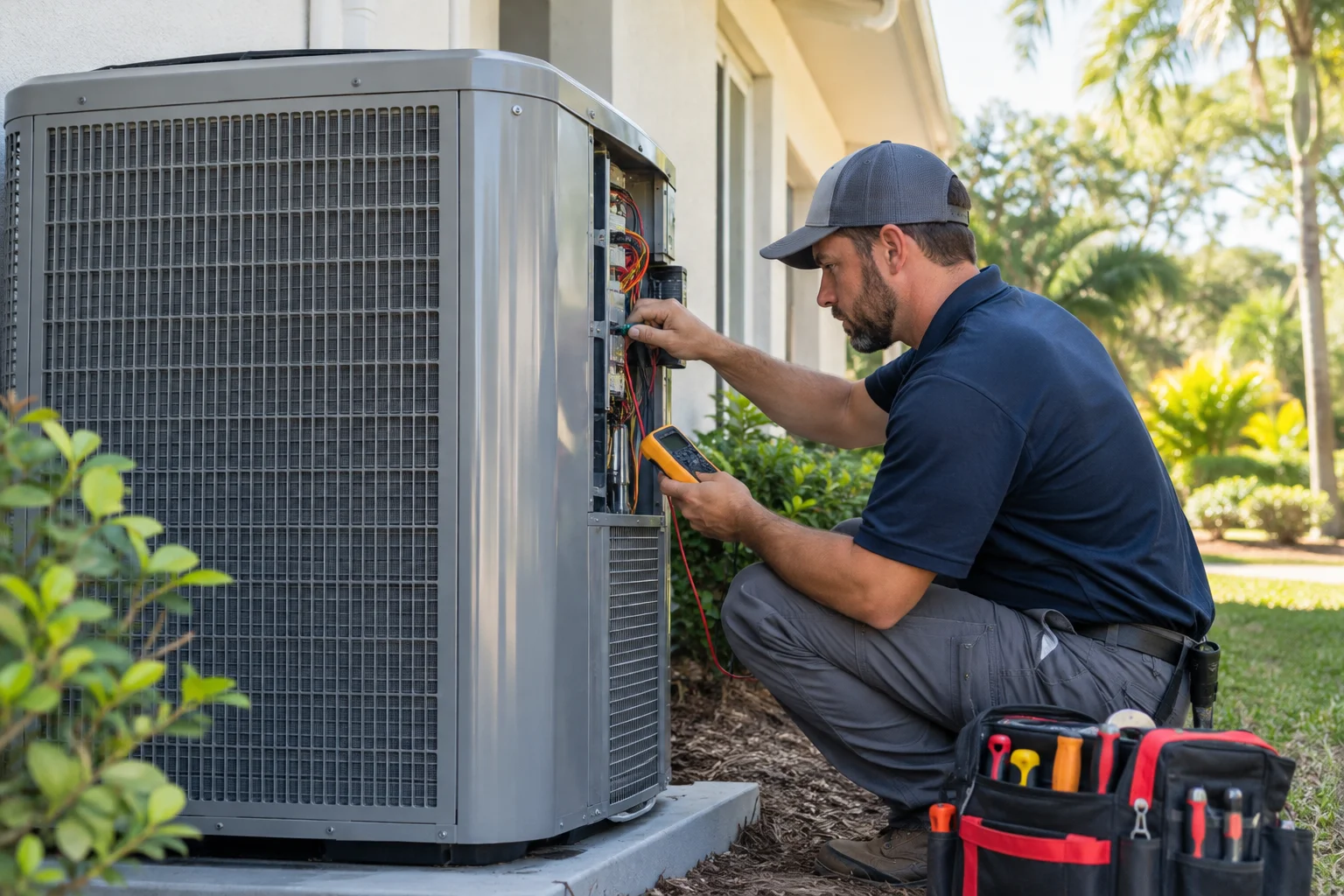
Homeowners searching for AC repair near me because their house feels damp should describe both temperature and humidity symptoms. A technician can check equipment operation, inspect the evaporator coil and drain pan, evaluate airflow, and determine whether refrigerant testing is necessary. Repeatedly adding refrigerant without addressing a leak is not a lasting repair.
A dedicated dehumidifier is useful when a properly operating cooling system still cannot manage the moisture load. It should not be installed simply to compensate for an unresolved AC fault. If replacement is already needed, coordinate humidity planning with air conditioning installation in Lynn Haven.
How Whole Home Dehumidifiers Work With Your HVAC System
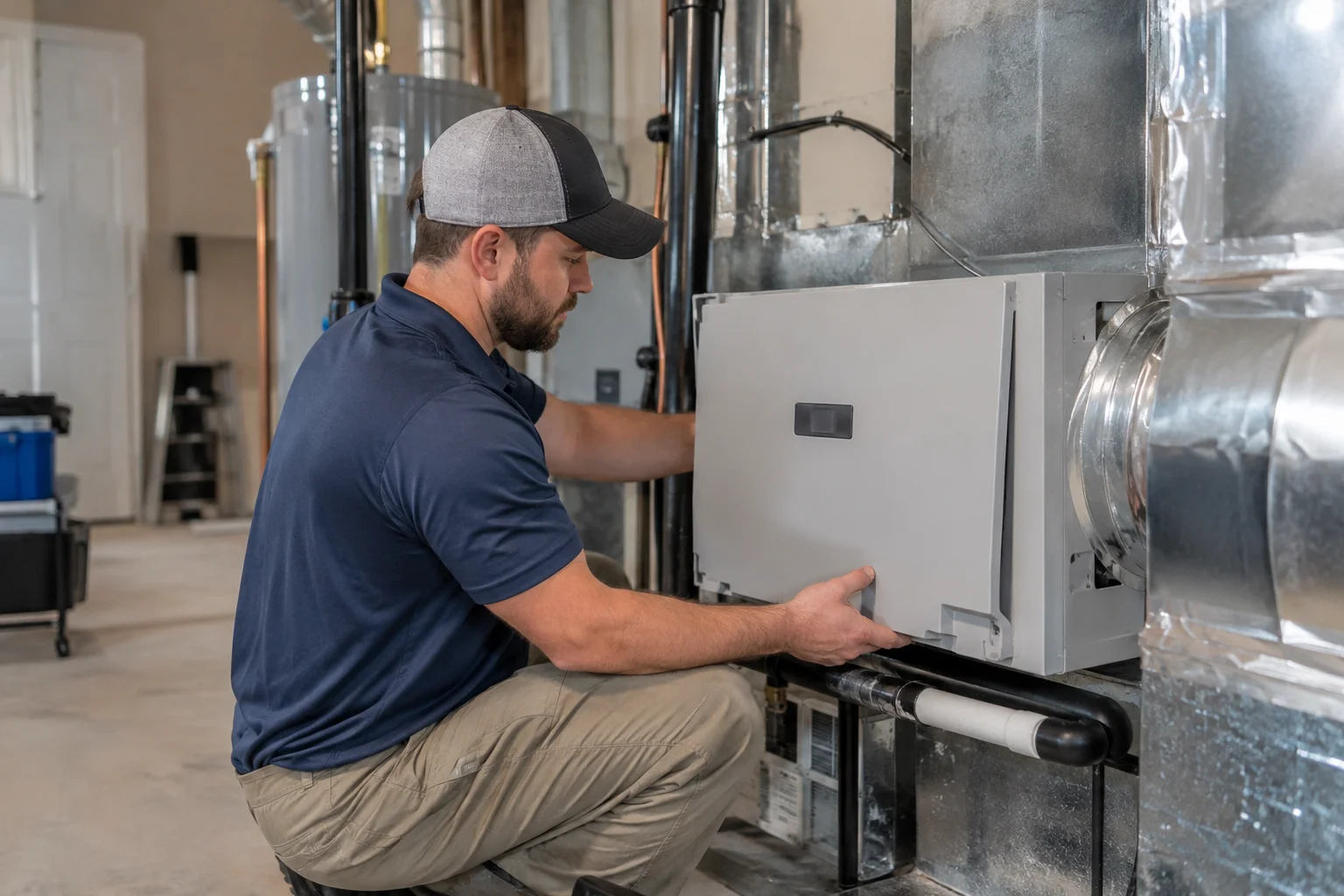
A whole home dehumidifier draws in humid air, cools it across a coil to condense moisture, drains the collected water, and delivers drier air back into the home. Unlike a portable unit serving one room, a ducted system can distribute its benefits across multiple living areas.
It can remove moisture without requiring a cooling call, although some installations need coordinated air handler operation to distribute air. The unit releases heat during operation, so placement, duct connections, and control settings influence overall comfort and energy use.
Integration depends on the equipment already installed
Central heat pumps and systems using furnaces with central AC may accommodate ducted dehumidification, subject to their layout and controls. Homes with ductless mini splits need a separate distribution plan because there may be no central duct network. A mini split's dry mode can help under certain conditions, but it is not equivalent to dedicated whole home humidity control.
Choose Capacity for the House, Not Just Its Square Footage
Two homes with the same floor area can have very different moisture loads. Occupancy, ceiling height, air leakage, ventilation, shower use, and indoor temperature all affect how much water a dehumidifier must remove. Published pint-per-day ratings also depend on test conditions, so capacity should be evaluated against actual operating conditions.
Remodels and additions deserve particular attention. An enclosed porch, converted garage, or new bedroom may have been connected to existing ductwork without an airflow assessment. More living space does not necessarily mean the existing air handler or ducts can distribute air properly.
Ask the contractor to explain equipment selection, expected operating conditions, available installation space, noise considerations, and service access. Choosing a larger model without evaluating those details is not a substitute for proper design.
Airflow and Ductwork Decide Where the Comfort Goes
Dry air cannot help a bedroom it rarely reaches. Crushed flex duct, disconnected branches, blocked vents, and inadequate return paths can leave some rooms uncomfortable while the main living area feels fine. Closed bedroom doors can expose return-air limitations that are less noticeable during the day.
A professional duct inspection can identify leakage, damaged insulation, and distribution problems before equipment is added. Leaky returns in an attic may pull hot, humid air into the system. Supply leaks waste conditioned air and can contribute to pressure imbalances that encourage outdoor air infiltration.
If you are searching for return air duct repair near me, mention any humidity differences between rooms. Ductwork repair and duct sealing may be part of the solution. Keep furniture clear of returns, and avoid closing multiple supply vents to redirect air, which can increase resistance through the system.
Controls Should Manage Moisture Without Overcooling
A thermostat measures temperature, but not every thermostat measures or controls humidity. A dedicated humidistat or compatible integrated control allows moisture removal to respond to actual indoor conditions. Sensor location matters: a reading beside a supply register may not represent the rest of the home.
During thermostat installation or a control upgrade, ask how cooling, heating, and dehumidification will interact. The goal is to avoid unnecessary blower operation or conflicting calls. A review of heating control systems and HVAC controls can help coordinate compatible equipment.
For many conventional AC systems, using the fan's AUTO setting instead of continuous ON can reduce moisture re-evaporation from a wet coil between cooling cycles. Follow equipment-specific guidance, especially where ventilation or dehumidifier operation requires a different fan strategy.
Drainage and Service Access Belong in the Installation Plan
A dehumidifier needs a dependable route for condensate. The installer should evaluate drain-line routing, required slope or pump operation, manufacturer instructions, and applicable code requirements. Where appropriate, overflow protection can help reduce water-damage risk if drainage fails.
Equipment also needs clearance for filter changes, coil inspection, and repairs. Installing a unit in a difficult attic corner may save space, but it can complicate every future maintenance visit. Discuss access, vibration isolation, and sound before installation.
Existing AC drain lines deserve attention at the same time. A clogged drain or damaged pan can create moisture problems even when indoor relative humidity appears acceptable. Do not assume a dehumidifier will dry out concealed wet materials or correct an active leak.
Humidity Control Supports Indoor Air Quality, With Limits
Reducing excess humidity can make conditions less favorable for mold growth and dust mites, while improving comfort and helping protect moisture-sensitive belongings. It does not remove every airborne pollutant, sterilize a house, or replace remediation where mold or water damage already exists.
Homeowners exploring indoor air quality near me should consider moisture control alongside filtration, source control, and appropriate ventilation. Filters capture particles; dehumidifiers remove water vapor. Those are different jobs, and a complete plan may require both.
Use the filter type and size recommended for your system. A more restrictive filter is not automatically better if the blower and ductwork cannot accommodate it. Bathroom exhaust fans and a properly vented kitchen hood also help remove moisture near its source.
Keep Efficiency and Prevention on the Same Schedule
Drier air may feel comfortable at a slightly higher cooling setpoint, but energy savings are not guaranteed. A dehumidifier consumes electricity and adds heat indoors. Its value depends on appropriate sizing, efficient operation, reduced overcooling, and the condition of the house and HVAC system.
Routine care protects moisture-removal performance
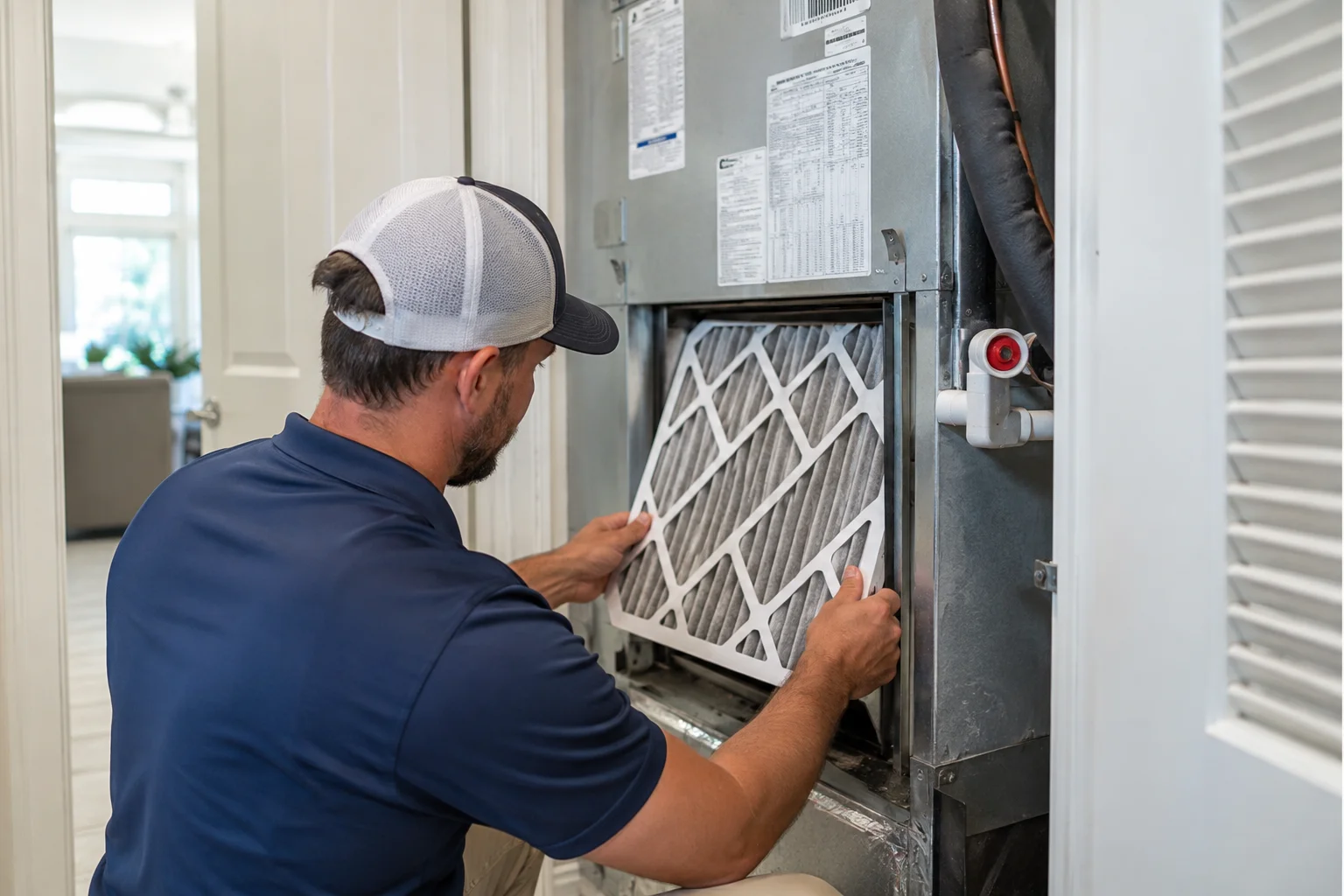
Check filters regularly and clean or replace them according to manufacturer instructions. Schedule inspection of the dehumidifier's coils, drainage, controls, and airflow. Central HVAC maintenance should also address the air handler, evaporator coil, outdoor condenser, and condensate system.
For a coastal maintenance perspective, see why consistent maintenance matters for whole home dehumidifiers. Similar principles apply in Lynn Haven: clean equipment, clear drains, and verified controls help prevent small performance losses from becoming recurring comfort complaints.
Arrange service ahead of peak summer demand when possible. Heat pumps also need heating-season checks. If heating repair, heat pump repair, or furnace service becomes necessary, mention any shared blower or thermostat concerns that could affect year-round air distribution.
Know Which Problems Need Prompt Professional Attention
Persistent humidity above 60 percent, repeated short cycling, ice on refrigerant lines, weak airflow, or water around the air handler warrants professional evaluation. Turn cooling off if the coil appears frozen and avoid attempting refrigerant repairs yourself.
Smoke, a burning smell, or water reaching electrical components requires more urgent action. Stop using affected equipment if safe, and seek emergency assistance appropriate to the hazard. After storm flooding, do not restart submerged HVAC equipment before inspection. These are situations where an emergency HVAC repair near me search should take priority over adjusting humidity settings.
Build a Humidity Plan Around Your Lynn Haven Home
A Superior Mechanical provides whole home dehumidifier installation, replacement, repair, and maintenance. A useful service conversation starts with your humidity readings, uncomfortable rooms, equipment history, and any recent remodeling or water intrusion.
Local service matters because coastal exposure, seasonal demand, and varied home construction influence practical recommendations. Explore HVAC service in Lynn Haven or the company's Bay County service area when planning an assessment. Ask for a coordinated plan covering moisture removal, duct performance, controls, drainage, and maintenance so the equipment addresses the cause of discomfort, not just the thermostat reading.
Find Whole Home Dehumidifiers in Lynn Haven, FL
If you need Whole Home Dehumidifiers in Lynn Haven, FL, visit our local service page or contact A Superior Mechanical today.
Map of Lynn Haven, FL
Frequently Asked Questions
Do I need a whole home dehumidifier if my air conditioner already cools well?
Possibly. An AC can reach the temperature setting before removing enough moisture, especially during mild, humid weather. Measure indoor humidity and have airflow, equipment operation, and moisture sources checked first. Dedicated dehumidification may help if humidity remains elevated after those issues are addressed.
What humidity setting works well for a Lynn Haven home?
Around 45 to 50 percent is often a practical starting point. Indoor relative humidity generally should stay between 30 and 50 percent when practical, and below 60 percent. A technician can recommend adjustments based on your home's conditions, comfort, and equipment performance.
Can a whole home dehumidifier work with heat pumps or ductless mini splits?
Yes, with an appropriate design. Central heat pump systems may support integration with existing ductwork. Homes using ductless mini splits usually need a separate duct or distribution arrangement. Equipment compatibility, airflow, controls, and condensate drainage should be evaluated before installation.
Related Articles
Photo Gallery