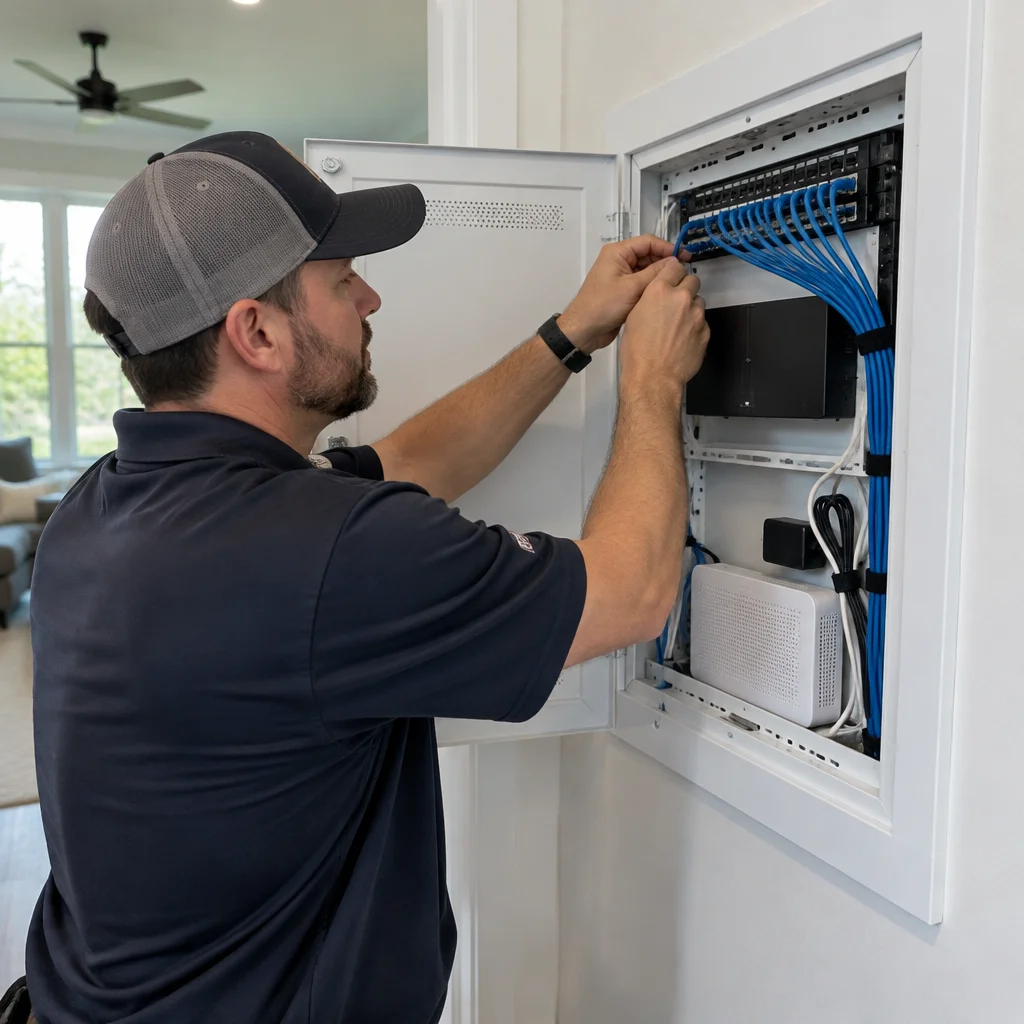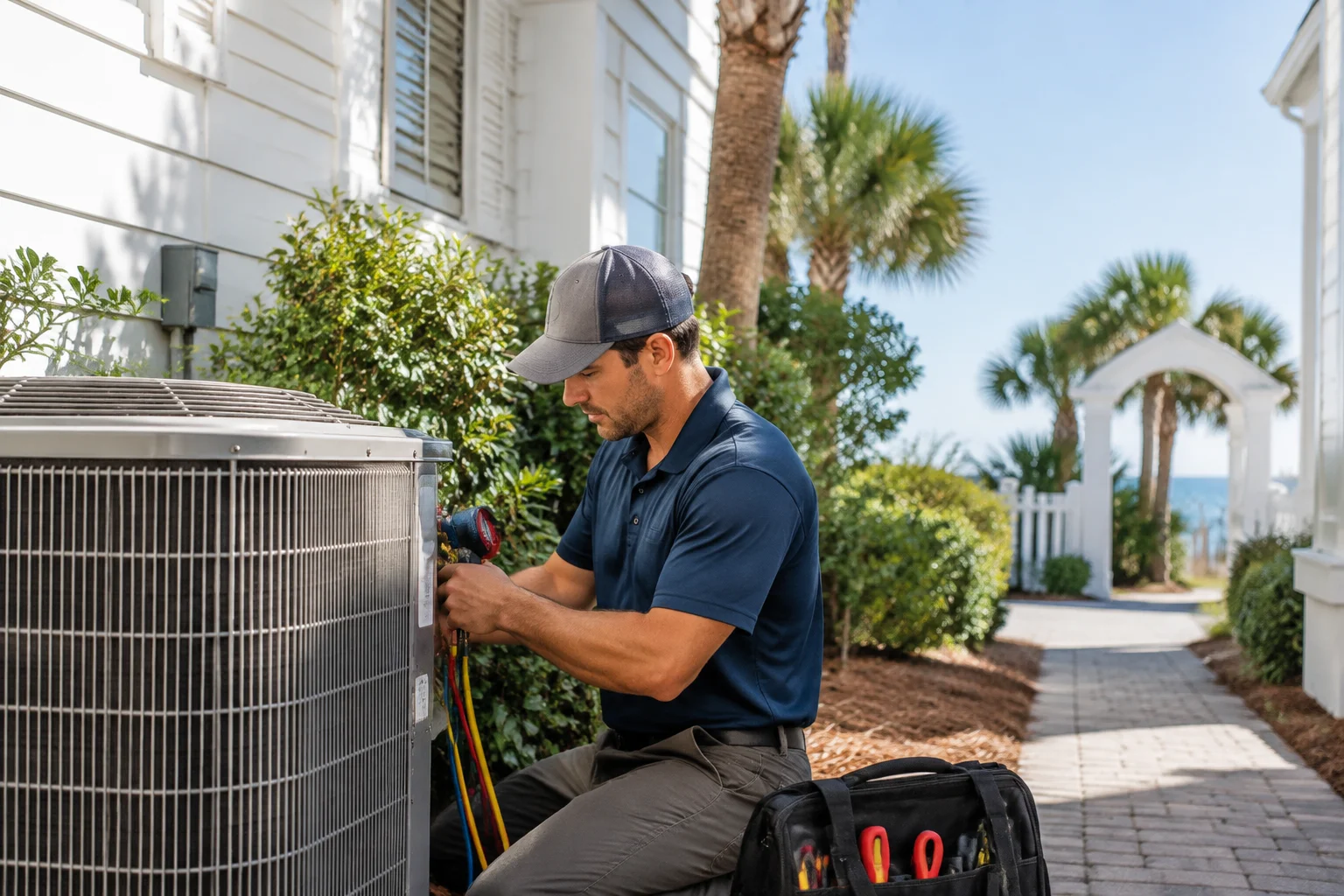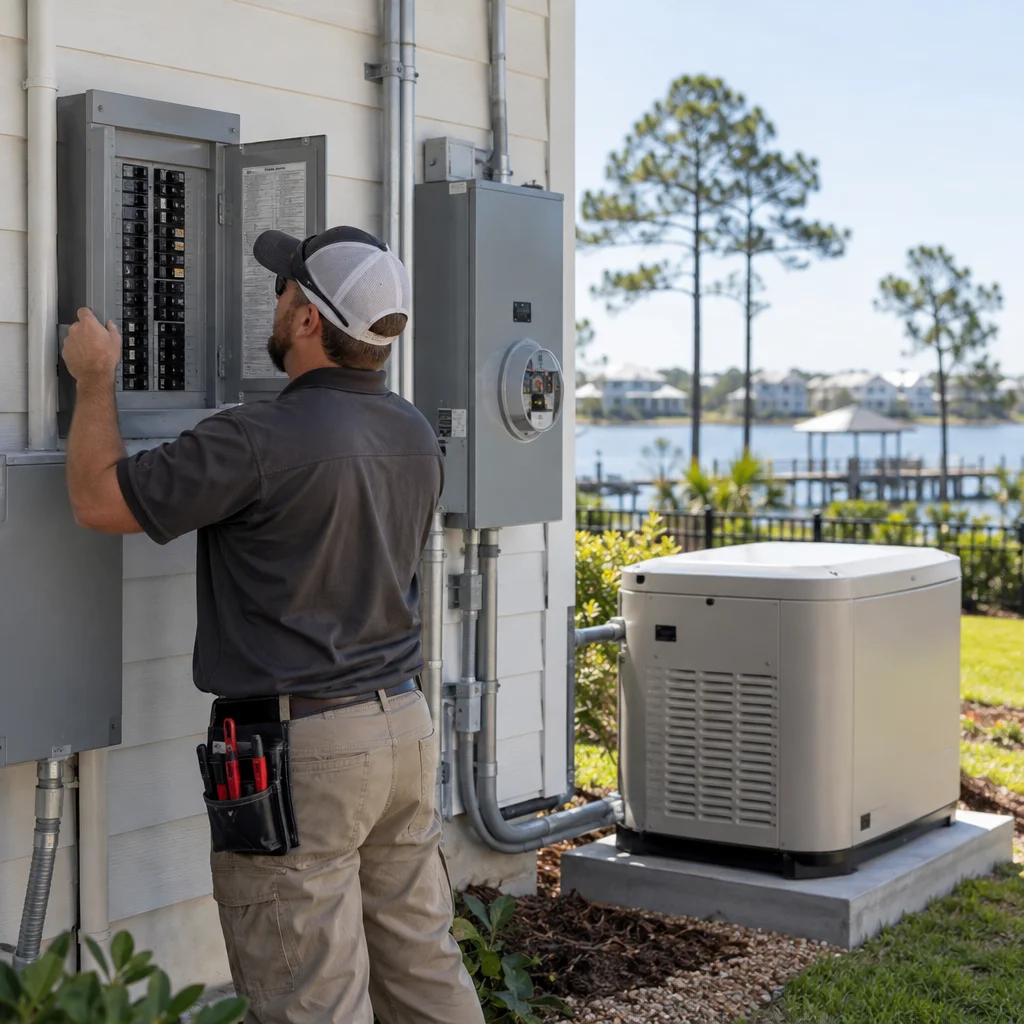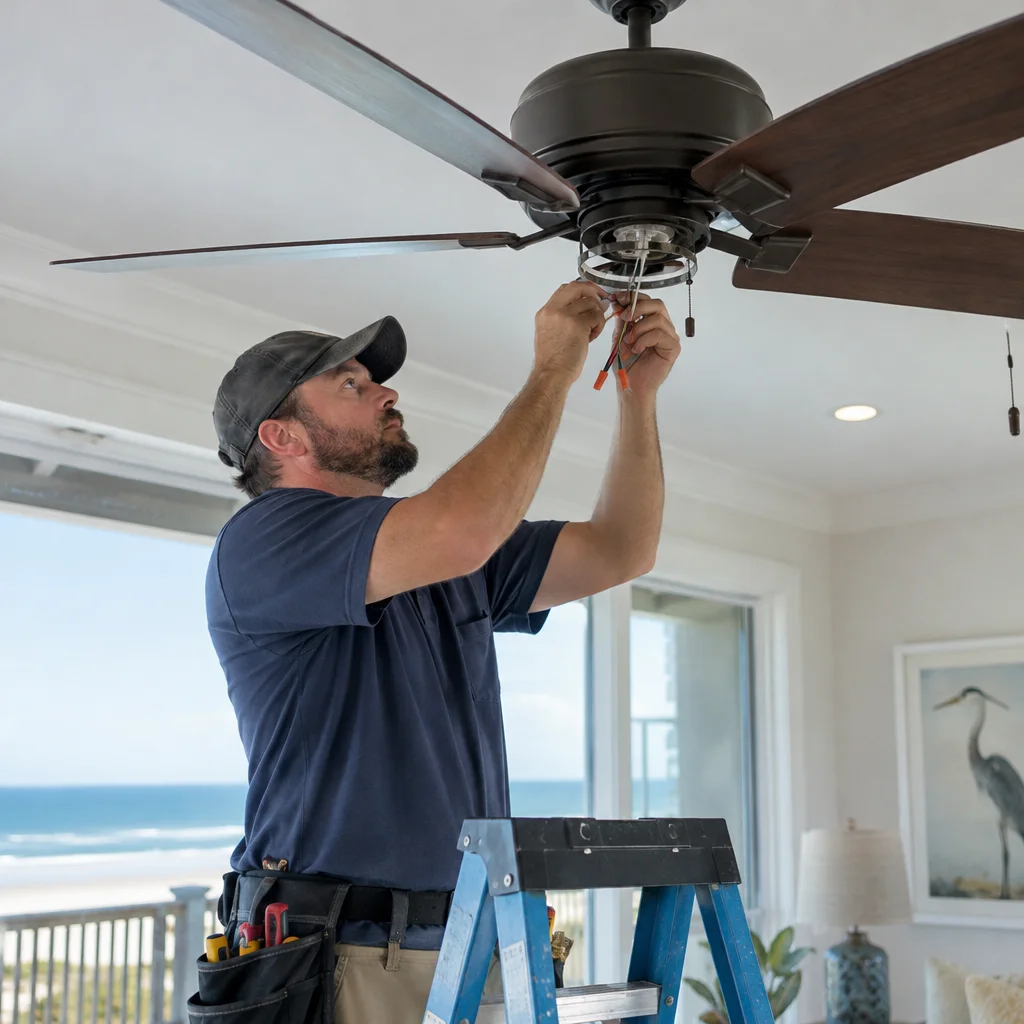
A ceiling fan can make a Seaside bedroom, living room, or covered porch more comfortable without a major renovation. But a successful installation depends on more than blade size and finish. The ceiling support, wiring, wall controls, and circuit all need to suit the equipment and its location.
For homeowners planning ceiling fan services in Seaside, FL, a little electrical planning helps prevent repeated breaker trips, unreliable controls, and unnecessary repairs. A Superior Mechanical installs, replaces, wires, and upgrades fans for coastal homes, rentals, and businesses throughout this part of Walton County.
Start With the Room, Not Just the Fan
Think about how the space is used before choosing a model. A quiet bedroom fan has different priorities than a fan above a busy rental living room. Porch fans need appropriate environmental ratings, while high ceilings may require manufacturer-approved downrods to deliver useful airflow.
Placement matters as much as appearance. Blades need clearance from walls, doors, cabinets, and sloped ceilings. Fan blades generally should be at least seven feet above the floor, with any greater clearance required by the manufacturer or applicable code observed. Low ceilings may call for a suitable flush-mount model.
Match the rating to coastal exposure
Seaside's humid air, wind-driven rain, and salt exposure can shorten the life of unsuitable equipment. A damp-rated fan may work under a protected porch roof, but a location exposed to rain needs a wet-rated fan. An outdoor label alone does not guarantee resistance to salt corrosion, so review the manufacturer's coastal-use guidance and warranty limitations.
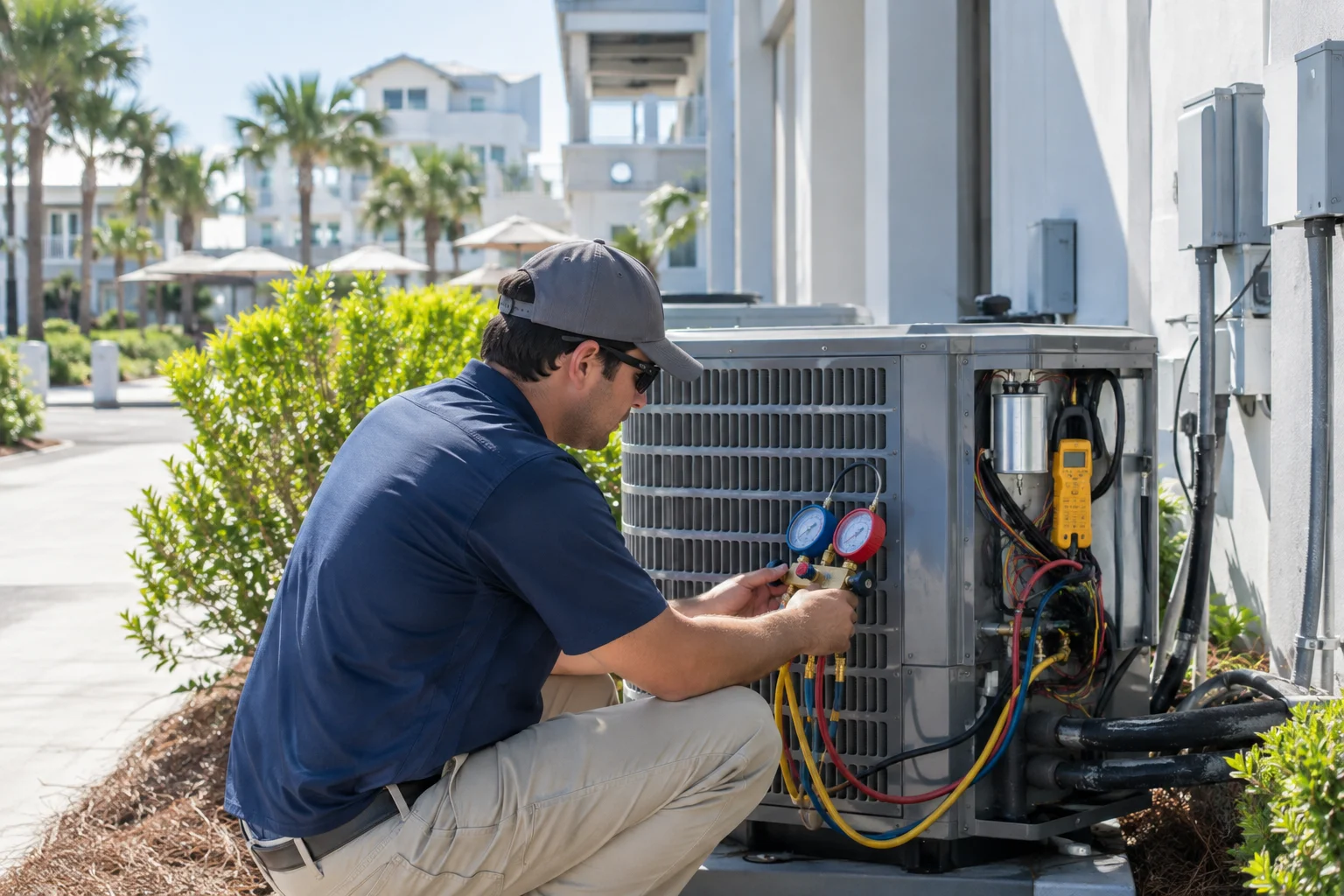
Fans improve comfort by moving air across people; they do not remove humidity or lower room temperature. For a broader look at comfort, the guide to airflow and humidity control in Seaside homes explains why ventilation, cooling, and air movement need to work together.
The Ceiling Box Is a Structural Safety Detail
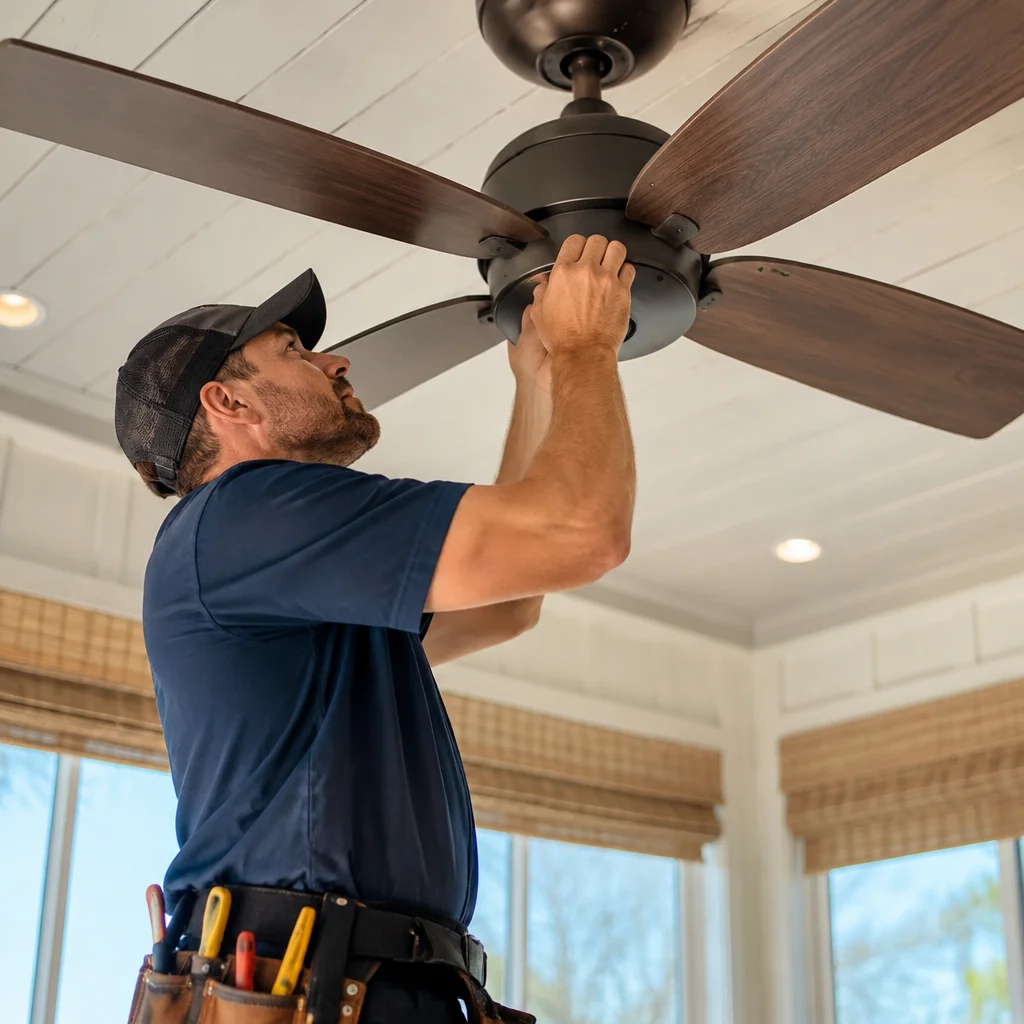
An existing light fixture does not prove that the ceiling is ready for a fan. Many light boxes cannot support a fan's weight and movement. The installation needs a box listed and marked for ceiling fan support, properly secured to framing or an approved support assembly and rated for the selected fan.
This is especially important in older cottages and remodeled homes where the original mounting method may be hidden. A decorative ceiling medallion can conceal a poorly secured box, while a newer home may have a fan-ready location that still needs verification.
If a fan rocks at the ceiling, makes a repeated clicking sound, or visibly pulls away from the surface, stop using it until the mounting is checked. Blade balancing will not correct an unsupported electrical box or loose structural attachment.
Check the Circuit Before Blaming the Panel
A modern ceiling fan usually draws relatively little power. Replacing one fan does not automatically justify a panel upgrade or dedicated circuit. The electrician should consider the fan's nameplate rating, lighting load, existing circuit use, conductor size, and protective devices before recommending changes.
In older Seaside homes, one branch circuit may serve several rooms and outlets. A fan problem that appears only when a portable heater or another appliance runs could involve a shared circuit, a loose connection, or voltage drop. The fan itself may not be the source.
Breaker trips need diagnosis, not a larger breaker
A breaker that trips repeatedly is reporting a problem. Possible causes include an overload, damaged wiring, a motor fault, or a ground fault. Breaker repair begins with finding the cause; damaged breakers are generally replaced with equipment approved for that panel. Installing a larger breaker without verifying the wiring can create a fire hazard.
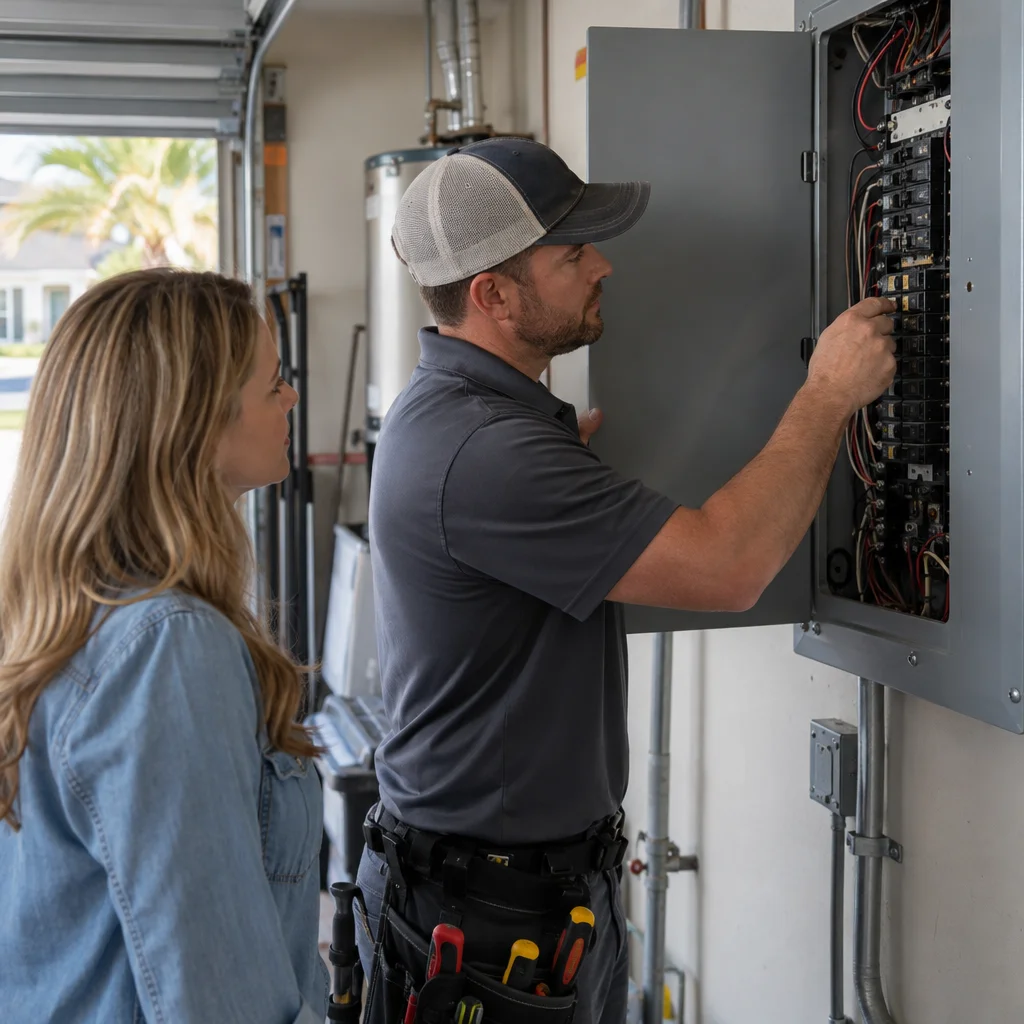
Homeowners searching for an electrical panel upgrade near me should expect a load assessment, not a recommendation based only on the panel's age. Available capacity, equipment condition, service size, and planned additions determine whether an upgrade makes sense. A 200 amp service is not automatically necessary for every home.
Wiring and Controls Should Work as One System
Some existing ceiling locations have one switched power feed. Others have separate conductors for fan speed and lighting. That difference affects whether you can use independent wall controls, need additional wiring, or should select a compatible receiver-based system.
A remote control does not eliminate electrical requirements. Smart fans may need continuous power, and certain wall controls require a neutral conductor. An electrician should verify the available wiring rather than assume that every switch box can accommodate the new device.
Do not put a fan motor on a standard light dimmer
A standard lighting dimmer is not a substitute for a fan speed control. Incompatible controls can cause humming, erratic operation, overheating, or equipment damage. Use controls specifically approved for the fan, and confirm that any dimmable light kit and LED lamps work with the selected lighting control.
If a light switch installation near me search started with a desire for separate fan and light controls, explain that goal before purchasing equipment. Planning the controls early helps avoid buying a fan whose electronics do not support the preferred setup.
Wiring repair may also be needed where insulation is damaged, connections are loose, or splices are concealed outside accessible junction boxes. Grounding and bonding need verification, particularly when replacing equipment in older homes. A new fan should not be used to hide an unresolved wiring defect.
Nearby Outlets Can Reveal a Bigger Electrical Issue
A fan does not normally plug into a nearby receptacle, but outlets on the same circuit can provide clues. Flickering fan lights accompanied by warm receptacles, intermittent power, or buzzing switches may point to a shared connection problem rather than a defective fan.
Someone looking for electrical repair near me because a fan cuts out should mention every affected device. Outlet repair and switch repair may belong in the same diagnosis. Do not keep using a scorched, loose, or unusually warm outlet while waiting to replace the fan.
Outdoor outlets and other locations specified by applicable code require GFCI protection. Whether the fan circuit itself requires that protection depends on the installation and applicable requirements. GFCI protection also does not replace proper equipment grounding where required. An electrician can determine what applies to a porch, bathroom, or other specific location.
Use Remodels and Additions to Plan Ahead
A room addition or ceiling renovation offers an opportunity to install fan-rated supports and suitable wiring before surfaces are finished. Planning fan placement alongside lighting installation helps avoid poor clearances and distracting flicker effects when blades pass through recessed light beams.
Newer homes can benefit from this coordination too. A builder-installed fan location may not match a changed furniture layout, enclosed porch, or converted office. Verify the circuit and mounting arrangement whenever a room's use changes.
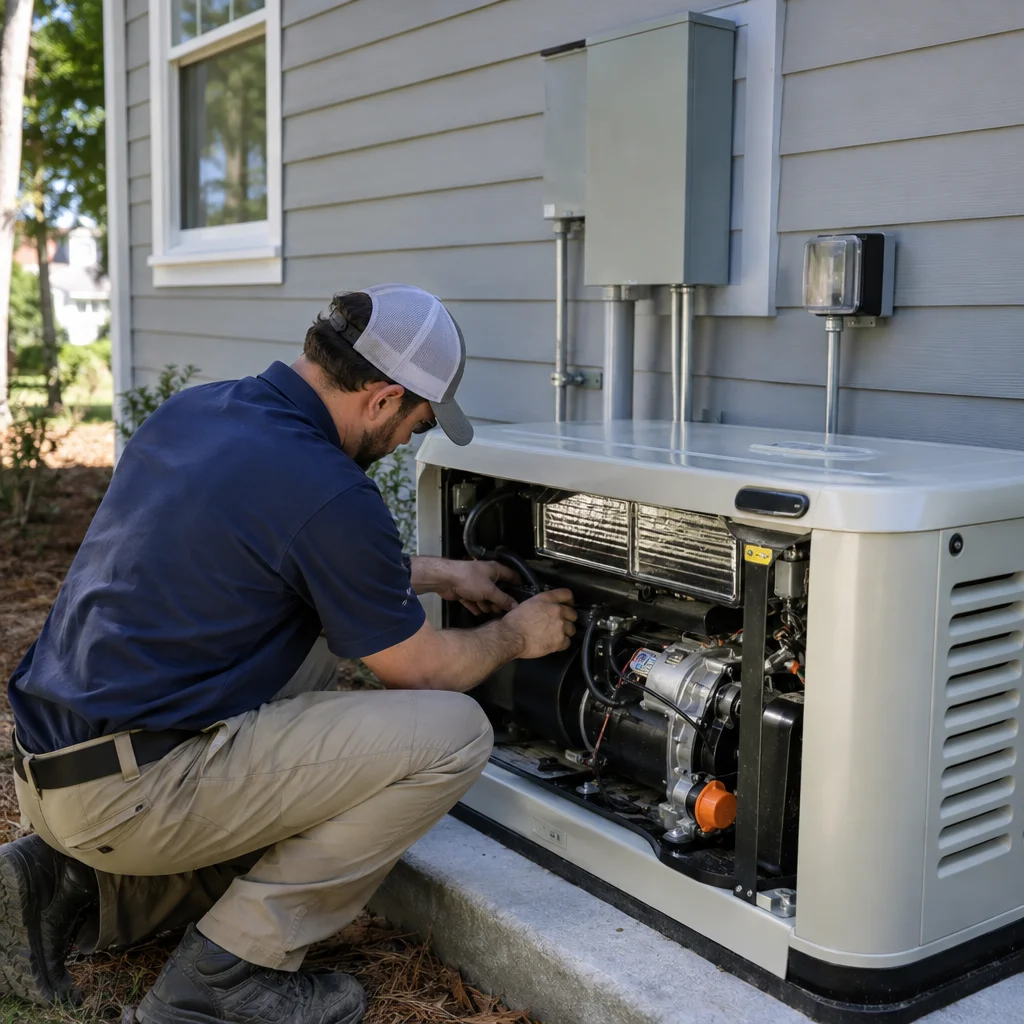
Consider future power demand beyond the fan. EV charger installation in Seaside may require a dedicated circuit and load calculations. Generator installation calls for properly designed transfer equipment and decisions about which loads receive backup power. Neither project should be treated as simply adding another connection to an available breaker space.
A coordinated electrical inspection and code update review can identify wiring repairs, grounding issues, and permit requirements before work begins. It is also a useful time to review smoke detector installation, required interconnection, and carbon monoxide detection where applicable.
Coastal Storms Make Protection Worth Discussing
Seaside's thunderstorms and tropical weather expose electrical systems to outages, moisture, and voltage disturbances. Electronic fan receivers and integrated LED controls can be vulnerable to surges, just like other household electronics. Whole-home surge protection can reduce exposure to certain transient voltage events, but it cannot guarantee protection against every event or a direct lightning strike.
Proper grounding and bonding support electrical safety, but they are not substitutes for surge protective devices. An electrician can assess the panel and recommend a coordinated approach. Outdoor fan maintenance should also include checking for corrosion, water intrusion, and damaged covers or wiring enclosures.
If porch improvements include outdoor landscape lighting, coordinate controls and circuit planning with the fan work. Exterior equipment must suit its exposure, and wiring methods need to meet applicable requirements for wet or damp locations.
Know Which Fan Problems Can Wait
Arrange service for persistent noise or unreliable operation
A mild wobble may come from dust buildup, an unbalanced blade set, or loose hardware. Persistent humming can involve incompatible controls or motor problems. Random shutdowns may involve a receiver, overheating, or a wiring fault. These symptoms deserve diagnosis rather than repeated parts replacement.
For rental properties, schedule repairs before the next occupancy whenever possible. Simple, labeled controls help guests avoid confusion, but labels cannot compensate for faulty equipment. Keep the model number and control instructions available for maintenance visits.
Treat heat, smoke, and sparking as urgent
Stop using equipment that produces a burning smell, smoke, sparks, or an electrical shock. If you can safely identify and access the correct breaker without approaching damaged equipment, switch the circuit off. Do not touch wet fixtures or repeatedly reset a tripping breaker.
If there is smoke or fire, leave the property and call 911. For an urgent fault without an active fire, contact an emergency electrician and describe the symptoms clearly. A same day electrician near me search should be followed by confirming actual availability, not assuming immediate service.
After a storm, never energize flood-affected equipment before professional assessment. Report downed lines to the utility and stay well away. If only part of the home loses power, the utility or an electrician may need to investigate service connections, meter equipment, or branch circuits.
A Practical Maintenance Routine for Seaside Properties
With the fan switched off and safely accessible, clean blades according to the manufacturer's instructions and watch for corrosion or distortion. Do not bend blades or apply unapproved lubricants. Note new noises, wobbling, delayed starts, or changes in light output, and arrange service if they persist.
Seasonal checks are particularly useful for coastal rentals and homes that sit vacant. Test GFCI devices and smoke alarms according to their instructions, check remote batteries, and schedule professional attention for damaged switches or loose outlets. Keep the panel accessible and its circuit directory accurate.
Local electrical maintenance should reflect actual exposure and equipment condition rather than an arbitrary replacement schedule. Homes throughout Walton County face different combinations of salt air, storm damage, age, and renovation history.
Plan the Installation Around Your Home's Actual Needs
Before requesting service, note the ceiling height, existing fixture type, control preferences, and whether the location receives rain or salt spray. Mention breaker trips, flickering lights, planned additions, and future charging or backup power needs. These details help the electrician assess the complete installation.
A Superior Mechanical provides service in Seaside with ceiling fan work coordinated around safe mounting, compatible controls, and sound wiring. For projects involving several electrical concerns, explore Seaside electrical services or request an appointment to discuss the work your property needs.
Find Ceiling Fan Services in Seaside, FL
If you need Ceiling Fan Services in Seaside, FL, visit our local service page or contact A Superior Mechanical today.
Map of Seaside, FL
Frequently Asked Questions
Can an electrician install a ceiling fan where I currently have a light fixture?
Often, yes, but the existing box must be listed for ceiling fan support and properly secured. The electrician also needs to verify wiring, grounding, clearances, and control compatibility. A standard light fixture box may need replacement.
Does a ceiling fan installation require a panel upgrade or dedicated circuit?
Usually not for a straightforward replacement on a suitable circuit. An electrician should check the existing load, wiring, breaker, and equipment requirements. A panel upgrade or new circuit may be appropriate if the system has capacity limitations, safety defects, or other planned electrical additions.
What type of ceiling fan works best on a porch in Seaside, FL?
Choose a fan rated for the actual exposure. A protected porch may allow a damp-rated fan, while an area exposed to rain needs a wet-rated model. Because salt air can accelerate corrosion, also review the manufacturer's coastal-use recommendations, materials, and warranty limitations.
Related Articles
Photo Gallery