A new ceiling fan seems like a straightforward improvement until the old fixture comes down. Is the ceiling box strong enough? Can the existing wiring support separate fan and light controls? Why does the breaker trip when several things run in the same room? Those questions matter more than blade finish or remote-control features.
For homeowners planning ceiling fan services in Hammock Bay, FL, a little electrical planning helps prevent repeat repairs. A Superior Mechanical can help connect the installation or repair with the condition of the circuit, controls, and electrical system serving it. The goal is a securely mounted fan that operates reliably without overlooking a problem behind the ceiling.
Start Above the Fan, Not Below It
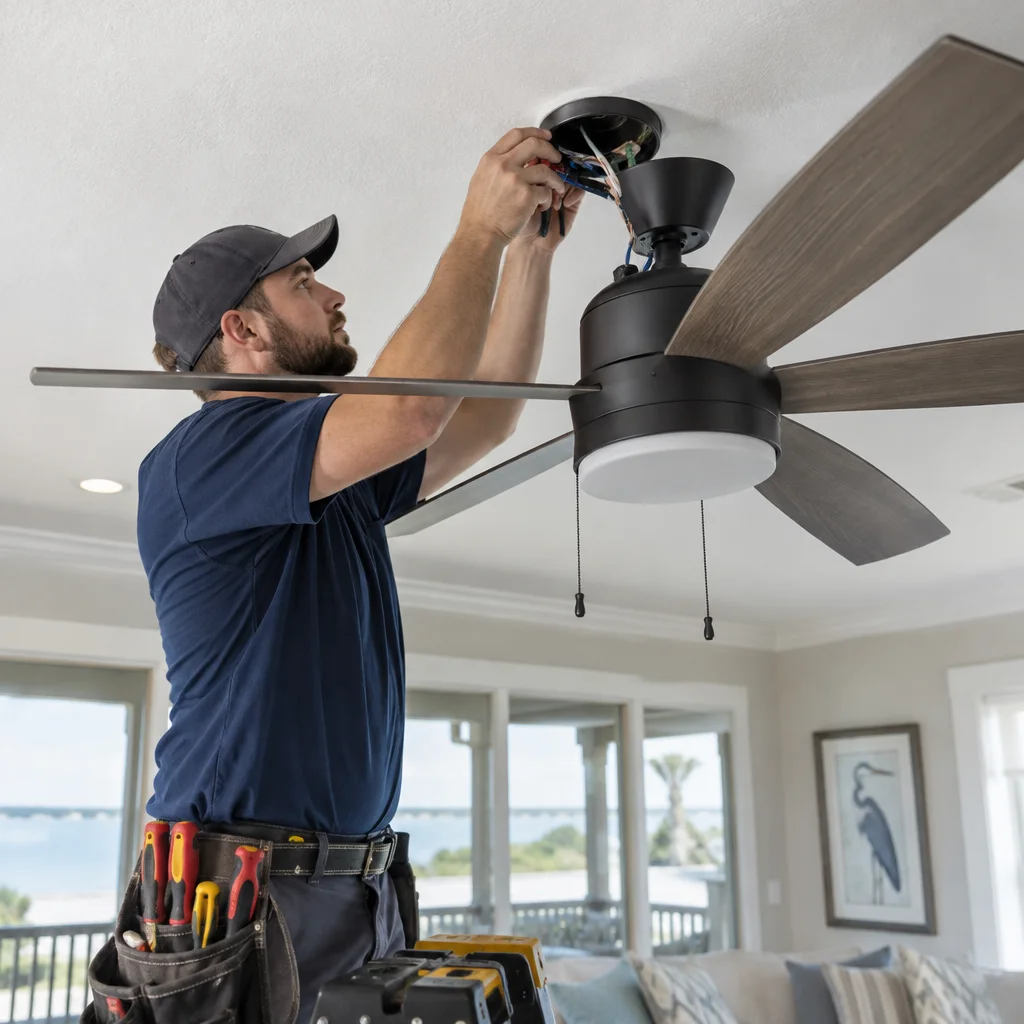
A ceiling fan puts different demands on its mounting point than a light fixture. It adds weight, vibration, and movement. An existing electrical box that supported a chandelier or flush-mounted light is not automatically suitable for a fan, even if it looks sturdy from below.
Confirm the box and structural support
The installer should verify that the box and mounting system are listed and rated for ceiling fan support and suitable for the selected fan. Support may require an approved brace or attachment to framing. Drywall anchors and an ordinary lighting box are not substitutes. A decorative ceiling medallion can hide a mounting problem, but it cannot correct one.
Ceiling height, slope, blade clearance, and downrod length also affect the installation. Follow the fan manufacturer's requirements and applicable code. In a room with a tall or angled ceiling, selecting the correct mounting hardware before installation avoids improvising with incompatible parts.
Check the Wiring Before Choosing Controls
A fan location may have wiring for a single switched light, separate fan and light controls, or a constant power supply intended for an electronic receiver. Those arrangements are not interchangeable without planning. The switch you want must work with both the available conductors and the fan's control design.
Look for hidden problems during replacement
With power safely isolated and verified, an electrician can inspect accessible connections for loose splices, heat damage, deteriorated insulation, missing grounding connections, and overcrowded boxes. Wiring repair should address the cause of damage, not simply cover it with a new canopy. Splices belong in approved, accessible enclosures.
Older homes and previously remodeled properties may have several generations of wiring methods. Even newer homes can have questionable alterations from earlier fixture changes. If aluminum branch-circuit wiring is present, connections need evaluation and approved methods appropriate to the conductors involved. It is not a reason to attempt a quick homeowner splice.
Homeowners searching for a licensed electrician near me should describe whether the project is a replacement or a new fan location. Running cable to a room without an existing ceiling box is a different job from replacing a compatible, properly supported fan.
A Ceiling Fan Rarely Requires a Panel Upgrade by Itself
A typical residential ceiling fan draws relatively little power compared with an electric range, water heater, or EV charger. Replacing one fan does not automatically justify a larger panel. The relevant questions are whether the circuit is suitable, whether existing equipment is in good condition, and whether the home's overall electrical demand has changed.
Repeated breaker trips deserve diagnosis. Possible causes include an overloaded circuit, damaged wiring, a faulty fan motor, or a problem with the breaker or its connection. A breaker that trips is providing protection. Installing a larger breaker without evaluating the conductors and circuit is unsafe.
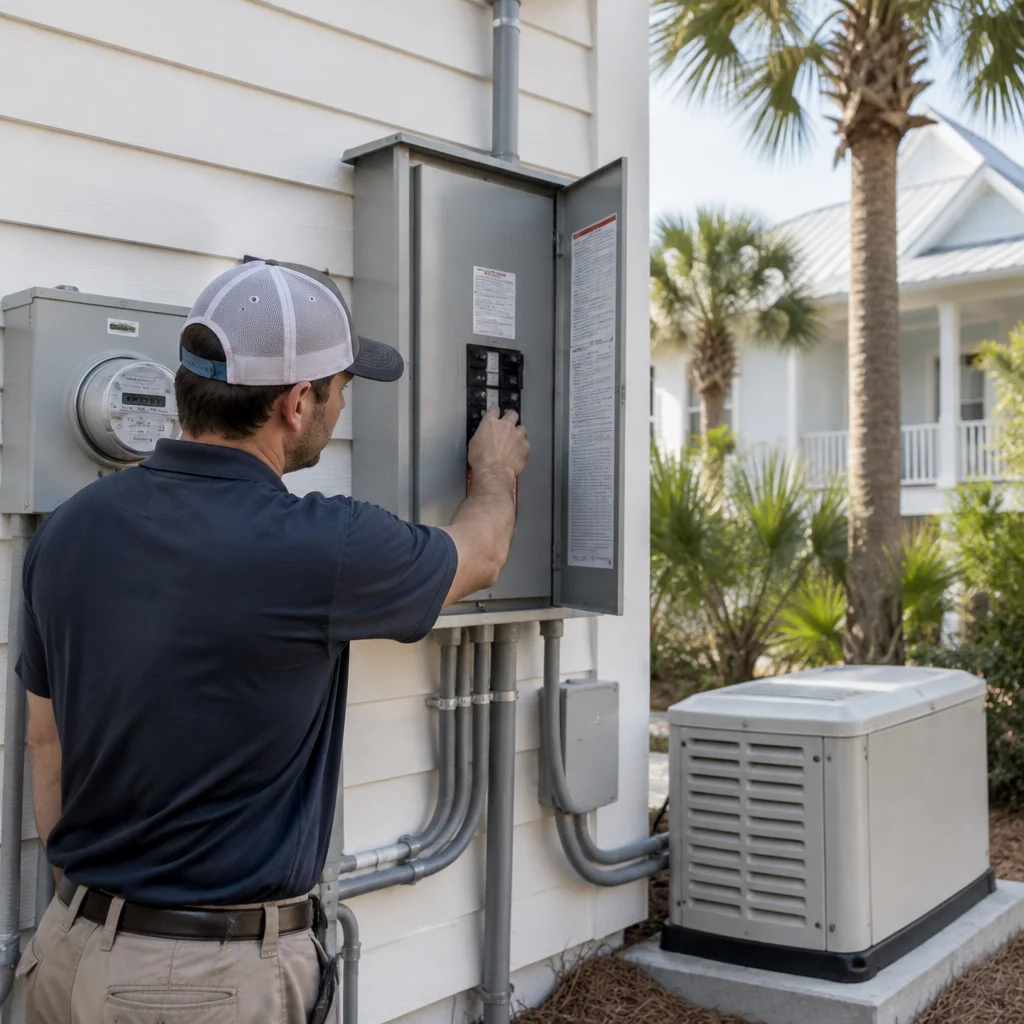
For breaker repair concerns, the solution may involve correcting a connection or replacing a defective breaker with equipment listed for that panel. Breakers are generally not repaired internally. Panel upgrades or breaker box replacement become relevant when capacity, condition, compatibility, or planned additions warrant them. Spare breaker spaces alone do not establish available electrical capacity.
Make Switches, Outlets, and Lighting Work Together
A fan motor should not run through an ordinary lighting dimmer unless the manufacturer specifically permits that arrangement. Use compatible fan-speed controls, receivers, and switches. Some fans with electronically controlled motors require their own control system rather than a conventional wall-mounted speed control.
If a switch buzzes, gets unusually hot, or operates inconsistently, replacing the fan may not solve the problem. A switch repair near me search can lead to a simple component replacement, but the electrician should also check connections and compatibility. Electronic controls can behave poorly when paired with equipment they were not designed to operate.
Room improvements are also a sensible time to discuss outlet repair, loose receptacles, USB outlet installation, and furniture layouts that encourage extension-cord use. A fan normally does not require its own dedicated circuit, although circuit capacity and manufacturer requirements must be verified. Other equipment in the room may have different requirements.
For coordinated lighting and fixture installation in Hammock Bay, consider how the fan light will work with recessed lights, task lighting, and dimmers. Compatible LED lamps or integrated light kits can help avoid flickering and disappointing light output.
Hammock Bay Porches Need Weather-Appropriate Equipment
Hammock Bay's warm, humid climate makes porch fans appealing for much of the year. Walton County's coastal weather also brings wind-driven rain, moisture, and storms that can challenge outdoor electrical equipment. A covered location is not necessarily a dry location.
Match the fan rating to the exposure
A damp-rated fan is intended for protected locations where moisture is present without direct water exposure. A wet-rated fan is designed for exposure allowed by its listing, including rain. The correct choice depends on the actual installation, not just whether there is a roof overhead. Outdoor-rated hardware and properly selected electrical enclosures matter as well.
Have the installer evaluate nearby outdoor outlets, switches, grounding, and required GFCI protection. GFCI requirements vary by equipment, circuit, location, and adopted code, so do not assume every hardwired porch fan has the same requirements as an outdoor receptacle. A GFCI also does not replace equipment grounding or suitable weather protection.
Corrosion, discolored terminals, water staining, and brittle insulation warrant attention. In screened porches, additions, and converted outdoor spaces, previous wiring may no longer suit the way the area is being used.
Storm Planning Includes More Than the Fan
Modern fans often contain electronic receivers, LED drivers, and control boards. These components can be damaged by electrical surges, just like televisions and smart-home equipment. Homeowners researching a whole home surge protector near me should ask about panel-mounted protection, grounding and bonding, and coordinated protection for sensitive devices.
Surge protection reduces exposure to certain transient voltage events; it does not make a home lightning-proof or keep power running during an outage. An electrician should select a compatible device and explain its status indicators and maintenance requirements. A failed or expired protective device may need replacement even when the house still has power.
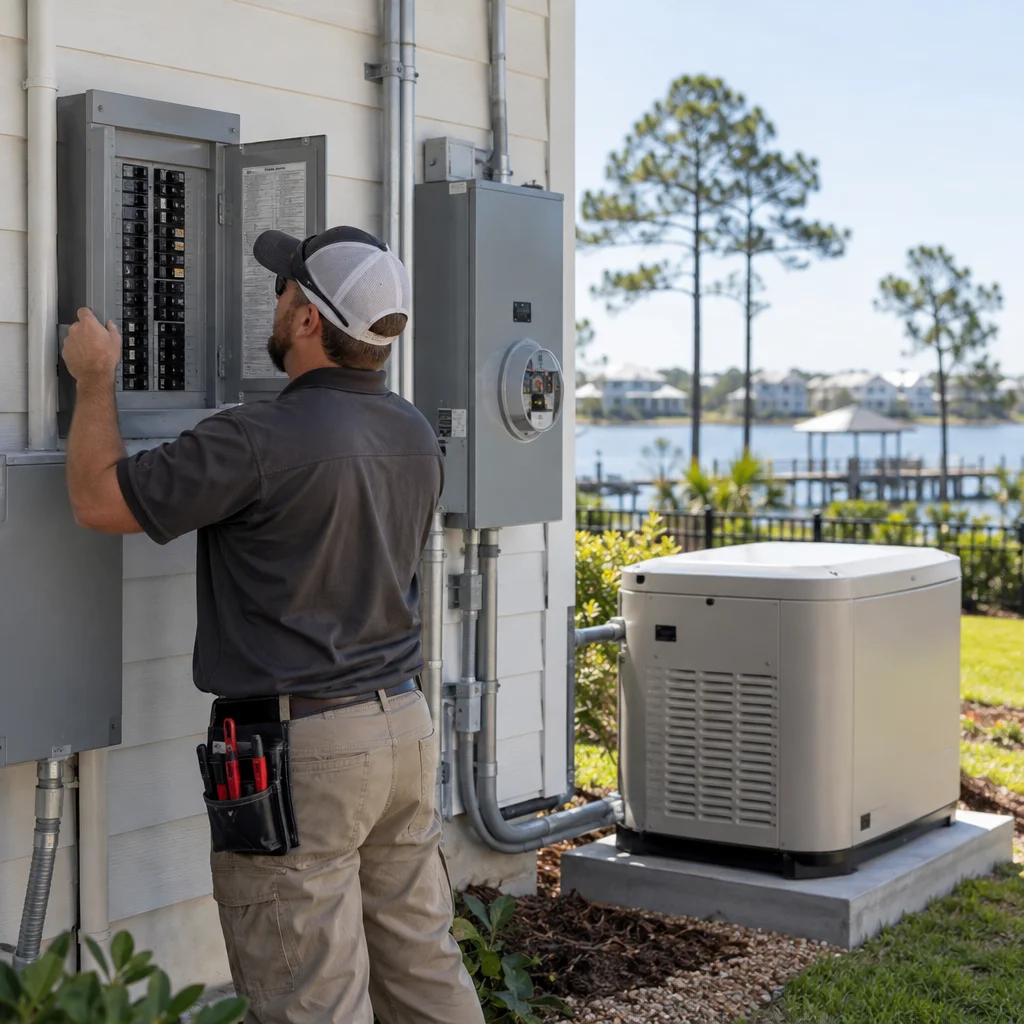
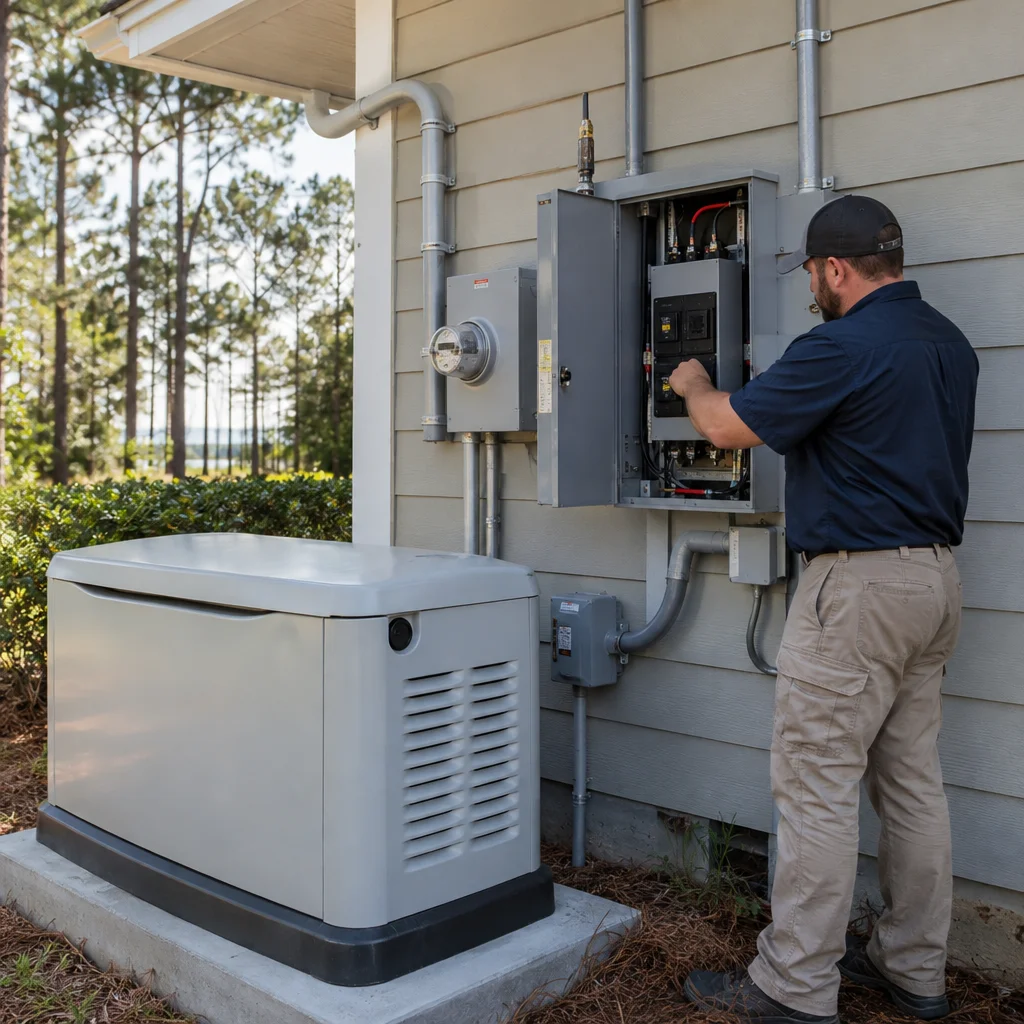
If you are considering power backup generators in Hammock Bay, discuss which lighting and fan circuits should remain available during an outage. Generator installation requires proper transfer equipment, capacity planning, and code-compliant connections. Never connect a portable generator through a household outlet or operate one in a garage, even with the door open.
Use One Project to Plan for the Next
A bedroom fan replacement does not have to become a whole-house renovation. Still, it is useful to mention upcoming projects before the electrician scopes the work. An addition, kitchen remodel, spa, or Level 2 EV charger installation may change service demand or require new dedicated circuits.
Load calculations help determine whether existing service capacity is adequate. EV charging and appliance circuits have requirements very different from those of a fan. Planning cable routes and panel capacity together can reduce duplicated work, particularly when walls or ceilings are already open.
The article Before the New Device Goes In: Electrical Planning for Hammock Bay Homes offers a useful starting point for coordinating these improvements. During remodel planning, also ask whether smoke detector installation, interconnected alarms, or other safety updates are required by the project scope and applicable code.
For app-controlled fans, verify control compatibility before purchase. Smart home integration in Hammock Bay should support dependable operation, not hide a wiring fault behind automation. Remote monitoring is not a substitute for electrical inspections.
Know Which Symptoms Need Prompt Attention
A mild wobble may result from dust buildup, blade imbalance, loose hardware, or an unsuitable mount. Clicking can come from a loose component, while humming may involve control incompatibility or motor trouble. Turn the fan off if movement is pronounced or the mounting appears loose, and have it evaluated before further use.
Burning odors, scorching, crackling, shocks, smoke, or repeated breaker trips are more serious. Stop using the affected equipment. If it is safe, shut off the affected circuit without approaching damaged or wet electrical equipment. Do not repeatedly reset a tripping breaker or remove covers to investigate energized wiring.
For active smoke or fire, leave the home and call 911. Keep away from storm-damaged service equipment and downed lines. Emergency electrical concerns require the appropriate emergency response, utility assistance, or a qualified emergency electrician, depending on the hazard. Routine scheduling should never delay action on an immediate danger.
Keep Prevention Simple and Consistent
With the fan off and stopped, clean accessible blades according to the manufacturer's instructions. Uneven dust accumulation can contribute to imbalance. Watch for changes in sound, speed, wobble, or light operation, and avoid spraying cleaning liquids into the motor housing or controls.
Periodically check visible outdoor equipment for corrosion and moisture damage. Test GFCI receptacles according to their instructions, and arrange service if they will not test or reset properly. Leave internal wiring checks and mounting repairs to a qualified professional.
If an electrical code inspection near me search follows a renovation or recurring problem, request a defined inspection scope. Electrical inspections and code updates can help identify necessary code corrections, unsafe alterations, and maintenance priorities without assuming every older installation requires complete replacement.
Plan a Fan Visit Around Your Home's Actual Needs
Before scheduling, note the fan location, ceiling height, indoor or outdoor exposure, available controls, and any symptoms. Share the model information if you already purchased a replacement. Mention recent electrical changes and whether other lights or outlets lose power when the breaker trips.
Local electrical service matters because installation conditions, storm exposure, and permitting requirements all affect the work. Explore A Superior Mechanical's Hammock Bay electrical service information and broader Walton County service area, then request ceiling fan installation or repair with those details ready. A clearly scoped visit helps separate a straightforward fixture upgrade from wiring, control, or circuit issues that deserve attention first.
Find Ceiling Fan Services in Hammock Bay, FL
If you need Ceiling Fan Services in Hammock Bay, FL, visit our local service page or contact A Superior Mechanical today.
Map of Hammock Bay, FL
Frequently Asked Questions
Does installing a ceiling fan require a panel upgrade?
Usually not by itself. A typical ceiling fan has a relatively small electrical load. An electrician should check the existing circuit, panel condition, and available capacity, especially if you are also adding an EV charger, appliances, or an addition. Repeated breaker trips require diagnosis rather than an automatic panel upgrade.
Can an existing light fixture box support a ceiling fan?
Only if the box and its mounting system are listed and rated for ceiling fan support and suitable for the selected fan. Many lighting boxes are not. An electrician can verify the support and install an approved fan-rated box or brace when needed.
What type of ceiling fan should I choose for a Hammock Bay porch?
Choose a fan rated for the actual moisture exposure. A damp-rated model may suit a protected porch without direct rain exposure, while a location exposed to rain needs an appropriately listed wet-rated fan. The installer should also check the mounting, electrical enclosures, grounding, and any applicable GFCI requirements.
Related Articles
- Before the New Device Goes In: Electrical Planning for Hammock Bay Homes
- Smart Home Integration in Hammock Bay That Helps Protect Electrical Systems Before Problems Start
- Better Hot Water Starts With Better Plumbing in Hammock Bay
- Clearer Glasses, Better Coffee: Water Filtration for Everyday Life in Hammock Bay
Photo Gallery