Living on 30A means you get plenty of sunshine, beach air, and long stretches of humid Florida summer. The flip side is that your HVAC system works hard year-round, and ductwork becomes the hidden pathway for comfort or trouble. Smart duct inspection habits can help you catch airflow problems, moisture risks, and indoor air quality concerns before they turn into an emergency cooling situation.
If you are searching for duct inspection in 30A, FL, the goal is simple: verify that conditioned air is moving the way it should, and that your duct system is not quietly undermining your air conditioner or heat pump.
Why duct inspection matters more in 30A humidity and salt air
In Walton County and along the 30A corridor, warm humidity is not just an outdoor condition. It affects indoor air, duct surfaces, and airflow performance. Salt air can also contribute to corrosion over time, especially in coastal homes and vacation rentals where air handling may vary by season.
When ductwork underperforms, your comfort problems are often blamed on the AC or thermostat. But many HVAC emergencies begin with something upstream: air cannot move through the system efficiently, so the air conditioner or heat pump must work longer to reach the set temperature. That extra run time can increase wear, raise energy use, and make failures more likely during peak demand.
The duct inspection checklist homeowners can actually use
You cannot see every issue inside duct walls, but you can spot patterns that point to duct leaks, poor airflow, or moisture problems. These are practical checks that pair well with professional duct inspection near you.
1) Map room-by-room temperature and airflow
Start with a simple comfort audit. Pick a day when your air conditioner or heat pump is running and compare:
- Rooms that feel consistently warmer or colder than the thermostat setting
- Supply vents that feel weak compared to others
- Any “hot spots” that show up in the same locations week after week
Uneven temperatures can indicate duct leakage, duct restriction, poor balancing, or dampers not opening correctly. In a duct inspection, these observations help the technician target where airflow is breaking down.
2) Watch for humidity clues near vents and returns
Florida humidity can be managed, but ductwork problems can make it harder. During cooling season, pay attention to:
- Condensation on or around supply registers
- Musty odors that seem to rise when the system runs
- Visible staining or discoloration near duct seams or access panels
- Rooms that stay “clammy” even when cooling is on
Moisture issues can be linked to airflow problems, condensate drainage concerns, or duct insulation that is no longer doing its job. If you are seeing moisture symptoms, ask about duct inspection that includes checking airflow and duct insulation condition, not just surface-level observations.
3) Inspect vent covers and grilles for dust buildup and gaps
Dust can be a normal byproduct of airflow. What matters is what the dust pattern suggests. Look for:
- Excess dust around vent edges or along the wall seam
- Loose vent covers that create air leaks
- Signs that a vent is blocked by furniture, curtains, or storage
Blocked or leaky vents reduce airflow, and reduced airflow can strain refrigerant systems by changing how the indoor coil and blower operate. That is one reason homeowners searching for AC repair near me sometimes end up needing ductwork attention instead of only replacing parts.
4) Confirm your thermostat settings are consistent with cooling load
Sometimes the duct system is not the only factor. Thermostat behavior can affect how often your system runs and how long it cycles. Check for:
- Incorrect mode selection (cooling vs. fan only)
- Unusual short cycling that makes the system run in bursts
- Thermostat locations that are exposed to direct sun or drafts
If you suspect thermostat issues, consider pairing duct inspection with proper thermostat setup. For homeowners needing Heating Control Systems, a correct control setup helps your system run efficiently and reduces the stress that can contribute to emergency cooling concerns.
5) Listen for airflow whistling or rattling at specific vents
When ductwork has leaks, loose joints, or poorly sealed transitions, you may notice:
- Whistling sounds when the blower ramps up
- Rattling near a particular room or hallway
- Air movement that feels “drafty” in one area but weak in another
These clues help professionals distinguish between duct leakage, airflow restriction, or issues related to the air handler and blower.
Common duct inspection oversights in 30A homes
Homeowners often focus on the air conditioner itself and skip ductwork because ducts are out of sight. Here are the most overlooked areas that show up during duct inspection in 30A, FL.
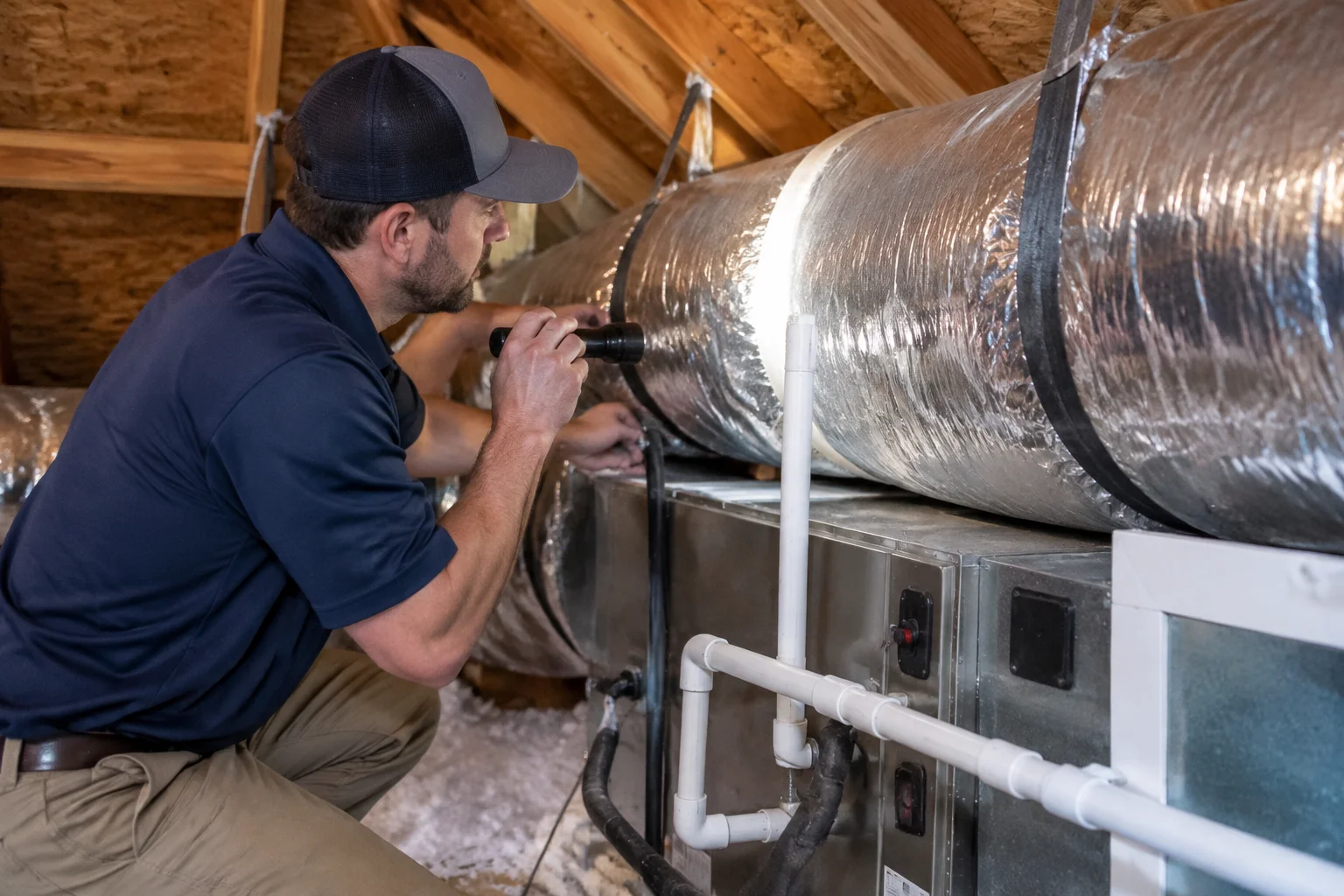
Hidden duct leaks in attics and crawl spaces
In many 30A homes, ductwork runs through attic spaces or crawl areas that can experience high heat and humidity. Seams and joints can loosen, and insulation can degrade. Leaks may not always be obvious, but they show up as:
- Lower airflow at registers
- Higher energy use because the system runs longer
- Hot or cold rooms that keep returning
When duct leakage is severe, the system can struggle to maintain indoor temperatures during the hottest Florida days. That is when emergency cooling concerns become more likely.
Blocked or collapsed duct sections
Some duct problems come from construction changes, renovations, or pest activity. A duct section can be partially blocked or even collapsed, and the result is often:
- Weak airflow that never improves
- Rooms that remain uncomfortable even with the thermostat turned down
These issues are not something you can safely diagnose with a DIY approach. A professional duct inspection can identify where airflow is restricted and whether duct repair or duct replacement is needed.
Return air problems that quietly affect comfort and indoor air quality
Supply ducts get attention, but returns are just as important. If return pathways are undersized, blocked, or leaky, it can lead to:
- Lower overall system efficiency
- Reduced ability to remove humidity and airborne particles
- Uneven temperature distribution
Since ductwork is part of your indoor air quality system, return issues can increase dust and reduce filtration effectiveness.
Moisture and condensate drainage concerns that connect to duct performance
Cooling season often brings condensate drainage into the conversation. While condensate is typically handled at the air handler level, duct insulation and airflow still influence whether moisture becomes a comfort problem. If you notice condensation around duct surfaces, damp insulation, or recurring musty odors, duct inspection should include checking relevant moisture pathways and the condition of duct insulation.
How duct problems can trigger HVAC emergencies
Emergency cooling situations usually feel sudden, but the causes often build. Here is how ductwork issues can push your system toward failure during high-demand periods.
Reduced airflow increases strain on refrigerant systems
When airflow is restricted, the indoor coil can operate differently than intended. That can lead to uncomfortable temperatures and system safety responses. A duct inspection helps identify whether airflow issues are contributing before you hit a point where the system cannot keep up.
Long run times raise energy use and wear
In humid coastal climates, your air conditioner or heat pump may already run longer to manage temperature and humidity. When duct leakage or poor balancing is added, the system works harder. Over time, that increases the likelihood of breakdowns that leave you scrambling for HVAC repair near me during the hottest hours.
Indoor air quality drops when airflow and filtration are compromised
Airflow impacts how effectively your system moves air through filters and how well it removes particulates. If ducts are leaking or returns are weak, indoor air quality suffers. That can show up as more dust, lingering odors, or irritation for sensitive household members.
What to ask for during professional duct inspection
When you schedule duct inspection, you want more than a quick look at visible ductwork. Ask your technician to explain what they are checking and how it relates to comfort, humidity control, and system efficiency.
For example, you can ask:
- Which rooms show the biggest airflow imbalance and why
- Whether duct leakage appears to be contributing to comfort issues
- Whether duct insulation condition suggests moisture risk
- How ductwork connects to airflow, energy use, and indoor air quality goals
- Whether duct repair or duct replacement is likely needed based on findings
If your home has a heat pump, ask how duct performance affects heat pump operation during cooling and shoulder seasons. If your property is commercial or multi-zone, ask how ductwork and zoning interact. For larger systems, you can also explore VRF Multi-Zone Systems for guidance on how airflow and zoning affect comfort.
Pair duct inspection with preventive HVAC maintenance
Duct inspection works best when it is part of preventive HVAC maintenance. A tune-up focuses on the system, while duct inspection focuses on the airflow pathway. Together, they reduce the chance of mid-summer breakdowns.
Homeowners often notice that comfort problems return after they have an AC tune up, only to realize the ductwork was the missing piece. If you are planning seasonal service, read Why Preventive HVAC Service Pays Off for Air Conditioning Repair in 30A, FL to understand how maintenance and airflow issues can overlap.
Special considerations for vacation rentals and coastal properties
On 30A, many homes are vacation rentals where the system runs intermittently. That creates a unique duct inspection challenge: humidity and airflow patterns may change between occupancy and vacancy.
When guests arrive, the system may need to recover quickly. If ductwork is leaking or airflow is restricted, the system may struggle to cool down efficiently. That is when temperature complaints escalate and emergency cooling concerns can become more likely.
For property owners, it can also help to plan ahead for seasonal stress. This guide on scheduling and preparation can complement duct inspection: How 30A Homes Can Stay Ahead of HVAC Emergencies During Seasonal Stress.
Energy use and comfort: the real payoff of duct inspection
When ducts leak or airflow is restricted, your system may run longer to achieve the thermostat setpoint. That can increase energy use and make indoor humidity harder to control. In a climate where cooling demand stays high, even small airflow losses can add up.
Duct inspection helps you understand the comfort side of the equation and the efficiency side. It also helps you avoid guesswork, especially when homeowners are considering HVAC replacement near me after repeated discomfort. Sometimes the system is performing acceptably, but the ductwork is not delivering air where it needs to go.
When duct inspection is urgent versus routine
Some duct issues are easy to schedule. Others should be addressed sooner because they affect comfort and can escalate into emergency cooling needs.
Consider scheduling soon if you notice:
- Hot or cold rooms that persist season after season
- Rising dust levels or recurring musty odors
- Condensation near vents or access panels
- The system taking longer to reach temperature
Prioritize professional help if you notice:
- Cooling failing during peak heat hours
- Repeated system shutdowns or unusual behavior
- Significant moisture signs that could affect indoor air quality
If cooling becomes an emergency, you may need assistance from Emergency HVAC Services. After the immediate issue is handled, duct inspection can help prevent the same problem from returning.
Choosing local duct inspection service matters in Walton County
Professional local HVAC service matters because ductwork issues in 30A homes are shaped by local realities: coastal air, humidity, insulation performance, and how homes are built and modified over time. A technician familiar with the area can better connect comfort complaints to likely ductwork and airflow causes.
A Superior Mechanical offers duct inspection in 30A, FL designed to uncover airflow problems, duct leaks, moisture concerns, and efficiency issues that affect comfort and indoor air quality. If you want to explore broader service coverage across the region, you can also view 30A services and Walton County services.
Related service options that pair well with duct inspection
Ductwork performance and HVAC system performance influence each other. Depending on what the inspection finds, you might also need support in these areas:
- Heat Pump Services if your heat pump struggles with cooling comfort or humidity control.
- Heating Control Systems if thermostat placement or control settings contribute to short cycling or inconsistent temperatures.
- Commercial considerations: if you manage a property, Keeping 30A Commercial Spaces Comfortable Before HVAC Trouble Spreads can help with planning for airflow comfort across a larger space.
Simple next steps for homeowners today
If you are trying to reduce HVAC emergencies in 30A, start with an observation-driven approach. Track airflow and comfort room by room, watch for humidity clues near vents and returns, and make sure your thermostat settings are stable. Then schedule a professional duct inspection to confirm what is going on behind the scenes.
That combination is how many homeowners avoid repeat breakdowns and get more consistent cooling performance from their air conditioner service, heat pump service, and overall preventive HVAC maintenance plan.
Find Duct Inspection in 30A, FL
If you need Duct Inspection in 30A, FL, visit our local service page or contact A Superior Mechanical today.
Map of 30A, FL
Frequently Asked Questions
What does duct inspection actually check in a 30A home?
Duct inspection typically focuses on whether conditioned air is moving properly through the ductwork. A professional review can look for airflow imbalance, duct leaks, ductwork condition, and signs of moisture risk that can affect indoor air quality and cooling performance.
Can duct problems make my AC seem like it needs repair?
Yes. If ductwork has leaks or airflow restrictions, your system may run longer to reach the thermostat setpoint. That can create comfort complaints that feel like an air conditioner problem, even when the HVAC system itself is not the only cause.
How do humidity and salt air in 30A affect ductwork?
High humidity can increase the chance of condensation and moisture-related issues, especially where insulation is aging or duct surfaces are exposed. Coastal salt air can contribute to corrosion over time. Both factors make duct inspection and preventive HVAC maintenance more important.
How often should I schedule duct inspection?
Many homeowners schedule duct inspection when they notice persistent hot or cold rooms, musty odors, or airflow changes, or as part of seasonal preventive maintenance planning. Your best schedule depends on your home, duct condition, and how often the system runs.
If duct inspection finds issues, is duct replacement always necessary?
Not always. The right approach depends on what the technician finds during an in-person evaluation. Some problems may be addressed with duct repair, while others may require more extensive work. A professional assessment is the safest way to decide.
Related Articles
Photo Gallery