The breakfast dishes are clean, but the glasses still look spotted. The coffee tastes slightly off, and the kitchen faucet has another chalky ring around its base. In the bathroom, soap takes extra effort to rinse away. These frustrations can share a water quality cause, but they do not always call for the same treatment.
For homeowners considering water softening in Pretty Bayou, FL, the useful starting point is separating hardness problems from taste, odor, and sediment concerns. A softener addresses dissolved hardness minerals. Other water treatment equipment may be needed for better drinking water or clearer cooking water. A Superior Mechanical helps homeowners choose a system based on the water entering the house and how the household uses it.
Pretty Bayou Water Deserves a House-by-House Look
Pretty Bayou's warm, humid coastal setting means frequent showers, laundry, and plenty of cold drinking water through much of the year. Those everyday habits make water quality noticeable. A family filling reusable bottles, washing beach towels, and running the dishwasher has plenty of opportunities to notice spots, odors, or changes in taste.
Still, living near the coast does not establish how hard your tap water is. Neither does a neighbor's experience. Water source, utility treatment, private well conditions where applicable, and the condition of household piping can all affect what reaches a faucet. An older home and a recently built house may have different treatment needs even when they receive water from the same supplier.
For a utility-connected home, review the current water quality report and test at the property for the concerns you are experiencing. Private well owners should follow local health guidance for testing. Local service matters because equipment also needs to fit the home's layout, exposure conditions, drainage options, and water demand. A Superior Mechanical serves Pretty Bayou homeowners with those practical details in mind.
Reading the Clues Around Your Home
Spotted glasses and crusty fixtures
Hard water contains dissolved calcium and magnesium. As water evaporates, mineral residue can remain on glass, dishes, and fixtures. Hard water spots on dishes may return after every dishwasher cycle, while scale buildup on faucets can collect around aerators and handles. Showerheads may develop crusty deposits that interfere with spray patterns.
Not every cloudy glass has a hardness problem. Dishwasher detergent residue and permanent glass etching can look similar. Testing the water helps avoid buying treatment for a problem caused by detergent, loading habits, or damage to the glass itself.
Soap, skin, hair, and laundry changes
If soap does not lather readily, hardness may be interfering with its performance. Soap can react with hardness minerals and leave residue on shower walls, fabrics, and skin. Some people notice dry skin or dull hair after bathing, although weather, personal care products, and skin conditions can contribute too. Softening can reduce mineral-related residue, but it is not a medical treatment.
Laundry may feel stiff or look dull, and adding more detergent can create another rinsing problem. Once water is softened, detergent amounts often need adjustment according to the product instructions and washing machine guidance.
Taste, cloudiness, sediment, and odor
A metallic taste, chlorine taste in water, visible sediment, discoloration, or unpleasant odor needs investigation beyond hardness. Cloudy ice cubes may contain trapped air or dissolved minerals, so appearance alone does not identify a contaminant. Likewise, a clear glass of water is not proof of safety. Sudden changes deserve attention, especially if multiple fixtures are affected.
Where Water Softening Makes the Biggest Difference
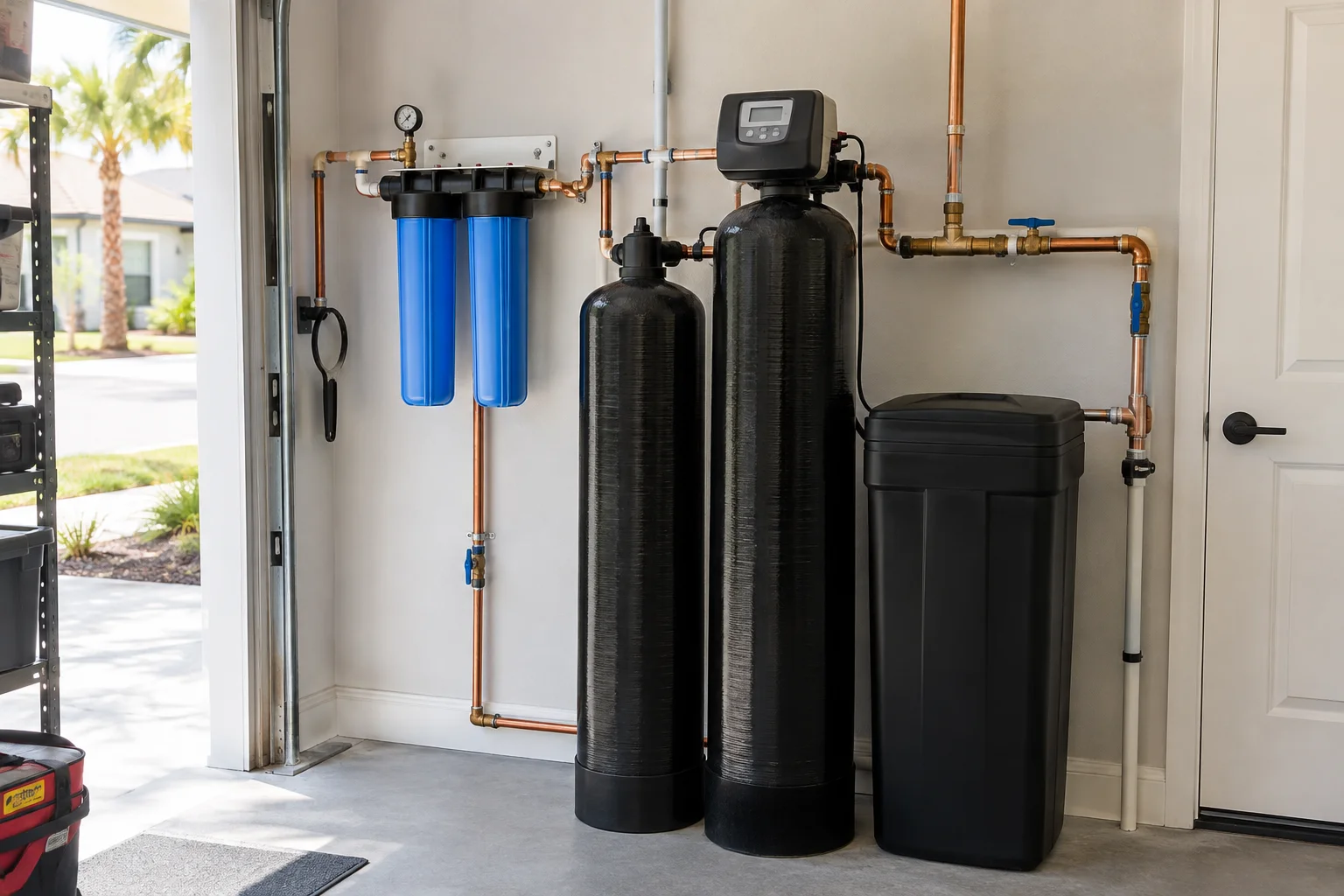
A conventional ion exchange softener removes calcium and magnesium by exchanging them for sodium or potassium ions, depending on the system and regenerant used. This reduces hardness before water reaches the fixtures and appliances served by the equipment.
That can mean less mineral residue on shower glass, easier fixture cleaning, and fewer hardness deposits developing inside water-using equipment. Scale can accumulate on water heater heating surfaces, dishwasher components, and other appliance parts. Over time, those deposits may reduce efficiency, restrict flow, or contribute to appliances wearing out faster.
Softening helps limit new hardness buildup; it does not repair existing damage or guarantee a particular appliance lifespan. A heavily scaled showerhead may still need cleaning, and a restricted pipe may need separate evaluation. The article on keeping small plumbing problems small in Pretty Bayou homes offers useful context for recognizing problems that water treatment alone cannot fix.
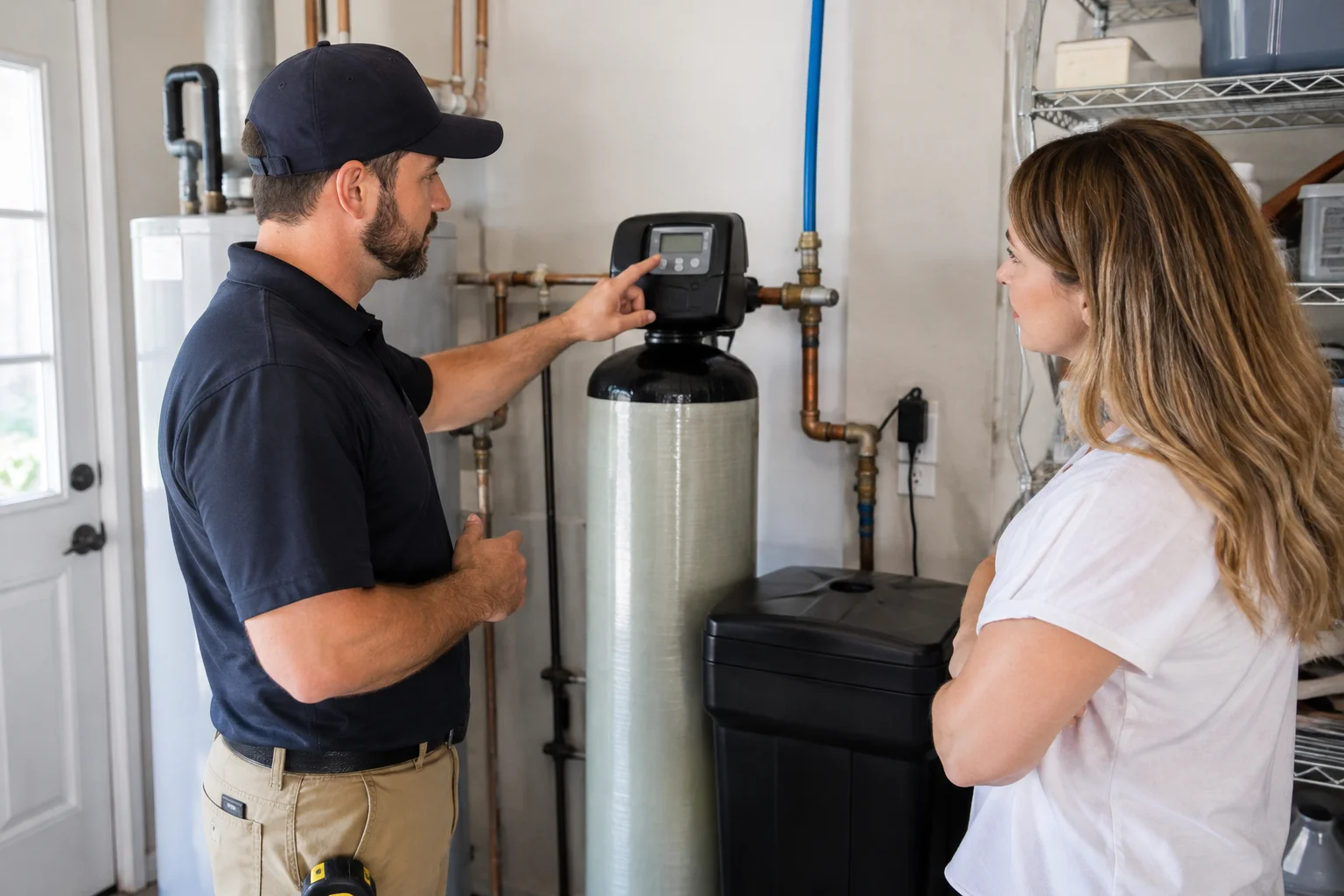
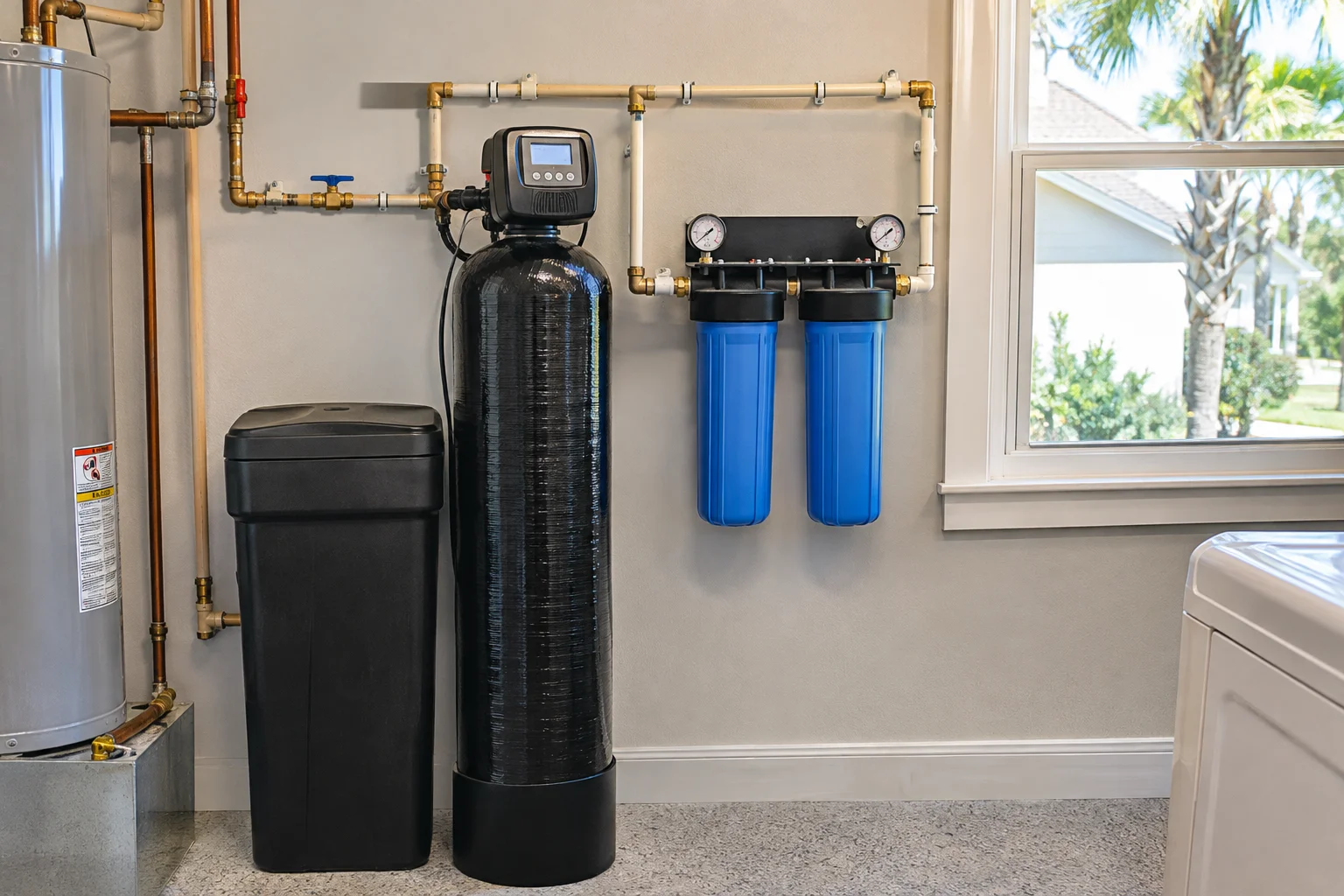
A Superior Mechanical installs, replaces, and services AO Smith water softening systems. Proper sizing and setup matter as much as the equipment name, particularly when several bathrooms or appliances run at once.
Softening, Filtration, and Reverse Osmosis Have Different Jobs
Whole home filtration addresses water throughout the house
Whole home water filtration treats water near its entry point, supplying the connected fixtures with filtered water. A sediment filter can capture particles within its rated size range. An appropriately selected carbon filter can reduce chlorine taste and odor. Other concerns may require specialized media or a different treatment process.
No single filter removes everything. Iron, manganese, sulfur-related odors, and microbial concerns require testing and equipment selected for the actual finding. If chloramine is the relevant disinfectant, the filter must be suitable for that application. Standard sediment or carbon filtration does not replace a softener for dissolved hardness.
When evaluating AO Smith water filtration, compare the specific model's rated flow, maintenance requirements, and certified reduction claims. The brand name alone does not establish what a system treats.
Reverse osmosis focuses on drinking and cooking water
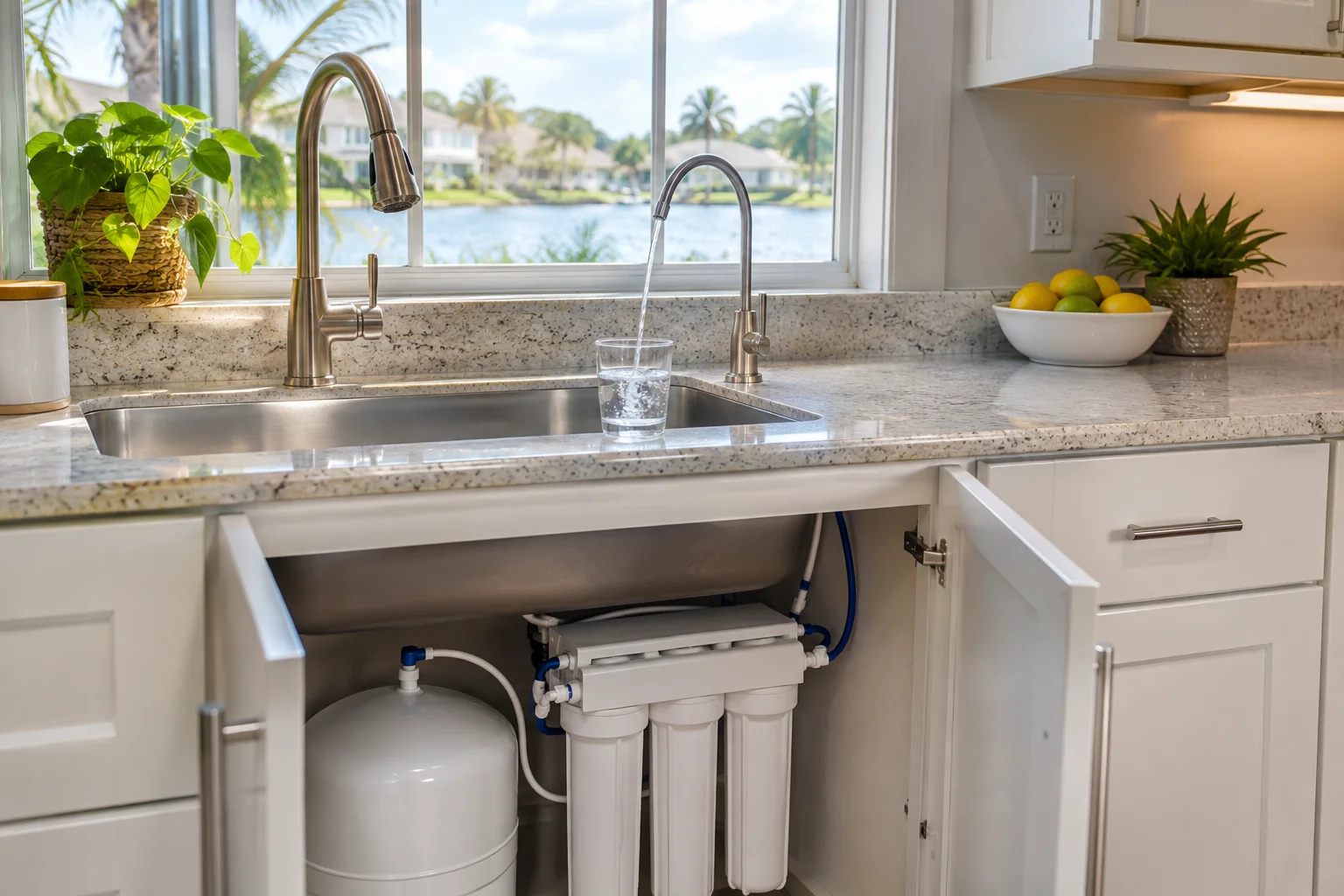
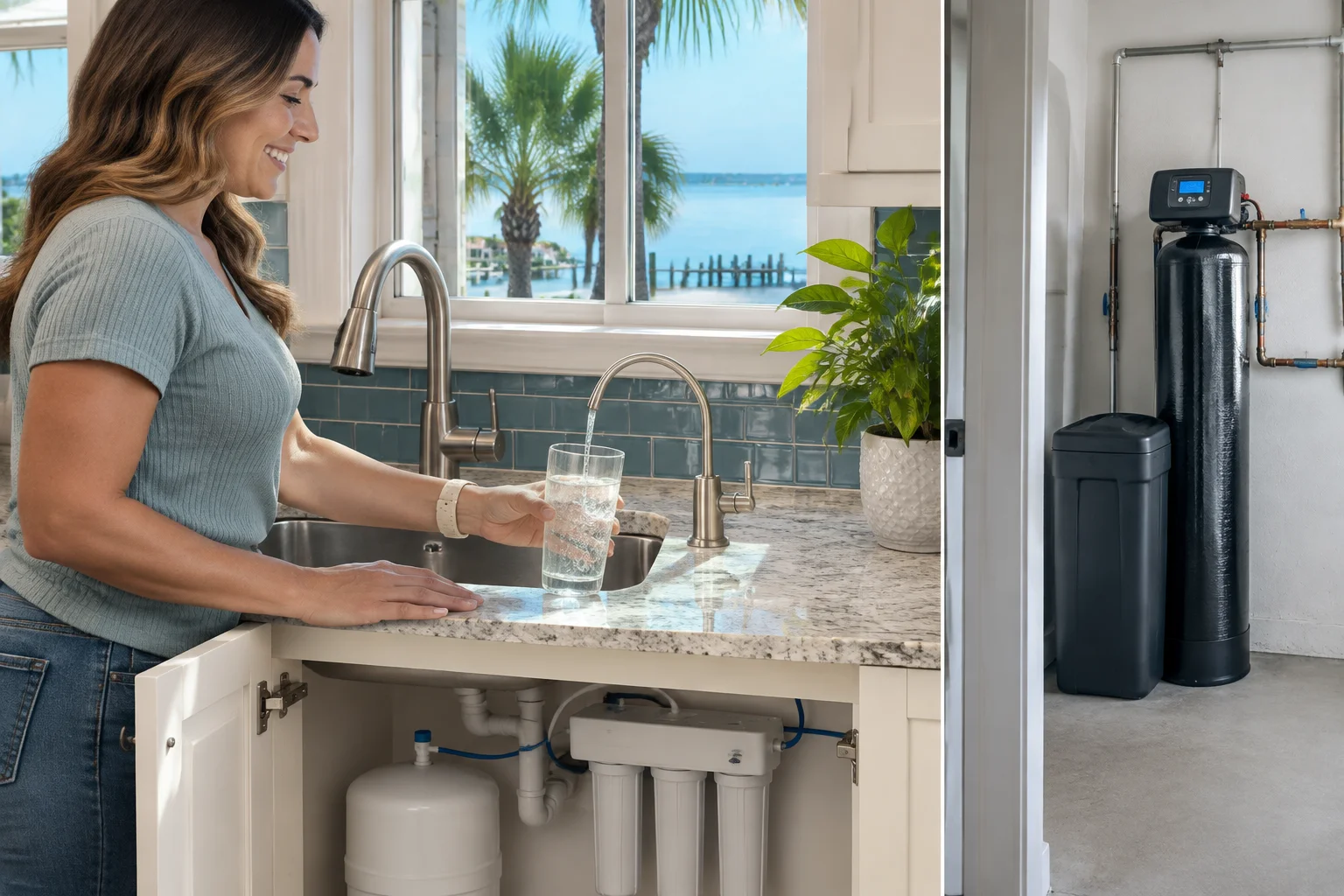
A typical under-sink reverse osmosis system uses a membrane and supporting filters to reduce many dissolved substances at a dedicated kitchen faucet. Depending on the system's certified capabilities, it can improve water used for drinking, ice, coffee, tea, soups, and other cooking.
Picture filling a child's water bottle while a pot of oatmeal simmers nearby. A dedicated drinking water faucet can make both tasks more convenient when the household dislikes its tap water's taste. Reverse osmosis may also improve ice clarity, although freezing conditions and trapped air still affect the result.
An under-sink system does not soften shower water or protect plumbing throughout the home. It serves the connected outlet or outlets. A softener upstream may help reduce hardness scaling on an RO membrane, subject to the equipment requirements.
Combining treatment only where it is useful
Some households benefit from softening alone. Others need a sediment prefilter, a softener, and a kitchen drinking water system. A Superior Mechanical's water filtration, reverse osmosis, and water softener options cover these different treatment roles. A good recommendation explains what each component does rather than treating a larger equipment package as automatically better.
Better Water Should Fit the Way Your Family Lives
Daily routines help determine where improvements matter most. A household concerned mainly about shower residue and laundry may prioritize softening. A family that buys bottled water because coffee and cooking water taste unpleasant may put greater emphasis on kitchen filtration. Homes with both problems may benefit from coordinated treatment.
Bathing with softened water can feel different, sometimes described as slippery. That sensation does not necessarily mean soap remains on the skin. Using less soap may be appropriate, but follow product directions and adjust gradually. For cleaning fixtures and appliances, continue following manufacturer instructions rather than assuming treatment eliminates maintenance.
Conventional sodium-based softening adds sodium to the treated water. If anyone has a medically prescribed sodium restriction, discuss drinking water choices with their clinician and the installer. A properly selected drinking water system or a separate drinking water supply may be appropriate.
Planning an Installation That Works Beyond Day One
Homeowners searching for water softener installation near me should expect more than a recommendation based on bedroom count. Sizing should account for measured hardness, household water use, peak flow, and any iron or other constituents that affect equipment performance.
The installer should also evaluate available space, service access, inlet pressure, a suitable drain connection, and power where required. Any outdoor installation needs equipment approved for those conditions and appropriate protection. In Pretty Bayou's humid climate, leaving room to inspect connections and maintain equipment is especially practical.
Ask whether exterior irrigation or selected hose connections should bypass the softener. Treating large volumes of irrigation water may waste capacity, salt, and regeneration water. System layout should reflect how the property actually uses water.
If you are comparing water treatment near me, request a written explanation of the test results, proposed treatment stages, expected maintenance, and ongoing supply costs. Local support across Bay County also matters when settings need adjustment or replacement filters are due.
Simple Maintenance Keeps Performance Consistent
Check the brine tank as directed and use the salt type recommended for the softener. A tank can appear to contain salt even when a hardened bridge has formed above the water. If hardness returns, check the bypass position, power supply, and controller alerts before assuming the equipment needs replacement. Avoid changing programming without understanding the effect.
Filters need attention too. Replace sediment cartridges and drinking water filters according to manufacturer guidance and actual conditions. A clogged filter can reduce flow. RO membranes, storage tanks, and sanitizing procedures also require scheduled attention; a system that still produces water is not necessarily performing as intended.
Water softener service near me becomes a useful search when the unit repeatedly runs out of soft water, consumes unusual amounts of salt, leaks, or fails to regenerate. Professional service can distinguish a setting problem from a valve, resin, drain, or source-water issue.
Get Help When the Water Changes
Arrange professional evaluation for persistent metallic taste, recurring sediment in household water, unexplained discoloration, or odors that return after cleaning. Note whether the issue affects hot water, cold water, one fixture, or the entire house. Those details help narrow the cause.
If contamination is suspected or a utility advisory is issued, follow official guidance. A standard softener or taste filter is not a substitute for disinfection or an approved safe water supply.
For homeowners searching for water filtration near me, A Superior Mechanical can help connect the complaint to the appropriate treatment. Start with testing, identify whether hardness or another issue is responsible, and choose equipment that supports your household's drinking, cooking, bathing, and laundry needs. The goal is less guesswork, less mineral cleanup, and water that works better for everyday life in Pretty Bayou.
Find Water Softening in Pretty Bayou, FL
If you need Water Softening in Pretty Bayou, FL, visit our local service page or contact A Superior Mechanical today.
For a broader look at whole-home water filtration, reverse osmosis, and water softener options, visit our water filtration, RO, and water softener page.
Map of Pretty Bayou, FL
Frequently Asked Questions
Will a water softener remove chlorine taste and unpleasant odors?
A standard water softener targets calcium and magnesium, not chlorine or every source of odor. Carbon filtration may help with chlorine taste and odor, while other concerns require testing and specialized treatment. Combination systems should be evaluated by the capabilities of each treatment stage.
Do I need reverse osmosis if I already have a water softener?
It depends on your water test results and drinking water preferences. Softening reduces hardness throughout the connected household supply. A typical under-sink reverse osmosis system treats drinking and cooking water at a dedicated outlet and reduces substances covered by its performance claims. Some homes benefit from both.
How do I know whether my Pretty Bayou home needs water softening?
Recurring mineral spots, scale on showerheads, and soap residue can suggest hardness, but a water test should confirm it. A Superior Mechanical can evaluate hardness, household demand, installation conditions, and related water quality concerns before recommending an AO Smith softening system or other treatment.
Related Articles
- Keeping Small Plumbing Problems Small in Pretty Bayou Homes
- Pretty Bayou Homes and the Real Cost of Hard Water: How Reverse Osmosis Helps Protect Plumbing
- Less Scale, Fewer Surprises: Water Softening and Plumbing Care in Cinco Bayou
- How Plumbing Wear and Tear Changes the Way Water Softening Works in Inlet Beach
Photo Gallery