A glass of water should taste refreshing. Coffee should taste like coffee, not chlorine. And freshly washed dishes should come out of the dishwasher looking clean instead of covered in cloudy spots. For homeowners in Bid-A-Wee, FL, everyday water quality can influence everything from morning routines to the condition of kitchen fixtures and household appliances.
Along this coastal stretch of Bay County, homeowners may notice mineral deposits around faucets, unpleasant drinking water flavors, cloudy ice cubes, or soap that never seems to rinse completely. These symptoms can have different causes, and choosing the right water treatment equipment starts with understanding what is actually in the water.
Reverse osmosis systems in Bid-A-Wee, FL offer an effective way to improve drinking and cooking water. When paired with appropriate water softening or whole home filtration, they can become part of a more complete approach to household water quality.
A Superior Mechanical helps local homeowners, rental property owners, and businesses explore water treatment solutions designed around their specific water concerns.
What Your Kitchen and Bathroom May Be Telling You About Water Quality
Water problems are not always obvious when you turn on the faucet. Some become noticeable only after repeated use, especially on glassware, plumbing fixtures, and appliances.
In the kitchen, homeowners may find white spots on drinking glasses, dishes that look cloudy after washing, or mineral residue around the faucet. Ice cubes may appear cloudy, while drinking water develops a metallic, chlorinated, or otherwise unpleasant taste.
These observations do not necessarily indicate unsafe water. They can, however, provide useful clues about mineral content, treatment chemicals, dissolved substances, or household plumbing conditions.
Hard Water Spots and Scale Around Fixtures
Hard water contains dissolved minerals, primarily calcium and magnesium. When water evaporates from glass, dishes, or fixtures, those minerals can remain behind as visible deposits.
Homeowners may notice scale buildup on faucets, crusty deposits around showerheads, or stubborn white marks on glass shower doors. Mineral accumulation can also develop inside water heaters, plumbing components, and appliances that regularly heat water.
Hardness varies by water source and treatment history. Not every Bid-A-Wee property has the same mineral levels, so testing is more useful than assuming that visible deposits have one particular cause.
Reverse osmosis can reduce dissolved minerals in water used at a drinking water faucet. However, a kitchen reverse osmosis unit does not soften the water throughout the house. If mineral scale is affecting showers, fixtures, and appliances, a water softener may be the more appropriate companion system.
Dry Skin, Dull Hair, and Soap That Will Not Rinse Clean
Bathing water can affect how soap and shampoo behave. Hardness minerals react with certain soaps, creating residue and reducing lather. This may leave skin feeling coated and hair looking dull or difficult to manage.
Some people also report dry skin from hard water, although skin dryness can have several causes, including weather, bathing habits, and individual sensitivities.
When soap does not lather or rinse well, homeowners may compensate by using more detergent, shampoo, or cleaning products. Water softening can reduce hardness minerals and improve how many soaps perform.
For households dealing with both bathing concerns and unpleasant drinking water, combining water softening with reverse osmosis may address more of the problem than either system alone.
Why Water Quality Deserves Attention in Coastal Bid-A-Wee
Bid-A-Wee is known for its beachside setting near Panama City Beach. Warm temperatures, humid weather, sandy surroundings, and a steady flow of visitors shape how local homes are used and maintained.
Coastal conditions can increase maintenance demands on fixtures and equipment, particularly where salt air contributes to external corrosion. That environmental exposure is different from the dissolved minerals and other substances present inside household water lines.
Water characteristics depend on the property's supply. Homes connected to a public water system may experience different conditions from properties using private wells or specialized treatment equipment.
Municipal treatment may leave a noticeable disinfectant taste or odor, while private well water can present concerns involving sediment, minerals, iron, or other naturally occurring substances. Actual conditions must be confirmed through appropriate testing.
Seasonal occupancy also matters. Vacation homes and rental properties may sit unused between visits, allowing water to remain in household plumbing for extended periods. Stagnant water can develop taste or odor changes, making flushing and equipment maintenance especially important.
Homeowners throughout Bid-A-Wee benefit from choosing water treatment based on their specific property rather than relying on assumptions about coastal water quality.
How Reverse Osmosis Creates Better Drinking Water
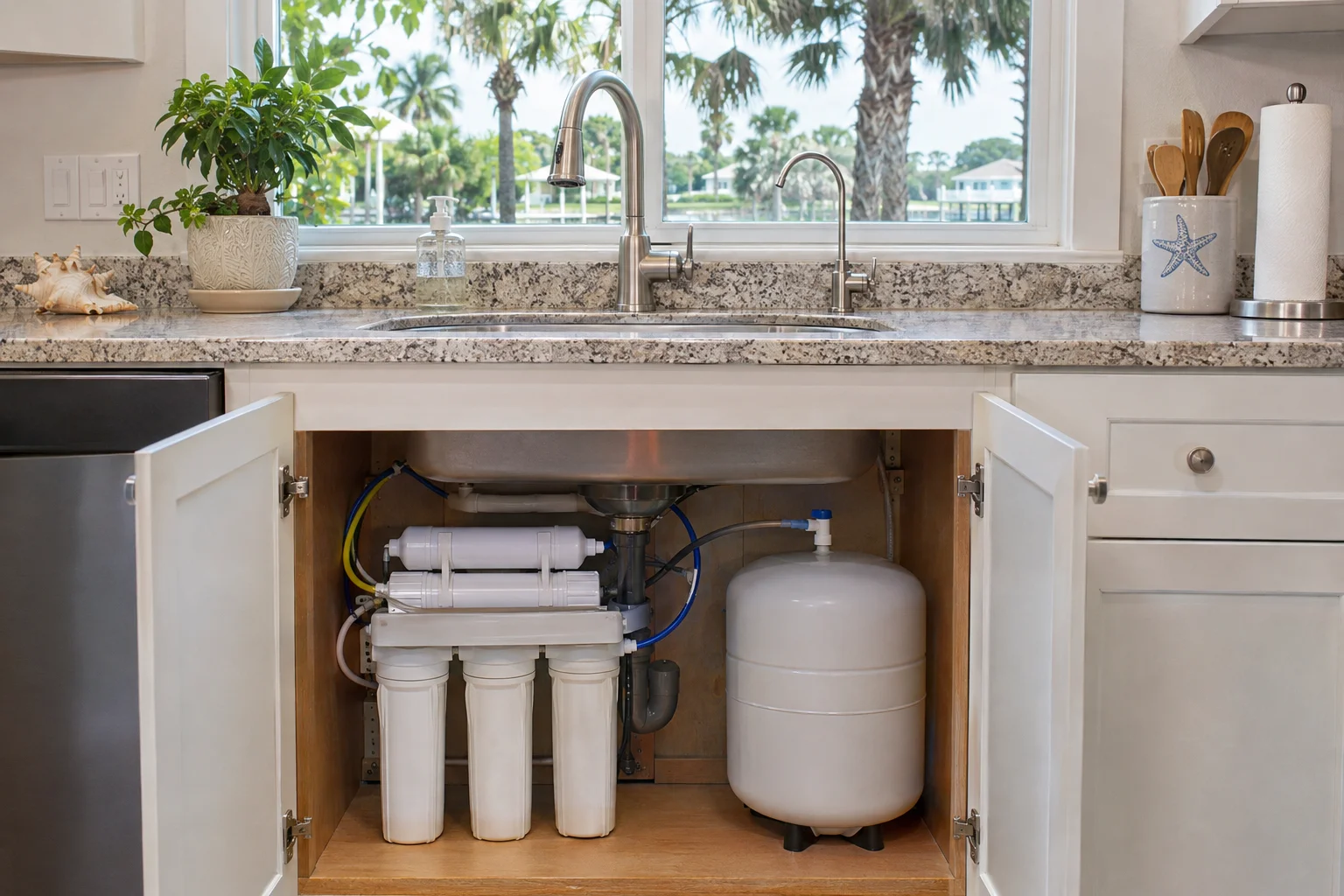
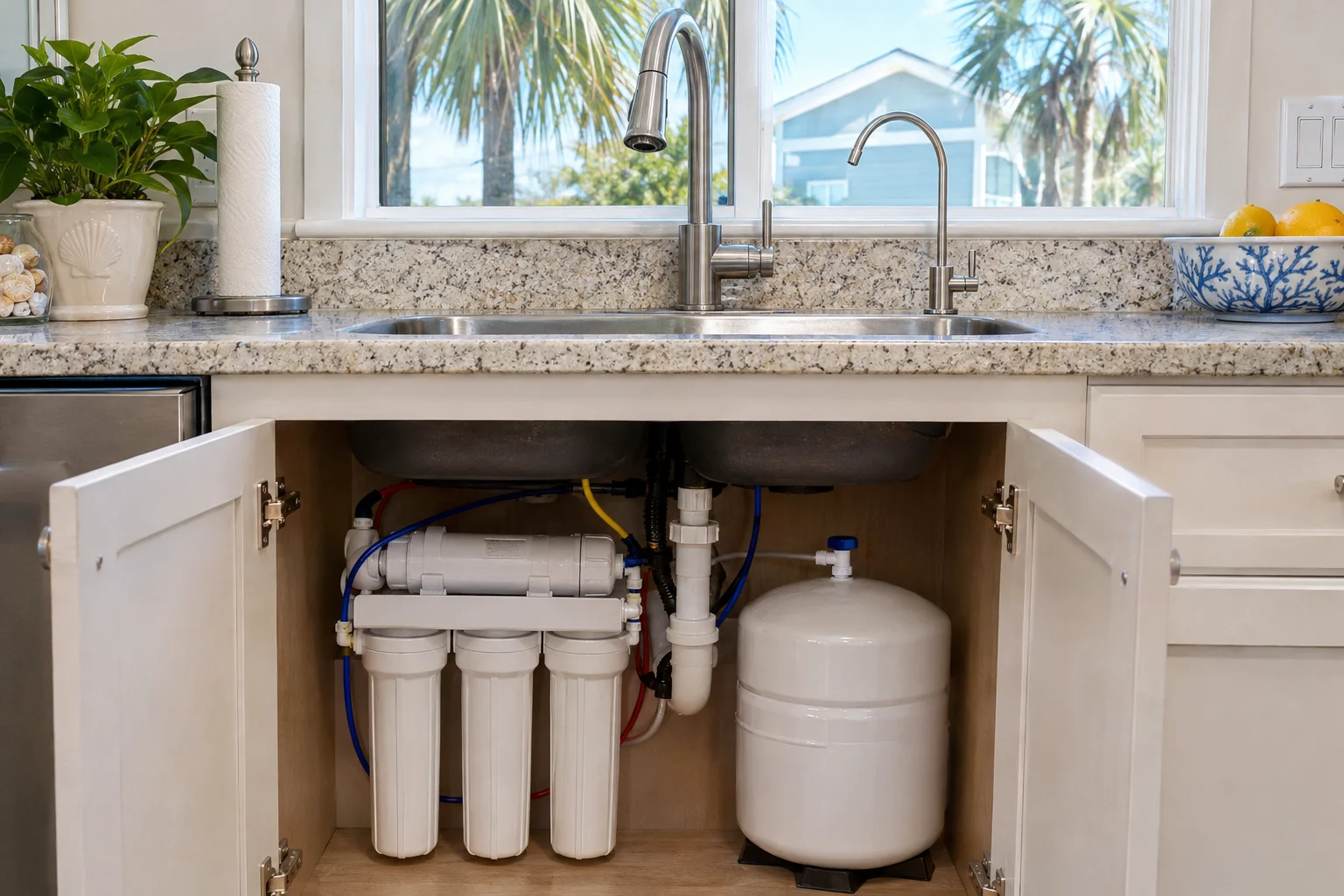
Reverse osmosis, commonly called RO, uses a semipermeable membrane to separate water from many dissolved substances. Most residential systems also include sediment and carbon filtration stages that prepare water before it reaches the membrane and improve finished water quality.
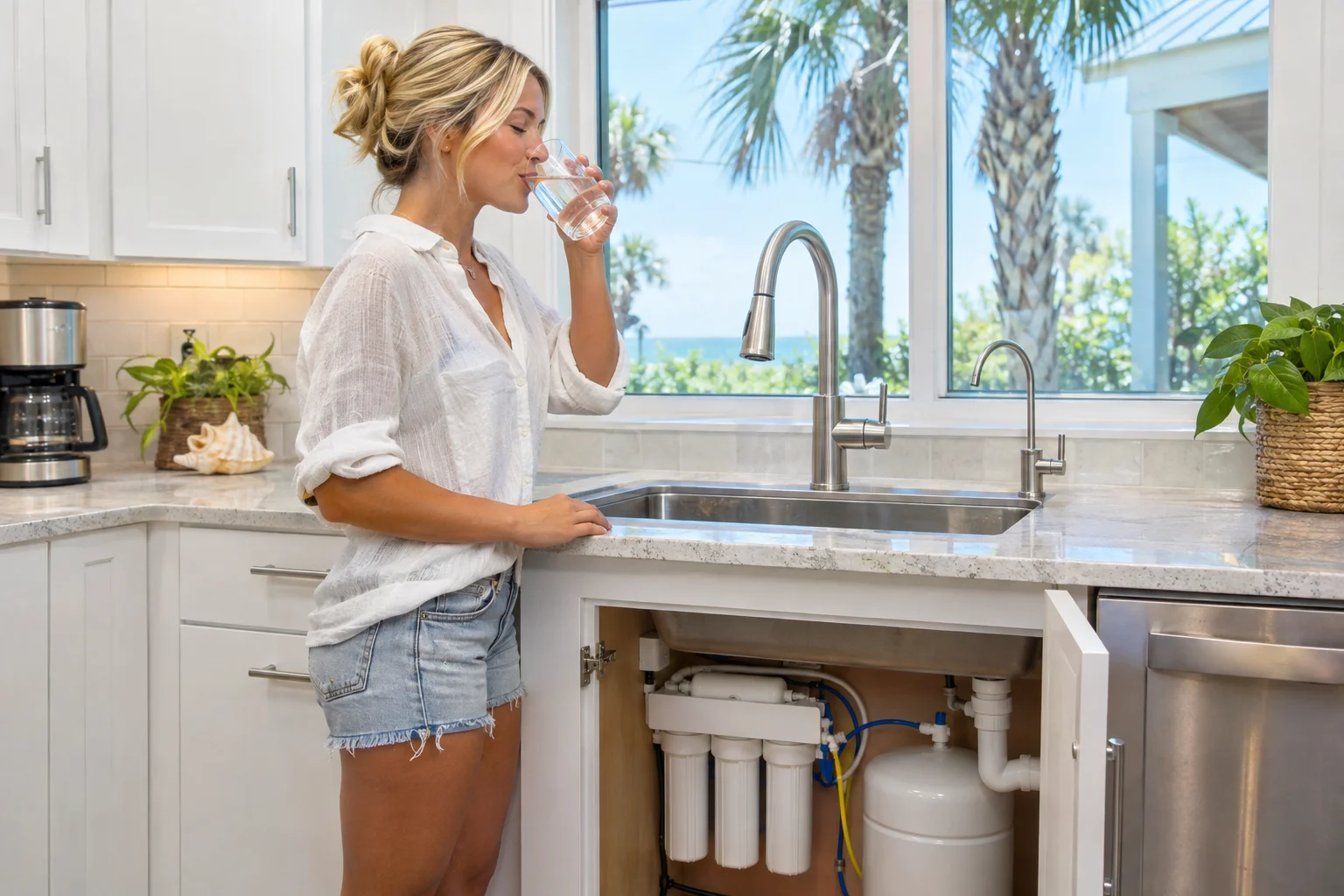
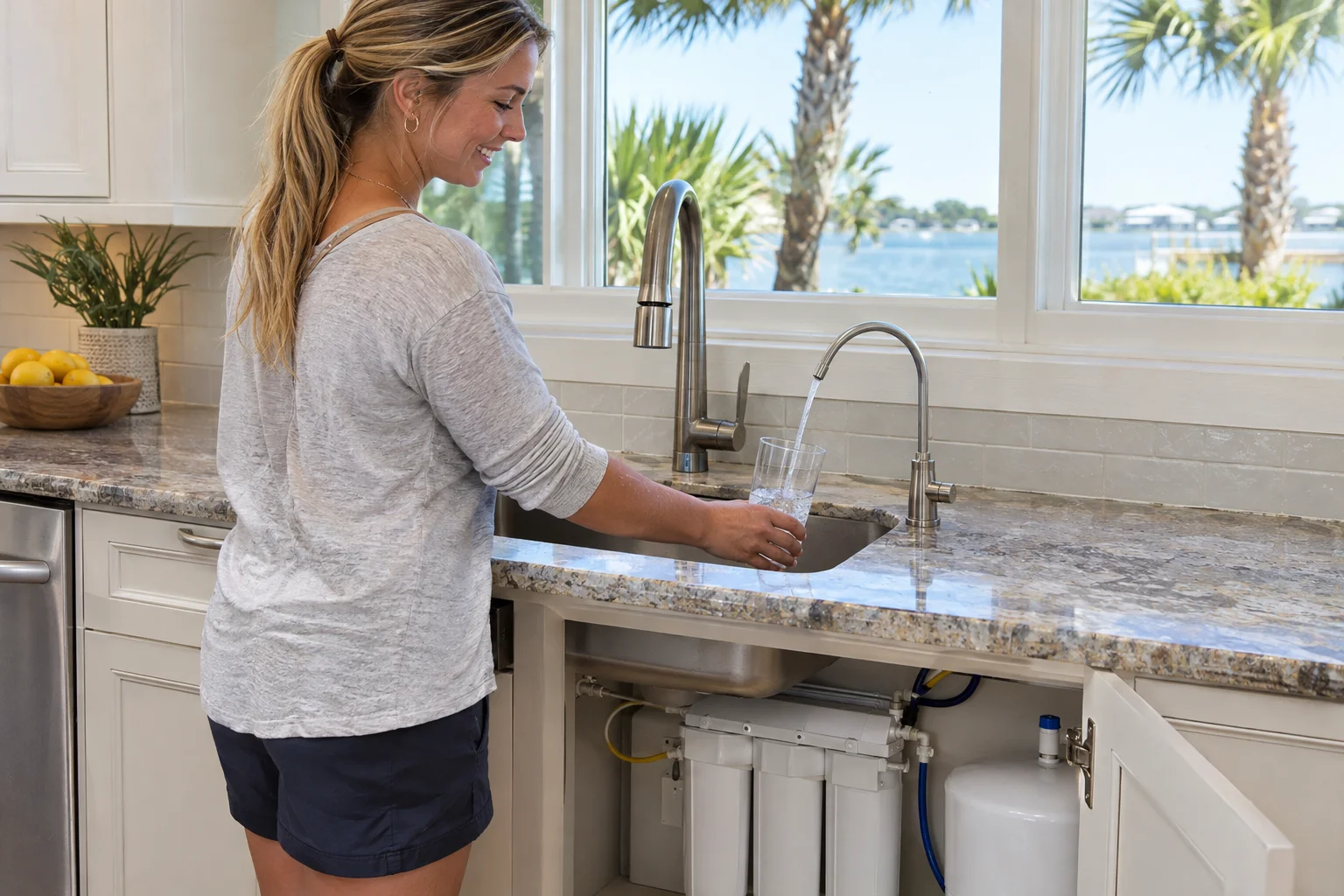
A typical under sink reverse osmosis system provides treated water through a dedicated drinking water faucet. Some configurations can also supply a refrigerator or ice maker when properly designed and installed.
Depending on the system and its certifications, reverse osmosis can reduce substances such as dissolved salts, certain metals, and other dissolved contaminants. Carbon filtration stages can also reduce chlorine taste and odor.
Performance depends on the specific equipment, incoming water conditions, membrane condition, and maintenance schedule. Not every reverse osmosis system is certified to reduce every contaminant.
Cleaner Water for Morning Coffee and Family Meals
Think about a typical morning in a busy Bid-A-Wee kitchen. Someone fills the coffee maker while another family member grabs ice for a water bottle. Breakfast preparation begins, and a pot of water goes on the stove.
Water is part of nearly every step.
If tap water has a strong chlorine taste or noticeable metallic flavor, those characteristics can carry into beverages and food. Filtered water for coffee and cooking can improve consistency by reducing certain substances that affect flavor.
Better tasting drinking water also makes it easier to fill reusable bottles directly from the kitchen rather than relying on cases of bottled water.
Reverse osmosis is particularly useful for drinking water, tea, coffee, soups, and recipes where water quality noticeably influences the finished product.
Clearer Ice and More Pleasant Drinking Water
Cloudy ice cubes can result from trapped air bubbles, dissolved minerals, or the freezing process itself. Cloudiness alone does not establish that water is contaminated.
Still, when cloudy ice is accompanied by unpleasant taste or visible residue, examining the water supply makes sense.
A properly maintained reverse osmosis system can reduce dissolved mineral content and improve the flavor of water used for ice. It will not guarantee perfectly transparent cubes because freezing conditions also affect ice clarity.
For homeowners searching for a reverse osmosis system near me, the practical goal is dependable drinking water that tastes good and fits the household's daily needs.
Reverse Osmosis, Water Softeners, and Whole Home Filtration Serve Different Purposes
One of the most important decisions in residential water treatment is understanding that different systems solve different problems.
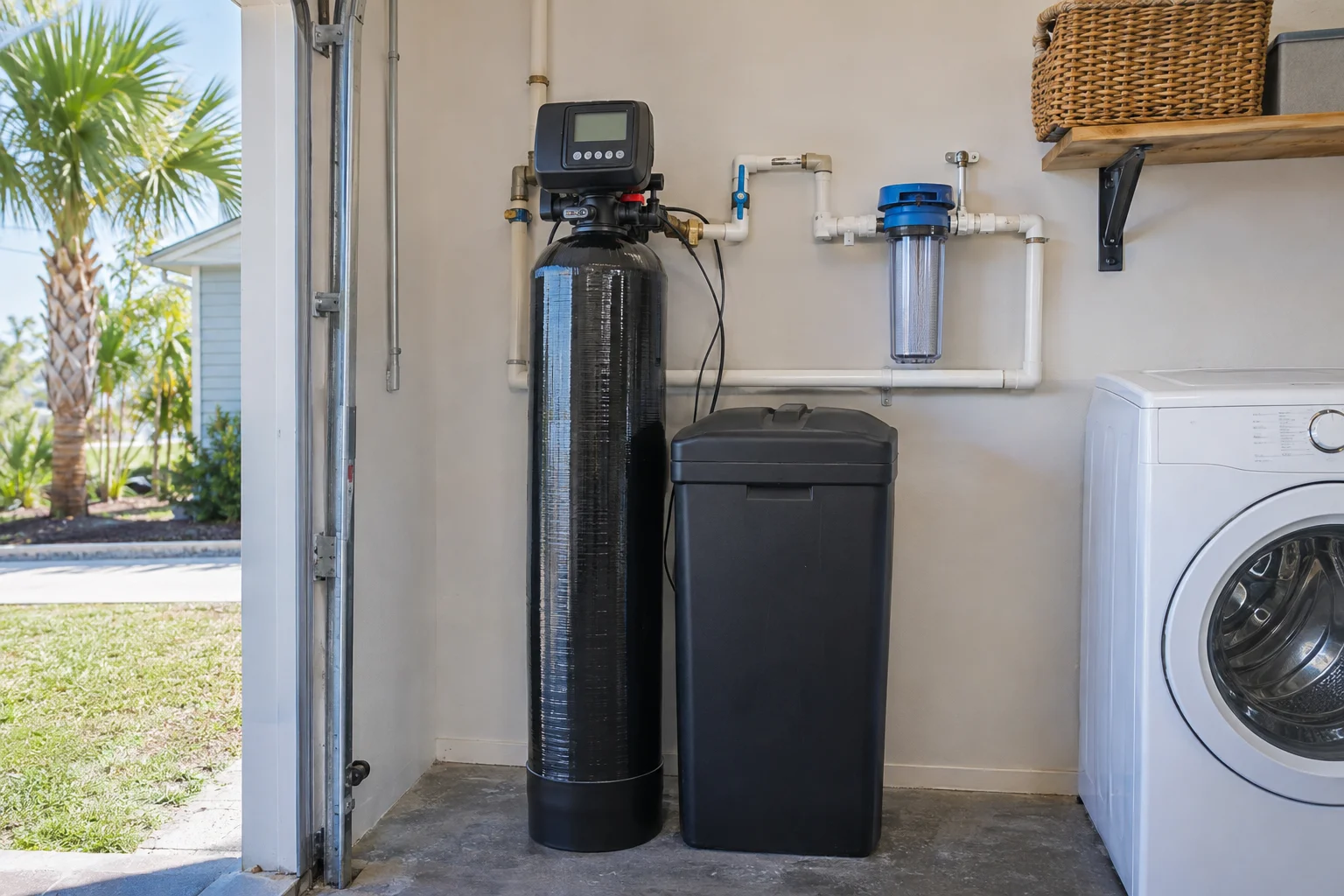
A reverse osmosis unit focuses on producing highly filtered water at selected drinking water outlets. A water softener addresses hardness minerals throughout the areas it serves. Whole home water filtration treats incoming water before it reaches multiple fixtures and appliances.
These approaches can work together, but homeowners do not automatically need all three.
Reverse Osmosis for Drinking and Cooking
Reverse osmosis is often the preferred option when homeowners want better tasting drinking water and reduced concentrations of certain dissolved substances.
Under sink systems are popular because they provide treated water where families use it most frequently: the kitchen.
For households dealing primarily with chlorine taste in water, an appropriately certified carbon filter may be sufficient. When testing identifies dissolved contaminants that carbon filtration does not adequately address, reverse osmosis may provide additional treatment.
Water Softening for Mineral Scale
A water softener typically uses ion exchange to reduce calcium and magnesium hardness. This helps limit mineral deposits on fixtures and can reduce scaling in water heaters and other equipment.
Softening may also improve soap lather, reduce detergent waste, and make cleaning glass shower doors easier.
Homeowners interested in an AO Smith water softener should have their water hardness measured before choosing equipment capacity and settings.
Water softening is not the same as comprehensive contaminant filtration. It should not be treated as a substitute for a properly selected drinking water purification system.
Whole Home Water Filtration for Broader Household Concerns
A whole house water filter can address specific concerns at the point where water enters the home. Depending on its design, it may reduce sediment, chlorine, certain odors, or other targeted substances.
Whole home water filtration can be useful when discoloration, visible particles, or unpleasant odors affect several faucets rather than only the kitchen.
However, not every filter removes the same contaminants. Sediment filters, activated carbon systems, specialized media, and other technologies have different capabilities.
A Superior Mechanical can help homeowners explore water filtration, reverse osmosis, and water softening solutions that match their household priorities.
Where AO Smith Water Filtration Fits Into a Home Treatment Plan
AO Smith water filtration equipment offers options for homeowners interested in improving drinking water quality and managing specific household water concerns.
A Superior Mechanical provides professional installation and service for AO Smith reverse osmosis systems in the Bid-A-Wee area.
Choosing equipment involves more than selecting a brand. The system must match the water supply, available installation space, household demand, and contaminants targeted for reduction.
For an under sink reverse osmosis installation, considerations include cabinet clearance, drinking water faucet placement, water pressure, drainage, and connections to refrigerators or ice makers.
System specifications and independently verified contaminant reduction claims should be reviewed before installation. Certifications such as NSF/ANSI 58 can help homeowners evaluate reverse osmosis performance for the particular claims listed by the manufacturer.
Proper sizing also matters. A household with several family members may use considerably more drinking water than a vacation condo occupied occasionally.
Visible Sediment, Discoloration, and Odors Need the Right Diagnosis
Not every water complaint can be solved by installing a reverse osmosis filter.
Brown or reddish discoloration may involve iron, sediment, or disturbances in water lines. Black particles can have several possible sources, including deteriorating plumbing components or treatment media. Musty, earthy, sulfur-like, or chemical odors may point to different conditions.
If water suddenly changes color or develops an unusual smell, homeowners should identify the source before selecting equipment.
Compare hot and cold water, check whether multiple faucets are affected, and determine whether neighbors are experiencing similar issues. For municipal water concerns, the utility can provide information about current service conditions and published water quality reports.
Private well owners may need laboratory testing for bacteria and relevant chemical contaminants. Unusual odor or appearance cannot reliably establish whether water is safe to drink.
If contamination is suspected, use an appropriate alternative drinking water source until the concern has been evaluated. Boiling water does not remove dissolved metals or many chemical contaminants.
Professional water treatment recommendations should follow the identified problem, not simply the appearance of the water.
Protecting Appliances, Laundry, and Plumbing With Better Water
Drinking water is only one part of household water use. Dishwashers, washing machines, water heaters, showerheads, and plumbing fixtures also interact with water every day.
Hardness deposits can accumulate on heating surfaces and internal components. Over time, substantial scale may reduce efficiency or contribute to maintenance problems, depending on the appliance and operating conditions.
Mineral residue can leave laundry feeling stiff, make glassware look dull, and require extra cleaning around sinks and showers.
Water softening can reduce these hardness-related problems. Whole home filtration may help protect certain equipment from sediment when the selected filter is appropriate for the water supply.
Reverse osmosis contributes differently by improving water used for drinking, food preparation, and potentially ice production. A standard kitchen RO system is not intended to protect every appliance in the house.
Homeowners can learn more about coordinating water treatment with routine plumbing care in How Bid-A-Wee Homes Can Keep Plumbing Problems at Bay With Regular Maintenance.
Maintaining a Reverse Osmosis System in Florida's Coastal Climate
Even high quality reverse osmosis equipment requires maintenance to keep performing as intended.
Pre-filters collect sediment and reduce substances that could affect the membrane. Carbon filters have a limited treatment capacity, while RO membranes gradually lose performance and eventually require replacement.
Replacement schedules vary by manufacturer, incoming water quality, and household consumption. Homeowners should follow the specific equipment instructions rather than assuming every filter has the same service interval.
Storage tanks, tubing, faucet components, and connections should also be inspected for leaks or signs of wear.
Homes used as vacation rentals deserve particular attention. After extended periods of vacancy, follow manufacturer guidance for flushing and sanitizing the system before returning it to regular use.
Where an RO system supplies a refrigerator, the connected lines and components should be included in appropriate maintenance procedures.
Property owners managing multiple residences may find additional guidance in Why Property Management Plumbing Keeps Bid-A-Wee Homes Comfortable and Repairs Under Control.
Choosing Professional Reverse Osmosis Installation in Bid-A-Wee
A well designed water treatment system starts with identifying the concern. Hardness testing can help explain scale deposits, while appropriate laboratory testing may be necessary for suspected contaminants.
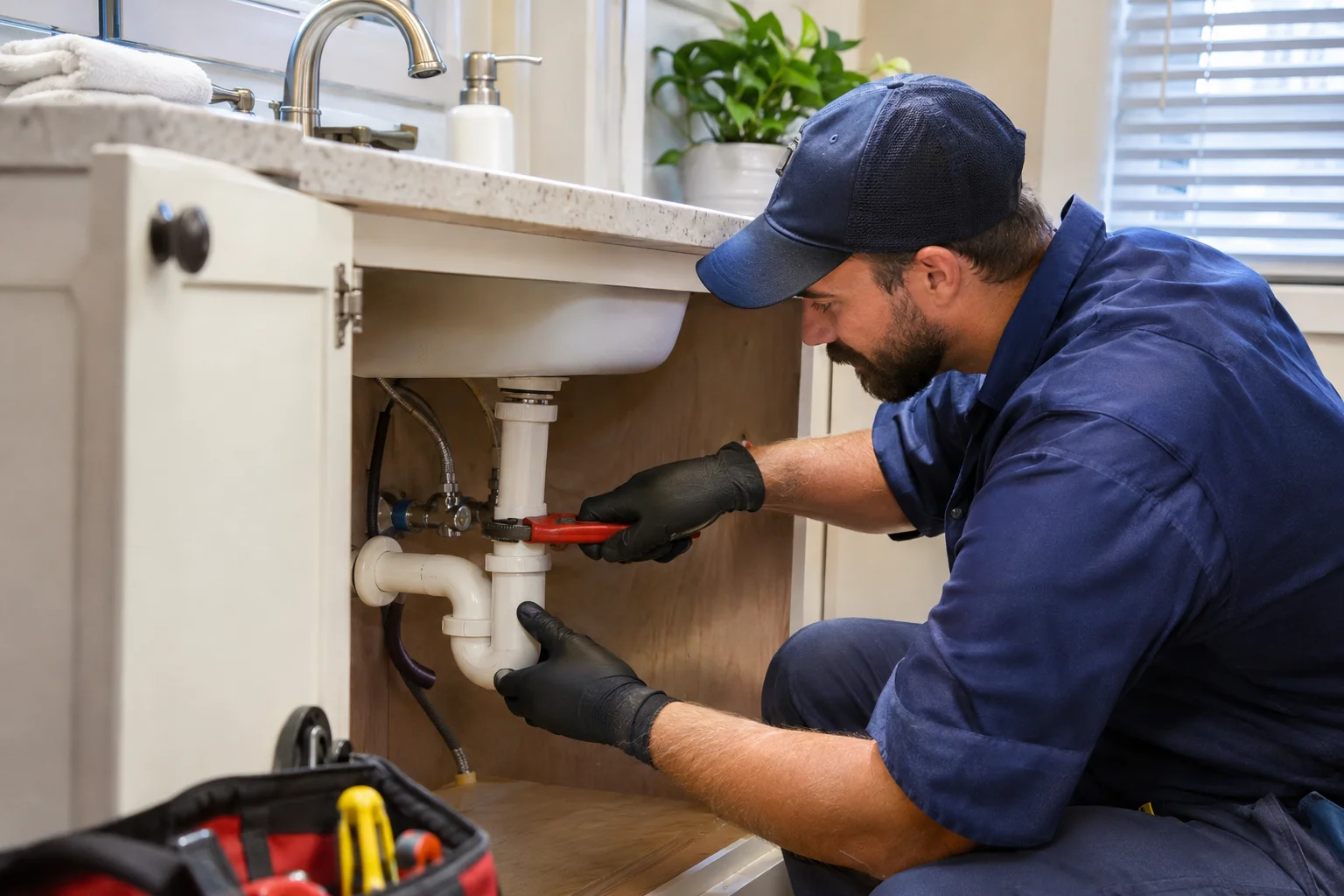
Professional installation also helps ensure the RO system has adequate pressure, suitable drainage, accessible service components, and properly connected drinking water outlets.
Homeowners searching for water treatment near me often benefit from working with a provider familiar with coastal properties, vacation rentals, and the practical installation challenges found in existing kitchens.
A Superior Mechanical serves customers in Bid-A-Wee and the surrounding Bay County area with water treatment services focused on household needs.
For additional insight into coastal drinking water treatment, explore Cleaner Water, Easier Plumbing: Why Better Reverse Osmosis Systems Fit Seaside Homes.
Make Everyday Water Work Better for Your Household
Cleaner water can make ordinary routines more enjoyable. It can mean filling a child's water bottle without an unpleasant aftertaste, making coffee with filtered water, serving ice that tastes fresh, and spending less time scrubbing mineral deposits when appropriate hardness treatment is installed.
The right solution depends on whether the concern involves drinking water, scale buildup, bathing, laundry, or several areas of the home.
If your Bid-A-Wee property has persistent water taste problems, recurring mineral spots, or concerns about sediment and odors, A Superior Mechanical can help evaluate suitable filtration options.
Explore professional reverse osmosis installation and service in Bid-A-Wee to learn how an AO Smith system or a coordinated water treatment approach can support cleaner, better tasting water for your home, rental property, or business.
Find Reverse Osmosis Systems in Bid-A-Wee, FL
If you need Reverse Osmosis Systems in Bid-A-Wee, FL, visit our local service page or contact A Superior Mechanical today.
For a broader look at whole-home water filtration, reverse osmosis, and water softener options, visit our water filtration, RO, and water softener page.
Map of Bid-A-Wee, FL
Frequently Asked Questions
Will a reverse osmosis system remove hard water spots from dishes and faucets?
A reverse osmosis system reduces dissolved minerals in the water it treats, which can help reduce mineral residue on drinking glasses and other items rinsed with RO water. However, a typical under sink system does not treat water throughout the house. If hard water spots, showerhead scale, and mineral deposits are widespread, a properly sized water softener may be a better solution for those concerns.
Is reverse osmosis worth installing in a Bid-A-Wee, FL home?
Reverse osmosis can be a worthwhile investment for Bid-A-Wee homeowners who want better tasting drinking water or need to reduce specific dissolved contaminants. It can also provide convenient filtered water for coffee, cooking, and ice makers. The value depends on your current water quality, household usage, and the treatment performance of the selected system. A Superior Mechanical can help evaluate suitable AO Smith reverse osmosis options.
Can I install both a water softener and a reverse osmosis system?
Yes. Water softeners and reverse osmosis systems perform different functions and can complement each other. A water softener reduces hardness minerals that contribute to scale buildup and poor soap performance. Reverse osmosis provides more extensively filtered water for drinking and cooking. Combining the systems may be appropriate when testing confirms both hardness and drinking water concerns.
Related Articles
- How Bid-A-Wee Homes Can Keep Plumbing Problems at Bay With Regular Maintenance
- Making Smarter Plumbing Choices for Bid-A-Wee Homes
- Why Property Management Plumbing Keeps Bid-A-Wee Homes Comfortable and Repairs Under Control
- Cleaner Water, Easier Plumbing: Why Better Reverse Osmosis Systems Fit Seaside Homes
Photo Gallery