A glass of water should not need a squeeze of lemon to cover an unpleasant taste. Coffee should taste like coffee, and freshly washed dishes should not come out covered in chalky marks. In a busy Camp Creek kitchen, those small frustrations can affect everything from filling children's water bottles to making dinner.
Reverse osmosis systems in Camp Creek, FL can improve drinking and cooking water, but they are not the answer to every water problem. Spots, scale, odors, and sediment can have different causes. The best starting point is understanding what is in your water and choosing treatment that addresses the right issue in the right place.
Camp Creek water deserves a household-specific approach
Camp Creek's warm, humid coastal setting makes dependable water especially valuable. Families refill glasses after time outdoors, rinse off after the beach, and run laundry through busy summer weeks. Vacation properties may alternate between quiet stretches and full occupancy, changing how much water a treatment system needs to handle.
Location alone does not establish water hardness or contaminant levels. Conditions can vary with the water source, utility service area, building plumbing, and existing treatment equipment. Coastal proximity does not automatically mean a home has saltwater intrusion or unsafe tap water.
For public water, review the supplier's current water quality report and test at the home when needed. Private wells require their own testing. A Superior Mechanical serves Camp Creek homeowners with treatment recommendations that should account for the property's water supply, usage, and maintenance needs.
Read the clues before choosing a filter
White spots and crusty deposits
Hard water spots on glass, dishes, and fixtures often appear when water evaporates and leaves calcium and magnesium behind. Scale buildup on faucets, showerheads, and inside plumbing can accompany the same mineral load. Soap that does not lather or rinse well is another possible clue.
These symptoms usually point toward evaluating water softening rather than installing only a kitchen drinking water filter. A standard under-sink RO system treats one outlet, not every shower, dishwasher, or laundry connection.
Taste, odor, and cloudy ice
Metallic tasting water can relate to dissolved metals, corrosion, or other chemistry issues. A chlorinated taste may reflect the disinfectant used in a public supply. Other unpleasant tastes and odors can originate in the source water, treatment equipment, or household plumbing.
Cloudy ice cubes may contain trapped air or minerals, so appearance alone is not a water safety test. RO water often improves ice quality, but freezer design and freezing conditions also affect clarity. Poor tasting coffee and cooking water are useful reasons to investigate, not proof of a particular contaminant.
Discoloration, sediment, and bathing complaints
Visible sediment in household water, rusty discoloration, or a sudden odor change deserves investigation before equipment selection. Check whether the issue affects hot water, cold water, one fixture, or the entire house. Cloudiness that clears from the bottom upward after standing is often caused by tiny air bubbles.
Dry skin or dull hair after bathing can have several causes, including hot showers and personal care products. Hardness may contribute to soap residue, but treatment should not be presented as a cure for a skin condition.
What reverse osmosis does well
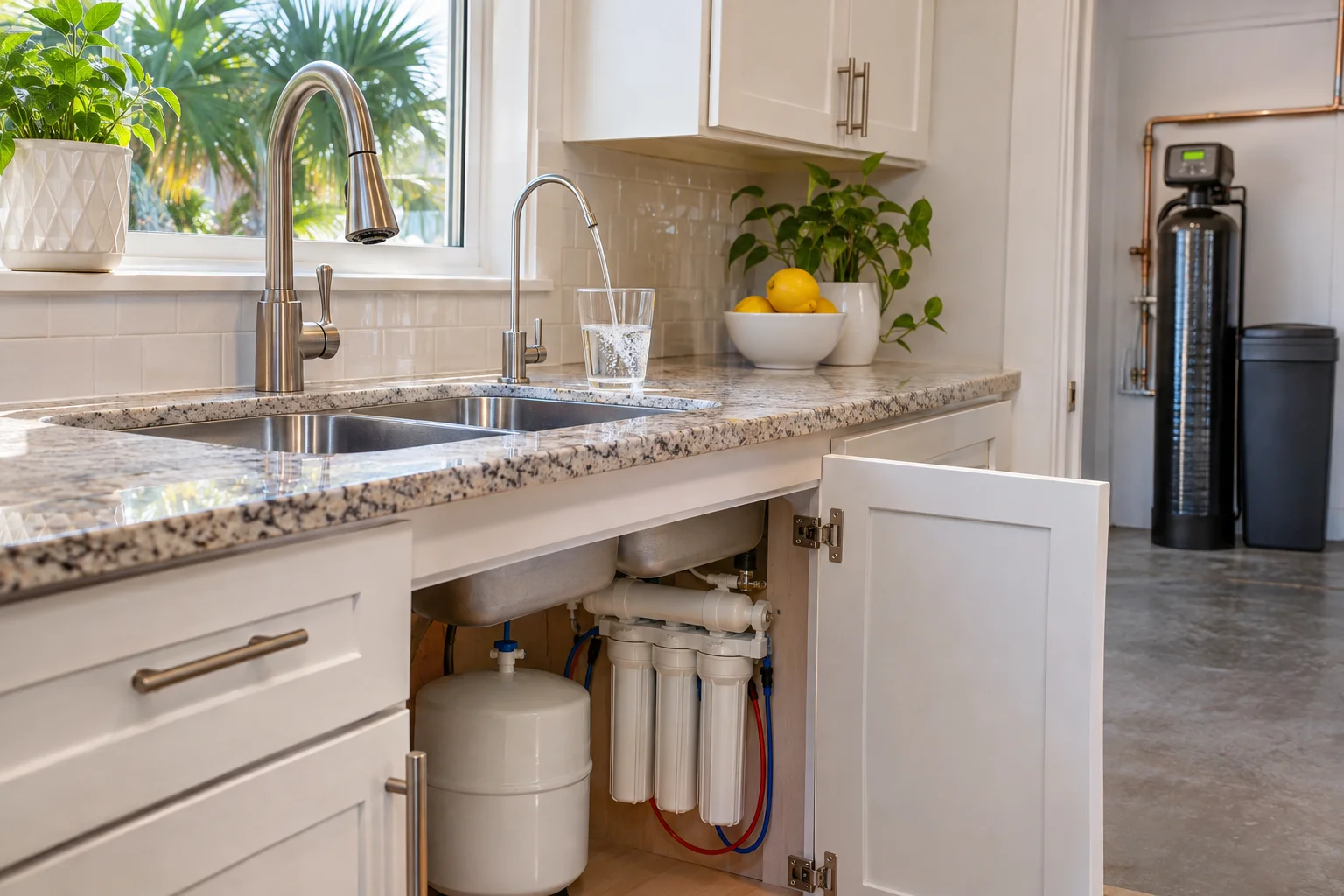
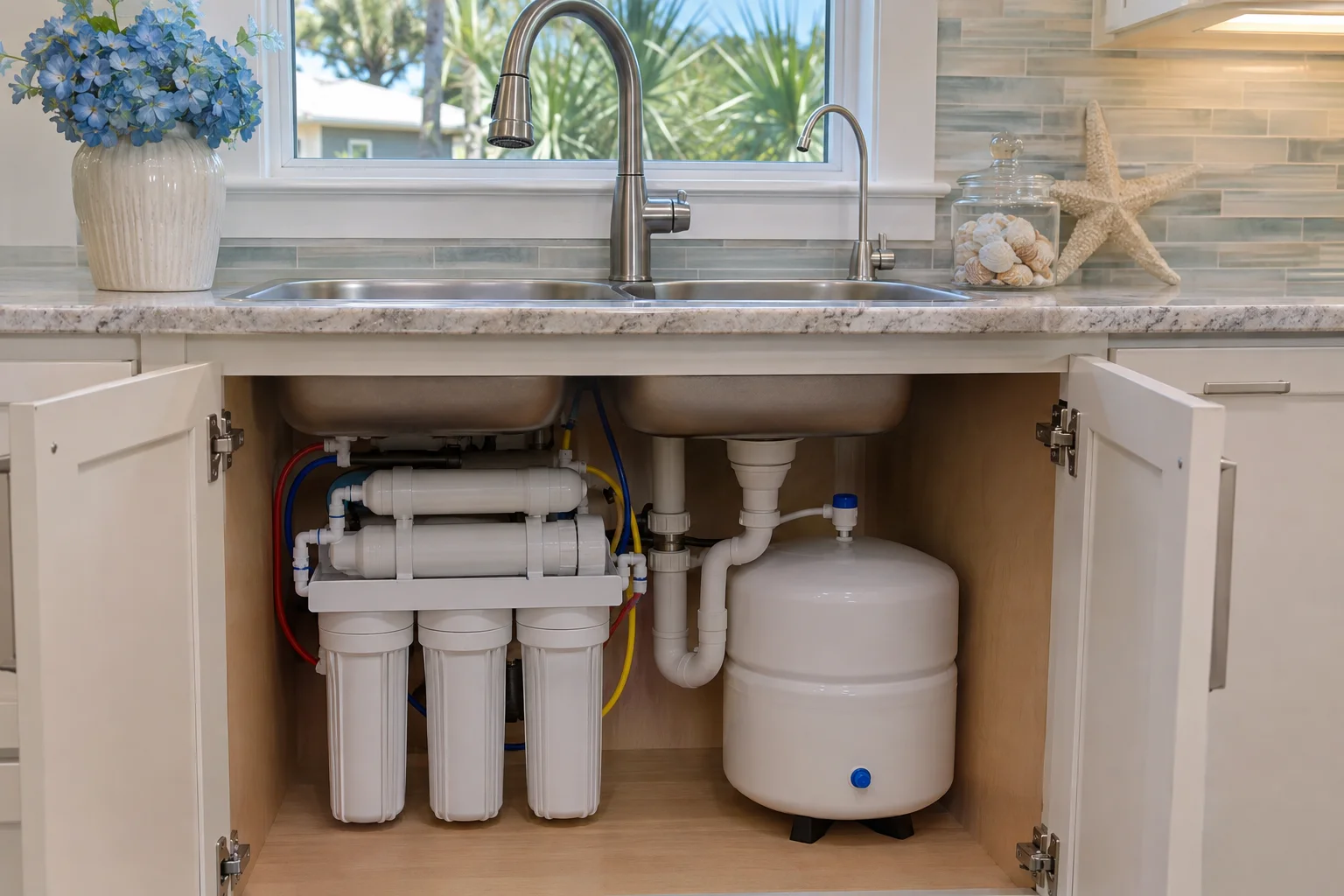
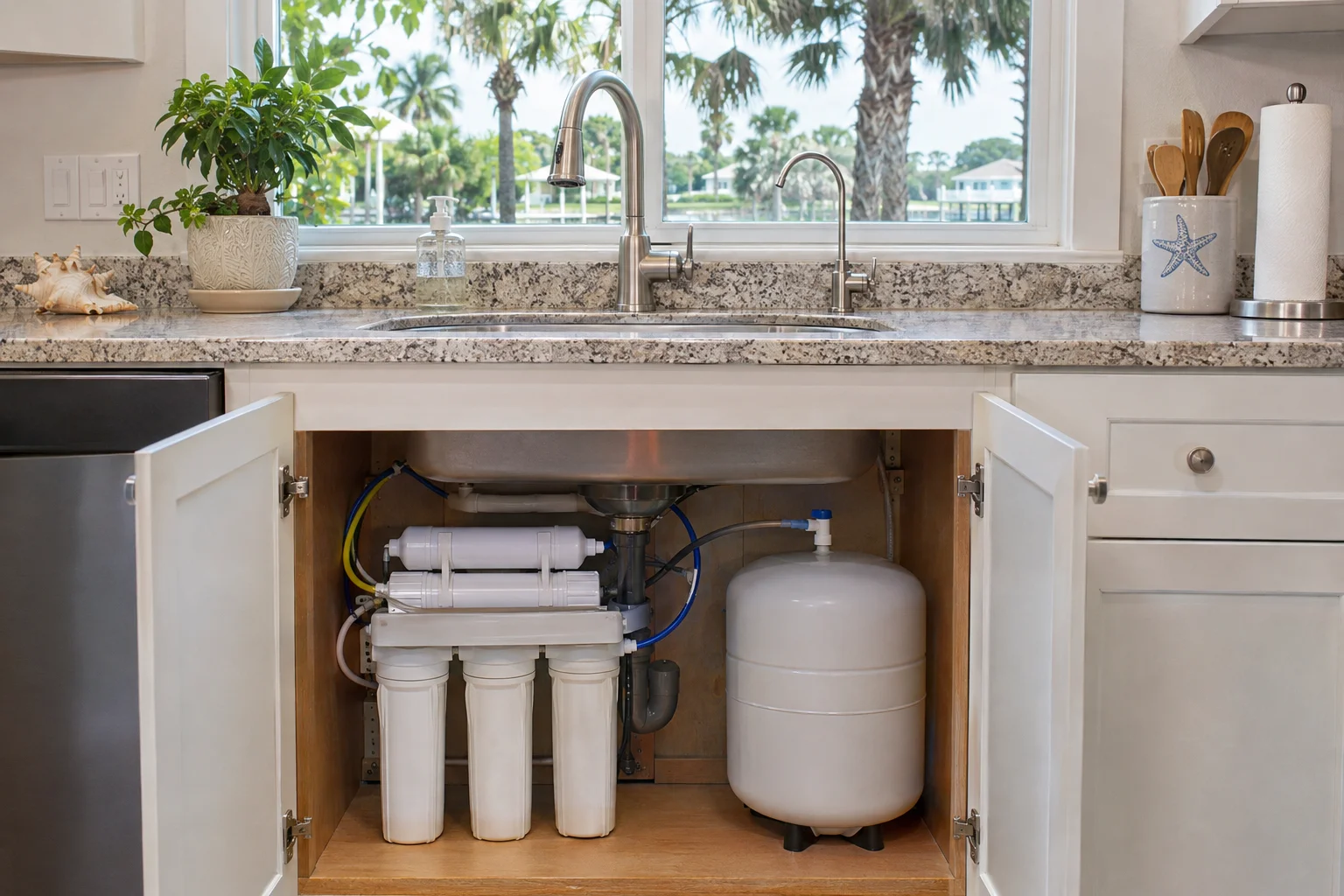
Reverse osmosis pushes water through a semipermeable membrane to reduce many dissolved substances. Residential systems commonly combine sediment filtration, carbon filtration, an RO membrane, and a finishing filter. Designs vary, with some using a storage tank and others operating without one.
The practical benefit is a dedicated source of better tasting drinking water. Depending on the model and its verified performance, RO can reduce dissolved salts and certain contaminants such as lead, arsenic, or nitrate. These capabilities are not universal. Select a system with independent certification for the specific reductions your water needs, rather than assuming every RO unit performs identically.
Carbon stages commonly help with chlorine taste and odor and protect membranes that are sensitive to chlorine. Chloramine treatment requires suitable equipment and capacity. If a particular disinfectant or contaminant is a concern, check the system's documented performance.
Explore A Superior Mechanical's reverse osmosis installation and service in Camp Creek for help matching equipment to your kitchen and water conditions. Ordinary residential RO should not be assumed to disinfect microbiologically unsafe water or replace instructions issued during a boil water advisory.
RO, water softening, and whole home filtration serve different jobs
Reverse osmosis for drinking and cooking
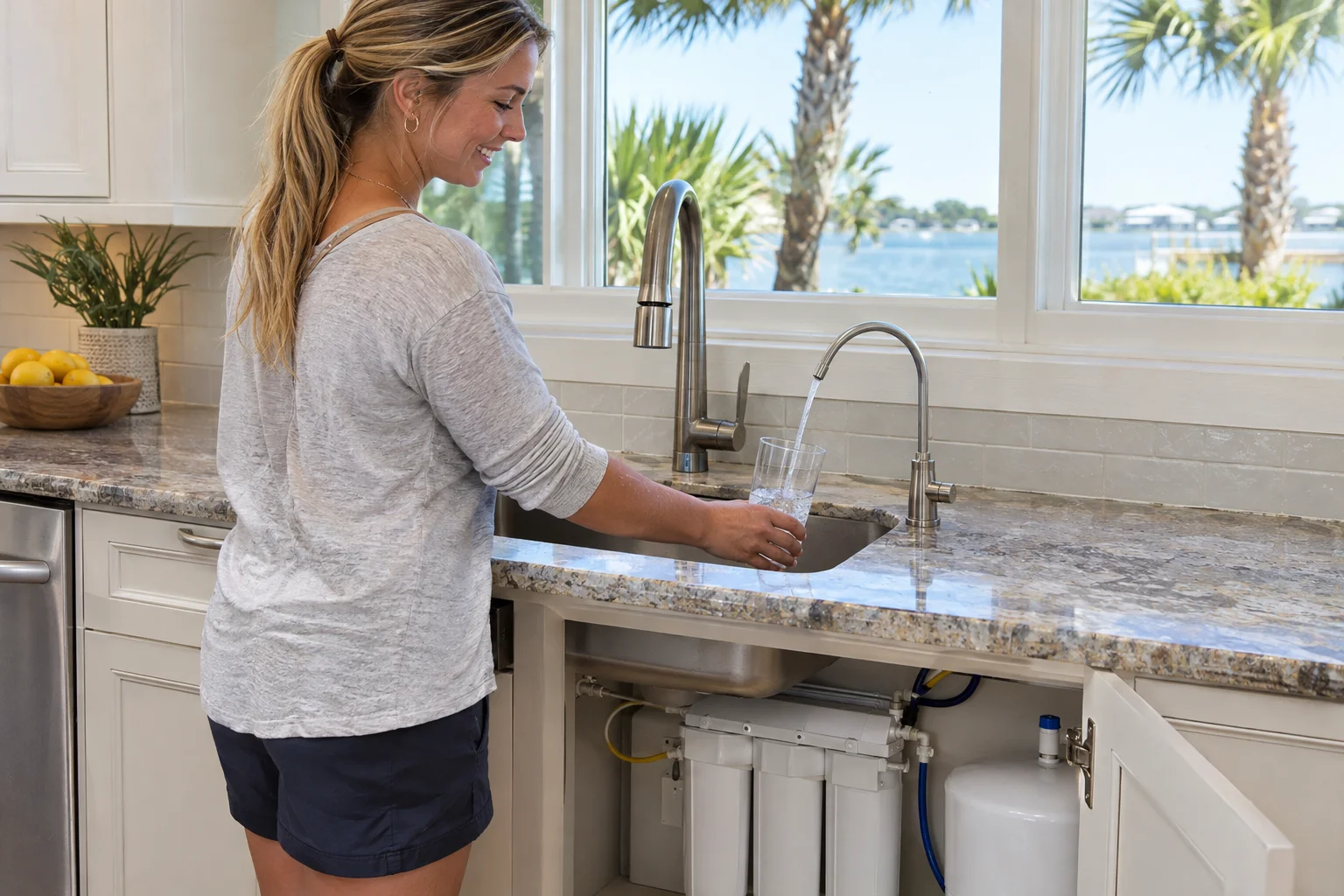
A point-of-use RO system typically supplies a dedicated kitchen faucet. With compatible equipment and proper installation, it may also serve a refrigerator or ice maker. This approach concentrates treatment where families drink, prepare food, and fill kettles.
It will not eliminate scale in bathrooms or soften laundry water elsewhere in the house. That distinction matters when homeowners expect one small system to solve every water concern.
Water softening for hardness
A conventional ion-exchange softener removes hardness minerals from the water it treats. Correct sizing and maintenance can help reduce mineral deposits, improve soap performance, and limit scale accumulation in equipment exposed to hard water.
Homeowners searching for water softener installation near me should ask about measured hardness, peak flow, regeneration settings, and ongoing salt use. A softener is not a substitute for contaminant-specific filtration. Salt-free scale-control products also should not be confused with systems that actually remove hardness.
Whole home filtration for broader concerns
A whole house water filter treats incoming water before it reaches multiple fixtures. Depending on its media and design, it may address sediment, chlorine taste and odor, or other identified concerns. Whole home water filtration does not automatically remove dissolved minerals or every contaminant.
AO Smith water filtration products may come up during equipment comparisons. Evaluate the particular model, certifications, flow capacity, and replacement filter availability rather than choosing by brand alone. A coordinated setup may combine sediment protection, carbon filtration, water softening, and kitchen RO. The water filtration, RO, and water softener overview explains these complementary treatment options.
Better water shows up throughout the day
At breakfast, treated kitchen water can make coffee and tea taste more consistent. When cooking, it avoids carrying unwanted tastes into soup, rice, oatmeal, and pasta. A convenient drinking water faucet also makes it easier to refill reusable bottles instead of keeping cases of bottled water in the pantry.
Bathroom and laundry improvements depend on treatment beyond the kitchen. Proper softening may reduce soap residue on shower glass and mineral deposits on fixtures. Detergent amounts may need adjustment after softening, since using too much can leave its own residue on towels and clothing.
Hardness-related scale can also reduce heat transfer and contribute to appliances wearing out faster, although equipment age, installation, and maintenance matter too. Water heaters are particularly worth evaluating when scale is suspected. Our Camp Creek guide to water heater replacement and system wear discusses factors that affect service life.
A good installation starts before the cabinet is opened
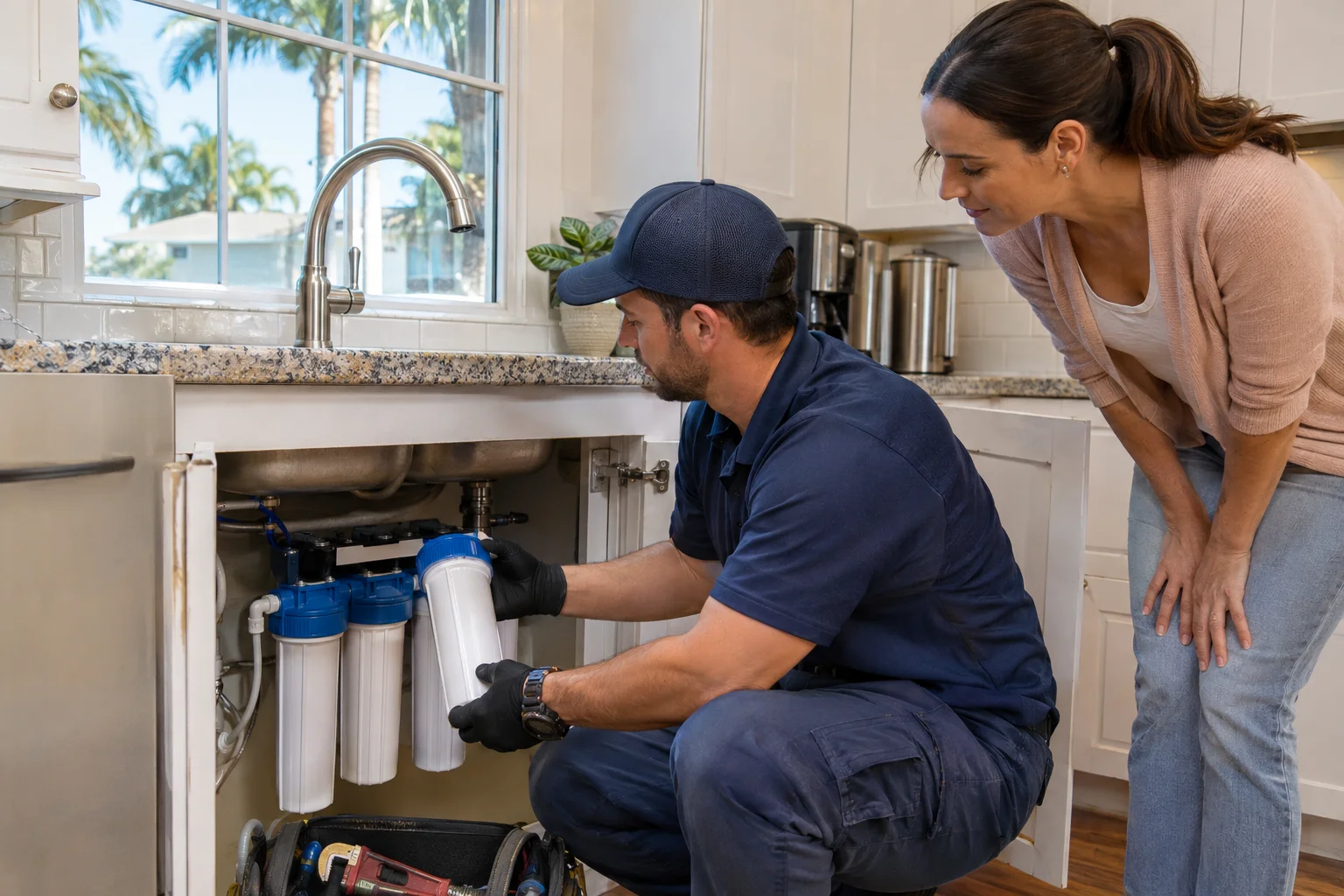
For homeowners comparing reverse osmosis installation near me, the useful questions go beyond equipment price. How much treated water can the unit deliver? Will it fit beside the disposal and cleaning supplies? Can the refrigerator receive adequate pressure? What will replacement filters cost?
A professional assessment should review incoming pressure, water chemistry, daily demand, cabinet space, and a suitable drain connection. RO produces a concentrate stream during operation, so water efficiency deserves attention. Published production ratings also depend on test conditions and may differ from actual household output.
Rentals and larger households may need more storage or production capacity than a lightly used home. Proper tubing routing, accessible shutoff valves, required backflow protection, and leak checks help make the installation serviceable. For broader household upkeep, the practical plumbing plan for Camp Creek homes offers useful prevention habits.
Keep the water quality you paid for
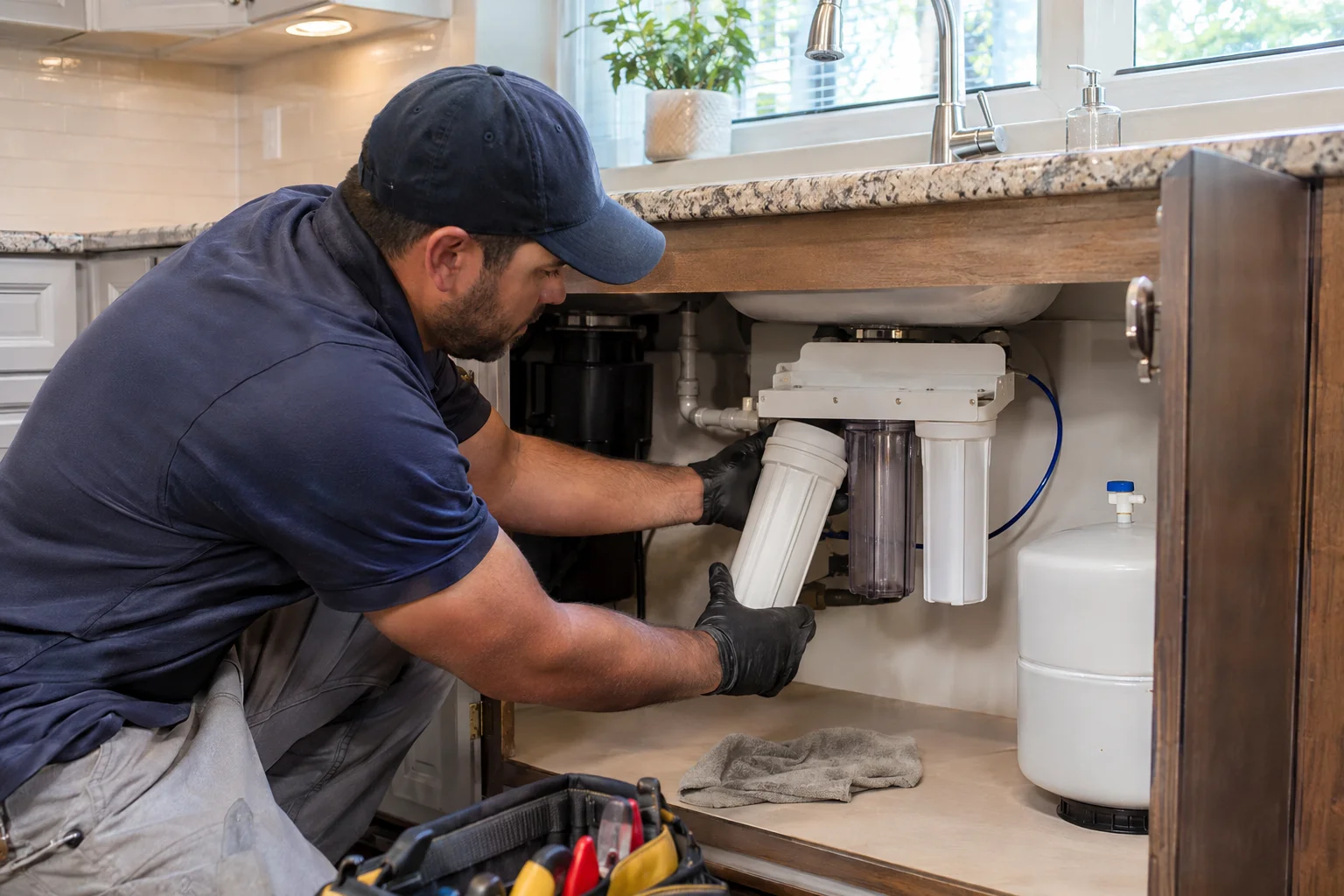
Even well-selected clean water systems need maintenance. Sediment and carbon cartridges have finite capacity, and membranes can foul or scale. Follow the manufacturer's replacement schedule, adjusted for actual water quality and usage. Taste alone is not a reliable indicator that a filter still meets its reduction claims.
Keep a record of filter changes, membrane checks, and sanitizing procedures. RO tanks and tubing should be sanitized according to the equipment instructions. Watch for slower production, reduced faucet flow, leaks, or a returning off taste. These changes may reflect overdue filters, pressure problems, or another service issue.
A total dissolved solids meter can help track membrane performance, but it cannot determine whether water is safe or identify specific contaminants. Use appropriate laboratory testing when a health-related contaminant is suspected.
For seasonal homes, follow the manufacturer's shutdown and restart guidance rather than leaving the system unused indefinitely. Arrange accessible service records for rental managers. Our guide to caring for reverse osmosis systems in 30A homes provides additional context for everyday ownership.
Know which changes need professional attention
Persistent metallic taste, repeated discoloration, unusual odors, or significant sediment should prompt investigation. A sudden change affecting several fixtures may warrant contacting the water supplier as well as a treatment professional. Do not assume a new filter makes water safe after a contamination notice.
If only hot water smells or looks unusual, the water heater may need evaluation. If just one faucet is affected, inspect that fixture and its supply components before committing to whole home equipment. Pinpointing the source helps avoid buying treatment that cannot solve the actual problem.
When comparing water filtration near me, look for a provider who explains testing, treatment limits, service access, and ongoing costs. Local experience across Walton County matters because homes differ in occupancy, available space, plumbing arrangements, and water supply.
Build a treatment plan around your Camp Creek home
Start with the complaint that affects your household most: an unpleasant glass of water, crusty showerheads, stained laundry, or a coffee maker that needs frequent descaling. Then separate drinking water needs from whole home concerns and test accordingly.
If you are searching for a drinking water filter near me, ask A Superior Mechanical about reverse osmosis systems in Camp Creek, FL. A practical assessment can help determine whether kitchen RO alone is appropriate or whether filtration and softening should work alongside it. The goal is better water for drinking and cooking, with a clear plan for the fixtures and appliances that need broader protection.
Find Reverse Osmosis Systems in Camp Creek, FL
If you need Reverse Osmosis Systems in Camp Creek, FL, visit our local service page or contact A Superior Mechanical today.
For a broader look at whole-home water filtration, reverse osmosis, and water softener options, visit our water filtration, RO, and water softener page.
Map of Camp Creek, FL
Frequently Asked Questions
Will a reverse osmosis system remove hard water spots throughout my Camp Creek home?
A typical under-sink RO system reduces dissolved minerals in water delivered through its dedicated faucet. It does not treat showers, washing machines, or other household fixtures. If hardness is causing widespread spots and scale, water testing can help determine whether a whole home water softener should accompany kitchen RO.
Can reverse osmosis improve metallic taste, chlorine odor, and cloudy ice?
An appropriately selected RO system with carbon filtration can improve many taste and odor concerns and reduce dissolved minerals that contribute to cloudy ice. Results depend on the cause and the system's certified capabilities. Metallic taste should be investigated, and trapped air or freezer conditions can keep ice cloudy even with treated water.
How often should reverse osmosis filters be replaced?
Follow the specific manufacturer's schedule. Many systems require prefilter and postfilter changes about every 6 to 12 months, while membranes often last several years. Water quality, usage, and operating conditions can shorten those intervals. Regular servicing should include leak checks, appropriate sanitizing, and evaluation of membrane performance.
Related Articles
- A Practical Plumbing Plan for Camp Creek Homes: Leaks, Drains, and Everyday Prevention
- A Practical Guide to Water Heater Replacement in Camp Creek, FL and the Plumbing Problems That Shorten System Life
- Cleaner Water, Easier Plumbing: Why Better Reverse Osmosis Systems Fit Seaside Homes
- Smart Plumbing Habits for Reverse Osmosis Systems in 30A Homes
Photo Gallery