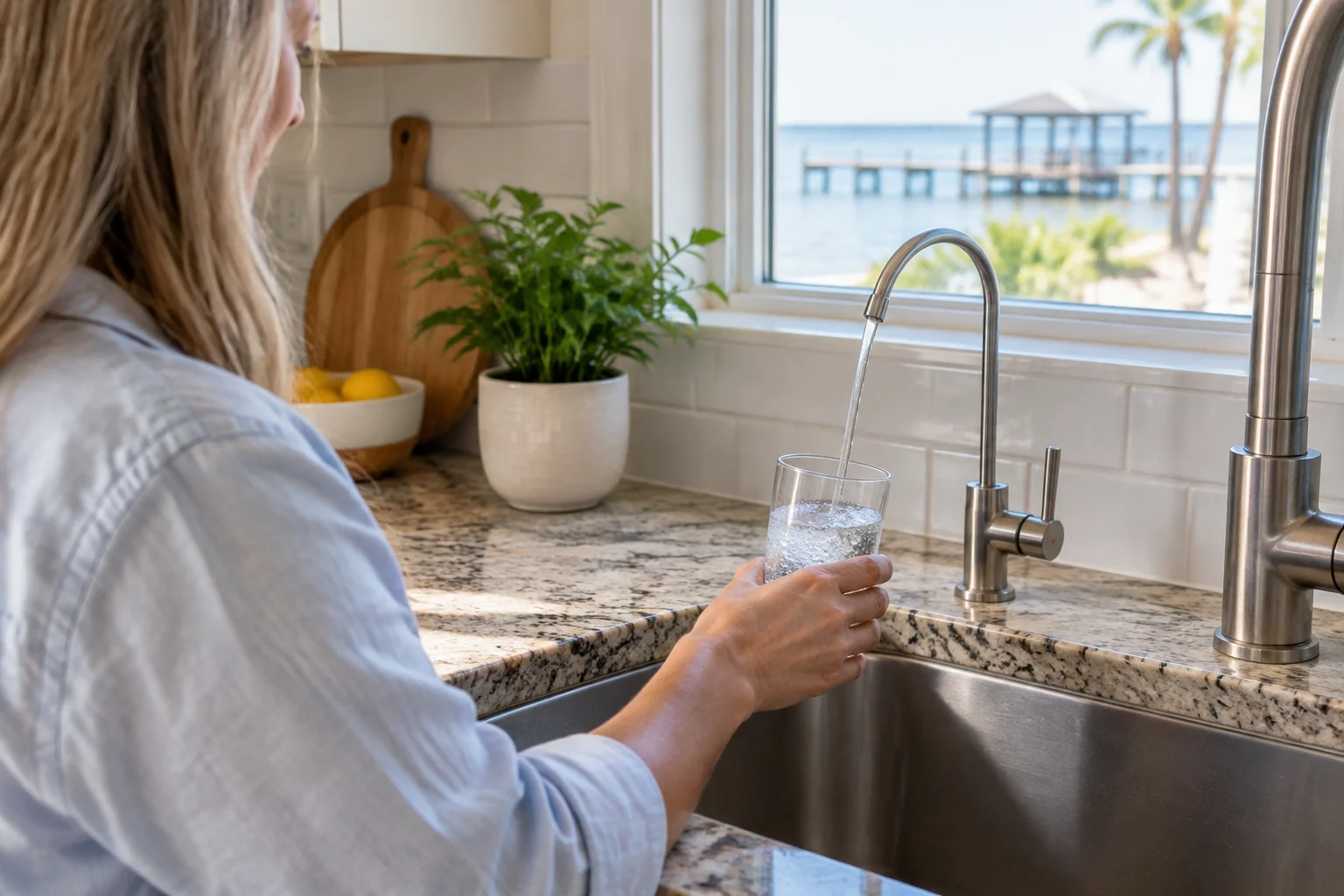
At breakfast, water fills the coffee maker, rinses fruit, and goes into the kids' reusable bottles. Later, it cooks pasta, runs through the dishwasher, and supplies evening showers. When that water leaves spots on glasses or gives coffee an unpleasant flavor, the problem becomes part of the daily routine.
For homeowners considering reverse osmosis systems in Ocean City, FL, the best starting point is understanding which problems an RO system can solve. Reverse osmosis is especially useful for drinking and cooking water. Hard water scale, bathing concerns, and sediment throughout the house may call for additional treatment. A Superior Mechanical helps homeowners match those needs with practical water treatment options.
Ocean City water deserves a household-specific approach
Ocean City's warm, humid coastal climate means water bottles, ice trays, and showerheads get plenty of use. After yard work or an afternoon outside, a cold glass of water should taste refreshing. Laundry from beach trips and outdoor activities also puts household water to work.
Still, living near salt water does not automatically mean the tap water has elevated salt levels. Local water conditions depend on the property's supply, utility treatment, and what happens inside the home's piping. Older homes, renovated kitchens, and rental properties can have different fixtures, service histories, and treatment needs.
For a home on public water, the serving utility's current water quality report provides useful background. Testing at the tap helps investigate household-specific concerns such as hardness, iron, or a metallic taste. Private wells require their own testing plan. Local service matters because equipment selection should reflect those findings, available space, and how the household actually uses water.
Read the clues before choosing a water treatment system
Spots, scale, and soap that leaves a film
Hard water contains dissolved calcium and magnesium. After water evaporates, those minerals can leave hard water spots on glass, dishes, and fixtures. Chalky scale buildup around faucets and showerheads may also collect inside equipment and plumbing, particularly where water is heated.
Another clue is soap that does not lather or rinse well. You may notice film in the tub, stiff towels, or detergent residue. Some people report dry skin or dull hair after bathing in hard water, although those symptoms have other possible causes. Water softening can address the mineral-related part of the problem, but it is not a medical treatment.
Scale can reduce heat transfer and restrict small passages in certain appliances. Over time, that may contribute to higher maintenance needs or appliances wearing out faster. An under-sink RO system will not protect the dishwasher, washing machine, or water heater unless those appliances receive separately treated water.
Taste, cloudy ice, sediment, and odors
A metallic, chlorinated, or otherwise unpleasant taste deserves a closer look. Chlorine taste may respond to suitable carbon filtration. A metallic taste could involve iron, copper, or other conditions that require testing rather than guesswork.
Cloudy ice cubes are not a reliable water quality test. Trapped air and the way ice freezes can cause cloudiness, while minerals may contribute. Similarly, poor tasting coffee water can reflect water chemistry, but a dirty coffee maker or old beans may also be involved.
Visible sediment, discoloration, and odor concerns need their own diagnosis. Notice whether the issue occurs at every faucet, only with hot water, or only after water sits overnight. Sudden changes should be reported to the water provider when applicable and evaluated before assuming a new filter is the answer.
Where reverse osmosis makes the biggest difference
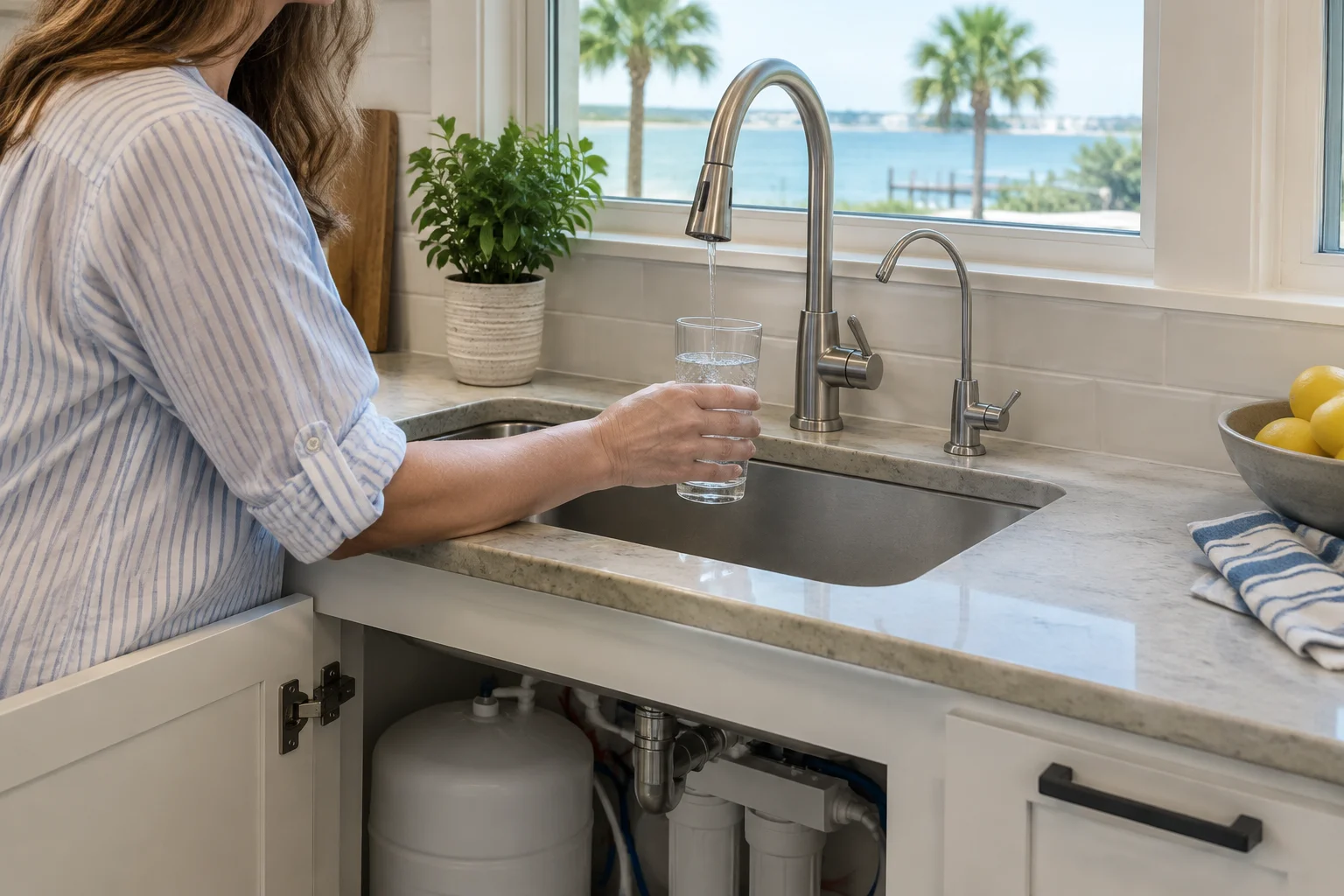
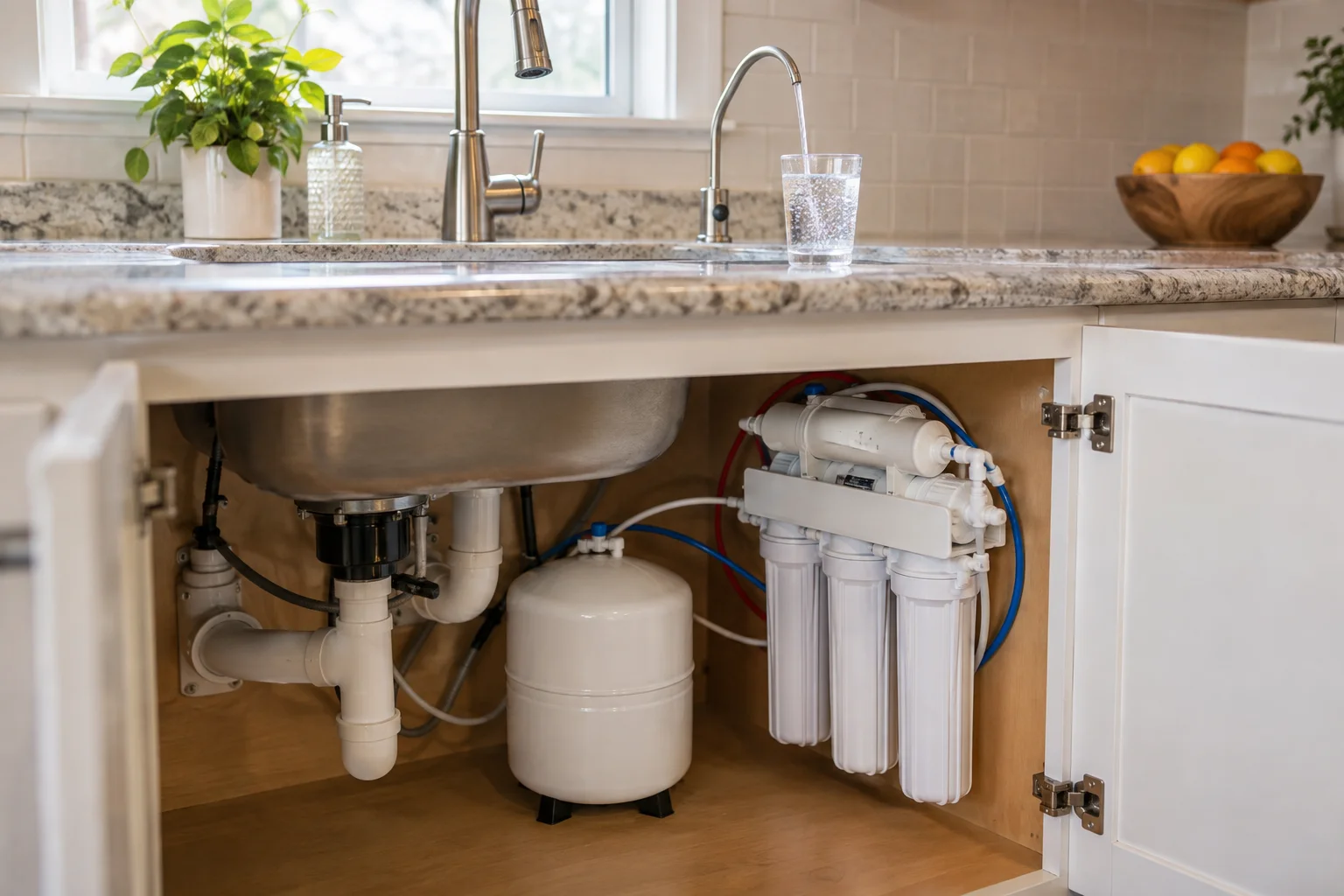
A typical residential RO drinking water system treats water at the kitchen sink. Water passes through prefilters and a semipermeable membrane, with additional filtration depending on the model. The membrane reduces many dissolved substances, while compatible carbon stages can address chlorine taste and odor.
The result can be better water for drinking and cooking without treating every gallon used for bathing or laundry. A dedicated faucet supplies water for glasses, coffee, tea, soup, and other kitchen tasks. Some installations can also serve a refrigerator, provided the system's output, pressure, and tubing arrangement meet the appliance's requirements.
Performance is model-specific. Look for independent certification to NSF/ANSI 58 and the actual reduction claims for the system being considered. Certification does not mean every possible contaminant is removed. A system should be selected for the substances identified in the source water and maintained according to its instructions.
A Superior Mechanical provides reverse osmosis installation, replacement, and maintenance in Ocean City. The goal is dependable kitchen water treatment with capacity that fits the household, not simply adding another device beneath the sink.
RO, softening, and whole home filtration do different jobs
Water softening for mineral-related problems
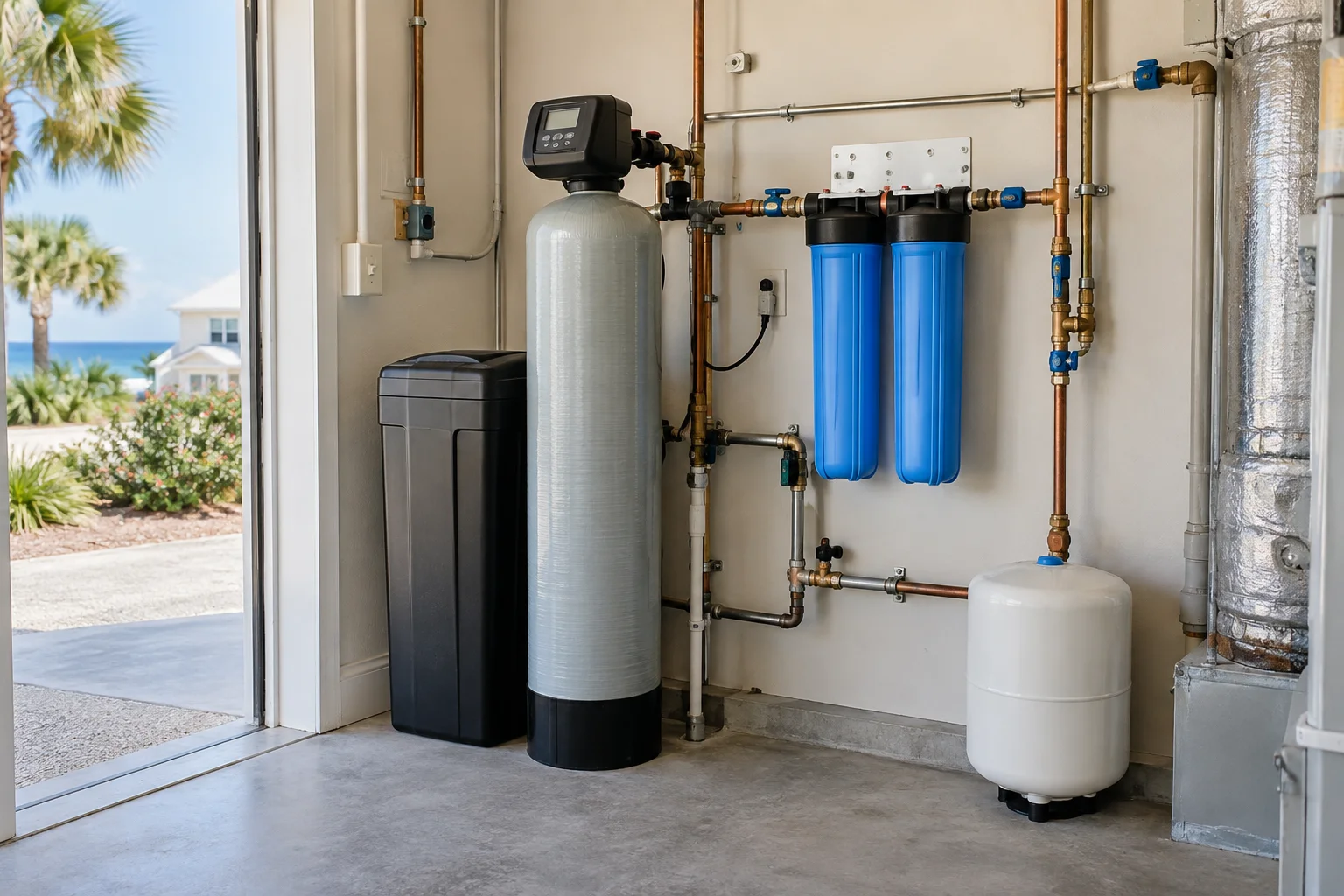
A conventional water softener uses ion exchange to reduce calcium and magnesium hardness. This makes it the more direct choice for recurring mineral spots, scale, and soap performance throughout the home. It is different from a drinking water filter and does not broadly remove every contaminant.
If testing confirms significant hardness, a softener may be installed upstream of an RO system. That arrangement can reduce hardness-related fouling of the membrane while treating water used by showers, laundry equipment, and other connected fixtures. Proper sizing and programming matter because regeneration consumes salt and water.
Whole home filtration for broader coverage
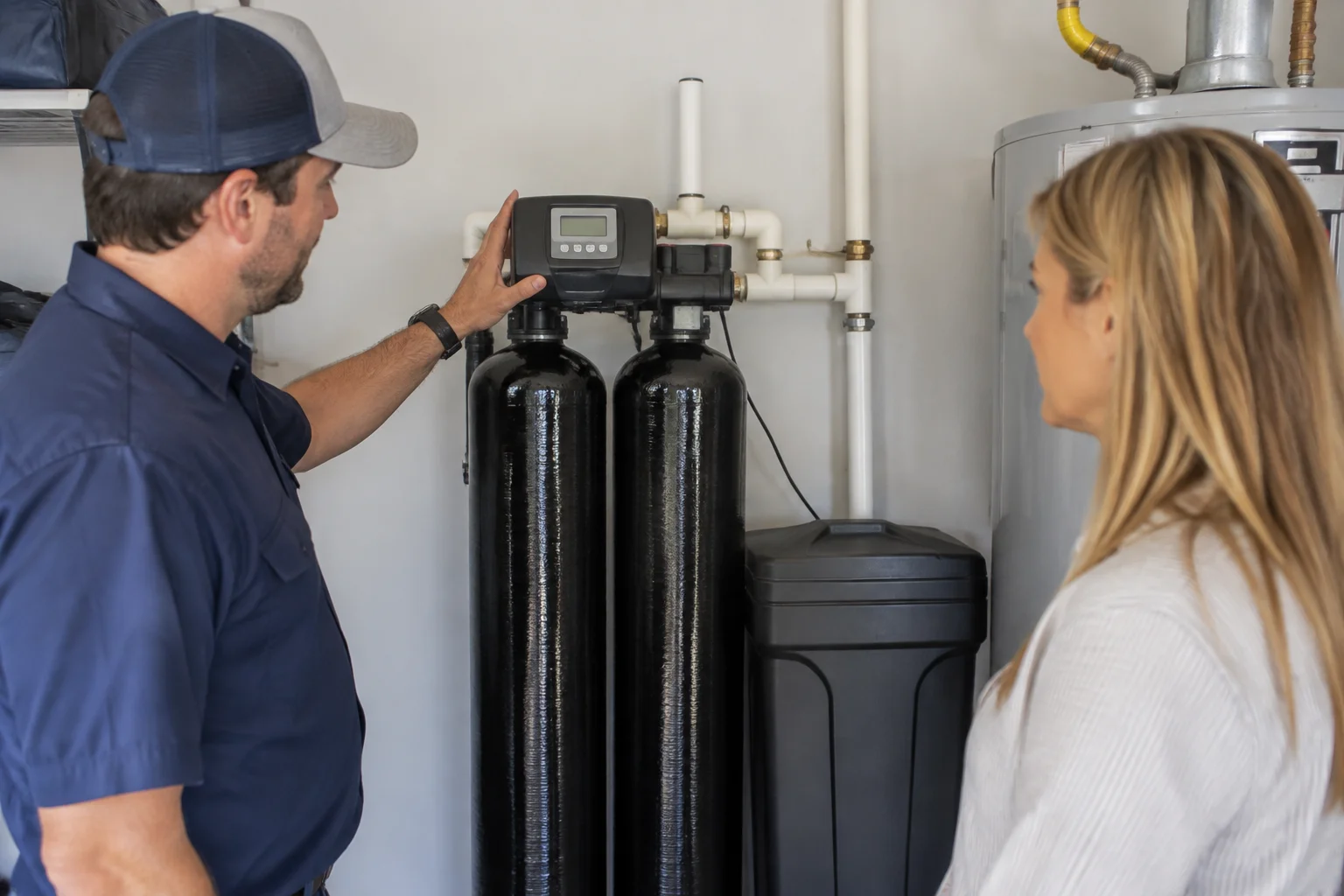
Whole home water filtration treats incoming water before it reaches the home's distribution piping. Depending on the equipment, a whole house water filter may target sediment, chlorine taste and odor, or another specifically identified concern.
A sediment filter catches particles, not dissolved hardness. Carbon media does not perform the same function as a softener. For persistent odors, iron staining, or unusual discoloration, additional testing may identify the need for specialized treatment rather than a standard cartridge filter.
Choosing AO Smith equipment by the problem
AO Smith water filtration options can be considered alongside RO and softening equipment, but brand alone does not determine the right fit. An AO Smith water softener should be evaluated for hardness load, household demand, and service requirements. An A. O. Smith RO option should be evaluated for its certified reduction claims, production capacity, and replacement filter needs.
Homeowners comparing these choices can explore A Superior Mechanical's water filtration, reverse osmosis, and water softener services. A coordinated plan may include more than one treatment stage, but each stage should have a clear purpose.
Better kitchen water without unrealistic promises
Picture filling the coffee maker before work, rinsing rice for dinner, or setting a pitcher on the table for guests. Convenient filtered water for coffee and cooking can make those small routines easier. Taste preferences vary, but reducing an unwanted chlorine flavor or excessive dissolved minerals can noticeably change the experience.
RO water may also reduce mineral residue in kettles and countertop coffee equipment supplied from the drinking water faucet. It will not eliminate the need to clean those appliances. Ice may taste better even if it is not perfectly clear.
Beyond the kitchen, the benefits depend on the rest of the treatment plan. Softer towels, less soap film, and easier fixture cleaning are more closely associated with hardness reduction than with a kitchen RO unit. Our article on cleaner water and sounder plumbing for Ocean City homes explores that broader household connection.
Installation starts with testing, pressure, and usable space
When comparing results for reverse osmosis installation near me, ask what the evaluation includes. A useful assessment considers water chemistry, incoming pressure, household drinking water demand, cabinet space, and the condition of the proposed connections.
Many RO units use a storage tank, while some designs are tankless. Both need adequate room for servicing. Installation also requires an appropriate drain connection and compliance with applicable plumbing requirements. Low pressure or a long refrigerator supply run can affect performance and may require a different configuration.
Ask about recovery rate and reject water as well. RO systems discharge a portion of incoming water while separating dissolved substances. Efficiency varies by design and operating conditions, so compare documented specifications rather than assuming all units use the same amount.
For homeowners searching for water softener installation near me alongside RO service, the same visit can help establish equipment order, drain access, and whether the available space supports both systems.
Maintenance keeps treatment useful after installation
Filters and membranes are not permanent. Replacement timing depends on the model, incoming water quality, and usage. Follow the manufacturer's schedule and service instructions rather than waiting until the water tastes bad. Some substances have no noticeable taste or smell.
RO maintenance may include replacing prefilters and postfilters, checking membrane performance, inspecting tubing, and sanitizing the system as directed. Slow production, reduced faucet flow, leaks, or a returning taste can justify a service visit. A change in dissolved solids readings can help evaluate membrane operation, but that reading alone does not establish drinking water safety.
A softener needs separate attention to salt levels, regeneration settings, and possible salt bridging. Whole home filters need cartridge changes or media service appropriate to their design. Homeowners looking for water softener service near me should describe both the visible symptoms and any changes in salt or water use.
For seasonal homes or properties left vacant, ask about manufacturer-approved shutdown and restart procedures. Keeping service dates and filter model numbers in one place makes ongoing care much easier.
Get help when the water changes or the system falls short
Call for an evaluation when spots return quickly after cleaning, scale restricts shower flow, taste changes suddenly, or existing treatment no longer keeps up. Persistent discoloration, unusual odors, and suspected contamination warrant investigation, not simply a stronger filter. Follow utility advisories, and do not assume a household RO unit makes water safe during a boil-water notice.
If your search for water treatment near me starts with several different complaints, bring that full list to the appointment. A Superior Mechanical serves Ocean City homeowners and provides services throughout Okaloosa County. Testing and a review of daily water use can help separate the need for better drinking water from whole-home hardness or filtration concerns, giving each problem an appropriate solution.
Find Reverse Osmosis Systems in Ocean City, FL
If you need Reverse Osmosis Systems in Ocean City, FL, visit our local service page or contact A Superior Mechanical today.
For a broader look at whole-home water filtration, reverse osmosis, and water softener options, visit our water filtration, RO, and water softener page.
Map of Ocean City, FL
Frequently Asked Questions
Will an under-sink reverse osmosis system stop hard water spots throughout my Ocean City home?
No. An under-sink RO system treats water delivered through its connected drinking water faucet and any approved additional connections. It does not soften water used by showers, washing machines, or other untreated fixtures. If testing confirms hardness, a properly sized water softener is usually the more direct solution for whole-home mineral spots and scale.
Can reverse osmosis improve coffee flavor and cloudy ice cubes?
RO can improve coffee and ice flavor by reducing substances covered by the system's treatment capabilities. It may reduce mineral-related cloudiness, but trapped air and freezing conditions can still make ice cloudy. Carbon stages often help with chlorine taste, while the membrane reduces many dissolved substances.
How do I choose between AO Smith water filtration, a softener, and reverse osmosis?
Start with water testing and the problems you want to address. A softener targets hardness, suitable whole home filtration can target sediment or specific taste and odor concerns, and RO focuses on drinking and cooking water. A Superior Mechanical can evaluate installation needs and discuss A. O. Smith options based on model-specific capabilities, household demand, and maintenance requirements.
Related Articles
- Cleaner Water and Sounder Plumbing for Ocean City Homes
- Keeping Commercial Plumbing in Ocean City, FL Ahead of Trouble
- Commercial Plumbing in Ocean City, FL: Small Issues That Turn Costly for Local Families and Property Owners
- Cleaner Water, Easier Plumbing: Why Better Reverse Osmosis Systems Fit Seaside Homes
Photo Gallery