You unload the dishwasher before breakfast, and the glasses still look spotted. The showerhead has a chalky crust around its openings. Coffee tastes a little off, even with fresh beans. These frustrations can start with the water entering your home, but they do not necessarily share the same cause.
For homeowners considering water softening in Camp Creek, FL, the best starting point is understanding what needs treatment. A softener addresses hardness minerals. Filtration can address certain particles, tastes, and odors. A drinking water system may handle another set of concerns. Matching those tools to your water makes more sense than buying one system and expecting it to fix everything.
What the spots and scale are telling you
Hard water contains dissolved calcium and magnesium. When water evaporates from glass, dishes, and fixtures, those minerals can remain behind. Hard water spots on dishes may be especially noticeable on clear drinking glasses, while bathroom faucets develop pale rings around their bases.
Heat encourages certain mineral deposits to form, making water heaters and hot water appliances particularly vulnerable. Scale buildup on faucets and showerheads can narrow openings and disrupt spray patterns. Inside plumbing and equipment, mineral accumulation can contribute to restricted flow or reduced heat transfer over time.
Not every cloudy glass indicates hardness. Dishwasher detergent residue and permanent glass etching can look similar. Have the water tested before assuming that every mark requires a softener. A Superior Mechanical's water softening services in Camp Creek provide a place to start discussing hardness, household demand, and treatment options.
Soap, skin, and hair offer other clues
Hardness minerals react with soap, creating residue instead of useful lather. If soap does not lather easily or seems difficult to rinse from shower surfaces, hardness may be contributing. Laundry can feel stiff, and towels may become less pleasant to use.
People sometimes describe dry skin from hard water or dull hair after bathing. Mineral and soap residue can contribute to that feeling, although skin conditions, products, and hot showers also matter. Softening may improve the bathing experience, but it is not a medical treatment or a guarantee of healthier skin.
Camp Creek water deserves a local assessment
Camp Creek's coastal Walton County setting brings warm temperatures, humidity, and plenty of outdoor activity. After a beach afternoon, showers, towel washing, and kitchen cleanup can put several water demands on a home at once. Treatment equipment needs to support that routine without creating unnecessary pressure loss.
Coastal location alone does not establish a home's hardness level or prove that salt is entering its water supply. Conditions depend on the source, utility treatment, distribution system, and the home's plumbing. Properties using private wells need a testing approach that also considers well condition and potential contaminants.
Local service matters because equipment placement, drainage, outdoor exposure, and household occupancy affect installation decisions. A full-time residence and a vacation home may need different maintenance arrangements. Homeowners exploring services in Camp Creek should look for recommendations based on measurements rather than assumptions about coastal water.
Separate hardness from taste, odor, and sediment
A useful assessment starts with specific observations. Does discoloration appear at every faucet or only one? Is an odor present in cold water, hot water, or both? Does the problem clear after a short flush? Those details help narrow the investigation.
Metallic or chlorinated taste
Metallic tasting water can have several causes, including iron, copper, or plumbing corrosion. Chlorine taste in water may relate to the disinfectant used by the water provider. A softener is not a universal solution for either issue. Testing and, where appropriate, a conversation with the utility help determine whether filtration, plumbing correction, or another response is needed.
Visible particles and discoloration
Sediment in household water may come from supply disturbances, a well, deteriorating plumbing, or other sources. A sediment filter captures particles within its rated range, but it does not remove dissolved hardness. Sudden brown water, persistent particles, or a new widespread change should be investigated rather than simply hidden behind a filter.
Odors and cloudy ice cubes
Odors can originate in the supply, a water heater, or even the sink drain rather than the water itself. Cloudy ice cubes often contain trapped air and concentrated dissolved minerals, so cloudiness alone does not establish a safety problem. Poor taste, odor, and appearance deserve attention, but clear water is not proof that it is safe either.
Choose treatment by the job it needs to do
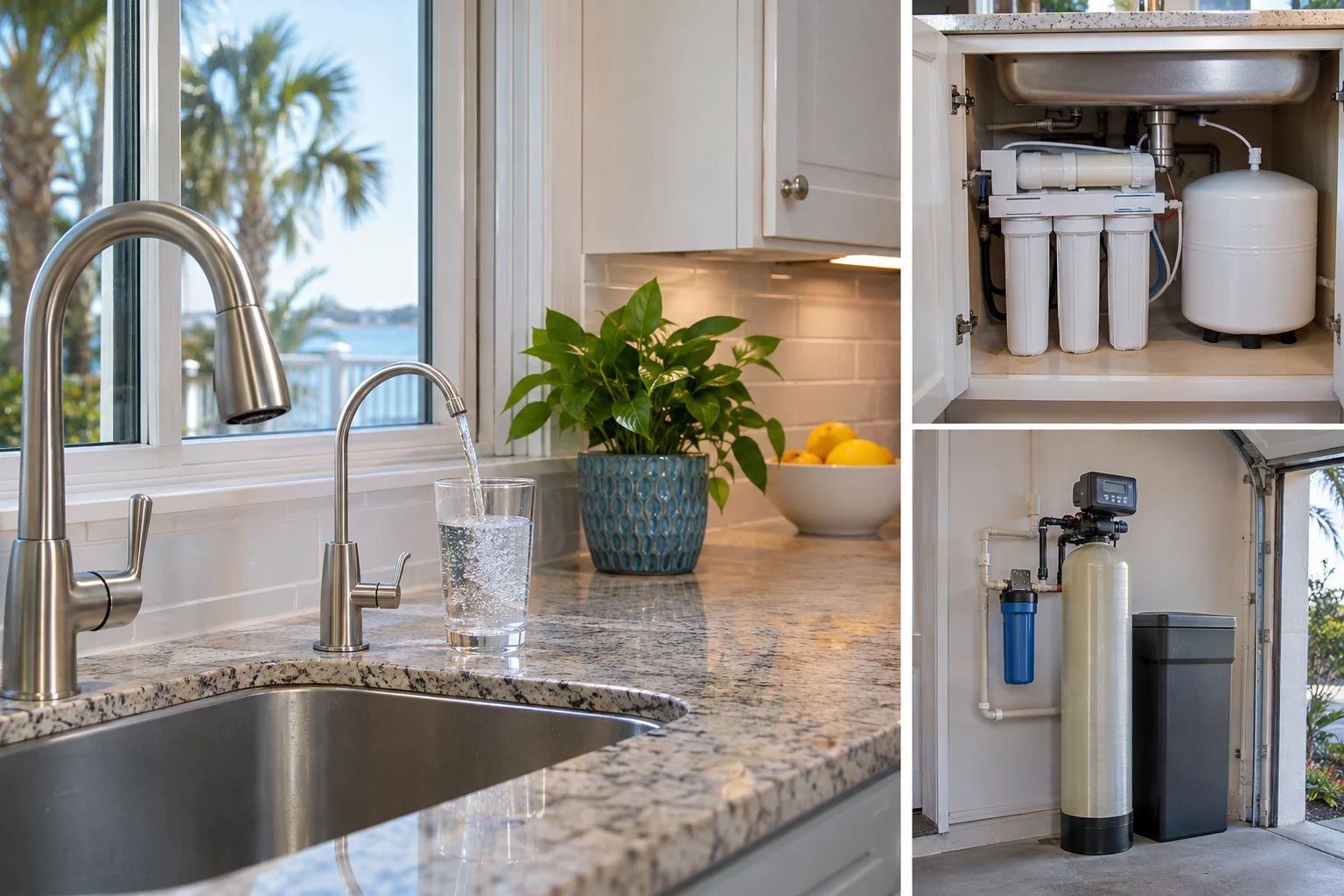
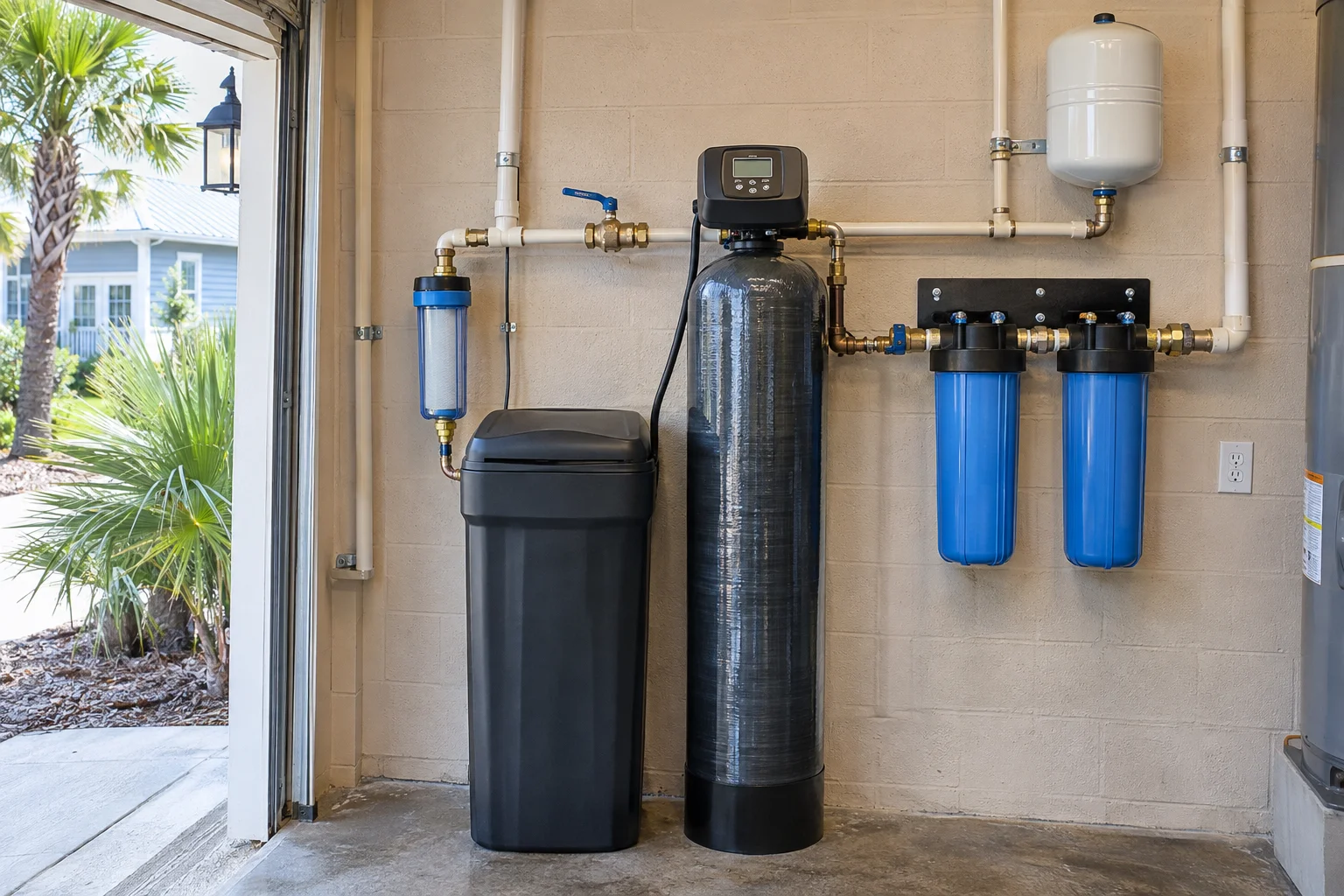
For homeowners searching for water treatment near me, the most useful question is not which system is biggest. It is which equipment addresses the measured problem. A Superior Mechanical's water filtration, reverse osmosis, and water softener options cover distinct treatment categories that can sometimes work together.
Water softening for mineral control
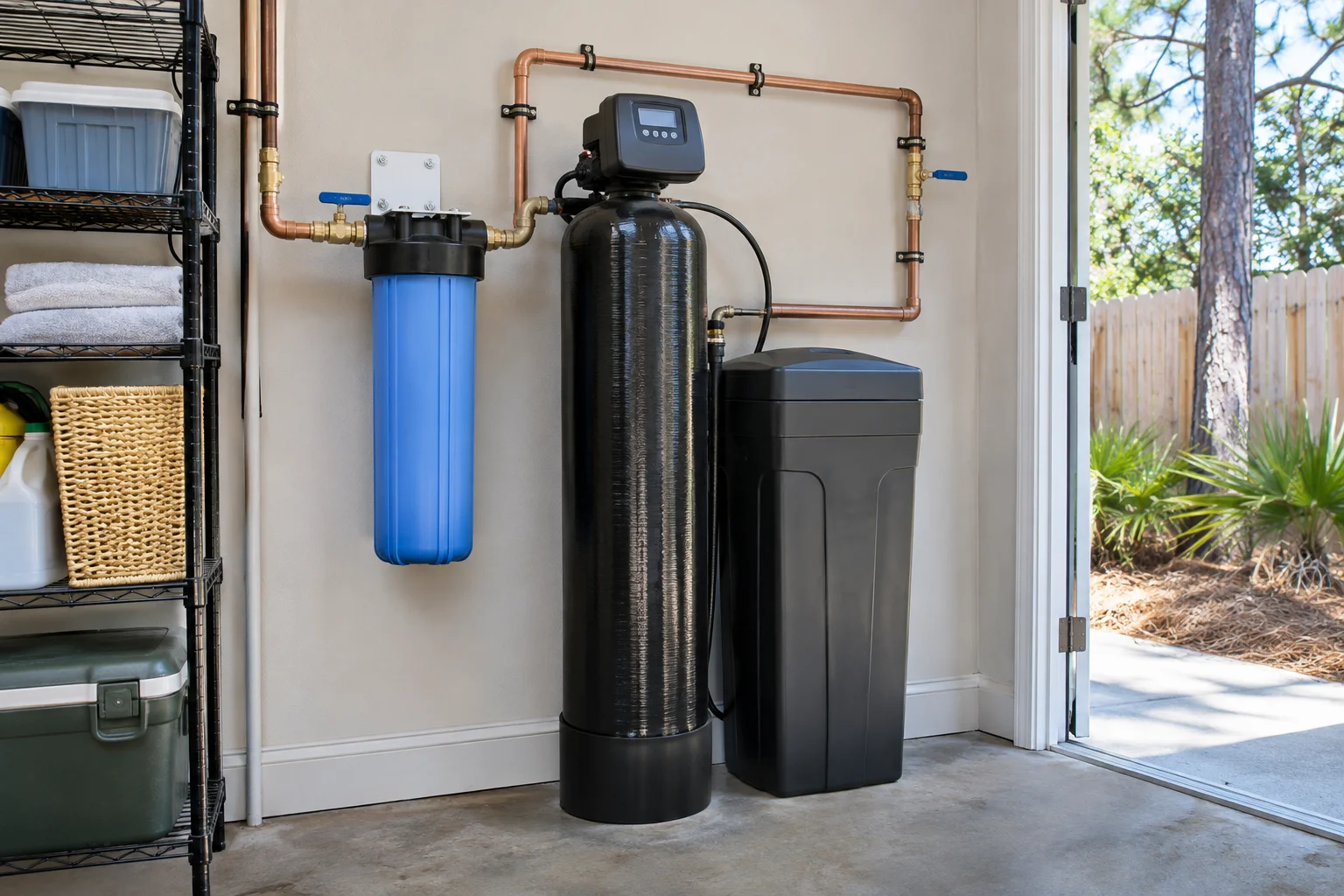
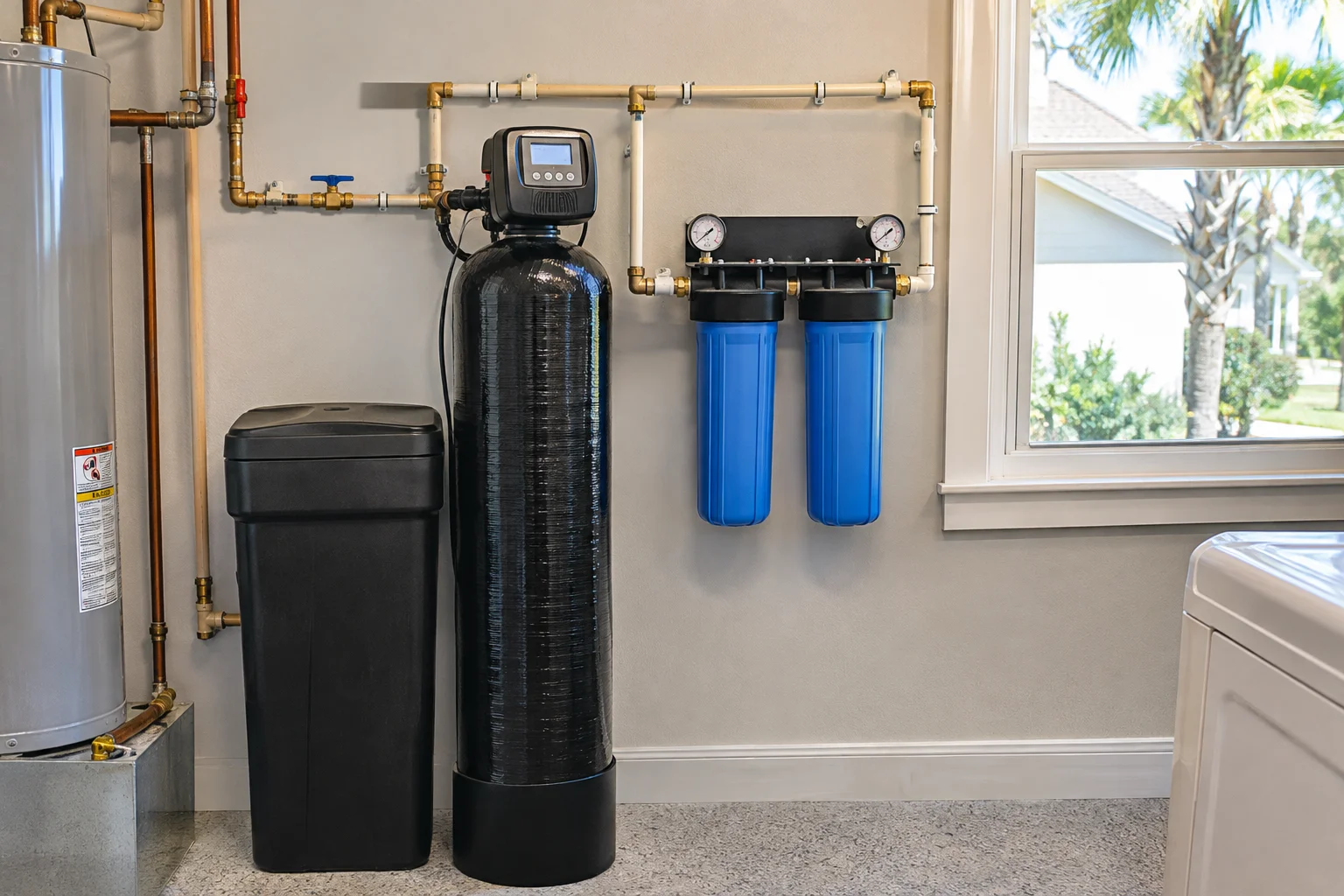
A conventional ion exchange softener replaces calcium and magnesium with sodium or potassium ions, depending on the regenerant used. Its primary job is reducing hardness and future scale formation. It can help soap work more effectively and reduce mineral residue around the home.
Softening does not disinfect water, remove every contaminant, or immediately clear established scale from plumbing. Salt-free scale conditioning also differs from softening: it generally does not remove hardness minerals. Ask what a proposed system actually changes and how its performance will be verified.
Whole home water filtration for broader coverage
A whole house water filter treats incoming water before it reaches multiple fixtures. Depending on the media and design, it may reduce sediment, chlorine taste and odor, or other specified substances. Carbon filtration and sediment filtration perform different jobs, and neither automatically replaces a softener.
If you are comparing AO Smith water filtration products, evaluate the exact model rather than the brand name alone. Check contaminant reduction claims, applicable independent certifications, flow capacity, replacement costs, and maintenance requirements. A system suited to one household may be undersized or unnecessary for another.
Reverse osmosis for drinking and cooking
Reverse osmosis commonly serves a dedicated kitchen faucet. Using a membrane and supporting filters, it reduces many dissolved substances, with actual performance depending on the model, pressure, maintenance, and verified reduction claims. It is often considered for better water for drinking and cooking rather than treating every shower and laundry load.
Families searching for a reverse osmosis system near me should discuss faucet placement, storage capacity, drain connections, and refrigerator compatibility. Reverse osmosis installation also requires attention to supply pressure and manufacturer instructions. Hardness pretreatment may be appropriate to help protect the membrane.
Better water at the breakfast table and beyond
Water quality becomes personal in the kitchen. It is the water filling children's bottles, boiling pasta, rinsing produce, and brewing the first pot of coffee. Unpleasant taste can carry into simple foods and drinks. Targeted filtration can make those routines more enjoyable when it addresses the substance causing the taste.
Softening alone does not guarantee better tasting coffee. Coffee flavor depends partly on mineral balance, and reverse osmosis water may produce a different result from filtered tap water. The practical goal is water you enjoy using, supported by treatment suited to your actual concerns.
Elsewhere in the house, reduced hardness can mean less scrubbing of shower glass and easier control of soap residue. Detergent amounts may need adjustment after softening. Our article on how better water softening changes daily life in Camp Creek homes explores these everyday differences.
Protect appliances without expecting miracles
Hard water can contribute to appliances wearing out faster when scale interferes with heating surfaces, valves, or narrow passages. Water heaters, dishwashers, and some ice makers can be affected. Reducing incoming hardness helps limit new deposits, but it cannot reverse every problem caused by age or neglected maintenance.
Keep following appliance cleaning and service instructions after installing treatment. If hot water performance has already declined, an inspection may be needed. This guide to water heater replacement in Camp Creek explains additional problems that can shorten equipment life.
Size the system for your household, not just your address
Softener sizing involves measured hardness, expected water use, service flow rate, and regeneration capacity. Iron or manganese may require additional assessment or pretreatment. An undersized system may struggle during busy mornings, while an oversized or poorly configured system can create avoidable costs.
Installation planning should cover a suitable location, a bypass, access for service, required power, and an approved regeneration discharge arrangement. Outdoor equipment needs appropriate protection under manufacturer requirements. Whole home water filtration also needs enough capacity to serve simultaneous showers, laundry, and kitchen use.
Across Walton County, household schedules and property layouts vary. Share the number of regular occupants, guest patterns, and any periods when the home sits empty. These details help make the recommendation practical.
Maintenance keeps treatment working as intended
Check a salt-based softener's brine tank regularly and use the salt recommended for the unit. A salt bridge can make the tank appear supplied while preventing proper brine production. Watch for returning spots, changes in water feel, unusual regeneration behavior, or unexpected salt consumption.
Replace sediment and carbon filters on the recommended schedule, adjusted for actual water conditions and use. Reverse osmosis systems need filter replacement, membrane checks, and sanitation according to their instructions. A neglected cartridge can restrict flow, and exhausted media may no longer provide its intended reduction.
For seasonal Camp Creek homes, ask about shutdown and restart procedures rather than leaving equipment unattended indefinitely. Keep a record of testing, settings, and service dates. Routine leak checks also remain important, as discussed in this practical plumbing plan for Camp Creek homes.
Get help when the cause is unclear
Arrange a professional assessment when scale keeps returning, a softener stops regenerating, pressure drops after filtration, or taste and odor persist. Homeowners searching for water softener service near me should request hardness testing and equipment checks, not just an adjustment to the salt setting.
Sudden discoloration, a strong unfamiliar odor, or suspected contamination calls for prompt investigation. Contact the water provider when appropriate and follow any public health advisory. Do not assume a household softener or filter makes water safe during an advisory.
A Superior Mechanical can help Camp Creek homeowners discuss water softening and complementary treatment options. Start with the problems you notice at the sink, shower, and laundry room, then use testing to guide the next step. The right setup should fit your water, your household, and the maintenance you can realistically keep up with.
Find Water Softening in Camp Creek, FL
If you need Water Softening in Camp Creek, FL, visit our local service page or contact A Superior Mechanical today.
For a broader look at whole-home water filtration, reverse osmosis, and water softener options, visit our water filtration, RO, and water softener page.
Map of Camp Creek, FL
Frequently Asked Questions
Will water softening remove chlorine taste and odors in my Camp Creek home?
A conventional water softener primarily removes hardness minerals, not chlorine or every source of odor. Carbon filtration may address chlorine taste and odor, while other concerns require different treatment. Testing helps determine whether softening, filtration, or a combination is appropriate.
Do I need both whole home water filtration and reverse osmosis?
Not necessarily. Whole home filtration treats water serving multiple fixtures, while reverse osmosis typically provides treated drinking and cooking water at a dedicated kitchen faucet. The right combination depends on your test results, taste preferences, household demand, and the specific reduction claims of each system.
How can I tell whether my water softener needs service?
Returning mineral spots, poor soap performance, unusual salt consumption, persistent low pressure, or changes in regeneration behavior can indicate a problem. Check that the unit is not bypassed and that it has the recommended salt, then arrange service if the issue continues. A hardness test can confirm whether it is still softening effectively.
Related Articles
- How Better Water Softening Changes Daily Life in Camp Creek Homes
- A Practical Plumbing Plan for Camp Creek Homes: Leaks, Drains, and Everyday Prevention
- A Practical Guide to Water Heater Replacement in Camp Creek, FL and the Plumbing Problems That Shorten System Life
- Less Scale, Fewer Surprises: Water Softening and Plumbing Care in Cinco Bayou
Photo Gallery