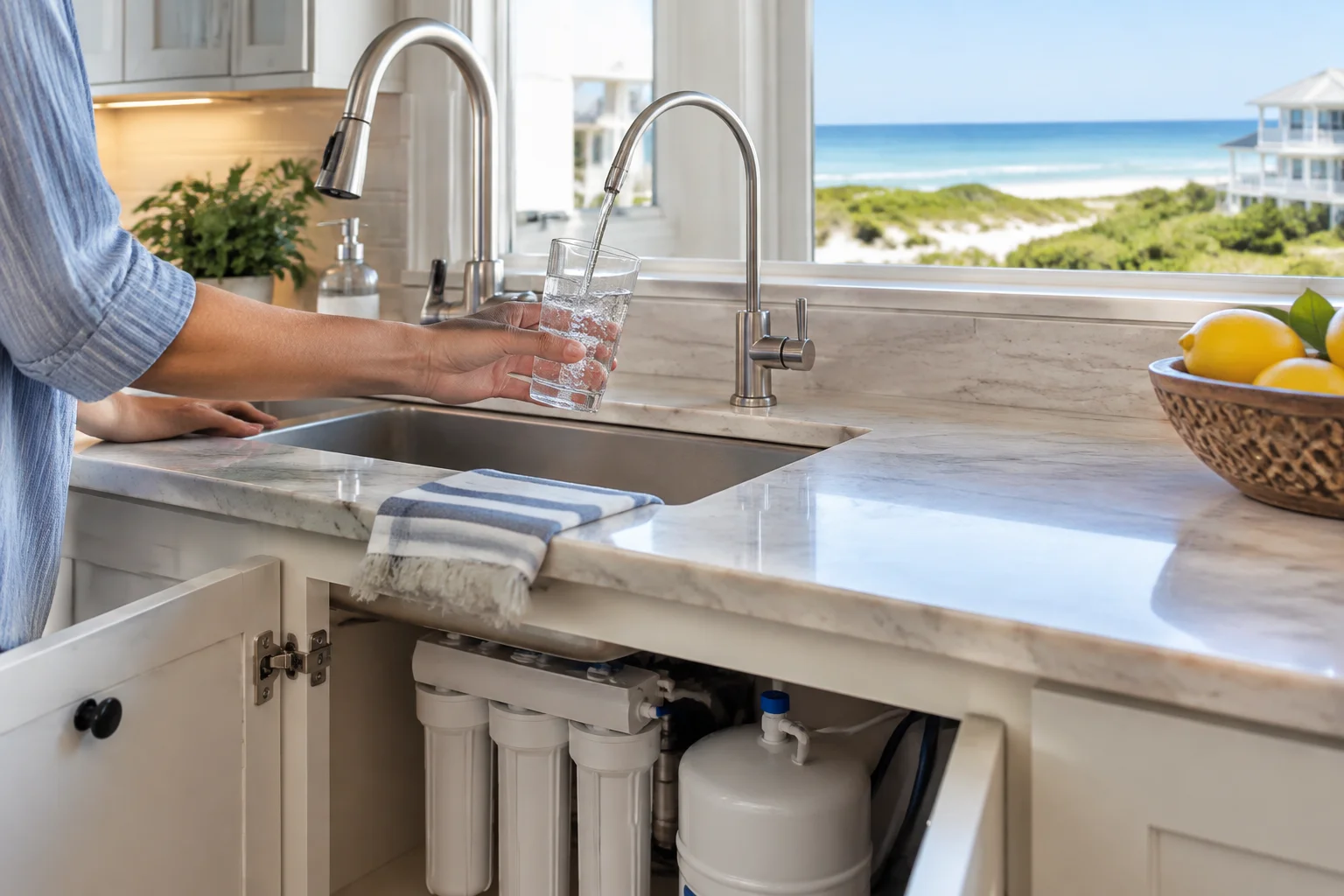
A glass filled at the kitchen sink should be refreshing, not something you drink reluctantly. Yet an unpleasant taste, cloudy ice cubes, or a chalky film on clean dishes can make homeowners question the water they use every day. Those concerns often extend beyond drinking water to showers, laundry, fixtures, and appliances.
For homeowners considering reverse osmosis systems in DeFuniak Springs, FL, the first step is separating drinking water concerns from whole-house problems. Reverse osmosis can improve water at the kitchen tap, while water softening and whole home water filtration serve different purposes. Choosing the right combination starts with understanding your water.
Local Water Conditions Deserve a Closer Look
DeFuniak Springs has long, hot summers and a humid climate that keeps cold drinking water and ice in regular rotation. A family filling reusable bottles before school or pouring water after yardwork notices taste quickly. The climate influences water use, but it does not tell you which contaminants or minerals are present.
Across Walton County, properties may use public water or private wells, depending on location. Groundwater can pick up dissolved minerals as it moves through soil and rock. Actual hardness, iron, sediment, and other water characteristics vary by source and property. Water passing through older household piping can also change before it reaches the faucet.
For public water, start with the utility's current water quality report. Private well owners should arrange appropriate laboratory testing, including routine bacteria and nitrate testing and additional tests based on local guidance or observed concerns. Neither clear water nor an unpleasant taste, by itself, establishes whether water is safe.
What Your Glasses, Faucets, and Laundry May Be Telling You
Spots, scale, and soap that will not cooperate
Hard water spots on glass, dishes, and fixtures commonly appear when water evaporates and leaves dissolved minerals behind. Calcium and magnesium can also contribute to scale buildup on faucets, showerheads, and inside plumbing, especially where water is heated. A crusted showerhead or repeatedly clogged aerator deserves more attention than another round of scrubbing.
When soap does not lather easily or rinse well, hardness may be part of the problem. Laundry can feel stiff, and bathing may leave a residue that makes hair seem dull or skin feel tight. People often describe this as dry skin from hard water, although skin irritation has many possible causes. Water treatment is not a substitute for medical advice.
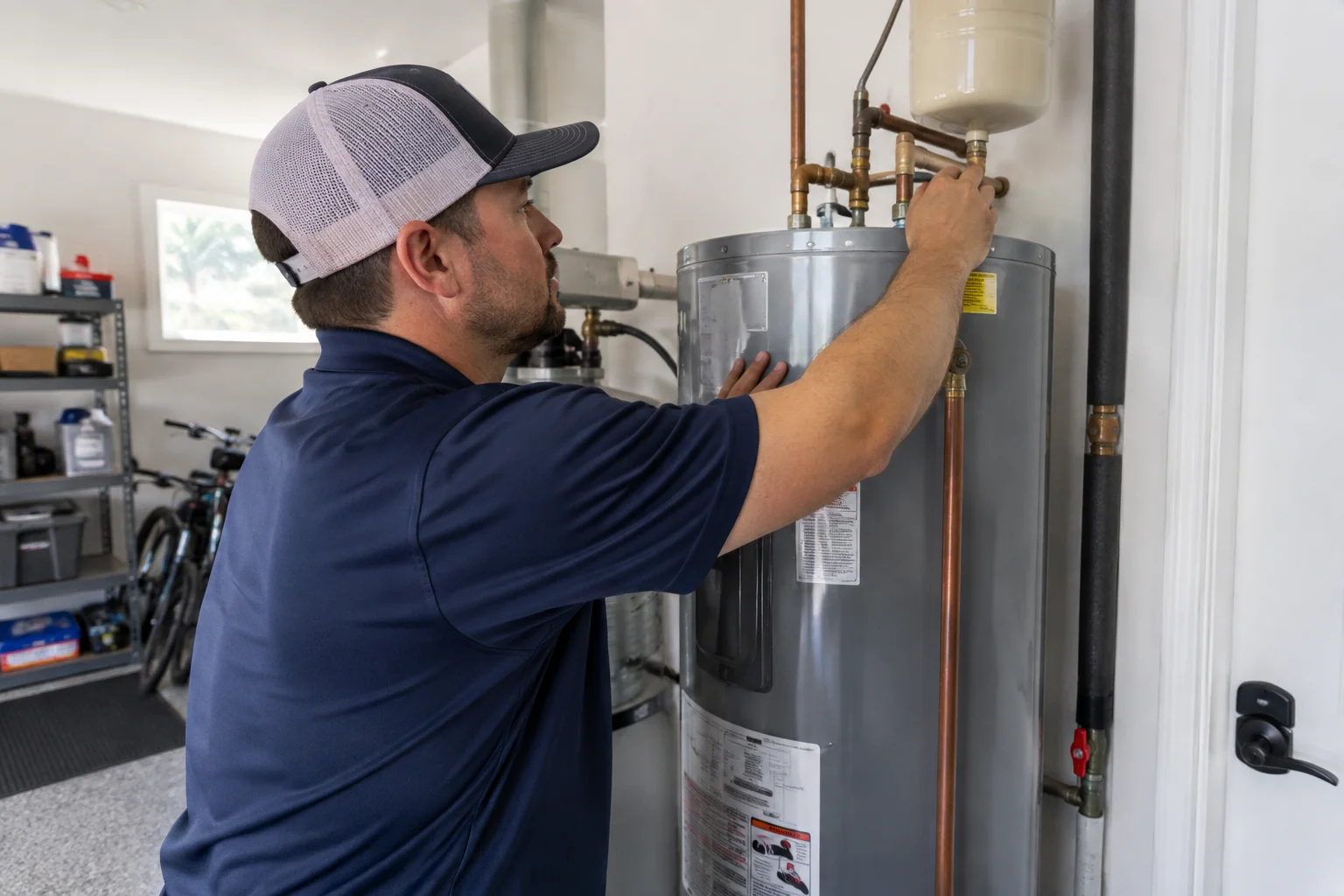
Mineral buildup can also reduce efficiency and contribute to appliances wearing out faster. Water heaters and dishwashers are common concerns because heat encourages scale formation. An under-sink reverse osmosis unit does not protect these appliances unless they receive water from a separately designed treatment system.
Taste, odor, sediment, and discoloration
Metallic tasting water may be associated with iron, copper, corrosion, or other conditions that require testing. A chlorinated taste can reflect the disinfectant used in a public supply. Earthy, sulfur-like, or otherwise unpleasant odors need a more specific evaluation rather than an assumption that every smell has the same cause.
Visible sediment, discoloration, or a sudden change in water quality should be investigated. Compare hot and cold taps and check whether the issue affects one fixture or the entire home. If a utility advisory is active or contamination is suspected, follow official instructions. A standard household filter or RO system should not be assumed to make unsafe water safe.
Where Reverse Osmosis Makes the Biggest Difference
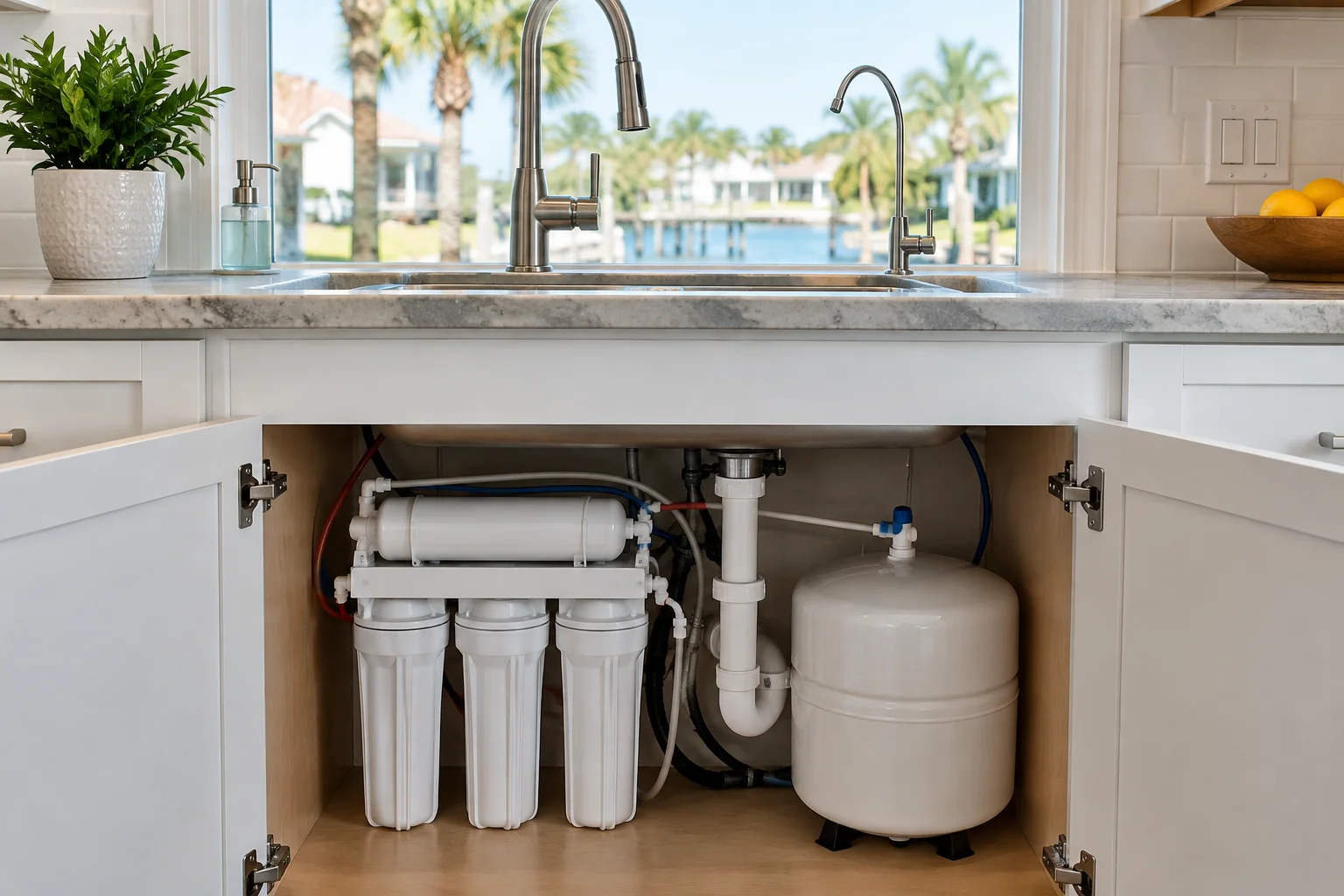
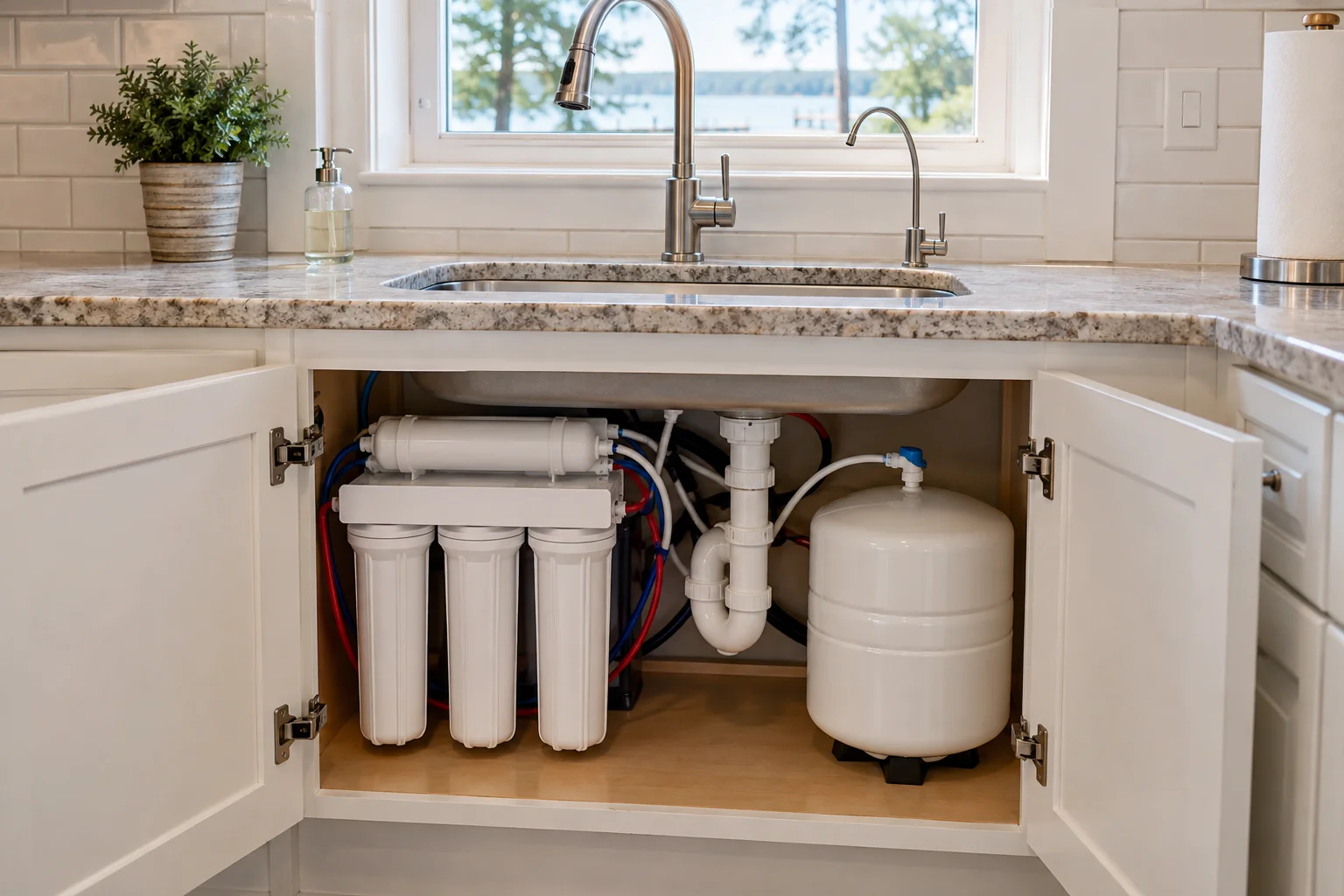
A typical residential reverse osmosis system treats water at a dedicated kitchen faucet. It uses pressure to move water through a semipermeable membrane, reducing many dissolved substances. Sediment and carbon filters usually support the membrane by capturing particles and addressing certain taste and odor concerns, depending on the system design.
This makes RO a useful option for better tasting drinking water and filtered water for coffee and cooking. Filling a kettle, making soup, washing down breakfast, and mixing a pitcher of lemonade all become more pleasant when the starting water tastes clean. Carbon stages often help with chlorine taste, while the membrane reduces many dissolved minerals.
Performance depends on the specific equipment, incoming water, and maintenance. Look for independent certification, such as NSF/ANSI 58, and verify the exact reduction claims for the model. Certification does not mean every system removes every contaminant. If testing identifies a particular concern, the equipment should be selected for that concern.
A Superior Mechanical provides reverse osmosis installation, repair, and maintenance in DeFuniak Springs. A site evaluation can help determine suitable capacity, pretreatment needs, and whether an existing system is worth repairing or upgrading.
Will reverse osmosis make ice clearer?
It may help when dissolved minerals contribute to cloudy ice cubes, but clarity is not guaranteed. Trapped air and the way an ice maker freezes water also affect appearance. Connecting RO water to a refrigerator requires checking available pressure, tubing distance, and appliance requirements. Some installations need additional equipment to provide dependable flow.
RO, Softening, and Whole Home Filtration Are Different Tools
A kitchen RO system will not remove spots from shower glass or improve water going to the washing machine. Homeowners who want better drinking water and less mineral buildup throughout the house often need more than one treatment method.
Water softening for hardness
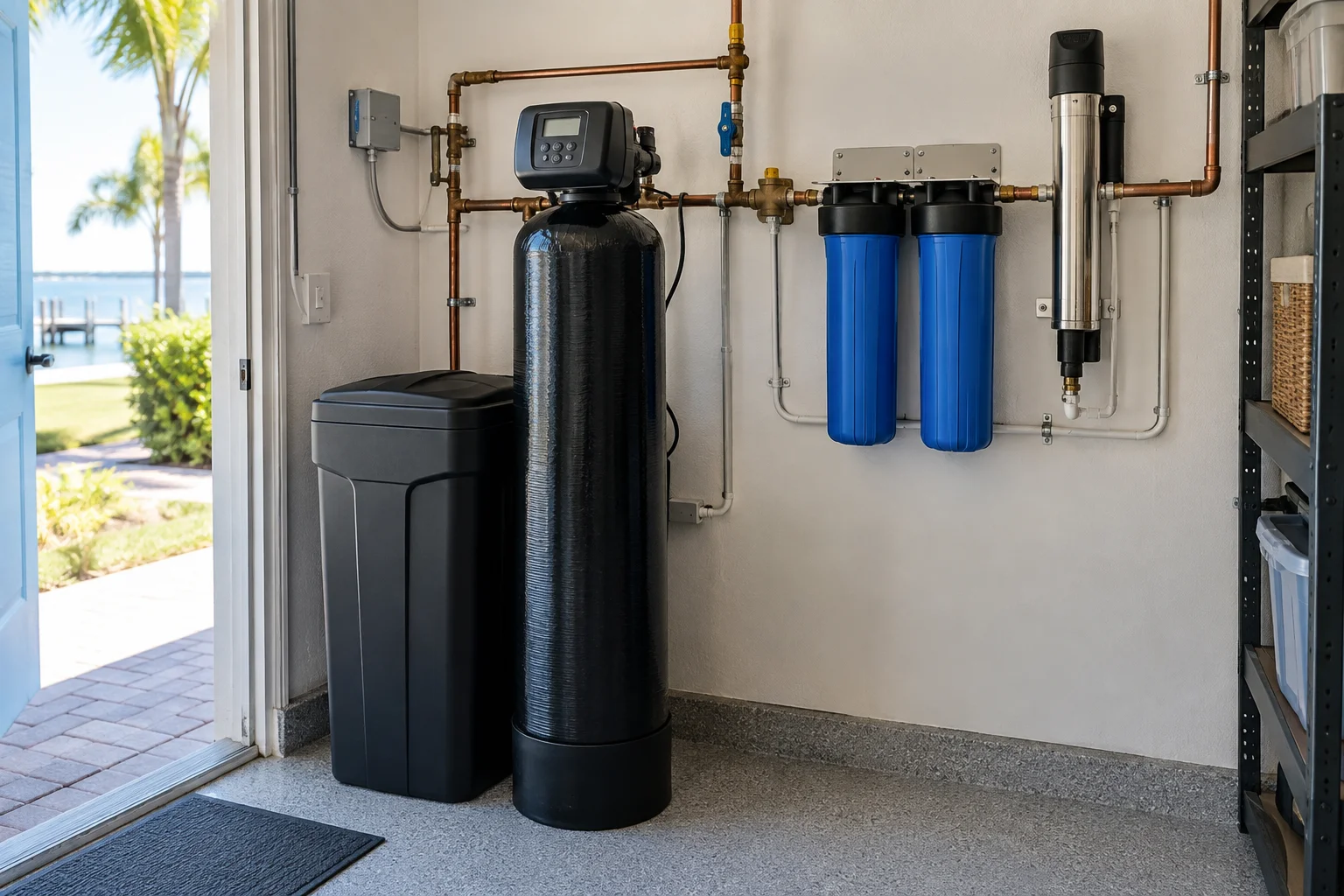
A conventional ion-exchange water softener removes calcium and magnesium by exchanging them for sodium or potassium ions. It is designed to address hardness, helping reduce scale and allowing soap to work more effectively. It does not, by itself, disinfect water or resolve every odor and taste concern.
If you are comparing an AO Smith water softener with other options, focus on measured hardness, household demand, regeneration settings, and service requirements. Proper sizing matters more than choosing the largest unit. Softening ahead of an RO system may also help limit membrane scaling when incoming hardness warrants it.
Whole home water filtration for broader concerns
A whole house water filter treats incoming water before it reaches most fixtures. Sediment cartridges capture particles within their rated size range. Carbon media can reduce chlorine taste and odor, while other media may be needed for iron, sulfur-related issues, or specific contaminants. No single filter handles every water problem.
AO Smith water filtration products, like other treatment options, should be evaluated by their specifications, certifications, flow capacity, and replacement needs. Brand recognition alone does not establish suitability. Explore A Superior Mechanical's water filtration, RO, and water softener services to understand how these approaches can work together.
Plan the Installation Around Your Kitchen and Household
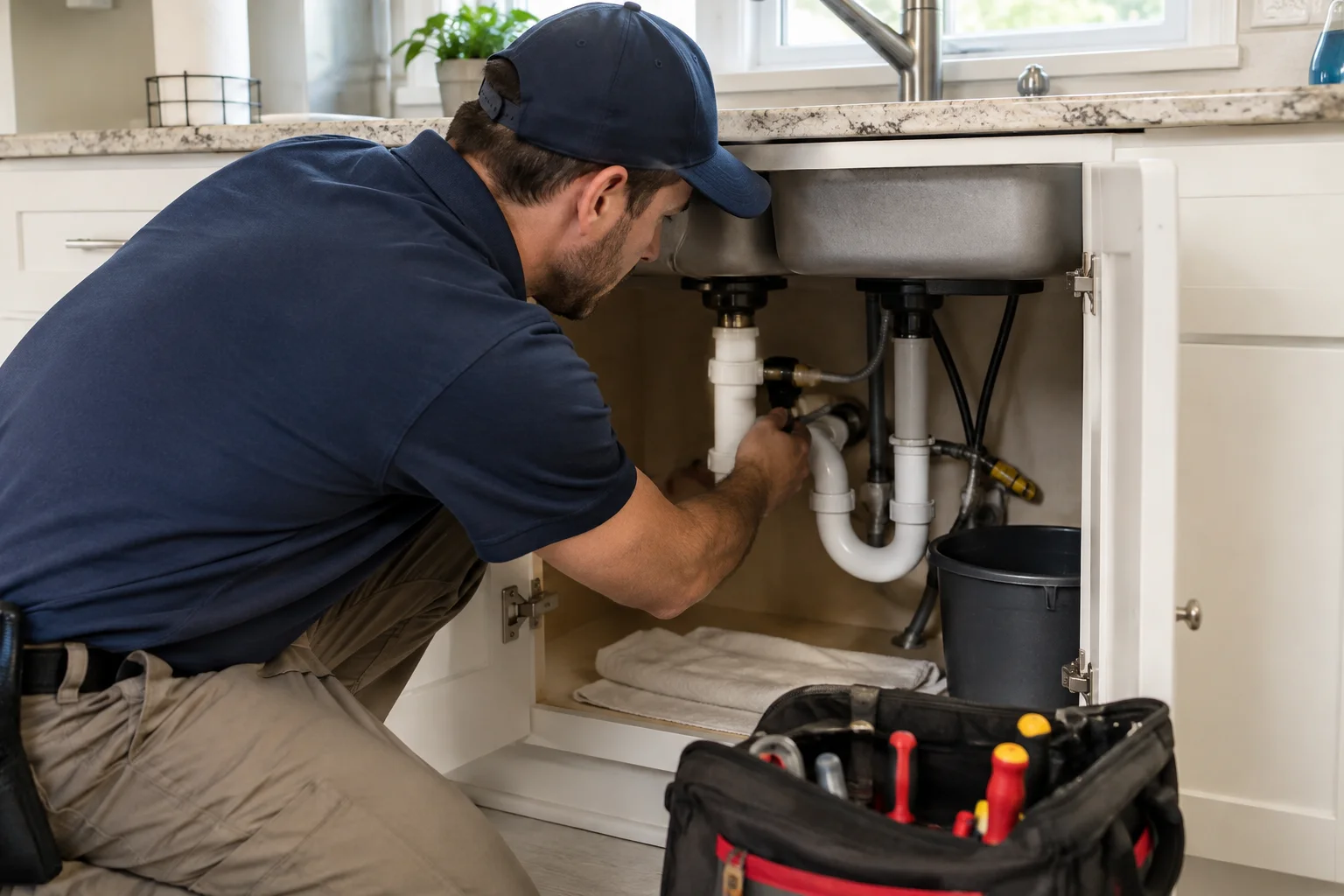
During reverse osmosis installation planning, the available cabinet space is only one consideration. A technician should check incoming pressure, water temperature, supply connections, drainage, and access for future filter changes. Tank-style systems need storage space; tankless models have their own flow, pressure, and electrical requirements.
Household routines also matter. A family that fills several bottles each morning has different demands from a lightly used guest kitchen. Rated production figures are measured under specified conditions, and actual output can change with pressure and temperature. Storage volume and delivery speed should support the times you use water most.
RO systems produce a reject-water stream as part of separation. Ask about efficiency, expected water use, approved drain connections, and leak protection. Installation should follow applicable codes and manufacturer instructions. Vacation properties also need a plan for shutdown, flushing, and sanitation after extended periods without use.
Local service is valuable because the installer can assess the actual home rather than recommend equipment from a generic checklist. A Superior Mechanical serves DeFuniak Springs homeowners and properties across Walton County, where water sources and household layouts can differ considerably.
Keep Better Water Flowing With Routine Maintenance
Water treatment equipment needs ongoing care. RO prefilters and postfilters should be changed on the manufacturer's schedule, adjusted for water conditions and use. Membranes often have a different replacement interval. Waiting until water tastes bad can allow performance problems to develop before anyone notices.
Storage tanks and filter housings may require periodic sanitation according to the manufacturer's instructions. A technician can check pressure, inspect fittings, assess flow, and compare incoming and treated water measurements. A total dissolved solids reading helps track membrane performance, but it is not a complete safety test or a substitute for contaminant-specific testing.
For whole-home equipment, replace sediment cartridges before excessive restriction develops, maintain softener salt as directed, and watch for salt bridging or abnormal regeneration. Keep a record of service dates and changes in taste or pressure. These habits complement the practical care covered in maintaining plumbing in DeFuniak Springs homes.
Good treatment also depends on sound household piping. Persistent discoloration from one faucet or an odor limited to hot water may point to a localized issue. The discussion of cleaner water through better plumbing care explains why equipment and the distribution system deserve attention together.
Get Help Before Replacing Equipment on Guesswork
Professional evaluation makes sense when an RO faucet slows significantly, the system leaks, taste returns soon after a filter change, or the drain flow seems abnormal. These symptoms can involve filters, pressure, tank condition, or valves. They do not automatically mean the entire system needs replacement.
Call for water testing and treatment advice when scale repeatedly returns, sediment becomes visible, discoloration persists, or odor changes suddenly. If mineral damage has affected faucets, address the water issue alongside any plumbing fixture replacement decisions. New fixtures exposed to the same untreated hardness can develop the same buildup.
Homeowners searching for water treatment near me should ask how the recommendation connects to test results, everyday water use, and maintenance costs. Request a clear explanation of what the proposed equipment treats and what it does not. Better water starts with an accurate diagnosis, not a package chosen before anyone checks the supply.
For reverse osmosis systems in DeFuniak Springs, FL, A Superior Mechanical can help with installation, repairs, maintenance, and upgrades. Whether your priority is better coffee, dependable drinking water, or coordinating kitchen filtration with whole-home treatment, start with a review of your water and the way your household uses it.
Find Reverse Osmosis Systems in DeFuniak Springs, FL
If you need Reverse Osmosis Systems in DeFuniak Springs, FL, visit our local service page or contact A Superior Mechanical today.
For a broader look at whole-home water filtration, reverse osmosis, and water softener options, visit our water filtration, RO, and water softener page.
Map of DeFuniak Springs, FL
Frequently Asked Questions
Will a reverse osmosis system stop hard water spots throughout my home?
A typical under-sink RO system reduces dissolved minerals only in the water it treats. It will not prevent spots on shower glass or scale in appliances supplied by untreated water. A properly sized water softener may be appropriate for whole-house hardness, with RO providing drinking and cooking water at the kitchen sink.
Can reverse osmosis improve metallic taste, chlorine taste, and cloudy ice?
An RO system with suitable carbon filtration can improve many taste concerns and reduce dissolved minerals that may contribute to cloudy ice. Metallic taste should be investigated because corrosion or other water conditions may be involved. Ice can remain cloudy from trapped air and freezing conditions, even with filtered water.
How do I choose between AO Smith water filtration, a softener, and reverse osmosis?
Start with water testing and your household priorities. Softening addresses hardness, whole-home filtration targets concerns such as sediment or chlorine depending on the media, and RO typically treats drinking and cooking water. Compare specific AO Smith models and other options by certified performance, flow capacity, maintenance, and suitability for your water rather than brand alone.
Related Articles
Photo Gallery