Valparaiso homeowners rely on air conditioning to handle long, humid stretches and sudden heat spikes. But even a well-built HVAC system can wear out faster if the installation does not match the realities of coastal Florida. Salt air, moisture, airflow issues, refrigerant system problems, and condensate drainage mistakes can all show up later as higher energy use, weak cooling, or frequent repairs.
This guide explains what can go wrong with air conditioning installation in Valparaiso, FL and how professional HVAC service helps protect system life, comfort, and indoor air quality.
Start with Valparaiso’s climate: heat, humidity, and salt air
Coastal Okaloosa County homes face a tough mix. Summer heat drives the HVAC to run longer. High humidity increases indoor moisture and raises the load on cooling and dehumidification. Salt air can accelerate corrosion on metal components. These conditions do not automatically ruin an HVAC system, but they make installation quality more important.
When an installer sizes, seals, and tunes equipment without accounting for local conditions, the system often compensates by working harder. Over time, that extra strain can shorten the life of HVAC components and increase the chance of emergency cooling concerns during peak season.
Airflow problems that quietly shorten HVAC life
Airflow is the foundation of air conditioning performance. If the indoor airflow is restricted or mismatched, the system may not remove heat and moisture effectively. It can also spend more time cycling and running at higher stress.
Undersized or poorly matched ductwork
Many Valparaiso homes have older ductwork runs, ducting that is undersized for today’s loads, or duct sections that are not properly sealed. Even small leaks or crushed sections can reduce airflow. When airflow is low, the indoor coil may not get the steady stream of air it needs. That can lead to uneven temperatures, comfort complaints, and higher energy use.
Homeowners sometimes notice hot rooms, cold rooms, or musty odors that come and go. Those symptoms can point to airflow issues, and they are a common contributor to premature wear after HVAC installation.
Wrong blower speed or restricted filter access
During installation, technicians set up airflow to match the equipment and the duct system. If blower settings are not configured correctly, or if filters are not properly sized and installed, the system can run with reduced airflow. A clogged or mismatched filter can also worsen indoor air quality by limiting dust capture and increasing bypass.
If you are searching for HVAC service near me because of recurring comfort issues, it is worth asking whether ductwork and airflow have been checked alongside the thermostat settings.
Refrigerant system issues: when the cooling cycle is not balanced
The refrigerant system is what actually moves heat out of your home. Installation steps that do not properly prepare, connect, and verify that system can create problems that show up months later.
Improper refrigerant charge or commissioning
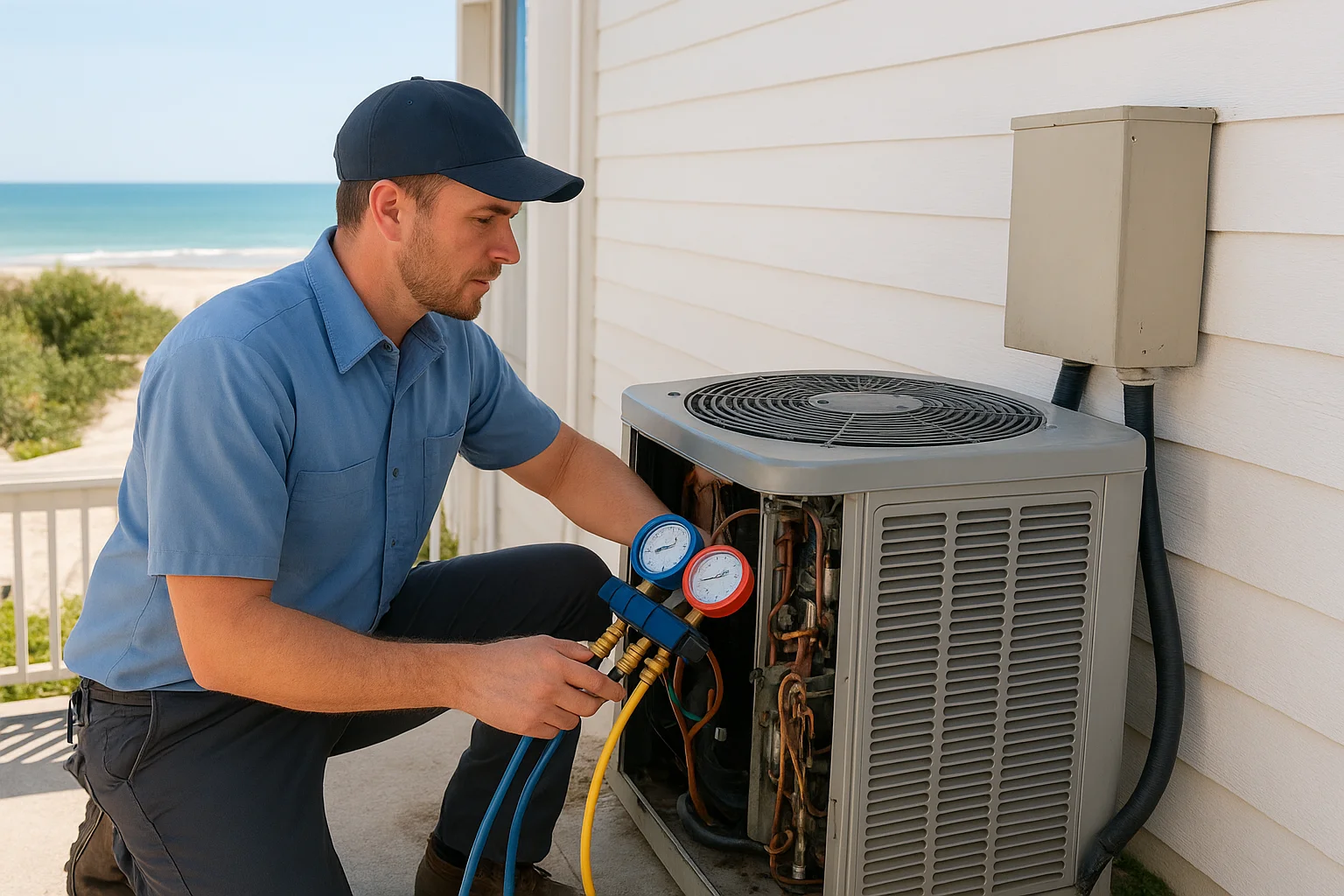
A correct refrigerant charge depends on the equipment, the line set, and the conditions at the time of commissioning. If the charge is off, the system can run hotter, cycle differently, and wear components faster. Troubleshooting refrigerant issues is not a DIY task. Proper checks require professional tools and safe procedures.
Homeowners should be cautious about assuming a refrigerant diagnosis from a single symptom like low cooling. A professional air conditioning inspection near me visit should evaluate the whole system, including airflow, condensate drainage, thermostat behavior, and refrigerant system performance.
Leaky connections and poor line-set handling
In coastal areas, corrosion and moisture exposure can worsen the impact of a small installation defect. If connections are not properly made, sealed, and tested, leaks may develop over time. Refrigerant leaks can also reduce cooling capacity and increase system runtime.
Salt air does not cause refrigerant leaks by itself, but it can accelerate corrosion on exposed metal parts. That is why careful installation and protective practices matter in coastal Valparaiso.
Condensate drainage mistakes and indoor moisture
Air conditioning is also dehumidification. As the indoor coil cools air, condensation forms and must drain correctly. If condensate drainage is wrong, your system can create indoor moisture problems that affect comfort and indoor air quality.
Incorrect slope, clogged lines, or poor termination
During installation, condensate lines need correct routing and slope so water flows away reliably. Poor drainage can cause overflow, water around the indoor unit, or recurring shutdowns. Over time, moisture can contribute to biological growth and odors, turning routine comfort into an indoor air quality concern.
Drain pan and overflow safety setup
Even when drainage lines are installed correctly, safety devices matter. An overflow switch or proper pan setup can prevent damage if drainage is blocked. These details are often overlooked in rushed installations.
If you have noticed water on floors, damp drywall, or persistent humidity even when the thermostat is set correctly, do not ignore it. Moisture issues can lead to more expensive repairs and can shorten HVAC system life.
Thermostat and controls errors that increase wear
A thermostat is not just a comfort control. It also influences how long the system runs, how it cycles, and how the home responds to temperature swings.
Improper thermostat placement
Thermostats placed in direct sun, near heat sources, or in airflow dead zones can misread the home’s temperature. The system may run longer than necessary, which increases energy use and accelerates normal component wear.
Settings that do not match the system type
Different systems and configurations can require different control setups. If the thermostat is configured incorrectly for the installed equipment, short cycling can occur or cooling may not reach target humidity levels. Short cycling is especially harmful because it increases start and stop cycles for compressors and other components.
For homeowners considering system replacement or new AC installation near me, it helps to confirm that controls are commissioned and tested for stable operation.
Coastal corrosion and exterior unit placement
Salt air and coastal moisture can speed up corrosion. That means the outdoor unit’s placement and protection are part of installation quality, not an afterthought.
Insufficient clearance and airflow around the outdoor unit
Outdoor units need clear airflow to reject heat. If the unit is placed too close to walls, fences, shrubbery, or other obstructions, heat rejection suffers. The system can compensate by running longer and harder, which increases wear.
Exposure to standing water and improper pad setup
Standing water around the outdoor unit can increase corrosion and may affect drainage. A properly prepared pad and careful placement help reduce the risk of water pooling and premature deterioration of metal components.
Energy use and comfort problems that point to installation gaps
One of the most common homeowner complaints after an installation is higher-than-expected energy use. While utility rates and household behavior matter, installation gaps can also drive higher costs.
Here are a few comfort and energy patterns that often connect back to installation quality:
- Long run times without reaching steady indoor temperatures
- Hot and cold spots that suggest airflow imbalance or ductwork leaks
- Humidity stays high even when cooling seems to run
- Frequent cycling that can increase wear on compressors and electrical components
- Unusual odors that can be tied to moisture, condensate issues, or ductwork contamination
If you are comparing options and looking for an energy efficient AC system near me, remember that efficiency depends on both equipment selection and correct installation. An efficient system installed poorly can still perform like a less efficient unit.
Why ductwork cleanliness and sealing matter for indoor air quality
Air conditioning installation does not end at the equipment. Ductwork condition and sealing affect how clean and even the airflow feels across your home.
Dust, debris, and leaks can worsen indoor air quality
When ducts have leaks, unfiltered return air can pull in dust and moisture. That can worsen indoor air quality and make allergy symptoms feel worse during humid months. If the duct system was contaminated before installation, the new equipment may circulate that air more effectively, which can make the issue more noticeable.
For Valparaiso homes, it can be helpful to pair installation planning with ductwork evaluation. If you already have recurring air quality complaints, consider reading Comfort Clues Hidden in the Ductwork: Why Valparaiso Homes Benefit from Cleaner Air Paths and ask a technician whether duct cleaning near me is appropriate for your situation.
Note that duct cleaning decisions should be based on what is found during inspection. A professional can help you avoid unnecessary work and focus on the right fix.
Preventive HVAC maintenance protects what good installation built
Even with a careful install, HVAC systems need ongoing attention. Preventive maintenance reduces the risk of small issues becoming bigger problems during Florida’s hottest weeks.
Seasonal tune ups and system checks
During an AC tune up near me visit, a qualified technician can inspect airflow, check the thermostat operation, look at condensate drainage, and verify that the system is operating as expected. These steps help prevent breakdowns and can extend the service life of the equipment.
Maintenance planning for coastal homeowners
Coastal conditions can increase the importance of keeping the system clean, ensuring proper drainage, and watching for signs of corrosion. If you live in Valparaiso or nearby areas in Okaloosa County, a maintenance plan should reflect the humidity and salt exposure your home experiences.
To see how maintenance supports comfort and reliability, read Why Better HVAC Maintenance Pays Off for Valparaiso Air Conditioning Systems and Keeping Valparaiso Comfortable Starts With Smarter Commercial HVAC Maintenance if you manage a rental or commercial property.
Common installation red flags homeowners can watch for
You should never try to verify refrigerant systems or electrical components yourself. But you can notice patterns that often signal an installation was not commissioned properly or that a system was not matched to the home.
Consider asking for an air conditioning inspection if you notice:
- The system cools inconsistently room to room
- Humidity remains high or the home feels clammy
- Water appears near the indoor unit or in the path of condensate drainage
- Frequent cycling or short bursts of cooling followed by long delays
- Unusual noises that start soon after installation
- Higher energy use that does not match your thermostat settings
These symptoms can have multiple causes, including ductwork, airflow, condensate drainage, and controls. A professional evaluation is the safest way to identify what is actually happening.
What to ask a contractor during AC installation in Valparaiso
If you are getting quotes for HVAC installation near me or planning new AC installation near me, use questions to confirm that the job will be done with local conditions in mind.
Here are practical questions that help you gauge the quality of installation and commissioning:
- How will you evaluate ductwork and airflow before installation?
- What steps do you take to verify airflow balance and indoor coil performance?
- How do you handle condensate drainage routing, slope, and overflow safety?
- How do you commission thermostat operation and control settings for stable cooling?
- How will you protect the outdoor unit from coastal corrosion and ensure proper clearance?
- Will you test the system after installation and document what you find?
If you manage a business or rental property, you may also want to ask about commercial HVAC service near me options and maintenance planning. Systems in high-occupancy buildings can experience heavier wear due to frequent thermostat changes and larger cooling loads.
When to call for help: emergency cooling concerns and early interventions
Florida summers do not wait for scheduling gaps. If your AC fails during peak heat and you are facing emergency cooling concerns, contact Emergency HVAC Services in Valparaiso so comfort and safety are addressed quickly.
At the same time, you do not have to wait for a full breakdown. If the system is new but performance is off, or if you suspect installation gaps after noticing persistent humidity, uneven airflow, or water issues, an early professional evaluation can prevent additional damage.
Air conditioning installation and system replacement: planning for the long term
Some homeowners choose system replacement because their current unit is struggling. Others plan installation as part of new construction. Either way, the long-term goal is a system that cools reliably, controls humidity, and supports indoor air quality.
If your home uses a heat pump or you are considering a different approach, you can explore Heat Pump Services for installation and maintenance guidance. For new builds, it helps to coordinate HVAC design and installation from day one with New Construction Air Conditioning.
For broader context on local service coverage, visit the Valparaiso service area page and Okaloosa County HVAC service coverage.
How A Superior Mechanical helps protect HVAC life in coastal Valparaiso
In coastal Florida, installation quality is not just about starting up. It is about matching equipment and controls to humidity, airflow, condensate drainage, and ductwork realities. A professional HVAC team can help ensure the system is installed and commissioned so it can cool efficiently and last longer.
When homeowners search for residential HVAC service near me, they are often looking for more than a quick fix. They want a system that handles Valparaiso’s heat without constant callbacks. The best way to protect HVAC life is to combine a careful installation with preventive HVAC maintenance and timely service when comfort or moisture symptoms appear.
If you are planning air conditioning installation in Valparaiso, A Superior Mechanical can help you start with the right setup for your home and local climate conditions.
Find Air Conditioning Installation in Valparaiso, FL
If you need Air Conditioning Installation in Valparaiso, FL, visit our local service page or contact A Superior Mechanical today.
Map of Valparaiso, FL
Frequently Asked Questions
Can coastal salt air really shorten the life of an HVAC system?
Yes, salt air and coastal moisture can increase corrosion risk on outdoor unit components. Proper placement, clearance, and installation practices that account for coastal exposure can help reduce premature deterioration.
Why does my new AC cool unevenly in different rooms?
Uneven cooling often points to airflow problems such as ductwork leaks, undersized duct runs, or incorrect blower settings. A technician should inspect airflow and ductwork rather than only adjusting the thermostat.
What does condensate drainage have to do with AC reliability?
Air conditioning removes humidity, and that moisture must drain correctly. If condensate lines are routed incorrectly or become blocked, you can see water issues, higher indoor humidity, and system problems that may lead to more repairs over time.
Is it safe to diagnose refrigerant problems without tools?
No. Refrigerant issues require safe handling and professional measurement. If cooling is weak or performance is off, schedule an in-person air conditioning inspection so the full system can be evaluated.
How can preventive HVAC maintenance help after installation?
Routine maintenance supports correct airflow, thermostat operation, condensate drainage, and overall system performance. That helps prevent small installation or performance issues from turning into breakdowns during peak heat.
Related Articles
- Keeping Valparaiso Comfortable Starts With Smarter Commercial HVAC Maintenance
- Why Better HVAC Maintenance Pays Off for Valparaiso Air Conditioning Systems
- Comfort Clues Hidden in the Ductwork: Why Valparaiso Homes Benefit from Cleaner Air Paths
- Why Heating Control Systems Matter for Valparaiso Homes
Photo Gallery