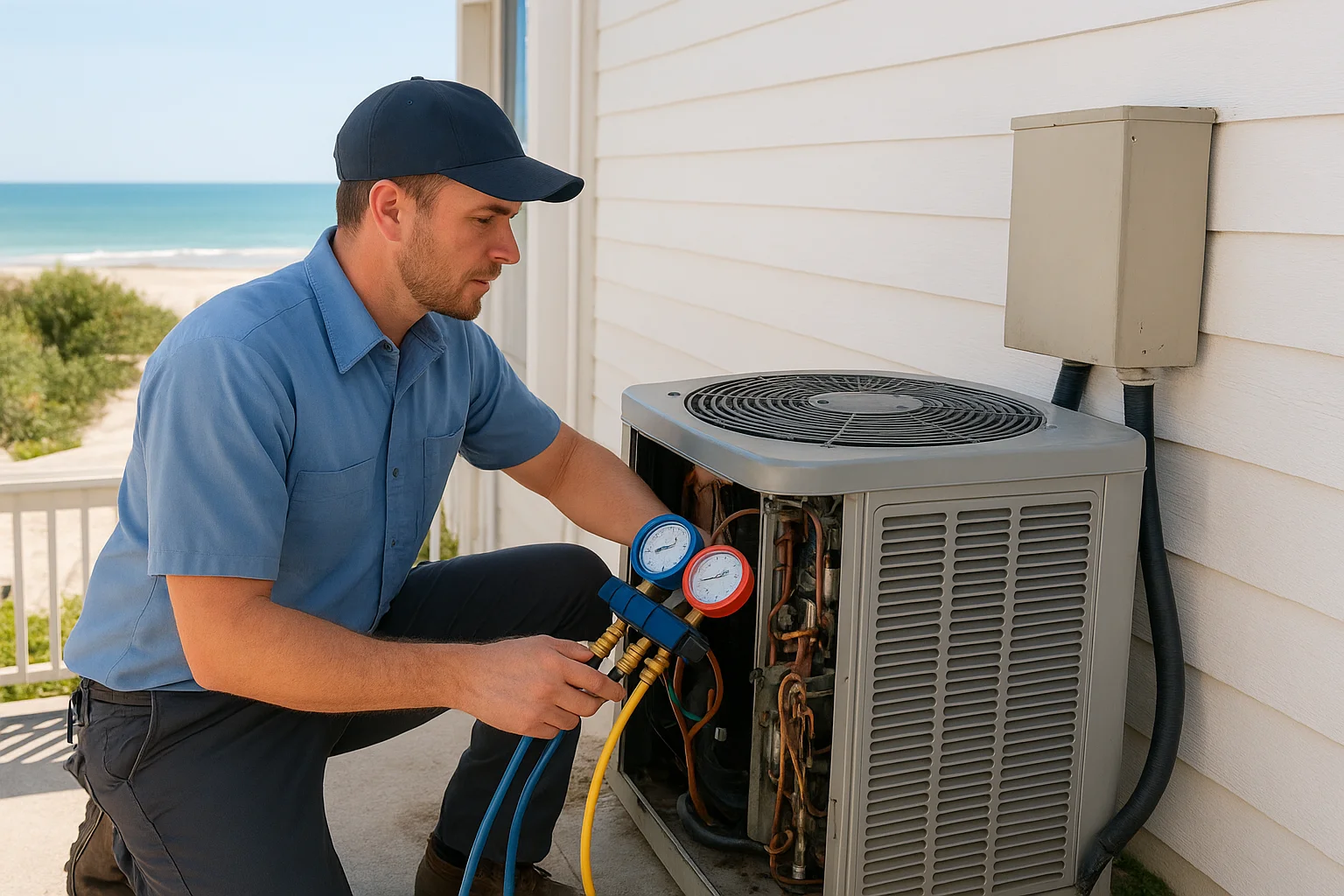
Parker, FL businesses run on comfort. When commercial HVAC installation is rushed or incomplete, problems often show up later as uneven temperatures, high indoor humidity, and unexpected breakdowns during Florida heat. Those issues can turn into emergency cooling concerns, especially for offices, retail spaces, restaurants, and multi-unit properties across Bay County.
This guide covers common causes of HVAC installation problems in Parker and how homeowners and property managers can reduce the odds of frequent service calls. While you can support the process with good habits, the best results come from a licensed HVAC contractor who understands local conditions like heat, humidity, and salt air exposure.
Why Parker’s climate punishes poor installation
Commercial HVAC systems in Parker are expected to handle long cooling seasons, humid indoor conditions, and rapid temperature swings. Florida heat drives higher cooling loads, while humidity affects comfort, materials, and indoor air quality. If installation details do not match those realities, the system often works harder than it should.
Common local stressors include:
- High humidity: Poor condensate drainage or airflow problems can leave moisture behind.
- Airflow demands: Ductwork that is undersized or improperly sealed can reduce comfort and increase energy use.
- Salt air exposure: Coastal or near-coastal conditions can accelerate corrosion if materials and installation practices are not appropriate.
- Refrigerant system sensitivity: Correct charging and proper component connections matter because refrigerant systems operate within tight performance ranges.
When these factors are ignored, the result is often more frequent HVAC repair needs and, in the worst cases, emergency AC repair near me situations when demand spikes.
Installation errors that lead to weak airflow and comfort complaints
Airflow problems are one of the most common paths from a flawed installation to ongoing HVAC service calls. Even when equipment is new, airflow issues can cause the system to cycle improperly, struggle to cool, and raise indoor humidity.
1) Ductwork that does not match the load
Commercial ductwork must deliver the right airflow to the right spaces. If duct sizing, routing, or balancing is off, some areas stay warm while others overcool. That uneven comfort is often mistaken for equipment failure.
Look for patterns like:
- Hot zones near ceilings or exterior walls
- Rooms that feel stuffy even when the thermostat is set correctly
- Registers that blow weakly or produce uneven airflow
For homeowners searching for duct inspection near me or duct cleaning near me, it helps to remember that duct cleanliness matters, but duct design and installation quality matter even more for consistent airflow.
If you are planning upgrades, you can also review related guidance on airflow and humidity control, such as Planning Duct Sealing and Aeroseal Work Before Parker Heat and Humidity Push Your HVAC Harder.
2) Leaky or poorly sealed duct connections
Leaky ductwork wastes conditioned air and pulls in unconditioned air from attics, crawl spaces, or wall cavities. In Parker’s humidity, that can mean moisture intrusion and higher energy use. Leaks also make it harder to maintain stable temperatures, which can increase runtime and wear on components.
This is why ductwork installation and commissioning should include proper sealing and verification of airflow performance, not just connecting ducts and moving on.
3) Missing or incorrect balancing
Even well-designed duct systems need proper balancing. Without balancing, dampers and airflow paths may not deliver what each zone or tenant area requires. The system then compensates with longer run times, which can raise operating costs and increase the chance of breakdowns.
Condensate drainage mistakes that create humidity and water issues
During cooling, commercial systems remove moisture from indoor air. That moisture becomes condensate that must drain correctly. Condensate drainage problems are a frequent source of comfort issues and can contribute to equipment icing, corrosion, and indoor air quality concerns.
1) Improper condensate line routing or slope
If the condensate drain line is installed with the wrong slope, contains traps, or routes in a way that restricts flow, condensate can back up. In humid Florida conditions, this risk increases because cooling run time is longer.
2) Drain line clogs and poor access
Condensate lines should be installed so they can be maintained. If access is difficult or if the system is installed in a way that makes routine cleaning impractical, clogs become more likely over time.
3) Condensate pan and overflow risk
When condensate pans are installed incorrectly or when overflow protection is not addressed properly, the system may shut down or behave unpredictably. Those shutdowns can feel like random failures, but they are often rooted in drainage installation details.
If you manage a multi-unit property, drainage-related issues can also affect multiple tenants and increase the likelihood of urgent service requests.
Refrigerant system and charging issues that show up later
Commercial HVAC systems rely on refrigerant systems to move heat. Installation details that impact refrigerant performance can lead to poor cooling, reduced efficiency, and repeat repairs. While homeowners can support the process by asking the right questions, a refrigerant system evaluation must be performed in person by a qualified technician.
1) Incorrect connections or workmanship at joints
Refrigerant line connections must be made correctly and sealed as required. Improper brazing, poor workmanship, or missed steps can create leaks or performance problems. If a leak is suspected, it should be handled by a licensed HVAC contractor using proper procedures.
2) Charging that does not reflect the installed setup
Charging is not a one-size-fits-all task. It should reflect the installed configuration, equipment design, and system conditions. When charging is off, comfort can suffer and the system may run longer than expected. That can also increase emergency cooling concerns when the building needs reliable performance most.
If you are receiving an AC replacement estimate near me or considering a new system, ask how the contractor will verify refrigerant system performance during commissioning. Avoid relying on assumptions.
Thermostat and controls problems that trigger unnecessary cycling
Commercial buildings often use thermostats, zone controls, scheduling, and sometimes smart controls. Installation mistakes in controls wiring, sensor placement, or programming can cause the system to short cycle or run when it should be off.
1) Thermostat placement that ignores sunlight and airflow
A thermostat installed where it reads direct sun, drafts, or heat from equipment can misreport room temperature. The result is uncomfortable spaces and increased energy use.
2) Incorrect zone control wiring or sensor placement
Multi-zone setups, including VRF systems, require careful installation of sensors and correct control sequences. Poor installation can lead to zones fighting each other, unstable temperatures, and frequent service calls.
If your building uses advanced systems, you may want to explore VRF Multi-Zone Systems to understand how design and commissioning affect performance.
Ductwork and indoor air quality: where comfort and health overlap
Air quality is not just about filters. In Parker, humidity and airborne contaminants can build up when airflow is weak or when the system does not manage moisture well. Installation that neglects ductwork quality and ventilation balance can contribute to stale air, odors, and occupant complaints.
1) Filtration installed incorrectly
Filters should fit properly in the housing and match the system’s airflow requirements. Gaps or misalignment reduce filtration effectiveness and can increase pressure drop, which affects airflow.
2) Ventilation and outdoor air handling that is not set correctly
Commercial systems often bring in outdoor air for ventilation. If dampers, economizer settings, or controls sequences are not configured correctly, the building can end up with either too much humidity or insufficient fresh air.
3) Poor indoor air quality service planning
If occupants complain about dryness, headaches, or lingering odors, the issue might involve more than filters. It can involve system airflow, duct sealing, and how the system handles moisture. Homeowners searching for indoor air quality services near me should look for contractors who evaluate the full HVAC system, not just individual components.
For more on filtration and air cleaning, see Air Filtration & Purifiers and Indoor Air Quality Services.
Energy use increases when installation details are skipped
Parker businesses feel the impact of energy use quickly. When installation errors reduce efficiency, the system compensates by running longer. That can raise operating costs and increase equipment wear.
Common efficiency killers include:
- Airflow that is too low because of duct restrictions or poor balancing
- Air leaks in ductwork that waste cooled air
- Condensate drainage issues that lead to moisture problems and additional strain
- Controls or thermostat problems that cause unnecessary runtime
Energy-efficient equipment is only as effective as the installation around it. If you are considering energy efficient AC system near me options, plan for commissioning and airflow verification as part of the project, not as an afterthought.
Salt air and corrosion: small choices that prevent big headaches
In areas with salt air exposure, corrosion can become a long-term risk. Installation practices that do not account for coastal conditions can shorten component life and increase the likelihood of breakdowns.
During installation, professional contractors should consider:
- How outdoor units are mounted and protected
- Material choices and appropriate coatings where applicable
- How fasteners and connections are handled to reduce corrosion pathways
If you have had recurring repairs outdoors, it is worth asking your contractor how they plan to reduce corrosion risk during installation and maintenance.
Simple habits that reduce the chance of HVAC emergencies
You cannot control every installation detail, but you can influence the outcome by supporting good practices before, during, and after the project.
1) Ask for a commissioning plan, not just equipment placement
After commercial HVAC installation, the system should be verified. Ask how the contractor will check airflow, thermostat operation, condensate drainage, duct performance, and control sequences.
2) Keep return air paths clear
Return grilles and intakes should not be blocked by storage, signage, or temporary partitions. Even a well-installed system can struggle if airflow paths are restricted.
3) Use the thermostat settings that match how your building operates
Set schedules based on occupancy. Constant overrides can drive higher humidity and energy use, especially during Florida heat. If you are not sure how to program schedules, ask for guidance from your contractor or facilities team.
4) Watch for early comfort changes
Small issues can be early warning signs. Notice patterns like:
- Humidity that creeps up over days, not hours
- Airflow that feels weaker than usual
- Frequent cycling or temperature swings
- Unusual odors that appear when cooling starts
These are often easier and less disruptive to address than an emergency cooling event.
5) Schedule preventive HVAC maintenance before peak season
When an HVAC maintenance near me search is timed well, it can prevent a mid-summer breakdown. Preventive maintenance helps catch airflow restrictions, drainage concerns, and control issues before they become urgent.
For additional local guidance, read Keeping Commercial HVAC Problems Small in Parker, FL and Keeping Commercial HVAC Projects on Track in Parker, FL.
How to choose a licensed HVAC contractor for commercial installs
Commercial HVAC installation is not just a set of steps. It is design, installation workmanship, and commissioning. A qualified contractor understands how refrigerant systems, airflow, condensate drainage, and controls must work together for consistent performance.
When searching for HVAC service near me or a licensed HVAC contractor near me, look for experience with the type of commercial system you need. For Parker businesses, that can include rooftop units, split systems, ductwork upgrades, and VRF solutions.
If you are evaluating options for your building, you can also explore the broader category of Air Conditioning Systems to understand common commercial approaches.
Professional local service matters because the contractor should be familiar with Bay County conditions and the kinds of installation details that affect long-term comfort, indoor air quality, and energy use.
When to call for HVAC repair or troubleshooting
Even with good habits, problems can happen. Call for HVAC repair near me when you notice repeating symptoms after installation or maintenance, especially during hot, humid periods.
Contact a professional promptly if you see:
- The system cannot reach temperature targets consistently
- Humidity remains high even when cooling runs
- Condensate overflow or water around indoor units
- Unusual noises or frequent short cycling
- Airflow that is weak in multiple areas of the building
If comfort failures happen during peak demand, emergency service may be necessary. For homeowners searching for emergency AC repair near me, the key is to have a contractor familiar with your system and building layout so troubleshooting starts with the right context.
Commercial HVAC installation in Parker: start with the right scope
For businesses planning a new build or a system replacement, the installation scope should include the parts that prevent problems later: correct ductwork design and sealing, correct condensate drainage, carefully configured thermostats and controls, and commissioning that verifies performance under real operating conditions.
If you need commercial HVAC installation in Parker, FL, A Superior Mechanical can help guide system design and installation for offices, retail spaces, restaurants, and multi-unit properties across Bay County. Learn more about the service here: commercial HVAC installation in Parker, FL, and browse local service coverage at Parker, FL and Bay County.
Find Commercial HVAC Installation in Parker, FL
If you need Commercial HVAC Installation in Parker, FL, visit our local service page or contact A Superior Mechanical today.
Map of Parker, FL
Frequently Asked Questions
What are the most common installation issues that cause poor cooling in commercial buildings?
Weak airflow from ductwork that is undersized, improperly sealed, or not balanced is a frequent cause. Condensate drainage problems can also affect comfort and humidity. Controls and thermostat placement can add another layer of performance issues.
How does condensate drainage relate to humidity and indoor air quality?
During cooling, the system removes moisture from indoor air. If the condensate line is routed incorrectly, clogged, or lacks proper drainage, moisture can build up. That can lead to musty odors, comfort complaints, and indoor air quality problems that often require professional troubleshooting.
Can a new commercial HVAC system still need frequent repairs after installation?
Yes. New equipment can still underperform if installation details are skipped, such as airflow verification, proper commissioning, correct controls setup, or correct refrigerant system charging for the installed configuration. A licensed HVAC contractor should verify performance after installation.
What should we ask about commissioning for a commercial HVAC installation in Parker, FL?
Ask how the contractor will verify airflow and comfort across zones, confirm condensate drainage is functioning safely, check thermostat and control operation, and document commissioning steps. Since Parker humidity and heat are demanding, verification matters for long-term reliability.
When should a business call for HVAC repair versus scheduling preventive maintenance?
Schedule preventive HVAC maintenance when issues are not severe and performance is gradually trending. Call for HVAC repair if you notice sudden comfort failures, persistent high humidity, water around indoor units, unusual noises, or frequent short cycling, especially during peak cooling demand.
Related Articles
Photo Gallery