A ceiling fan can make a 30A bedroom or covered porch more comfortable, but the installation deserves more thought than choosing a finish and blade span. Above the ceiling, the mounting box, wiring, grounding, and circuit all need to support safe operation. At the wall, the controls must match the fan and any integrated lighting.
For homeowners along Walton County's scenic coastal corridor, humidity, salt exposure, storms, and busy rental schedules add another layer of planning. A Superior Mechanical's ceiling fan services in 30A, FL cover installation, replacement, repair, and smart upgrades. Treating the fan as part of the home's electrical system helps prevent recurring trouble.
Start With the Room, Not Just the Fan
A guest bedroom, vaulted living room, and screened porch have different requirements. Fan size, ceiling height, blade clearance, and mounting hardware affect both performance and safety. An oversized fan mounted too close to a wall or sloped ceiling can create clearance problems that a different downrod alone will not solve.
Match the rating to coastal conditions
Indoor fans belong in dry spaces. Covered outdoor locations generally need a damp-rated or wet-rated model, depending on actual exposure and the manufacturer's instructions. A porch that receives wind-driven rain may need a wet-rated fan even when it has a roof. An outdoor location rating does not automatically mean every finish resists salt corrosion equally well.
Along 30A, look for hardware and finishes suited to coastal exposure, and follow the manufacturer's cleaning guidance. Fans cool people through air movement rather than lowering room temperature. Turning them off in empty rooms saves energy without sacrificing comfort.
The Ceiling Box and Wiring Carry the Real Responsibility
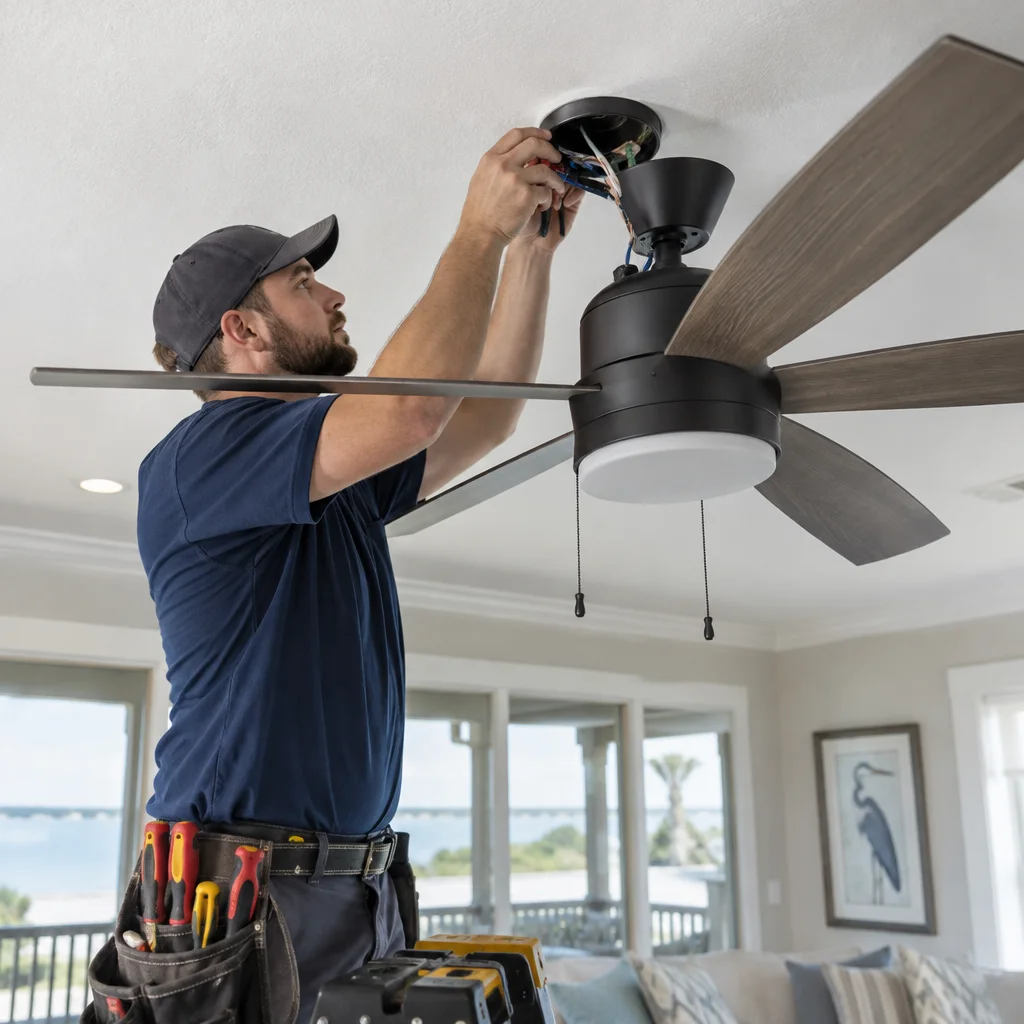
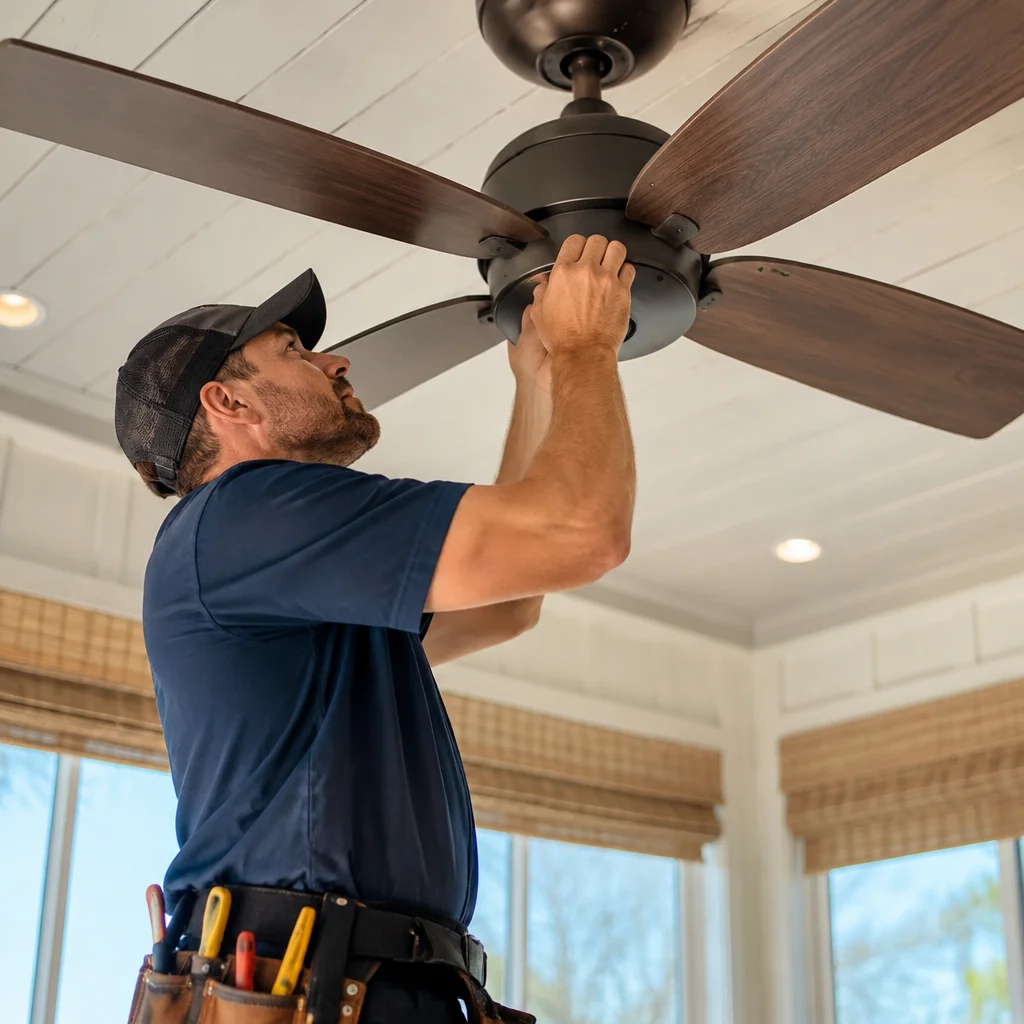
Replacing a light fixture with a fan is not always a direct swap. A box that safely held a lightweight fixture may not be listed to support a moving ceiling fan. The box and its attachment must be suitable for the fan's weight and operational forces, with support anchored to appropriate framing or a listed support system.
Check what is above the ceiling
An electrician should evaluate the mounting point, conductor condition, connection space, and grounding before installing the fan. Older homes may have altered wiring, missing equipment grounding conductors, or crowded boxes from past renovations. Newer homes can also have unsuitable boxes if the room was originally designed for lighting only.
Wiring repair may be necessary when insulation is damaged, connections show overheating, or previous work left improper splices. Concealing a questionable connection under a new canopy does not correct it. Accessible, properly enclosed connections and compatible components are essential to a safe installation.
For homeowners searching for a ceiling fan electrician near me, the useful question is whether the visit includes checking support, wiring, and controls, not simply hanging the new fixture. Mention whether the location already has a fan, a light, or no electrical connection.
Panels, Breakers, and the Circuit Behind the Fan
A typical residential ceiling fan is a relatively small load. Installing one does not automatically require a panel upgrade or a dedicated circuit. However, the existing circuit may already supply bedroom outlets, lighting, electronics, and other equipment. Its overall condition and connected load matter more than the fan alone.
Repeated tripping needs diagnosis
If a breaker trips after a fan starts, possible causes include a wiring fault, a defective motor or receiver, an incompatible control, or an overloaded circuit. A breaker that will not stay set is not something to repeatedly reset. Never replace it with a higher-rated breaker to stop tripping unless the entire circuit has been professionally evaluated and appropriately redesigned.
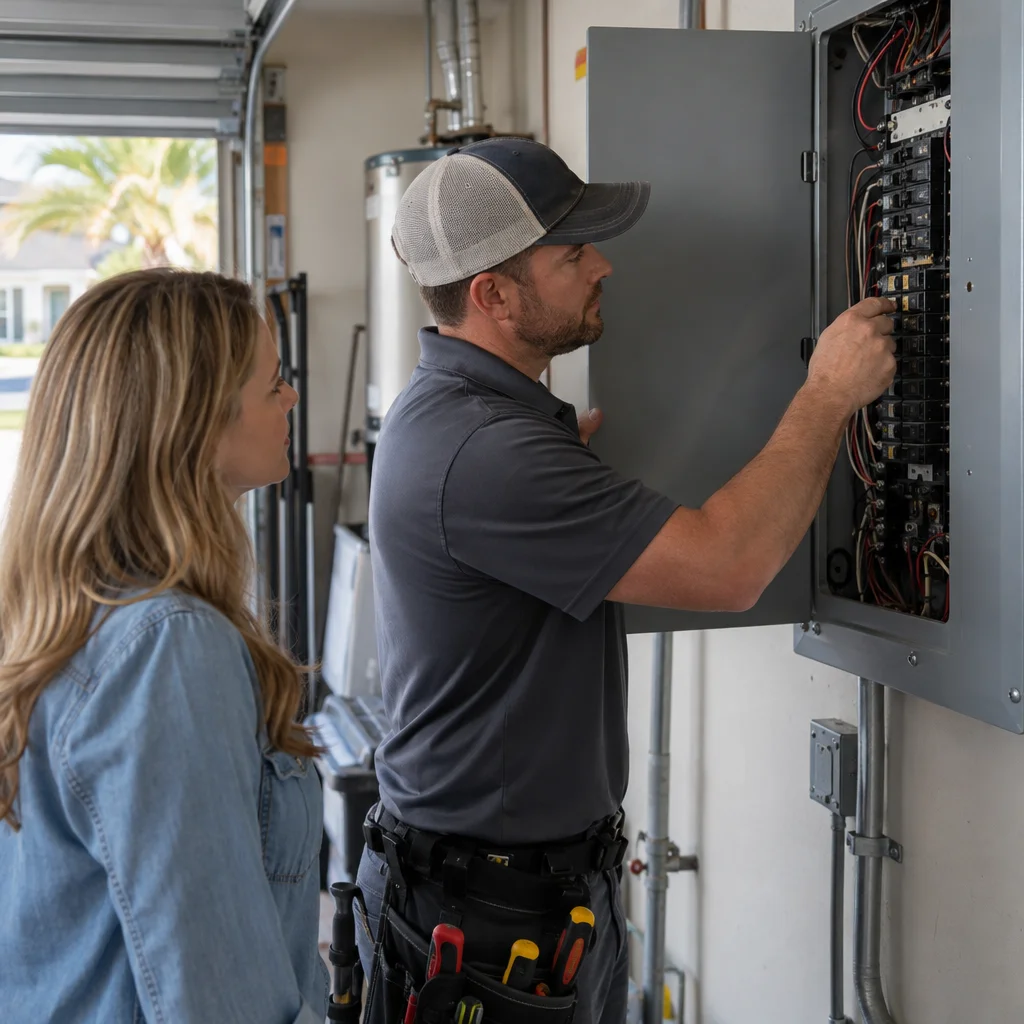
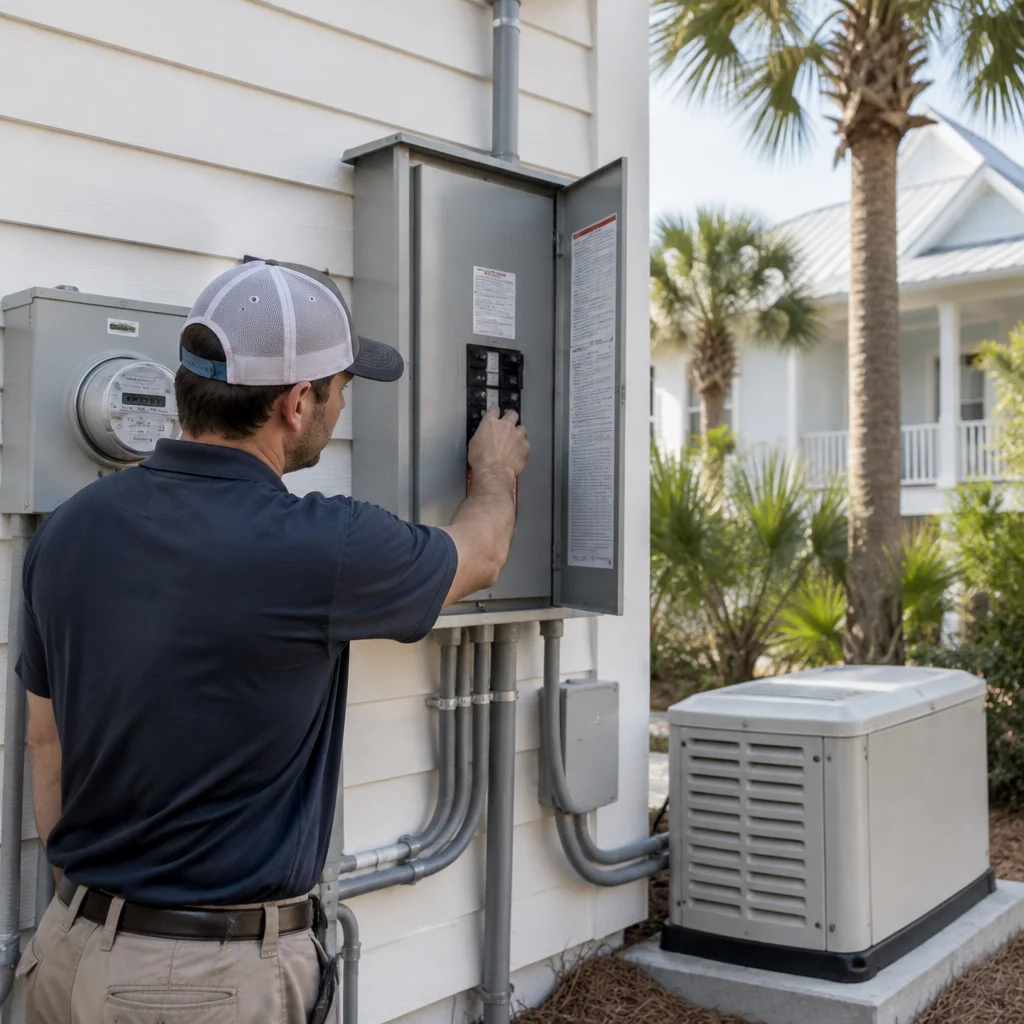
Requests for breaker repair usually involve finding the underlying problem and replacing a defective breaker when necessary, rather than repairing its internal mechanism. Heat damage, corrosion, loose connections, and unsuitable breaker types can also require attention inside the panel.
Homeowners searching for electrical panel upgrade near me should ask for an assessment of service capacity, panel condition, and planned loads. A Superior Mechanical's circuit breaker panels and rewiring services provide a relevant starting point when a fan project reveals broader electrical concerns.
Choose Switches and Lighting Controls That Work Together
Some fans use separate wall switches for the motor and light. Others rely on a remote receiver, a manufacturer-specific wall control, or smart connectivity. The available wiring helps determine which arrangement is practical. Separate fan and light control may require an additional conductor or a compatible listed control system.
A standard lighting dimmer should not control a fan motor unless specifically listed for that use. LED light kits also need compatible dimming controls. Humming, flickering, limited speed adjustment, or a receiver that behaves unpredictably can point to control incompatibility, although loose connections and component faults must also be considered.
During a remodel, coordinate fan placement with indoor lighting installation. Recessed lights positioned above or close to rotating blades can produce distracting shadows. Planning fixture locations together is easier than relocating finished ceiling openings later.
For vacation rentals, straightforward controls are often more useful than complicated automation. Label switches clearly, keep remote instructions available, and choose smart features that remain usable if internet service is interrupted.
Outlets and Other Upgrades Belong in the Same Conversation
A fan replacement can be a convenient time to discuss nearby electrical problems, especially before repainting or closing walls. Loose receptacles, discolored outlets, switches that feel unusually hot, and intermittent power deserve evaluation. They should not be dismissed because the fan still runs.
GFCI protection is required in many moisture-prone locations, including applicable bathroom, kitchen, garage, and outdoor areas. Requirements depend on the location, equipment, and adopted code. An electrician can determine the protection needed for the specific project, including whether AFCI requirements apply to the affected circuit.
The article Behind Every Reliable Outlet and Switch in a 30A Home offers additional context for outlet repair and switch concerns. A worn receptacle and a malfunctioning fan may be separate problems, but symptoms on the same circuit can help guide troubleshooting.
Plan for additions and higher power demand
A bedroom addition or porch enclosure may bring new lighting, receptacles, and fan locations. Meanwhile, EV charger installation, electric appliances, and workshop equipment can substantially change household demand. Dedicated circuits should be designed around equipment requirements and load calculations, not assumed available because a panel has an empty breaker position.
Discuss future work before finishes are installed. That might include pathways for EV charging, smoke detector installation or relocation, or wiring for additional lighting. Coordinating these projects can reduce repeated wall openings while allowing each system to meet its own requirements.
Storm Protection Starts Beyond the Fan
Coastal storms can interrupt power and expose electrical systems to damaging surges. Modern ceiling fans often contain electronic receivers, LED drivers, or smart controls that can be vulnerable to voltage disturbances. Properly selected and installed whole-home surge protection can help reduce exposure, but it cannot guarantee protection against every event, particularly a direct lightning strike.
Surge protection also depends on correct installation and a sound grounding and bonding system. Corrosion, damaged service equipment, or questionable grounding should be evaluated rather than treated as problems a surge device will solve.
Include fans in backup power planning
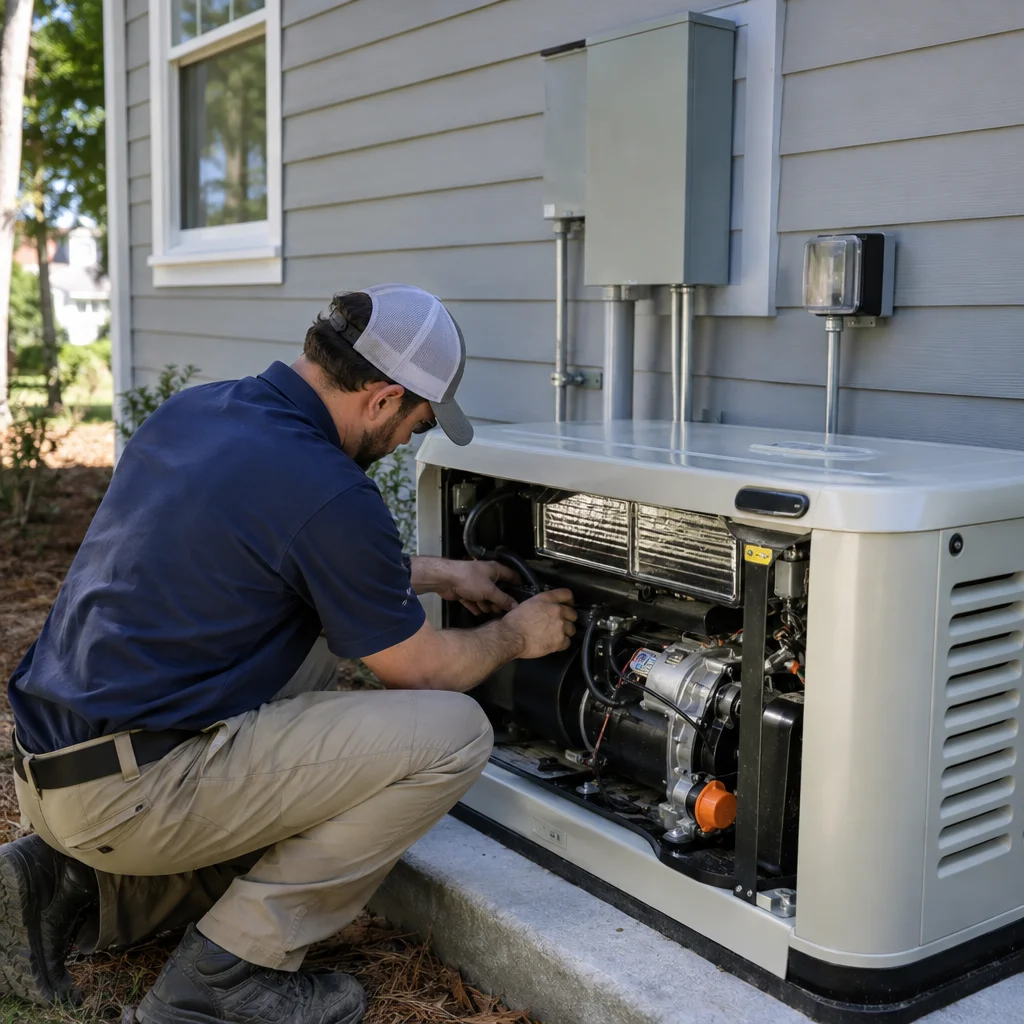
Ceiling fans can be useful loads during an outage when supplied by a properly designed backup system. Generator installation requires appropriate transfer equipment to prevent dangerous backfeeding into utility lines. Never connect a portable generator to a household outlet to energize the home.
For a broader look at circuit priorities, read Backup Power on 30A Starts With Smarter Electrical Planning. Planning for power backup generators or battery backup systems should account for lighting, refrigeration, communications, and desired fan circuits. Battery runtime depends on usable capacity and the combined connected load.
Recognize Problems That Need Prompt Attention
A slight imbalance may come from dust buildup, a damaged blade, or loose hardware. Persistent wobbling can also indicate an unsuitable mounting arrangement. Stop using a fan that moves excessively or appears to be separating from the ceiling. Do not assume a balancing kit will correct a loose electrical box.
Other warning signs include burning odors, crackling, sparks, repeated breaker trips, or a fan that stops while other devices on the circuit behave erratically. If safe, turn off the affected circuit and arrange professional electrical repair. Do not remove covers or touch suspect equipment to investigate.
Homeowners searching for an emergency electrician near me should describe any heat, smoke, water exposure, or loss of power when requesting help. For smoke, fire, or immediate danger, leave the area and call 911. Keep away from fallen power lines and storm-damaged service equipment. Never approach a wet panel or stand in water to operate a breaker.
A Practical Maintenance Routine for 30A Properties
Periodically inspect fans from a safe position for wobble, unusual noise, corrosion, and damaged blades. With the fan switched off, clean accessible surfaces according to its instructions. Avoid spraying cleaner into the motor housing or controls. Have a professional address mounting concerns, electrical connections, or components that require disassembly.
Rental owners can add a simple operational check between stays: confirm that each speed works, the light responds normally, and the remote or wall control is understandable. Note recurring symptoms instead of repeatedly resetting power. After significant roof leaks or storm damage, have potentially affected electrical equipment assessed before reuse.
An electrical inspection near me search can be useful when buying an older 30A home, preparing a substantial remodel, or investigating undocumented electrical changes. Ask about grounding, circuit identification, panel condition, and needed code corrections. Permit and inspection requirements should be confirmed with the local authority for the actual scope of work.
Give Your Electrician the Whole Picture
Before scheduling ceiling fan services, gather the fan model, ceiling height, indoor or outdoor location, and details about existing controls. Mention flickering lights, breaker trips, recent leaks, and upcoming additions. Photos taken safely from floor level can help explain the project without opening equipment.
Local electrical service matters because porch exposure, seasonal occupancy, and renovation history vary across the 30A corridor. Explore A Superior Mechanical's 30A service area and broader Walton County coverage, or contact the team to discuss your fan installation or repair. A sound plan addresses the visible fixture and the electrical system supporting it.
Find Ceiling Fan Services in 30A, FL
If you need Ceiling Fan Services in 30A, FL, visit our local service page or contact A Superior Mechanical today.
Map of 30A, FL
Frequently Asked Questions
Can an electrician install a ceiling fan where a light fixture already exists?
Often, yes, but the existing ceiling box must be listed for fan support and properly secured. The electrician should also check wiring, grounding, clearances, and control compatibility. A light fixture box may need replacement before the fan can be installed safely.
Does a ceiling fan installation require a panel upgrade or dedicated circuit?
Usually not for a typical residential fan on a suitable existing circuit. A circuit assessment may reveal overloading, damaged wiring, or panel issues that need correction. Larger projects involving additions, EV charging, or new appliances may require a broader load calculation.
What type of ceiling fan is appropriate for a covered porch in 30A?
Choose a fan listed for the porch's actual exposure. A sheltered damp location may allow a damp-rated fan, while exposure to wind-driven rain can require a wet-rated model. Follow the manufacturer's installation instructions and consider finishes designed to withstand coastal corrosion.
Related Articles
Photo Gallery