Latitude Margaritaville Watersound, FL is home to coastal humidity, changing water conditions, and many newer and renovated homes. Even when a household has a water softener already installed, water can still feel harsh, leave hard water spots on glass, or create scale buildup around faucets and showerheads. Those everyday symptoms are often the clue that something is interfering with how the softener is working.
Below, A Superior Mechanical breaks down the most common causes of water softening problems in Latitude Margaritaville Watersound, what homeowners can look for, and how better water treatment protects plumbing, appliances, and comfort.
Hard water and scale start showing up in the places you notice first
When soft water is not happening consistently, the results are usually visible in the kitchen and bathroom. Homeowners often describe the same patterns:
- Hard water spots on glass after rinsing a drinking glass or filling the dishwasher
- Hard water spots on dishes and cloudy film even when the dishes look clean
- Scale buildup around faucets, showerheads, and tub spouts
- Dry skin from hard water and dull or flat hair after bathing
- Metallic, chlorinated, or unpleasant taste in drinking water
- Cloudy ice cubes or ice that looks “off” compared to bottled water
- Poor tasting coffee and cooking water, especially when tea and coffee taste more bitter than expected
- Visible sediment, discoloration, and odor concerns that show up in sinks, tubs, or at fixtures
Those symptoms can point to true hard water, but they can also indicate that a softener is not regenerating correctly or is not sized and configured for the household.
Why older homes and newer builds can both end up with “softening problems”
It is easy to assume water softener issues only happen in older homes. In reality, both older and newer Latitude Margaritaville Watersound properties can run into trouble because the causes are often related to water chemistry, plumbing layout, and system settings rather than the age of the house.
Older plumbing can create more scale and more water “carryover”
Older homes may have older pipe materials, older fixture cartridges, and mineral deposits already built up in plumbing lines. Even if a softener is installed later, existing scale can continue to shed into hot water lines or restrict flow in certain areas. That can make it seem like the softener is “not working,” when it may be working but battling a backlog of buildup.
Newer homes can still be undersized or misconfigured
Newer construction does not automatically mean the water system is correct. A water softener that is sized for a different household size, a different flow rate, or a different water condition may struggle. If the regeneration schedule is off or the system is not set to the right hardness level, you can see the same results: soap that does not lather well, residue that does not rinse clean, and scale buildup around faucets and showerheads.
Common causes of water softening failure in Latitude Margaritaville Watersound
Homeowners searching for water softener service near me often want one simple answer. The truth is that softening performance can be disrupted by several common issues, and the fix depends on which one is happening.
1) The softener is not sized for your actual water hardness and usage
Water hardness is not just a single number. It can vary with season, demand, and local water conditions. If the softener was installed for a smaller household or a lower daily water use, it may regenerate too late. That leads to a “breakthrough” of hard water, which shows up as hard water spots on glass and hard water spots on dishes, plus scale around faucets and showerheads.
In busy households, the pattern can be obvious. For example, after a day with extra laundry, showers, and dishwashing, the next morning’s water may feel harsher. That is a sign the system is not keeping up.
2) Incorrect hardness settings or regeneration timing
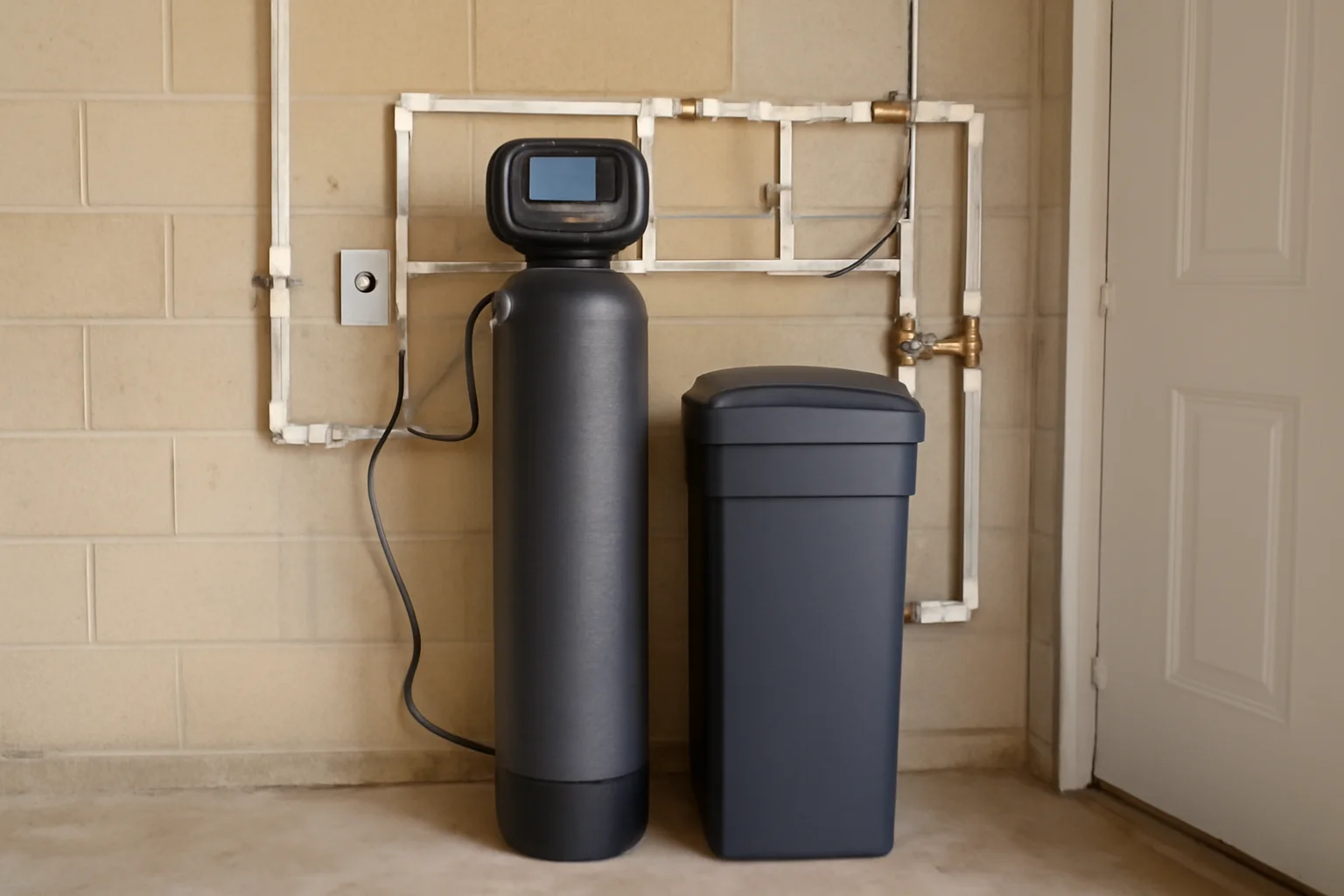
Many water softeners use a control valve that relies on settings. If the hardness setting is too low, the unit will not remove enough minerals each cycle. If regeneration is set too infrequently, the resin bed can become saturated. If regeneration is set too often, you may waste water and salt, which can also reduce overall effectiveness.
Seasonal changes and changes in household patterns, like a new baby, a second bathroom, or an increase in laundry, can make a previously “fine” setting fall out of sync.
3) Salt issues, brine problems, or low-quality salt
Soft water depends on a clean, consistent brine solution. Common problems include:
- Salt bridging in the tank, where salt forms a crust and does not dissolve properly
- Low salt levels, especially after a long stretch between deliveries
- Incorrect salt type or inconsistent pellet quality
- Brine line restrictions or suction issues
When brine formation is weak, the resin bed is not regenerated fully. That often leads to a gradual decline in performance, which can look like “the softener used to work” until it suddenly did not.
4) Resin bed fouling from water conditions or plumbing contamination
Some water quality characteristics can create challenges for softeners. Sediment, iron, or other contaminants can coat the resin bed or clog parts of the system. When that happens, the softener may run through cycles but still underperform.
Homeowners may notice visible sediment, discoloration, or odor concerns, and the water may feel different depending on whether it is hot or cold. That is also when whole home water filtration near me becomes relevant, because a filtration step upstream can protect the softener and improve overall clean water systems performance.
5) Bypass valves left open or plumbing changes that affect flow
Some systems have bypass positions for maintenance. If a valve is left in bypass, you might get partial softening or none at all. Also, renovations can introduce plumbing changes that alter how water reaches the softener.
A common scenario is a kitchen remodel or a new water line for an appliance. If the plumbing was reworked, the softener may still be “on,” but water may be routed around it.
6) Hard water buildup already inside fixtures and appliances
Even a properly functioning softener cannot instantly remove scale that is already inside plumbing. Over time, scale buildup around faucets, showerheads, and water heater components can reduce performance. It can also cause appliances to wear out faster because mineral deposits reduce heat transfer and increase stress on heating elements.
That is why you may notice:
- Dishwashers that clean less effectively over time
- Water heater recovery that feels slower
- Faucets that build up mineral crusts quickly
- More frequent maintenance calls for plumbing repairs
If you are seeing those patterns, it can help to review plumbing upkeep too. You can read Keeping Plumbing Trouble Small in Latitude Margaritaville Watersound Homes for practical ways to reduce damage before it becomes expensive.
How the problems show up in daily life at Latitude Margaritaville Watersound
Water softening is not just about minerals. It affects how water behaves in your home every day, from the first cup of coffee to the last load of laundry.
Coffee, tea, and cooking water that tastes “off”
Many homeowners assume taste problems are only about softening. Softening targets hardness minerals like calcium and magnesium that cause scale. But taste and odor concerns can also involve other water treatment needs. When water is not being treated correctly, you may notice metallic, chlorinated, or unpleasant taste in drinking water, plus cloudy ice cubes that look different than expected.
In the kitchen, that can affect everything. Coffee may taste flatter or harsher, and cooking water can change how pasta and rice turn out. Even when you are using the same brand of beans or the same recipe, poor tasting coffee water can be a sign that your home water treatment is not keeping up.
If you are considering a stronger clean water approach, homeowners often compare softeners with reverse osmosis systems and whole home water filtration. For more on the risks and tradeoffs, see Reverse Osmosis Problems in Latitude Margaritaville Watersound Homes and How to Keep Plumbing Costs Down.
Bathing comfort and laundry that feels different
Hard water can leave minerals behind on skin and hair. That is why many residents report dry skin from hard water and dull hair after bathing. It can also make towels feel rough and cause soap residue to cling to fabrics.
When the softener is not working properly, soap may not lather or rinse well. Laundry can come out with a film that reduces softness, and you may find you are using more detergent than usual. That is a common reason homeowners start searching for water filtration near me, especially when they want cleaner, softer water for the whole household.
Fixtures, showerheads, and glassware that never stay clean
After a shower, scale buildup around showerheads can show up as white crusting. Around sinks, you may see rings that return quickly. In the kitchen, hard water spots on glass can appear even after careful rinsing.
These are not just aesthetic issues. Mineral buildup can clog small openings, reduce water flow, and increase wear on cartridges and valves. Over time, that can mean more frequent maintenance and more costly repairs.
Where reverse osmosis and whole home filtration fit in
Homeowners often ask whether a water softener alone will solve every water issue. Softening helps with scale and hardness. Whole home water filtration near me is often considered when there are additional concerns like sediment, discoloration, odor, or taste.
Whole home water filtration protects the entire plumbing system
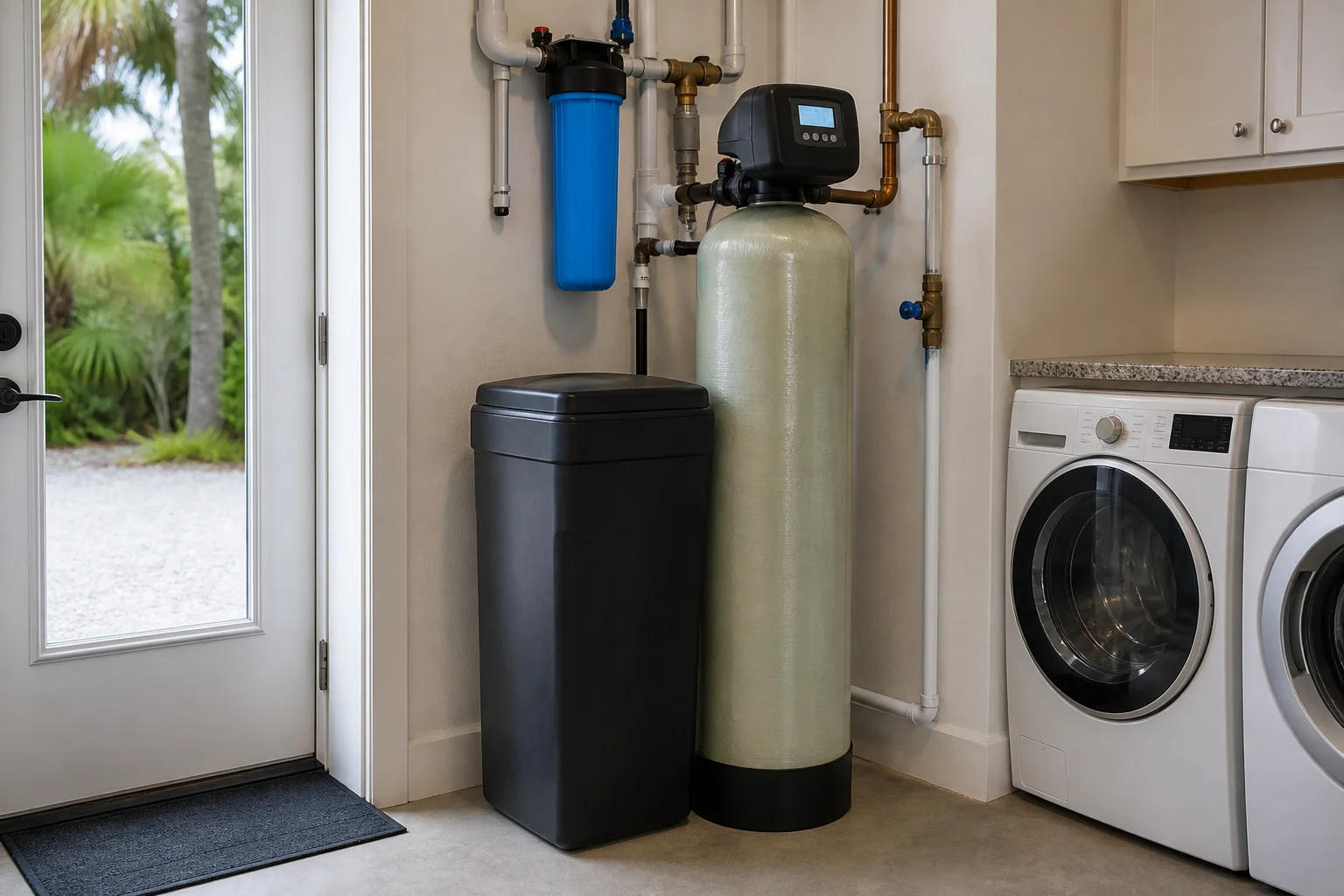
Whole home water filtration can be a smart pairing with water softening. By reducing sediment and other particles before water reaches the softener and fixtures, filtration can help protect resin performance and keep clean water systems running more reliably. It can also improve water clarity for laundry and fixtures.
Reverse osmosis for drinking and cooking water
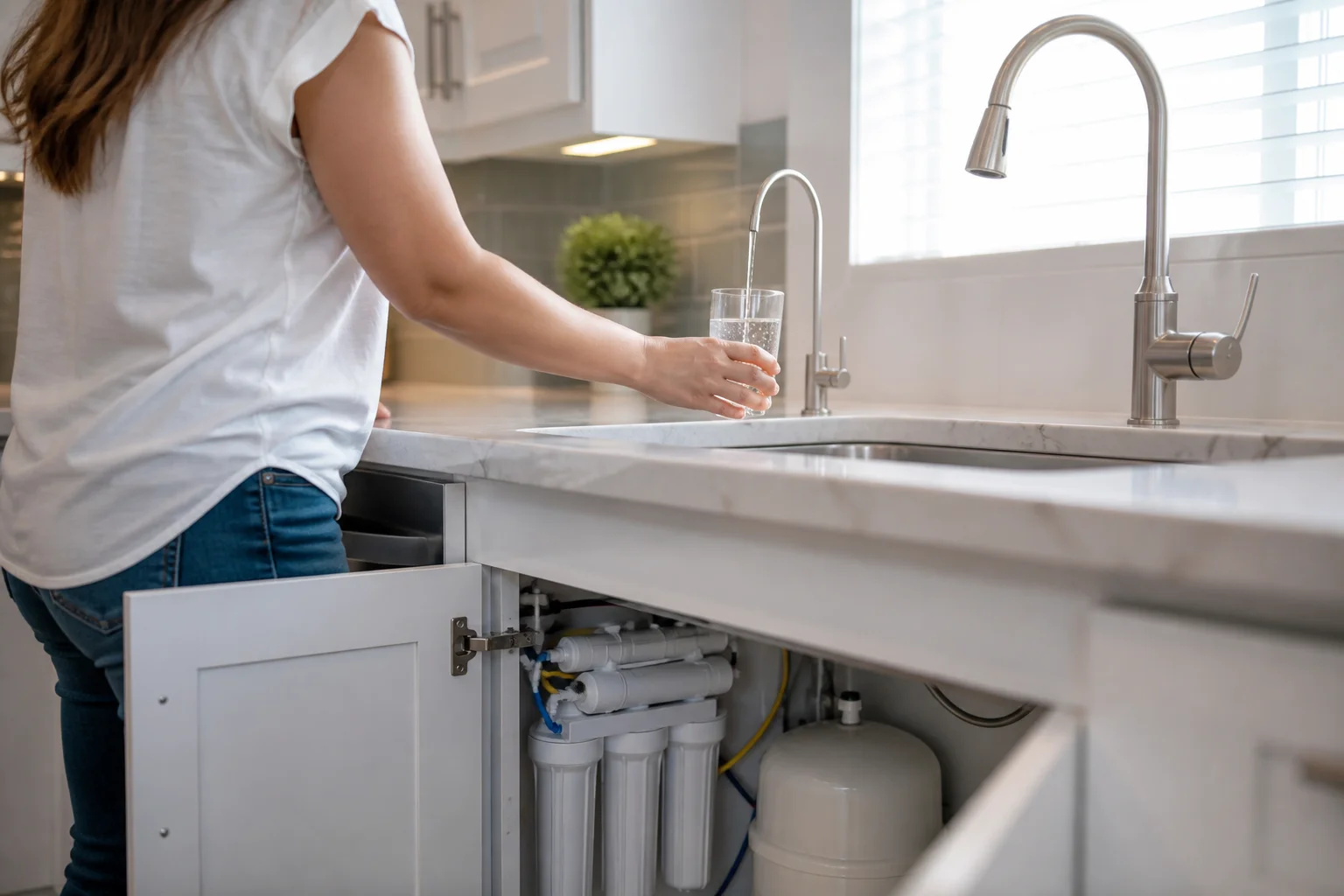
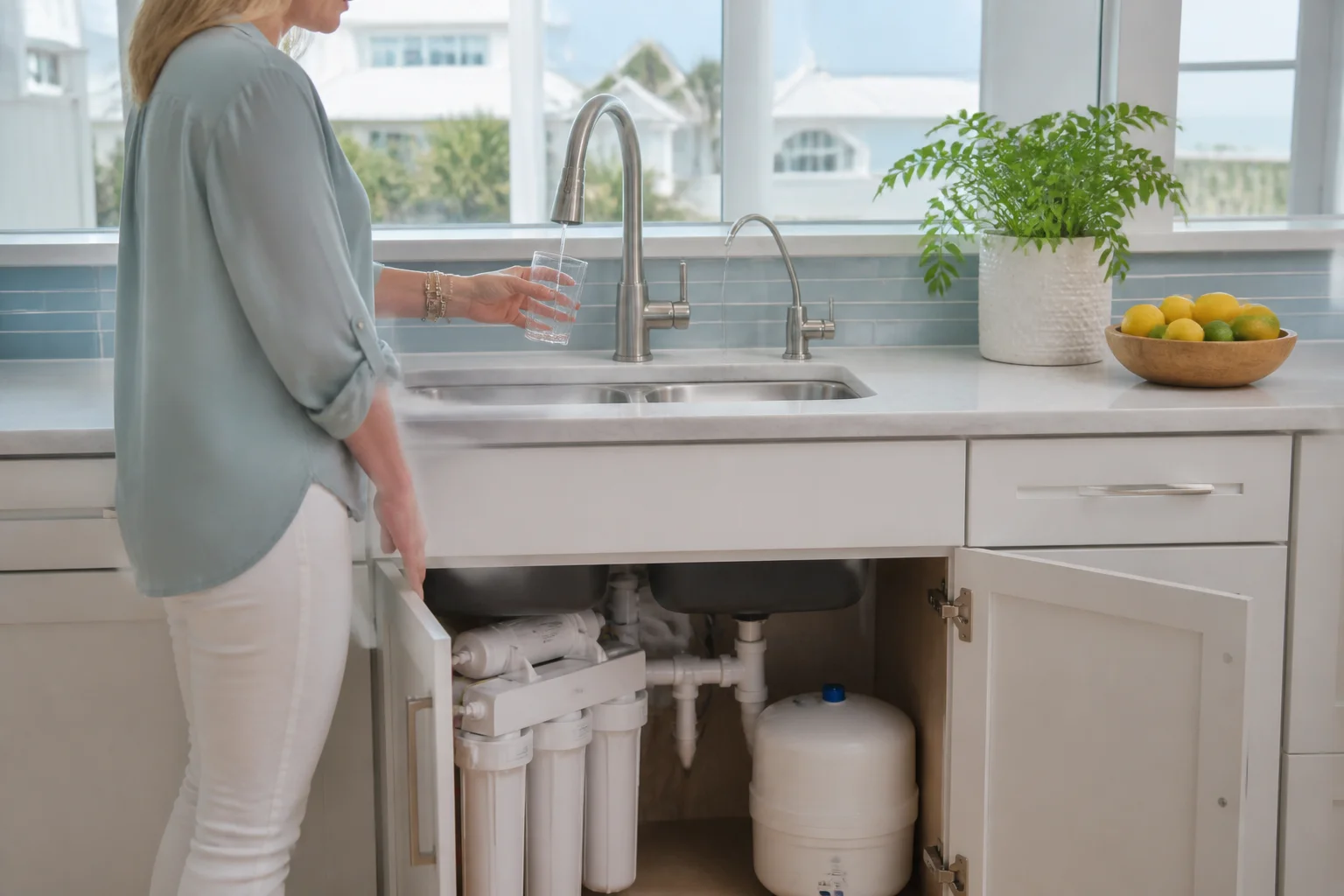
Reverse osmosis systems are popular for point-of-use drinking water. They can help address taste and odor concerns, and many families like the idea of reliable clean water for kitchen scenes like filling a glass, making ice cubes, and brewing coffee.
RO is not always the best choice for treating the entire home, but it can be a strong complement to softening when the goal is better drinking water and better cooking water.
AO Smith water filtration and softening options for Latitude Margaritaville Watersound homes
A Superior Mechanical commonly recommends AO Smith equipment because it is designed for dependable residential performance and can be tailored to a home’s needs. Depending on your water test results and goals, the right setup can include:
- Water softening to reduce hardness and prevent scale buildup around faucets, showerheads, and plumbing components
- AO Smith water filtration to improve water clarity and help protect the rest of your clean water system
- Reverse osmosis for drinking and cooking water, especially when you are noticing metallic tasting water, cloudy ice cubes, or unpleasant taste
- Whole home water filtration strategies for households that want cleaner water throughout the house
If you are exploring water softener service near me or looking for home water purification near me, it helps to start with the right assessment. A water test and an on-site review help determine whether you need hard water treatment only, or a layered approach with filtration plus softening.
You can learn more about the specific local service available for this area on our page: water softening in Latitude Margaritaville Watersound.
If you are also comparing options for whole home water filtration, start here: water filtration and reverse osmosis water softeners.
For broader service coverage, homeowners can also check: Latitude Margaritaville Watersound and Bay County.
Prevention and maintenance that keeps softening consistent
Even the best water softener needs basic care. A few simple habits can prevent the most common softening breakdowns and reduce the chance of scale returning.
Keep salt levels steady and watch for salt bridging
Salt should never run too low. If you notice a hard crust across the top of the tank, it may be bridging. That can stop brine formation and cause hard water spots on glass to return. Keeping salt fresh and properly loaded helps maintain consistent regeneration.
Use the right settings and confirm them after changes
If you add a bathroom, install a high-use appliance, or your household size changes, review the hardness setting and regeneration schedule. That is especially important for homeowners in coastal areas where conditions can vary.
Inspect for unusual taste and odor that points beyond hardness
When you see metallic, chlorinated, or unpleasant taste, or you are concerned about visible sediment and odor, do not assume softening will fix it. The softener may be fine, but another step like filtration or reverse osmosis may be needed. That is where whole home filtration and clean water systems near me searches often lead to the right multi-stage plan.
Address scale early to protect appliances
If you see early signs of scale buildup around faucets, showerheads, or the inside of kettle and coffee equipment, handle it quickly. Removing scale early helps protect water heater performance and reduces the chance that appliances wear out faster due to mineral deposits.
If you are planning maintenance around larger plumbing projects, it can also help to coordinate service timing. You can read How Better Plumbing Maintenance Lowers the Risk of Water Damage During Water Heater Replacement in Latitude Margaritaville Watersound to keep your water system working well during upgrades.
When it is time to call a professional water treatment team
Some softener issues are easy to spot, but troubleshooting is not always straightforward. If you are dealing with recurring hard water spots on glass, persistent scale buildup around faucets, or ongoing dry skin from hard water, it is usually time for a professional check.
Contact A Superior Mechanical when:
- The softener is producing only partial results or performance fades after a few days
- You see scale buildup returning quickly despite recent salt refills
- You notice metallic tasting water, cloudy ice cubes, or unpleasant drinking water taste
- There is visible sediment or discoloration in water fixtures
- You suspect undersizing, incorrect settings, or plumbing bypass issues
- You want to upgrade to a layered approach with AO Smith water filtration, whole home water filtration, or reverse osmosis
A technician can review your setup, check settings, evaluate the resin and brine system, and recommend the right combination of water softening and filtration for your home. That is how homeowners protect their plumbing, improve everyday comfort, and keep kitchen and laundry routines running smoothly.
Find Water Softening in Latitude Margaritaville Watersound, FL
If you need Water Softening in Latitude Margaritaville Watersound, FL, visit our local service page or contact A Superior Mechanical today.
For a broader look at whole-home water filtration, reverse osmosis, and water softener options, visit our water filtration, RO, and water softener page.
Map of Latitude Margaritaville Watersound, FL
Frequently Asked Questions
Why does my water still feel hard even though I have a water softener?
Common causes include an undersized softener, incorrect hardness settings, brine or salt issues, a bypass valve left open, or resin bed fouling. If hard water spots on glass and scale buildup around faucets keep returning, a service visit is usually needed to diagnose the control settings and regeneration performance.
Can a water softener fix metallic or unpleasant tasting water?
Water softening mainly reduces hardness minerals that cause scale. Metallic, chlorinated, or unpleasant taste can involve other water quality factors. Many homeowners pair softening with AO Smith water filtration or reverse osmosis to improve drinking water taste and odor.
How do I know if I need reverse osmosis or whole home water filtration?
If your main issue is drinking and cooking water taste, reverse osmosis can be a strong point-of-use solution. If you are seeing sediment, odor concerns, or want cleaner water throughout the home, whole home water filtration is often the better match, especially when paired with water softening.
What maintenance should I do between water softener service visits?
Keep the salt tank filled, watch for salt bridging, and confirm the system settings after major household changes. If you notice reduced soap lathering, poor rinse performance, or renewed hard water spots on dishes, schedule a professional inspection.
Will hard water shorten the life of appliances in my Latitude Margaritaville Watersound home?
Yes. When scale buildup forms, it can reduce heat transfer and increase wear on water heaters, dishwashers, and other appliances. Consistent hard water treatment helps appliances run more efficiently and can reduce repair frequency.
Related Articles
- Reverse Osmosis Problems in Latitude Margaritaville Watersound Homes and How to Keep Plumbing Costs Down
- Keeping Plumbing Trouble Small in Latitude Margaritaville Watersound Homes
- What Homeowners Often Miss During Plumbing Repair in Latitude Margaritaville Watersound
- How Better Plumbing Maintenance Lowers the Risk of Water Damage During Water Heater Replacement in Latitude Margaritaville Watersound
Photo Gallery