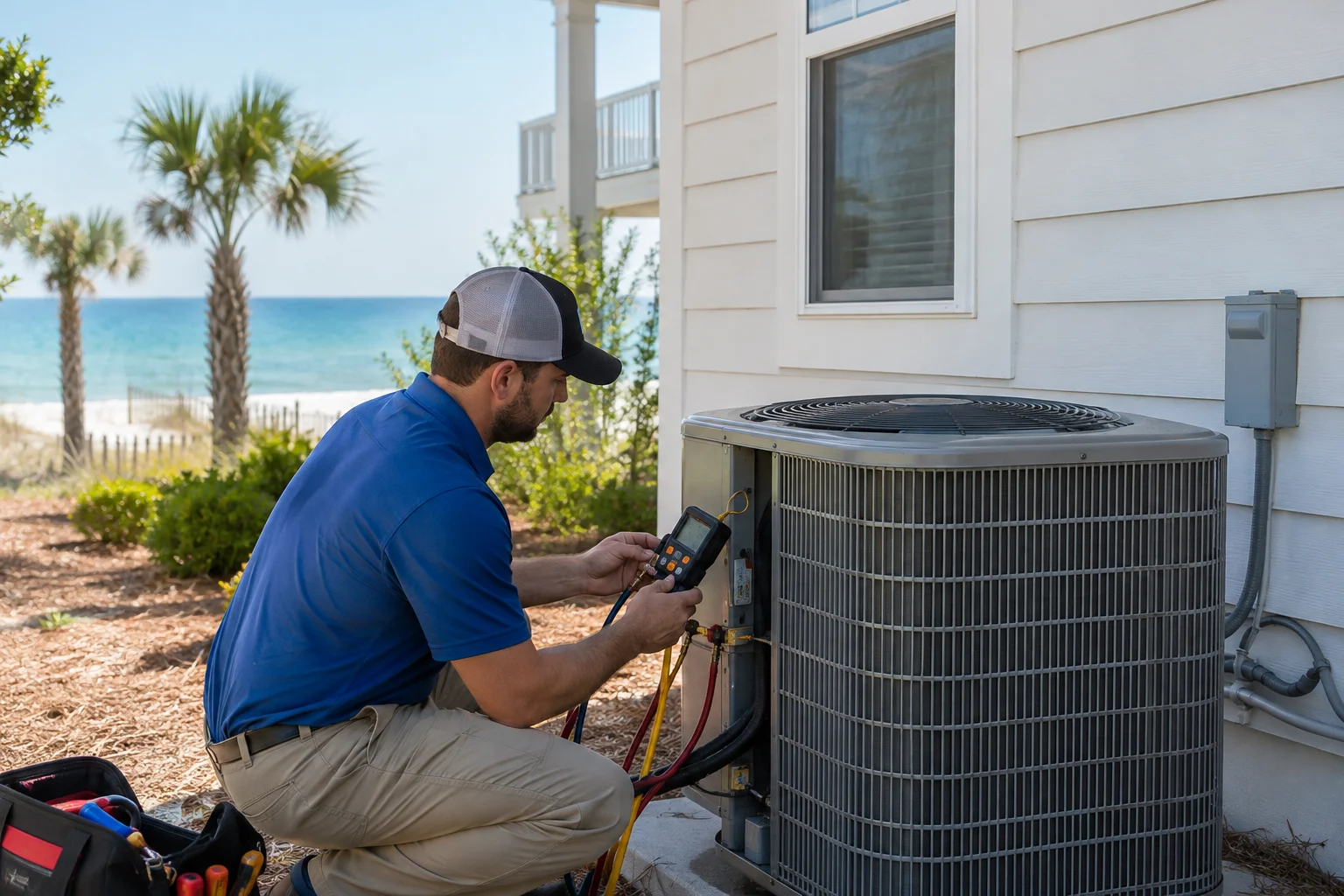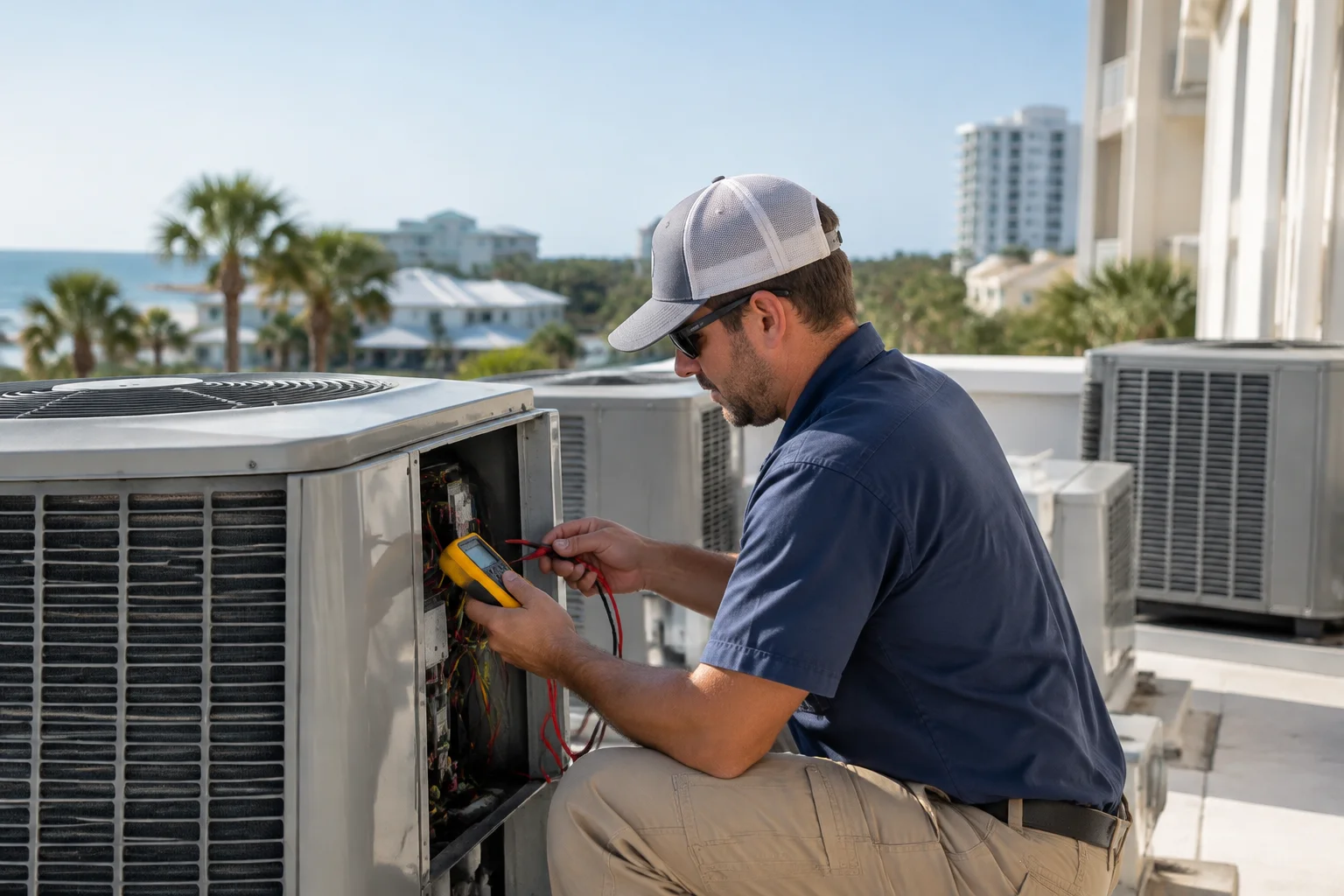
Niceville, FL is a place where HVAC systems work hard year-round. Winter can be mild, but the combination of humidity, salty air near the coast, and long stretches of high outdoor temperatures can gradually wear down the parts that control how your home heats. When heating control systems start to drift, homeowners often notice comfort issues first, then higher energy use, and sometimes emergency cooling concerns when the system cannot respond the way it should.
This guide explains how wear and tear affects heating control systems in Niceville homes, what symptoms to watch for, and how preventive HVAC maintenance helps keep thermostats, zoning, airflow, condensate drainage, and refrigerant systems operating as a coordinated system.
Heating control systems are only as strong as the parts around them
In most Niceville homes, “heating control systems” are not a single device. They include the thermostat, any zoning or smart controls, the control board inside your furnace or heat pump, sensors, and the communication pathways that tell the system when to run and when to stop. They also depend on airflow through ductwork, proper condensate drainage, and refrigerant system performance.
When HVAC components age, the control system can become less effective even if the thermostat display looks normal. Wear affects timing, temperature readings, and how consistently the system can maintain the setpoint.
Why Florida conditions speed up wear
Niceville sits in Okaloosa County where summers are hot and humid. Coastal and near-coastal areas also experience salt air. Over time, these factors can contribute to:
Corrosion on control components, especially where moisture can collect.
Dust and debris buildup in air handlers, blower assemblies, and filter slots, which changes airflow.
Moisture exposure that can affect sensors and wiring connections.
Condensate drainage wear that can lead to water issues near indoor equipment.
Even with routine filter changes, humidity and airborne particles can accumulate inside the system over multiple cooling and heating seasons.
Common ways HVAC wear and tear disrupt heating control
Below are practical, homeowner-friendly examples of how aging HVAC systems can interfere with heating control. Some issues start quietly, while others show up as comfort problems during colder or transitional weather.
1) Thermostat drift and sensor lag
Thermostats depend on accurate temperature sensing. With age, dust buildup, sensor calibration drift, and wiring connection wear can cause the thermostat to read a room differently than reality. The result can be:
Short cycling, where the system turns on and off more often than expected.
Delayed response, where the system takes longer to reach the setpoint.
Rooms feeling uneven, especially where ductwork airflow is already strained.
Smart thermostats can also appear “fine” while still reacting poorly due to inconsistent signals or sensor issues. If you are searching for HVAC repair near me because your heating feels off, thermostat drift is a common place to start looking, but it should be verified on-site.
2) Control board and relay wear
Inside the furnace or heat pump, control boards and relays manage sequences for heating mode, blower operation, and safety functions. Over time, repeated heat cycles and humidity exposure can contribute to:
Intermittent faults that reset or reappear after the system cools down.
Erratic blower timing that affects how quickly warm air reaches the home.
Reduced reliability that makes the system less responsive during peak demand.
Because control boards are safety-critical, DIY attempts to diagnose electrical or control problems can be risky. A residential HVAC service near me should be able to inspect the system safely and confirm what is actually happening.
3) Airflow restrictions that confuse the system
Heating control systems are designed around airflow. If airflow is restricted, temperature changes occur more slowly, and safety limits can trigger. Wear-related airflow issues often come from:
Dirty filters or clogged return grilles.
Dust buildup on blower components.
Leaky or obstructed ductwork that reduces how much air reaches each room.
Duct insulation wear in attics and crawlspaces.
In a humid climate, restricted airflow can also affect indoor air quality by allowing moisture and particulates to circulate longer. If you notice stale air, increased dust, or uneven comfort, pairing heating control troubleshooting with duct inspection can help identify whether airflow problems are driving the control symptoms.
4) Zoning problems from aging dampers and communication
Many Niceville homes use zoning to improve comfort and reduce energy use. Zoning depends on dampers, actuators, and control logic. Wear and tear can lead to:
Dampers that do not fully open or close.
Inconsistent room-to-room temperatures.
Short cycling if the system senses that the home is not responding as expected.
Homeowners sometimes blame the thermostat when the real issue is a damper that is sticking due to dust buildup or moisture exposure. A professional heating control systems service can evaluate the full setup rather than guessing.
5) Condensate drainage issues that affect performance
Even when you are focused on heating, many HVAC systems handle moisture and condensate drainage as part of their cooling operation. Wear in condensate drainage components can cause problems that indirectly disrupt heating control, such as:
Water accumulation near indoor equipment.
Safety shutdowns that interrupt heating sequences.
Increased humidity in the air handler area, which can contribute to corrosion and component wear.
If you have ever noticed water around the unit, musty odors, or recurring drain-related warnings, addressing condensate drainage is part of protecting HVAC control reliability.
6) Refrigerant system strain and control behavior
Heating and cooling performance depends on a refrigerant system that is operating within safe and intended conditions. Over time, refrigerant system wear can affect how the system responds to heating calls. However, homeowners should not attempt refrigerant diagnosis on their own. A professional evaluation is needed to determine whether any refrigerant-related issue is present and what is causing it.
When refrigerant performance is off, heating control can feel “inaccurate” because the system may not deliver the expected heat output, and safety protections can change how the unit cycles.
What homeowners usually notice first
Wear and tear often shows up as comfort complaints before any obvious equipment failure. In Niceville, where humidity and heat are common, the early symptoms can be subtle and easy to dismiss.
Comfort and temperature symptoms
The home never quite reaches the thermostat setting during heating mode.
Temperature swings that feel worse on humid days.
Rooms above, below, or far from supply vents are consistently cooler or warmer.
Short cycling, especially after the system has been off for a while.
Operational and energy use symptoms
More frequent heating calls or longer run times.
Higher energy use that seems out of proportion to weather changes.
Unusual noises from the blower or indoor unit when heating starts.
Indoor air quality and humidity symptoms
Stale or musty air, especially when the system has run for heating or transitional periods.
Dust buildup that seems faster than usual.
Persistent humidity that makes the home feel clammy even when the thermostat is set correctly.
These symptoms can overlap with issues in ductwork, filtration, and airflow, which is why a coordinated inspection matters.
Why the thermostat alone rarely explains the problem
Homeowners often start by replacing batteries, checking settings, or swapping to a different thermostat mode. Those steps can be helpful, but they can also delay the real fix. Heating control systems rely on communication between controls and the HVAC equipment. If the blower speed is inconsistent, ducts are restricted, dampers are sticking, or the system is protecting itself due to moisture or airflow issues, the thermostat cannot “compensate” enough.
If you are considering HVAC replacement near me or a thermostat upgrade, it is still worth having a professional evaluate what is actually causing the control behavior. A local HVAC contractor near me can assess the system as a whole, including airflow and control sequence performance.
Preventive maintenance that protects heating control reliability
Preventive HVAC maintenance is one of the most effective ways to slow down wear and keep heating control systems stable. In Niceville, maintenance also helps you manage the seasonal workload on your heating and cooling equipment.
Tasks that support heating control systems
Airflow verification through inspections that help ensure the system can move air as designed.
Filter and return check to prevent restrictions that cause the system to run longer and cycle more.
Thermostat and control sequence review to confirm signals and operation match the settings.
Blower and coil care where buildup can affect performance and control timing.
Condensate drainage inspection to protect against moisture problems that lead to corrosion and safety shutdowns.
Ductwork assessment when comfort is uneven or when indoor air quality concerns show up.
If you want a maintenance-first approach, read how better upkeep supports heating control systems in similar Florida coastal conditions: How Better HVAC Maintenance Supports Heating Control Systems in Alys Beach.
Seasonal maintenance matters in Niceville
Niceville homeowners often experience long stretches of high humidity. That means your air conditioner service and heating system share the same indoor components and ductwork environment. When air conditioning service is neglected, moisture and buildup can carry over and influence heating control performance later.
For cooling season habits that also protect heating comfort, see Keeping Niceville Cool Starts with Better AC Maintenance.
When heating control problems turn into emergency cooling concerns
Niceville weather can shift quickly. A heating control issue is not always just a comfort problem. If your system is already struggling due to airflow restrictions, control sequence problems, or safety shutdowns, you may also face emergency cooling concerns when temperatures climb again.
Consider contacting a professional promptly if you notice:
Your system fails to respond to thermostat calls consistently.
Heating mode triggers safety behavior or repeated restarts.
Cooling performance drops sharply after the system has been running for a while.
You see signs of moisture issues near indoor equipment.
When homeowners search for emergency AC repair near me during a heat spike, the best time to prevent that situation is before the system reaches its limit. A Superior Mechanical can help you address heating control reliability so your home stays comfortable through both heating and cooling demands.
How to decide between repair, tuning, or a broader system approach
Wear and tear can sometimes be corrected by restoring airflow, cleaning components, repairing control wiring, or correcting zoning behavior. Other times, the system may be nearing the end of its useful life, especially if multiple components show age-related failures.
Only an in-person professional evaluation can determine whether repair, tuning, or HVAC replacement is appropriate. If you are comparing options, it helps to ask your HVAC contractor about the specific control symptoms you are seeing and how they relate to airflow, condensate drainage, and refrigerant system performance. Avoid decisions based solely on thermostat settings or error codes seen on the display.
For homes that rely heavily on temperature accuracy and room comfort, it also helps to understand why heating control systems matter for the way people live day to day. See Why Heating Control Systems Matter for Valparaiso Homes for a deeper look at the comfort side of control reliability.
Related considerations for modern homes and ductwork
Many newer Niceville homes use advanced HVAC layouts. If you have ductless mini-splits or a hybrid system, heating control behavior can be influenced by how indoor units are balanced and how controls coordinate between zones. If you are exploring comfort improvements, it may be worth reviewing Ductless Mini-Splits and how they integrate with your existing heating control strategy.
For homes with older or complicated ductwork, airflow problems can be the hidden driver behind control complaints. If you suspect ductwork is part of the issue, combine your heating control concerns with Duct Inspection rather than focusing only on the thermostat.
Indoor air quality and heating control: the humidity connection
In Niceville, humidity is not just uncomfortable. It can also affect indoor air quality by influencing how long particulates and moisture remain suspended. When heating control systems do not maintain consistent operation, the home may not dehumidify as effectively during cooling transitions, and ductwork can distribute air unevenly.
If you are noticing allergies, dust, or lingering odors, consider pairing HVAC service with Indoor Air Quality Testing. A professional can help connect control reliability, airflow, filtration, and humidity management to the comfort problems you are experiencing.
Why local HVAC service matters in Okaloosa County
Local conditions in Niceville shape what wears first and what fails more often. Salt air can accelerate corrosion. Humidity can affect condensate drainage and sensors. Long cooling seasons put extra cycles on control boards, blowers, and ductwork. A local HVAC team understands these patterns and can tailor inspections to the realities of Okaloosa County homes.
When you need HVAC repair near me, air conditioning service, or heat pump service that also considers heating control reliability, choosing a contractor that regularly serves Niceville households can make the process smoother. A Superior Mechanical focuses on heating control systems and the HVAC performance around them, including airflow, ductwork considerations, indoor air quality, and dependable operation across seasons.
If you want to focus specifically on heating control systems, you can review our service details here: heating control systems for Niceville homes. For broader coverage across the region, visit our Niceville service area and Okaloosa County HVAC services.
Questions to ask during a heating control inspection
To get the most value from a residential HVAC service, bring your observations and ask targeted questions. Helpful prompts include:
“Does my thermostat call match what the system is actually doing in heating mode?”
“Could airflow or ductwork restrictions be causing temperature swings or short cycling?”
“Is condensate drainage functioning properly, and could moisture be affecting controls?”
“If I have zoning, are dampers and actuators operating consistently?”
“What preventive HVAC maintenance steps would most reduce wear for my system in Niceville’s humidity?”
These questions help your HVAC contractor near me approach the problem as a system, not a single part.
Preventive steps homeowners can take between professional visits
Homeowners can support heating control reliability with a few practical habits:
Replace filters on schedule and check them more often during heavy humidity periods.
Keep supply and return vents unobstructed so airflow stays consistent.
Watch for changes in runtime, comfort, and humidity, and write down what you observe.
Use thermostat settings consistently and avoid frequent setpoint changes that can confuse comfort patterns.
Schedule commercial HVAC maintenance where applicable for businesses, since control reliability also matters for occupied spaces and productivity.
If you are searching for an AC tune up near me or broader HVAC maintenance near me, use the same seasonal timing for your heating control system inspection so both sides of comfort are protected.
Heating control systems in Niceville homes can last longer and behave more predictably when wear and tear is addressed early. When you connect thermostat performance to airflow, ductwork, condensate drainage, and overall HVAC operation, you get comfort that feels steady instead of reactive.
For homeowners ready to troubleshoot heating control reliability, A Superior Mechanical offers focused service across Okaloosa County, including Niceville. Start with the heating control systems page, or explore more about the area at our Niceville location.
Find Heating Control Systems in Niceville, FL
If you need Heating Control Systems in Niceville, FL, visit our local service page or contact A Superior Mechanical today.
Map of Niceville, FL
Frequently Asked Questions
Can worn HVAC parts make my thermostat seem inaccurate?
Yes. Thermostat readings depend on how the HVAC system responds to each heating call. If airflow is restricted, dampers are sticking, or control components are aging, the home may not reach the setpoint even if the thermostat display looks correct.
How does humidity in Niceville affect heating control systems?
Humidity can contribute to corrosion, sensor issues, and condensate drainage problems. Those effects can interfere with control reliability, leading to comfort swings, short cycling, or intermittent behavior that is hard to reproduce.
What are early signs my heating control system needs professional service?
Look for inconsistent temperatures, frequent heating cycling, delayed warm-up, uneven rooms, or comfort problems that change during humid weather. If you also notice moisture near indoor equipment, that is another reason to schedule an inspection.
Should I replace my thermostat if heating feels off?
Replacing a thermostat can help only if the thermostat is the actual cause. Because heating control depends on airflow, ductwork, zoning components, and equipment controls, an in-person evaluation is the safest way to confirm what is driving the issue.
Can ductwork issues make heating controls act up?
Absolutely. Restricted or leaky ductwork changes airflow and how quickly the home responds to heating calls. That can create temperature swings, longer run times, and control behavior that feels inconsistent.
Related Articles
Photo Gallery